
Written by the TreasureGuide for the exclusive use of treasurebeachesreport.blogspot.com.
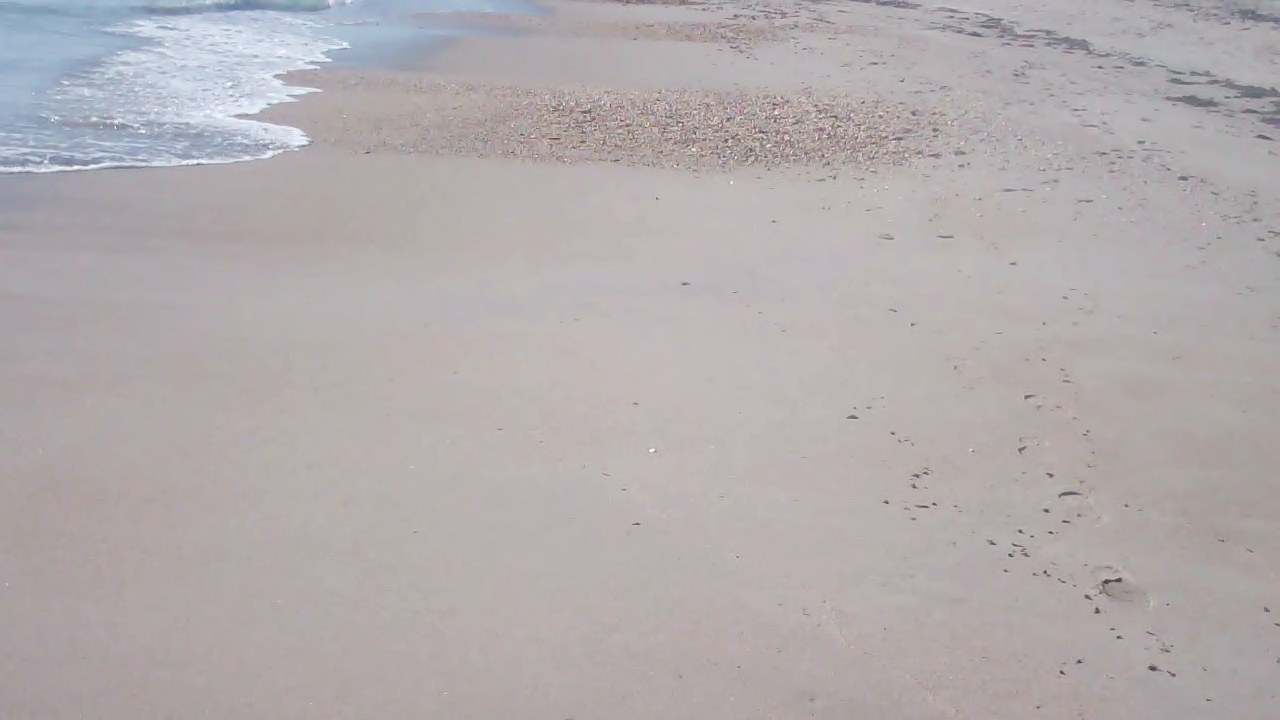 |
| Shell piles on Treasure Coast Beach Yesterday |
I mentioned yesterday that I saw some big shell piles on Treasure Coast beaches. Shell piles can be both fun and productive.
If you are targeting old shipwreck coins or gold jewelry, shell piles are not a good place to spend your time. If you are trying to make a living at metal detecting or trying to get the absolute greatest economic value out of your time, they are not the best place to spend your time. Or if you have some other good hot spots, they are not a good place to spend your time. However, if none of the above apply, you might enjoy scanning big shell piles.
The most productive shell piles are those with the greatest concentration of large shells. Those made of smaller shells or piles that are small or scattered are not as good.
The type of shell pile I'm talking about today is the type shown in the photo above.
Once you find a dense pile of larger shells, there are several types of things you should look for. One thing to look for is nice shells. Some shells are collected and can be sold. As usual, the most valuable are the most rare.
Also look for fossils, glass, ceramics, Indian artifacts, metal, and other types of interesting things. Many of those things can be sold. The Native Americans often made useful or decorative items out of shell.
Not all areas will produce all of those types of items. Some areas will have fossils, for example, while the shell piles in other areas will not. There are some good Treasure Coast beaches for collecting sharks teeth.
A good shell pile containing larger shells, can also produce stone artifacts. The larger and heavier the shells, the better. I've seen spear and arrowhead points in better shell piles.
Sea glass is collected and used in crafts and can be sold. Red and yellow sea glass is unusual and highly sought after.
The metal you find in shell piles usually consists of thin flat pieces, including a lot of aluminum junk, but some interesting metal items can sometimes be found in shell piles.
I have found both coins and gold jewelry in shell piles, but that is the exception rather than the rule.
Cobs are also sometimes found associated with shells, but that is most often not in the type of shell pile that I am talking about now.
Heavier, or should I say more dense, items can often be found under or around shell piles, sometimes deposited separately but overlaid by the shells. It is good to understand how things get sifted and deposited on a beach.
Iron artifacts will often be found around large shell piles, and occasionally under nice shell piles.
 |
| Sample of Items Found in a Shell Pile Yesterday. |
That is just a sample to give you an idea.
None of these have much value, but they are what I call "signal finds" that tell you something about the history of the beach and other things that might be found there.
Evaluate the age and source of any signal finds.
There were a lot of fossils in the shell piles yesterday, besides the piece of tooth. The shell piles were composed of decent size but not large shells. The fossils were not the larger ones, but fossils don't need to be large to be interesting.
The tooth was found sticking out of the edge of a shell pile that was in the process of eroding. I like watching shell piles as the water moves the surface items. Even if someone scanned the pile a few minutes earlier, new things will appear.
You never know what you might find in a shell pile. It can be worth looking.
La Salle's ship, La Belle, sank in 1686 in Matagorda Bay between Galveston and Corpus Christi. It is being freeze dried and reconstructed for display.
Here is the link to that story.
http://www.kansascity.com/2012/08/15/3763002/17th-century-shipwreck-to-be-freeze.html
Treasure Coast Treasure Beach Detecting Forecast and Conditions.
Nothing has changed much. Still a west wind and calm seas - down around one foot. Still sandy, and still some shell piles. A lot of sand in the shallow water too. No change is expected real soon.
There is one new tropical wave just coming off of Africa. Too early to say much about that.
Low tide will be around 2:30 PM today.
Happy hunting,
TreasureGuide@comcast.net


