Showing posts with label earrings. Show all posts

Friday, February 14, 2020

2/14/20 Report - Surprises! Treasure in Jar of Clay. Earthquake Footprints. Encrusted Bits. Increasing Surf.


Written by the TreasureGuide for the exclusive use of treasurebeachesreport.blogspot.com.

Treasure From a Clay Jar.
Source: English.tau.ac.il web site (See link below)


We’re always told that the journey is just as important as the destination. This is true in many aspects of life, but perhaps nowhere as much as in scientific research. Flexibility, curiosity, and attention to detail can lead to a treasure you weren’t even expecting to find. TAU’s scientists talk about research that began one way and ended another, thanks to a few surprises along the way...

That is the beginning of an article in the Tel Avive University News entitled Recalculating: when research starts one way and ends another.   It is about surprise discoveries that change the direction of the research.

Continuing with the first story in the article...

A treasure in a pot

A team of archeologists on an excavation mission found that sometimes the appearance of a clay pot is no indication of its contents. "On one of the excavations in Megiddo, we removed the partitions separating the different sections of the dig and found a whole clay pot full of dirt," says Naama Walzer, a doctoral student in the Department of Archaeology and Early Eastern Cultures at Tel Aviv University.


"We packed it up and planned to send it to a molecular residue lab to find out what used to be stored inside of this pot, which we dated to around 1100 BCE." The pot was stored in an office, but after a while it became clear that preservation in that area of the excavation wasn’t up to standard, so the team decided to empty the pot, in a controlled way, and poured out its contents on the table. "We weren’t expecting to find what ended up being inside: a treasure trove of jewelry, considered one of the greatest troves found in Israel from the Biblical period!"   (See photo at top of this post.)

Among other things the trove contained nine large earrings and a seal ring, over a thousand small gold beads, and silver necklaces and jewelry.  "This is how we found the big treasure of area H, which is now part of the permanent exhibition, at the Israel Museum in Jerusalem," concludes Walzer.

That is the first story of several interesting stories found in that article.  Below is the link for the rest of the article.

https://english.tau.ac.il/news/recalculating\


If you look at the earrings found in the over three-thousand year-old jar, could you tell that they are not modern or how old they are?   They aren't really that much different from modern earrings.  That is how difficult it can be to identify the age of an item by just looking at the form of the object.  Those types of hooks worked then and would still work today.

Someone once said that he learned everything he knew from six fellows: Who, What, Where, When, Why and How.  So here is one question - Why nine earrings.  Seems an odd number - in more ways than one.  Loss?  Extra Earring?  Only wore one at a time?  Just a grouping?  What?  Who knows?

Written around 59AD by Paul (who, by the way, was a shipwreck survivor), 2 Corinthians 4:7-9, reads, But we have this treasure in jars of clay to show that this all-surpassing power is from God and not from us. 8We are hard pressed on every side, but not crushed; perplexed, but not in despair; 9persecuted, but not abandoned; struck down, but not destroyed.   He was evidently familiar with treasures in jars of clay and saw it as a suitable metaphor.

You might find the second story in the article interesting too.  In the picture below, notice the swirly sedimentary layers.  It is at the bottom of the Dead Sea (lowest place on earth that is dry land) and the swirls, it seems, were created by earthquakes hundreds of thousands of years ago.


You might enjoy reading that story too.

---


I was picking up some small bits of metal when I was finding cobs a few weeks ago, and said I was going to take a closer look at some of those to try to figure out what they are.  Here are a couple of small encrusted bits that I'll be cleaning.


The one above seems to be as heavy as lead.  I wouldn't be surprised if that is what it is.


This one is flatter and hard to compare but doesn't feel as dense.

Both have a brown/orange encrustation.

They are being cleaned now.

---


Sourcea; MagicSeaWeed.com

As you can see, the surf will be building today up to around six feet.


Happy Valentine's Day,
TreasureGuide@comcast.net

Saturday, January 11, 2020

1/11/20 Report - Surf Remains Rough At Least One Wreck Beach Cut. Sticking With My 2 Beach Conditions Rating For Now. A Couple Finds.


Written by the TreasureGuide for the exclusive use of treasurebeachesreport.blogspot.com.


John Brooks Saturday Morning Near High Tide.

Wet, dim, windy morn, highlighted by white water crashing on the beach.  The sun only dared to peek, as men armed with steel wire cages that somehow matched their set jaws and determined faces, tracked the mighty sandflea.

Enough pf the humor, but I do like the photo. The only people I saw this morning at John Brooks were trying to catch sandfleas - those terrestrial crustaceans of the family Talitridae.  I do enjoy seeing the little buggers scamper in my scoop.

Evidently not much happened last night.  The water only topped the berm in a very few spots.  And very little additional erosion had occurred since yesterday, although at high tide a little additional sand was being pealed away.

Below is another view from about the same spot at John Brooks Beach.


The water coming off the cuts was washing towards the north.  That is not usually what you see here when conditions are very good.


Frederick Douglass beach hadn't changed much overnight either.


Frederick Douglass Beach Saturday Morning.

Frederick Douglass Beach Saturday Morning.

I showed Fort Pierce South Jetty a few times lately.  A couple days ago it started to fill in, then the bar flattened out.  This morning you could see that it has been filling from the south.


Fort Pierce South Jetty Saturday Morning.


Fort Pierce South Jetty Saturday Morning.


The first thing, or about the first thing, I dug yesterday is the following ring.


Ring Dug Yesterday (Friday).


I haven't cleaned it off yet, and haven't found any markings.  Undoubtedly junk.

Perhaps the most interesting thing about the ring is that
It was found in a straight line of about ten sinkers.  I think there was one penny in the line, but nothing else other than the sinkers and ring.  It was a very straight line too.  Easy to follow.

I've been finding rings almost every time out lately.  Unfortunately they are mostly cheap stuff.  The good thing about that is nobody lost a valuable cherished item.


Two Gold Earrings Found.

The are latched and interlocked.  Obviously someone took them off before they were lost.  Finding pairs of matching earrings is not extremely common, but it does happen every once in a while.

The other finds from yesterday need cleaned and then photographed.  Maybe something more interesting in that bunch.

Terry S. sent photos of some interesting finds from a week or so ago.  I'll post them soon.

I'm sticking with my level 2 beach conditions rating for now even though I haven't seen the beaches or received reports from the Vero/Sebastian area the past day or two.  

The surf today was about 4 - 6 feet.  It is predicted to drop a foot or so tomorrow.

Happy hunting,
TreasureGuide@comcast.net


Wednesday, October 16, 2019

10/16/19 Report - The Hesse Crown Jewels. A Silver Cross Find Examined. Pax.


Written by the TreasureGuide for the exclusive use of treasurebeachesreport.blogspot.com.

Princess Margaret Wearing Some of the Hesse Crown Jewels.
Source: See GemSelect,com link below.

The story of the Hesse Crown Jewels illustrates how a cache can be secreted, discovered, distributed and found.  Some of the Hesse Crown Jewels could still be buried somewhere.

The story of the Hesse Crown Jewels heist began during the time of WWII. To help secure the future of the Hesse family, in October of 1944, Prince Richard and Prince Wolfgang of the House of Hesse secretly placed a large collection of their crown jewels into a wooden box lined with lead and zinc, which was buried in the basement of the Kronberg Castle. The box was lowered into a hole they had dug into the floor and then covered and sealed over with concrete. The contents included several diamonds, gemstones, bracelets, rings, necklaces, tiaras, rare coins, pieces of silver, gold and family heirlooms. After burying the jewels, they abandoned the castle and planned to return and retrieve the jewels after the end of the war...

The cache was discovered by U. S. soldiers, who helped themselves and dispersed the jewels.

Almost immediately after arriving in the United States on March 12, Durant set about hiding or trying to sell all the jewels he had managed to send from Europe.

On at least two occasions he and his brother James—the recipient of most of the packages Durant had mailed—buried large glass jars filled with jewels and cash along Route 7 near James’s home in Falls Church, Virginia. Durant sold gems to several private individuals, pawned other items, and, using a false name, sold several stones to a large Washington jewelry store. He even managed to use one particularly nice diamond as partial payment for a new Hudson convertible...

If you want to learn more about the Hesse Jewels, here are the source links for both of the above excerpts.

https://www.gemselect.com/other-info/the-hesse-crown-jewelry-heist.php

https://www.historynet.com/soldiers-of-fortune.htm

---


Crude Silver Cross
Same as posted yesterday

I posted this picture yesterday.  It was just one example of a few items that I thought were probably made by an individual for their own use rather than commercially made to be sold.  It is almost exactly one inch high and wide - a fact that I neglected to mention yesterday.

As I looked at the photo, it captured my attention and made me wonder about it more than I had before.  I don't know that I ever noticed the lettering until I took this closeup photo yesterday.

The cross appears to be inexactly made.  The lines are not perfectly straight or perpendicular. The bottom part of the stapes, which is the vertical member of the cross, looks wider and offset to the right when compared to the upper section.  And the lines of the horizontal member, the patibulum, are not parallel or straight.  Rightly or wrongly, I would expect the cross to be more precise if was made commercially.  Some of the original lines could have been changed slightly by wear and corrosion, but not that much.

Despite being imprecisely made, the use of a precious metal suggests but does not prove that it was an item of some reverence for the person who carried it.  The form, of course, also suggests that.

It is possible I didn't notice the word before, since the item is very dark and rough and smaller than it appears in the picture, but now that I notice the word "PAX," I also see that the word is not centered.  I would guess that is just another example of being made with less planning and care than you would expect of a commercially produced item.

I do not see any sign that there was ever a loop or appendages for attachment, but those could have been worn or corroded away.

It shows some age, but I have no idea how much.  I wish I remember where and when I found it, and I wish I had conducted the experiments I thought about to learn how long it takes for silver to corrode after being immersed in salt water.  It could be very old, but I don't know if it is.  I've seen silver coins just a decade old as well as items centuries old, that have a similar look.

The word PAX, of course, is Latin for "peace."  Peace, the peace symbol, and homey crafts were the vogue in the seventies, but that is not the only time period that it could be from.  I can see it being made either by a Jesus Freak of the seventies or someone in the 1700s needing a point of contact with a source of peace.

I think the Jesus Freak explanation is the more likely of the two even though there are other reasonable possibilities.  Maybe I shouldn't even say "think."  It is more like a feel.

PAX has a few other meanings.  In Christian liturgy, "the Pax" refers to "pax vobis" or "pax vobiscum," which are salutations used in Catholic mass or Lutherin Diving Services.  There were also Pax tablets, which I'd expect to be much more elaborate than this simple cross, and also Pax pendants, which I'd expect to be more formal, except possibly in the most desperate circumstances when a person might have to make do with whatever poor materials they had available.

Like many metal detecting finds, this humble cross started me on a thought-journey.  I didn't solve the puzzle, but journey was fun and I learned something.  I hope you did too.

---

Here is another find that looks to me to be a craft project from the seventies.


Earring Craft Project.
I think it is pewter but not sure.
---

The National Hurricane Center map looks pretty quiet now - especially in our area.

The surf is down to around two feet and won't be any higher, at least for a few days.

Happy hunting,
TreasureGuide@comcast.net

Saturday, August 10, 2019

8/10/19 Report - Earrings: Materials and Some Clues for Determing Age. Diamonds and Other clear Genstones.


Written by the TreasureGuide for the exclusive use of treasurebeachesreport.blogspot.com.

Nice Crystal On Drop Earring.


I recently posted a photo of what I believe to be a vintage button featuring a clear stone.  Here is   very nice large clear crystal (if that is what I can call it) from a vintage earring that I once found.

Clear stones are a bit of a problem for me.  You always want to know what kind of stone you have, but it can be difficult to tell if you have a diamond, zircon, or any of a variety of other types of clear stones, unless you have a gem tester or take the item to a jewelry store or pawn shop to be tested.

This earring seems to me to be vintage.  Other than its overall look, notice the screw type closure.  Those were invented in the early 1900s and used a lot until the clip-ons were invented around 1930.

Closure For Same Earring.
This one is signed, but I haven't yet been able to make out the signature.

In the Renaissance era earrings were not popular because women's hairstyles obscured the ears, however they became more popular in the 17th century.  According to Deagan's book, Artifacts of the Spanish Colonies of Florida and the Caribbean, 1500 - 1800, earrings have been found at Spanish Colonial New World archaeological sites, especially 17th century sites. The long dangling type are more frequent from 18th century sites.  Many of those were made of copper alloy or gold and featured faceted glass, or paste, while others featured pearls, turquoise or emeralds.  Several gold drop-earrings have been found on 1715 Fleet wreck sites.

The closure can provide a clue to the age of an earring.  In the early 20th century ear piercing was not in fashion, so screw and clipon earrings were heavily used until piercing once again became popular in the 1970s.

17th and 18th century earrings were usually attached by a simple curved wire.  Similar wire hooks are still used today so that alone doesn't help much.

Here is an example I found on a Treasure Coast shipwreck beach, but there is no evidence that it is very old.  It could be quite modern.  There are no definitive marks, and the design is very basic and common.


I have found one almost exactly like one shown in the Deagan book on page 164 (figure 6.12).

When it comes to clear stones, there are a variety of methods or tests you can do yourself to see if you might have a diamond.

Of course the easiest thing is to take it to a jewelry store or pawn shop and have them test it.

Here is a link to a web site that lists 25 different clear gemstones that are used in jewelry.  Of course, it includes diamonds, zircons, white sapphire, spinel and much more.

Simulated gemstones are not new.  Paste, made from glass, goes back to Ancient Egypt.

The Rhine River was filled with quartz pebbles that were used in jewelry. That is why they are called Rhinestones. Eventually the natural glass pebbles were depleted.

In 1891 Swarovski invented a machine that could mechanically cut and facet glass. He began making rhinestones with a 32% high lead content with great refraction.   He also came up with a new kind of plating that for plating silver and gold onto the backs of the crystals.
I plan to add to this content some other day.

---

Still nothing of interest on the National Hurricane Center web site.ast.

Happy hunting,
TreasureGuide@comcast.net


Friday, January 4, 2019

1/4/19 Report - Gold Trending Up. Rare Matching Pair Finds. Silver Dollar VAMs.


Written by the TreasureGuide for the exclusive use of treasurebeachesreport.blogspot.com.

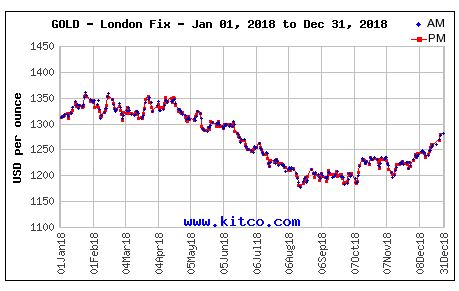
While the stock market has been going through wild gyrations, the price of gold has been doing well.  Above is the 2018 chart.  The early days of 2019 have also seen increases.  

The up-trend in gold prices started back around the end of August and has continued through yesterday, when it closed at about $1298 US dollars per ounce.  Today however it is down again.  You never know what it is going to do.

---

Some finds are rare for one reason or another.  Even though I used to target and find a lot of gold jewelry, I seldom found sets together.  There have been times though when I found a matching engagement and wedding ring.  On a few occasions I found a matching pair of ear rings.  I showed a diamond and pearl set before.

The one time that stick out in my memory when I found a matching engagement and wedding band together was in the shallow water beside a picnic area on a causeway in Pensacola.  They were only a couple feet apart.  They were the same size and design. They were gold and diamond, but fairly inexpensive.  I figured they just slipped off at the same time.  Maybe a little suntan lotion and a Frisbee or something was involved.  Who knows?  Anyway they ended up lost in the water in very close proximity.

Here is a more recent matching set found on a Treasure Coast beach.  14K with diamonds.  They were also found in shallow water very close together.  They make a more expensive set than the Pensacola set that I talked about.

Matching Engagement Ring and Wedding Band Set.

I always figured the matching earring finds were taken off together.  It is difficult to imagine a pair of those coming off at the same time.

---

Older silver dollars are also rare finds for me.  I haven't found too many, and most of the ones I did find were found together in a cache.  After finding those and doing a little research I learned just a little about VAMs.

VAMs are cataloged varieties of Morgan or Peace dollar. For each year and mint, there are varieties that are identified by characteristics that may include any of the following:


    VAM silver dollars are cataloged using a system of numbers and letters that incorporate the “VAM” name. A normal Morgan dollar or Peace dollar is classified as a “VAM-1.” Subsequent VAM dollars are recognized as a VAM-2, VAM-3, VAM-4, and so on...

The Comprehensive Catalog and Encyclopedia of Morgan and Peace Dollars by Leroy C. Van Allen and A. George Mallis.

See https://coins.thefuntimesguide.com/vam-dollars/

"VAM" is a combination of the initials of the fellows (Van Allen and A. Mallis) that extensively studied and catalogued all the Morgan and Peace dollar mint varieties in The Comprehensive Catalog and Encyclopedia of Morgan and Peace Dollars.

Some VAMS are quite valuable.

---

I added the 18th Century Material Culture Resource Center web site to my reference link list.  It is well worth browsing.

We'll have a few more days of calm surf on the Treasure Coast.

Happy hunting,
TreasureGuide@comcast.net

Friday, June 9, 2017

6/9/17 Report - An Earring Find. Surprising History of Earrings. Cycles of Moving Sand.


Written by the TreasureGuide for the exclusive use of treasurebeachesreport.blogspot.com.

Rainbow Over the River.
Rainbows have been a common sight lately on the Treasure Coast.


Very Encrusted Silver Earring.

This ear ring was dug on a treasure beach.  It is very small,  The main part of it will fit on a penny.

The stone is very small, but seems to have a remarkable surface.   

The back is made to let the light through the stone.
Back of Same Earring.
I'll have to get this heavy crust off to get a better look at this thing.

I got it partly cleaned - enought to see some design.  More cleaning is needed for the silver and the stone.


Same Item Partly Cleaned On Penny.

As often happens, after making a find, I try to narrow down the source and age of the find.  That means research.  In the process I usually find something interesting.  Here is a little of something I found on the history of earrings.

During the Middle Ages in Europe male earrings alternated between being popular and being out of style for long periods of time until in the 13th century when the Catholic Church forbade the piercing of ears. This was done in accordance with the dogma, stating that a person cannot alternate his or her body which is created in the image of God. Only thieves, pirates and representatives of the lower class continued to wear earrings.

Thieves used this means of expression to demonstrate their abhorrence for society, while peasants pierced the ear of the only boy in the family or of a child who had been born immediately following the death of another child. For pirates, the earring meant a plundered ship. The Russian Cossacks also gave much significance to earrings.

Earrings were worn on the left ear by the sons of a single mother whose husband had been killed and on the right ear by the only boy in the family. A man wearing earrings on both ears was the last of his family line. Such a man was guarded by his neighbors and was not allowed to participate in times of war, lest his line disappears forever...

For more of that article, here is the link.

http://jewellerypassion.net/the-history-of-earrings/

I now think this earring is 19th century or later.  One reason is the kidney style wire with loop.  That was invented about 1870.   I would also not expect the setting for the stone to be open on the back. That is my best attempt at dating the earring so far.

---

Sand moves all the time.  Every tidal cycle it moves to some extent.  The amount can be small and difficult to identify.


Most of the time it is just a small amount of sand in front of the beach that gets washed up or a small amount of sand from the slope that gets washed own into the water.  That happens all the time to some extent.  The same old sand keeps getting pushed up and dragged down.

Newly lost objects can be in the top layers of sand that always get moved.  The objects might or might not move move with the sand.  I've discussed that a lot in the past.

The force of the water can be enough to move the water and leave the objects behind, or it an be great enough to move both.  When both are moved they will be separated as the force decreases with the more difficult to move objects dropping out first.

In the illustration above the three orange dots represent good old objects.  The sand above those objects can get pushed up onto the beach many many times before the objects are moved.  They will just sit there under the sand until the sand over them gets moved and the force of water is great enough to move them.  That could be years or centuries.

Of course they can get uncovered enough to be detected with a metal detector.

I should also say that sometimes the sand at the foot of the beach will get pulled out to deeper water.

Those same objects will not sink much deeper than the lowest level of sand that has occurred in the past.  If they are sitting on bed rock, the sand above was at some time removed or at least agitated or disturbed.  In the past I've discussed various things that can result in those types of effects.

---

The surf is just a little higher today ( 3 - 3 feet).  The primary swell is from the north.  We are near a nice full moon.  The tides increased a little.

You might want to go early before the rain storms start.

Happy hunting,
TreasureGuide@comcast.net