Showing posts with label distribution pattern. Show all posts

Monday, September 21, 2015

9/21/15 Report - Scan Patterns and Coin Line Identification. Tropical Storm Ida.


Writtten by the TreasureGuide for the exclusive use of treasurebeachesreport.blogspot.com

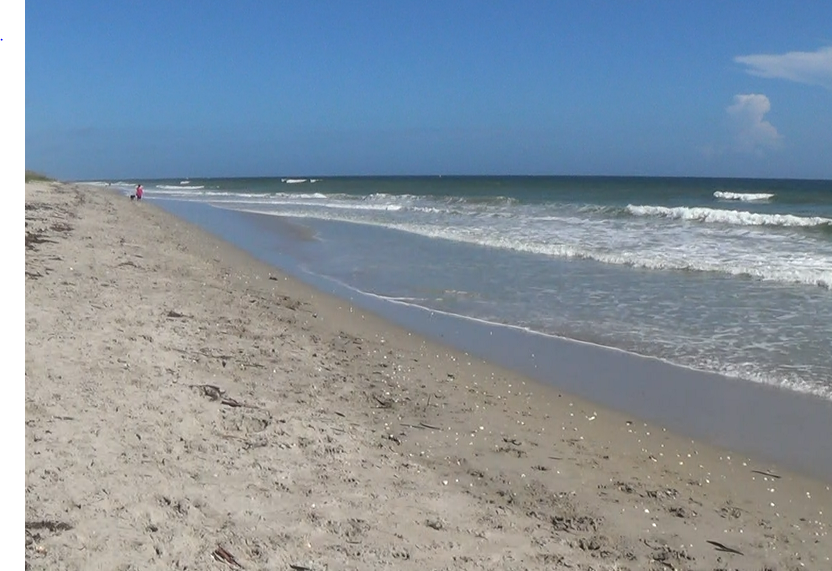
One Treasure Coast Beach This Morning.
I took a look at a couple beaches this morning.  I was disappointed.  Yesterday it looked like we might get a little improvement, but not much happened.

The beach shown above is very mushy.  You can see the waves breaking right at the base of the beach.  The slope is fairly steep, ever so slightly scalloped and mushy.  Not good detecting conditions.

Another Beach At Low Tide Yesterday.
Notice the twenty or thirty yards of flat beach out front.  Water from the breaking waves is surging in over that flat part of the beach.

I saw another beach this morning that was very much like this one.

There were few targets where I did a little detecting this morning.  There were some though, although it took me a while to find them.

I started off by checking the two hot spots that usually produce good targets on that beach.  There was nothing at those two spots.  My guess is that the regulars hit those spots this weekend.

I quickly shifted to a very loose scan pattern to see if I could find some better spots to hunt.  I would often use a zig-zag pattern in a situation like that.  Today I checked down by the waterline first.  Nothing good there.  Then I checked higher on the beach.  Nothing there either.

It didn't look like it was worth spending much time either high or low, so then I checked the middle of the slope.  Bingo.  First a dime.  Then a quarter, etc.

There was a coin line.  It was a very narrow straight coin line.  If you looked back and connected the holes with a line, it would have been surprisingly straight.  By the way, this line was not by the most busy parts of the beach.  It was well north of that.  Again, I suspect that the weekenders cleaned the more busy areas.

It took me a while to find the first good target, but after that they came fairly quickly.  I used the first coin as a sign of a possible distribution pattern.  In this case it turned out to be a coin line.

I used the first find as a possible indicator of the most productive zone - in this case not high, or low.

The second find supported the idea that there could be a coin line and that the most productive area would be just a little below, mid way between the water and the high tide mark.

The third find and additional finds were all in that narrow coin line.

I've often talked about using finds as indicators.  Some will not be a part of a distribution pattern, but after finding one, the next thing I do is check to see if it might be a part of a pattern.

All the coins found in that line were discolored.  That is important.  A coin that was just dropped would not be a sign of a distribution pattern.  Discolored coins that have been out there for a while are more likely to be relevant signs.  That is especially true in areas where most coins are removed before long.  A discolored coin that pops up in a heavily detected area probably came from somewhere - either washed up or washed out.

I'm always looking for something to tell me where to spend my time.  First by looking at the beach and any features, considering hot spots that have been found in the past, and then by sampling.

At this point I could get into the details of how coin lines form, but that would take me a lot more time.  I think I'll wind this topic up for now.  Maybe I'll get into how such lines form some other time.
---

Here is the auction catalog for Sothebys Oct. 1 Rarities Auction.  There are over 200 lots of very fine coins to browse.

http://www.sothebys.com/pdf/2015/N09385/index.html

---

Here is a very good paper on bioturbation and artifact movement.  It shows how significant bioturbation can be.

http://alliance.la.asu.edu/rockart/scans/Balek.pdf

---

There wasn't much wind this morning.  I was disappointed that we didn't get more sand moved last night.

Wednesday and Thursday the surf will be up to around four feet if the predictions are correct.

Ida is supposed to become a hurricane in a few days.  It looks like she'll stay out in the Atlantic though.  It doesn't look like she'll affect us.

Happy hunting,
TreasureGuide@comcast.net

Tuesday, November 25, 2014

11/25/14 Report - Metal Detecting Target Distribution Patterns and Search Strategies - One Excellent Example. Sedwick Auction Results Online.


Written by the TreasureGuide for the exclusive use of treasurebeachesreport.BlogSpot.com.


Simplified Illustration of What I Found On One Treasure Coast Beach Saturday.
I mentioned that I found a lot of coins Sunday.  I hunted the slope of the beach from the face of the cut down to the water line.  First I scanned part of the beach for maybe three hundred yards.

The above illustration is not totally accurate but gives a good picture of what it looked like.  First, the coins were found in one area running from close to the toe of the cut down to near the water line well before low tide.  The coins did not appear to go all the way to the water line though.

In the above illustration black dots represent coins.  There are not as many black dots as coins found in the coin hole area that spread about fifty yards along the beach.  The coins were on average about five yards apart. This was not a densely packed coin hole.

The grey dots out to the right represent aluminum targets that were found about a hundred yards or so to the north.  They were up against the toe of the dune in a white shell packed sand which was distinctly different from the sand the coins were found in.

Although there were more coins found than shown, the illustration shows he correct number of dots for the other types of targets dug on that day.

To the South of the coins no targets of any kind were found for a hundred yards or so.

Red dots represent lead finds, and orange represents gold.

I only spent between one and two hours checking this stretch of beach.  I did not cover every inch of the beach.  Some areas were detected much more thoroughly than others.

I first used a very lose search pattern to identify different areas that I would more intensely search.  I try to find the most promising areas where I should spend most of my time.

I quickly hit a few of the coins in the coin hole as I walked along the beach, then nothing as I went north until I hit the aluminum junk area.

I've explained before some of the scan patterns that I use to identify hot spots. The zig zag pattern is one of those.  That is not what I used Saturday.  I simply followed the contour of the beach near the face of the cut at first.  Since I quickly discovered a few coins up near the cut, on the return I went down closer to the water to get an idea of how wide the coin bearing area might be.

Here is an important point.  Look at the illustration.  The black dots represent coins, the grey dots aluminum, the red represents led finds, and the orange iron.  What do you notice about the distribution?   The targets of different metals were grouped without exception.  This was a well developed distribution pattern. 

The coins were not real old, but were not recent drops.  They were all, except one, colored and crusty.

If I was using discrimination, I might not have detected the aluminum or iron targets.  I would have had a less complete picture of what was going on.

The two round lead sinkers helped to identify the lower boundary of the coin hole.

I certainly did not need discrimination in the coin hole because there was no junk in with the coins. The aluminum told me that the area to the north was probably not a good place to waste time, so that information was helpful too.  There is simply too much beach to cover equally and completely, so you need to focus your time and efforts on the most promising spots.

The distribution of targets led me to the most likely location to find gold.  Of course, sometimes the areas aren't so well defined, but in this case the targets were not new and had been well classified and distributed by type.

This illustration shows a number of things and explains why I use some of the techniques that I often talk about.  I can't get into all of them now.

Here is one thing I will advise.  Sample different areas of a beach to try to identify the area where you want to focus your efforts.  Don't use discrimination, especially at first, until you get some idea of any distribution pattern. 

Distribution patterns are not random below the high tide line.  This particular example is a very well developed pattern and makes an excellent illustration.

I probably spent about eighty percent or more of my time in the area of the coin hole.  It was located quickly.

-------------------

You can go back and look at the completed Sedwick Coins auction catalog on the icollector site to see what prices were realized by the various lots.

Here is the link.

http://auction.sedwickcoins.com/Treasure-and-World-Coin-Auction-16_as34049

Sedwick also sent me an email to say that new items were added to their online store.

-----------------

Don't expect any Thanksgiving storm this year.  The surf Thursday will be calm.  

They are predicting a bump in the surf out another week, but the long range predictions are not very accurate.


Happy Hunting,
TreasureGuide@Comcast.net