Showing posts with label coin line. Show all posts

Saturday, September 14, 2019

9/14/19 Report - Tropical Storm Humberto and Higher Surf Predictions. My Second Field Test With The Equinox: Finds and Thoughts.


Written by the TreasureGuide for the exclusive use of treasurebeachesreport.blogspot.com.


Source: MagicSeaWeed.com

I'm leading with the surf this morning.  I don't often do that, but the predictions at this point look encouraging.  Not only is the surf supposed to be high, but it lasts for a while.  That is something we've been missing, especially with Dorian.  It would be nice if that is what we get.

Source: nhc.noaa.gov

The map is really lighting up.  We now have a tropical storm named Humberto, that is supposed to become a hurricane, however it will be staying out in the Atlantic.

Source: nhc.noaa.gov
That doesn't mean it won't sent some surf this way, but MagicSeaWeed is evidently counting on some surf from other sources as well.  We'll see.

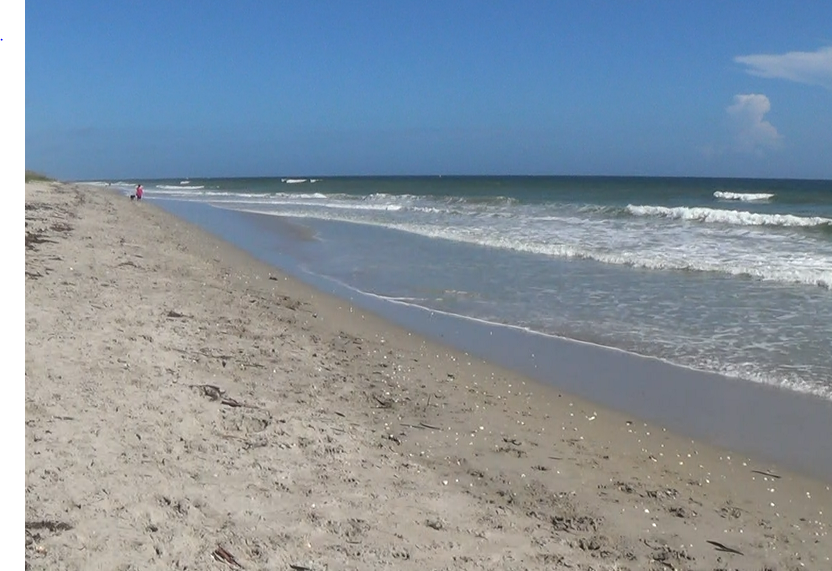
From what I've seen of the beaches so far, which is limited to South Hutchinson Island, I'm not increasing my beach conditions rating yet.  The shipwreck beaches that I looked at yesterday showed no erosion.

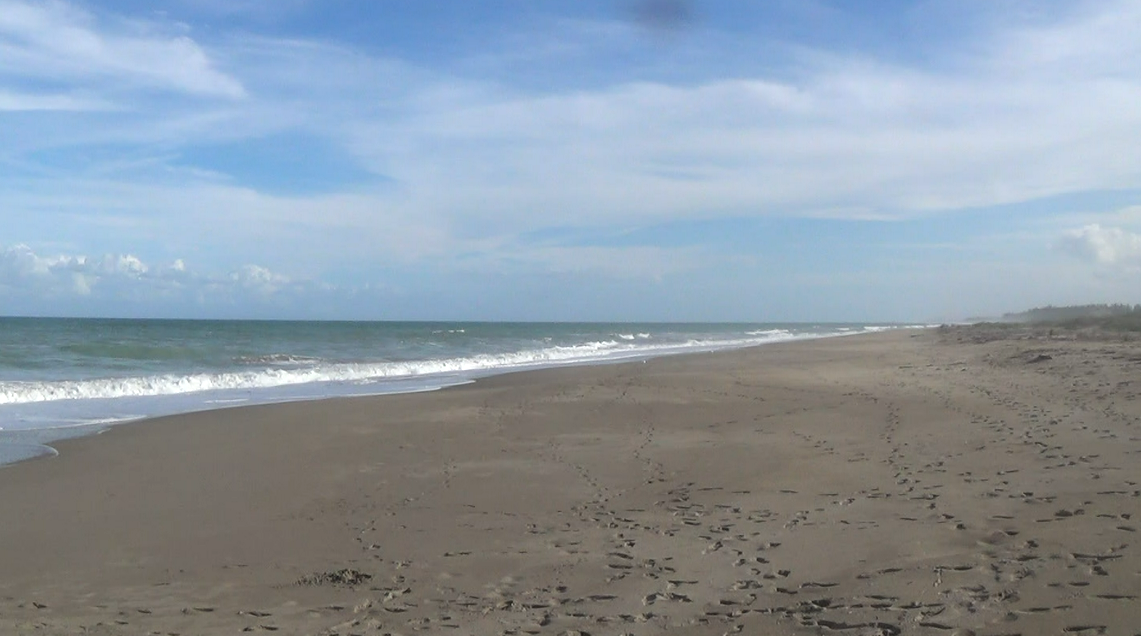
After looking at John Brooks and Frederick Douglass I looked for a beach where I could get a little productive practice with the Equinox.  The first one I looked was no better than the wreck beaches, but then the next one after that looked more promising.  It had a low scooped out front, so I looked like a good place to get in some practice.

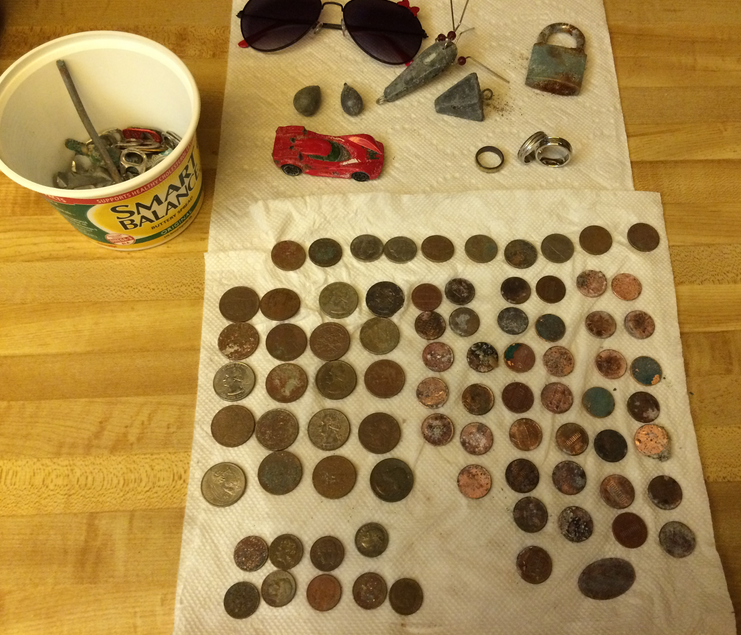
Here is the result of about an hour of hunting in the wet salt sand.

Coins and Small Gold Band Found Yesterday.

I found the coins and ring shown above while only digging three junk targets - a sinker, piece of copper, and a lapel pin back.  As I've always said, targets are not distributed randomly, and if you pick the right areas to search, you won't be bothered by a lot of junk.

The targets were arranged in a fairly narrow line, with one exception.  One of two nickels was found closer to the water than the other items.

Even though I would call it a coin line, the targets were pretty far apart - maybe five to ten yards on average.  Still, by focusing on the coin line I was able to find targets quickly enough to get in some good practice with the detector.

One thing I observed was that the nickels and ring both showed a 13 on the target ID meter.  That is the same number that I've also seen for some pull tabs.  Once again, that points out the danger of using target ID numbers as the sole criterion for deciding whether to dig or not.

In my 9/11 post, I questioned the reliability and accuracy of the target ID numbers.  In the near future I'll have a lot more to say about target ID numbers and making dig/no-dig decisions.

Joe D. offered the following observations.

   I agree with you on the conductivity numbers on the Equinox! I have the 800 that i got in January! I don't pay a whole lot of attention to them! I use the 5 tone setting, and rely more on the sound to locate and identify targets! I'm far from being proficient with it yet, but i like the small targets i can now find, over the Garrett AT Pro! It seems to also do much better in the wet beach sand; less falsing! I also like the Equinoxes DD coil , over the Garett version! Its more responsive! Or maybe the Equinoxes software and hardware make better use of the configuration! I have bought a few accessories for the Equinox; most recently a new telescoping shaft from Detecting Innovations! Now my Equinox will fit into a backpack! I also got a silicone cover and ties that also came with a silicone handle gasket that keeps water from entering the battery compartment! I haven't had it under water yet, but i can probably double my depth safely with these installed!
Thanks Joe.

Joe also sent me a link to a video on target ID numbers.  I'll present when I get into the subject of target ID numbers again.

---

The Atlantic is active now, so keep watching.  I'd like to get some beach reports from the Vero/Sebastian areas.

Happy hunting,
TreasureGuide@comcast.net

Wednesday, June 6, 2018

6/6/18 Report - Underwater Statue Stolen. Harrington Farthing. Canadian Silver. Junk Lines.


Written by the TreasureGuide for the exclusive use of treasurebeachesreport.blogspot.com.

Source: Telegraph.co.uk link below

Thieves in Italy have stolen an underwater statue of Christ which was an attraction for divers and a location for scuba-diving couples to tie the knot.


The bronze statue, “Christ of the Deep”, has stood on the seabed off the Adriatic coast since it was installed in 1994...

One of the most famous is an 8ft-tall bronze statue of Christ that sits on the seabed in the bay of San Fruttuoso, in the northwestern region of Liguria. It was placed there in 1954, submerged at a depth of 56ft.

An exact replica stands on the seabed off the coast of Key Largo in Florida..

Here is the link for the rest of the article.

---

Yesterday I posted a picture of a Harrington farthing that was found at Jamestown.  The Harrington farthing has an interesting history.  Here is a bit of it from the OldCurrencyExhange web site (link below).

From his previous experience as King of Scotland, James realised that small denomination copper coins would be acceptable, as they had been in use in Scotland and on the European mainland for some time. However the English seemed to have an obsession with gold and silver, requiring that coins had their proper values’ worth of metal.
  • James decided not to have the copper coinage produced by the Royal Mint
On May 19, 1613 James issued a proclamation prohibiting private token coinage and granting John Harrington, 1st Baron Harington of Exton, a royal patent (after a number of other proposals had been considered) to produce tin coated bronze farthing tokens which were to be used throughout the realm.
  • Harington was heavily charged for the privilege of minting the farthings, but also made a healthy profit from this enterprise
  • The coins were authorized to be just six grains but the first products actually weighed only five grains
  • They were 12.25 mm in diameter, showing two sceptres through a crown on the obverse and a crowned harp on the reverse, so they are often called Irish coins but in fact they were the only English coins which were notauthorised for circulation in Ireland
The Harington issues originally had a surface of tin which served to make counterfeiting more difficult and to make the coins look more like silver and therefore more acceptable.
  • The obverse shows two sceptres through a crown, and the legend IACO DG MAG BRIT — James, by the grace of God, of Great Britain
  • The reverse shows a crowned harp and the continuing inscription FRA ET HIB REX — France and Ireland, King.
Despite Harington’s best intentions, these copper coins were extremely small and easily counterfeited. Due to protests by traders and the public over the minute size of these tokens, the weight was increased to nine grains and made slightly larger – 15mm diameter – and without the tin wash.
You often find Canadian coins on Florida beaches.  I was surprised to learn that this one is either 80% or 50% silver.  They changed the composition at some point without changing the die.  Not worth much, but I was surprised to learn of the silver content.


I enjoy having my close-up photo system working again.

---

Because I've mentioned it a couple of times recently, I was watching a couple guys using a Minelab Equinox.  I was interested in how they were doing with it.

One fellow was following a slight dip that I wouldn't have spent much time on and kept digging bottle caps and pull tabs and small pieces of wire.  

Quite a few years ago I described what I referred to as coin lines and coin holes.  I think most people now know what coin lines are.  Well there are other kinds of lines too.  The surf does not just sift and sort coins.  There are shell lines and junk lines too.  The surf sorts everything according to its characteristics, most notably the density but also including other things such as the shape of the object.

I always used junk targets as one indicator that I might not be in a good area for better targets.  I've said before that is one reason I seldom use discrimination.  Junk targets provide good information.  

If I want to find something like a gold ring, I'm not going to spend a lot of time where pull tabs and other aluminum or light materials are accumulating.  You might occasionally find something good in an area like that, but not real often.  I'll go with the probabilities, and the probability of finding dense targets in with concentrations of recently accumulated aluminum and other less dense targets is not so good.  Junk targets will direct me elsewhere as much as dense targets might attract me.

---

Happy hunting,
TreasureGuide@comcast.net

Saturday, January 6, 2018

1/6/18 Report - Metal Detecting A Nicely Shaped Cut: A Case Study. Identifying Patterns and Choosing A Strategy.


Written by the TreasureGuide for the exclusive use of treasurebeachesreport.blogspot.com.

Cut I Was Talking About Yesterday.

I wanted to talk more about the cut I hunted the other day because even though it didn't produce anything really remarkable, it is a good illustration.  You will never see a  back-beach cut that is more perfectly formed for producing a high concentration of coins.  I won't say it has it all because there is one thing that is missing.

The best back-beach cuts, like this one, have a sizable steep cliff, then below that, a hard packed slant, very often with some black sand, and below that there will be a softer surface that slopes at a less steep angle. You see the first two in the above photo.  I didn't get back far enough to show the third in the photo.  You can expect coins and similar objects to be found very shallow on the hard-packed slope.  You will often see some coins there without detecting or digging.

This particular cut ran maybe fifty yards or a little more.  I thought I took a photo that showed more of it, but can't find it now.

Coins and other things will typically be found running the length of a cut like this.

When I arrived at this beach yesterday, I first looked north, but it didn't look very good.  But then I looked south and saw a more concave beach that had been cut back.  I walked in that direction a short way down and saw the cut at the back of the beach, so I immediately went up to detect in front of the cut.

I was surprised at first.   I didn't find the good concentration of coins that I expected.  In fact there were no coins for maybe the first five or ten yards.  Knowing that there should be a heavy concentration of coins there, I figured that somebody had already detected the cut, which was created probably two or three days before I got there.  There were no foot prints or holes though, so I figured that whoever detected that cut was there before the most recent high tide, which removed their tracks.

One good thing about cuts at the back of the beach is that they will occur when the water is highest and then not fill again right away if the high water slacks off.  They can remain in place for days or more.

After going the first five or ten yards I finally found a nickel, and then another nickel right away, and then shortly after that another nickel.  So now I am sure it had been detected and that the previous person was using discrimination.  When you know what the target distribution should be like, and I did in this case, you can tell if another detectorist had been there and also something about what they did or did not do.

I already made some choices that day.  I passed up one good wreck beach because it didn't look good because I would have had to detect a large area with a small chance of finding anything old.  Conditions there were not great, and I wanted to spend no more than an hour for various reasons that I won't explain now.  I chose the beach where I could dig a number of targets quickly even though they were' probably not going to be real old. 

I said this cut was ideally formed for a high concentration of targets.  I also said that there was something about it that was less than ideal.  The thing that was wrong with it, is that the cut was into recent sand instead of into older layers.  That means that the targets would not be very old, though perhaps with few exceptions.  And that is what I got - modern coins ( and a few other things).

Some of the Coins Dug In Front of The Cut
Notice the nickels.  Those are some of the first targets recovered from this coin line ( Coin line is a term that I "coined" to describe a long narrow distribution of coins as opposed to a coin hole,which refers to a high concentration of coins in more of an oval pattern.)

You can see that after the first three nickels, I started digging other coins.  The area near the beach access was more cleaned out than farther on.  The other detectorist evidently lost interest or got sloppy after a while.

I knew that there should be a high concentration of coin targets as soon as I saw the cut.  I also knew that they would mostly be modern.  I didn't know that someone had detected the area before me but was able to determine that quickly.  I didn't stop when I found that out because when you have so many targets of this kind, people will usually leave some good hunting.  They will usually either cover a small area very carefully or a larger area less carefully.  In one case you can find the areas they missed, and in the other case, you can cover the same area they did but look for the small and deep or otherwise missed targets.

Since I had a very limited amount of time, I decided to go for quantity rather than quality and take a chance on something more interesting being found in with all of the clad coins. If you pick up enough modern targets, you have a good chance of picking up something better.  I found more coins than shown above and a few other things.  Below is one of the targets that was found between the coins.

Thin Gold Chain.
I was lucky to have found such a thin chain because I was skimming pretty fast.

To summarize, this particular cut looked nearly perfect, so I decided to use it as an illustration.  You can often visually identify the best spots on a beach to find concentrations of certain types of targets.  Knowing the likely distribution of targets and comparing that with the actual distribution, you can also often tell if someone has been there before you and make strategy decisions accordingly.  

---

I've received so much good input from readers and had so much to talk about lately that I've been having a hard time deciding what to post and have had to put some things off for days.  That is a good problem.  Thanks to all who have contributed.

We are still having good high and low tides.  That should keep it interesting.  Also expect another increase in the surf next week.

Happy hunting,
TreasureGuide@comcast.net


Friday, January 5, 2018

1/5/18 Report - Another Kind Of Treasure. Brief Comments On Looking For Concentrations of Coins and Detecting After Other Detectorists.


Written by the TreasureGuide for the exclusive use of treasurebeachesreport.blogspot.com.

Detectorist Inspecting a New Hole Near the Fort Pierce Jetty Thursday.
I went out and did a  little detecting yesterday.  I stopped and looked at a couple of places but didn't stay to detect.  I did pick up some fossils at the first spot, but the third place I visited had a cut that looked ideal for producing targets, so I took my detector out.  I found a concentration of coins right where I thought they should be, so I spent about an hour and picked up a number of clad coins and a few other things - nothing old though.  I was only skimming the quick and easy targets anyhow.  The cut just wasn't into the older stuff.

Here are a few points I want to quickly make today.  I won't discuss them in a lot of detail today because I have other things I want to post.

1.  By simply looking at a beach, you can usually tell where there will be a highly concentrated number of coins, when there is such a spot on the beach.  Many times there are no such concentrations, and in that case you might have to detect large areas to find a few scattered targets.

2. You can tell when someone else has detected such a concentration of targets even if the tide has removed any visible tracks.  You can tell by the distribution and type of remaining targets.

3. Detectorists will seldom clean out a good concentration of targets, so if you are not the first one there, don't worry too much about it.  You can probably tell what the previous detectorist did or did not do, and that can actually help you.

Today I visited two beaches and looked at them and decided not to detect them, before visiting a third beach where I could quickly see an area where there should be a high concentration of coins (what I would call a coin line), and there was.  I also knew the targets were not going to be hundreds of years old, but decided to take the quick and easy targets.

Don't think that such an area is cleaned out just because it has been detected.  The place I detected had been detected for sure, but there was a good bit left.  Whoever detected the area was using discrimination ( I did too since I was just skimming).  I could tell that because the first three coins I dug were nickles, and some parts of the hot spot had been cleaned out fairly well.  I also found spots that were missed.  It had been detected before the most recent high tide, because there were no foot marks or hints of holes remaining.

 I'll talk more about that some other time.  I have a lot I could talk about today, so I'll have to keep some of it for some other time.

Below is a picture of John Brooks near low tide.  Notice the features at the water's edge and the sand bar.  There was a fellow detecting there.

Detetorist In The Distance At John Brooks Thursday.

Maybe you fought the cold the past couple of days and feel like it wasn't worth the effort.  Maybe you didn't find find what you wanted to find.  If that is the case, I'm sure you are not alone, but that doesn't mean it is all over or it has all been found.  A lot of people have been congregating at the same spots.  They might have reason to do that, but there is always something to be found some place else if you don't just follow the crowd. They might not be the kind of spots you are looking for, but you never know what might show up if you are in a decent spot.

I'll get into that more some other time.

I received an excellent email from Steve in Sebastian who wrote about his January 3rd hunt, and I want to get that posted today, so here it is.

Wednesday Jan. 3rd.

Happy New Year "Boss!" I decided I would take in a little beach time with the CTX 3030 on Wednesday afternoon. Headed to the "San Roman" site off Kip's Cabin just south of the McLarty Treasure Museum.

It's a long walk for this old boy, but I have lots of good memories from this particular wreck. I recovered several 4 and 8 Reales from in the water years back, and then a small gold cross at the dune cut line. It was down about 3", you could have found it with my first $20 Relco!

I knew the temps were falling fast and the wind getting pretty brisk from the north, but the end of the rain coincided with the low tide at about 2:30. Besides... I'm an old Wisconsin boy. As always said... layers is the trick... first a thin T-shirt, then a thicker, larger T-shirt, then a zip up cotton "hoodie" jacket, and finally a -breathable- rain jacket. I like loose cotton pants for bending down and digging.

So I get to Ambersand Beach Public Access... and the weather is pretty sporty! I have to dress alongside the SUV, to stay out of the wind. I walk over the dune crossover and into open, empty air space! The biggest drop-off I have ever seen at a public beach site. I had to slide down, had to be a drop-off of 8'! I pity anyone just looking down at their equipment, or chatting with a friend, and not looking ahead and down.

I noted the beach was very, very wide. Wider than I have ever seen it in over 30 years. Looked like a totally different beach. Odd... But yet the dune line looked built up a couple feet already, as yes you do need to be there almost on the rear end of the storm. A couple tides between a storm and your visit, and most likely you will already be late to the game.

I got about halfway to Kip's Cabin, and here comes the driving wind and rain. But luckily more of a light fast drizzle. Because I was so far along, I stuck with it. I noticed the walking was definitely firmer than normal, and very nice walking. Not so tiring as in looser sand.

The water visibility was actually fairly good. I could see the first reef line off Kip's. I had the feeling I was getting much further out into the water than normal. No exciting stories of treasure finds today, just a penny.

But a strange and wonderful moment descended down upon me... __MY REAL TREASURE THAT DAY...THAT I WILL ALWAYS REMEMBER__???

The weather cleared and the sun came out. The wind backed down and it felt warmer. And I looked up and down the beach, north and south, as far as the eye could see the beaches. And the beaches looked so very wide, they looked so expansive, wider than ever before, and to my amazement... never before seen by me, not even 30 years ago when I first moved down here. There I stood... and I marveled as I realized that there was -NOT A SINGLE SOUL TO BE SEEN-...on the beach as far as the eye could see, even in both directions-. And I marveled how treasure comes to those who search it, sometimes in totally unexpected ways!

I knew I was standing pretty close to the exact site of the salvage and survivor's camp, (known as a "Real)." How did I know? I do my homework. I was standing approximately 800 meters to the south of the McLarty Treasure Museum, and on the north side of Kip Wagner's old cabin. Charles Higgs discovered the area and this "Real," in 1941. And for a second... surveying the long empty stretches of beach, took me back to 1715, and thoughts of shared feelings with Admiral Don Francisco Salmon'. The man in direct charge of all the salvage. Answering only to the King. Surveying the many broken hulls from up on his perch, Many beyond his line of sight down into Vero and Ft. Pierce. And all he could think of was... one day at a time..

Regards,

Steve in Sebastian

Thanks much Steve for sharing your thoughts and feelings on your recent hunt.

---

Beach conditions won't be changing for a couple of days, but we are still having some good high and low tides. You'll be able to get to some areas that are not normally accessible without getting into the water.

Another increase in the surf is predicted for next week.

I'm still waiting for the first report of a treasure coin find in 2018.

Happy hunting,
TreasureGuide@comcast.net

Saturday, October 15, 2016

10/15/16 Report - After Hurricane Matthew Emails and Comments.


Written by the TreasureGuide for the exclusive use of treasurebeachesreport.blogspot.com

Erosion Tuesday by Sea Oats Condos
Submitted by Darrell S.
Hurricane Matthew brought high water that hit and eroded the dunes.  Notice when roots are newly exposed.  If the roots are large then you know that they had a while t grow.  Also notice any distinct layers in the sand and what is in that sand.  This looks like it might be some of that fine white renourishment sand.  If you can find places where the erosion was into old sand in some out of the way location, you might still have a chance of finding something old.

Matthew eroded some dunes when it passed by.  Since then the water has been high, but not that high.  As a result, if there was anything that fell out of the cliff face, it could still be laying there (if nobody else has picked it up yet).  On the other hand, sand has built up in the beach fronts.  As a result old items in those areas could have been covered again.

---

Despite the fact that much of the erosion that occurred on the Treasure Coast was in renourishment sand, there were still coin lines that were produced at some of the busier beaches.  If you don't know what a coin line is you can search this blog for my discussions.

I received the following email from Sherman W, about a coin line that he found.

Well, my cob found before the storm is a $3 fake. Probably bought at Mel Fishers. If you want pix let me know.

I did a clean up on my coin line today. Another 6 quarters, 14 dimes, 6 nickels and 12 pennies. Funny, at the south end of the line I ran into two other detectors, one had found nothing the other a single penny. All the coins on the whole beach collected in my line? Where did the rings go? I wont go there again for a while, it will be out of my way. One other comment; I think a lot of people do not know how to use their machines properly. I have been detecting for 40 years and have had 8 machines some were not easy to master. I had one that probably did not even pay for it self. I have a couple of inland sites set up for over the winter, not great sites, we shall see. It is not always the treasure, it is the journey. Sometimes the knowledge learned is the most valued. Take care, and good hunting. Sherman


Thanks for sharing Sherman.

---

KT sent me an email and concerning the fossil I showed a few days ago, said, ... almost certainly is a horse tooth. if you could show an end on view, it would clinch it. a fossil horse's tooth will show a crenulation pattern similar to a mammoth tooth. i have pulled a bunch of both types from the central Fla phosphate pits in the 1970s.

Thanks KT,

Keep an eye out for fossils on the beach.

---

I got an email from Gold Nugget, our friend from North Carolina.  They got hit hard by Matthew.  Hope everyone up there is well.

Here is what Gold Nugget said.

From your 10-13-2016 Post - I liked the Photo on Jupiter Beach To me it look like the Ancient Fluff mud [sometimes pluff mud, TG] from a marsh. To either side where it ends might be a Good spot to detect, The sand should be lower.

Still stuck and can't get to my 1700-1800 site ,Waves are looking good from Nicole.

Thanks GoldNugget,

The beach was at one time far from where it is now.  There were once rivers and marshes and other types of land where the beach is now.  Some of the fossils come from areas like that.

---

Hurricane Matthew brought a lot of attention to the Treasure Coast and then passed us by.  I received the following email from Peter H., a detectorist from the UK.  He makes some good points.


I just had a few thoughts. I think the excitement of a storm hitting the treasure coast has got me excited across the pond here in the UK .Its a sort of mini blog about strategy in general...

What do you do after the biggest storm to hit the treasure coast in many years ? Where do you go first? what are the best sites ?what do you go searching for?

If you don't have a strategy and put some thought into it then you could be too late, either the finds will become covered again or someone could beat you to the find of a lifetime.

For a beach detectorist a storm that's about to hit a beach is like Christmas to a young child .Its a time full of dreams ,anticipation,wonderment and excitement but its also a time to get ready, to be prepared and to follow the best strategy to maximize the potential for the best finds.

You can't be everywhere at once so where do you go ?

As an experienced detectorist yourself, you know the hotspots and you know where finds have been found before and that's the key to the strategy.

In the vast majority of cases you will find what you are looking for where finds have been made before .

I guarantee that you have already identified the spots and you have been waiting patiently for the storm to do its work.

I once waited 9 years for one patch to erode and I wasn't disappointed when the storms came but I almost missed out because I got too excited and didn't think straight when I hit the beach.

In this period before the storm I would work out where I really thought there would be the best chance of finds then I would plot them and work out the best course of action to get to them all taking into account distances ,ease of access and the likelihood of competition from others. Of course there are many other factors .Do you go for areas where there are larger 4 reale cobs or areas where there are harder to find smaller cobs?.Do you prefer the chance to find gold instead ? Will the back shore erode out spilling coins or will coins be thrown up from the near shore. Your plan will be down to your personal choice and experience.

Having a strategy means you've got it all worked out before you hit the beach. It means you approach all your chosen spots with a clear idea of what you want and with a clear back up plan to follow .All this planning means you move from one potential hot spot to the other maximizing your time, effort and experience.

Follow your instincts, follow your experience but above all follow a plan and remember to religiously check all your equipment and batteries.!!! - I've made so many mistakes by not checking the gear !!

I enjoy all your posts immensely and I wish you all the best in luck and judgment for the exciting finds that I'm sure you'll make in the coming days and weeks .A storm changes beach patterns around the shores for many weeks so never give up !! I know you've been waiting for this storm for a long time and I know you'll have the best of times.I can't wait to read your posts !!

Best wishes and kind regards,
Peter H


Thanks for writing Peter.  Best wishes to you all on the other side of the pond.

---

I'm still waiting for some low tides.  I want to get to some areas where the water has to go down before I can see what is there.

That's all for today,
Happy hunting.
TreasureGuide@comcast.net

Wednesday, January 27, 2016

1/27/16 Report - Most Recent Observations On How Water Moves Objects On A Beach.

Written by the TreasureGuide for the exclusive use of treasurebeachesreport.blogspot.com.


Yesterday was an excellent day for observing how objects move on a beach.  The surf was about three to five feet.  That was rough enough that there were significant waves and enough force, while not too rough to be able to get close to the crashing waves.  There were also lots of shells and small rocks.  That made it possible to observe how things move.

At low tide I stood near the low point of the beach where the waves were crashing at the time.  There were a lot of shells and things periodically exposed as the waves crashed and the water and sand came and went.  Shells and things would be exposed, moved up and back down the beach, and then sometimes covered by sand again, and then exposed and moved again and again.  Occasionally some were moved higher on the slope where they remained for a while.

I focused on one small roughly coin-shaped shell and watched the water rush back down the slope over that shell.  At first it didn't move as the water rushed over it.  No movement.  No movement.  Then all of a sudden it popped up off the sand, into the current and quickly retreated down the slope and disappeared into the swash.

The thing that struck me most about that observation is how quickly it popped up off of the sand and how quickly it moved after a period of hugging the sand and not moving as the water rushed over it.

Here is a quiz to see if you read my blog in the past.  What have I called the point when the water force becomes sufficient to move a specific object?

It is the trigger point.  And what I have just described is an excellent illustration.  Again, what struck me was how sudden it was.

I think it is tempting to think that it is a more gradual process and that if the water is moving, objects are being moved in a similar way at and at similar rate.  But water moves more gradually while objects being moved by the water can be moved not at all and then very suddenly. The trigger point is all or nothing.  Eight it has been reached or it has not.  Once the trigger point is reached and the object becomes suspended it moves very quickly until the what I have called the "settle point" is reached, and the object settles down on the bottom again.

Objects such as coins, which are relatively flat and settle against flat the surface, sometimes even settling slightly into the surface, move differently from round objects, which roll around - first up the beach and then back down.  Rounder objects do not hug the surface and provide more surface area for the water to push against.

Flat coin-shaped objects quickly settle into the surface and do not provide much surface area for the water to push against, until they are lifted off the surface, and then they are moved quickly, sometimes flipping.

You can not observe how this works when the water is very rough.  You can't stand in the crash zone when the surf is strong, and if you could you would still not be able to see small objects because the water is so rough and turbulent.

If you look at the illustration  at the top of the post, the red area is where the waves were hitting with force and masses of shells were exposed.  Occasionally they would get covered with sand and disappear, but often the sand was removed to expose the shells and rocks.

When a wave crashed, the water would dislodge settled objects and some of them would get washed up the slope.  Many would get washed back down the slope with the returning water, but those that settled near the top (blue area on the illustration) formed a shell pile.  Occasionally the water would hit the shell pile and wash some objects back down the slope.

This was all happening at low tide.  As the tide gets higher, the crash zone moves up, as would other the surge and objects. At other times the shell pile might be pulled down into the water and disappear again.

All of this is very well explained by trigger points, and the increasing and decreasing water flow interacting with various characteristics of the objects, including density, size, shape and surface characteristics.

I was observing shells and rocks today, but coins are moved in a very similar way.  Coin lines are formed in the same way as shell piles.  You can't often observe the same process with coins though. There are much fewer coins, and they are more difficult to see.  Shells will be moved slightly differently than coins, because of differences in density, size and shape, but the same basic principles apply.

I had plenty of other things to post today but thought I should post this while I was thinking about it.

Even when you are not finding what you want, take advantage of your time on the beach to observe how it all works.  You might find something else in the process.

Remains of An Old Cut As Seen Yesterday Afternoon.

One Formless Beach As Seen Yesterday Afternoon Near Low Tide.
I'll try to get some good close video of the things I described above.  I guess I was so intent on watching that I forgot to take a video.

Every time I do try to catch a video of something in the crash zone, it seems things don't happen when I want.

It rained last night and much of today.  The surf is down today and will be nearly flat for a few days.

I'll get back to recent finds in my future posts.

Happy hunting,
TreasureGuide@comcast.net

Friday, November 27, 2015

11/27/15 Report - Beach Detecting Conditions Rating Increased To Level 2. Coin Clusters Being Found On T. C. Beaches.


Written by the TreasureGuide for the exclusive use of treasurebeachesreport.blogspot.com.

Full Moon Last Night.
A couple days ago someone said they found clusters of clad coins, a good number of which were on the surface.  They wondered if anyone else was seeing the same thing.

In answer to the reader's question, I saw the same thing Wednesday and Thursday on two different beaches.  One was what I would call a coin line and the other was a coin hole.  It is evidently not uncommon to find shallow coin clusters on the Treasure Coast right now.  If you've been reading this blog very long, you know what I mean by the terms "coin line" and "coin hole."

---

There was a nice full moon last night and a good bit of wind.  I went out this morning just after high tide and found that some beaches were slightly better while others looked worse.

The water was high.  At one beach the water was a good ten yards or more behind the berm.

I didn't find the clad coins at the beach where I found them on the slope yesterday.  Conditions at that beach were a little worse.

Six Foot Cliff At One Treasure Coast Beach Today.
As you might expect, there were a lot of detectorists out today.  Some were locals and some were from up north.

I am upgrading my beach detecting conditions rating to a 2.  That is a borderline rating.  It indicates that the beach has improved but is not consistently productive.  I know some shipwreck cobs were found today.  I only know of one beach that is producing cobs for sure.  Although conditions are way better than they were this summer, you will still have to hit the right beaches and even then the cobs will be few and far between.

In the recent past I have been pretty conservative with my ratings, especially the level two rating.  I decided that I should probably be a little more liberal with that rating in the future.  It is a borderline or transition rating.

According to the surfing web sites, the surf is supposed to peak at around 10 feet on the Treasure Coast this evening.

Even though the surf will be decreasing Saturday and Sunday, it looks to me like the wind will be more favorable later Saturday and into Sunday.

The beaches are wobbling.  By that I mean one day they will be a little better and the next a little worse.  We're not getting the consistent improvement that I'd like to see.

Hope you had a happy Thanksgiving.

I enjoyed a couple of the shows about the Pilgrims at Plymouth.  One movie had an excellent replica of the Mayflower in it.  I saw some artifacts on it that I couldn't identify.

It looks like there should be a couple more days of at least level two conditions.

Happy hunting,
TreasureGuide@comcast.net


Tuesday, September 29, 2015

9/29/15 Report - How The TBR Beach Studies Paid Off. Tropical Storm Joaquin. Ten Top Treasures. Great Research Tip.


Written by the TreasureGuide for the exclusive use of treasurebeachesreport.blogspot.com.

Three Rings Found In Coin Line
Finds and Photo by Doug E.
I am glad to know that people are not only reading and using the tips and techniques that I present, but they are being successful with them.

Here is what Doug E. said.

Thanks to your research on coin line formation I was able to determine from the wave direction, tides, and beach cams that a line was likely forming near Cocoa.

On Sunday I quickly found and  followed the line for almost 2 miles. From the condition of the coins and rings one could tell it was all older material. 


Most of the targets were at the same depth. More research is less less hard work digging. 

Please keep on with the study, it really helps in the field.


Doug E,

Thanks for sharing Doug, And congratulations!  

Doug's Finds.
Notice the predominance of discolored coins along with the other varied items, including sinkers and rings.  

You can indeed save time by learning to locate coin lines or coin holes.  Once you locate one, it can be worth working it completely.  

When targets are densely distributed, I'll pick it clean and then go back over it.  It seems that removing the obvious signals, you can then tighten up and focus on the less obvious signals.  That can produce gold that otherwise would be missed if you didn't go back over the area.  

As I've said before the idea of cleaning out a coin line or hole is not to find clad coins, it is to get the better items that might be associated with the line or hole.

Yesterday, I first went north to see what the beach around the bend looked like.  It wasn't any good.  I then turned around and went back south.  After walking a good distance I found a cut that I could not see from where I walked onto the beach.  

Binoculars are a good idea when you want to be able to see a little farther down the beach.

---

Top ten lost treasures of the world.


---

Dan B. gave this great tip.  When searching for quality reports and studies include the term pdf with your search terms.  It does help weed out the useless stuff and provides better search results.

Thanks Dan.

---

We have a new tropical storm, Joaquin.  We also have two disturbances.  

On the Treasure Coast we've had a south wind for what seems like years.  This morning the wind was blowing off-shore.

Despite Joaquin sitting east of the Bahamas, we're still not getting any beneficial changes.  Jaoquin will probably move north instead of closer to us.

Expect a three to five foot surf today and a foot or so higher tomorrow.  That is getting up there.  It will do some good if we can get some decent angles.

Happy hunting,
TreasureGuide@comcast.net

Monday, September 21, 2015

9/21/15 Report - Scan Patterns and Coin Line Identification. Tropical Storm Ida.


Writtten by the TreasureGuide for the exclusive use of treasurebeachesreport.blogspot.com

One Treasure Coast Beach This Morning.
I took a look at a couple beaches this morning.  I was disappointed.  Yesterday it looked like we might get a little improvement, but not much happened.

The beach shown above is very mushy.  You can see the waves breaking right at the base of the beach.  The slope is fairly steep, ever so slightly scalloped and mushy.  Not good detecting conditions.


Another Beach At Low Tide Yesterday.
Notice the twenty or thirty yards of flat beach out front.  Water from the breaking waves is surging in over that flat part of the beach.

I saw another beach this morning that was very much like this one.

There were few targets where I did a little detecting this morning.  There were some though, although it took me a while to find them.

I started off by checking the two hot spots that usually produce good targets on that beach.  There was nothing at those two spots.  My guess is that the regulars hit those spots this weekend.

I quickly shifted to a very loose scan pattern to see if I could find some better spots to hunt.  I would often use a zig-zag pattern in a situation like that.  Today I checked down by the waterline first.  Nothing good there.  Then I checked higher on the beach.  Nothing there either.

It didn't look like it was worth spending much time either high or low, so then I checked the middle of the slope.  Bingo.  First a dime.  Then a quarter, etc.

There was a coin line.  It was a very narrow straight coin line.  If you looked back and connected the holes with a line, it would have been surprisingly straight.  By the way, this line was not by the most busy parts of the beach.  It was well north of that.  Again, I suspect that the weekenders cleaned the more busy areas.

It took me a while to find the first good target, but after that they came fairly quickly.  I used the first coin as a sign of a possible distribution pattern.  In this case it turned out to be a coin line.

I used the first find as a possible indicator of the most productive zone - in this case not high, or low.

The second find supported the idea that there could be a coin line and that the most productive area would be just a little below, mid way between the water and the high tide mark.

The third find and additional finds were all in that narrow coin line.

I've often talked about using finds as indicators.  Some will not be a part of a distribution pattern, but after finding one, the next thing I do is check to see if it might be a part of a pattern.

All the coins found in that line were discolored.  That is important.  A coin that was just dropped would not be a sign of a distribution pattern.  Discolored coins that have been out there for a while are more likely to be relevant signs.  That is especially true in areas where most coins are removed before long.  A discolored coin that pops up in a heavily detected area probably came from somewhere - either washed up or washed out.

I'm always looking for something to tell me where to spend my time.  First by looking at the beach and any features, considering hot spots that have been found in the past, and then by sampling.

At this point I could get into the details of how coin lines form, but that would take me a lot more time.  I think I'll wind this topic up for now.  Maybe I'll get into how such lines form some other time.
---

Here is the auction catalog for Sothebys Oct. 1 Rarities Auction.  There are over 200 lots of very fine coins to browse.

http://www.sothebys.com/pdf/2015/N09385/index.html

---

Here is a very good paper on bioturbation and artifact movement.  It shows how significant bioturbation can be.

http://alliance.la.asu.edu/rockart/scans/Balek.pdf

---

There wasn't much wind this morning.  I was disappointed that we didn't get more sand moved last night.

Wednesday and Thursday the surf will be up to around four feet if the predictions are correct.

Ida is supposed to become a hurricane in a few days.  It looks like she'll stay out in the Atlantic though.  It doesn't look like she'll affect us.

Happy hunting,
TreasureGuide@comcast.net

Monday, May 11, 2015

5/11/15 Report - Treasure Coast and Other Florida Beach Conditions. Good Ships and Travel Web Site.


Written by the TreasureGuide for the exclusive use of treasurebeachesreport.blogspot.com.

Jensen Beach This Morning Near Low Tide
This photo shows a beach where some sand has moved.  At the bottom of the picture note the dip in the shallow water.  At the top left, note the sand bar.

The light sand between the two people (one is just a white dot) at the top left is where the sand was scooped out to form a shallow cut.  You would expect to find coins there.

That sand got washed into the water to add to the sand bar.

These days I'm happy to see features like those.  It means that things at least got shifted around a little.

You can easily read a beach like that and know where to spend your time.

Jensen Beach Looking South
The second photo was taken from near the same spot only looking the other direction.  There are not as many interesting features in that direction.

Another Beach On South Hutchinson Island
Here is another beach.  It was featureless.  I much prefer to hunt a beach that has distinct features.

That photo also shows where someone got married this weekend.  May and June is a time for a lot of beach weddings.

While our beaches are only producing modern items, I keep hearing about the St. Augustine beaches and the beaches up a little farther north where Ana caused some erosion.

Here is a good article on St. Augustine's disappearing beaches.

http://www.gulflive.com/news/index.ssf/2015/05/florida_coast_sea_rise_threate.html

Ana was the earliest tropical storm since 2003.

http://hosted.ap.org/dynamic/stories/T/TROPICAL_WEATHER_ANA?SITE=AP&SECTION=HOME&TEMPLATE=DEFAULT&CTIME=2015-05-09-06-21-18

It looks like there were good crowds on the Treasure Coast beaches for Mother's Day.  I hope you and your family had a good one.

Mother's Day has a surprisingly complex history.

http://news.nationalgeographic.com/2015/05/150507-mothers-day-history-holidays-anna-jarvis/

Here is an interesting web site that you might want to take a look at - Ships and Travel in the 18th Century

http://www.iro.umontreal.ca/~vaucher/History/Ships_19thC/


I ran into a good coin hole this morning.  Lots of coins.  Only one piece of gold though.

I define a coin hole as being roughly oval shaped, while a coin line I would say would be at least five times longer than wide.

The coin hole that I found this morning was on a convex beach front near the water.  It wasn't the most obvious spot.  Shells were just under the sand.

I'm not expecting anything for the Treasure Coast other than a one or two foot surf for a couple of days.

Sea Weed On Bahia Honda
Photo submitted by Dan B.
Thanks for this photo from the Keys Dan.  Seaweed like that can be a pain if it is where you want to detect, but you can sometimes find things tangled in seaweed such as dollar bills or chains.  It is worth looking.

The good thing about reading about the erosion up north is that it reminds me that it is only a matter of time until we finally get ours.

----

I heard from some people interested in the opportunity I announced yesterday concerning diving on the 1715 wrecks with Captain Jonah.   If you didn't see that, you might want to go back and take a look, but the captain will be doing the selection and you need to contact him at the phone number provided.  Read it carefully before calling.  This is for one full time position.

---

Happy hunting,
TreasureGuide@comcast.net

Sunday, December 7, 2014

12/7/14 Report - Comparing and Contrasting Beach Object Distributions On Two Different Metal Detecting Outings.


Written by the TreasureGuide for the exclusive use treasurebeachesreport.BlogSpot.com.

Comparison of Find Distribution Pattern On Two Different Days


Friday when I went to the beach, I got a signal in the first three swings.  I remembered the time that I walked onto the same beach and in the first three swings got a silver shipwreck cob.  Well, this one wasn't a cob.  It was a nickel.  From that first signal, three swings into the hunt, I started to evaluate the picture which would guide the rest of that hunt.  Most every target means something to me and helps determine what I do next.

The first thing I did was evaluate the find.  Where was it found?  What was it?  And what might that tell me?

As I said it was a nickel; a plain modern nickel.  It was crusted green though.  That told me it was not just dropped that day but had been on this particular heavily hunted beach for a while.  Yet it was found right very near the walkover and would very likely have been detected if anyone had detected that beach very well before me.  My conclusion, or should I say working hypothesis at that point, was that (1) modern items were washing up or out on that beach and (2) nobody had likely detected the beach since the coin was uncovered. 

I always take into account any signs of what other detectorists have done or not done as well as what nature is doing when I detect a site.  There are adjustments to be made in both cases.

I noted how far from the face of the cut the nickel was and how deep it was.  It was not far from the face of the cut and was in the top inch or two of sand.

Since this was the first target I found, the next thing to determine is if it was part of a pattern.   Searching immediately around the same area revealed no additional targets. 

Moving down the beach a ways, I got another signal.  It sounded like a shallow coin and it was.  This time it turned out to be a penny. 

I forgot to mention that I did not have my long handle scoop with me.  I forgot that I took it out of the trunk, so I was using a trowel. 

The nickel and this penny were both removed in the first scoop.  They were both shallow.  And they were both fairly close to the face of the cut.  Checking the immediate area revealed no other targets very close. 

A pattern is emerging.  Two modern but crusty coins were found close to the face of the cut, but a good distance apart.

On down the beach the next signal results in a lead sinker being dug.  Again it was shallow and retrieved with the first dirt removed with the trowel.  It was also several yards from the previous find.

Hmmmm.   The sinker is found at very nearly the same distance from the cut as the coins.  Does that suggest anything?

In my 11/25/14 post I presented an illustration (a copy of which is shown above at the top) of a coin distribution pattern, the dug items were found from the toe of the cut down to the water line.  The objects I dug today were all up near the face of the cut.   The pattern I showed on 11/25 was that of what I would call a coin hole, Friday's example would be what I would call a coin line.  I've described both coin lines and coin holes in previous posts.

In the top illustration from 11/25, the red dots represent sinkers and the yellow dot a gold find. 

In the bottom illustration above (from Friday), the red dot represents a bottle cap and the blue dot a sinker.  (Not totally consistent.)

From what I have described of Friday's hunt so far, I concluded that things were washing out of the cliff, but they weren't being moved much and the erosion had not been going on for very long.  It appeared to be a forming coin line.

Continuing along the cut, resulted in similar finds and observations.  Coins were spread along the cut, not far below the cut.  One bottle cap appeared in the coin line too.  The bottle cap and the sinker were the only non-coin finds in the coin line on Friday.

My main point is that every signal can be a source of information.  From the first signal you can begin to formulate ideas about what might be going on.  The more quickly you can accurately assess the situation, the better use you can make of your time. 

Patterns do not always emerge so quickly.  Sometimes you will find things that do not fit a pattern, and sometimes you'll have to revise your theories.

If there was enough water force acting upon the slope for a long enough period of time, the bottle cap would be moved a greater distance than the sinkers.  If the trigger point for the bottle cap was met while the trigger point for the sinker was not met, bottle caps would be washed away while the sinkers remained put.  If the force of water was great enough to move both objects, bottle caps might still be moved a greater distance than the sinkers.

As I've shown with experiments in the past, not only does density determine who far an item will be moved, but also the item's shape.  Round sinkers will often roll down a compact slope and be found down near the water line where the sand flattens out.  Rings sometimes do the same thing.

On Friday the fact that both a bottle cap and a lead sinker as well as all the coins were in a fairly narrow line made me conclude that the line was newly formed.  Objects had not been moved or classified by shape or density yet.  They were simply laying in front of the cliff were they came from.  If the same forces continued, as the face of the cliff continued to erode, the coin line could have turned into a coin hole.  I doubt that happened though, since the cliff was barely eroding and the tide was going down.

----------------

The Treasure Coast surf predictions look interesting.   The surf will increase slightly up to a peak of about seven or eight feet by Wednesday if the surf predictions are correct.  Not only that, but the wind will be pretty much out of the North during that time.  Maybe we'll actually get some significant improvement in beach detecting conditions in a few days.

Happy hunting,
TreasureGuide@comcast.net