Showing posts with label gold bars. Show all posts

Friday, October 26, 2018

10/26/18 Report - Where Is The Treasure Now? One Thing You Should Know. Red Tide in Vero.


Written by the TreasureGuide for the exclusive use of treasurebeachesreport.blogspot.com.

Fort Pierce Inlet.
Snipped from Floridadep.gov.  Full link below.

I mentioned a project to find gold bars dropped along a West Coast beach a few decades ago.   The bars were scattered to some extent.  Those hunting the bars have a general description of where the bars were dropped (scattered)  relative to the beach and a delta.

Since the bars were dropped a few decades ago, the first thing I'd want to know is where the shoreline was when the bars were dropped relative to where the shoreline is now.  Beaches change over time and it is important to know where the beach was relative to where it is now.  That is often an overlooked and very important piece of information.

Let's just say the bars were said to be dropped along the shoreline very close to the water.  Where was the water line at that time?  Was it farther out than it is now, or is it now under the beach.

If we use the Fort Pierce inlet area as an example, we know that north of the inlet the sand has been accumulating for quite some time, and the shoreline just south of the inlet continually erodes.  The shoreline to the north of the inlet has been moving one way, while the shoreline south of the inlet has been moving the other.  If the bars were dropped along the waterline, if they were dropped north of the inlet a few decades ago, they would probably be under the beach now.

Fortunately there is good detailed data on shoreline changes.  For Florida you can find very detailed data for most of the 20th and 21st century.  If you do the research you can find out where  the beach was back some years ago and compare that with where the beach is now.

If you were told that a bar was buried ten yards back from the water line fifty yards south of the Fort Pierce inlet fifty years ago, it might seem like you'd have a good idea of where that bar was.   However, the shoreline might have changed a lot in those fifty years.   In recent years the beach just south of the inlet changes a hundred yards east/west every year or two when they renourish the beach and then it erodes again.  You can't just go out to the waterline and march back fifty yards and figure that is where the bar is.

It doesn't have to be bars of gold.  Resort beaches have changed the same way.  One beach that I hunted a lot in the past is now covered by at least a hundred yards of new sand.  The beach and dips in front of that beach that I worked thirty years ago are now deeply buried, as are the items dropped there back then.  It helps a lot to know where the beach was compared to where it is now.

Below is an example of a map that shows how erosion changed a shoreline between 1954 to some time in the 2000s.  If there was a swimming beach at this location in the 1950s hundreds of yards farther out than they would be most recently.  Or if there was a shipwreck offshore, it would now be much farther out from shore.

Map Showing How a Shoreline Changed Over a Few Decades.

There will be daily, monthly, yearly changes, but there are also fluctuations that occur over decades and centuries.   A shipwreck that was in the water could now be under the beach if it is in an area where there is accretion rather than erosion.

Florida provides an immense amount of shoreline data.  The database is not easy to use unless you are familiar with it, but the information is there if you are willing to do the hard work.

Here is a link to the Florida shoreline database.

https://floridadep.gov/water/beaches/content/historic-shoreline-database

If you take the time to dig into it, you'll be amazed at the detail that is available.  There is map, survey and photographic documentation on virtually every foot of shoreline.

If you look at the photo at the top of the post, you'll see that there are six small red triangles west of the shoreline.  Those are the survey monuments.

The Florida Public Land Survey System (FLPLSS) was established by the United States Government Land Office (GLO, now re-organized under the Department of the Interior, Bureau of Land Management, BLM) beginning in 1824, with the establishment of the Initial Point in Tallahassee. This system of rectangular survey grids was gradually extended through the remainder of the 1800's eventually covering the entire state, dividing all the public lands first into six mile by six mile areas (Townships), then subdividing these Townships into one mile by one mile regions (Sections). Physical survey markers, or monuments, were placed every half mile on these section lines to delineate the surveyed lands. Monuments were also placed at points on the section lines where they intersected bodies of water or previously occupied (private) lands...

(Source: http://sfrc.ufl.edu/pdf/faculty/gibsonresearch.pdf)

I better wrap this up.  If you have a general description of the location of a beach treasure, the first thing you might want to do is check to see how the beach has changed since the time of the description.  It seems that people don't appreciate how much or how rapidly beaches change.  You will want to know where the beach is now compared to where it was in the past.

Shipwrecks that were once underwater can now be under sand.  Treasures that were once buried on the beach, can not be out in the water.  People talk a lot about how items move, but beaches move too.  The movement of the beach is just as or more important than the movement of the items.  A lot of data is available if you are willing to dig it out.

--

There is a lot more to be said on the above topic.  I might pick up on it again real soon.

One reason I chose the picture at the top of the post is that it is not a simple case.  It is more complex than an unbroken stretch of beach.  See if you can see how the sand is flowing at various spots.

---

I've noticed that more people are starting to use DuckDuckGo.
DuckDuckGo says, DuckDuckGo is an Internet privacy company that empowers you to seamlessly take control of your personal information online, without any tradeoffs. With our roots as the search engine that doesn’t track you, we’ve expanded what we do to protect you no matter where the Internet takes you.

See DuckDuckGo.com.

---

It seems that the Indian River beaches have some of the most toxic Red Tide contamination.


---

Happy hunting,
TreasureGuide@comcast.net

Monday, August 13, 2018

8/13/18 Report - Valuable Coin Collection Dug Up In Backyard. Famous Selby Gold Heist. Big Low Tide Today.


Written by the TreasureGuide for the exclusive use of treasurebeachesreport.blogspot.com.

Beautiful Encased Proof Set Among Coins Dug Up In Back Yard.
Source: CoinWorld link below.

An eight-coin 1876 Proof set containing silver and minor coinage, buried by its owner in the backyard of his Chicago home more than two decades ago, was brought for authentication and grading April 27 to the Central States Numismatic Society convention in Schaumburg, Illinois, by the late owner’s son...
The late collector, who died in 1994 at age 84, suffered with Alzheimer’s disease the last five years of his life, according to his son. The son said there’s a possibility that his father may have buried his entire extensive collection of United States coins. The coins, which have been off the market for more than 50 years, were primarily silver and gold issues.
In a May 3 interview with Coin World, the son, who requested anonymity, indicated his father collected a lot of U.S. gold coins, focusing on his birth year of 1915. Asked how many coins he had dug up from his father’s backyard, the son indicated he didn’t have a firm count but he had weighed them all, and combined they weighed “in the pounds.”
Here is the link for the rest of the article.
https://www.coinworld.com/news/us-coins/2018/05/family-finds-1876-proof-set-buried-in-yard.html

---

Story of the Selby Gold Heist.

"I committed the greatest robbery of the century and I did it alone."

So bragged Jack Winters, a.k.a. Buck Taylor, after he stole gold bullion worth $283,000 — the equivalent of about $17 million today — from the Selby Smelting Works in Contra Costa County on Aug. 5, 1901...

"I made fourteen trips from my tunnel to the wharf where I lowered the bullion into the bay," Winters told reporters in an Aug. 12, 1901, Chronicle article. "I made a mark on the wharf where I dropped each bar, so that I could readily find them."

By then dawn was breaking, and Winters was running out of time. He left behind $130,000 of gold, and in his haste, dropped two bars on the beach. Still, he was able to submerge more than $283,000 in bullion in the bay and make his getaway.

When Selby employees opened vault the next morning, they found the hole in the floor and almost 900 pounds of gold missing. No one suspected a one-man job: the prevailing theory was that a gang of crooks tunneled to the gold, hauled it through a railroad tunnel and loaded it on a boat moored in the bay off Vallejo Junction...


For more of that article on the Selby gold heist, here is the link.


Imagine strolling along and seeing one of those gold bars on the beach?

Is any of it still out there to be found?  Could be.
---
There is still a disturbance in the middle of the Atlantic, but don't expect it to affect us at all.

There is going to be an unusually low tide this afternoon.  Maybe you can take advantage of that.  The surf will be smooth too.

Happy hunting,
TreasureGuide@comcast.net

Tuesday, May 2, 2017

5/3/17 Report - Treasure From the Sky. Mystery Object Identified. $2.5 Million In Gold Bars Found In Unlikely Place.


Written by the TreasureGuide for the exclusive use of treasurebeachesreport.blogspot.com.


Source: Christies' listing.
See link below.

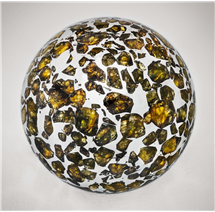
I mentioned Florida meteorites yesterday.  Here are a couple meteorites that will be up for auction on 5/3 (Wednesday.

These treasures from the sky are part of a Christies' auction.

Source: See Christie's link below.

Christie's is proud to present its third online only auction of important and aesthetic meteorites.
Led by prized examples of naturally sculpted metallic meteorites, the sale features some of the oldest objects in the world - at 4.5 billion years old, they are a third as old as time itself.


This curated selection includes incredibly rare meteorites that originate from the surface of the Moon and the planet Mars, which are offered alongside a series of stunning slices and spheres of the most beautiful meteorites known to man...


Click here to learn more about the auction.


---

Thanks to my readers, the mystery object I posted yesterday has been identified.

Beloe is a picture that was sent in by Dustin P. and also by Stan.


The item was on sale on eBay for $55.  It is a microscope lens with tube.  The tube looks almost exactly like the one I found.

Here is the eBay description.  This is an VINTAGE microscope objective made by the BAUSCH & LOMB OPTICAL CO. IT IS MARKED 16 mm - 0.25 NA & in its original brass canister.


Thanks guys!

I'm fairly confident that is what my find is.  Now I think I'll try to get it open without hurting the canister to see if the lens is still inside.

---

An old Iraqi tank was purchased on eBay for $40,000.  When the tank arrived, $2.5 million worth of gold bars were found inside.

Here is how the article begins.

When Nick Mead purchased an old Iraqi tank on an auction on eBay, he was excited for the piece of military history to arrive at his home. But when Mead and mechanic Todd Chamberlain took a closer look at the large machine of war once it arrived, they were in for the shock of their life.


Not only were Mead and Chamberlain stunned at what they found, military buffs around the globe are equally shocked. As you’ll see in the video reveal below, as the duo searched the broken down tank, they expected to find rusty guns or other war-time items..


Click here to read more about that.

Thanks much to Linda C. who sent me that link.

---

No significant change in beach conditions to report.

Happy hunting,
TreasureGuide@comcast.net


Saturday, September 24, 2016

9/24/16 Report - Very Neat 4-Reale. Scale Weight or Assay Sample. Thirty Gold Bars Hidden On Beach.


Written by the TreasureGuide for the exclusive use of treasurebeachesreport.blogspot.com.

Interesting 4-Reale
Find and photo by Darrel Strickland

This is an old find by Darrell Strickland.  Darrell said, I sold the shaped 4 reale to Hugh Mitchell many tears, ago. Really hated selling a lot of my finds, but needed the money back then.

Thanks for sharing Darrell.

---

This is one of those artifacts I've lived with for a while and still go back and forth on its identity.  Sometimes I'm pretty confident it is a scale weight.  There are other times that
 I think it is an assay sample.  Right now I'm about 80% on the side of scale weight.

Find and Photo by Author.
It is about the same shape as a silver ingot that I showed in my 12/7/12 post.  What reminded me of it, though, is the scale weight I posted the other day shown below.

Scale Weight Found At The Luna Settlement Shown a Couple of Days Ago In This Blog
Photo credit: University of West Florida
Two features that I noticed are the "X" which is stamped very much like the "1" on the other item, and the circular marking in the center.  If you look closely you can see what appears to be a wreathe in the center of the silver item.

While the markings for both items are similar in some ways, the shape is different.  The silver item is not shaped well for stacking, which I would think would be desirable for scale weights.

I also never saw another scale weight made of silver. Some say they just used what they had.

I don't think the silver item is Spanish either, and I don't know why it is stamped with a "1" when the weight is 10 grams.

Well, I still don't have a firm conclusion, and I might be living with that mystery as long as I live.

---


Here is a story from 2014 that I missed at that time.

A gold-rush has started at a beach in Kent where a German artist buried £10,000 worth of bullion as part of an arts festival.

Michael Sailstorfer has hidden 30 24-carat gold bars on Folkestone's Outer Harbour beach.
More than 150 people started digging for gold when low tide exposed the beach. Organisers say prospectors can keep any bars they find.


The Folkestone Digs project is part of the town's triennial arts festival...


Here is the link.

http://www.bbc.com/news/uk-england-surrey-28967848

---

Karl and Lisa are still hanging around.  There is a new disturbance over by Africa.  Maybe it will come this way.

Happy hunting,
TreasureGuide@comcast.net

Wednesday, March 4, 2015

3/4/15 Report - Lead Leads To Gold. $4.8 Million In Gold Bars Stolen. Sunken Japanese Warship Found? Sinking Coins.


Written by the TreasureGuide for the exclusive use of treasurebeachesreport.BlogSpot.com.

Japanese WW II Warship
Possibly Discovered by
Apple Co-founder Paul Allen.
Source of Photos: see aol.com link.
Japanese Warship?


What do you do after founding one of the most admired and successful American tech companies and earning millions of dollars?  That's easy!  Go treasure hunting.  

That is what Apple co-founder Paul Allen did.  Here is the link for the rest of the story and more photos.

http://www.aol.com/article/2015/03/04/microsoft-co-founder-says-he-found-sunken-japan-wwii-warship/21149409/?icid=maing-grid7%7Cmain5%7Cdl2%7Csec1_lnk3%26pLid%3D622391

--------

I received the following in an email from Joe D.

Our beach conditions in West Palm have been just as poor as the Treasure Coast. The renurishment projects have hit full swing in Palm Beach and Juipiter! In Palm Beach the sand is going out as quick as they haul it in, and making a secondary beach at low tide! But much of it is mushy and useless to hunt! The primary low tide area has had a lot of shells though with lots of iron, sea glass, and old worn brick pieces, but few coins! Could be that I have become too comfortable with my smaller coil and am not going deep enough! But I have had good luck this week using it on old vacant lots and small park areas! Today I hit several areas that I like to call "drive-by's" that I have made mental notes of in my daily travels. Some I only quick-scanned! The small roadside parks won out over the vacant lots today! The second park I went to produced a nice working watch on the first swing! That's the first time I have hit something good so quickly! 

I have a question that I would like you and your readers to try and help me solve! In your expert opinion, in very damp rich soil, how deep will coins sink with the constant action of earthworms? I have been finding that in a few of the places I hunt, the relatively modern coins are much deeper than they should be! And older coins that should be there are all but nonexistent! ( too deep??) And I know for a fact that these places have had NO fill added to create this challenge!

Thanks much for the beach report Joe! 

On Joe's question concerning how fast coins sink in rich soil, I want to see what you all have to say.
Send me your thoughts.  I'll gather everyone's thoughts and give a summary in a few days.

---------


Here is an interesting story.  275 pounds of gold bars worth 4.8 million dollars were stolen from an armored truck after the truck reportedly had mechanical difficulties along I 95.

Here is the link of the story and also the source of the photo.

http://www.huffingtonpost.com/2015/03/03/gold-bars-stolen-armored-truck-heist-4-million_n_6789870.html


------

Not long ago I mentioned he Magruder and Dare heading back to the Margarita site.  Rough weather sent them back to port, but before returning they found an encrusted object, musket ball, pot shards and various ballast stones.
 
If you've been reading this blog very long you read when I said that gold rings are sometimes found with lead sinkers.  I just read that Mel Fisher always said,“Lead leads to gold!”  I hadn't heard that said by anyone else before.

One time that sticks out in my mind was when I was digging a hole in shallow water.  The first three dug objects were one-ounce round sinkers.  The fourth was a one ounce 14K gold class ring.

------

Thanks for the emails.   Send me your thoughts on how fast coins sink in rich soil.

It looks like we'll be stuck with something like a three-foot surf for a  while.  The wind will be from the South for a couple of days.  Not very encouraging.

Happy hunting,
TreasureGuide@Comcast.net