Showing posts with label seashell. Show all posts

Monday, July 13, 2020

7/13/20 Report - Blue China Shipwreck. Gold Prices Increasing. Ancient Necklaces Made By Early Sea Shell Collectors.


Written by the TreasureGuide for the exclusive use of treasurebeachesreport.blogspot.com.

Site of BA02
Source: See link to Jacksonville "Blue China" Shipwreck below.

I found a good study of the "Blue China" wreck, which lies about 70 miles east/southeast of Jacksonville.  The study was conducted by Odyssey Marine Explorations and provides a lot of great information and photos.  Above is one illustration of the site.


Plates and Jars on the "Blue China" Wreck Site.
Source: Odyssey Marine Explorations Report (link below)


Source: See link below.


There is  a lot to see in this report.  Here is the link.


---
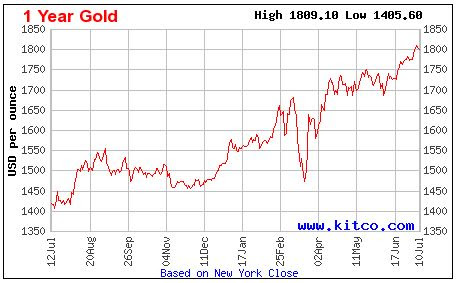
Source: Kitco.com

Gold has been doing well.  As you can see from the above chart, the price has increased from just over $1400/oz. to over $1800/oz. in the last year.

After peaking back in 2011, it has almost reached those levels again recently.

Source: Kitco.com.


Silver, on the other hand, has not be doing so well.  Silver was nearly $50/oz. back in 2010, but is below $20/oz. today.

Source: Kitco.com.


---

Picking up seashells has been a human habit for almost as long as there have been humans. Archaeologists found clam shells mingled with other artifacts in Israel’s Misliya Cave, buried in sediment layers dating from 240,000 to 160,000 years ago. The shells clearly weren’t the remains of Paleolithic seafood dinners; their battered condition meant they’d washed ashore after their former occupants had died....

Shell collectors at Misliya seemed to like mostly intact shells, and there’s no sign that they decorated or modified their finds. But 40,000 years later and 40km (25 miles) away, people at Qafzeh Cave seemed to prefer collecting clam shells with little holes near their tops. The holes were natural damage from scraping along the seafloor, but people used them to string the shells together to make jewelry or decorations. Tel-Aviv University archaeologist Daniella Bar-Yosef Mayer and her colleagues examined five shells from Qafzeh and found microscopic striations around the edges of the holes—marks that suggest the shells once hung on a string...

Here is the link to read more about that.


---

No storms to be concerned about right now.

Happy hunting,
TreasureGuide@comcast.net

Wednesday, September 16, 2015

9/16/15 Report - Old Rare Treasure Coast Treasures. Using Black Light On Sea Shell Fossils and Artifacts. Outer Banks Videos.


Written by the TreasureGuide for the exclusive use of TreasureBeachesReport.blogspot.com.

Fossil Seashell From The Treasure Coast
Lighted By Ultra Violet Light To Reveal Yellow Bands.

A black light can be used for more than lighting up psychedelic posters.  I found that out somehow long ago.

You can use a black light for finding or identifying some gem stones, such as corundum.  Actually not all corundum glows in black light, but an ultra violet light will make some rubies and other gem stones glow in the dirt.  That makes them easier to find.

You can also use a black light to classify gem stones.  Black light can also be used to tell if some gem stones are natural.

I've pointed out before that calcite crystals in fossil shells will glow under black light.

Black light can also be used to reveal the original lost color patterns of chalky white fossil shells, which can help to identify previously unknown species.

Southern Florida has a very rare and special treasure that you might not be aware of.

These fossil seashells are found in deposits at several places in southern Florida. The ones figured here [in the following linked paper] came from spoil banks bordering a canal in Okeechobee County and are ten to fifteen million years old...

Their "secret" character is not possessed by the Los Angeles County fossils or, to the same degree as far as I know, by other fossil seashells from elsewhere. We have tested all the ones in our museum collections, which is worldwide in scope, although obviously incomplete. What causes this geographic restriction is unknown at present. When exposed to the short wave kind of ultraviolet light in darkness, some of the fossil Florida seashells fluoresce brilliantly with symmetrical orange patterns against a glowing violet background.

The two paragraphs above are from a really good paper that can be found through the following link.

http://research.nhm.org/pdfs/33751/33751.pdf

I didn't have a good setup to make good pictures in black light, but I did manage to get the photo at the top of the post.  The nice yellow lines show under black light.

The paper found through the research.nhm.org link above shows other examples Florida fossil shells and their color patterns as seen under black light.

The fossil shell shown at the top of this post, to the best of my very limited understanding, is an excellent museum quality specimen of a fossil tulip shell.

Here is another link on the same subject of using a black light to see color patterns of fossil seashells.

https://www.washingtonpost.com/news/speaking-of-science/wp/2015/04/01/bone-white-ancient-shells-reveal-their-dazzling-colors-under-uv-light/

If you are not into seashells, even million-year-old Florida fossil shells, you can use a black light to bring out markings on artifacts that otherwise might be very difficult to see.  Black light will also reveal slight differences in the surface of artifacts.

One hand made lead fishing sinker that I found, when displayed under black light, showed how the edges were carved.  I didn't notice that under normal lighting.

If you have an ultra violet light take a look at a variety of artifacts under the black light and see what you can find.  I'd like to hear about it if you find anything interesting.   Send me an email.

---

Here are some nice quick video clips of a North Carolina beach sent by GoldNugget.  He shows the beach, finds and equipment.

The North Carolina beaches are a bit different from ours.  They get more tides, and I would say lately, they've also been getting more waves.  GoldNugget has some nice old coins and buttons and other things to show.


https://youtu.be/POT3aqQP2i0 


---

There are now two tropical disturbances in the Atlantic that could be headed our way.  Both have a 90% chance of becoming a cyclone in the next 48 hours.

Keep a watch on those two even if they are still out there a ways.

This was the kind of morning I like -  cloudy and rainy.  I could do without the thunder.  And I'd like more wind and better beach conditions, but otherwise, I prefer this to those glaring sunny days.

Happy hunting,
TreasureGuide@comcast.net