Showing posts with label seashells. Show all posts

Monday, July 13, 2020

7/13/20 Report - Blue China Shipwreck. Gold Prices Increasing. Ancient Necklaces Made By Early Sea Shell Collectors.


Written by the TreasureGuide for the exclusive use of treasurebeachesreport.blogspot.com.

Site of BA02
Source: See link to Jacksonville "Blue China" Shipwreck below.

I found a good study of the "Blue China" wreck, which lies about 70 miles east/southeast of Jacksonville.  The study was conducted by Odyssey Marine Explorations and provides a lot of great information and photos.  Above is one illustration of the site.


Plates and Jars on the "Blue China" Wreck Site.
Source: Odyssey Marine Explorations Report (link below)


Source: See link below.


There is  a lot to see in this report.  Here is the link.


---
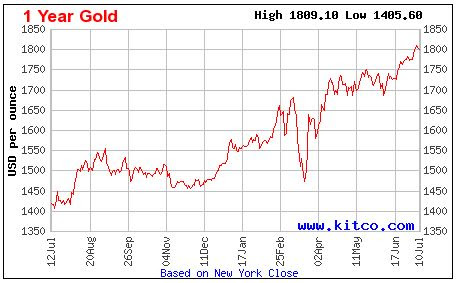
Source: Kitco.com

Gold has been doing well.  As you can see from the above chart, the price has increased from just over $1400/oz. to over $1800/oz. in the last year.

After peaking back in 2011, it has almost reached those levels again recently.

Source: Kitco.com.


Silver, on the other hand, has not be doing so well.  Silver was nearly $50/oz. back in 2010, but is below $20/oz. today.

Source: Kitco.com.


---

Picking up seashells has been a human habit for almost as long as there have been humans. Archaeologists found clam shells mingled with other artifacts in Israel’s Misliya Cave, buried in sediment layers dating from 240,000 to 160,000 years ago. The shells clearly weren’t the remains of Paleolithic seafood dinners; their battered condition meant they’d washed ashore after their former occupants had died....

Shell collectors at Misliya seemed to like mostly intact shells, and there’s no sign that they decorated or modified their finds. But 40,000 years later and 40km (25 miles) away, people at Qafzeh Cave seemed to prefer collecting clam shells with little holes near their tops. The holes were natural damage from scraping along the seafloor, but people used them to string the shells together to make jewelry or decorations. Tel-Aviv University archaeologist Daniella Bar-Yosef Mayer and her colleagues examined five shells from Qafzeh and found microscopic striations around the edges of the holes—marks that suggest the shells once hung on a string...

Here is the link to read more about that.


---

No storms to be concerned about right now.

Happy hunting,
TreasureGuide@comcast.net

Thursday, November 3, 2016

11/3/16 Report - Non-metallic Treasures - Valuable Seashells: Fossils and Artifacts. Higher Surf Coming In A Few Days


Written by the TreasureGuide for the exclusive use of treasurebeachesreport.blogspot.com.

Eight-Inch Long Fossil Shell Find Sold.
I always encourage detectorists to keep their eyes open for non-metallic treasure. You can find a lot of valuable things on the beach that are not made of metal.  You can find fossils, sea shells, wood items, stone and shell artifacts, old bottles, sea glass, etc..   Those kinds of things might be worth more than you think. 

The fossilized shell above might look like any broken old shell, but it quickly sold for a nice price.  Sea shells are used for home decor and collected by shell collectors and others.  Some are fossils and some are artifacts.

I hate the fact that I have such a hard time identifying shell artifacts, but I've found a few.  I take my own advice and keep things that I'm not sure about.  If I don't know about them then I ask people who do.  I'm still sure that I occasionally pass up some good things on the beach not realizing how valuable they might be.

Reading helps, but sometimes you need the opinion of specialists or at least people who are more informed.

With shell artifacts it is often difficult to tell the difference between shells that have been modified by humans and those that nature has shaped.

Lightning Whelk Shell Hammer
Source: See link below.
You can find pieces of shell on a beach similar to those shown above.  Who would ever guess that they are artifacts?  It is not easy to see the signs of human workmanship.  Context can help a lot.

Who would ever guess that the following is anything but a broken shell?

Shell Hammer.
Source: See link below.
Like I said, it can be difficult to tell.  But you might be walking right by artifacts like this when you are detecting.

My wife has a found some interesting artifacts while looking for shells on the beach.  Tourists sometimes ask me about the things they've found, and they sometimes have some nice artifacts or fossils.

The beach is an amazing place where all kinds of treasures show up from time to time.  It helps if you learn to recognize them.  I recommend browsing the following thesis which you can read online.  It is lengthy, but you can jump to the pictures or get into it as deeply as you want.

2004 Prehistoric Shell Artifacts From The Apalachicola River Valley Area, Northwest Florida by Eric C. Eyles.

Here is the link.

http://scholarcommons.usf.edu/cgi/viewcontent.cgi?article=2025&context=etd

---


The surf will increase this weekend, up to a peak of about seven feet on Monday or Tuesday.

Happy hunting,
TreasureGuide@comcast.net