Showing posts with label electrical interference. Show all posts

Wednesday, August 21, 2019

8/21/19 Report - New Salvage Finds Down South. Coins Found At Eroding Site. Metal Detector Testing and Noise Adjustments. Storm Scene.


Written by the TreasureGuide for the exclusive use of treaurebeachesreport.blogspot.com.

Silver Ewer Spout Find.
Source: https://www.melfisherartifacts.com/


What do you think the object shown above is?  I'll tell you below.


Down south the crews of the Dare and Magruder recently found silver coins musket balls, pottery shards, a barrel hoop, and a possible carpenter's file.  

They also found an ewer spout very much like one shown above.  I know that the single view didn't give you much of a chance of figuring it out.  Multiple views are always helpful.

The spout shown above was found on the Atocha site years ago and is pictured in the melfisherartifacts database.   Entire silver ewers have also been found with the same kind of spout attached so there is no question of what it is.

---

I got a few responses on John E's mystery object that I posted yesterday.

Joe D. looks like an aluminum sprinkler repair tool!

And Susan E. Plumber's multi-tool.

Steve M . says That is definitely an automotive battery connection cleaner.  I have seen those in the 70s but could still be in use today.   They cleaned the lead clamp inside and the lead post outside.

I think John will be able to decide which of those it is.

Thanks to all of you for the help.

---
An archaeological site being eroded by the sea revealed Roman coins and pottery.

"The main problem is that everything is under a metre of sand and we're wondering if it blew in in the big storm in 1330 - so it looks like it's been buried for a long time and it's superbly preserved."

Archaeologists' initial estimations think the Roman pottery could be from around 200 to 300AD while the fort is thought to be from the Iron Age, which dates from around 800BC to 43AD.

"That's not to say Romans occupied the site but perhaps a tribe lived there that traded with the Romans," said Dan Amor, of the Gwynedd Archaeological Trust...


Here is the link for more about that.

https://www.bbc.com/news/uk-wales-49397328

  1. Luke 3:5 5Every valley shall be filled in, every mountain and hill made low...
--- Yesterday I described some air tests I did. It seems I can't do that without repeating the limitations of an air test, and the importance of not making too much out of the results. You have to start somewhere, and an air test is a convenient starting place when you are just starting to become familiar with a metal detector.  You can form some initial theories to be tested more effectively at a later time, but an air test will not tell you what you will get in the field with real targets. An air test is an OK starting place, but that is about it. If you want to compare metal detectors, the best way is to take those detectors out to the area you want to detect and compare signals on UNDUG targets. Don't dig the targets until after you have thoroughly explored the signals and all of the adjustments you might be interested in. It is important that the targets remain undisturbed in the naturally settled sand or earth to get a good test. If you are interested in the wet sand area, compare the performance of your detectors there. If you are interested in submerged areas, test there. Or dry sand, test there. Test in the same type of area you want to detect. Testing in dry sand for detecting in wet sand will give you very misleading results, but it will help you learn a bit about your new detector before venturing into the wet sand. Also, when conducting a test, you should sweep as you would naturally sweep when hunting. Since I conducted the air test in an area with a considerable amount of electrical interference, I wanted to make a few comments about that. The Ace 250 isn't bothered too much by electrical interference (much less than some metal detectors) but when you need to, you can turn down the sensitivity. The Ace 250 does not have other additional options for dealing with that. The Equinox has a frequency check function to find the best frequency for you. Besides that, you have several choices that you can manually select. You can choose multi-frequency or other specific frequencies. I found that both 5kz and 10kz worked well when I needed to adjust. Sometimes multi-frequency works well, but if you are getting a lot of noise, you can easily change frequencies. You can just cycle through the various frequencies and use the one that seems to work well. From my limited experience, I've been impressed by several things about the Equinox. I didn't expect the display to be as clear and easy to read. Also, for the variety of features that are available, the options are easy to understand and use. The human interface was well designed. Eventually I'll get around to testing it in the field on real targets. That is what really counts. ---
Source: nhc.noaa.gov
Way to the north is Tropical Storm Chantal, and on the other side of the Bahamas is another system that could form. I'll keep an eye on that one. Happy hunting, TreasureGuide@comcast.net

Thursday, December 13, 2018

12/14/18 Report - More On Another Favorite Find:1670 Escudo. Areas of Detector Interference. Beach Conditions.


Written by the TreasureGjuide for the exclusive use of treasurebeachesreport.blogspot.com.

1670 Escudo
Photo submitted by Warren D
Captain Jonah mentioned one of his favorite coins finds being a 1670.  Warren D. provided the following additional comments about that one.

Your article about Jonah's favorite coin brought back the memory of the day that coin was brought up.

I witnessed it from the beach on July 29, 2015 and it was the only coin that came up as a single.

It made us all totally hysterical and I remember every word we said that day. Danny brought it to the beach and showed it to us close up. 

I went to the press conference and took these pictures. The crack in the coin is part of the story.

Warren Dennison

---

Rio Mar Beach
Submitted by Dale J.
Dale J. sent the following.

Tuesday I walked Riomar and found an old cut (picture attached) but did not detect. I was hoping the higher surf and high tide Wednesday might create new ones. Been trying to learn from your blog. 

Wednesday brought the MD and turned it on just past the stairs. The thing went crazy with number jumping all over even holding the coil up in air. I rebooted it, factory reset, nothing worked. I was convinced it was toast. Another detectorist walked by headed to south beach and we talked a bit. When I mentioned the crazy behavior, he said that always happens here in front of the Riomar country club. He said he does not turn his on until far down the beach.  Sure enough, farther down everything returned to normal. The other guy was convinced something strange was buried  in the sand. I had a different theory, an undersea cable. And of course their is a website for that: 

Cable Map Submitted by Dale J.
Source: https://www.submarinecablemap.com/#/

The cuts in the picture I took Tuesday were gone and new 2-3’ cuts (about 50 ft. long) far down the beach on a section that is more NW-SE than north south. And that seems to support your comment on the winds and waves drive cut creation. The primary swell Wednesday was northeast as were the winds for a time.

Fascinating hobby!

Thanks Dale.  There are a number of spots like that along the Treasure Coast.  There is one south of the Rio Mar access that I've known about at least thirty or forty years..   Another one is south of Turtle Trail.  Some are stronger and more persistent than others.  I usually associated them with certain buildings and radio transmissions, but you might be right.  

There is also a source of interference at Pepper Park.  It is not as strong or as consistent.  There is a fire house immediately across from it, and I wondered if it had to do with that in some way, or perhaps marine radio transmission.  

What do you all think?

Here are some other recent beach photos from Dale J.

Wabasso Beach.

Seagrape Trail


Seagrape Trail

Turtle Trail

Thanks to Dale J. for sending these photos.


I was working on another post  but this material was more time sensitive, so I'll get to my other topic some other day.

The  surf was only two to three feet today and will be decreasing daily for a few days.

Happy hunting,
Treasuregujde@comcast.net

Friday, November 16, 2018

11/16/18 Report - Some Metal Detecting Tips. A Couple More Holed Coin Finds. North Wind But East Primary Swell.


Written by the TreasureGuide for the exclusive use of treasurebeachesreport.blogspot.com.

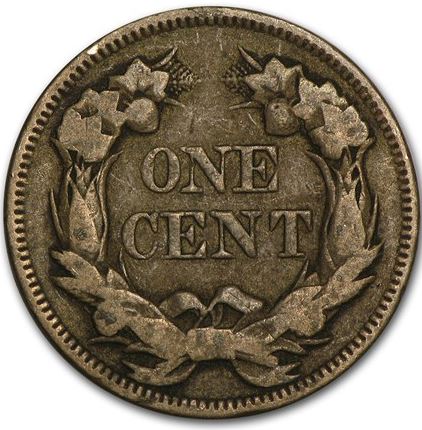
Holed 1858 Flying Eagle Cent.
Photo by William K.
'
William K. sent this photo of an 1858 Flying Eagle cent.  He said, With the small hole I assume it could have been affixed to a charm bracelet.

Sometimes coins used in jewelry are not real coins.  The photo makes the wear on this one look strange to me.  It might be the focus or glare from the lighting.    


Below is a photo of an 1858 Flying Eagle cent shown on the APMEX web site, where it is listed as VG and has a price of about $50.


Thanks William.

---

Here is another holed find.  This one from Palm Beach.


Holded Olympics Commemorative Coin
Find and photo by Jerry P.


Here is what Jerry had to say.

Here’s a holed coin I recovered on Palm Beach Midtown Beach. It was July last year when I dug it from the wet-sand after some nice erosion during that week.

It is a Commemorative coin from the 1992 Olympics in Barcelona Spain. The value is 25 PTAS, whatever that is. It was corroded to a zinc Penny when recovered.

I also recovered a $1.00 US Statue of Liberty modern coin & a 2003 10 KOIIEEK (Russian coin??) as well as a couple of small jewelry pieces that day.

So even though it was a short hunt (right at LT) it was quite productive😎

Note the different dates on the different sides.  It was evidently minted in 1991 for the Summer Games of 1992.

Thanks Jerry!


----

I like to use different detectors at different times.  The best metal detector for one situation, might not be the best for another situation.

In my yard, the best choice is not the metal detector that I most often use at the beach.  There are several reasons for that.  The biggest reason is the ambient interference from overhead power lines and buried cables.  The metal detector I most often use at the beach is more sensitive to that noise and even though it has a frequency check and tries to find the best frequency, still does not do as well as another much less expensive metal detector.

As I've said in the past, I look at metal detectors very much like golf clubs.  You select the one that best suits the situation.

A change in environments can make a big difference.  It is not only the electrical interference that makes a difference.  While my more inexpensive metal detector usually does a fine job in the dry sand at the beach, it is not nearly as good in the wet salt sand.

Of course there are also different target types.  One of the favorite Treasure Coast beach metal detectors, misses a lot of iron, and people don't realize it.  And you don't have to be running any discrimination.  It simply does not detect iron as well as some other metal detectors.  Whether that is a good or bad thing, depends upon what you are trying to do.

Besides environmental factors and the operating characteristics of your metal detector, there are behavioral factors that are very important.  By that I mean how you use your detector. Many people fail to realize the importance of coil speed, for example.  Moving your coil either too fast or too slow, can cause a big loss in depth.  Your detector's performance can be affected a lot by how you move the coil.  Jerking the coil when you change the sweep direction can cause a lot of false signals under some circumstances and also reduce depth of detection.

You may or may not be fully aware of how sensitivity varies under different parts of your coil.  In the past I've recommended testing to determine the how sensitivity varies under different part of your coil.   My experience is that the cone of sensitivity is not always exactly what the operating manual suggests.  It can be helpful to know where the spot of maximum sensitivity is and how that compares with different areas under the coil.

Those are just a few things that you might want to be aware of.  It is easy to fall into habits.  If you've been using the same metal detector for a while and detect the same types of places, you might not even take the time to adjust settings on different outings, but things change.  There can be a different amount of ambient noise or interference on different days, for example.

On the other hand, absolute best depth or sensitivity might not be that important to you.  Again, it depends upon what you are doing.  You might not think some things are important, but I think it is good to be aware of various factors and be aware of the trade-offs and how your decision making can affect outcomes.

There are times when I don't care about getting maximum performance.  Maybe I'm running a quick check of the area, but if I find there is reason to really tighten up and go for that last smidgeon of performance, I'll do that.

I'm an empiricist by nature.  I don't automatically accept what I hear.  I enjoy experimenting and testing things out for myself.  I hope that you do the same with whatever I say.

---

The tides are still small.  Today we'll have some north winds, but the primary swell will be east, and the surf will be only about two feet.  I don't expect much.

Happy hunting,
TreasureGuide@comcast.net


Saturday, August 11, 2018

8/11/18 Report - New Projections For The 2018 Hurricane Season. Metal Detector Choice and Ambient Noise. Restoring Precious Artifacts.


Written by the TreasureGuide for the exclusive use of treasurebeachesreport.blogspot.com.

Notable Hurricane That Hit In August or Later.


Some good news from top hurricane forecasters: The 2018 Atlantic hurricane season should be quieter than normal, according to a new predictionreleased Monday.

Meteorologist Phil Klotzbach and other experts from Colorado State University – regarded as the nation's top seasonal hurricane forecasters – predict 10 named tropical storms will form, of which four will become hurricanes.

That is a sharp decrease from their forecast in April, when they said 7 hurricanes would form. One system, Subtropical Storm Alberto, already formed in May...


Here is the link for more of that article.

https://www.usatoday.com/story/news/nation/2018/07/03/hurricane-season-2018-forecast/755215002/

It only take one, and hurricane season is far from over.

There is one disturbance in the Atlantic now, but at this point it closer to Africa than.  I'll keep an eye on that one for any development.

On the Treasure Coast today we had a smooth surf and big tides.

---

I think everybody knows that there is no "best" metal detector.  The detector that is best depends upon a variety of factors including but not limited to where you are going to hunt and what you want to find.  While the Garrett ATX is a much more expensive and under most circumstances a much more capable metal detector than the Garrett Ace, yet there are times when the Ace might be the best choice.  One such place is a site where there are nearby power lines, cables and a lot of ambient interference.  I was reminded of that today when I visited a place where there was a lot of interference.

Yes the ATX has a frequency scan function, but under those circumstances, the Ace does a decent job, barely being affected by the interference without going through any special procedures.  If you are on a beach, especially with wet sand, you'll most likely get way better performance from the ATX, assuming you know how to use it.

I just mentioned two particular detectors, but what I'm talking about isn't just those two metal detectors.  You always have to evaluate a metal detector relative to the situation and application.  The detector that will be best in one situation might be a poor choice in another situation.

The Excalibur and Sovereign were not especially sensitive to ambient electrical interference.  If I correctly recall, the White's Dual surf was more sensitive.

There are some places on Treasure Coast beaches where you might run into erratic performance due to interference.  If you go south from the beach access at Rio Mar, when you get near the bend, there is one location where you might run into interference.  There is also one south of the Turtle Trail access.

The interference at some of those locations seem to center around particular houses.  I think sometime marine or other radio communications can cause noise too.  There are times when it is worse than other times at the same location.

---

Treasure hunters seek, discover, recover and perhaps clean nice old artifacts.  We hope those items are still in good condition, but the fellow in the following video actually restores precious artifacts and works of art.

https://www.gloria.tv/video/oEmvDEMFuq624iLvwVRkKPCo6

---

Happy hunting,
TreasureGuide@comcast.net

Friday, August 18, 2017

8/18/17 Report - Developing Storm Headed Our Way. Metal Detecting and Electrical Interference. Sand Transport Prediction Model.


Written by the TreasureGuide for the exclusive use of treasurebeachesreport.blogspot.com.

Source: nhc.noaa.gov

Harvey is now a tropical storm.  It is headed towards Yucatan and Mexico.  There was another one not long ago that took about the same track.

The one behind Harvey (red) is the one that looks to be headed towards Florida.  At this point it has a 70% chance of developing into a cyclone in the next 48 hours.

As you can see, the third will probably head north and out into the North Atlantic.

There is a good chance that the one behind Harvey will affect out beaches.  We haven't had much of anything to stir up the beaches all year.

MagicSeaWeed predicts an increase in the surf up to three or four feet by Tuesday.  We'll see.

---

If you've done much detecting around the Treasure Coast, you might have noticed that there are some places where your detector becomes very erratic or noisy.  There is a place like that south of Turtle Trail.  There is another south of the Rio Mar beach access.  There is another north of Amber Sands beach access.  And there are times when Pepper Park can produce some electrical interference, but not as consistently or as much as the other sites that I mentioned.

Wikipedia says, Electromagnetic interference (EMI), also called radio-frequency interference (RFI) when in the radio frequency spectrum, is a disturbance generated by an external source that affects an electrical circuit by electromagnetic induction, electrostatic coupling, or conduction. The disturbance may degrade the performance of the circuit or even stop it from functioning. In the case of a data path, these effects can range from an increase in error rate to a total loss of the data.  Both man-made and natural sources generate changing electrical currents and voltages that can cause EMI: automobile ignition systems, mobile phones, thunderstorms, the sun and the Northern Lights. EMI frequently affects AM radios.  It can also affect mobile phones, FM radios and televisions, as well as observations for radio astronomy.

You can also get electrical interference from electrical lines, underground utility cables and train engines.  The interference can be significant enough that you won't be able to detect some locations. Some metal detectors will be more sensitive to a specific source of interference than other detectors. Some detectors will allow you to detect much closer to overhead electrical lines or other sources of electrical interference than others.  That can be an advantage.

Some detectors have adjustments you can make that will allow you to work around various sources of interference.  Just the other day I took my Ace 250 and ATX to a yard that had overhead electrical lines as well as underground cables that caused interference.  Without making adjustments, the Ace could work much closer to the cables than the ATX, however the ATX has a Frequency Scan function that helped with that situation.

When working in the middle of the yard, the ATX was very noisy and sensitivity was severely reduced, but he ATX Frequency Scan function was able to find a frequency that eliminated much of the noise.  It then worked very well where there was previously way too much interference.

On the ATX you hold the searchcoil steady and away from any metal, and push the button to activate the Frequency Scan function.  It takes 35 seconds for the ATX to complete the scan and select a quiet operating frequency.  It worked well.

At the beach I've seldom used the Frequency Scan function, except a few times at some of the locations mentioned above.  There aren't as many sources of interference at the beach, but you'll find a good number in urban areas or residential neighborhoods.

---

Darrel S. said the weight found by Grant of the Capitana a few days ago, Matches the weight found on Green Cabin Wreck several years, ago. It had 6M on it, and this one 4M.  

Thanks Darrel.  I didn't remember that.

---

I noticed that in my videos and previous posts I kept typing Ace 150 when it should have been Ace 250.  I made those corrections.

---

Here is a scientific article on cross-shore suspended sand and bed load transport on beaches.  It is very technical and difficult to read.

Here is the link.

http://onlinelibrary.wiley.com/doi/10.1029/2007JC004203/full

---

Keep watching for weather news and a possible change in beach detecting conditions.

Happy hunting,
TreasureGuide@comcast.net