Showing posts with label tips. Show all posts

Wednesday, June 26, 2019

6/26/19 Report - Some Cleaned Silver Coins. Jackie Robinson Bat Found. Metal Detecting Around People: Tips and Precautions.


Written by the TreasureGuide for the exclusive use of treasurebeachesreport.blogspot.com.

Silver Coin Cleaned by Muriatic Acid 

Yesterday I posted photos of the surface of a couple coins that I was going to clean using Muriatic Acid.  I immersed three silver quarters and five silver dimes about a 10% solution for about a day.   All eight coins were in the same container together for the same amount of time.

Above you see the cleaned 1942 quarter,.  Below you see part of the same 1942 quarter (right) before it was cleaned.

Surfaces on Recently Dug Dime and Quarter That I'll Be Cleaning.
That quarter came out better than the others.  Below is another 1942 quarter that I cleaned in the batch.  It didn't come out as well.

Another 1942 Quarter That Was Cleaned.

It looks like the second 1942 quarter might benefit from additional cleaning.

And below is the third quarter that was cleaned in that batch.  It is in worse condition.

Cleaned 1947 Quarter.
The surface on this one is very rough.

I also cleaned some Roosevelt and Mercury dimes in the same solution.

1946 Dime After One Day in Diluted Solution of Muriatic Acid.
This dime (above) still has some surface scale that I think will come off with additional cleaning.

I'm going to put it back in the solution for a while to see how the surface corrosion reacts.

Here are a closer views of the surface of that dime.

Closer View of Surface of Same 1946 Dime.
We'll see the effects of additional time in the solution maybe tomorrow.

Another 1946 Dime
I did another 1946 dime.  That one (above) has a badly pitted surface.  I don't think additional cleaning will do much for it.

Here is a Roosevelt dime that is nearly unidentifiable.

Roosevelt Dime - Date Unknown.
The third Roosevelt dime came out just as bad as the Mercury dimes.

Now to the Mercury dimes, which did not come out very well.

Mercury Dime - Date Undetermined.
Additional treatment of this Mercury dime might remove some more surface materials, but I don't think the appearance will be improved,

Almost Unidentifiable Mercury Dime.
The last Mercury dime is terrible as well.

The first quarter turned out fairly nice, but the rest are bad.

None have any numismatic value.  Coin collectors are very particular about condition, and these ones aren't even close.

---

A man found a valuable Jackie Robinson baseball bat in with a bunch of worthless bats and tells the seller.  They quickly removed the bat from the garage sale.

Here is the link.


If I was the owner I would reward the man for his honest kindness.  He could have easily bought the bat for almost nothing and kept the profit for himself.

Kindness is often not rewarded.  I don't know how many times I returned a found gold ring or something and received not so much as a thank you.  You have to wonder about people.  Are the not capable of showing gratitude?

I'm not saying you should return items and show kindness for the reward, but I'd think that people would like to reward those that freely do things for them for no particular reason other than being honest and kind.

In fact, as I've told before, I've had people on multiple occasions try to claim finds that did not belong to them.  If they see you find something, they'll say that they lost it.  Or they'll tell you I lost a ring, if you find it, it belongs to me.

Here are some things I do.

First, get a good description of the item, including details that would not be obvious to any casual observer, such as a date inscribed in the ring.

Define the area you are going to hunt, and if in sand, draw a boundary and keep everyone out of it while you search.  Explain that you have to be able to swing the detector and have to cover every inch and you want to be able to see where you have and haven't been.  You can't have people in the way.  That also helps makes it possible for you to get a look at found items before everybody else.

When hunting in the water, if other people are trying to see what you are digging up, when you raise your scoop, as it nears the surface, shake it violently, raising a cloud of sand that will conceal the item until you stick your hand in the scoop and find it by feel and put it in your pocket before anyone else sees it.  You can then move away from people and inspect it when you can do it privately.

The goal is to get items for the rightful owner - not for crooks.

---

A couple days ago I heard from Captain Jonah.  He has been having boat problems, but expected to get out soon.

Happy hunting,
TreasureGuide@comcast.net

Friday, November 16, 2018

11/16/18 Report - Some Metal Detecting Tips. A Couple More Holed Coin Finds. North Wind But East Primary Swell.


Written by the TreasureGuide for the exclusive use of treasurebeachesreport.blogspot.com.

Holed 1858 Flying Eagle Cent.
Photo by William K.
'
William K. sent this photo of an 1858 Flying Eagle cent.  He said, With the small hole I assume it could have been affixed to a charm bracelet.

Sometimes coins used in jewelry are not real coins.  The photo makes the wear on this one look strange to me.  It might be the focus or glare from the lighting.    


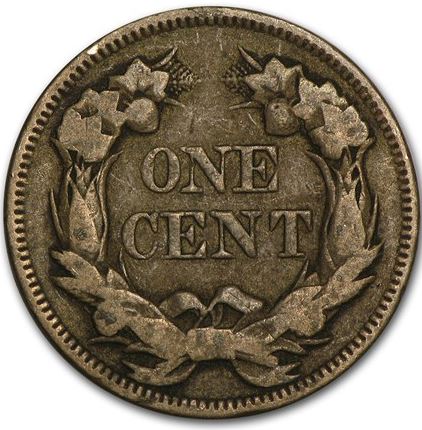
Below is a photo of an 1858 Flying Eagle cent shown on the APMEX web site, where it is listed as VG and has a price of about $50.


Thanks William.

---

Here is another holed find.  This one from Palm Beach.


Holded Olympics Commemorative Coin
Find and photo by Jerry P.


Here is what Jerry had to say.

Here’s a holed coin I recovered on Palm Beach Midtown Beach. It was July last year when I dug it from the wet-sand after some nice erosion during that week.

It is a Commemorative coin from the 1992 Olympics in Barcelona Spain. The value is 25 PTAS, whatever that is. It was corroded to a zinc Penny when recovered.

I also recovered a $1.00 US Statue of Liberty modern coin & a 2003 10 KOIIEEK (Russian coin??) as well as a couple of small jewelry pieces that day.

So even though it was a short hunt (right at LT) it was quite productive😎

Note the different dates on the different sides.  It was evidently minted in 1991 for the Summer Games of 1992.

Thanks Jerry!


----

I like to use different detectors at different times.  The best metal detector for one situation, might not be the best for another situation.

In my yard, the best choice is not the metal detector that I most often use at the beach.  There are several reasons for that.  The biggest reason is the ambient interference from overhead power lines and buried cables.  The metal detector I most often use at the beach is more sensitive to that noise and even though it has a frequency check and tries to find the best frequency, still does not do as well as another much less expensive metal detector.

As I've said in the past, I look at metal detectors very much like golf clubs.  You select the one that best suits the situation.

A change in environments can make a big difference.  It is not only the electrical interference that makes a difference.  While my more inexpensive metal detector usually does a fine job in the dry sand at the beach, it is not nearly as good in the wet salt sand.

Of course there are also different target types.  One of the favorite Treasure Coast beach metal detectors, misses a lot of iron, and people don't realize it.  And you don't have to be running any discrimination.  It simply does not detect iron as well as some other metal detectors.  Whether that is a good or bad thing, depends upon what you are trying to do.

Besides environmental factors and the operating characteristics of your metal detector, there are behavioral factors that are very important.  By that I mean how you use your detector. Many people fail to realize the importance of coil speed, for example.  Moving your coil either too fast or too slow, can cause a big loss in depth.  Your detector's performance can be affected a lot by how you move the coil.  Jerking the coil when you change the sweep direction can cause a lot of false signals under some circumstances and also reduce depth of detection.

You may or may not be fully aware of how sensitivity varies under different parts of your coil.  In the past I've recommended testing to determine the how sensitivity varies under different part of your coil.   My experience is that the cone of sensitivity is not always exactly what the operating manual suggests.  It can be helpful to know where the spot of maximum sensitivity is and how that compares with different areas under the coil.

Those are just a few things that you might want to be aware of.  It is easy to fall into habits.  If you've been using the same metal detector for a while and detect the same types of places, you might not even take the time to adjust settings on different outings, but things change.  There can be a different amount of ambient noise or interference on different days, for example.

On the other hand, absolute best depth or sensitivity might not be that important to you.  Again, it depends upon what you are doing.  You might not think some things are important, but I think it is good to be aware of various factors and be aware of the trade-offs and how your decision making can affect outcomes.

There are times when I don't care about getting maximum performance.  Maybe I'm running a quick check of the area, but if I find there is reason to really tighten up and go for that last smidgeon of performance, I'll do that.

I'm an empiricist by nature.  I don't automatically accept what I hear.  I enjoy experimenting and testing things out for myself.  I hope that you do the same with whatever I say.

---

The tides are still small.  Today we'll have some north winds, but the primary swell will be east, and the surf will be only about two feet.  I don't expect much.

Happy hunting,
TreasureGuide@comcast.net


Tuesday, January 9, 2018

1/9/18/ Report - Treasure Coast Find That Could Be Millions of Years Old. A Few Tips. Coin Show.


Written by the TreasureGuide for the exclusive use of treasurebeachesreport.blogspot.com.

Sloth is said to be one of the seven deadly sins.  Sloth can be defined as the desire for ease and the aversion to effort.  When it comes to metal detecting, it might not be a deadly sin, but it will hold you back.  Years ago when I was really doing some serious detecting, I had a saying that I often repeated to myself and told one or two other people.  It goes: if you don't want to do it, do it.  To me that was good advice for metal detecting. You won't likely follow that advice if you are just out for a day of leisurely detecting.

I was not at all slothful back then.  I realized that very often my best detecting came from hunting in unpleasant weather or rough water, walking a long distance to a site that was difficult to get to, detecting a steep slope that was near impossible to stay on without a rope tied to a tree, or working a site that was covered with rocks that made digging with a scoop impossible.  Those are just a few examples.

I'm want to talk a little about another kind of sloth today: the giant ground sloth that was about as big as an elephant and roamed Florida between 2.6 and 0.6 million years ago.  Florida has more than its fair share of slothful characters today, but I wanted to talk about the extinct ground sloth because a piece of one on a Treasure Coast beach just last week (See photos immediately below.)


Three Views of the Same Item.


I think the item shown above is a giant sloth tooth - obviously broken.  I could be wrong about the ID, so If I am, please let me know.


Below is one that was found years ago.  As I recall, it was identified by a smart fossil guy.  It is in better shape.

Fossil Sloth Tooth

If you like to find really old stuff, keep your eyes out for old fossils and think about the amazing creatures that once roamed Florida.

---

I dug this with the coins from the cut that I talked about the other day.  Do you know what it is?

EO.
You'll find the answer below.

---

2018 Vero Beach Coin Show

The 54th Annual Vero Beach Coin Show will be held January 20 – 21, 2018 at the Vero Beach Community Center.  The address is 2266 14th Ave, Vero Beach, Fl. This is a very busy show with over 1100 people attending the show every year.   For further information please contact Scott Anderson at verocoinshow@gmail.com.
You can also visit treasurecoastcoinclub.org.

...

Massachusetts got record tides and coastal flooding during the storm.

See how bad it was.

https://www.bostonglobe.com/metro/2018/01/04/here-how-bad-coastal-flooding-was-during-thursday-storm/HCU6EZbtcN94FfScmuGM3M/story.html

---

EO With Some Crust Chpped Off

The EO was a stinkin zincin.

---

The Treasure Coast surf could be up to seven feet today.  Not bad.

The wind will not be from the best direction, but their are locations that can cut anyhow - mostly those with some type of barrier to the natural flow of sand.

Happy hunting,
TreasureGuide@comcast.net

Remember: for best results, don't be slothful.

Tuesday, May 12, 2015

5/12/15 Report - Time Saving Metal Detecting Tips. Modern Coins Abound On One Treasure Coast Beach.


Written by the TreasureGuide for the exclusive use of treasurebeachesreport.blogspot.com.

Beach This Morning Near Low Tide
Same Beach Looking South
People sometimes mention using discrimination as a way to save time.  The obvious theory is that you will save time by not digging junk.  I've shown before that discrimination does not always save time.  I looked at one video and using the video timer actually counted how many seconds it took the person to get a reading before deciding if the item was junk or if he would dig it.  The amount of time spent reading the display and making the decision often took longer than it took him to retrieve the item.  I think he would have been surprised to see that the number of seconds he took reading the display was greater than the number of seconds he took to recover the item.

If you have good retrieval skills and are working where you can do a quick sift, such as in dry sand or in the water, recovering a typical item should not take more than a few seconds.  Of course you still might save frustration and effort by discriminating even if you don't really save much time.

In any case, there are other methods for saving time.   One comes from learning to use your detector well enough that you can get a very good idea of an item's location and depth without switching to a pinpoint mode or reading a display screen.  The better you know your detector, the quicker you will be able to pinpoint the item and get a good idea of the depth of items from the auditory signal alone,  That can save you seconds on typical items.

Accurate pinpointing and depth analysis will save you time by cutting down on scooping or digging too.  Don't dig a deeper hole than necessary.  Very often items will be in the top few inches of sand.  When you can tell that is the case, digging a deeper hole will cost you time.  The more sand you get in your scoop, the more you will have to sift, unless of course, you don't get the item and have to dig again.  There is a skill to it.

Here is another time saver.  When digging on the beach, especially in wet sand, don't move the sand farther than necessary.  Keep it close to the hole.  That makes it easier and quicker to kick the sand back into the hole.

When working on a slope in wet sand, I like to have the sand right next to the hole just to the uphill side.  That makes it very easy to kick the sand back in the hole.

I've noticed that a lot of people don't sift when working in wet sand.  As you know, wet sand doesn't sift quickly.   They just dump the sand on the ground and spread it out so they can see the item.

If the water is moving nearby, let the moving water rush through your scoop.  Be careful to do it so the item is not washed out of the scoop.  That means not over-filling the scoop, and having the scoop oriented so the rushing water goes into the open end of the scoop.  Put the tip up a bit. A little shaking will help the item settle into the scoop.

Small items can wash through the holes of the scoop and into the water.  Again, it helps to be able to read the detector signal so you have a good idea if the item might be small enough to wash through the scoop.

I was reminded of most of those things recently when I was digging a lot of coins in wet sand.

Some Coins Dug In Wet Sand One Morning.
I was actually getting tired of digging coins.  There were a few other items.  All of the coins were recent.  Some were not discolored despite being in the wet salt sand.

Very Small Item Dug Same Morning.
This is the type of item I was talking about.  It appears to me to be a bead.  It would easily slip through most any scoop.  It is small enough to sit on Roosevelt's face on a dime.  I picked it up somewhere between the coins shown above,

Some of the ear rings these days are huge.

Here are a couple of those that were dug along with the coins and bead.

The largest one would fit around a child's neck.

Both of these ear rings are junk.

I need to get some good photos of the better finds.

----

Here is a good bargain.  You can get a 24 pack of AA batteries very inexpensively at Harbor Freight, if you have one of those near you.  In fact you can get a 24-pack free with any purchase May 22 to May 55.

----

I've been taking my time perfecting use of a detector that I got this year.  I never took that much time and really studied a detector to that extent before.  I'm thinking of when we finally get some good conditions and want to really exactly what it will do.

On the Treasure Coast it looks like the surf tomorrow will be about the same as today's.  By Thursday and Friday it will start to increase a bit.  Nothing exciting though.

Happy hunting,
TreasureGuide@comcast.net


Saturday, July 5, 2014

7/5/14 Report - Little Diamond Sparkler Find & How To Recover Deep Targets In Moving Water and Mushy Sand,


Written by the TreasureGuide for the exclusive use of treasurebeachesreport.blogspot.com.


Little sparkler found on the 4th.
You might recall the cobs recently recovered from the Green Cabin Wreck that Captain Martinez of the Capitana showed us not long ago.  Neither showed the denomination, but both are eight-reales.

Captain Martinez said both of those cobs are in the lab now and he'll send more info on them when he gets it.  He also said he'll be sending photos or new finds too.


On the Treasure Coast the seas are still calm.  I did a little hunting Friday morning near low tide.  Some people were out very early to reserve their place in the sun.

In the dry sand were a good number of shiny new clad coins, with just a couple discolored ones.  You can always expect at least some new drops on hot holiday weeks.   It appeared that at least 80 percent were recently dropped and did not show any effects of weathering. 

Now there will be all the new debris from fireworks to deal with on the beaches, such as sparkler wires.

I also sampled the wet sand and shallow water.  The wet sand didn't produce much besides some junk jewelry - no coins and no aluminum. 

There was a lot of sea weed piled up on the beach front and also in the shallow water.

The shallow water produced some junk jewelry too, and one good target (See above.), which was deep and took quite a while to recover due to its depth and the moving water and sand that kept filling the hole.

I stuck at it though.  It always really bugs me to have to leave a target giving a good signal just because I'm not able to get to it. 

While trying to recover that good target I thought of some tips that I should give you for recovering deep targets in moving water and sand in the shallow water. 

The small waves were breaking over the bar just to the East of me and then rushing over the dip, which is where I was trying to recover the target in semi-mushy sand.  It wasn't the most mushy I'd ever seen, just not firm.  The top layer was fairly thick and without any course shell sand.

Anyhow, here are some things to try when trying to recover deep targets in moving water and mushy sand.

First switch to pin-point mode and get a good fix on your target, noting both the position and depth of the object.

Second, remove a scoop of sand right over the deep target.  That little hole will serve to mark the location visibly, or if the visibility is not good, you  can relocate the hole quickly and easily by feel with your foot. 

If the water is rough enough and deep enough to make it difficult to stay in position (it wasn't Friday) try to keep one foot planted at the edge of the hole to keep yourself in good position.

Now, it is time to move sand.  If you got a good fix on the depth of the target, you have an idea how much sand you need to move.  If it is a lot, then I'd recommend foot fanning.

Plant your non-predominant foot (I'll assume you are right handed, or footed.) to the left of the small hole.  Don't anchor your foot too close to the hole because the hole will be expanding.

Take your long-handle scoop and anchor it to the left of your left foot so you can lean on it while trying to stand on one foot and fanning wildly with the dominant foot. 

Once you feel firmly set, start moving your right foot back and forth over the center of the hole until you have fanned enough sand to be getting close to the object.

Warning: doing this bare foot can result in things such as a fishing lure popping up and getting stuck in your foot.  I know.  It is best to have some foot cover.  A trimmed swim fin is excellent for moving a lot of sand.

Check the hole with your detector.  Still in pin-point mode, angle the coil up at about a 45 degree angle and face the coil over the sloping sand on four or more sides of the hole.   If the signal is louder when the coil is angled over the left slope of the hole than when it is over the right hole, then you have a good indication that the object is not in the exact center of the hole but off to the left a little.  If that is the case, or if the hole has expanded so that your left foot is now in the hole, readjust your stance farther to the left.

After fanning a lot of sand, if you fanned too much, the object can now be on the slope of the hole or even outside of the hole, so check with your detector once in a while to see if the target moved.  If visibility is good, keep watching for the target to show up.

The ideal is to fan just enough sand so that the target is just barely covered.  Then use your scoop to scoop it up.    (That is why your estimation of depth is important.)

 If you try to scoop up the object while it is deeply buried, you can scoop it up with so much sand that the object will be on top of a scoop full of sand and can fall out over and over again as you lift it through the moving water.    That is especially true of light objects as well as gold chains. 

Gold chains will very often slide out of the front of the scoop unless you get the entire chain well in the scoop, which is not easy.

Light objects like pull tabs can slide off as you raise the scoop of sand through the moving water.  Light objects like that can also be moved a good distance with the moving water when they fall out of the scoop.  It can take a little time to relocate them.  They will tend to be moved in the same direction as the moving water.

If a target moves a good distance after you try to scoop up, there is a good chance that it is aluminum.
A heavier target won't move as far when you lose it and will often fall back down into the hole.  A target can slip down the side and get reburied by sand refilling the hole.  That can result in the signal becoming more faint.  You might have to take time to relocate the object.

Despite the fact that you are trying to get deep, it is better to not over-fill your scoop when trying to scoop up a deep target in a hole. 

Also, before lifting the scoop, give it a little time and shake it a little while the scoop sits in the bottom of the hole to let the target settle better into the scoop.  Then when you lift the scoop, not so much stuff will slide out as the scoop is lifted.   If your scoop sifts fast that will help too.

I didn't know there was going to be so much to this when I started typing.

The process can be much easier if you have good visibility and can get a look at what is happening under water.  A snorkel mask can help.

One thing I want to emphasize is how to angle your coil up along the various slopes of the hole to identify the position of the object relative to the center of the hole.   When the hole is smaller all you need to do is put your detector in pin-point mode and place the coil angled up the slope from the center of the hole in four or more directions.   If the hole has become bigger, you can sweep up each of the slopes.  There is the possibility that the object has been moved up the slope or even out of the hole, as well as the possibility that it is still buried below the hole.


 A good fix on the location of the object can save a lot of work.  


Thursday night Hurricane Arthur came ashore near the southern end of the Outer Banks as predicted.  

http://news.yahoo.com/hurricane-arthur-scythes-outer-banks-north-carolina-072924809.html

That should have given the guys up there a good opportunity.  Hope they are all safe.

They are very good at predicted tropical storms these days.  The paths are pretty much right on.


I understand there are new rules on taking batteries on planes.  I'll get into that more tomorrow, as well as some other things.

Happy hunting,
TreasureGuide@comcast.net

Sunday, June 8, 2014

6/8/14 Report - Gold Grin, Bunch of Great Old Finds & Tip On Returning Finds


Written by the treasureguide for the exclusive use of treasurebeachesreport.blogspot.com.

Finds by Robert H.

Despite the poor conditions, there are things being found.

Here is a jaw dropping find from Robert H.

On the right is a grill.  Probably 14K.

I've found a few sets of false teeth.  One time a young girl asked me to hunt for her retainer.  Unfortunately I didn't find that.

Every detectorists should have a gold grill, don't you think?  If you see a detectorists wearing a gold grill, you can figure it is Robert.  Just kidding, of course.  He said they didn't fit.  Just kidding again.

Anyhow gold grills sell for over $200.  Below is a link if you want to see what you can get in the way of grills.  Some are really glitzy.

http://www.goldteethgrillz.net/


The other day I mentioned that they showed a ring found on the West Coast of Florida on the Kelly and Michael show.  That was a bad move.  That is why I said I wondered how many calls they would get.

I've talked about that in the past.  People will claim items that do not belong to them if you give them the chance.

Bill P., who gave us his coin cleaning instructions way back years ago, and which I still use today, said the following.

I have discovered ... that when attempting to return a jewelry item, I ALWAYS ask the caller to identify any markings or names. NEVER divulge that info at the beginning. You will get so many calls and sob stories, you'll wish you didn't even try to return it. -Bill

Thanks for that good reminder Bill.  

I haven't said much about that lately.  I try to avoid repeating but probably should repeat some things once in a while. 

Never show a found item until after you have a good detailed description.  When possible get the description in as much detail as possible before hunting.  And when an item is found, keep it concealed as much as possible until the owner gives enough to prove that he or she is indeed the owner.  

I've learned that from experience.  People do try to claim things that do not belong to them.  You want the item returned to the real owner, not an imposter.


I can't believe that Tesoro still offers a Lifetime warranty!  I have two detectors that they claim has exceeded their Lifetime warranty.  They no longer have the necessary parts on stock so they won't repair them.  Don't be fooled by the Lifetime warranty offer.  If necessary they'll claim that there is corrosion in the electronics or something in order to say the warranty has been violated, but the fact is that they no longer have the parts.

You'll notice that some detector manufacturers will declare a model obsolete when they no longer can get the parts to repair them.


Here are some pictures of some really nice old finds from GoldNugget.


He found all this in one day - eleven hours of detecting.  That's fantastic.   And a real hot spot.

Congratulations on the finds!


High water exposes war dead that were buried on the Marshall Islands. 

Here is the link for more about that.

http://www.bbc.com/news/science-environment-27742957


On the Treasure Coast don't expect more than about a two foot surf for the coming week.  The tides are getting just a touch bigger.

Happy hunting,
TreasureGuide@comcast.net

Tuesday, April 29, 2014

4/29/14 Report - Gold Religious Medallion, Early Gulf Coast Settlement, and Genealogical Research


Written by the TreasureGuide for the exclusive use of treasurebeachesreport.blogspot.com.


Gold Religious Medallion Find

This medallion is larger than most and is intricate.  You can see the remains of a black encrustation that has been partly removed. 


When I first posted yesterday's post there were a lot of problems with it.  Fortunately I went back later and fixed some of the problems.

One big thing was that I originally left out of the post was a link to a great article on the earliest European Gulf Coast settlement.  I put it in later, but in case you missed it, here it is.

http://archeologyink.com/LaRuaBluff.pdf

Below is an excerpt from that article.

Fig. 16: During the 1940s several young boys were roaming along the shoreline
of a peninsula jutting into Pensacola Bay . They had learned how to find
artifacts. The railroad crews would come down the line on occasion and dig
out the banks to protect the tracks. When it rained the kids would scour the
exposed banks for artifacts. On one day, they found a coin which dated to the
time of the Tristan de Luna colony. One the kids, Harry Bonifay, found it.
The coin and the area are figured in the next few pages. Sixty something
years later marine archeologists found two shipwrecks of the period just
offshore from the same bayshore.

It says the kids checked newly disturbed soil.  I've recommended checking any disturbed soil many times in this blog.  


The kids also knew to check after rain.  That is another strategy that I've mentioned before.  Those are two good reminders.

Curren, as contrasted with the quotes I gave a couple of days ago from the shipwreck articles reveals a much more constructive style and approach.  He gives even children recognition for their finds and treats the public as a part of the process.  That is exactly the approach that will promote and advance the field of study.

Below is another good tip found in the same article

Fig. 18: ...  The coin was found in a dredge spoil pile near the mouth of Bayou

Texar.

Most often you'll find junk, such as mangled aluminum cans in dredged material, however there are times when more interesting things are found in dredged material.  There have been times when interesting old materials have been found in dredged material in Southeast Florida and the Treasure Coast. 

Thanks to Caleb Curren, author of archaeologink.com and that particular article. 


I would encourage you once again to do some genealogical research.  I've learned a lot of history through research into my own ancestors.   One line goes back to the Pilgrims at Plymouth Colony in the 1640s.  Of course that was after the Mayflower.  One thing I found particularly interesting is that John Greenleaf Whittier actually wrote a ballad about one of my ancestors.  She was said to be the first white woman sold into slavery in America.  Her crime was not exactly, but basically being too friendly to the Quakers.  The sea captains refused to take to Virginia or Barbados to be sold though.  It might have had something to do with the fact that her father was a boat carpenter.  She did spend time in leg stocks.  Anyhow, the ballad is Cassandra, which is actually her mother's name.

Along another ancestral line was a Ranger in the Revolutionary War that fought Indians in the Ohio Valley.  He was captured, escaped, swam the river, etc. etc.  It was a violet time on both sides, and both sides actually collected scalps.  With all the political correctness these days, I was surprised to learn how violent and brutal it actually was. 

It can be really interesting when you put enough time into the research to locate ancestors which were written about in detail like that. 

Those are only two of the things that I found most interesting.  I was lucky to be able to locate so much material.  I'm sure you can find some interesting things about your ancestry too.  The most interesting thing would be to go to some of those areas and do a detector search where your ancestors lived.  It really makes the history come alive.


On the Treasure Coast the wind picked up around noon and white caps formed on the river. 

We are still having high high tides, but the surf is still small.

A 3 - 5 foot surf is predicted for Wednesday.  That is a little increase.

Happy hunting,
TreasureGuide@comcast.net


Sunday, August 18, 2013

8/18/13 Report - Media Story on Treasure Coast Diamond Ring Returned & Tips for Working Hunted Areas


Written by the TreasureGuide for the exclusive use of treasurebeachesreport.blogspot.com.


WPTV did a piece on Michael E. finding and returning a $4000 diamond ring that was lost and found on the Treasure Coast.  I mentioned that story a few days ago.  Here is the link to the news story.

The video comes on after the advertisement.

http://www.wptv.com//dpp/news/region_martin_county/jensen_beach/florida-man-digs-up-buried-treasure-of-a-lifetime-gives-it-away-after-message-finds-him

When I originally gave the story I said I hoped the media followed up on it.

Thanks to Bernie C. for submitting the link and Michael E. for the good find and his good act.

The video and article did not mention the St. Lucie Metal Detecting club and some other things.  That is not unusual for the media.  They have their own ideas of what should be included in a story.


Detectorists sometimes get discouraged by competition.  They show up at the beach and see two or three other people coming off the beach and think they might as well turn around and go somewhere else.  That isn't necessarily the case.

First, nobody can cover an entire beach.  There is just too much area.  But I wouldn't cover the entire beach even if I had the time.  Some spots are better than others, and I'm all about trying to identify and hit the best spots.

I'm don't worry much about the competition.  I've never felt it was much of a concern.  As I said the other day, I tend to specialize in finding those spots that are neglected by most others.

I've mentioned many times about the beach being a dynamic system.  That means it constantly changes.  As a result, hunting the same spot after it has been hunted can be like hunting an entirely new area.  It is the same area, but, like I said, things can be changing. 

I thought I'd give you some tips on how to deal with competition today.

First, is timing.  Take advantage of the fact that most detectorists are creatures of habit.  Many will show up at the same beach at the same day of the week and the same time of day.  If you are dealing with competiton, get to know the competition.  I don't mean what you might think I mean by that.  I don't mean to talk to them and get to know their name and things like that.  I mean get to know their detecting habits.  It isn't usually all that difficult, even if you never see them.  You can get to know them by their footprints, drag marks, etc.  Get to know when they detect and make consider your timing.

You can tell a lot about who was there before you even if you never see them.  How many targets did they leave?  What types of targets did they leave?  Is there a disproportionate number of nickels, for example?   Do they grid a small area or cover a large area loosely?  Do they work the dry sand, wet sand, or water?   Do they miss pull tabs, iron, big objects, deeper targets, or whatever?  All of that tells you something that will help you make adjustments and take advantage of the situation.

What areas did they detect and what areas did they miss?  You can sometimes tell that from tracks, uncoverd or refilled holes, or from remaining targets.

If you get to the beach early in the morning or after a rain or strong wind, it wipes the slate clean and makes it easier to tell what happened after that.

After gathering information, make adjustments.  If the others miss a lot of deeper signals, you might decide to select another detector, adjust your settings, or just focus on hearing those faint signals and deep targets.

I don't mind if someone leaves a lot of trash, which tells me they probably also missed some targets, and I don't mind if they left a clean beach, which makes it easier to focus on deep targets.  Either way there is an adjustment that you can make to take advantage of the situation.

Of course, all of that assumes that you decide to stay at that beach and hunt it rather than moving on.  Moving on to another beach can be a good option if you decide that detecting conditions might be better somewhere else.  I often take a look at a beach and move on without ever taking my detector out.  I'm not set on detecting beach X or Y, but make adjustments according to what I see as I go.

One good technique for dealing with competition at top beaches that I often like is to detect the perimeter.  Even if an area is very heavily detected, those that detect it often end up spending their time in a well defined area.  One technique I've used with remarkable success is to define the cleaned out area, and thoroughly detect around the perimeter of the cleaned out area.

In the past I told about one beach that I stopped at when I was traveling up by Pensacola.  There was a picnic area by the causeway to the beach.  I stopped there and started to detect in the water.  I could quickly tell that the area was pretty well cleaned out.  I noticed that there were two pilings in the water and found that the cleaned out area was a rectangular area with the two pilings being two corners of the area.  Inside the rectangle was clean, but just outside that area there was junk.  I decided to detect right around the borders of the rectangular area and in a few minutes came up with three gold rings.  All three were within a couple of feet outside the area that somebody obvoiusly detected on a regular basis.   I never saw them there, but I could tell what they had done, and adjusted accordingly.  They actually helped me out by helping me narrow down the area where remaining targets were likely to be found.  That is an illustration of what I am talking about. 

One of the areas that is most overlooked by other detectorists is where the water gets deeper than chest high.  Some guys do very well by specializing in deep water where many other detectorist do not detect.

Another of my favorite techniques is to hunt an area that is in the process of changing.  It doesn't matter if someone detected the area a half hour ago if another six inches of sand has been removed, or if new targets have washed up in that last half hour.

Others will also miss targets if they are moving too fast, discriminating, or just not scanning thoroughly.  All of those are things you can take advantage of. 

I have no problem following right behind people that do those things.  And I'm not insulting anyone here.  I'll follow myself too.   By that I mean, I'll go back over the same ground time and time again if it seems warranted, especially when I wanted to move fast the first time for some reason, maybe to do some sampling, or if the target density was high and I moved a good number of surface targets on the first pass.  Also, I'll go back and cover the same ground again if it was a high density target area and if the sand is moving as I detect.

Being worried by the competition is more of a psychological thing.  Yes, they might get some targets.  That's OK.  No problem.   Just analyze what is going on, make the necessary adjustments, and take advantage of the situation rather than getting discouraged.


Not much has changed on the Treasure Coast lately.   Erin is now a depression and moving west, but is still a long way away.

Another disturbed area that might form just came off of Africa.

That is it for now.

Happy hunting,
TreasureGuide@comcast.net


WPTV did a piece on Michael E. finding and returning a $4000 diamond ring.  I mentioned that story a few days ago.  Here is the link.

The video comes on after the advertisement.

http://www.wptv.com//dpp/news/region_martin_county/jensen_beach/florida-man-digs-up-buried-treasure-of-a-lifetime-gives-it-away-after-message-finds-him

Thanks for Bernie C. for submitting the link. 

The video and article did not mention the St. Lucie Metal Detecting club and some other things.  That is not unusual for the media.  They have their own ideas of what should be included in a story.


Jim M. sold the detector I mentioned was for sale two days ago and has a stainless steel scoop for sell on eBay.  It is item no. 141040416069.

Thursday, February 16, 2012

2/16/12 Report - A Few Detecting Tips


Written by the TreasureGuide for the exclusive use of treasurebeachesreport.blogspot.com.

This Mornings Finds.

Nothing exciting. I decided to do a little scouting around and went to a park that I hadn't detected for a number of years. It isn't on the ocean. The ocean beaches that I've seen have been building the past couple of days. They weren't very good looking at all, so I felt like doing something a little different this morning.

The photo shows a few dollars in clad, a ring and what looks like an old bullet (since I've been talking about those).

I got some more good information on the bullets that I showed yesterday. I'll have to get back to that topic in another post.

I could tell that the area I detected today had been detected recently. There were a variety of clues. I could tell by the distribution of targets that part of this area had been detected relatively well. Most targets in the detected area were several inches deep in densely packed sand with a good layer of black sand. There was a disproportionate number of nickles (a common tell-tale sign). And there were the typical areas that most detectorists will skip.

A Good Spot.

I always like to see spots like this. There is a little erosion and some roots and things to add protection. Many detectorists will miss targets in an area like this.

There were three targets (within a half inch of the surface) in the small area shown in this photo.

I'll never pass an area like that without checking.

I also like to stick my coil back under limbs and bushes. Again, many detectorists will miss targets in areas like that.

That is where I got the old bullet today - back under some bushes.

And here is another type of thing that I will never pass up.

It doesn't look like much and it isn't easy to detect, but people will be drawn to these blocks. Sometimes they'll sit on them and sometimes lay things on them or by them. And sometimes people will stumble over them.

Things will slip down beside the blocks and quickly sink beside them when the water rushes around.

Old Concrete Blocks.

The iron in the blocks makes it difficult to detect around them. This is one time that I used discrimination. I could hear the iron but I could also pick out the other targets in and around the blocks. That might take a little practice, but you can learn to do it.

There was a lot of black sand around here too.

I seldom use anything but all metals or pin-point mode, but I was constantly switching back and forth today.

The dimes were coming up rusty looking and many of the pennies were heavily caked.

There were a lot of obstacles at this site, but I like obstacles. Obstacles protect targets.

I like to try different spots like this once in a while for a change.

There are a lot of snowbirds in in the area detecting now.

The wind is out of the south and the seas calm. Expect increasing sand on the ocean beaches.

Monday the seas will increase. I'd say no change in conditions until then.

I received some good information on bullets. I'll get back to that topic soon. maybe tomorrow.

Happy hunting,
Treasureguide@comcast.net