Showing posts with label Roman coins. Show all posts

Wednesday, April 8, 2020

4/8/20 Report - Hoard Found in Farm Field. Wile E. Coyote. Reader Comments. Prayer and Meditation. Statistics. Big Tides.


Written by the TreasureGuide for the exclusive use of treasurebeachesreport.blogspot.com.

Roman Hoard Discovered by Farmer.
Source: See ScienceInPoland link below.

A farmer has discovered one of the largest hauls of Roman coins to ever be found in Poland.

Mariusz Dyl had been looking for abandoned antlers in a field near Cichobórz, south of Hrubieszów, Lublin, when he stumbled upon the 2,000-year-old coins scattered across 100 metres of the field.
After calling in experts, the 1,753 coins weighing 5.5kg and which were found in 2019, were taken to the Hrubieszów Museum where they have now been analysed and their authenticity confirmed.
Director of the Museum Bartłomiej Bartecki said: “This is undoubtedly the largest treasure from the Roman period in the Lublin region and one of the largest found in Poland so far...

According to Bartecki, all the coins, had been originally placed in a wooden box or leather pouch. While the remains of the container have not survived, it is known that it was decorated with silver-plated bronze rivets...

Notice the metal detectors being used in the photo below.

Source: ScienceInPoland link below.


Here is the link for the rest of the article.


---


Here is a humorous find.  It is small - only as wide as a US quarter.   I didn't realize what it was before I took a really good look at it.

Wile E. Coyote Charm Find?

Proves that the Knights Templar liked Road Runner cartoons.  I've seen too much baloney on TV.

---

JamminJack said, It seems the courts dismiss the law suit against Governor Desantis in regards to closed beaches. The news did not say anything about the law suit. I had seen where some resorts, homes, etc., wanted their beaches open. 


Maybe you can get some readers give more info. 


Anybody know anything about that?

Jack was also wondering about open and closed beaches and what was going on.

A few days ago I read that Fort Pierce or St. Lucie County was going to keep the boat ramps open if people acted responsibly.

Monday the pier and walkway along the Fort Pierce inlet was open even though the beach was closed.  Also along A1A people were parking and putting kayaks in as normal along one popular stretch where people often fish in the river.  A sheriff's car was parked just a short distance from there and appeared to have no problem with that.

If you think about it fishing and boating is a grocery store for some people, not to mention the relaxation and stress relief.

---

Got a message from Dan B. as follows.


Now is a time to come together when we cannot physically hug or touch or shake hands. In moments when our friends or family are hurting or in need. This becomes especially difficult.

Adapting and figuring out ways to do this can seem frustrating, but that is what comes before change.

Keeping ourselves at home and fighting for everyone we care for is crucial, yet we lose our social interactions and abilities to be free....and most of all breathe.

I truly hope that everyone can stay as positive as possible and remember we can help many from a distance.

I am just venting and hope this rubs off. Some people really need encouragement, hope, love, and especially treasure. 


Always appreciating treasure coast beach blog. 

Thanks for sharing Dan.

Although I hate to see government forcing churches to close for Easter or anytime, it won't stop prayer and meditation.  This Easter can be an especially powerful and meaningful time of spiritual growth for those who devote themselves to prayer and meditation during the crisis.  

People tend to think of prayer as picking up the phone and calling God.  I look at it the other way around.  Your phone is ringing.  It is time for you to answer.  


You might be interested in the book, Healing Words: The Power of Prayer and The Practice of Medicine, by Larry Dossey, MD.

He actually presents some randomized double-blind experiments as well as the more anecdotal.

---

You can find a lot of quotations about statistics.  Here are a couple I liked.

Torture statistics and they'll confess to anything.

98% of all statistics are made up.


Here are some misleading things we've been hearing from the experts lately.  If I acted like the press and didn't like the source, I'd call them lies, otherwise I might describe them as misleading errors.

1st.  They say that the numbers show that our mitigation efforts are working.  That is based upon a comparison of the numbers collected (which are very misleading) with the model predictions (which have no proven validity at all.  Dr, Birx said when this is all over we can gather the data and see if  how correct they were).  It appears that the predictions given by the particular model they most often cite could have been off by as much as a factor of thrity.  A wild guess, at best.  

2nd.  If what Dr. Brix says is right, the death rates we are seeing presented as a COVID-19 deaths include anybody that dies and is found to have COVID antibodies.  That is a little like saying that everybody that has flat feet and dies, died from flat feet.  At best those numbers are very misleading.  Unknown numbers of those same people would have likely died if they never got the virus.

---

Tomorrow I'll show you an interesting project you can do while waiting for an opportunity to go out metal detecting.  I just received it in an email.  Very nice.


We are getting some very big high tides now even thought the surf is down around 2 - 4 feet.

Have a blessed Holy Week.
TreasureGuide@comcast.net

Wednesday, August 21, 2019

8/21/19 Report - New Salvage Finds Down South. Coins Found At Eroding Site. Metal Detector Testing and Noise Adjustments. Storm Scene.


Written by the TreasureGuide for the exclusive use of treaurebeachesreport.blogspot.com.

Silver Ewer Spout Find.
Source: https://www.melfisherartifacts.com/


What do you think the object shown above is?  I'll tell you below.


Down south the crews of the Dare and Magruder recently found silver coins musket balls, pottery shards, a barrel hoop, and a possible carpenter's file.  

They also found an ewer spout very much like one shown above.  I know that the single view didn't give you much of a chance of figuring it out.  Multiple views are always helpful.

The spout shown above was found on the Atocha site years ago and is pictured in the melfisherartifacts database.   Entire silver ewers have also been found with the same kind of spout attached so there is no question of what it is.

---

I got a few responses on John E's mystery object that I posted yesterday.

Joe D. looks like an aluminum sprinkler repair tool!

And Susan E. Plumber's multi-tool.

Steve M . says That is definitely an automotive battery connection cleaner.  I have seen those in the 70s but could still be in use today.   They cleaned the lead clamp inside and the lead post outside.

I think John will be able to decide which of those it is.

Thanks to all of you for the help.

---
An archaeological site being eroded by the sea revealed Roman coins and pottery.

"The main problem is that everything is under a metre of sand and we're wondering if it blew in in the big storm in 1330 - so it looks like it's been buried for a long time and it's superbly preserved."

Archaeologists' initial estimations think the Roman pottery could be from around 200 to 300AD while the fort is thought to be from the Iron Age, which dates from around 800BC to 43AD.

"That's not to say Romans occupied the site but perhaps a tribe lived there that traded with the Romans," said Dan Amor, of the Gwynedd Archaeological Trust...


Here is the link for more about that.

https://www.bbc.com/news/uk-wales-49397328

  1. Luke 3:5 5Every valley shall be filled in, every mountain and hill made low...
--- Yesterday I described some air tests I did. It seems I can't do that without repeating the limitations of an air test, and the importance of not making too much out of the results. You have to start somewhere, and an air test is a convenient starting place when you are just starting to become familiar with a metal detector.  You can form some initial theories to be tested more effectively at a later time, but an air test will not tell you what you will get in the field with real targets. An air test is an OK starting place, but that is about it. If you want to compare metal detectors, the best way is to take those detectors out to the area you want to detect and compare signals on UNDUG targets. Don't dig the targets until after you have thoroughly explored the signals and all of the adjustments you might be interested in. It is important that the targets remain undisturbed in the naturally settled sand or earth to get a good test. If you are interested in the wet sand area, compare the performance of your detectors there. If you are interested in submerged areas, test there. Or dry sand, test there. Test in the same type of area you want to detect. Testing in dry sand for detecting in wet sand will give you very misleading results, but it will help you learn a bit about your new detector before venturing into the wet sand. Also, when conducting a test, you should sweep as you would naturally sweep when hunting. Since I conducted the air test in an area with a considerable amount of electrical interference, I wanted to make a few comments about that. The Ace 250 isn't bothered too much by electrical interference (much less than some metal detectors) but when you need to, you can turn down the sensitivity. The Ace 250 does not have other additional options for dealing with that. The Equinox has a frequency check function to find the best frequency for you. Besides that, you have several choices that you can manually select. You can choose multi-frequency or other specific frequencies. I found that both 5kz and 10kz worked well when I needed to adjust. Sometimes multi-frequency works well, but if you are getting a lot of noise, you can easily change frequencies. You can just cycle through the various frequencies and use the one that seems to work well. From my limited experience, I've been impressed by several things about the Equinox. I didn't expect the display to be as clear and easy to read. Also, for the variety of features that are available, the options are easy to understand and use. The human interface was well designed. Eventually I'll get around to testing it in the field on real targets. That is what really counts. ---
Source: nhc.noaa.gov
Way to the north is Tropical Storm Chantal, and on the other side of the Bahamas is another system that could form. I'll keep an eye on that one. Happy hunting, TreasureGuide@comcast.net

Friday, February 22, 2019

2/22/19 Report - Exploring and Finding Historic Artifacts in the Indian River Lagoon. Ancient Roman Coins Found on Tampa Beach.


Written by the TreasureGuide fore the exclusive use of treasurebeachesreport.blogspot.com.

Source: See kayakingksc.com link below.

Álvaro Mexía on orders from the Governor of St. Augustine created a detailed map while exploring and recording the people and towns along the east coast. His journey is still easy to follow to this day and makes for an interesting kayak trip.

From June 1605 to July 1605 (mosquito & hurricane season on the east coast) Mexía mapped the coastal area of East Florida from Matanzas Inlet south to Hobe sound...

That excerpt is from the blog of a kayaking enthusiast who is also a history buff, amateur archeaologist, historian, and explorer of the Indian River Lagoon.

I think you'll find his blog interesting.

Here are a couple links that you might want to explore.


https://www.kayakingksc.com/Ais-Native-Americans-of-Kennedy-Space-Center.html

It seems he has made a lot of really nice sight finds.

There are some other great sections too, such as the one showing the paleo channels.

---

Barbara Ann wrote and asked if I heard about the ancient Roman coins found on a Tampa beach.  I hadn't, but then I looked into it.

It seems a detectorist in the Tampa area found seven ancient Roman coins on the beach.

Here is a link about that find.

https://www.lifedaily.com/story/tampa-treasure-hunter-unearths-rare-coins-on-florida-beach/

There was some speculation that the coins might mean that the Romans visited Florida before Columbus.  It sounds to me like this guy is trying out for a spot on Oak Island.

Without going through all the reasons why one could be skeptical of that conclusion myself, here is someone else's take on it.

http://www.jasoncolavito.com/blog/tampa-area-man-wonders-if-roman-coins-found-on-beach-prove-pre-columbian-european-presence-in-florida

I've been talking about the need to be skeptical of reality TV.  Social media is the same.

You might not need to use much discrimination on your detector, but you need a lot of discrimination when reading the news or the internet these days.

---

If you compare the Kayaking the Indian River Lagoon blog with the suggestion of Pre-Colombian Romans in America, the first source seems very trustworthy, while the second (Pre-Colombian Romans) makes me very skeptical.

I started to write a bit about the characteristic differences between trustworthy sources and those that you should cause suspicion.  Although I think that is a very important topic, it turned out to be  too long and complicated for a blog post, and it would take me quite a while to refine it.

---


I showed this encrusted object and asked if you had any ideas.  I received some good thoughts on the object, but one thing I thought it could be is a pulley.  Here is one example.


Tell me why I'm wrong.

Although pulleys come in different sizes and shapes, I've never seen one with such a bulging center but some might have a cover.

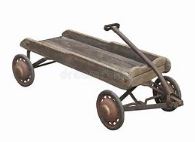
On the other hand, maybe it is just a wheel.  Take a look at the wheels on this wagon.  That is the closest I've found to the shape of the round part of the EO.


Well, I'm not sure yet.  All ideas and thoughts still appreciated.  Thanks.
---
Looks like the surf will remain small for a few days while the tides remain big.

Happy hunting.
TreasureGuide@comcast.net


Friday, November 10, 2017

11/10/17 Report - Millions of Dollars of Coins Found By Detectorist. Turtle Trail. Oak Island Artifacts and Observations.


Written by the TreasureGuide for the exclusive use of treasurebeachesreport.blogspot.com.

Coins Found by Detectorist Mike Smale
Source: See DailyMail link below.

  • Treasure hunter discovers a rare hoard of 2,000-year-old silver Roman coins worth up to £200,000 with a metal detector in a farmer's field (but he'll have to split the cash with the farmer)
  • Some of the coins were minted during the era of Roman general Mark Antony
  • Experts said the find is very rare and each coin could sell for £900 ($12,000)
  • Coins would have circulated widely during Roman times - some dating to 32BC
  • Mike Smale, 35, found the hoard of rare ancient coins in a farmer's field
Detectorist Mike Smale With The Field's Owner.
Source: See DailyMail link below.
Here is the link for more about that.

---

Turtle Trail Yesterday.
Photo by Darrel S.
Darrel S. has been detecting the Treasure Coast beaches and sending in daily photos and reports.  I appreciate that a lot because I haven't been out to take a look at things much myself.

Yesterday he stopped at Treasure Shores, where he found a number of detectorists already there, so he moved on to Turtle Trail, where targets were scarce once again.  You can see the small dips or scallops that he described to me via email.

Thanks Darrel.

---

I didn't mean to carry on with this topic, but last night I watched a bit of a new episode of Oak Island and saw two things that I wanted to comment on.  First, there is now another spike.  The new spike was found in  the spoil pile.  I will refer to that spike as the "rose head" spike.  It is longer and does not have an offset head like the first spike.  I think things got more muddled when they discussed the new spike and why it was not a railroad spike. I don't know who would ever confuse the rose head spike with a railroad spike.  You could tell that even if the head was not present or was totally ignored.

The first spike, however, which I will refer to as the "swamp spike" was shown once again for a brief second or two earlier in the episode.  The view they gave only VERY briefly showed the offset head before it was turned to an angle that did not show the offset head.  It was super quick and you would not notice the offset head unless you were specifically looking for it.

It was supposedly the swamp spike that was researched by Dr. Lori.  However the spike she had in front of her did not appear to me to have the same offset head.  They undoubtedly were aware of the skepticism caused by that spike.  It was discussed all over the internet.

After getting another glimpse of the the swamp spike when the cut back again when it was found, I was not able to dismiss my impression that it was not the same spike discussed by Dr. Lori.  I hope to get another view of the spike that was in front of Dr. Lori and am sure I will in time.   If anyone wants to go back and really study the images of the swamp spike found as shown when it was found and when it was discussed by Dr. Lori, I'd really like to hear your conclusions.

So to summarize, there is now a new spike (rose head), which I don't think hardly anyone would confuse with a railroad spike even though they took the time to present the reasons why it was not a railroad spike.  It seemed to me that that would confuse many viewers and muddy the controversy around the railroad spike for the more casual viewer.

I haven't watched every minute of the show, and I might have missed or confused something myself.  If I did miss something or you need to correct me, please let me know.

I recently posted some thoughts on how hard it can be to identify and date artifacts so I won't delve into that much again.   I guess it is my scientific training that makes me very cautious about jumping to conclusions.  To me it is very foolish to pick up something out of the dirt and quickly state that it is from a certain time period.  I remember, for example, the time I found a musket ball on Cape Florida, where musket balls from the Seminole War period might be found.  That was way back a few decades ago.  I didn't recognize at first, that it was a new reproduction.  Musket balls are still made today using the same processes, and they are used with antique guns etc.  Rose head nails are still made today too.  And just because a coin has an 18th century date, does not mean that it was lost in the 18th century.  There are many possibilities, and quickly jumping to conclusions does not give me a great deal of confidence in either the source or the conclusions.  I know that it is a TV show and they are going to try to make it exciting,    but while saying that a piece of metal with holes in it could have been used in a treasure chest without providing any other evidence might excite some viewers, it will raise questions for the more discriminating viewer.  I'd really like to see a more thoughtful scientific approach.

Just one more example.  Did you notice the golden balls floating in the water in front of the diver's camera in the last episode?  That is how light sometimes reflects off particles under water.  Do you remember the "golden" object in the wall of the pit that they talked about as if it was gold?  Might be, but I really doubt it.

---

North winds have started today. Watch for the five to eight foot surf coming this weekend.

Happy hunting,
TreasureGuide@comcast.net

Wednesday, November 1, 2017

11/1/17 Report - Numismatic Archaeology. Literally Finding a Mint. Old Coin Blog. Educational Seminars Today.


Written by the TreasureGuide for the exclusive use of treasurebeachesreport.blogspot.com.

Source: Numismatic Archaeology of North America: A Field Guide.

Here is an interesting book - Numiamatic Archaeology of North America: A Field Guide, by Akin, Bard and Akin, 2016.

The above illustration comes from that book.  I know it is a little hard to read the illustration but it starts on the bottom with ocho reales, or an 8-reale, and ends at the top with the small medio reale and then smaller cuartillo, or quarter reale.  The number on the right is the number of coins of that denomination in one peso.

Just thought it was useful to see a good comparison of the different sizes of reals.

You can preview a little of that book online.  It contains many illustrations.  I would say well worth reading.

Click here to go to the preview.

---

... “We’ve come to a layer with material from the end of the 3rd and the beginning of the 4th century in which we have discovered slag and bellows for fanning up fire for metal smelting," lead archaeologist Veselka Katsarova from the Museum of Sofia History, has told bTV.

She adds that the layer in question contains coins from the time of Roman Emperors Gallienus (Gallien) (r. 253-268 AD), Claudius II (r. 268-270 AD), and Aurelian (r. 270-275 AD) up until the beginning of the 4th century AD.

“We are finding slag, and clay fragments from bellows… There are metal particles stuck to the bellows fragments," she has elaborated, as cited by BNT.

In addition to these latest finds, the archaeologists’ hypothesis that in the Late Roman era the building in question and the adjacent structures were turned into a coin mint is also supported by findings from excavations in the 1970s and 1980s by archaeologist Prof. Magdalina Stancheva of a large Roman public building underneath today’s St. Nedelya Cathedral...


Here is the link for more about that.

http://archaeologyinbulgaria.com/2017/10/25/archaeologists-may-found-mint-ancient-roman-city-serdica-bulgarias-capital-sofia/

---

Peter H. from Wales recommended this blog about old and beat up coins.

www.oldcoinnecromancer.blogspot.co.uk

Take a look.

---

The educational sessions and lot viewing for the Sedwick auction takes place today (Wednesday) in Orlando.

Happy hunting,
TreasureGuide@comcast.net

Tuesday, July 18, 2017

7/18/17 Report - Tropical Storm Don. Ancient Hoard Found in Spain. Live Cannon Ball Found.


Written by the TreasureGuide for the exclusive use of the treasurebeachesreport.blogspot.com.

Predicted Path of Tropical Storm Don.
Source:  nhc.noaa.gov
The big news for me is that we now have a named Tropical Storm.  It is named Don.

While it looks like Don will stay south, it could turn north, or maybe go through the Gulf and come back at us.

There is also another tropical disturbance behind (East of) Don.  That one now has a thirty percent chance of becoming a cyclone in the next 48 hours.

---

Hoard of Coins Found in Spain.
Source: See thelocal link below.

A treasure of gold and silver ancient Roman coins has been found at a mining site in Huelva, southern Spain.

The discovery is of "incalculable value and a milestone in the archeology of this mining area," according to the archeologists from Atalaya Mining, the company running the mine who found it. The discovery was reported by local newspaper Huelava Spain.

The 40 or 50 coins found, which date from the 2nd century AD, according to a report in La Informacion, are said to be from the era of Nero and Trajan.

"It is a discovery of great beauty that comes to contribute data to our knowledge of RioTinto, that was the great mine of the Roman Empire," Luis Iglesias, director of archeology at Atalaya Mining, told El Pais....

Here is the link.

https://www.thelocal.es/20170706/milestone-treasure-of-ancient-roman-coins-found-at-mining-site

Unless Don or the other system heads our way, it looks like we'll have a one to two foot surf on the Treasure Coast for a week or two.  We have some good tidal variation though.


---

Explosive Cannon Ball Found
Source: See CBC link below.

A cannonball fired by the British during the Battle of the Plains of Abraham in 1759 has been unearthed at a building site in Old Quebec.
The rusted, 90-kilogram projectile was unearthed during excavation work last week at the corner of Hamel and Couillard streets and still contained a charge and gunpowder.
The work crew that found the ball picked it up and gathered around it for photographs, unaware that it was still potentially explosive.
Municipal authorities were contacted, and archeologist Serge Rouleau was called in.
Rouleau brought the cannonball back to his home, and noticed it still contained a charge...
Here is the link for more on that story.

http://www.cbc.ca/news/canada/montreal/cannon-ball-quebec-city-1.4202559

---

I recorded some detector signals and was going to insert them in a post.  I couldn't figure out how to do that on blogspot.  Maybe I'll get it figured out some day.

Happy hunting,
TreasureGuide@comcast.net

Thursday, May 12, 2016

5/12/16 Report - Diamond Ring Found In Shallow Water. Amphoras Full of Coins. Recovery Skills and Over-Scooping.


Written by the TreasureGuide for the exclusive use of treasurebeachesreport.blogspot.com.


Diamond Ring Find by Shannon F.

Here is an email from Shannon F telling about finding the above diamond ring.

I'm dropping you a line to tell you a quick story about detecting in chest deep water at the beach. I went out at around dark with the tide almost low and started hunting. After about an hour I had found 2 silver rings and about a coffee can worth of trash. I was walking out in about knee deep water when I got a quick silver/gold tone/number. So I dug a 2 foot deep hole and couldn't find the target. I said heck with it and was walking up the beach. I was almost to the showers but couldn't let it go. I went back and dug like a man possessed. Moral of the story: NEVER GIVE UP ON A TARGET. 18kt with a nice real diamond.

Thanks for sharing Shannon!

---

Amphoras Filled With Coins Found By Construction Crew.


Some 1,300 pounds of bronze Roman coins dating to the 3rd and 4th centuries have been unearthed by construction workers digging ditches in Spain.


The find, in 19 amphoras — storage containers — is unique not only because of the volume of coins but because the coins appear to have never been in circulation, making them almost pristine by comparison with other discoveries.


Workers in the city of Tomares, in Andalusia, were working on installing a water line to a park in the city of 24,000, according to the Spanish newspaper El País, when they noticed irregular terrain inside a ditch about a meter below ground level...


Here is the link.

https://www.washingtonpost.com/news/morning-mix/wp/2016/04/29/construction-workers-in-spain-unearth-huge-trove-of-ancient-roman-coins/

---

Pinpointing and recovery skills can save a lot of time.  It is a big waste of time to over-scoop.  By that I mean scooping up more sand than is needed.  That can be caused by digging too deep.

Even if you don't have or use a depth meter you can learn to tell about how deep an object is buried.  Besides giving a louder signal objects near the surface will often give a more distinct sound.  The edges of the target will sound sharper, while deeper targets will give a softer sound, and the signal will not appear as sharp or distinct.

Pinpoint or non-motion mode will often make it easier to determine depth and size of the object from the sound of the signal.

If the object is right on the surface, just skim the surface with your scoop and no sifting will be necessary.  Of course you don't want to hit the object with your scoop in case the object is something that might be damaged.

Just dig as deep as necessary and no deeper.  Wet sand makes sifting a lot more difficult, as does shells and rocks.  Use the surf when possible, to help sift sand through your scoop more quickly.

Sometimes it is actually faster to take multiple scoops rather than filling the scoop and having the object slip off the top of the sand as the scoop is raised,  That is particularly true in the water where object might not fall straight down.  Objects that fall off as you raise the scoop might take a few seconds or more to find again, especially if the water is rough.

---

On the Treasure Coast today we'll have a two to three foot surf, a south wind and moderating tides.

Happy hunting,
TreasureGuide@comcast.net

Sunday, May 1, 2016

5/1/16 Report - Lot of Mushy Sand On Beach Fronts. Non-metallic Finds Returned. Thousands of Bronze and Silver Plated Coins Found in Spain.


Written by the TreasureGuide for the exclusive use of treasurebeachesreport.blogspot.com.

A Lot of Mushy New Sand In Front of an Old Cut.
Add caption
 All of the beaches have a lot of new sand on the front of the beach because of the mild surf and south winds.

We have summer beach conditions.  We've had a lot of south winds.  There will be two or more weeks of almost no surf.

The front beach will be poor.  With the smooth surf the water will be easy to hunt, but conditions there will be sandy too.

I found the following items at the water line.  First was the fish grabber.

Fish Grabber Find

Then I found the waterproof container shown below.  Very nice.

It was full.  I suspect that it held a wallet or whatever.

I saw a fellow down the beach looking around like he lost something, so I went down and asked him what he lost.  When he told me, I returned the following items.  Needless to say, he was very happy.


Watch the water line for things like this.  Some of my favorite finds are no metallic and were found near the water line during a mild surf.  I've mentioned some.  One was a wax seal that I found.  I wonder how it survived all of those years.

Can you believe we are into may already.  It seems to me like New Years was just a few weeks ago. This has been one of my most hectic years.

I have a lot to talk about and show but won't get around to some of it for at least a few days.

---

MADRID — Workers laying pipes in a southern Spanish park have unearthed a 600-kilogram (1,300-pound) trove of Roman coins in what culture officials say is a unique historic discovery.

The Seville Archaeological Museum said the construction workers came across 19 amphoras containing thousands of bronze and silver-coated coins dating from the end of the fourth century. The coins are believed to have been recently minted at the time and had probably been stored away to pay soldiers or civil servants...

Here is that link.  Thanks to Dean R. 


That's it for now.

Happy hunting,
TreasureGuide@comcast.netn Coins Dis

Saturday, September 27, 2014

9/27/14 Report - Million Dollar Hoard Found By Metal Detector. Success of Portable Antiquities Scheme. Probability.


Written by the TreasureGuide for the exclusive use of treasurebeachesreport.BlogSpot.com.


Seaton Down Hoard
Source: See link.
The Seaton Down Hoard, found by an amateur detectorist, consists of 22,000 coins and is valued at nearly $1.5 million dollars. 

The hoard has the distinction of including the one millionth object reported as a part of England's very successful Portable Antiquities Scheme, which, unlike the American system, rewards those who find and report antiquities.  The PAS has been hugely successful.  Too bad we don't have something similar.

The Seton Down Hoard was located by amateur detectorist, Laurence Egerton.

The Independent reports, Laurence Egerton, 51, a semi-retired builder from East Devon, discovered two ancient coins “the size of a thumbnail” buried near the surface of a field with his metal detector in November last year.

After digging deeper, his shovel came up full of the copper-alloy coins. “They just spilled out all over the field,” he said. “It was an exciting moment. I had found one or two Roman coins before but never so many together.”

http://www.independent.co.uk/news/science/archaeology/the-seaton-down-hoard-amateur-metal-detector-uncovers-22000-roman-coins-9758483.html

 Coin From Seaton Down Hoard
Source: Same link.


This is an interesting article that you'll want to read.

------------------
.
Probability is an interesting subject and very relevant to anyone that takes detecting seriously. 

Skill might be defined as anything you intentionally do in such a way that it increases the probability of success.

Different people will define success differently.  For some it might be finding a valuable object.  For others it might be finding something old.  For others it might be finding a personal item of sentimental value and returning it to the owner.

There are many metal detecting skills.  You can skillfully use a detector, read a beach, or conduct research, to name just a few.

A good knowledge of probability will help you.   It is not something you can be totally precise about, but by deriving a good estimate of the probability of success at different sites or under different circumstances, you can increase your rate of success over the long run.

Just a few basics.  One site can produce a lot of coins but little of much economic value.  Lets say the average gold find at that site is worth $50.  And you make a gold find at that site once every five hunts on average.   That means the average gold find would be  1/5 X 50, or $10.

At another site, the gold is of higher value but you find it less often.  Let;s say the average gold find there is worth $200, but you only make a gold find at that site once every ten trips.   That means your average expected gold find per hunt would be 1/10 X 200 or $20. 

That means that the second site produces more value on average even though you find gold at that site less often. 

There are other things that should be taken into account.  One of those is personal preferences.  

Some people get discouraged easily and like to find something nearly every hunt even if it isn't very valuable, for example.  They might stick to high-probability but low-value sites just because of personal preferences.  Those people are not suited for something like the search for the Atocha.  They would get discouraged and give up way before finding that kind of high-value target.

There is always the element of chance involved in metal detecting.  There are factors which you have no control over, or at least which you did not take into account, that will affect the probability of success.  The element of chance provides a good bit of the excitement of metal detecting.


The history-buff that owns President Eisenhower's Rolex did not accept an auction bid of $475,000.

http://nypost.com/2014/09/17/owner-of-eisenhowers-rolex-snubs-475k-auction-bid/


The other day I was talking about lightning.  You can check for lightning in your area at various web sites.  One is weatherbug.com.

http://weather.weatherbug.com/FL/Port%20Saint%20Lucie-weather/weather-maps/lightning.html


Speaking of probability, what is the probability of being killed by lightning?

The National Safety Council says 1 in 136,011.   That is hugely better than the odds of winning PowerBall.

Here is a link to that site which presents a list of causes of death and the associated probabilities. 

http://www.nsc.org/news_resources/injury_and_death_statistics/Documents/2014-Injury-Facts-43.pdf

If you go back to your car to avoid lightning, there is a good chance that you will be killed as a pedestrian.   1 in 723.

And if you then drive home, you might consdier that the chance of being killed in a motor vehicle incident (in your lifetime) is 1 in 112.

I know there are a lot of qualifications and ifs, ands and buts.   I'm just having some fun with the numbers. 

I do find it interesting how fears and behavior are so often proved to be irrational when you really get down to the numbers.  

Nobody wants to ban cars even though they kill way more people than guns.  They are just too convenient and too much a part of daily life.


I have more Treasure Coast find photos to show but that is all for today.


There is no weather in the Atlantic to watch now, and the surf on the Treasure Coast remains in the two to three foot range.

Happy hunting,
TreasureGuide@Comcast.net