Showing posts with label force. Show all posts

Monday, April 15, 2019

4/15/19 Report - New Explanation on Beaches and Cuts. Rare Strike-Over Half-Reale Coin.


Written by the TreasureGuide for the exclusive use of treasurebeachesreport.blogspot.com.


Cuban Half Reale Struck Over U.S. Half Dime.
Source: Sedwick Coins auction.  See link below.

Here is an interesting coin that is listed in the current Sedwick auction - a Cuba 1/2 reale that was struck over a U.S. half dime.  There are other coins in the auction that were struck over coins of other countries.

Here is the lot description for this coin.

Cuba (Mayari), silver 1/2-real(?) token with incuse MORALES above 1 over 2 denomination, made from a US Seated Liberty half dime (1800s), very rare. 1.10 grams. One of very few examples known, all believed to be made from half dimes, this one to our knowledge the only one without a hole, with oversized arms (lions/castles) covering the entire reverse and the obverse punched with MORALES H(o) in a box above an incuse 1 over 2 believed to stand for 1/2 real. Clearly from the same series are some 10 centavos (supposedly) made on US dimes with incuse 10 and also a unique 20 centavos made on a Spanish colonial 2 reales (both of those denominations with JUNIO below the number), the last-mentioned with more of the reverse design showing a clear DE MAYARI below the arms. Toned Fine with no host-coin details showing.

https://auction.sedwickcoins.com/Cuba-Mayari-silver-1-2-real-token-with-incuse-MORALES-above-1-over-2-denomination-made-from-a_i33012333

This coin is lot 1020.

There are more strike-overs in the auction.  This one already has a bid of over $2000.

---

These days I often hear people say "You don't know what you don't know."  There is some truth to that, but it isn't entirely true.  I personally have an unending list of things that I know I don't know and would very much like to know.

Sometimes it is very important to know what you don't know.  I wouldn't let a podiatrist do brain surgery on me, for example.  Experts should be especially aware of their limits, and have a deep respect for the boundaries of their expertise.

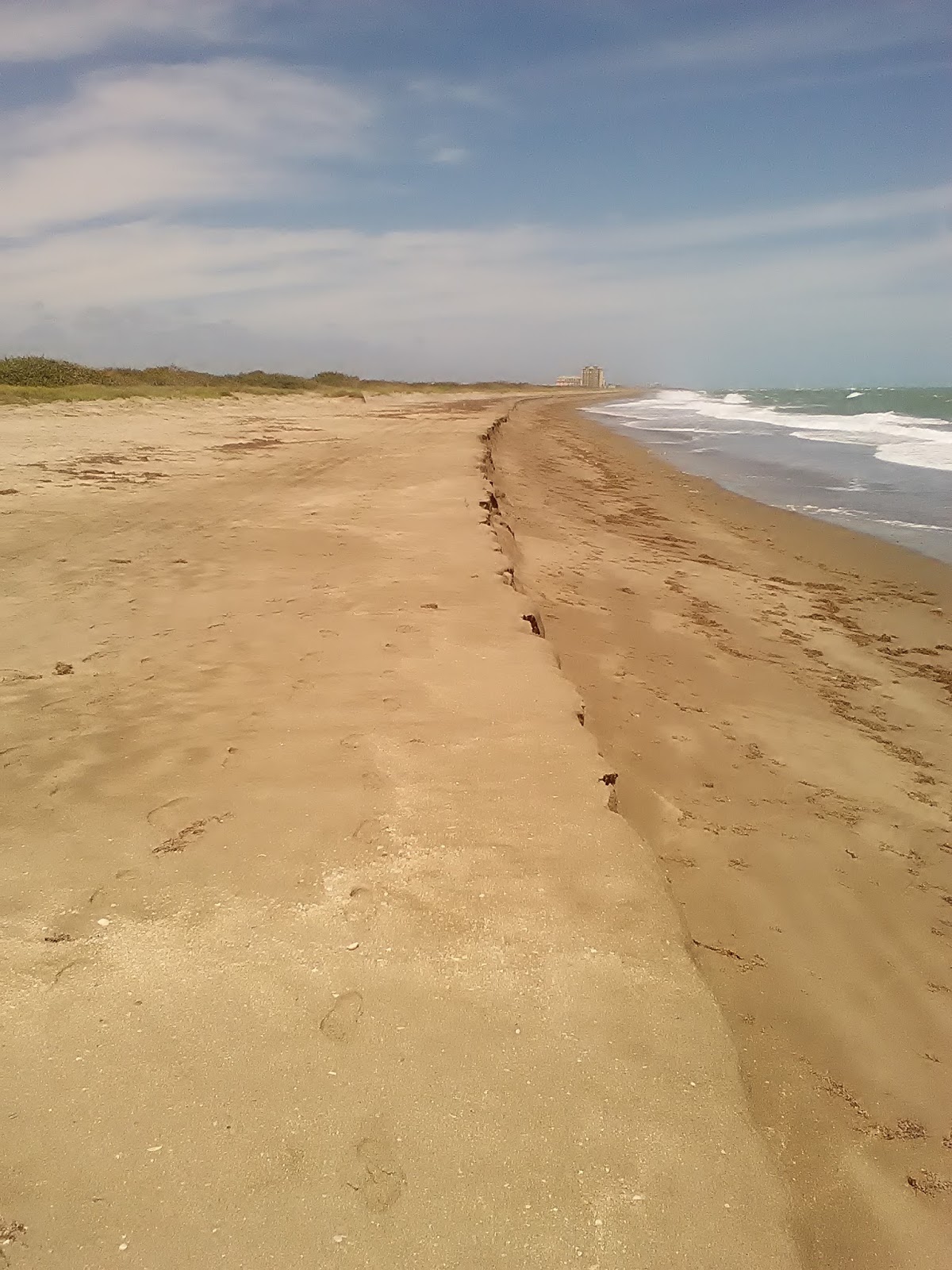
I previously described how cuts are created.  The one thing that absolutely has to happen is the water has to move with enough force to carry sand down the slope and out into the water.   I've described how that happens when the water hits the beach at an angle and slices sand away.

Below I have a video that I previously posted that shows how cuts are created when the water is hitting the beach at an angle - in this case, it is an extreme angle.  After that I have an excellent and very revealing video of an experiment conducted in a wave tank that shows how a cut can be created when the water is hitting the beach directly at a ninety degree angle.

Here is a video I caught that shows how a cut occurs when water hits the beach from an angle.  In this case the water flows almost parallel to the beach.  I showed this one once before.


The cut is moved farther back each time the water flows along the face of the cut.  If the tide goes out and the water level drops but the water keeps hitting at a similar angle, another cut will be made lower on the beach.  You three different cuts at different levels in the video.  For a deep cut to be made the water has to keep moving along the cut for a period of time without the water level getting either much higher or lower.

That is one way a cut is created, however cuts can occur even when there is little or no angle to the water hitting the beach.

Here is a video that illustrates very clearly how a beach can erode when the water is hitting a beach straight on.  Watch closely.  This is great.

https://www.youtube.com/watch?v=y0C5sQ_NWs8

A wave tank is a different than a real beach in several ways, but the wave tank does help make some things clear.

If you carefully watch the beginning of the video, you can see a dip gradually form just below the highest reach of the water.  Watch from second three through nine and you will see a dip beginning to form.  The side of the dip highest on the beach continues to get steeper until finally it starts to collapse, and a small cliff (or cut) is formed.  The cliff becomes higher and moves farther back on the beach as the water continues to erode into it.  That is an excellent illustration that you couldn't see on a real beach in real time.

But that isn't all.  After the first cut, a second cut forms a little lower on the beach.  Why is there a space between the cuts, and why does the second cut form where it does?

What happens is that the sand from the first cut moves down the slope and that hump forms a steeper slope which focuses the force of the water and creates a new a new cut.

To sum it up, under specific circumstances such as those illustrated in this wave tank video, water hitting straight onto the beach CAN, under certain circumstances, cause a cut by first creating a dip that gradually increases until the slope is so steep that it begins to collapse, therefore creating a cut.

Steeper beaches return water at a speed and force that can carry sand down the slope (erosion).  Waves with less force cause lower wider beaches that deposit sand on the beach instead of pulling it back into the water.

A real beach is different in a variety of ways.  For one thing you don't have straight walls and the waves are more irregular in both shape and timing.  The beach is not straight either.  And the sand can vary in a number of ways, including grain size and compactness.

There is much more that you can see in that video if you keep watching, but that is enough to assimilate at one time.  I'll probably comment on more of what you can see in that video at some other time.  I do wish I could slow the video down.

Here is one tip if you want to study the video some more - watch the turbulent areas.

While on the subject I'll throw in one more video.


I didn't even get into what is special about cuts or why they are good for metal detecting.  I'll do that in the future.

---

The tides are getting a little bigger.  Today there will be a small negative tide.

The surf is only around two feet.

As I recall, Easter is on the first Sunday after the first full moon after the Spring equinox.

I think what I posted today will help you understand beaches better.  There is more to come.


Happy hunting,
TreasureGuide@comcast.net

Tuesday, January 8, 2019

1/8/19 Report - How Mammoths Were Killed by Man. Water Forces and How Objects Move on a Beach.


Written by the TreasureGuide for the exclusive use of treasurebeachesreport.blogspot.com.

A flint point was found in a mammoth bone that provides clues about how mammoths were killed.  Here is an excerpt from that report.

"Among tens of thousands of bones, during a detailed analysis of the remains, I came across a damaged mammoth rib. It turned out that a fragment of a flint arrowhead was stuck in it. This is the first such find from the Ice Age in Europe!" - told PAP Dr. Piotr Wojtal from the Institute of Systematics and Evolution of Animals PAS in Kraków. The analyses, co-financed with the National Science Centre grants, are conducted jointly with Dr. Jarosław Wilczyński.

Wojtal reminds that the scientific community has been discussing for years how our ancestors killed mammoths. According to some researchers, these animals were killed by trickery - chasing them to the pits or towards bluffs, from which they would fall. Others say that people focused on weaker or sick animals. Some think that mammoths were hunted...


Here is the link for more about that.

http://scienceinpoland.pap.pl/en/news/news%2C32358%2Ckrakow-first-evidence-europe-man-was-hunting-mammoths-discovered.html

---

On different occasions I've talked about how coins and items move on a beach and the forces that move them.  Today I'll address the complexity of the water forces.

There are many different water forces that act on an item on a beach.  First of all, the water doesn't hit the beach or an individual item from just one direction.  The most obvious example is the incoming and outgoing water after each wave.  The incoming water hits in one direction, and the outgoing water, if it gets there, from another direction.  But there will often be a primary and secondary swell too, and they will hit the beach from different angles.

Not only can the water come from almost any direction, but the amount of force will vary dramatically too. The amount of force can be nearly zero or very violent.  The force of a crashing wave can be great.  That is water crashing down.  A breaking wave can also, or a passing wave can also lift sand and other items.  I've shown pictures of that before.

Considering all that, an item can be hit from almost any direction and with greatly varying amount of force, but that is not all.  The force will also be different on different parts of a single object.

I once posted a link to a video showing an experiment in which a stream of water was directed up a sandy slope and over an object that was sitting on the slope in shallow water.  The amount of force was sufficient to move the sand on the front of the object, but not enough to push the object up the slope.  The result was that the object slipped down the sandy slope in steps.  When enough sand was moved from the down-slope side of the object, the object slipped down and settled again until enough sand was moved so the object slipped down again.  As the water flowed around the object, the sand on one side (the down-slope side) was moved away until gravity moved it down the slope.

I described that experiment in more detail in a March 2014 post.  Here is the illustration and brief description of the experiment.

Object On Sandy Slope and Stream or Current Directed Up Hill.


The current pushed the sand away from the front and sides of the object as the water rushed around it.  The object then STEPPED down the slope.  I say "stepped" because it moved in small quick steps, pausing in between steps.

The current moved the sand from the front of the object but not the back of the object.  Gravity on the object and also the sand behind the object then moved the object down the slope.

The current trigger or threshold level was sufficient to move the sand in the current up the slope but gravity moved the object down the slope.


Here is the link to that post, which also described another related experiment.

https://treasurebeachesreport.blogspot.com/2014/03/31014-report-experiments-on-movement-of.html


It might seem surprising that the object actually moved opposite the current, but that is the way it worked out.

If this was a wave, instead of a steady stream, you'd also have returning water too instead of water running in one direction, and that could move sand down the hill faster than the object moved down the hill.  And that could bury the object.

You have vastly different amounts of force at different times and locations.  The amount of force of a crashing wave can throw objects and suspend a lot of sand.

I think you can see how complex this is with the water moving  in a variety of different directions and with varying amounts of force.

How an object moves on a beach depends on how the water moves the sand in relation to other objects.  Different objects require different amounts of force to be moved.  The sand moves easier and faster and uncovers or covers objects that move at a different rate.

I've discussed that before along with the subject of thresholds and trigger rates.

---

Not much surf this week.

Predicted Surf.
Source: MagicSeaWeed.com
Happy hunting,
TreasureGuide@comcast.net

Sunday, March 26, 2017

3/26/17 Report - An Important Experiment That Helps Explain When Beaches Will Erode. A Little More Erosion On One Beach.


Written by the TreasureGuide for the exclusive use of treasurebeachesreport.blogspot.com.

John Brooks Saturday Afternoon.

This is one place along the Treasure Coast that shows a cut.  Friday I showed the same beach, but nearer to high tide.


John Brooks Beach Friday Near Low Tide.

Between Saturday morning and the Friday low tide, another half foot had been added to the cut at John Brooks.  The slope was not as mushy either.

Another beach I looked at was not cut at all, but was showing an area that would have probably produced at least some modern coins if I had made the walk.  It was a good ways off.

---

From time to time I talk about how beach sand moves.  I've referred to how crashing waves push water into the sand and put pressure between particles of sand.  I found a good YouTube experiment that hows how water with some velocity saturates and and how the process can actually lift sand particles.  You might remember the photo that I posted in which in looked like sand was actually being sucked up into a wave.  This experiment might help you better visualize how that happens.

The experiment shows how sand will be moved.  If you remember my post on sand liquefaction, this is something like that.  The result is "sand shearing."  Sand shearing, I recently discovered, is the technical term for one way that sand moves.

Water Poured Into  Sand Contained in a Transparent Container \
Source: YouTube video link below.
The above illustration clearly shows what I imagined must happen and what I tried to describe before.  In the middle where the most water is hitting, you see two things.  One is that the water is penetrating the sand.  That is hardly surprising.  Notice also that the sand is pushed out from the area of greatest force on the surface of the sand.  Sand is also lifted there.

So what does that have to do with metal detecting?  Imagine a coin sitting on the surface of the sand when a wave hits the same spot.  The coin, unless the force is so great that the coin is lifted too, would slip down into the depression and eventually be covered.

There is another thing to consider as well.  When the sand is lifted, it will be easily swept away by water moving over the surface.

On a day when the surf is not so rough, the waves are breaking out in front of the beach.  When the waves are bigger and the tide is up, the waves will crash farther up on the beach.  When that happens, the sand will wash away quickly.

When the water is hitting with force any type of cliff from any erosion that has already occurred, the erosion will occur quickly due to the water bouncing back off the cliff and washing disturbed sand down the slope at a relatively rapid rate.

On calmer days when the water is washing up the slope, sand and other materials that are easily lifted and moved will wash up onto the slope.  The water force will slow as the water goes up the slope and the sand will be deposited.  The water washing down the slope will be even less forceful, due to water sinking into the sand.

Here is the link to the video.  There is more to it.

https://www.youtube.com/watch?v=nCJLuB0NgcI

If you remember my discussions of trigger points, the water must be moving with enough force to move both sand and coins for coins to wash in.  (I'm not talking about coins being uncovered or washing out now.) While the force diminishes, the coins will settle or drop out of the flow while the sand is being moved.  The sand will settle out at some other location where the force diminishes even more.

I hope these experiments help you to visualize what I've been talking about.  The technical terms make it much easier for me to talk about my observations.

Sand shear or soil shear are two good terms that I'll be using more in the future.

---

It looks like we'll have a three to five foot surf for a few days.  The wind will be from the east.  That isn't promising, but we'll have bigger tides later in the week.

Happy hunting,
TreasureGuide@comcast.net


Wednesday, July 15, 2015

7/15/15 Report - The Big Three Factors Of Hunting In Dry Sand. How Waves Move Very Big and Small Objects. The Langeid Viking Sword Finally On Display.


Written by the TreasureGuide for the exclusive use of treasurebeachesreport.blogspot.com.


Ornate Viking Sword.
Photo from http://www.thehistoryblog.com/archives/37504
A deadly weapon and symbol of power -- jewellery for a man, with magical properties. The sword gave power to the warrior, but the warrior's strength could also be transferred to the sword. That is how they were bound together: man and weapon, warrior and sword.

This sword was found in Langeid in Bygland in Setesdal in 2011. It is a truly unique sword from the late Viking Age, embellished with gold, inscriptions and other ornamentation. The discovery of the sword has not been published until now, when it is being displayed for the first time in the exhibition 'Take It Personally' at the Historical Museum in Oslo...

Here is the link for the rest of that article.

 http://www.sciencedaily.com/releases/2015/07/150714093658.htm


---


When talking about where to hunt for gold jewelry on a dry beach, I could sum up ninety percent of what needs to be said in a couple of paragraphs.  It isn't that complex.  It doesn't change as much as the wet sand or water does.

It comes down to looking where the most people of the right type do the right things.  The primary factors are (1) number of people, (2) type of people and (3) their behavior.  Number is obvious.  Go where many wealthy people who wear a lot of gold either participate in very active behaviors or are involved in taking off or adjusting jewelry.  Example: busy volleyball court at a resort that attracts a lot of active wealthy people.

Of course there is a lot more that could be said, but that tells you the vast majority of what needs to be said.  You can't sum up where to hunt wet sand and shallow water so easily. There are a lot more factors and things change a lot.

Number of people, type of people and type of activities would be a start for those areas too, but it would only be a start.  After those factors you would want to include how the water moves sand and objects, and that is quite complex.

I've been at this a long time. I'd say something over thirty years, sometimes not as actively as others due to different careers and things, but one of the most surprising things to me is how much I continue to learn.

I knew a lot about where to look before, but a lot of the time I didn't know why.  I didn't know how it all worked.  In the last few years, I've filled in some of the blanks. I now understand some things that puzzled or confused me.  Having a more complete understanding helps in a variety of ways.

A few days ago I talked about coins being flipped up and over the face of a cut.  I first told what I saw happen on one occasion maybe twenty years ago.  I then received and posted reports by others verifying what I'm now calling flip-ups.  In a case reported by Clint L., the object flipped was a gold ring.  In a case reported by Bill P., the object flipped was a reale.

You might have been skeptical.  You might have wondered how objects could flip up and over a two foot cut.

I think the illustration that I provided in my 7/13 post might have satisfied many of you.  However if you still are not sure, you might be satisfied after reading today's post.

I came across a book entitled, Wave Action In Relation To Engineering Structures, by D. D. Gaillard, Captain, Corps of Engineers, U. S. A., 1904.  It is a free Google ebook.  It is a very technical and mathematical engineering book, and isn't easy to quickly browse.  You'll find the link below.

The book provides a lot of good information - much that has been widely published and easily available in recent years, but also details of a lot of experiments and additional specifics that you might not have read before.

Below are just a few examples many similar examples found in the book.  Whether you find these anecdotes convincing or not, I'm sure you'll find them interesting.

Just to give you the idea here are a few.


And a Florida example.


Like I said, that is to give you the idea.  You can find more examples like this as well as experimental data and mathematical calculations in the book.

Click here to go to that book.

After these remarkable examples, you might not find it hard to believe that something like a coin or ring could be flung up and over a cliff.

The power of the sea is amazing.  These events are almost beyond belief, yet this is a very credible source, and others have attested to similar things.

The book provides evidence of other things that I've talked about in the past.  The effect of density on how items are moved is one important one.  You can find the required force calculated for different examples. The density and surface area of the objects are factors, just as is the case for coins and jewelry. Precise mathematical formulae are provided.

While many of the principles I have presented are supported in this book, you will have to downscale many of them to apply to smaller objects.

You might wonder why you would want to know this.  If you do know this type of material, you can look at the waves and know a good bit about the bottom.  You can easily estimate the depth of the water where the waves are breaking, for example.  You will know where sand is building and where it is getting washed away.  That might tell you where to hunt when the water calms down.

If you know that the depth of the water is about one half the wave length ( distance between peak to peak) where the waves are breaking, you can look out and immediately have some idea about how deep or shallow the water is there.  If you keep a mental note of that, you will know when the near shore sand is coming or going and something about the shape of the bottom in the shallow water at that location.

On the deep side of the breaking waves, the bottom is not being affected much.

Most importantly, you'll be able to get an idea of where and when objects will be moving.  As a result you'll better know where to look to find things.

There is a great deal to it.  I have learned a lot from experience, and I have learned a lot in recent years, putting together my own observations and experiences with what I read.  I am enjoying the learning process and it is continuing at a rate that surprises me.

I got a lot more from that book that applies to metal detecting in very practical ways, but I can't put all of that into one post.

---

The next two days the Treasure Coast surf is supposed to be very calm.

Happy hunting,
TreasureGuide@comcast.net