Showing posts with label sand. Show all posts

Tuesday, July 7, 2020

7/7/20 Report - Putting It Together: Waves, Liquefaction and Lenses. Kings Landing.


Written by the TreasureGuide for the exclusive use of treasurebeachesreport.blogspot.com.

Clark Little Photo of Wave.
Source: ClarkLittlePhotography.com.
They say a picture is worth a thousand words, but they say a lot of things - don't they.  In this case, it might not be too far off.

They also say appearances are deceiving.  It looks to me like there might be a bit of a fisheye effect in this photo, but it is still amazing and informative.  Even if there is a fisheye effect, and I'm not sure there is, it still seems to show the sand being picked up with the water.  The surface of the sand right in front of the wave seems to curve up into it.

I've posted other pictures showing something similar, but there is also a lot of geology science that talks about things like liquefaction of sand and soil and how that happens, so we have both the pictures and scientific principles, which seem to support each other.

Source: Pinterest.


Liquefaction can be created by vibrations, which it seems you'd have on a beach with all of the breaking waves, but if that were not enough, I showed an illustration about a week ago that illustrates how passing waves cause liquefaction and water lenses.  I also have referred to how dock piers are set by a pressure hose pushing sand and earth apart so the pier can be inserted.  Putting that altogether, it looks like liquefaction could be one big ingredient that hasn't been talked about much in the metal detecting community to explain how sand and objects move on a beach.  In the past, it seemed that people just talked like sand and objects were simply pushed around somehow.  If you put this all together, I think you'll have a lot more understanding of how sand and other objects can move on the beach.  You'll also want to add what I've called trigger points.

A lot of times things are simply uncovered or washed down from the dunes, but I think the best metal detecting days are when the waves crash from the low tide zone and work their way all the way up until they crash against the dunes.  We usually can't see through the turbulent water to see how everything is moving, but the above photo might give you a pretty good idea.

---

Find With Good Message.

I mentioned finding a cheap necklace not long ago.  It bears a good message.  It seems like every time out I've been finding some type of little turtle thingy.


---


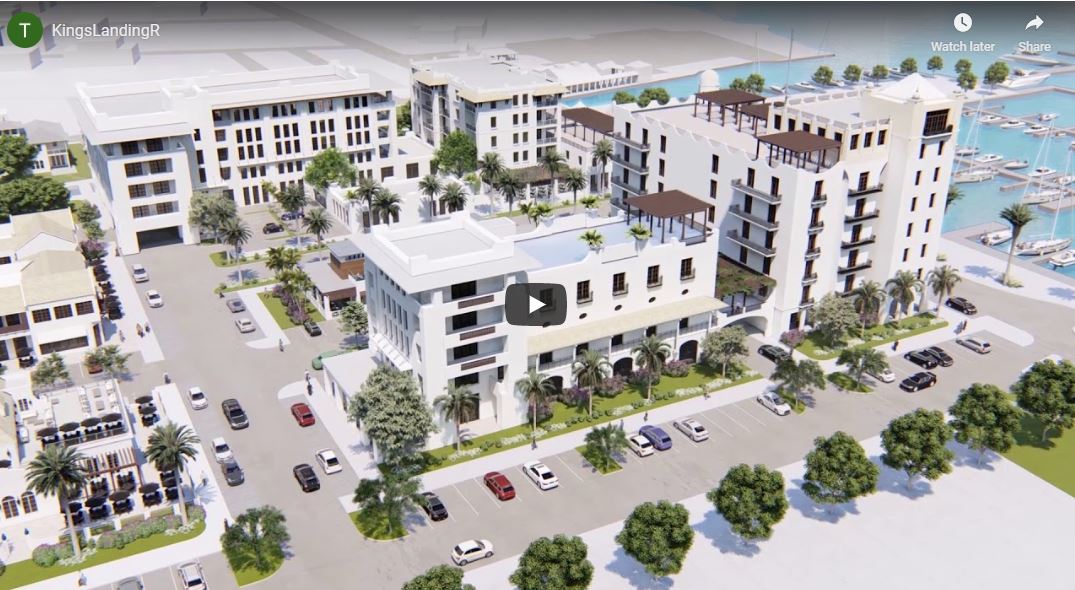
Exclusive Kings Landing Development Coming to Fort Pierce.


King's Landing, a new exclusive community is planned for marina area of Fort Pierce. 

Homeownership ranges from the mid-$400,000s to $1 million+. 

Charleston homes are two-story, three-bedroom and 3 1/2 bath residences.

Homeownership begins in the high $500,000s.

I've read that they are all reserved in advance.

---

If I decided that the predominant culture in which I now live has evil roots and is pervasively evil and I should no longer support it and participate in it or what came from it, that would mean I'd no longer use the internet or computers, or the English language for that matter.  I'd have to burn my degrees and erase them from my vita.   And I'd have throw away antibiotics and other pharmaceutical products, to to China or someplace for medical care, give up hot dogs, Coca Cola, eye glasses, laser surgery, TV, airplane travel, air conditioning, Ford, Chevy and Tesla automobiles, the convenience of the water closet, my Wrangler jeans, and UF Gator shorts.  I'd even have to stop rooting for my football team, watching the NFL and basketball.  And that is just a beginning.

---


Not much on the National Hurricane Center map today.

Happy hunting,
TreasureGuide@comcast.net

Monday, July 6, 2020

7/6/20 Report - Tropical Storm Edouard. Beach Zones. Density and Specific Gravity of Things.


Written by the TreasureGuide for the exclusive use of treasurebeachesreport.blogspot.com.

Yesterday I discussed liquefaction, which can occur on a beach under certain circumstances that cause sand to act much like a liquid.  I showed a couple photos of liquefied sand being moved by big waves.  Of course, most of the time that occurs near the front of the beach, but when the tides and swells are big, it can occur on the back of the beach.

Before delving more into the physical forces that move sand and other objects, this morning I thought it would be useful to mention the various beach zones of interest to the detectorist.  

Starting off-shore in the shallow water, there can be a sand bar.  That can be a good place to metal detect if there are a lot of bathers using the bar.  That happens a lot down in the Fort Lauderdale/Miami area.  It can be a very good place to detect for modern finds or what I call recent drops, but don't forget that the bar will move, and one side or the other, depending upon the direction the bar is moving, can be good detecting.

Inside of the bar, is often a dip, which can also be good detecting.  In fact some of my best detecting ever was in a cleaned out dip.  The dip can be full of sand and shells, but it can also be cleaned out down to bedrock, which of course is when the detecting can get very good.

On the beach front in the wet sand can also be good detecting, but it can also be poor, depending upon what is going on.  This area can be good or poor, depending upon a variety of factors, especially whether the sand is building on the beach front of eroding.  In either case, good water action can wash up good targets.  In the wet sand below the berm you might be able to find the coin lines or coin holes that I've mentioned many times.  They can also have other good targets beside coins.

The fourth zone is the dry sand area, which of course can be good if people have been using it.  Hunting the dry sand is very different from hunting the wet sand or water because the water does not do as much sifting and sorting there.  Detecting in the dry sand depends more on where things were dropped.  In the wet sand things gets sifted and sorted more, so you are often looking more for where targets ended up rather than where they were lost.  The water does however hit the wet sand area on some occasions and can definitely affect the distribution of finds.

The fifth zone is the dunes, where you will usually not be allowed to hunt.  Very old items will typically be buried a foot or more in the dunes, but when the water hits the dune face, items can be washed out and onto the flat beach.  

It can get a lot more complicated but those are some of the basics of the five zones.

---

We often talk of where you might find heavy items like gold.  As I've said many times, it is really not the weight that we are concerned with.  A ton of Styrofoam will float.  It is more a matter of density, rather than weight.  Other things are important too though, such as the shape of the object.  Bend tons of steel into the shape of an ocean liner and it will float.


Here are the densities of some of the metals you might find.  That helps explain why you can find aluminum when beach conditions are not very good, and why lead is a good sign if you are looking for beach gold.

Again, shape is also important.  Shape a super tanker out of steel and it will float.  Thin sheets present more surface area for the water to push around or lift.

Specific gravity is the density of an object relative to the density of a reference substance, usually water at a specific temperature and salinity.


Having a specific gravity of 19.32, gold is over 19 times more dense than reference water.

Sand has a specific gravity of somewhere around 2.65 to 2.70.   So being more dense than water it sinks in water.  There are a variety of other forces at work on the beach sand though, and the shape and constitution of the sands makes a difference too.

Notice the specific gravity of aluminum is very close to that of sand, so it is no surprised that you can find it in sand that is building on the beach.

Another generality is that it will take a lot more water force to move gold than either sand or aluminum.

If you understand these things it will help you figure out how things are moving and that will give you a better idea of where they might be found.

One of the things about gold rings is the relative lack of a flat surface area for the force of water to act on.  A copper coin on the other hand, will move differently than a gold ring not only because of the different density of the material but also because of the shape.  Likewise the movement of a zinc coin will be determined in part by the adherence of materials to the surface of a corroded coin.

That will provide some background for future discussions.

---

As I said yesterday, the National Hurricane Center map is starting to light up.  There is now a tropical storm :Edouard.  Edouard will not affect us, but there is a new system down by South America to watch.

Source: nhc.noaa.gov
It is the time of year to start watching for storms.

Happy hunting,
TreasureGuide@comcast.net


Sunday, July 5, 2020

7/5/20 Report - Waves, Liquifaction and Sand Movement on The Beach. NHC Map Lighting Up. Access to Technology and Data.


Written by the TreasureGuide for the exclusive use of treasurebeachesreport.blogspot.com.

Wave Photo by Clark Little Photography
Source: clarklittlephotography.com.
Although it seems like coins and rings and things sink in the sand, they don't sink in undisturbed dry sand without some disturbance of the sand.  You can easily prove that for yourself.  Just take a bowl or container of sand and place a coin or ring on top of it.  You can come back days later and clearly see that the item did not sink.

When you say a object sinks in sand, that seems to me to imply gravity as the primary force, which is misleading because the sand has to move to allow the object to "sink."  Maybe to you that is not an important distinction, and I can accept that, but for me, I'd rather place more emphasis on what has to happen with the sand.  That is what we have to know more about in order to be able to explain how an object will sink at the beach.

Clark Little takes amazing photographs of waves, like the one shown above.  If you visit ClarkLittlePhotography.com you'll see many great photos.

The above photo, besides being beautiful, shows some very interesting things.  Notice the brown area that the person is standing in.  There is brown all around the person, and there is also a brown vertical column in front of the camera.

The brown around in front of the wave shows that a lot of sand has been suspended by the turbulence.  And the brown vertical column, shows how sand has been picked up into the wave.  It seems clear that a lot of sand is being moved in that photo.

We don't often see a wave that big on the Treasure Coast, but the same thing happens with smaller waves, though to a lesser extent.  On the Treasure Coast we don't get waves like that, but the waves we do get will do the same thing - move sand.  And sometimes the waves do get pretty big.

Here is another great photo by Clark Little.  Once again, you can see the sand being sucked up into the wave.


Photograph by Clark Little.
Source: ClarkLittlePhotography.com.

As I've said many times, different materials and objects require different amounts of water force to move.  With a waves shown in these photographs a lot more than sand could be moved.

Here is an interesting explanation from Wikipedia explaining how sand fleas bury themselves.

Emerita is adept at burrowing, and is capable of burying itself completely in 1.5 seconds. Unlike mud shrimp,  Emerita burrows tail-first into the sand, using the periopods to scrape the sand from underneath its body. During this action, the carapace is pressed into the sand as anchorage for the digging limbs.   The digging requires the sand to be fluidised by wave action, and Emerita must bury itself in the correct orientation before the wave has passed to be safe from predators.

As the tides changes, Emerita changes its position on the beach; most individuals stay in the zone of breaking waves. This may be detected by the physical characteristics of the sand. As the tide falls, the sand is allowed to settle; when Emerita detects this, it uses the temporary liquefaction from a breaking wave to emerge from its burrow, and is carried down the beach by the wave action. Longshore drift also drag Emerita laterally along a beach.

Crashing waves cause liquification of the sand.  It burrows into the liquified sand, which settles when the tide recedes.

When you are talking about objects sinking into the sand, a number of things are going on.  Like I said above, it requires some disturbance of the sand.  In some cases that disturbance might be little more than sand moving away, while the denser objects remain.  When the sand is liquified, denser objects can actually sink into the sand, but that requires special conditions.  It does not happen unless the sand is being disturbed in one way or another.

In the near future, I plan to discuss some of the other variables and forces pertaining to how objects sink or appear to sink into sand.

---

Neural networks and AI could be a lot of help to the treasure hunter, but it would require a lot of research and development work, and access to the technology and data. For me the most valuable thing about going through years of higher education was access to technologies, labs and data.  I could  have done without the classes and lectures.  In fact, the thing in education that probably changed my life the most was discovering computers in 1969.

I started with batch processing, which involved punching computer instructions on punch cards, which were then submitted to the computer center.  You'd go back to the computer center in a day or two to get the output (you think your computer is slow).  As often as not, what you got was a listing of the many errors in your program that had to be identified and corrected before submitting the program again and waiting another day for the output.

I'll never forget the day I discovered a teletype machine that allowed me to use interactive BASIC to enter programs.  You'd hit a key and wait about two seconds before seeing the character typed on the computer paper on the teletype in front of you.  The delay in response took some getting used to but it was miles ahead of batch processing.  You know the rest - personal computers and then the internet.

If the general population had access to the most advanced technologies and data, progress would be accelerated many times.  If people had access to the raw data and information, there would be all kinds of genius geeks looking at the data.

A lot of things are accomplished by amateurs despite the barriers.  That is very true with archaeology.  Professionals have their own domain to protect and they seldom appreciate the talent that is sitting out there in the world.  Did you ever get a job when you were way beyond the person that would be your boss?  It won't happen.

In a very rare event about a week ago, a reporter actually asked a follow up question of Dr. Fauci, that elicited some useful information.  Dr. Fauci had mentioned in a very general way that something wasn't working, and the reporter asked what that was. Whoooaa - a reporter actually doing their job. Dr. Fauci said that contact tracing wasn't working because certain populations weren't responding to the calls.  In a moment of unguarded candor, he described those populations, but I won't.   I knew that very useful information was too politically incorrect to ever be mentioned in public again.  It wasn't.

Do you realize that a lot of the people at the top of the health agencies have been there longer than Moses wandered the wilderness?

The point I'm making is that the public only gets filtered information at best.  I'd love to see more good data put out there for the public to access.  Just yesterday I noticed a TCPalm headline that said something like 80% of corona cases are from minority populations.  I found some demographic breakdowns on the Florida Dept. of Health site and their numbers suggested nothing like that headline.

I don't do Facebook or Twitter.  I'm not much interested in the party line, the slogans, mantras, talking points or retweeted retweets.

I do very much like the idea of using neural networks and AI for contact tracing, but am personally more interested in tracing ideas and treasures than viruses, although that would be fun too if the data collection was more systematic and well defined.

---

Source: nhc.noaa.gov

Seems like the National Hurricane Center map is becoming a little more active.  Maybe we'll get some nice waves someday before long.

Tropical wave five is moving away from us and there is another area that has a small chance of developing in the next couple of days.

Happy hunting,
TreasureGuide@comcast.net

Friday, July 3, 2020

7/3/20 Report - EXCITING Gold Find Made on Douglas Beach Wreck. Biker Ring Find. Lessons From Liquefaction and Water Lenses.


Written by the TreasureGuide for the exclusive use of treasurebeachesreport.blogspot.com.

Gold Pelican of Piety Artifact
Found by Captain Bonnie Schubert

If you've been reading this blog very long you might remember reading Laura Strolia's research concerning the Pelican of Piety artifact that was found by Captain Bonnie Schubert on the Douglas Beach wreck site in 2010.  As you can see from the photo above, it was missing a wing.  Well, ten years later, in 2020, Captain Henry Jones and 1st mate Tracy Newman along with Brian Fisher working on the M/V Perfect Day, found the missing wing, along with an attached segment of chain and connecting ring.

Missing Wing Found by Captain Jones and Crew of M/V Perfect Day.
Queens Jewels LLC Photo submitted by Captain Jonah Martinez.


Thanks to Captain Jonah for sending me this news.

For Laura Strolia's research and interpretation of the Pelican of Piety artifact, see the following web site.


If you want to read more about the Pelican of Piety artifact, use the search box and do a search of this blog.


===

Alberto S. found this stainless steel biker ring about 10 inches deep.


Stainless Steel Biker Ring
Find and Photo by Alberto S.


Alberto also said, I also found that the heat was unbearable, good thing I carried some water with me, 2 bottles which was not good enough for a 2 hour hunt. 

If you are working out on the beach these days, be sure to take water along with you.


Thanks for sharing Alberto.

---


People talk about the sun coming up or going down.  That is how they see it.  There is nothing wrong with describing it that way - unless you really want understand or describe what is really going on.  In that case, you might want to talk about how the earth moves relative to the sun.

For a long time I've been trying to move the discussion away from objects sinking in the sand.  They do sink, at times, but it is not like an item at rest will be drawn by the force of gravity alone to lower levels, which is how I would picture objects described as sinking.  It has a lot to do with the movement of the sand, which might to the eye seem relatively stationary.

The sand can move in a very obvious or very subtle way.  Sometimes it is easy to see it moving and sometimes not so much.

As you can see from the above illustration, which really gives a good description of one way that items are sorted and resorted in wet sand, resulting in stratification of layers with successive waves of pore pressure changes.

I'll leave it at that for today.  I've been trying to put together a good description of how items become stratified (you might say sink) in wet sand, but it is fairly complex and I'm going to have to invent my own descriptions and illustrations.  None of the experiments that I've seen take into account forces such as crashing waves, which is critical in many cases. That is just one of several important factors.  A crashing wave, like the passing waves shown in the above illustration, changes the pore pressure between grains.  Think about how a pressure hose can be use to set a dock pier.  The hose creates turbulence and separates grains to create a hole into which the pier can be set.

Anyhow, I'll try to elaborate on that more in future posts.

---

The surf is really flat on the Treasure Coast and there are no signs of storms forming.

Happy hunting,
TreasureGuide@comcast.net


Tuesday, June 30, 2020

6/30/20 Report - Calm Surf and Sandy Beaches. Treasure Coast Fossils. Fishing Artifacts.


Written by the Treasureguide for the exclusive use of treasurebeachesreport.blogspot.com.


Typical Sandy Treasure Coast Beach.


The Treasure Coast beaches have been accumulating sand for weeks now.  In the photo you can see where the waves are crashing on a sand bar and then washing sand in, during high tide, up on the beach.

Waves Breaking on Bar

If there is a dip inside the bar, the waves will break on the bar and then disappear if the dip is deep enough.  Where there is less of a dip, the waves will continue in.  You can easily look out and see where the dips are.  


Waves Breaking on Sand Bar.

The dip shown in the above photo had a lot of loose sand and shells in it.  The water was clear and you could see what look like waves of sand on the bottom.  It was far from washed down to bedrock.


John Brooks Beach Yesterday Morning.

---

Recently I posted a photo of a fossil snake vertebra that I found on a Treasure Coast beach.

Here is an article discussing the evidence that men ate snakes long ago.  Notice the reptile vertebra  pictured in the article (below).


Source: LiveScience.com link below.
Here is the link.

https://www.livescience.com/ancient-humans-ate-snakes.html

---

Here is another small fossil vertebra found on a Treasure Coast beach.  It is in great shape and is very different than the snake vert.  I don't have any idea what type of animal it might have come from.


Two Views of Small Fossil Vertebra 
on US quarter for size comparison.

If anyone can tell me the animal, I'd love to know.  It doesn't look like the fish verts that I'm familiar with.

---

Here are a couple stone-age fish hooks found at an inland site that was once a lagoon.  Between 1932 and 2020 the land was drained.  You can see that the fishhook that was excavated before the land was drained is in much better condition than the one excavated from the drier earth.


Source: See ScienceNorway link below.


Here is the link for the article about the excavation of fish bones and fishing artifacts from a stone-age site.

https://sciencenorway.no/archaeology-history-stone-age/archaeologists-have-found-astonishingly-well-preserved-gear-from-a-fisherman-who-lived-5000-years-ago/1705054

---

As they mentioned on the Dino Hunters TV show, bones have to have the right conditions to fossilize.  After an organism's soft tissues decay in sediment, the bones are left behind. Water seeps into the remains, and minerals dissolved in the water seep into the spaces within the remains, where they form crystals.

---

Source: nhc.noaa.gov

An area of low pressure off North Carolina has a small chance of developing into a cyclone in the next 48 hours, but it is expected to head northeast.

The surf remains small on the Treasure Coast.

Happy hunting,
TreasureGuide@comcast.net


Saturday, May 30, 2020

5/30/20 Report - Lead Coin. Sand and Object Movement. Various Religious Items.


Written by the TreasureGuide for the exclusive use of treasurebeachesreport.blogspot.com.


One of the interesting odd items in the Sedwick auction yesterday is the lead coin shown above.  As you can see, it was listed as lot 1201.

You don't often see lead coins, but that Nicaragua 10 peson coin is one that has an interesting history.

fascinating relic from the rebellion of 1927-33 that pitted forces under revolutionary leader Augusto Cesar Sandino against the U.S. military, Sandino eventually being assassinated but still revered today as a national hero and symbol of resistance to U.S. domination in Central America. Tokens like this one were exchanged for goods from local merchants.

If you dug up a lead coin you might think it is some kind of token, weight or fake.

---

I've been thinking of doing this post for over a month now, but it isn't an easy one and I still don't have it together.   The topic is very complex and involves a number of factors and interrelationships, but I'll do my best to make it clear, which means keeping it simple to some extent.

I previously did a number of posts on the movement of sand and other objects.  Different objects move differently depending upon a variety of factors, and an object such as a coin can move in a variety of ways.

The main reason we are interested in the movement of sand is that it can cover or uncover the the types of objects we look for.  The uncovering can occur naturally, which is necessary for the beach detectorist, but if you are working a salvage lease you can move the sand using blowers.

What I want to describe today is the relative movement of sand and other objects.  First I must repeat one thing that is often neglected - it is not just about weight.  The density of the object - not it's weight - is important, but it's shape is also important.  A flat thin piece of copper will be washed around by the water differently than a coin of the same weight.  You'll frequently find small thin pieces of copper washed up and laying on or near the surface of the sand when you can find little else.  And an oval lead sinker will move around very differently than a flat or triangular one.


To get the basics, I'd recommend studying the following table shown above and a previous post in which I explained it.

Here is that link.

https://treasurebeachesreport.blogspot.com/2020/02/22620-report-reading-water-to-find.html

So a certain amount of force is required to move the sand and a certain amount of force is required to move an object such as a coin.  The amount of force required to move sand will typically be less than that required to move the coin.  Therefore, sometimes the sand will move, but not the coin.  The sand might then uncover the coin or let it sink down to the surface vacated by the sand.

In a previous post I mentioned five ways that coins move, so that can get complicated, however coins and items such as coins will move less often and not quickly as sand.  So the thing that is important is relative movement.

Imagine the situation in which the beach sand moves but the coin remains relatively stationary.  The coin will be uncovered and if the sand continues to move without the coin moving much, the coin will sink down to the new lower surface of the sand where it can stay until it is covered again.  That is not an unusual scenario.  One important thing to remember is that the coin will remain basically stationary as long as it remains covered.  If there is enough force the coin can move when the sand moves, but in most cases it won't move as much as the sand.

If you sketched a Christmas tree and took the side on one side, that would be a fairly typical coin movement pattern over the years.  Every time there is erosion it might drop with the sand surface and drift a little towards the surf.  It might get covered from time to time but seldom get washed back up.  Usually it would stay at its current position until it is uncovered again.

A ring, because of its shape, will get washed up less often than a coin because of its shape.  There is less surface area for the force of the water to act on.  Once either of them reaches a deep level they will seldom be washed up.  It would take a rare event for that to happen.  And once either reaches shelter in a rock crevice, it would be extremely rare for either to be washed up.

Where a lot of the action happens is where the wave breaks.  That produces a lot of turbulence and lifts sand, rocks and other things that can then be pushed up the slope by rushing water.  Again, it will take a lot to wash a ring up the slope because the lack of flat surface area.

What makes things especially complicated is the continually changing force of the water as it comes in and goes up the slope and then descends back down the slope and all of the interactions.  It would be much easier to figure out if the water simply flowed in a continuous stream, but that is far from what we are dealing with.

---

The Sedwick auction concluded today.  The last session included a variety of less expensive lots, including some rather large groups of coins, clumps, paper money and mounted coins.  Among the items were the following group of miscellaneous religious items.


Here is the lot description.

Lot of twelve crosses and religious medallions and other items in base metals, various periods (1600s-1900s). 47.95 grams total, 1/2" to 2". Cool little collection of objects, from a three-masted ship to a functioning miniature spur to various medallions and simple crosses to two crosses (one ornate though incomplete) with inlaid cabochon emeralds. Great for further study.

Some of the lots in the final session went unsold, but I thought the auction did much better than I expected.  For the most part, bidders were not deterred by the economic downturn.

---

It looks like we will have a two or three foot surf for a couple of days and then a possible increase.

Happy hunting,
TreasureGuide@comcast.net


Sunday, March 29, 2020

3/29/20 Report - Beach, Sand and Water Movemnts. Treasures in Books. Coronavirus Migrations.


Written by the TreasureGuide for the exclusive use of treasurebeachesreport.blogspot.com.

I've been thinking about presenting this topic for a long time, but it is difficult to present.  There are so many variables and it is so complex that it is hard to illustrate and explain.  Everything I am going to present is simplified, but that is the way it has to be.

It does NOT apply to steep areas or areas that the waves are breaking on.  It applies mostly to the mid and back beach areas that are only gently sloped.

If you talk about coins or things sinking at the beach, one way to visualize it is like objects sinking in water.  In other words, gravity would pull them down to a lower level without anything else happening.  That is not how it happens in sand.

You can set a coin or ring on the sand and it is not going anywhere unless the sand is agitated.  Try it for yourself.  It doesn't matter how long the object sits on the sand, it isn't going anywhere unless you stir things up.

Illustration A, which shows three objects on the beach.  They are going to sit there until the sand moves.  Assume the objects all have the same shape and size and density and the force of the water is enough to move the sand but not the objects.   If six inches of sand is removed from that area of the beach, the objects will then be down about six inches and on the new surface (NS), as shown in illustration B.

They will stay there on the new surface until more sand is moved from under them (again the assumption is that the water force is enough to move the sand but not the objects).

If more sand is moved while the force of the water is not enough to move the objects, the objects will drop down some more.  Remember, I'm oversimplifying here.  However if the sand returns (while the water force is still strong enough to move the sand but not the objects, the objects will get covered.  If six inches of sand moves, but this time in the opposite direction, the objects will be under about six inches of sand.

This coming and going of sand can happen many times.  If the amount of force is only great enough to move the sand, we will have some idea how deep the objects that started near the original surface will be.  If additional layers of sand are moved (without the objects being moved horizontally) the objects will find the lowest layer where the sand had vacated.  If, for example, three times six inches of sand was removed without any sand refilling, the objects will be down about 18 inches.  In actuality that would be unusual.   More commonly you would see sand eroding and then refilling to some extent in between erosion events.

My observations of local beaches seems to show that a foot or two is really about as much as you'll usually see, and that amount can put you into productive sand, and likewise cover it up when the flow of sand reverses.

More than a 100 times to 1 some amount of sand will be left covering the newly settled objects.  Only when a slight wash of water, most often during a descending tide, uncovers the items will the items be exposed and laying right on the surface.

I haven't even addressed when the water force is strong enough to move the objects too.  In that case, the objects, either a few or all of them will be moved some distance with the sand, but usually not as far as the sand.  And if the objects have different densities, sizes or shapes, they will also separate.

Another complicating factor is the fact that the water will be usually coming in and then reversing and going back out over the same area.  That means that in those cases the sand and any other objects can be moved in both directions.  The relative force of the incoming and outgoing water will determine which objects are moved how much, and the important thing - the net movement.  An easily moved object will can move a large distance in both directions, but one direction more than another.  Sometimes other factors come into play, such as the slope or other obstacles.

Objects that move less easily will remain closer to their original spot.  But there are also times such as when you have a good angle that the water comes in and washes out at more of an arc, which means a steady movement either south or north will be observed rather than only the back and forth of the up and down hill movement.

Back to the simple case in which we only consider a single sand moving wash of water.  The main point is that less easily moved objects fall into lowest layer and will tend to remain there, periodically being uncovered a little and then covered more deeply again.  They'll mostly stay at the same level until the sand gets moved and they reach a new lower level.  That might sound like sinking, but it is not sinking into a stable layer of sand.

When you can identify an old layer of sand that has been exposed, it likely has been relatively unmoved for a long time.  It will take an unusual event for it to be washed out - yet it does happened.  Usually when such a layer is near the surface it will get covered fairly quickly again and then most future movements of sand will be the coming and going of the one or two feet above that, but not much more.

If the objects are in deep layers that haven't been exposed for long periods of time, they will probably remain there for long periods of time.  It will take an unusual event to expose once again those deep layers.  And if items get down to bedrock and caught in crevices or whatever, they will stay there until some very dramatic event occurs or somebody removes them.  It will take a very unusual event, probably a sequence of events, to dislodge them naturally.

I started out trying to be specific, but couldn't cover much that way, so I got more general.  Like I said at the beginning, there are a lot of variables and it isn't simple.

---

Carpintero was working as an intern at the Z.D. Ramsdell Civil War Home Museum in Ceredo, West Virginia, when she discovered the letter tucked in a book. The letter, dated June 27, 1862, was written by then Lieutenant McKinley of the 23rd Ohio Infantry to Ramsdell. Carpintero found the letter Jan. 7 while researching another artifact in the museum and said her internship supervisor was just as surprised by her finding the letter as she was.

Here is the link.


I've written before about the surprises you can find in books.  I once wrote an article about that for a treasure magazine.

I have many old collectible books (over a hundred years old) that have never been read.   How can I tell?  The pages have never been separated.  They were never trimmed.

Old books are one of my favorite treasures, but unlike back forty or fifty years ago, the collectible book market is not good except for the most desired books.

---

Population migrations are interesting and often result in good places to detect.  Ghost towns are one good example.

Here is a link to an article about the coronavirus migration.

https://www.msn.com/en-us/news/us/the-great-american-migration-of-2020-on-the-move-to-escape-the-coronavirus/ar-BB11QAma?ocid=spartandhp

A few days ago I mentioned that people are escaping the high-risk New York area that has around fifty percent of the nations confirmed cases.  Instead of self-isolating that are spreading the risk.  There was some talk of stopping that, but it was those with means that were doing it, so it wasn't stopped.

Some local areas did take measures to stop it even if the governors didn't want to.

...From beaches and resort towns to mountain cabins to rural family homesteads, places far from densely packed cities are drawing people eager to escape from infection hotspots. But virus fugitives often are running into fierce opposition on their routes, including Florida’s effort to block New Yorkers from joining their relatives in the Sunshine State, a police checkpoint keeping outsiders from entering the Florida Keys, and several coastal islands closing bridges to try to keep the coronavirus at bay... 

...As the threat of the virus intensified last week, Danette Denlinger Brown, 54, hoped to relocate from Williamsburg, Va., to North Carolina's Outer Banks, where she and her husband own a second home. But as she prepared to leave, she learned that North Carolina police had blocked the Wright Brothers Memorial Bridge connecting the mainland to the barrier island. Only year-round residents could cross, a restriction county officials said was necessary to stop migrating families from overwhelming the area’s only hospital, a 20-bed facility...

They tell those who are moving to self-isolate for fourteen days, but who takes with them two weeks of supplies when they travel.  It's a farce.  Cuomo is happy to export his problem to another state, along the needs and statistics that go with them.

As per the TV news, there are so many private jets from New York now at the Palm Beach airport that there is no more parking space.

The blue state elites are now escaping to the culturally backward blue-collar red states for refuge.  Actually those who could always did.

---

The surf will increase to 3 - 5 feet in a few days.


Act responsibly not selfishly.  Think of others as much as yourself.
TreasureGuide@comcast.net

Sunday, March 22, 2020

3/22/2020 Report - Beach Dynamics and Beach-Specific Knowledge. Many Beaches Closed.


Written by the TreasureGuide for the exclusive use of treasurebeachesreport.blogspot.com.

Source: madkeen.com  (See specific link below.)

There are at least two distinct types of beach knowledge.  One is the general ability to read beaches, and the other is knowledge about the unique characteristics of specific beaches.

These days it seems almost everybody talks about "reading a beach."  My first posts on that topic were done back in 2008, although I was reading beaches long before that. 

People have been reading beaches for a long time - well before most of the current generation of detectorists was doing it.  It didn't take treasure hunters long to notice that blackened coins showed up on the beaches after storms.

One thing that is very different today is that a lot more gets published.  You can watch YouTube videos and read blogs and forums.  Those didn't exist back thirty or forty years ago.  Back then detectorists were generally much less talkative.  Some went to great lengths to remain invisible.  Some of the best detectorists hunted at night so they wouldn't be observed.  They weren't about to give anyone else their secrets.  Of course there were always a few who liked to talk, but most remained very tight lipped.  Now people come along, observe what others have been doing, read what others have to say, put it in a book, slap a picture of their face on the cover along with some finds and sell it as their own.

I remember once getting a call from somebody who wanted me to sell me some type of oil investment.  I thought if it was as good as he says, why is he on the phone trying to sell it to me.  According to him, a small investment would quickly become a fortune, so why didn't he just do that.  I feel similarly about people who are trying to sell books filled with information they got from somebody else without giving any credit.  There are all kinds of people in the world.

One thing you must do if you conduct any kind of serious academic or scientific research is give credit to the various sources that you use.   In a research report, you would include a review of the literature.  That includes everything relevant that has been published up to the point of your investigation. The literature review gives a history of the state of knowledge on the subject and gives credit to the people who contributed that knowledge.

If you've been watching the daily Coronavirus task force you'll notice that Dr. Fauci has a very conservative approach that demands good hard research and data.  You'd expect that from a person in his position.  He would naturally have a different attitude and perspective than somebody working alone with people in poor remote regions of the world that have to do what they can with what they have to solve immediate problems.  The press doesn't seem to understand that or much of anything else.

But back to reading beaches - detectorists are not the only people who do it these days.  I just ran across a fishing blog that talks about reading beaches.  It seems that many fishing sites talk about it.

Here is the link to the one I bumped into.

https://blog.madkeen.com.au/how-to-read-a-beach/

I didn't actually read much of it but saw some good illustrations on one post.  At the top of this post is one of those.

To me that seems more like reading the water than reading the beach, but that isn't important, and it is still food information for both shallow water hunters as well as land hunters.  The tides will go out.

You'd think the gutter is a good place to hunt, and it can be, but sometimes it is too shallow and is filled with loose sand and shells.  Even then it can be a good spot to find some types of objects - watches for example.

I still remember the first time I got caught in a rip tide.  At that time I knew nothing about rip tides. I just felt myself getting pulled out.  That was between Hollywood beach and Dania beach.  It was a little scary.

It is helpful to know how the sand is moving.  One thing I used to say a lot is "Follow the sand, but don't catch it."  When the sand moves it ends up in one location, but has left another.  Generally you want to be where the sand was - not where it is.

A sand bar can be moving in or out.  If people have been playing on it, there can be good items on the sand bar.  If the bar is moving towards the shore, things that were dropped earlier can be uncovered.   That is something that applies more often but not exclusively to hunting modern jewelry.

Gutters can be good, but they aren't always good places to hunt.  It depends upon how deeply they are scoured.  You can usually tell in just a second or two.  If the gutter is filled with coarse pieces of shells, it probably isn't very good.  There are a few types of items, however, that will often be found in shallow gutters,  That includes watches.

Rip tides and gutters can create fantastic hunting.   If the loose cover gets cleaned out down to bedrock, it can be a real bonanza until it fills in again.

One mistake I made on more than one occasion is not staying to clean an area like that out before it refilled.  Sometimes those types of spots can last for days, but they can quickly disappear.

What I started out to talk about was the difference between the general skill of reading a beach, and beach-specific knowledge.  If you know the general principles, you can walk onto any beach and use those skills, but it also helps to have a good knowledge of specific beaches.

If you hunt a particular beach enough, you will learn its unique habits.  You will learn where things tend to show up, and under what conditions.  If you hunt a particular beach enough, you will know where the good spots are.  Very seldom will somebody give you that kind of information.  And it takes a while to acquire.

Beaches will change over time though.  I've known some spots that were good for years or even decades, but they eventually changed.

To sum up my main point today, there is a general knowledge beach dynamics that you can apply to any beach, but there is also beach-specific knowledge, which is best acquired by working that beach for months and years.  If you have a good beach and are lucky enough to be able to hunt it enough so that you know it inside and out, you will have a huge advantage over anybody who does  not know it as well.

---

Many of the Florida beaches are now closed.  Indian River and Vero beaches will be closed Sunday.  So will the Hobe Sound beaches.

St. Lucie County beaches, I understand, at this point will remain open.  One local official thought it would provide a good outdoor outlet for people, but the situation will be monitored and the decision could be changed.  Safe outdoor activities can provide relief from stress that might otherwise cause some people to go stir-crazy and do something less safe.

---

Both Mitch King and Joe D. identified the silver item that looked something like an small but unclosed ring as a girls toe ring.  That seems conclusive.

Thanks guys.

---

Don't let the beach closures stop you.  There are still places to hunt.  It might be a good time to try some new types of areas.

Happy hunting,
Treasureguide@comcast.net

Wednesday, February 26, 2020

2/26/20 Report - Reading the Water to Find the Treasure Holes. Test Your Detector. Beach Privatization.


Written by the TreasureGuide for the exclusive use of treasurebeachesreport.blogspot.com.

Stairs at Seagrape Trail Saturday Morning.
Clipped form video submitted by DJ.

The posts at the bottom of the stairs at Seagrape Trail were getting washed out Saturday morning.  They had recently repaired them, but they were damaged again.  I was there that day but forgot to take photos.

Take a look at the stairs and the short posts sticking out of the sand in the photo below.  The posts are lower than the bottom step.  They weren't showing until the beach eroded.


Just To The North of the Seagrape Trail Access on 2/20
Clipped form video by DJ

Also notice the mass of water that is just below the stairs.  Just a few yards out is a wave surge behind that mass of water.  The surge will push the mass up the face of the slope, and the surge will rush up the slope towards the dunes.

Before I go much farther, I'd like to refer to what I think is the most important thing I've ever learned about beach dynamics.  The same principles apply to how things are moved in rivers and streams too, but for now I'm interested in these principles as they explain how sand and other items move on a beach.

Breaking it down, there is a certain amount of force needed to pick up different materials, including clay, silt, sand, pebbles, gravel and other items.  It takes more force to start an item moving than is required to keep the same item moving.

There is a certain amount of force required to suspend specific types of sand and other materials.  Generally it takes more water velocity and force to suspend clay than it takes to suspend sand, for example.  Even though the particles of clay are smaller, they are more cohesive so it takes more water force to pick it up.  And it takes more force to move pebbles than sand.  Things like the density of the objects, cohesiveness and even shape are important factors.  Pebbles are not more cohesive than sand, but they are more dense, so it takes more water velocity or force to get them moving.

There is also a certain amount of force required to keep an object moving once it is moving.  It takes less force to keep an object moving than it does to overcome the inertia and other factors that keep a particle or other object stationary.


The above chart shows velocity increasing from left to right on the horizontal axis, and particle size increasing from bottom to top on the vertical axis.  The right most red line shows that clay requires more force to suspend than sand, which requires less force to suspend than pebbles (or coins, rings, etc.).

Looking at the left most red line, you see that it takes little force to move already suspended clay or silt, but the force required to transport sand and pebbles or larger objects is greater.

Lets say you have enough water flow to get the sand moving, and enough to keep it moving, but then the force diminishes and the sand settles. The sand will be picked up where the force is relatively high, such as where the wave crashes, and carried up the slope until the water slows enough that the sand drops out of suspension.  If the water rushes back down the hill instead of slowly decreasing on the slope, sand can be carried down the hill, resulting in erosion.

The sand is moved when the force is great enough to pick it up and move it, and it is dropped when the force slows.  That part seems obvious enough, but there are other factors.  You have the tides and interacting multiple waves interacting.  Returning waves hit incoming waves, for example.  And there are irregularities in the surface of the beach.  And there is liquefaction.  (That is another topic for another time.)

There are different kinds of objects on the beach in addition to sand.  There are shells, and there might be coins and things.   Coins have their own peculiarities and methods of moving.  I once posted a number of ways that coins move.  But that is another discussion for another time.

Without getting into all the variables, sand will be moved differently than coins and things.  Different amounts of force are required to suspend and transport different objects.

Lets say you have just enough flow at the base of the slope to pick up and move sand.  It will be transported up the slope, and if the force slowly decreases, the sand will drop out and the sand will accumulate.   On the other hand, if the water picks up the sand and keeps it moving up the hill, and the water bounces off a cut or dune so the force is maintained at a high enough rate, the sand will wash down the hill again.  That is one way you get erosion.

Coins can be picked up if the force is great enough and carried up the hill along with the sand, but since it takes a greater amount of force to keep the denser objects moving, the water can slow enough to drop the coins while the sand continues to move out.  If the returning water force is great enough, the coins can be carried down the slope too.

You'll notice that when the water is bouncing off the face of a cut or off the dunes, the returning water can have a lot of force.  That means things will be carried down the slope until they drop out of suspension and settle in.

Different objects will settle at different places.  Like things will be dropped together.   As the water slows, coins and other things will drop out and settle before the sand.  That is how coin lines and coin holes are formed.   I've talked about that a lot in the past.

So what you are looking for is places where good targets have just been uncovered by eroding sand, or where those targets have been dropped.

After all of the fast moving water is over, slower water will move the grains of sand up the hill and drop the sand, building the beach and perhaps cover denser objects, such as any coins that were left behind.  Since you are interested in the areas where good targets are being uncovered or being dropped, you are looking for areas where the sand is being eroded or areas where the water has slowed enough to drop good targets.

It is all a beautiful balancing act.  Items are sifted and sorted like they are a gold pan, but on a beach the area is much bigger and there are a lot irregularities and complexities.  Still, I think you'll benefit if you get the ideas presented in the above chart.

...

PS: I lost the original source of the chart, so if anyone can find it I'd appreciate it.  I'd like to be able to credit the source.

---

I received some questions and know that some of you might be wondering if your detector might not be working ok because you didn't find anything good last weekend.   Your metal detector is probably fine.  If you are not sure, test it on some small silver coins.  Maybe cut an old silver dime in half, take it to the beach and test your metal detector.  If you can detect a small piece of silver like that, you can detect a silver reale unless it is too deep or something is wrong with your sweep.  So pay attention to your sweep speed and height when you do your tests.   It never hurts to take some test targets to the beach to make sure.  But I'd bet that your detector is fine.  There is a lot of beach out there and you just have to put your coil over the right spot at the right time.   If you understand what I wrote above, that will help you.  Finding the spots is the main thing.

I know how it is.  When you don't get any hits, you start to wonder if you detector is working well.  Usually it is, but you can test it to make sure.

---

Seems like there is some talk about beach privatization again.  I received the following emails from DJ.

Thought this bill died a couple years ago. 

HB 631 was approved and still on the books, lots of legaleaze


These bills are filed to repeal 631 and protect beach access for the public (as far as I can tell)


I’ll try to get more current info, they don’t make it easy to understand.


Hope we don’t have to face this too.

We had a petition going on this back some time ago.   Somebody needs to stay on top of this.

There is also some proposed legislation for the Florida Keys that the Fisher organization is fighting.  I've been meaning to post what I received about that, but there has been so much local news lately that I didn't get around to it yet.

---

The surf will be small this week.

Happy hunting,
Treasureguide@comcast.net