Showing posts with label Cuba. Show all posts

Wednesday, September 18, 2019

9/18/19 Report - Hurricanes Humberto and Jerry. Erosion in Jupiter Area. Silver Find From Vero Area. And More.


Written by the TreasureGuide for the exclusive use of treasurebeachesreport.blogspot.com.

Source: nhc.noaa.gov
Look at that!  Humberto hasn't completely left yet, and it looks like there will be a Hurricane Jerry headed in this general direction.


Source: nhc.noaa.gov

That could send us even more surf.

I haven't been out and around much yet, but hope to get out this afternoon and should be able to give you a beach conditions rating later today.


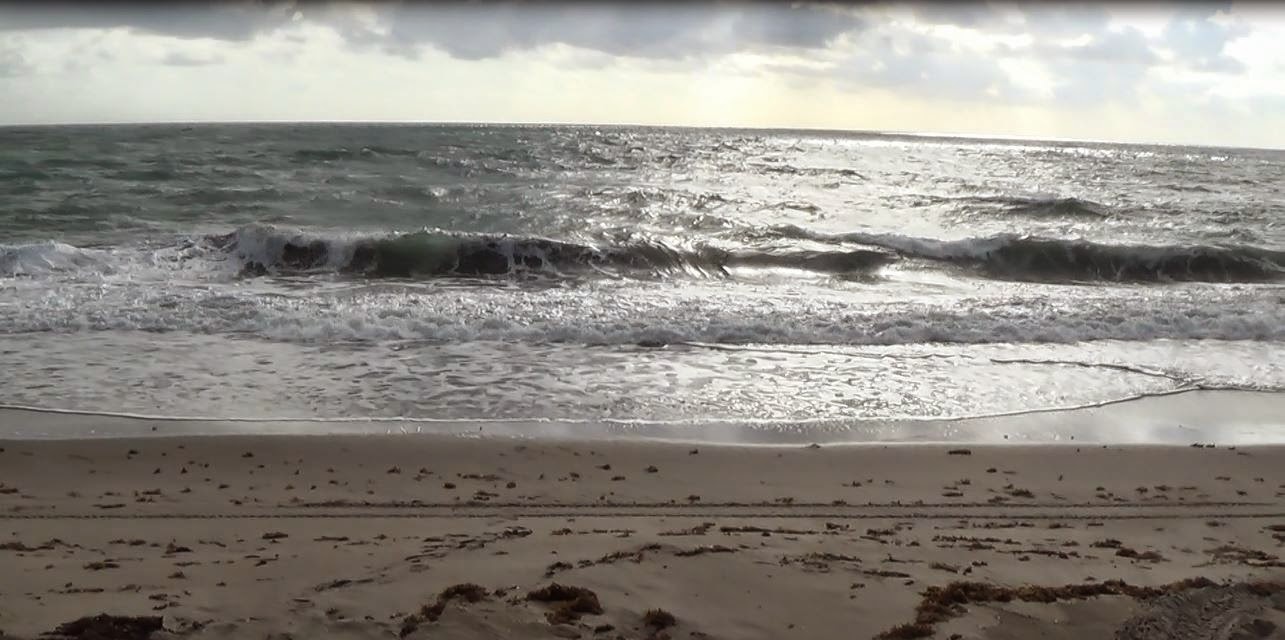
With Jerry following Humberto, we might get continued higher surf.


Eroded Beach in Jupiter Area
Photo by Jerry P.
Jerry said he used Ventusky.com, which you'll find on my first blog page, to find an area where conditions might be good, and he found this nicely eroded area.\

Thanks for sharing Jerry.  Very good use of Ventusky to find a good detecting site!

---

Here is one nice find from the Vero area.

John E. said, I’m stumped on this one.... exact size of a dime , registers a 21 on equinox 800..... found in about 14 in deep wet sand on treasure beach in vero, can anyone identify?

John E


Find and photo by John E.
He said the words above the star are FRIAY LIBER.

Other Side of Same Coin
Photo by John E.
I'm pretty sure it is a centavo from Cuba and can almost make out a date below the star.  I'd also guess it is silver.  Looks like it to me.   A little research should provide the denomination.

Thanks John.  Nice find!

---

Here is an interesting email message I received from Southern Digger concerning a link I posted yesterday.


Hello TG 

Been awhile corresponding but still following up. Archeological site locations on Hutchinson Island and elsewhere along the beaches is no big secret. I recall an old beach mound near the now closed Indian River inlet. I believe some of it has since been washed away. Years ago, a friend and I hiked to a hammock Island near Round Island Park, long before this hammock was developed. We used machetes to cut in to the center, finding old metal rods with eyelet ends which appeared to be from old sailing ship mast supports. Why they ended up way back of the beach we never could determine, unless a camp was made thereon by some 1800's shipwreck survivors.  Also, prehistoric evidence was everywhere. Thought it was interesting and a possible site to return to, we never did, that is until major changes took place thereon. Since then, the under-story was cleared and Univ. of Maryland (I believe) did an archeo survey on the hammock. I was invited to return after that, and did so--still seeing prehistoric evidence in abundance scattered everywhere. This was my last visit when construction began thereon for some type of structure. Another archeo site way to the south exists behind the beach at the water plant. I was asked to direct the Archeo. survey via an Env. firm I worked for at the time--but turned it down and recommend someone else because the end of the survey results and how the report should read were told to me before the project even started. In effect, regardless or not if there are burials. the site would be dozed and built upon. I turned it down even though I would be hired to direct the project because, at the time, I was being trusted on several other volunteer archeo. projects to the south which did not involve the Env. firm; and, I did not want a reputation of being a sellout for the $$$$ and destroy possible burials. That is a strict policy I adhere to to this day because I have seen way to much archaeological and historical sites destroyed and developed in which I had no control over or the power to prevent it from occurring. That is the nature of land development and the destruction of Old Florida. 

Thanks Ken.

--

I hope to get out this afternoon. I expect to be able to post a beach conditions rating after that - maybe later today.

At this point I am expecting a few reales to be found this week.

---

PM Update.

I looked at a few beaches in the Vero/Sebastian area and saw nothing encouraging at all.   I'm expecting fewer finds now than what I just said above.

Happy hunting,
TreasureGuide@comcast.net

Monday, April 15, 2019

4/15/19 Report - New Explanation on Beaches and Cuts. Rare Strike-Over Half-Reale Coin.


Written by the TreasureGuide for the exclusive use of treasurebeachesreport.blogspot.com.


Cuban Half Reale Struck Over U.S. Half Dime.
Source: Sedwick Coins auction.  See link below.

Here is an interesting coin that is listed in the current Sedwick auction - a Cuba 1/2 reale that was struck over a U.S. half dime.  There are other coins in the auction that were struck over coins of other countries.

Here is the lot description for this coin.

Cuba (Mayari), silver 1/2-real(?) token with incuse MORALES above 1 over 2 denomination, made from a US Seated Liberty half dime (1800s), very rare. 1.10 grams. One of very few examples known, all believed to be made from half dimes, this one to our knowledge the only one without a hole, with oversized arms (lions/castles) covering the entire reverse and the obverse punched with MORALES H(o) in a box above an incuse 1 over 2 believed to stand for 1/2 real. Clearly from the same series are some 10 centavos (supposedly) made on US dimes with incuse 10 and also a unique 20 centavos made on a Spanish colonial 2 reales (both of those denominations with JUNIO below the number), the last-mentioned with more of the reverse design showing a clear DE MAYARI below the arms. Toned Fine with no host-coin details showing.

https://auction.sedwickcoins.com/Cuba-Mayari-silver-1-2-real-token-with-incuse-MORALES-above-1-over-2-denomination-made-from-a_i33012333

This coin is lot 1020.

There are more strike-overs in the auction.  This one already has a bid of over $2000.

---

These days I often hear people say "You don't know what you don't know."  There is some truth to that, but it isn't entirely true.  I personally have an unending list of things that I know I don't know and would very much like to know.

Sometimes it is very important to know what you don't know.  I wouldn't let a podiatrist do brain surgery on me, for example.  Experts should be especially aware of their limits, and have a deep respect for the boundaries of their expertise.

I previously described how cuts are created.  The one thing that absolutely has to happen is the water has to move with enough force to carry sand down the slope and out into the water.   I've described how that happens when the water hits the beach at an angle and slices sand away.

Below I have a video that I previously posted that shows how cuts are created when the water is hitting the beach at an angle - in this case, it is an extreme angle.  After that I have an excellent and very revealing video of an experiment conducted in a wave tank that shows how a cut can be created when the water is hitting the beach directly at a ninety degree angle.

Here is a video I caught that shows how a cut occurs when water hits the beach from an angle.  In this case the water flows almost parallel to the beach.  I showed this one once before.


The cut is moved farther back each time the water flows along the face of the cut.  If the tide goes out and the water level drops but the water keeps hitting at a similar angle, another cut will be made lower on the beach.  You three different cuts at different levels in the video.  For a deep cut to be made the water has to keep moving along the cut for a period of time without the water level getting either much higher or lower.

That is one way a cut is created, however cuts can occur even when there is little or no angle to the water hitting the beach.

Here is a video that illustrates very clearly how a beach can erode when the water is hitting a beach straight on.  Watch closely.  This is great.

https://www.youtube.com/watch?v=y0C5sQ_NWs8

A wave tank is a different than a real beach in several ways, but the wave tank does help make some things clear.

If you carefully watch the beginning of the video, you can see a dip gradually form just below the highest reach of the water.  Watch from second three through nine and you will see a dip beginning to form.  The side of the dip highest on the beach continues to get steeper until finally it starts to collapse, and a small cliff (or cut) is formed.  The cliff becomes higher and moves farther back on the beach as the water continues to erode into it.  That is an excellent illustration that you couldn't see on a real beach in real time.

But that isn't all.  After the first cut, a second cut forms a little lower on the beach.  Why is there a space between the cuts, and why does the second cut form where it does?

What happens is that the sand from the first cut moves down the slope and that hump forms a steeper slope which focuses the force of the water and creates a new a new cut.

To sum it up, under specific circumstances such as those illustrated in this wave tank video, water hitting straight onto the beach CAN, under certain circumstances, cause a cut by first creating a dip that gradually increases until the slope is so steep that it begins to collapse, therefore creating a cut.

Steeper beaches return water at a speed and force that can carry sand down the slope (erosion).  Waves with less force cause lower wider beaches that deposit sand on the beach instead of pulling it back into the water.

A real beach is different in a variety of ways.  For one thing you don't have straight walls and the waves are more irregular in both shape and timing.  The beach is not straight either.  And the sand can vary in a number of ways, including grain size and compactness.

There is much more that you can see in that video if you keep watching, but that is enough to assimilate at one time.  I'll probably comment on more of what you can see in that video at some other time.  I do wish I could slow the video down.

Here is one tip if you want to study the video some more - watch the turbulent areas.

While on the subject I'll throw in one more video.


I didn't even get into what is special about cuts or why they are good for metal detecting.  I'll do that in the future.

---

The tides are getting a little bigger.  Today there will be a small negative tide.

The surf is only around two feet.

As I recall, Easter is on the first Sunday after the first full moon after the Spring equinox.

I think what I posted today will help you understand beaches better.  There is more to come.


Happy hunting,
TreasureGuide@comcast.net

Saturday, November 3, 2018

11/3/18 Report - $100,000 Gold Coin and $70,000 Silver Cob. Old Auto Frame on Vero Beach Used by Detectorists in Years Past. Man Saves Whale.


Written by the TreasureGuide for the exclusive use of treasurebeachesreport.blogspot.com.

Source: Sedwick Coins Treasure Auction # 24.

You might be surprised to learn that the coin that received the highest bid in the first session of the current Sedwick Coins Treasure Auction wasn't from the Atocha, Margarita, 1715 Fleet or any famous shipwreck: it was a 20th century 50-peso coin from Cuba.

Here is part of the auction description.

Cuba (struck at the Philadelphia mint), specimen 20 pesos, 1915, unique, NGC SP 63, finest and only known in NGC and PCGS censuses. KM-21; Fr-1. Struck on a special planchet with higher rims and smoother fields, the resulting (prooflike) luster a treat to behold, perhaps missing a higher NGC grade for a couple tiny rim-nicks on the reverse but at least recognized for its specimen status. NGC #4499455-006. 

The winning bid was $110,000, not counting the buyer's premium.

Other Cuba coins of the same period also did extremely well.

In the second session (silver cobs) there was one coin that stood out head and shoulders above all others.  The winning bid of that lot was $70,000.  The cob, shown below, is an experimental three reale in the Early Series.

Source: Sedwick Coins Auction # 24.
Here is the lot description.

Mexico City, Mexico, 3 reales, Charles-Joanna, "Early Series," assayer R (Rincon) at bottom between pillars, with waves, three-dots denomination, all-Gothic lettering except O, NGC VF 30, finest and only example in NGC and PCGS censuses, ex-Rudman. Nesmith-5b/5; CT-unl; S-M1. 9.74 grams. A classic and highly important issue, this is the first of the experimental 3-reales denomination (see article below), and it is arguably the finest in style, making for a very attractive and artistic design. It is also among the earliest coinage of this mint and the entire New World. The presence of water lines (“waves”) below the pillars is a feature that does not return until the “Late Series” a few years later. Exceptionally broad flan with full details, lovely toning and choice strike, one of only two problem-free examples known of this extremely rare and mysterious "with-waves" variety (the other impounded in the Banco de Mexico collection), worthy of inclusion in the finest of collections.

Some Boliva reales, a heart-shaped cob and some Panama cobs also did well in the same session, but nothing close to the above cob.

Some people aren't much interested in auction results, but I think it is good to browse the auctions so you know something about the various types of treasures that are out there in the world and what makes some more valuable than others.  You can learn a lot by looking through the auction catalogs and listings.

The final live sessions of the auction will conclude today.  You can watch the bidding online.

---

Mitch King wrote concerning the picture at the top of yesterday's post.

I know right where that picture was taken. For years we used that car as 
a gauge for how much sand was on the beach. That car sank down several
feet thru the years. Then the car was visible the chance of finding
silver coinage was very good. The car remained there till sometime after
the 2004 hurricanes when I believe it was removed. The location is just
south of Humiston park in Vero beach. If you look in the back ground you
can see the street drain pipe that is extending into the ocean. The
reddish building at the top is where the old "Crab Shack" was. There is
a whole new building there now constructed after the 2004 hurricane season.


Thanks Mitch. I remember seeing the frames there myself. ---- I just saw a rerun of the Oak Island Curse TV show. I noticed once again that the spike given to Lori, the art historian, was clearly not the same one that she showed when she returned with her verdict.  If you want to compare them for yourself, take a good look at the head of the spike(s).

---

Fisherman saves humpback whale.

https://www.nbcbayarea.com/news/local/Fishermans-Rescue-of-Entangled-Whale-Caught-on-Camera-499221291.html

---

.

Another Fall front came through yesterday.  In my opinion, the nice cool weather is excellent for walking the beaches.  

We are going to have some nice high tides.  We have northeast winds now, and even though the surf is not supposed to be very big, I'm betting there are a few small cuts around the Treasure Coast.

Happy hunting,
Treasureguide@comcast.net

Tuesday, May 26, 2015

5/26/15 Report - Vanished Freedom and Family Cache. Scabbard Tip Find. Santeria Yemaya. Sand & Seaweed.


Written by the TreasureGuide for the exclusive use of treasurebeachesreport.blogspot.com.


John Brooks Park This Morning Near Low Tide.
I received a number of very good responses to my Memorial Day post.  Thanks for all the comments.  One very personal email was from Alberto S.

Alberto said,  ​I enjoy reading your posts everyday and today was no exception, actually I think it was great. Freedom is something I don't take for granted, I come from a communist dictatorship that took ​our freedom away and destroyed a flourishing republic; Cuba. 


As to metal detecting, I can only imagine the treasures that are probably buried in Cuba, as an example I left the island when I was 12 years old and only returned last year at the age of 62, I did so at the insistence of our son who wanted to learn about his roots and I realized we were getting older. Anyways, went to my hometown and walked back in time visiting my grandparent's home we were allowed to walk in and when I stepped into the backyard, the lady that is living there now told me that once they were planting a tree and uncovered a metal box with jewelry in the form of gold rings, gold ear rings and a gold chain, surely buried by my grandmother or some other relative, she apologized to me and said they had to sell it out of necessity obviously I told her not to worry and was even surprised that she even told me, you just have to wonder how many other backyards that still remain without construction hold buried treasure. Sorry for the long email, and thank you for your comments on the value of Freedom.

Thanks for sharing Alberto.  


There are a lot of seniors stashing away cash and other valuables in the U. S. these days too.  Near zero interest rates and the "death tax" are two causes.

---
Photo of finds submitted by Pavo.


Pavo thought the odd accumulation of nearly 300 coins that I recently found in one small area might be the result of Santeria or something like that.  I agree.

He sent this photo of his finds from South Florida.  Some, if not all, are Santeria Yemaya tools.

See my 2/24/15 post for similar finds.

You can find stores that sell those online.

----


I've received a few emails on the recent silver find made by the crew of the Capitana.  I originally thought it might be an aglet.  Bill P. thought it was something like that too.

William M. thought it might be a tip to a scabbard.  I now think he is right.

Dan B. send this picture of a rapier scabbard.  Notice the tip.

Rapier Scabbard.
Picture submitted by Dan B.


Here is a picture of the find as posted in my 2/24 post.

Photo by Captain Martinez
of the Capitana.

----

Trivia question.  Who built the first transcontinental railroad.

Answer (according to wikipedia).  The rail line was built by three private companies: the original Western Pacific Railroad Company between Oakland and Sacramento California (132 mi or 212 km), the Central Pacific Railroad Company of California eastward from Sacramento to Promotory Summit, Utah Territory (690 mi or 1,110 km), and the Union Pacific Railroad Company westward to Promontory Summit from the road's statutory Eastern terminus at Council Bluffs on the eastern shore of the Missouri River opposite Omaha Nebraska (1,085 mi or 1,746 km).

----

I went out to the beach this morning and took a look at our different beaches.  None were very promising for older finds.

Of course the beaches yesterday were crowded and there were some recent drops to be found.

Most beach fronts were built up and mushy.  The bigger surf (3 - 5 feet) hadn't done much good.  The waves have been hitting almost directly from the East.

At one beach there were a few dips, but they were sandy too.  Not very promising at all.

There was a lot of sea weed on most of the beaches.  That is not a good sign.

There were a few nice shell piles at one beach.  This odd piece of pottery or whatever was in a shell pile.  The bright red color is unusual in my experience.

Red Pot Shard Found In Shell Pile.


I checked the area where the hundreds of coins were found.  I left a few coins just so I could check when I went back and see if anything was happening.

They were still there, a bit of a surprise in itself considering the number of detectorists that hit that beach daily, but they were deeper this morning.  I could tell that a little more sand had piled up on top of them.

Another Beach This Morning - Looks About the Same As the Other.
There were scattered showers along the coast this morning, but nothing very lasting.

A lot of people said they liked yesterday's Memorial Day, and it is already tied for the most Google Plused post of the year.

Thanks to all!

I had a lot of other stuff but will have to hold it for another day.

Happy hunting,
TreasureGuide@comcast.net