Tuesday, December 10, 2019

12/10/19 Re;port - Rare Mint Error Coins Found on SS Central America. Finds and Friends. Palladium Coins, Jewelry and Investment.


Written by the TreasureGuide for the exclusive use of treasurebeachesreport.blogspot.com.


Nine Rare 1856-S/s Quarters Discovered In SS Central America Treasure.


The fabled SS Central America, the famous "Ship of Gold" that sank in 1857 carrying tons of California Gold Rush treasure, continues to surprise and delight the numismatic world...

Here is the link for more about that.

http://www.coinnews.net/2019/12/03/nine-rare-1856-s-s-quarters-discovered-in-ss-central-america-treasure/

Interesting that they found mint errors on coins that were already rare and historic because of their age and association with the SS Republic.

---

I'm not much of a coin collector.  I don't buy coins.  I like finding coins - even in parking lots.  I check my change, and of course I dig up a lot of coins.

One thing I don't like about the coin collecting hobby is the extreme emphases on condition.  A barely discernible difference that most people can't even see with the naked eye can result in a huge difference in value.  People will pay thousands or millions of dollars for an encapsulated coin that they can't even touch.  

Personally I like coins that show some age and wear.  They've been used and handled.  In my opinion, the wear and patina makes them more appealing.  It tells something of their journey and story.

To be special to me, a find of any type doesn't have to be rare or valuable or highly sought after.  It just has to be meaningful in some personal way.

I've received some very nice coins as gifts.  They are nice enough.  They are shiny and new, some even beautiful to look at, but still something is lacking, and it isn't entirely because of the sealed containers.

There are millions and millions of different kinds of coins.  There are seemingly even millions and millions of rare coins, but a coin is just one more of the millions until it somehow becomes special to you.   Maybe it is the "perfectness" that makes it special to you.  Maybe it is the story behind it - maybe a pirate or treasure story.  Maybe it is something very personal.  Maybe it is just the fact that you are the one that found it.

I just realized that finds are a little bit like friends.  There are millions upon millions of people in this world, but each one is unique. They might not be perfect in every way.  You don't know everything about them, and you continue to learn more about them.  There are probably some things they don't want you to know, but you can accept them the way they are.  They always come with a history and a story.  But the more you get to know them, the more you appreciate them.  And when you find a friend, their story becomes part of your story and that makes them special to you.

---


Currently selling for nearly $1900 per ounce, as an investment palladium (Pd) has been outperforming gold and silver.  While the primary use of palladium is in automobile manufacture, it is also used in jewelry and Canada produces palladium coins.

Here are some facts about palladium presented by Monex.

  1. Palladium is the least appreciated of the four precious metals as an investment, but
  2. Palladium prices have appreciated more than the more popular precious metals over last ten years.
  3. Congressional approval has paved the way for the first Palladium Eagle from the US Mint.
  4. US Mint's Palladium Eagle will use the famed “Mercury Head” dime obverse design.
  5. A United States palladium coin will endorse the metal as an alternative bullion investment.
  6. Recent advances in Selective Catalytic Reduction reduces the quantity of palladium per vehicle.
  7. During a temporary supply squeeze, palladium prices exceeded gold prices, reaching $1,000 per ounce.
  8. South Africa mine production fell over most of the past decade, and is projected to decline further.
  9. For the most part, palladium is produced as a by-product of other mining.
  10. About 40% of the worlds mining supply comes from just one Russian company, Norilsk.

Palladium jewelry will often be marked PD950.

---

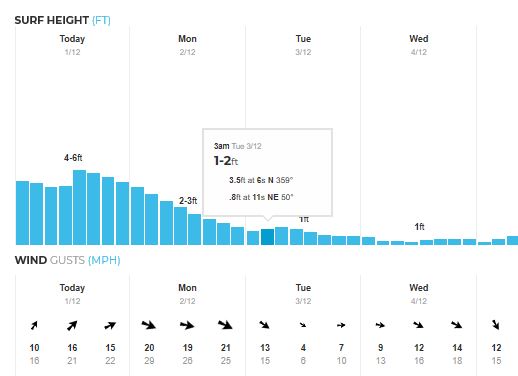
The surf will be running around three of four feet on the Treasure Coast for a few days.

Happy hunting,
TreasureGuide@comcast.net

Sunday, December 8, 2019

12/8/19 Report - A Couple Beaches and A Couple Finds. College Inn Bottle.


Written by the TreasureGuide for the exclusive use of treasurebeachesreport.blogspot.com.

Red Cross Blood Donor Pin Find.


I took a look at John Brooks and Frederick Douglass beaches late this morning.  Here is John Brooks.


John Brooks Beach Around 11 AM Sunday Morning.


For some reason the gates were still closed at 11 AM at John Brooks.  Frederick Douglass park was open though.

The beach at John Brooks looked very much like the beach at Frederick Douglass.


Frederick Douglass Beach Sunday Morning.

Neither beach had significant cuts.  There were a good number of shells up around the high tide line at both beaches.


Frederick Douglass Beach Sunday Morning.

There were still a good number of coins and other cheap jewelry on the Fort Pierce beaches.  I found the above Red Cross Blood Donor Pin at Fort Pierce.  It is only one half inch across.  At first I thought it must be a very small coins such as an Ore or Kopec.

I remember another type of Red Cross pin from when I was young.  It was more of a thin tin and had a tab that bent over to attach to your collar or lapel.

This one evidently had a straight pin at one time.


Back of Same Red Cross Blood Donor Pin.
I have no idea what the "A" means or the age of the pin.

Coins and a few bits of cheap jewelry were found this morning.

---

A day or two ago I showed a College Inn bottle found by Joe D. and discussed some possibilities.

Jorge Y. sent this photo of a College Inn bottle he found online.

College Inn Bottle with Label.
Submitted by Jorge Y.
This bottle has the same kind of "College Inn" embossing as the bottle submitted by Joe D., so I'm assuming that it comes from the same company, but I think they probably held different things.

Thanks Jorge.

---

Yesterday I was talking about how different beaches give up different kinds of finds.  Besides the different kinds of finds you can also get some clues about where certain items came from by the type of encrustation or corrosion.

I always like the gun metal blue patina on old silver coins from the cold fresh water lake of Minneapolis, for example.

---


Button With Red Cut Stone Found Today.

Here is another item I found today.  Looks like it  would be from Marie Antoinette's treasure.  Just joking.

---

The surf is going to increase a little through the week but not much.

Source: MagicSeaWeed.com.


Happy hunting,
TreasureGuide@comcast.net

Saturday, December 7, 2019

12/7/19 Report - Analyzing Cultures For Metal Detecting Locations. A Few Finds. College Inn Bottle. Surf Coming.


Written by the TreasureGuide for the exclusive use of treasurebeachesreport.blogspot.com.


Where you metal detect has a lot to do with what you find.  That isn't surprising at all, but it is worth noticing the extent to which it is true.  If you blindfolded me somehow so I didn't know which place I was at but just showed me the targets I was digging, it would be easy for me to tell you if I was in Pensacola, Miami Beach, Minneapolis, or any of a variety of other places where I spent a fair amount of time detecting.  It would be easy.  

Yesterday's news brought back a lot of memories.  I used to do a lot of work at the Naval Air Station where there was a shooting, and I lived for quite a while at Miramar, where the UPS truck was highjacked and more people were shot and killed.  

When I went to Pensacola, I always took my metal detector.  This was about thirty years ago, I would guess, and when I went to that area I would often detect Pensacola Beach, but also other nearby areas such as Gulf Breeze, Milton, or Ryerson State Park.  

In those days air travel was much easier.  It didn't hurt that I was among the top five percent of frequent flyers for Eastern and Delta Airlines, which usually got me a free upgrade to first class, but airport security was not such a big thing.  I remember one time when the security people looked at my metal detector and didn't know what it was, but just shrugged their shoulders and that was that.

But to my point - when I first metal detected in Minneapolis, I waded into one of the lakes in my wet suit and immediately started hitting old coins.  The lake was full of silver coins, and other silver including a lot of silver religious medallions, but few rings, and little gold.  Some of the lake bottoms were not easy to detect because of the rocky bottoms, but some of those lakes had obviously not been hunted much before, if at all.  The finds were very different from the glitzy Miami beaches, where you would find a lot of gold, including a lot of very expensive jewelry.  The people and cultures of Minneapolis and Miami are very different, and the finds show that.

The finds in Hollywood Florida and Miami were also different.  I don't know if that has changed since then, but back then you could find a lot in Hollywood but the finds would not be as expensive as what you would find in Miami.  In Hollywood you'd find some gold, but it would generally be 10K gold, or gold plated rather than 14K, 18K or higher.   The value of the items on average was simply a few steps lower in Hollywood.

If you think about it there are differences in the people and cultures of the different locations.  That is something that is worth paying attention to.  Some cultures wear more gold and wear different types of gold.  You won't find as many people wearing big hulking diamond rings in Minneapolis as compared to Miami.  There are cultural differences and there are practical differences.  When the weather is below zero and you are wearing gloves around, it is not easy to wear gloves over big diamond rings, and what would be the sense of doing that anyhow, especially if you come from a frugal Scandinavian background.

I think you get my point and I don't need to go into much more detail.

You can still take your metal detector on the plane when you travel, but these days I prefer to just ship my detector ahead when I want to detect somewhere that I'm going.  I always enjoyed detecting new places even though there is always a learning curve.  You might find some good spots right away, but you might have to spend more time finding a decent place to detect.

---

It amazes me how much stuff is out there to be found.  I didn't have time to go to the beach yesterday so I took a look at an area close by.  First I found a small cork stopper type bottle, so I got out my detector and found an old metal door knob.   So then I tightened up my search and found the little gold stud ear ring.  I'll have to hit that area some more some other day.


---

A couple days ago I posted a COLLEGE INN bottle that Joe D. was hoping to learn more about.
I found a similar bottle online that had the same embossing, the same patent date and a very similar shape.  Here is what the description said.

Rare,Early 1930's,Excellent Condition, 7 and 1/8th " Tall,University of Maryland Laboratory Dairy,That was Located at College Park,Maryland,Heavily Mottled,Strapped Across the Center,Footed Chocolate Milk Drink Bottle,with a tapered ring neck and a small,single ring collar,that takes a metal cap,embossed on a 3/4 " high,clear strap around the center" COLLEGE INN COLLEGE INN ",in thick,solid strike.Embossed on the base" DESIGN PAT.FEB.24 - 31 ".A very hard to find bottle,filled at the Maryland University Laboratory Dairy in the early 1930's,and sold at the campus soda shop and motel,"The College Inn".In the bottle was a short-lived,"YooHoo"-like,chocolate milk drink,that was slighly popular for a lttle while,but only lasted a few years,like the dairy and the College Inn,and that's why the bottles are so hard to find.I found three together,with a Lab.Dairy,and a St.Elizibeth's Hospital Dairy.I've never seen another before or since.A very rare bottle,with a lot of character,and history behind it. (Source: www.worthpoint.com)

I also found a College Inn brand that is still in operation today.  Today that College Inn brand sells now mostly things like beef and chicken stock and gravy.  It seems it began in 1923 as the College Inn restaurant in Chicago.  This might have some relationship since other 1931 College Inn bottles that I've seen online are definitely not soda bottles but may be for something else like chocolate milk or gravy.

---

I was having trouble with my camera, which is why I didn't get anything posted yesterday.  It just seemed like things wouldn't cooperate.

The weather is absolutely beautiful for being outside even though the beach conditions for finding anything old are not ideal.

It does look like in another week we could get another bump in the surf.


Source: MagicSeaWeed.com

Happy hunting,
TreasureGuide@comcast.net


Thursday, December 5, 2019

12/5/19 Report - Christmas Silver Coins. Silver Prices Over the Years. Bottle For ID. Sedwick News.


Written by the TreasureGuide for the exclusive use of treasurebeachesreport.blogspot.com.

Once Ounce Silver Ingot.

This isn't my Christmas greeting.  I think it's too early for that, but if you are shopping, here is an idea: it is a once ounce silver Christmas round.  This one was selling for $28.95 - quite a bit above the price of silver.  

Some of them are very nicely colorized.  I don't  think this kind of thing has appreciated great over the recent years and decades.  I wouldn't consider it a safe bet as investment, but it might make a nice gift.

Here is the chart of silver prices (inflation adjusted) beginning 1915.


It seems like silver, gold and coins always look like really good investments until you adjust for inflation.

If you have some junk silver around, think about melting it down and making something new.

There are classes you can take on lost wax casting.  I did that once, and even sold some of my junk silver to other class members to use in the class.

Here is the link to the price chart.

Joe D. wasn't able to find much information about this bottle and would like some help.  Looks like a soda bottle, and it looks like the bottle was manufactured in 1931.

The bottom provides a lot of information.


Looks like patent no. 83427.   I haven't seen a College Inn bottle before, but shouldn't be too difficult to run down.

Any help appreciated.

---

Here is a note from Sedwick Coins.  They'll be at the Fun Convention in Orlando on January 9.


Also remember they are taking consignments for the next auction.

---


The tides and surf are still small but the surf will be increasing a little next week.

Happy hunting,
Treasureguide@comcast.net


Wednesday, December 4, 2019

12/4/19 Report - Flintlocks Found on Treasure Coast 1715 Fleet Beaches. Metal Detecting Lesson Learned Hard Way.


Written by the TreasureGuide for the exclusive use of treasurebeachesreport.blogspot.com.


Yesterday I ended up talking about the wheellock and the fact that none have been found around Florida.  At the time they were used, they were thought to be unreliable and were not used much in the New World by the Spanish.

Next came the flintlock, the miquelet being an early version of the flintlock.  

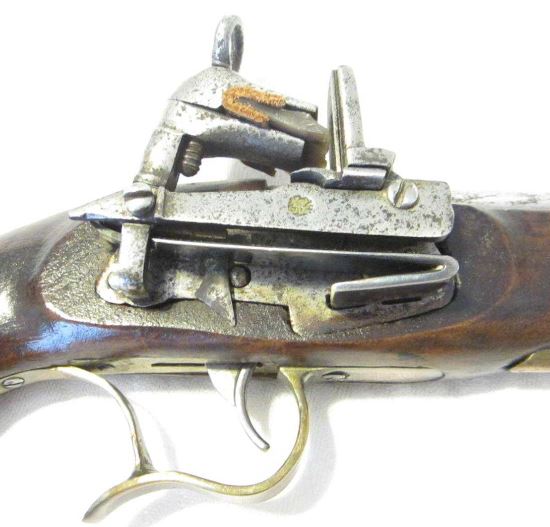
Lock of Miquelet Pistol.

You can easily see the flint being held in the lock by what in this case looks like maybe a piece of leather where you would often see a piece of lead.

You can often tell a Spanish flintlock from those made in other countries.  Spanish made miquelets were more boxy, while those made by some of the other countries were more curved and graceful in appearance.

Don't forget that Spanish galleons were provisioned by equipment from many countries, so if something isn't Spanish that doesn't mean that it didn't come from a Spanish treasure ship.

If you want to know more about the parts of a miquelet lock, click here to see a good video.

So what has been found in and around Florida waters?  First here is what Noel Wells' book Small Arms of the Spanish Treasure Fleets says about that.

As I said yesterday, matchlocks have been found on the 1622, 1715, and even the 1733 wreck sites, and never, according to Wells, has a wheellock been found in or around Florida waters.

* 24 French cavalry pistols (flintlocks) were found on one 1715 shipwreck site.  Some were totally encrusted.

*A miquelet musket stock (broken in the area where the lock would have been) was found on a 1715 fleet site.

* A 1660s era miquelet pistol from a 1715 site which is in the McLarty museum collection.

* In 1990 a trubuco musket was recovered from a 1715 site.

* In 1993 treasure divers found 2 encrusted muskets on a 1715 Fleet site.

* Around the year 2000 a beachcomber at a 1715 Fleet beach found a complete encrusted English flintlock lock that had never been fitted to a weapon.

Those are the ones I found listed in the wells book.  I might have missed one or two.  Of course there must be others.

For example, in my blog I reported on musket parts and a barrel mold that was found by Will R.  You can find information on that find in my 12/4/12 post and my 6/25/19 post.  Will was able to create a cast of the barrel.

I also remember one being found in the Sewall's point area, although I did not find right off where I reported on that one in my blog.

There are others for sure.  I found what I believe is most likely a piece of a silver side plate.

Piece of Silver Side Plate?

Here is the link to the post where I previously posted that.

https://treasurebeachesreport.blogspot.com/2012/07/72312-report-1715-fleet-ornate-silver.html

I once found a photo showing a side plate almost exactly matching the shape and design on the one that I found.  I don't know where that is now but there is a somewhat similar one shown in my old Dixie Gun Works catalog.

I clearly remember the first musket find that I made and have told that story before.  I found the rusted hammer and jaws of a musket on a steep hillside.  I can remember digging it up like it was yesterday, even though at the time I didn't know for sure what it was.  It was my first hunt in a historic area like that, and I didn't pay too much attention to the rusted twisted piece of metal that I just uncovered, and left it where it was.  In just a few short minutes, I found the flint.  I also didn't keep that.  I totally regret that to this day, but I just didn't have the knowledge and didn't know what I was doing. Sometimes you are just not ready for a find.  You can make good finds and not even know it if you don't have the necessary knowledge.  It would have been better if I found those items today rather than many years ago.  If I appreciated the items for what they were when I dug them up, I would have hunted the area better and I would have followed up by doing the research to better identify them. You can also ruin a find by not knowing how to conserve and store it.  Years later, I can now say that the musket lock and flint I found on that hillside was most likely English.

I've become painfully aware of how slowly I gain knowledge from experience and how that knowledge only makes my long history of ignorance that much more regretful.  Being a person that tends to learn independently rather than being quick to take advantage of the knowledge of others, much of my learning comes from making mistakes over the years.   One thing I've learned the hard way is that I could have saved myself a lot of wasted time and grief by being more organized and detailed in my documentation and record keeping.  I've said that before, but it is something I find myself very often regretting that I did not do.  I have objects that I can't easily find when I want to, and I've read things that I can not longer find when I want to.  I guess you can't avoid that, but being highly organized can help.

---

The tides are pretty flat now, as is the surf.

Happy hunting,
TreasureGuide@comcast.net


Tuesday, December 3, 2019

12/3/19 Report - Pirate Ship Artifacts Found. Part I of A Brief Introduction to Firearms of the Spanish Conquest and Treasure Fleets.


Written by the treasureguide for the exclusive use of treasurebeachesreport.blogspot.com

Source: VintageNews.com (See link below.)

17th century hand grenades and cannons from the wreck of a pirate ship have been found along the coast of Cornwall in the United Kingdom...

The wreck was rediscovered about two years ago. Local historian and author Robert Felce told Fox News that he found one hand grenade in November 2018 at Dollar Cove on Cornwall’s Lizard Peninsula. Felce found a similar grenade at the site in May 2017.
“I don’t use a metal detector – I use sight,” he explained. “I have become accustomed to what a lot of these things look like.”...
Both objects were heavily encrusted after lying on the seafloor for more than 300 years, and “Felce said he at first thought the latest grenade was an ordinary rock until he slipped and dropped it, and it broke open, revealing the two halves of the metal weapon and the explosive powder inside.”...


Here is the link for more finds and photos from that wreck.


---


Part 1.
Introduction to Firearms of the Spanish Conquest and Treasure Fleets.

The first small firearm was the hand cannon.  It was little more than a small cannon.  It was fired by touching a match directly to the powder.  Imagine trying to hold a firearm and aiming while applying a match to the touch hole.  Having a second person ignite the powder while another held and aimed the hand cannon made the process more manageable and accurate.

The hand cannon was used centuries before it was brought to the New World.  Christopher Columbus brought crossbows on his first voyage, along with one hand cannon, but brought a hundred hand cannons on his second voyage.

After the indigenous populations overcame their fear of the noise, the hand cannon lost much of its effectiveness in battle.

The hand cannon was eventually replaced by the matchlock arquebus, which was the first firearm to have a trigger.

The matchlock arquebus was invented in Spain in the 15th century.  It held a burning fuse in a clamp at the end of a lever.  When fired, the clamp dropped down, lowering the smoldering match into the flash pan and igniting the priming powder. The flash from the primer travelled through the touch hole igniting the main charge of propellant in the gun barrel.  (Wikipedia).


Source of illustration: Firearmshistory.blogspot.com. 
 Complete link immediately below.

See https://firearmshistory.blogspot.com/2010/04/matchlocks.html


In his book Small Arms of the Spanish Treasure Fleets, Noel Wells says that matchlocks have been found on the wreck sites of the 1622, 1715 and 1733 treasure fleets.  Things were repaired and used over long periods of time in those days.

In the same book, Noel Wells also writes that in 1596 Ponce de Leon requested 500 arquebuses and one hundred muskets.

It seems to me that some of the terms are confusing and different sources don't always use them the same.

On quora.com ( https://www.quora.com/What-is-the-physical-and-operational-differences-between-the-matchlock-musket-and-the-arquebus ) I found the following explanation.

The arquebus was the main firearm during the 16th century and was used into the 17th century (Gush, 1975). In the early 16th century the term arquebus covered quite a range of weapons but the most common type was a weapon about 3′ 6″ long (~108cm), weighing about 10 pounds (4.5 kg), and firing a ball of 1 1/2 ounces (~10 to the pound). From the 1540s the heavier muskets became a separate class of firearm and arquebus (called Caliver in England) standardized around 4′ (~123cm), weighing 12 pounds (~5.5 kg), and firing a ball somewhere in the range 10-16 to the pound.

The next step in the evolution of firearms was the development of the wheellock, sometimes called the Spanish lock.  The wheellock mechanism was used on pistols as well as long guns.

Here is how Wikipedia describes the wheellock.

The wheellock works by spinning a spring-loaded steel wheel against a piece of pyrite to generate intense sparks, which ignite gunpowder in a pan, which flashes through a small touchhole to ignite the main charge in the firearm's barrel. The pyrite is clamped in vise jaws on a spring-loaded arm (or 'dog'), which rests on the pan cover. When the trigger is pulled, the pan cover is opened, and the wheel is rotated, with the pyrite pressed into contact.
A close modern analogy of the wheellock mechanism is the operation of a Zippo lighter, where a toothed steel wheel is spun in contact with a piece of sparking material to ignite the liquid or gaseous fuel.
A wheellock firearm had the advantage that it can be instantly readied and fired even with one hand, in contrast to the then-common matchlock firearms, which must have a burning cord of slow match ready if the gun might be needed and demanded the operator's full attention and two hands to operate. On the other hand, wheellock mechanisms were complex to make, making them relatively costly.

The following simple illustration shows the main differences between a matchlock and a wheellock.

Source: Pinterest.

And here is another illustration of a wheellock.

Source: Pinterest.


In his book on Spanish firearms Wells says, An interesting note about Spanish guns is there has never been found on any of the Spanish shipwreck sites in or around Florida waters, a wheel lock pistol, a long gun, or a wheellock mechanism.  


I don't have time to complete this topic today.   This was a challenging topic for me because of what seems to me to be some inconsistency in the terminology, the difficulty of finding the best illustrations, and my general ignorance about early firearms.


I hope to be able to post part II tomorrow, which will focus more on firearms and firearm parts that have been found on treasure fleet wrecks, including the 1715 Fleet.

---

With the recent cold front moving through, we'll have offshore winds and a calm surf for a few days.

Happy hunting,
TreasureGuide@comcast.net

Sunday, December 1, 2019

12/1/19 Report - Beach Conditions Today: John Brooks Beach Scalloped. Ring Find. Smaller Bottle Finds.


Written by the TreasureGuide for the exclusive use of treasurebeachesreport.blogspot.com.


John Brooks Near Low Tide Sunday Afternoon.

I visited the beach this afternoon.  I just wanted to see what was going on, but got in about a half hour of metal detecting.

As you can see above, there wasn't much erosion at John Brooks.  There was a little scalloping.


John Brooks Beach Sunday Afternoon.

You can see in the photo above that the scalloping was not a lot, but there were some interesting features.

John Brooks Beach Sunday Afternoon.
The waves were breaking on the sand right in front of the beach.  The west wind was blowing the tops of these waves.


Fort Pierce South Jetty Beach Sunday Afternoon.

The sand has been disappearing from Fort Pierce South Jetty beach.  I'll bet that there will be a renourishment program before long.

As I said, I did a little detecting, about a half hour, and picked up about fifteen modern coins and the following ring.


Found Sunday Afternoon.

I've been on the ring trail lately, but unfortunately most are junky.


---

Three Small Found Ink Bottles.
I showed several found ink bottles before, but they were all of a larger size than these.  These ones are 1 ounce and 3/4 ounce ink bottles.

The one on the left above is a cut glass Sanford's ink bottle.

Sanford's Ink Bottle 

The center bottle is a Carter's ink bottle.


Carter's Ink Bottle.  One Oz. 

The Carter's bottle shows the Hazel Atlas symbol.  My father packed bottles in a Hazel Atlas plant in the early 1940s, so I wonder if he possibly packed that bottle.


The cork top ink bottle on the right of the top photo is a Higgins Drawing Ink bottle.

Higgins Ink Bottle.

I assume it is the oldest of the three, but haven't yet researched the dates yet.


I just added these to my TGBottleBarn web site.   http://tgbottlebarn.blogspot.com/

---

The high tides are smaller than they were in the recent past, and after today the surf will be decreasing.


Source: MagicSeaWeed.com

Happy hunting,
TreasureGuide@comcast.net