Showing posts with label jewelry. Show all posts

Thursday, June 18, 2020

6/18/20 Report - Consignments Wanted. Making Hay When Sun Shines. Dust Storm.


Written by the TreasureGuide for the exclusive use of treasurebeachesreport.blogspot.com.


Additionally from Sedwick - 


As you have probably heard by now, the ANA World's Fair of Money on August 4-8 in Pittsburgh has been suspended. We always look forward to going to the ANA show because it allows us to see our fellow collectors and dealers plus express our shared interest in numismatics.

Since some of our consignors like to see us in person at the ANA show, here is what we can offer you to make consigning an easy process:


- We are extending our consignment deadline to August 21, 2020.
- For qualifying consignments, we will pay for your shipping costs or send you a shipping label to get your consignments to us, fully insured.
- For large collections where consultation and pick up in person is safe, beneficial and feasible, we can travel to you.
- We offer discounted, expedited grading services for coins and paper money through PCGS, NGC, and PMG.
- We are able to meet with consignors by appointment at our office in Winter Park, Florida using proper health precautions.
- If you're planning on also buying in our auction, we can trade your consignment proceeds against your auction purchases.
- We are ready to consult with you at any point on what and how to consign by reaching us at 407-975-3325 or
office@sedwickcoins.com.


Our May Treasure Auction 27 was a fantastic success as we saw strong bidding, a very high sell-through rate of over 95%, and a record amount of new and returning bidders.

---


I've been describing some of the mistakes I've made in the past.  So far in recent weeks I've discussed and given examples of (1) careless digging and recovery resulting in scratched or damaged finds, (2) defective containers for carrying new finds, for example hole in pocket or goodie bag, (3) inadequate bag or container for carrying large items, for example plastic bags ripped by large fossils (4) inadequate bag or container for carrying bottles or fragile items resulting in fragile items like bottles being broken while be carried in plastic bags, and (5) leaving dug or found items on beach for later recovery, which often doesn't work out well.

Here is another mistake that I made on more than one occasion.  I've talked about this one before.  It is the mistake of being too casual when detecting conditions are exceptionally good.  When conditions are right and items are being found, don't stop until you have thoroughly cleaned out the area or you are forced to stop for some reason.

I've told about this situation before, but when I arrived at the beach I found the front beach cut back several feet, and there was a drop into the shallow water where there were tons of targets.  There were targets in every square foot for a hundred yards or more along the beach.  I remember that I dug over $20 in quarters in a hunt of about four hours.  Of course there were better things besides the coins, including many rings and pieces of jewelry.  This was in Fort Lauderdale many years ago.

After my first hunt of four hours, I left to pick up my wife or something, but I knew that I had not scratched the surface and there was much more remaining to be found.  I returned the next day and found conditions virtually unchanged.  I found about as many coins and as much jewelry as the day before.  I did about a four hour hunt again, and planned on returning the next day.  As I left I looked up and saw a front moving in.   That should have been a clue.

The next day when I returned, there was almost nothing to be found.  My mistake was not staying as long as I could and absolutely getting as much as I could while conditions were right.  As they say, "Make hay while the sun shines."

Unfortunately I've repeated that mistake several times.  Another time was years ago when I was still living in the Fort Lauderdale area.  I was traveling from Fort Lauderdale to Palm Coast to visit my parents.  It was Christmas eve, or the day before.  Anyhow, I stopped at Fort Pierce to do a little metal detecting.  It was freezing.  One of the bridges over the interstate had ice on it up north around Daytona.  ,

When I stopped at Fort Pierce, I got out of the car.  It was cold and the wind was ripping.  One other fellow showed up with a metal detector.   He was bundled up.  I saw him get ready to detect, but with the cold wind blowing, he just shook his head, turned around and left without doing any detecting.

My wife stayed in the car because of the cold.  I didn't stay on the beach long, but picked up several half reales in probably around twenty minutes.  That was another time I should have stayed longer.  There aren't many days like, so when it does happen, make the best of it.  I can think of quite a few times when I was too casual about a rare opportunity, but I there are two examples.

---


Saharan Dust Storm Headed For Gulf Coast.
Source: See weather.com link below.


The surf is down to around one or two feet on the Treasure Coast today.  The tides are small, and there is nothing on the National Hurricane Center map now.

Happy hunting,
TreasureGuide@comcast.net


Wednesday, March 25, 2020

3/25/20 Report - Ancient Florida Coin Finds. Screws and How To Tell How Old They Might Be.


Written by the TreasureGuide for the exclusive use of treasurebeachesreport.blogspot.com.

Fake Ancient Greek Coin Find.

Not long ago I had a few posts on some very old Spanish coins found on the Treasure Coast.  Back then I was thinking of shipwreck coins and which might have been among the oldest.  I neglected to think of the silver and gold  ancient coins I found while metal detecting while I lived in South Florida, but I'm sure that some have been found on the Treasure Coast as well.

It doesn't mean that Florida was visited by the Knights Templar or King Arthur as some might conclude, but ancient coins are found in Florida, and I'm sure must have been found on the Treasure Coast.

The one shown above is a fake that was mounted in a piece of jewelry.  I saw it this morning and that is what reminded me of the real ancient coins that have been found.  I think I might have posted a few real examples before, but am not sure.

Of course there are those who collect ancient coins.  Occasionally they get stolen or are taken by children for show-and-tell and get lost somehow.  But just as often they are mounted in necklaces, bracelets, rings or earrings that get lost.  Often you can see marks on a coin that show how it was once mounted in jewelry.

When I started thinking of the ancient coins I found, I remember a "widow's mite" that I found and gave to my parents for a gift long ago.  I'm going to ask my mother, who turned 94 yesterday, if she knows where it is.

Anyhow, I was reminded of all of those ancient coins, and am sure some must have been found on the Treasure Coast.

---

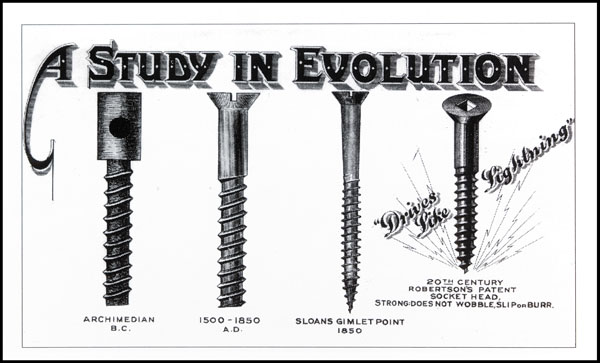
There was a time that if I found a screw on a beach I immediately assumed it was modern and  tossed it into the trash bag.  That was a mistake. I should have at least looked to see if it was old.

Screws have been made and used since the 1600s and earlier.  Screws were laboriously handmade until a machine was patented in 1780 for the process.   Experts use screws to help identify the age of antiques, such as furniture.  Despite my research I still find it very difficult to tell how old a screw might be.  You might ask who cares, but screws, no matter how small and inconsequential, just like any other object can provide clues for the treasure hunter.

Below is a little of what I've been able to put find on the sugject.  It is not easy to find photos of old screws that have been dated.  DJ did find some for me.  Thanks DJ!

Here are a couple of examples from an article, Observations on the Development of Wood Screws in North America by the Museum of Fine Arts, Boston.  DJ sent me those.

---

Source: Boston Museum of Fine Arts article.
---

The screw shown above is one of the oldest I've seen.  It is circa 1780 but was handmade like earlier examples.

One sign of an old screw that seems to be the easiest to recognize is the off-center groove on the head.  It was simply cut with a hacksaw or something.

Another common characteristic of 18th century and earlier screws is evidence that the screw began as square nail stock.  That typically shows on the uncut area on the shank just above the threads which might still show a flat side or two.

The threads were cut made with a file or hacksaw or a cutting tool with some type of lathe, often treadle driven.  Filing or using a hacksaw to cut the threads often left easy to identify tell-tale marks.

Remember, early screws were handmade and vary according to the ingenious methods employed by the individual that made them.

Here is another handmade example from the Museum of Fine Arts article.  It dates a little later, but was still handmade.


One of the easier to identify characteristics of very old screws is a blunt point.  Here is a good example of that from Pinterest.


Can you imagine having to make a screw?

Here is another illustration I located, but don't remember where it came from.  That gives clues for dating.


Unfortunately, like every other item made of iron and found on a beach, the clues to a screws age can be erased by time and corrosion.  Here is a found screw along with a brand new screw.


The older of the two has very rounded rather than sharp threads.  I don't know if they were made that way or if they got stripped or corroded down.

I'm not always able to figure out the age of a found screw, but I learned a lot, especially how screws were made centuries ago.  I guess that one point to remember is that not all screws are modern.

---

According to some sources, more than half of the confirmed coronaviruse cases are in the New York metro area.  But instead of being in lock-down, many New Yorkers are leaving and spreading the problem.  Many are coming to Florida, which will undoubtedly get a big bump in cases as a result.   If they won't stay in their own state, they are not going to self-quarantine.   You might say New York is now the US Wuhan, except it wasn't shut off in time.  It looks so much like the science fiction movies - the New Yorkers with means escaped to other areas and spread the disease while the poor are left at home unable to do much of anything else.

Indian River County, according to this morning statistics, has twelve cases, of which half are travel related.

You can track it on the Florida Surveillance Dashboard.

St. Lucie County, has six total, and Okeechobee has none.

Here is the link to the Florida coronavirus dashboard that will allow you to check the most current statistics for each county.

https://experience.arcgis.com/experience/96dd742462124fa0b38ddedb9b25e429

---

Friday the surf is supposed to get up around three to five feet.  That will be a slight increase.

Happy hunting,
TreasureGuide@comcast.net

Sunday, January 26, 2020

1/26/20 Report - Still Looking At Treasure Coast Beach Finds Including Cobs and Things.


Written by the TreasureGuide for the exclusive use of treasurebeachesreport.blogspot.com.

Uncleaned Four Reale Found Last Wednesday.
A day or two ago I showed a picture of the above four-reale which was found last week.  This is the other side of it.

I wanted to take a photo before I starting cleaning it.  I can't believe I waited so long before starting the cleaning, but I've had plenty to keep me busy.

After one hour in a diluted Muriatic solution, I could see the denomination mark emerging.

Details Emerging After Hour in Diluted Muriatic Solution.
The "4" is just to the right of the edge of the shield.  I think you'll be able to see it.

This one might be Charles II era (1665 - 1700)?  That's my guess now, but I'm not sure yet.  What do you think?

I also got a close-up photo of the half-reale I showed the other day.  Here is a closer look at that one.

One Gram Half Reale Found Last Week.
The little tail is interesting.  Does it remind you of anything?  Remember the Potosi "heart" reales?

Rare Potosi Heart Reales.
Very interesting heart reales were produced at Potosi, and they have a very similar little tail.

If you look at the top of the newly found half reale you might be able to see that it looks like maybe the top part was chipped off.  And if you stand that half reale so that the tail is at the very bottom, the cross is unusually well centered and oriented.  Most likely all of that is coincidence, but I sure would have liked to know what the top originally looked like.

---

Yesterday I showed a variety of small items found on the Treasure Coast in recent months.  That included the little piece found by Captain Jonah.  Mark Myer sent me a photo that he sent me back in September of September of 2017 that shows a very similar small find along with a hinge.  Below is that photo from Mark


2017 Finds by Mark M.

Part of what I've been doing in this blog, without really starting out with that intention, is documenting and cataloging Treasure Coast beach finds.

---

One thing I should have mentioned about the group of small items that I showed yesterday, is that there is a mixture of old and new items that were found in the same area on the same day.   While a small half reale was found with other old small items, there was also some obviously newer items.  One appears to be an electrical connector.  That goes along with the series I started not long ago on how difficult it can be too determine the age of finds and how context can be misleading when you are talking about beach finds.  Just because an item is found with older items does not mean it is also old.  It improves the chances some, but it doesn't guarantee anything.

Here is one way, and I'd say one of the most prevalent ways, that older and newer items get mixed together.

In the back dunes there are layers of material with older items buried deeper and under newer items. So when the dune erodes, it erodes from the bottom, and a vertical slab falls to the base of the cliff and the items are then redistributed by whatever waves might still be hitting the base of the cliff.  Depending upon various factors, those items will be redistributed over a small or large area.   If that area is relatively small, there won't be much sorting or classifying happening.

---

I haven't received any beach photos the last couple of days and might have some for you tomorrow.  We have been getting some ENE swells and decent, but not large, surf.

Let me know if you have and ideas on these objects or any corrections.

Happy hunting,
Treasureguide@comcast.net

Thursday, December 26, 2019

12/26/19 Report - High Tides and Treasure Coast Beaches. Copper Heart Find. Continuing Surf.


Written by the TreasureGuide for the exclusive use of treasurebeachesreport.blogspot.com.


John Brooks Beach Wednesday.
I took a quick look at the beach Wednesday.  The water had been up high and the four-foot cuts that were at John Brooks a day or two ago were gone.

Below is another view of John Brooks beach as it looked Wednesday near noon.


John Brooks Beach Wednesday.

Frederick Douglass beach had been smoothed out too.


Frederick Douglass Beach Wednesday.

Frederick Douglass wasn't much different.  In the photo below, there was one detectorist down around the bend. 


Frederick Douglass Beach Wednesday.


Pelicans Over Frederick Douglass Beach Wednesday.

I noticed a lot of pelicans flying south yesterday.  I don't know what that means, if anything, but I haven't been seeing many pelicans in recent years until Wednesday.

Pelicans are great wind surfers.  Wish I could do that.


Fort Pierce South Jetty Wednesday.


Almost all of the most recent renourishment sand has disappeared at Fort Pierce South Jetty Park.  You know what that means.  It won't be long before they start dumping sand again.

---

I found a copper puffed heart a few days ago.  I forget which day now, but I had some years ago found one just like it and also a silver one with the same kind of wire connectors shown in the photo below from Deagan's book.

-
Ornamental Glass Heart Jewelry Shown in Deagan's Book,
Artifacts of the Spanish Colonies of Florida and the Caribbean.  P. 129.


Below are two photos of the copper one that I found about a week or two ago.  The photo on the right shows the heart on a Roosevelt dime with the tip up to show the hole on that side.  There is a similar hole on the top of the heart for a wire connector.

Treasure Coast Copper Puffed Heart Beach Find.
The silver one that I found years ago is almost like the copper one shown here.  I think it still has the wire connectors like the ones shown on the Deagan example.

---

You know you are old when you go into the store and the Santa ringing the bell looks renarkably young.

----


We are having some high tides and some decent surf.

Here are the surf predictions.


Happy hunting,
TreasureGuide@comcast.net


Friday, December 20, 2019

12/20/19 Report - A Couple T. C. Beaches Being Detected This Morning. A Couple Small Finds.


Written by the TreasureGuide for the exclusive use of treasurebeachesreport.blogspot.com


South of Ambersands Beach Access Friday Morning.
There were four or five people detecting at Ambersand this morning.  There were some cuts.  The biggest ones were to the south (shown above).

Ambersands Beach Access Area Friday Morning.
The stepped cut was near the crossover.

Yesterday I showed photos of Turtle Trail, Seagrape Trail and John Brooks beaches.  I issued a 2 rating (transitional rating) on my beach conditions rating scale and mentioned that I didn't know what would happen with the next tidal cycle.

JD sent me a photo that evening.

Turtle Trail Thursday Evening.
Submitted by JD.
It looks like Turtle Trail conditions started to decrease later in the day.

Turtle Trail Thursday Evening.
Photo submitted by DJ.

Several detectorists showed up at Turtle Trail early this morning and found conditions not nearly as good as it was yesterday morning.

Turtle Trail Friday Morning.

So it looks like Turtle Trail opened up for a brief period but by Friday evening was already deteriorating.


Turtle Trail Friday Morning.
In addition to a bunch of lead, yesterday Captain Jonah dug the nice little piece shown below.  Looks to me like it might be a piece of jewelry.

Find and Photo by Captain Jonah.

I was talking to one of the fellows about the small pieces I've been picking up with the Equinox.  Here is an example of one I dug yesterday.  I'd call it a square nail, but it is too small to be a nail. It wasn't easy to see in the sand.

Dug Tack.


Dug Tack.

Very colorful.

I have some other examples of small finds that I've picked up recently, which I hope to get photographed soon. 

I've seen pieces very similar to Jonah's on 18th Century jewelry and might have one or two examples somewhere.  

Looks like we'll have four and five foot surf for a while, but no more north winds until Monday.


I was out this morning when the Atlas rocket went up but missed it somehow.  Was supposed to be a good show.

Happy hunting.
TreasureGuide@comcast.net

Tuesday, December 10, 2019

12/10/19 Re;port - Rare Mint Error Coins Found on SS Central America. Finds and Friends. Palladium Coins, Jewelry and Investment.


Written by the TreasureGuide for the exclusive use of treasurebeachesreport.blogspot.com.


Nine Rare 1856-S/s Quarters Discovered In SS Central America Treasure.


The fabled SS Central America, the famous "Ship of Gold" that sank in 1857 carrying tons of California Gold Rush treasure, continues to surprise and delight the numismatic world...

Here is the link for more about that.

http://www.coinnews.net/2019/12/03/nine-rare-1856-s-s-quarters-discovered-in-ss-central-america-treasure/

Interesting that they found mint errors on coins that were already rare and historic because of their age and association with the SS Republic.

---

I'm not much of a coin collector.  I don't buy coins.  I like finding coins - even in parking lots.  I check my change, and of course I dig up a lot of coins.

One thing I don't like about the coin collecting hobby is the extreme emphases on condition.  A barely discernible difference that most people can't even see with the naked eye can result in a huge difference in value.  People will pay thousands or millions of dollars for an encapsulated coin that they can't even touch.  

Personally I like coins that show some age and wear.  They've been used and handled.  In my opinion, the wear and patina makes them more appealing.  It tells something of their journey and story.

To be special to me, a find of any type doesn't have to be rare or valuable or highly sought after.  It just has to be meaningful in some personal way.

I've received some very nice coins as gifts.  They are nice enough.  They are shiny and new, some even beautiful to look at, but still something is lacking, and it isn't entirely because of the sealed containers.

There are millions and millions of different kinds of coins.  There are seemingly even millions and millions of rare coins, but a coin is just one more of the millions until it somehow becomes special to you.   Maybe it is the "perfectness" that makes it special to you.  Maybe it is the story behind it - maybe a pirate or treasure story.  Maybe it is something very personal.  Maybe it is just the fact that you are the one that found it.

I just realized that finds are a little bit like friends.  There are millions upon millions of people in this world, but each one is unique. They might not be perfect in every way.  You don't know everything about them, and you continue to learn more about them.  There are probably some things they don't want you to know, but you can accept them the way they are.  They always come with a history and a story.  But the more you get to know them, the more you appreciate them.  And when you find a friend, their story becomes part of your story and that makes them special to you.

---


Currently selling for nearly $1900 per ounce, as an investment palladium (Pd) has been outperforming gold and silver.  While the primary use of palladium is in automobile manufacture, it is also used in jewelry and Canada produces palladium coins.

Here are some facts about palladium presented by Monex.

  1. Palladium is the least appreciated of the four precious metals as an investment, but
  2. Palladium prices have appreciated more than the more popular precious metals over last ten years.
  3. Congressional approval has paved the way for the first Palladium Eagle from the US Mint.
  4. US Mint's Palladium Eagle will use the famed “Mercury Head” dime obverse design.
  5. A United States palladium coin will endorse the metal as an alternative bullion investment.
  6. Recent advances in Selective Catalytic Reduction reduces the quantity of palladium per vehicle.
  7. During a temporary supply squeeze, palladium prices exceeded gold prices, reaching $1,000 per ounce.
  8. South Africa mine production fell over most of the past decade, and is projected to decline further.
  9. For the most part, palladium is produced as a by-product of other mining.
  10. About 40% of the worlds mining supply comes from just one Russian company, Norilsk.

Palladium jewelry will often be marked PD950.

---

The surf will be running around three of four feet on the Treasure Coast for a few days.

Happy hunting,
TreasureGuide@comcast.net

Wednesday, June 26, 2019

6/26/19 Report - Some Cleaned Silver Coins. Jackie Robinson Bat Found. Metal Detecting Around People: Tips and Precautions.


Written by the TreasureGuide for the exclusive use of treasurebeachesreport.blogspot.com.

Silver Coin Cleaned by Muriatic Acid 

Yesterday I posted photos of the surface of a couple coins that I was going to clean using Muriatic Acid.  I immersed three silver quarters and five silver dimes about a 10% solution for about a day.   All eight coins were in the same container together for the same amount of time.

Above you see the cleaned 1942 quarter,.  Below you see part of the same 1942 quarter (right) before it was cleaned.

Surfaces on Recently Dug Dime and Quarter That I'll Be Cleaning.
That quarter came out better than the others.  Below is another 1942 quarter that I cleaned in the batch.  It didn't come out as well.

Another 1942 Quarter That Was Cleaned.

It looks like the second 1942 quarter might benefit from additional cleaning.

And below is the third quarter that was cleaned in that batch.  It is in worse condition.

Cleaned 1947 Quarter.
The surface on this one is very rough.

I also cleaned some Roosevelt and Mercury dimes in the same solution.

1946 Dime After One Day in Diluted Solution of Muriatic Acid.
This dime (above) still has some surface scale that I think will come off with additional cleaning.

I'm going to put it back in the solution for a while to see how the surface corrosion reacts.

Here are a closer views of the surface of that dime.

Closer View of Surface of Same 1946 Dime.
We'll see the effects of additional time in the solution maybe tomorrow.

Another 1946 Dime
I did another 1946 dime.  That one (above) has a badly pitted surface.  I don't think additional cleaning will do much for it.

Here is a Roosevelt dime that is nearly unidentifiable.

Roosevelt Dime - Date Unknown.
The third Roosevelt dime came out just as bad as the Mercury dimes.

Now to the Mercury dimes, which did not come out very well.

Mercury Dime - Date Undetermined.
Additional treatment of this Mercury dime might remove some more surface materials, but I don't think the appearance will be improved,

Almost Unidentifiable Mercury Dime.
The last Mercury dime is terrible as well.

The first quarter turned out fairly nice, but the rest are bad.

None have any numismatic value.  Coin collectors are very particular about condition, and these ones aren't even close.

---

A man found a valuable Jackie Robinson baseball bat in with a bunch of worthless bats and tells the seller.  They quickly removed the bat from the garage sale.

Here is the link.


If I was the owner I would reward the man for his honest kindness.  He could have easily bought the bat for almost nothing and kept the profit for himself.

Kindness is often not rewarded.  I don't know how many times I returned a found gold ring or something and received not so much as a thank you.  You have to wonder about people.  Are the not capable of showing gratitude?

I'm not saying you should return items and show kindness for the reward, but I'd think that people would like to reward those that freely do things for them for no particular reason other than being honest and kind.

In fact, as I've told before, I've had people on multiple occasions try to claim finds that did not belong to them.  If they see you find something, they'll say that they lost it.  Or they'll tell you I lost a ring, if you find it, it belongs to me.

Here are some things I do.

First, get a good description of the item, including details that would not be obvious to any casual observer, such as a date inscribed in the ring.

Define the area you are going to hunt, and if in sand, draw a boundary and keep everyone out of it while you search.  Explain that you have to be able to swing the detector and have to cover every inch and you want to be able to see where you have and haven't been.  You can't have people in the way.  That also helps makes it possible for you to get a look at found items before everybody else.

When hunting in the water, if other people are trying to see what you are digging up, when you raise your scoop, as it nears the surface, shake it violently, raising a cloud of sand that will conceal the item until you stick your hand in the scoop and find it by feel and put it in your pocket before anyone else sees it.  You can then move away from people and inspect it when you can do it privately.

The goal is to get items for the rightful owner - not for crooks.

---

A couple days ago I heard from Captain Jonah.  He has been having boat problems, but expected to get out soon.

Happy hunting,
TreasureGuide@comcast.net

Sunday, June 9, 2019

6/9/19 Report - Distribution of Treasure Not Random. Sports Jewelry. WW II Bills. Removing Tape.


Written by the TreasureGuide for the exclusive use of treasurebeachesreport.blogspot.com.

LeVeon Bell's Bling.
Source: See YouTube link below.

Two women (described as LeVeon's girlfriends) reportedly stole $520,000 of jewelry from LeVeon Bell in Hollywood Florida very recently.

Here is the link for more of that story.

https://sports.yahoo.com/cops-women-vanished-leveon-bells-jewelry-worth-500k-222453862--nfl.html

And here is a video of some of LeVeon Bell's jewelry in case you see it on the beach someday.

https://www.youtube.com/watch?v=HE_8yD31AL8

You might wonder why I bring this up.  Well, it is actually part of something I was planning on talking about anyhow - the distribution of different kinds of finds.

If you want to find treasure from the 1715 Fleet, you have a very good chance of finding it on the Treasure Coast.  That is where most of it is.

If you want to find jewelry like that shown above, you have a much better chance of finding it down south.  The rich and famous generally gather in South Florida instead of Fort Pierce.

I found a variety of sports jewelry in South Florida, including championship rings and other things.  I know of only one championship ring found on the Treasure Coast - a Yankees World Series ring found on Jensen Beach.  I know there is more, but not nearly as much as in South Florida.

There are reasons for where things are found, and you can improve your success if you know something about and follow the flow of goods.

It is not an accident that you can find Spanish treasure on the Treasure Coast.  It has to do with the currents and trade routes.

And it is not an accident you will find a lot of gold and diamonds in the Miami area.  They have a big airport and sea port and people, many wealthy, have gathered there from around the world for a long time.

If you simply go out to the nearest beach to where you live or where you vacation and find whatever happens to be there, you might not think about how things got there.  If you just hunt where you are and find whatever happens to be there, you aren't hunting strategically.  That is OK, but if you want to improve your success with a specific type of find, you might want to know more about where things will most likely be.

If you think about things and decide what you want to find first, then you can study and make a plan and do the things you need to do to find what you most want to find.

Your finds can tell you a lot.  Very often they tell you something about where they have been.  If you study your finds and get an idea of how they have been moved, you can take advantage of that knowledge.

Yesterday I showed where  a couple things came from.  That was a very very small sample, but illustrates something I will be talking about more in the future.

Take the Pace University class ring, for example.  It seems that it came from New York and then ended up in Dade County Florida.  That is not unusual.  You'll find a lot of things from the northeast in Florida.  On the other hand, you will find relatively little from California in Florida.  I don't think I ever found a class ring from USC or UCLA.

People more often come from the northeast to visit Florida than from California, and that shows in my finds.  It has to do with travel patterns, very much like the Spanish gold on the Treasure Coast had to do with trade routes.

You will find things in Miami from around the world.  You will find rings and gold from China and India in Miami - and New York, as well because those are international centers.

I didn't want to get into that topic too much today.  That is just a little sample.  I'll be talking more about that in the future.

---

DJ sent me a database of pocket watch serial numbers, and I found the information on the ILLINOIS watch that I showed yesterday.  The production year was 1888.

If you have a pocket watch to research, here is the link.   The site gives a lot of details on each watch.

https://pocketwatchdatabase.com/guide/company/illinois/serial-number-lookup

Here is the information I found.

Grade: I.W.C.


Manufacturer:
Manufacturer Location:
Springfield, Illinois
Movement Serial Number:
Grade:
Model:
2
Estimated Production Year:
1888
Run Quantity:
14,000
Total Production:
Size:
18s
Jewels:
7j
Movement Configuration:
Movement Finish:
Movement Setting:
Plate:
Barrel:
Going
Train:
Coarse
Railroad Grade:
No
Quality Rating:
Dial Feet Locations:
Case Screw Locations:
23.5, 51.5
Thanks DJ.

---

It was recently the 75th Anniversary of D-Day.  Here is another old item I once found in an old book.

\
1944 Military Issued Ten Francs.

The Allied Military Government for Occupied Territories issued French Franc banknotes in 8 different denominations, including this 10 French Francs banknote (Allied Military Currency 1944). They are part of the WW2 Allied Military Currency (1944) series. The Allied Military Government for Occupied Territories started issuing these 10 French Franc banknotes in 1944. They were withdrawn from circulation in 1945.

The French note of dix francs features the French tricolor flag. On the banknote a caption reads ‘Émis en France’. The banknote was issued during the Allied liberation of France in WWII.

I think that is from Wikipedia.

This bill or note has some tape on it.  I've seen various methods for removing tape.  You can use an clothes iron on its lowest setting, or a hair dryer to warm the tape, which can then be pealed off.  I've haven't tried that yet, but from the videos, it seems to work.

---

Happy hunting,
TreasureGuide@comcast.net