Showing posts with label coal. Show all posts

Sunday, February 26, 2017

2/26/17 Report - Coal: One Possible Sign Of a Nearby Wreck. 19th Century Treasure Salvage Company.


Written by the TreasureGuide for the exclusive use of treasurebeachesreport.blogspot.com.

Found on Treasure Coast Beach
Have you ever noticed a black lump like the one shown above on the beach?  Maybe you didn't pay it any attention.  You don't see it all the time.

This one isn't a burnt piece of wood, or a fossil.  It is a piece of coal.

I've found few pieces of coal on the Treasure Coast.  This one isn't the first.

I know a piece of coal when I see one.  I shoveled truck loads of coal into a basement up north to be used for heating during the winter.  And my wife's father owned a coal company.

But that doesn't tell you what a piece of coal would be doing on a Florida beach.  One possibility, and perhaps one of the most likely, is that it came from a shipwreck.  This one was found where other shipwreck artifacts, including spikes, galley bricks, and pieces of planking have been found.

Coal has been found on shipwrecks dating back to the early 1600s, but is very common on wrecks of the 1800s, when it was often used for power but was also a common cargo.

For example, the S. S. Copenhagen was on route from Philadelphia to Havana transporting 4,940 tons of coal when it sank. It now lies  3/4 of a nautical mile offshore just south of Hillsboro Inlet.  (See https://www.nps.gov/nr/travel/flshipwrecks/cop.htm ).

On the Stories From Ispwich web site, two sentences are the following.  When you’re walking on Crane Beach near Steep Hill Coal, you might be surprised to see lumps of coal lying on the sand.  This would be quite a mystery were it not for the tragic history of brigs and schooners transporting coal in the 19th century.  (See https://storiesfromipswich.org/2014/05/11/lucy_m_collins/ for the rest of that article).

But the pieces I've found are from a Treasure Coast beaches.  One beach where I've found the most coal is a beach where I suspect a 19th century wreck nearby.  I've also found a good number of percussion caps on the same beach, along with quite a few miscellaneous items.  The percussion caps, if they are wreck related (a big question mark), would support a 19th century date.

One point I want to make here is that coal can be found on Treasure Coast beaches and it can be a clue suggesting the possibility a nearby shipwreck.  It might not come from a wreck, but on the Treasure Coast, that possibility is about as likely as any other, especially if there is other evidence of a wreck in the area.

---

On the Treasure Coast we are very aware of modern treasure salvage efforts, but as you all know, shipwreck salvage has been going on for a very long time.

I stumbled onto what I thought was a very interesting ad in the 1874 Saward's Coal Trade Journal that announces the formation of the Galleon Treasure Company, which had the purpose of recovering for the Spanish government, treasure sunk in Vigo harbor.  7500 shares of stock were issued having the paper value of $750,000.

Below is a good part (nearly half) of the announcement.  You might be able to find the rest of the ad by clicking on this link.


I thought it was interesting to see statements made on behalf of a large treasure salvage company formed as far back as 1874.  We all know of the Treasure Coast treasure companies of the 20th century, but treasure companies were formed long before all of that.

---

We had a good north wind most of the day.  I'm sure there will be a spot or two with some cuts.  I didn't get out to see if anything actually happened yet.

Happy hunting,
TreasureGuide@comcast.net

Friday, August 8, 2014

8/8/14 Report - Unusually Patinated Dug 1927 Quarter. Beach Coal. British Loyalist Wrecks. Genealogical Research Again.


Written by the TreasureGuide for the exclusive use of treasurebeachesreport.BlogSpot.com.


1927 Quarter With Unusual Gold Color Patina.

In my opinion this is the most attractive natural dug patina that I have seen on a coin. 

The gold color patina has a shine to it.  It is much more attractive in person.

I have no idea how the patina was created, but it is the way it was dug.

It has a melt value of about $3.60, but is rare enough that in poor condition should sell for around $9.00.  In excellent condition, it would go for around $250.  If it had an S mint mark, in excellent condition it would be more like $6000.


This one is poor condition, but the beautiful toning might raise the price a little.  I should check that out.

Other Side Same Coin Showing Same Gold Patina.

We often talk about the famed 1715 Fleet, but there are plenty of other wrecks along the Treasure Coast.  The Roberts and Spring of Whitby are two that are well known. 

St. Augustine was a Spanish settlement first, but after that it was British.  Artifacts from a British fleet are now being studied by the St. Augustine LAMP Program.  Here are a few sentences from a recent article about that.

On New Year’s Eve, 1782, sixteen British Loyalist ships carrying evacuees from Charleston, S.C., ran aground while trying to enter the St. Augustine Inlet. More than 200 years later, archaeologists from the St. Augustine Lighthouse & Museum are carefully conserving artifacts recovered from one of those sixteen ships in hopes that they will reveal clues about these ill-fated vessels.
“Based on the artifacts we’ve recovered so far, we know this ship was part of a huge fleet that evacuated British Loyalists from the colonies near the end of the American Revolution,” said Chuck Meide, Director of the Lighthouse Archaeological Maritime Program (LAMP). “Our ship sailed from Charleston and was probably carrying both civilians and soldiers who were seeking refuge in St. Augustine. At that time in history, Florida was the closest British-held colony where evacuees could take shelter and try to start their lives again.”

Here is the link for the rest of the article.

http://historiccity.com/2014/staugustine/news/florida/lighthouse-hope-1782-cannon-yields-new-clues-46571

In Florida it is easy to focus on the Spanish history and forget some of our other history.  Don't forget the other shipwrecks that are out there.  And don't forget about later eras.

I was reminded that some wrecks are from later times when I found a few lumps of coal on a beach. 

 ... in 1911 coal was still the primary source of power for naval vessels. The Royal Navy had adopted oil for submarines and destroyers, and in most ships it was sprayed on coal to increase its combustion. But coal remained the principal fuel, especially for larger vessels like battleships. It was widely available, especially in Britain, where Cardiff coal mined in Wales was preferred by navies worldwide.

Here is the link for more about that.

http://www.epmag.com/archives/digitalOilField/5911.htm

But, of course, it wasn't necessarily from a coal powered ship.  The coal could have also been cargo.

Anyhow, there are wrecks besides the 1715 wrecks along our beaches, and reminders of those wrecks can pop up at different times.

The more you know, the more complicated things become.

I've mentioned before how much I've enjoyed and benefited from genealogical research.   I just read about some of my ancestors that departed Rotterdam for Philadelphia in August 1733.  That was the month after the Atocha sank.   It is interesting to make the connections.   While my ancestors were crossing the ocean, the Keys were a bee hive of salvage activity.

Those ancestors sailed on a ship named Elizabeth.  One died two days out.  After landing in Philadelphia, two boys were sold as indentured servants to pay for passage. 

From Wikipedia: Indentured Servitude in Pennsylvania.

As for indentured colonists, the reasons for entering into such an arrangement varied. Colonists might indenture themselves or their relations in response to economic circumstances. For example, parents unable to financially support their children might place them under indenture, since the terms of the agreement usually specified the provisioning of "meat, drink, lodging and washing."
Colonists also became indentured servants as punishment for some form of transgression or debt. In the case of the latter, individuals could present a "petition" to the courts, whereby they would "admit" to the debt and agree to fulfill their obligations by indenturing themselves. The indenture could be granted to the creditor or another party who paid the servant's debt.  Overall, however, only a small portion of the indentured servants in Pennsylvania derived from colony's residents.

Those of the "criminal" or "meaner" sort comprised another form of indentured servitude. For these individuals, indentured servitude provided a "conditional" alternative to judicially prescribed punishments. By serving a certain number of years under indenture, such persons would legally absolve themselves of their crimes. However, if these servants reneged on their contracts and returned to the home country, they would be subject to the penalty of death.

I was lucky to find a lot written about some of my ancestors.  It really makes history come alive, and it can provide many clues to good detecting sites.   I keep learning more and more.  You might enjoy researching your own family.


Occasionally we have some immigrants that come ashore on the Treasure Coast.  That happened recently.

http://www.wpbf.com/news/south-florida/treasure-coast-news/10-believed-to-be-illegal-immigrants-found-on-Hutchinson-Island/13478092#!bx8hMo

We have South winds and one foot seas for days to come.   I don't know a time when I've seen the water so smooth for so long.

I have some new modern jewelry finds to show.

Happy hunting,
TreasureGuide@Comcast.net


Friday, October 18, 2013

10/18/13 Report - Beach Coal, Boilers and Steam Ships, Gold & More


Written by the TreasureGuide for the exclusive use of treasurebeachesreport.blogspot.com.


Coal Found on Treasure Coast Beach

You might see almost anything on a beach.  Maybe you've seen lumps of coal like the one shown here.  The question always is, where did it come from and what might it tell you.

If it is seen around or below the high tide mark, the first thing it might tell you is something about the types of things that are washing up - or out.

If you think about the source, you won't know for sure, but one possibility is that it came from a shipwreck.

Along the Treasure Coast we tend to think most about treasure ships with sails.  But there are certainly a lot of other kinds of ships that sank along the Treasure Coast.

Some of the spikes that I've seen I would guess are from later wrecks from the 1800s or 1900s.  They could have been ships that were fueled by coal or carried a cargo of coal.

From what I've seen along the Treasure Coast I would say that there are a few steam ship wrecks scattered along different parts of the Treasure Coast, and in some cases, found along some of the same beaches as artifacts from older wrecks.

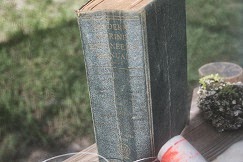
Old Book: Modern Marine Engineers Manual.

As you probably know, I always encourage reading broadly.  I found this huge old book a few years ago in a thrift store and bought it for a dollar.  It has been been very handy for researching ship parts.  It contains thousands of pages and many illustrations, including hundreds of pages on ship boilers etc.

Below are a couple of illustrations from the book, just to give you the idea.

The book actually has hundreds of pages on boilers.  It also talks about the fire bricks that were used to insulate the fire boxes.

 I've shown pictures of fire bricks that were found on the beach.  And of course, the Spanish galleons used bricks in the galleys.

A boiler for a ship was first patented in the 1600s, but they weren't widely used until much later than that.

Illustration of Boiler From the Above Book.

Steam boats were used a lot along the Indian River.

That is a nice part of our Treasure Coast history.

So when you see a lump of coal on the beach, give some thought about where it might have come from.

I think I said yesterday to let your imagination run, and use the evidence you find to debunk or support your theories.


Here is a web site with a very nice history of steam boats.

http://www.sam.usace.army.mil/Portals/46/docs/recreation/OP-CO/montgomery/pdfs/10thand11th/ahistoryofsteamboats.pdf


Yesterday the price of gold jumped while the dollar dropped.  That means that every dollar you have in your wallet or pocket or in a savings account became worth less.  The country continues to deal with its debt by silently slipping money out of your pocket.

Here is a link to an article about the move in the price of gold yesterday.  It hit $1322 an ounce once yesterday - well off of the year's high.

http://www.foxbusiness.com/markets/2013/10/17/gold-prices-surge-on-debt-deal-qe-hopes/


Have you ever walked by one of those fountains or whatever where you can see all the lucky coins that people threw in for good luck.  Some of those go for charity.  I don't know about the others.

One woman in need was recently arrested for taking $2.87 out of a fountain at a courthouse.  She said the money didn't belong to anyone and argued that it wasn't stealing.

Here is the link to that story.

http://www.10tv.com/content/stories/2013/10/17/Bellefontaine_Fountain_Change.html

I always think back to my childhood and one little bridge that crossed a small creek where the children and parents would always stop and look at the minnows as we went to the community swimming pool.

I wonder if it is still there.   If it is, I'd love to go there and detect in the stream under the bridge.

If you have access to any places like that that were a part of your childhood, you might think about going there and doing a little detecting.


The next article has no particular relation to the Treasure Coast but it is powerful story in my opinion.  Thought you might want to read it.

The Wild West has returned to ghost towns created by the recent floods in Colorado.  Small towns that have been isolated by recent floods and largely abandoned.  The only law remaining is the law of the Wild West.

http://usnews.nbcnews.com/_news/2013/10/18/21008887-colorado-floods-a-month-later-mountain-towns-spooky-and-deserted?lite


On the Treasure Coast we still have a 2 - 3 foot surf, with high low tides and fairly high high tides.
That is no change.

If you look ahead over a week, the surfing web sites are predicting a 4 - 6 foot surf.  That far ahead, the predictions are not that reliable.  If it does actually happen, it could improve detecting conditions.

Happy hunting,
TreasureGuide@comcast.net