Showing posts with label coin collecting. Show all posts

Sunday, March 10, 2019

3/10/19 Report - What A Treasure Hunter's Dream Might Look Like. Coin Sites To Visit. Increase In Surf Expected Mid-Week.


Written by the TreasureGuide for the exclusive use of treasurebeachesreport.blogspot.com.

Gold Crown - Part of the Sroda Slaska Hoard
Source: See the slavorum.org link below.

What would your dream treasure look like!  For me the Sroda Slaska Hoard is what I would imagine. The crown shown above is just one part of that hoard, which also includes the following items.

– a gold woman's crown, which probably belonged to Blanche of Valois, one of the wives of the emperor Charles IV
– two gold pendants, dating to the 12th century
– two gold pendants, dating to the 13th century
– a medieval gold clasp decorated with precious stones

– a ring with heads of dragons
– a ring with sapphire
– a ring with moon and star
– 39 gold coins
– 2924 or 3924 (sources vary) silver coins.


Here is how it was found.

... Gold and silver coins were discovered during demolition of an old building in the town of Środa on 8 June 1985. The authorities secured the original find (a vase filled with approximately 3,000 Prague groschen), however, no serious archaeological study was carried out at that time. Three years later, on 24 May 1988, during another demolition in the vicinity of the first discovery, another, even bigger find was reported (including silver and gold florin coins). Most of this new find disappeared before the site was secured by the authorities. In the following days, as enterprising individuals scoured the municipal landfill where rubble from other recently demolished buildings was deposited, reports of more discoveries started appearing; those include the first reports of j.ewelry...

Here is that link.   https://www.slavorum.org/forum/topic/treasure-of-sroda-slaska/

And here is another link about the Sroda Slaska Hoard.

https://mnwr.pl/en/the-sroda-slaska-treasure/

Here is one account of how it might have been lost.

It is now agreed that the treasure belonged to the King (later Emperor) Charles IV of the House of Luxembourg. Around 1348, needing funds to support his claim to the King of the Romans, Charles pawned various items to the Jewish banker Muscho (Moshe, Mojżesz) in Środa. Soon afterwards, the black plague visited Środa. Muscho was not heard of again and it is believed that he either fled from the plague-struck town, died of plague, or perhaps fell victim to pogroms as Jews were blamed for spreading the plague. What is certain is that no one ever reclaimed the treasure, which was left hidden somewhere in the town for hundreds of years...

That comes from http://realmsofgoldthenovel.blogspot.com/2015/03/the-sroda-treasure.html

---

I just found a site that lists 75 coin blogs and websites for coin collectors and numismatists.

The first few includes

Coin Week
Coin News
Numismatic News
Coin Update
Perth Mint blog]
Pocket Change
Coins: A Complete Value Guide
Mintage World
The Coin Show, and
Change Checker.

Here is where you can find those and the others.

https://blog.feedspot.com/coin_blogs/

Some require subscribing, but others don't.

---

On the Treasure Coast you can expect an increase in the surf around Wednesday.  The tides will remain moderate.

Source: MagicSeaWeed.com.


Happy hunting,
TreasureGuide@comcast.net

Wednesday, January 9, 2019

1/9/19 Report - Million Dollar Penny From Lunch Money. Reflecting on Metal Detecting and Error Coins.


Written by the treasureguide for the exclusive use of treasurebeachesreport.blogspot.com

1943 Penny Thought Worth $1.7 Million.
Source: MSN.com link (See below).

This 1943 penny found in a boy's lunch money is going up for auction and thought to be worth $1.7 million dollars.  

As you know, to help the war effort pennies were made of zinc coated steel in 1943, but a small number (probably 20 or less) were mistakenly made of copper.  Those are among the most famous and valuable coin errors of all.

Here is the link for the story on this penny.  Thanks to Dean R. for the link.

https://www.msn.com/en-us/video/viral/holy-grail-rare-penny-might-be-worth-dollar17m-after-it-was-found-in-boys-lunch-money/vi-BBRYXAL?ocid=spartandhp

That is one reason I always pick up pennies and do not discriminate pennies..  They can be valuable too if you know what to look for.

Unfortunately I did not learn much about coin collecting and error coins until fairly recently.  I received a book as a Christmas present - Strike It Rich With Pocket Change: Error Coins Bring Big Money by Ken Potter and dr. Brian Allen.  The Potter and Allen book only covers modern US coins up to recent years, so you might need to occasionally consult other sources.  There are older error coins and new errors being discovered all the time.
  
Not only can you scan your finds for valuable coins, but you can also find valuable coins in your pocket change.   I now enjoy doing both.

Don't think you will find a lot error coins all the time.  The majority of coins do not have any extra value - especially those in poor condition - but you will find some, and there is always the possibility of something big like the penny shown above.  Condition is an important factor, even if the error is rare.

I have one book that lists around 800 different valuable Lincoln cent errors from 1909 up to recent years.  That is only pennies, so you can figure how many types of error coins exist.

That book is Lincoln Cent Error Coin Guide 2019, by Stan McDonald.  The Potter and Allen book is a much better book if you want to identify error coins.  The McDonald book only lists them.  It has very few pictures and is not much help in identifying error coins - only listing them.

Valuable error coins include die errors, such as doubled dies, repunched mint marks, off-center strikes, struck on wrong planchet, struck on wrong metal (such as the one above), die cracks, lamination errors, clipped planchets, strike-throughs and more.

Wheat Penny Showing Strike-through

In the short time I've been looking for error coins I've found some interesting die cracks and strike-throughs.  I haven't found any good doubled dies yet, or any certain repunched mint marks.

The coincommunity.com web site is very helpful when you aren't sure about a coin.  The community will provide their helpful comments and opinions on your coins.  There are also web sites that will verify and classify error error coin discoveries.

When you begin searching for error coins, it might be frustrating.  It can be difficult to tell the difference between damaged coins and coins with real mint errors.  And as you would expect, valuable examples are not real common, yet they can be found.

The strike-through shown above was created by something being on the coin planchet when the coin was struck.  It could easily be mistaken for a simple scratch, but it is not.

Damaged Coin - Not Error Coin
This penny might look like an error coin, but it is only a coin damaged by acid.  That is the opinion of people more expert than I.

I do recommend giving it a try.  The Potter and Allen book can be a good starting place.  It has a lot of pictures and tells you what to look for.

Like anything else, you have to go through a period of learning to become knowledgeable.  That is why good books and web sites are very helpful.  It is another one of those things that you can never learn everything about.  It is a continuing learning process.

I've said this before, but one of the problems with coins that are found by metal detectors is that a lot of them are in poor condition and coin collectors generally only like coins in fine condition.  Even error coins must be in great condition to bring the highest prices.

Learning about error coins and coin varieties can make coin-shooting more interesting and profitable even when it is not easy to find older silver and gold coins.

Another thing you will need is some good magnification.   There are a variety of tools you might use for that.  Maybe I'll do another post on that some day.

Of all the regrets that I have about metal detecting, the vast majority were caused by simply not knowing enough a the time.  I wish I had known more about coin collecting back when I was really digging a lot of coins.  When I started metal detecting I was targeting coins.  Later I started targeting gold, but was still digging tons of coins.  I wish I had known what to look for when all of those coins passed through my hands.

---

We haven't been getting much surf lately.  Friday it might be up to four feet, but that is all.

Happy hunting,
TreasureGuide@comcast.net

Wednesday, November 7, 2018

11/7/18 Report - Two Mounted Gold Coin Finds. Some Notes On The Handling, Care, and Grading of Coins.


Written by the TreasureGuide for the exclusive use of treasurebeachesreport.blogspot.com.

Twenty Dollar Double Eagle Found by Sebastian Steve
Who Had It Mounted.
Yesterday I posted part of an email message I received from Sebastian Steve.  Today I'll post more of the same message along with some photos Steve sent.  The double eagle shown above was originally posted back a while ago hanging on an antique champagne bottle.  I snipped it from that photo.

Here is the rest of what Steve had to say.


I found a nice picture today that I was looking for.  This pic was of the big gold, the 1860’s $20 Double Eagle (Shown above.) that  I recovered from a deep,  Lakes Passenger Steamer back in the late 1970s. 

I used to wear it on special occasion....but with the chain and bezel, the weight was over 3 ounces!  The wife said...”Far too heavy for me, but I’ll wear one of those English Sovereign’s (similar in size and weight to our $5 gold piece).

And so I mounted an 1832 Sovereign for her.  How fitting her request.  As this Sovereign was my very first gold coin I ever recovered!   I recall the day I recovered this coin, although almost half a century ago... like it were yesterday!  Because this coin showed wear, it was suitable for me to make a decision to use this particular coin mounted in jewelry.  It’s a decision that must be made with care.  More later on this...

And my wife still wears that first Sovereign even today for special occasions.  (:


1832 English Sovereign
Find and photos by Sebastian Steve.
Same 1832 English Sovereign.
Although the Sovereign is almost pure gold (22 Karat), and contains 0.23 ounces of pure gold (just shy of a quarter ounce) gold coins -always- needed a hardening agent added such as copper.  Otherwise the wear in normal circulation would be quite excessive and unacceptable.  The English Sovereign was actually used extensively in this country... early on.  Our U.S. coinage was somewhat untrusted when a new issue, and was in short supply.  Now the Sovereign was a known, respected coin that often came over with the settlers.  And a practical size for regular transactions of somewhat size.  After all...$5 of gold in the 1850s...era...still brought home the bacon. 

And there was in fact counterfeiting going on even in the 1860s already.  I had one particular U.S. $1 One Dollar gold piece... (try to pick up one of these with big dry suit mitts!) that just seemed far darker than the others. 

Sure enough at NGC grading, when chatting in the office of the President of N.G.C., in Sarasota... he hauls out my -Counterfeit- $1 gold piece!  Interestingly... as a preeminent grading firm, that was his “cup of tea” to show history and how they could tell the coin was not real.  (Without the darkness from not being real gold, it looked pretty good to my untrained eyes).  And we worked out a deal with some other business, so that my $1 Counterfeit would remain in N.G.C., permanent collection!  I was thrilled to hear I made history in a small way. 

Allow me to comment on coins and coin grading.  Everyone thinks they have a sure fire way to get a coin re-graded and up its grading a point.  As I mentioned...1 point on a valuable coin can be $10,000.  But EVERY COIN has its own set of markings.  The slightest rub, the tiniest scratch, and firms like NGC...use microscopes on each and every coin of value that they grade. 

Coins and their particular identity become very obvious and recorded forever...with microscopic pictures taken while under the lens...that are archived forever.  So if your buddy told you to “crack it out of the case” and re-submit it...you’re just wasting your time and money.  AND you might just get yourself a bad reputation. 

The serious coin world is very small and everyone knows each other.  And that is actually very good for you.  For with today’s grading system...no shark will ever skin you with an over-rated, over graded coin, sold  “in his opinion.” at a grade far in excess of its actual grade.  If you’re buying for investment...insist on buying ONLY ENCAPSULATED GRADED COINS, GRADED BY ONLY N.G.C. or P.C.G.S.  Sure there are a few other reputable firms...but why take the chance?  Only to have your spouse or other loved one years later have trouble getting top dollar for your coins!  Why risk it?  Back to the deep we go...

When I first saw the $20 Double Eagle outline laying on some boards on the lake bottom next to the wreck...I had no idea what it was!  In the swirling mud, I attempted to pick up this very large coin with difficulty... thinking “something was holding it...like it was glued down?” 

I said to myself...this must be some type of State Fair or Inaugural Token?  So big and heavy...what else could it be?  It was somewhat dirty but still had that unmistakable look of gold.  Not until I reached my first decompression stop coming up at 20 feet, did I get to peek into my bag and realize what I had!  Even that one coin sagged the big diver’s bag down in the corner!  Thank God there were no rips or holes in the bag!!!  Something like that could absolutely ruin your day!!!  (;

And there it was...the coin of legend...the famous often read about, but rarely ever seen or held...the U.S. $20 Double Eagle.  1 ounce of gold.  Very close in size to the silver dollar.  Rarely even used in everyday trade as seen all too often in the old Westerns.  The $20 Double Eagle, Civil War era...would have bought you a down payment on a good house!  So in reality...these coins were mainly used for international trade between bankers.

These $20 Double Eagle coins was produced in response to the immense gold finds coming out of California.  The result of the initial rich finds were the beginning of The California Gold Rush.  So much so...that in 1854...the U.S. built a branch mint in San Francisco, to convert the miners gold into coins.  By the end of that year...the San Francisco Mint had produced $4,084,207 in gold coinage!  What an exciting time to be alive!???

And yes...gold does bring a smile to your face, but all the other shipwreck artifacts if studied and shared, bring more joy and history come to life... than any one gold coin.


Thanks once again Steve!

Someone sent me an email and asked why the mercury dime from the Sedwick auction that I posted a few days ago brought such a high price when a mercury dime with the same date/mint was listed on eBay for much less.  What Steve had to say is relevant.

Of course condition is extremely important.  A coin in excellent condition can bring a thousand times more than the same date/mint in poor condition.  In fact a valuable coin in very poor condition can be worthless.  As Steve points out, a single scratch can reduce the value tremendously.

An encapsulated graded coin will bring a higher price.  Buyers feel confident knowing what they are getting.

Sometimes there is simply an eye-appeal factor.  Some coins just look better.  They might have an especially nice patina, for example.

And there are a lot of counterfeits and poorly, if not inaccurately, described items on eBay.

I've dabbled in coin collecting lately, and have mentioned how difficult it is to find a coin on a beach that will delight a purist collector of U. S. coins.  Most coin collectors are very picky and prefer coins in as close to mint condition as possible.  They wear gloves when handling their coins.  They view them under magnification.  That means every bit of corrosion and every scratch is taken into account.  The majority of coins that I've found on salt water beaches are ruined as far as collectors are concerned.  I have found a few that would be graded as uncirculated, but those are very rare.  I even found one that was in a plastic case that protected it from the salt water.

Thankfully Spanish colonial reales seem to be regarded differently.  While it is the general rule that you should not clean valuable coins, silver cobs are routinely cleaned using electrolysis or acid.  Of course if you manage to find a rare mint-state reale that has never been circulated or spent years on a salt water beach, handle it with kid gloves, but most have already led a tough life and a little handling or proper cleaning won't hurt them.  In fact, you will often have to clean them to simply find out what you have.

---

On the Treasure Coast we are still having some nice high tides, however the surf is still running around two or three feet.

Happy hunting,
TreasureGuide@comcast.net

Saturday, October 13, 2018

10/13/18 Report - Large Group of Shipwrecks Found. Whitman Coin Folders. Lamination Coin Errors.


Written by the TreasureGuide for the exclusive use of treasurebeachesreport.blogspot.com.
Hurricane Michael Damage.
Remember the people that got hit by Michael.

---

I like the Whitman coin folders. There are some for sets, with each of the coin holes labeled. For example, there is one for Jefferson nickels with a hole for each year and each mint.  That is convenient if you are trying to build a complete set.  You can upgrade each example whenever you get a nicer coin for that year and mint.

Whitman also makes unmarked folders for each denomination.  You might use them for silver war nickels or every error and variation you can find.

Whitman Nickel Folder With Unlabeled Holes.
This one just happened to be the one I got out.  It is just a miscellaneous bunch that I put in the folder years ago.  They aren't good enough to be included in my better date/mint sets.  You can see that I added my own labels, and in some cases changed the coins.

I just looked through the coins in that folder and found a couple nickels with mint errors.

1953 Nickel With Lamination Error.


Lamination Error.
The lamination error goes across Jefferson's face towards the D in GOD.

A lamination error is a coin with a fragment of metal missing or peeled off the coin's surface. It is caused by dirt or gas trapped in the strip as it is rolled out to the prescribed thickness before the coin is struck.

I didn't know anything about lamination errors when I originally filled this folder many years ago.  It is surprising how much you learn as time goes by.  I'm often glad that I kept things until I learned more about them.

I found another lamination error in the same folder.

I highly recommend the Whitman coin folders as a way to store your modern coins and get more enjoyment out of them.

---

Archaeologists in Greece have discovered at least 58 shipwrecks, many laden with antiquities, in what they say may be the largest concentration of ancient wrecks ever found in the Aegean and possibly the whole of the Mediterranean.

The wrecks lie in the small island archipelago of Fournoi, in the Eastern Aegean, and span a huge period from ancient Greece right through to the 20th century. Most are dated to the Greek, Roman and Byzantine eras.

Although shipwrecks can be seen together in the Aegean, until now such a large number have not been found together...
Here is that link.
https://gcaptain.com/shipwrecks-found-in-greek-waters-tell-tale-of-ancient-trade-routes/

Thanks to Douglas for that link.

---

The Atlantic is looking pretty quiet now.  Michael is gone, and Leslie is closer to Europe.  Not much else out there.

We'll have some small surf for a week or so.

Happy hunting,
TreasureGuide@comcast.net

Thursday, July 19, 2018

7/19/18 Report - Some Things You Should Know About Coin Collecting.


Written by the TreasureGuide for the exclusive use of treasurebeachesreport.blogspot.com.

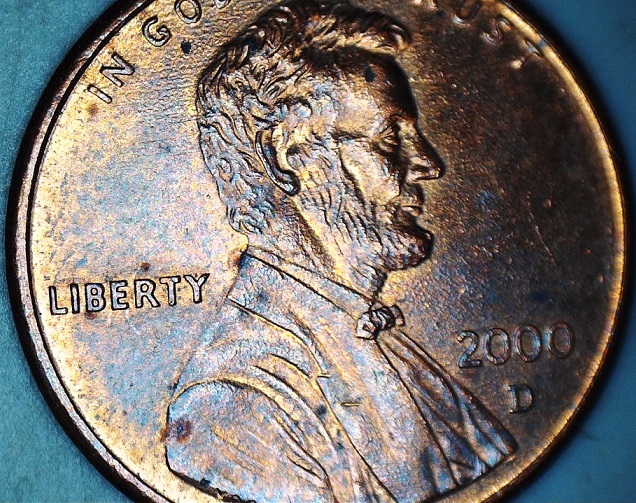
2000 D Zinc Penny

You'd think that metal detecting and coin collecting would go hand in hand, but there are reasons that they don't go together as well as you might think.

Here are a few things I've become more aware of in the past month or so since I began looking through modern coins for errors and talking with some serious coin collectors.

1. Coins found in the ocean are very often too corroded or deteriorated to show errors or other important features.  I  knew that before, but after looking through a lot of modern coins I developed a better appreciation for small differences and how easily they can be masked or removed.  Even if a coin is a rare doubled die coin, that might not be visible if the coin has been affected by salt water or otherwise corroded.

2.  Condition is so important to coin collectors, that even if you find a real rarity, poor condition can reduce the value to almost nothing.  Many dug coins are simply not in good enough condition to demand good premiums even if they are rare.

3.  Valuable coins are rare.  That is obvious enough, but it is worth stating.  You can search through many coins and find many interesting things, but real valuable finds are very rare.

4.  Everyone hears about doubled-die coins, but there are many types of doubling on coins and the coin collecting community is not interested in most of them.  It is not easy for a beginner to distinguish between some of the types of doubling that they will see.  I do not find it easy to distinguish between some types of machine doubling and doubled die errors.

5.  Coins that have circulated are similar to coins that are corroded.  Many of the signs that coin collectors look for can be obliterated by the wear and damage.

6.  It is not always easy to distinguish between damage done by individuals after the coin went into circulation and mint errors. For example I ran into one copper penny that evidently was reduced by acid at some time for some unknown reason.  At first it simply looked like a weak strike.  After some detective work, it was concluded that it had been reduced by acid.

7. Many things that a coin collector looks for requires magnification.  There are many small but important features that aren't easily seen by the naked eye.

8.  I would not plan on saving zinc pennies for my children or grandchildren.  Pennies that are almost new and shown little or no wear are corroding.  You know how badly zinc pennies corrode on a beach, but pennies that have scarcely seen the light of day and show signs of beginning zinc rot.

The penny at the top of the post is a 2000 D.  There is very little evidence of wear.  Look at the surfaces.  They aren't smoothed out, and there are few scratches, yet zinc rot is beginning.

Spots of Zinc Rot Beginning On 2000 C penny.
I don't know the history of this coin, but I've seen some that are only one or two years old, and in my opinion were never on a beach or anything. and they are developing zinc rot.

I'll turn this same coin over and you can see how zinc rot develops.

Same 2000 C Coin.
It seems that zinc pennies are going to rot in most cases, even if they have been treated well.  That is why I would never collect zinc coins with any long term expectation.

I've seen newer coins than the one shown above with even worse zinc rot.

9.  There is a lot to learn if you want to become a serious coin collector - especially one that collects errors or varieties.

If you want to collect sets or if you buy coins it should be considerably easier, although it still helps to be informed so you can avoid being misled by unscrupulous dealers.

---

There is nothing of significance going on in the Atlantic right now.

We have a two foot surf, and will have for a few days.  The tides are more moderate than they were a few days ago.

Happy hunting,
TreasureGuide@comcast.net

Tuesday, May 29, 2018

5/29/18 Report - Silver Coin Find. Long Ater the Find. Recommendations for the Coin Collecting Community.


Written by the TreasureGuide for the exclusive use of treasurebeachesreport.blogspot.com.

Isle of Man One Crown Silver Jubilee Coin
When you start detecting, you probably never think about ten, twenty or thirty years in the future.  You know what you found and where you found it and you know whatever else you've learned about your finds. One thing I appreciate more every year is the importance of good organization, labeling and storage. You'll read something or learn something and all of a sudden decide that you want to take another look at a particular item but can't remember where you put it, or worse yet, remember that you put it somewhere safe, but can't remember where that was. Or you find an item that you found long ago and researched, but now you don't remember what you learned about it. Maybe you can't even identify it anymore. You just remember that you once knew more about it.

That might sound like a memory problem, but if you've been hunting for a few decades and made thousands of finds every year, few people will be able to keep up with the large number of finds and all the research.  I'm often surprised by how often I learn something new about an item after I had it for a few decades.  Just today I found out that one coin I've had for years could be worth quite a bit more if it has a straight nine rather than a nine that is more curved.  You learn things like that, and sometimes its only after years have passed.  The bottom line on all that is that it helps to organize your finds, keep records and label them well, and store them safely.  I hate when old items get corroded or broken.

Same Isle of Man Silver Jubilee Coin.
This is the first more interesting coin that I ever found.  It is 80% silver and it is one of those things that you wouldn't expect to find in circulation or on a tourist beach.  I remember finding this one four decades ago on Hollywood Beach.  It is one that impressed me enough when I picked it up that I still remember it.  At that time I was mostly finding clad spending change.  Being over 28 grams and 26 mm in diameter, it was not difficult to detect.

 I didn't know much about this coin other than it was a different and nice looking foreign coin. You couldn't find all the information on the internet like you can today, so it wasn't until much later that I learned more about it.

Over the years not only do you learn more about old finds, but more generally you'll look at them differently and perhaps appreciate them in a deeper way.  Of course there are also some finds that you'll learn are nothing more than junk, but even with those you might benefit from the journey.

---

The American Numismatic Association is concerned that fewer and fewer people are attending coin conventions. It seems that millennials are more interested in things other than coin collecting and choose to spend there money on things like iPhones rather than collecting.

Here are some recommendations from David Bowers concerning that.

Those in numismatics who emphasize the art, history, and romance of numismatics will stay for a long period of time, even lifetimes. These elements are essential.
 
Specialization is the key to longevity. If you look at the officers and contributors of articles to Early American Coppers, Colonial Coin Collectors Club,Liberty Seated Coin Club, Numismatic Bibliomania Society, Civil War Token Society, Token and Medal Society, John Reich Collectors Society, and other specialized groups you will see that most have been active for years! 

As I mentioned earlier, like it or not, many, if not most, new collectors are attracted by gold and silver, or by telemarketers offering modern coins in high grades, as well as a lot of products advertised in USA Today, by telemarketers, and others, that have no realistic aftermarket. These people leave quickly, never to be heard from again. Neither the ANA nor the PNG is even slightly interested in regulating ethics, giving excuses such as “afraid of lawsuits,” etc. As a proponent of ethics in numismatics, and as having worked with the Federal Trade Commission to put fraudsters in jail, I can say that NO perps ever threatened to sue the ANA or the PNG. Nothing but nothing is being done about ethics. The ANA and PNG act on specific complaints, but that is about it. How sad. 

Young Numismatists, say ages 8 to 15, are the brightest and the best. Encourage them in any way possible. As Gary Adkins knows, the ANA already scores high points on this. 

One of the greatest potentials for ANA is people past the age of 65, especially those who are educated and have been successful in life. Millions of people are potentials for learning about numismatics and the ANA. With proper promotion and education, thousands of retirees might well come into the hobby. 

For Whitman (for which I am the numismatic director) or, if they pass on the idea, for the ANA I volunteer to create a book on how specializing is the key to numismatic enjoyment and longevity.


Here is the link for more of what David Bowers had to say about that.

http://news.coinupdate.com/bowers-on-collecting-changes-for-the-american-numismatic-association/

Many detectorists are also coin collectors although many are not.  A lot of what Mr. Bowers says about coin-collecting applies to metal detecting too.

Back a few years ago I conducted a poll in this blog and found that 93% of the respondents were over 35 years old and over half were over 56 years old. The biggest age group was the 56 to 65 age group.

In the future, I'll have more to say about how coin-collecting and how the metal detecting hobbies are doing.

---

Alberto is now in Alabama and heading north.  We're going to have a few days of small surf.

Happy hunting,
TreasureGuide@comc

Wednesday, May 16, 2018

5/16/18 Report - How To Bring Out Unreadable Dates On Some Coins. High Prices and Notable Sedwick Auction Results From First Day.


Written by the TreasureGuide for the exclusive use of treasurebeachesreport.blogspot.com.


Source: Sedwick Auction Listing.

The Sedwick treasure auction went live yesterday and the action was hot and heavy.  Most items sold within the range of the auction estimates, with some higher and a few lower.

It is always interesting to see the fine examples that bring high prices.  It tells you what people most value and what treasure hunters can dream of finding.  (See photo above and partial lot description below.)

USA, regulated $15, Joseph Edwards plug and countermark (Boston, ca. 1780) on a Lima, Peru, cob 8 escudos, 1741V, extremely rare, NGC XF 40, ex-Brown (Chapman, 1911). 26.46 grams. (see separate writeup) Pedigreed to the Julius L. Brown collection (S.H. Chapman auction of 1911, plated as lot 343). 

Unique Lima 8 Escudos Cob Regulated by Joseph Edwards, Jr. to $15 U.S. Standard 
This coin bears several distinctions: So far, it is the earliest known genuine host for a regulated doubloon (see accompanying article, “The Regulated Gold Coinage of North America and the West Indies in the Late 1700s”); it is the only known regulated coin with the mark of Joseph Edwards, Jr.; and it is the only known non-imitation cob to be regulated to the $15 standard. Its weight is 26.46 grams = 408.34 grains = 17 pennyweight (dwt), which matches a value of $15 as established by the Bank of New York in 1784. Since a mint-fresh Lima cob 8 escudos typically weighs 27 grams (418 grains), it is evident the present coin was lightly shaved (visible in two places on the edge) and then plugged to bring the weight back up to meet the $15 standard. s can dream of finding.

The winning bid with buyers premium was over $152,000.  That was the highest price of the day  It was the highest priced coin by far for the day.

---

Source: Sedwick Auction Listing.


Another big winner was this 88 pound Atocha silver bar from Potosi.  The bid plus premium was just a couple dollars short of $57,000.

Here is the description for that one.

Large silver bar #902 from Potosi, 88 lb 3.84 oz troy, Class Factor 1.0, with markings of mine/date Po1621, manifest IUDCCCCIII (1903) and fineness IIUCCCL (2350/2400) followed by cartouche of assayer Mexia, one big owner/shipper mark and several tax stamps, from the Atocha (1622). 13-7/8" x 5" x 3-3/8". Very bold markings grace the top of this thick, somewhat compact ingot, particularly the manifest and owner/shipper monogram (J. Delgado and C. de Saravia), the fineness also bold and followed by a very clear assayer cartouche, the multiple tax stamps of two different designs also very clear, as are also the silvermaster V and diagonal slash in one corner with bold C inside, the typical assayer's "bite" prominent in the center; but best of all is the full and clear mine/date marking to the left of the manifest, qualifying this piece for the top grade of 1.0, with minimal surface corrosion and nice toning all over. From the Atocha (1622), with Fisher photo-certificate #85A-S902.

That silver bar brought in the second highest bid of the day, while two more large silver bars brought the third and forth highest bids.

---

The next highest bids were achieved by a gold finger bar that cost $31,725 ( bid plus premium) and a silver pina ingot that cost $30,550.

For the bargain hunter was one lot of 100 one-reales and half-reales that sold for just over $3000 total including bid and premium  (around $30 per cob) while two other lots of 100 one and half reales sold for just over $2500.  That is one way to start a nice collection quickly and inexpensively.

As I've said before, auctions like this provide a lot of data for anyone interested in treasure coins and artifacts.  There aren't many places where you can see more historical items.

----

Yesterday I showed a small group of Buffalo nickels without dates.  RinkRat sent me an email about a product that some people use to bring out otherwise unreadable dates on such coins.  Here is what he said.

... you can often bring up old buffalo nickel dates with this product, which is basically a weak nitric acid solution (actually link below says its a ferric chloride solution):

 https://www.mintproducts.com/nic-a-date-nickel-date-restorer.html  (not endorsing these sites- it just came up on the search)

the enhanced date will eventually fade and subsequent use of nicadate will help less and less. but if its unreadable anyway, why not?


Thanks RinkRat!

I didn't know about that and looked into it a little and found that a ferro-chloride product is sold as Nic-A-Date.  You put a drop on the area where you'd like to see more detail, wait about 60 seconds, and then wash it off with water.   In many cases you will then be able to see the date or other details. Some coin shops sell it for about $8. It eats the metal a little so of course you don't want to use it on coins that may have some value, but according to what I've read, people do use it with satisfactory results.

---

Expect a two to three foot surf for a few days and then a slight increase up to about three or four feet.

Happy hunting,
TreasureGuide@comcast.net


Friday, June 17, 2016

6/17/16 Report - Increasing Antiquities Research and Knowledge: A Case Study. Open Access Movement. Lifetime Achievement Award To T C. Salvor.


Written by the TreasureGuide for the exclusive use of treasurebeachesreport.blogspot.com.


Mel Fisher Days will be held July 15 and 16th this year in Key West.  The Mel Fisher Lifetime Achievement Award will be awarded to John Brandon. Congratulations John!

---

In the Feb 3, 2011 CoinWeek there was an interesting article bearing the title Dancing with the Universe – The Infamous Wanborough Hoard of Atrebates Coins, a reprint from Wayne Sayles' Blog Ancient Coin Collecting.

Not long ago I expressed my pleasure that so many privately held cobs were available for study.  You can see many of those cobs, complete with photos and detailed descriptions in auction catalogs or on online retail sites.  As you know, I also receive pictures of finds, many from Treasure Coast salvors, that I post in this blog for all of you to see.

The Wanborough Hoard provides a very interesting case study and illustrates how private ownership of ancient coins can stimulate study and promote dispersal of information about those coins.

I will now post a few excerpts from the CoinWeek article.

The Wanborough hoard, at least the parts of it that got away, went around the world and worked their magic. People started buying metal detectors to find even more, and what do you know? They did! The little coins inspired me and many more, Some of us started to collect and write about them. The literature and the research ballooned. Before all of that there were only a few people working on this stuff — Sir John Evans in the nineteenth century, then much later, Commander Mack, and the very great Derek Allen who was a friend of two friends of mine, a smallish assortment of lesser known scholars and a few collectors who could wait for the occasional British Celtic coin to show up at Seaby’s...

Wanborough was our salvation. The commodification of Celtic coins eventually created even conferences about the things!...

So what would have happened if the restrictions preceded the hoard? The site would have been excavated and the report, if it was ever published, might have been read by a few inhabitants of boxes, but two weeks later, the world would have forgotten about it and the hoard, itself, would be in its own box in the bowels of the British Museum, soon to be forgotten. A few might have gone on display as entertainment, or something to look at before the rain stopped.

Don’t believe me? I have worked at a museum. Get permission to randomly look in their storage cabinets and boxes to see what you might find. It will amaze you to see what has been forgotten and is sitting in boxes while the universe dances on...

Analyze the dates and their frequency, plot it out and compare it to metal detector use. People found coins, they asked about them, Those they asked started to look more and write. Some of the collectors turned to scholars and wrote more...
Some academics see commodification as a bad thing. A few of them look at coin dealers as maggots, but without maggots, dust mites, and dung beetles we would soon be buried in our own muck. They do not know that many of these coin dealers and collectors sometimes make amazing discoveries — they are dancing with the universe. Even more of them are inspiring others to take to the floor.

Here is the link if you want to read more of that CoinWeek article.

For a great post on the same subject, you can use the following link provided to me by James F.

http://pasttimesandpresnttensions.blogspot.com/2014/06/in-praise-of-metal-detecting-1-celtic.html

I am very much of the belief that disciplines advance more when the public is informed and allowed to participate.  The phrase that has been on my mind is "great cloud of witnesses." When information is made public and the public gets to see the existing objects and evidence, more discoveries will be made. It also results in greater accountability.

I am big fan of Open Access, which helps scholarly publishing achieve its purpose: spreading knowledge and allowing that knowledge to be built upon. Price barriers should not prevent the public from getting access to research.

The Right To Research, an organization promoting Open Access, says, "Open Access, and the open availability and searchability of scholarly research that it entails, will have a significant positive impact on everything from education to the practice of medicine to the ability of entrepreneurs to innovate."

Here is the link to the Right To Research web site.

(http://www.righttoresearch.org/learn/whyOA/index.shtml#The_Public)

And here are a couple more excerpts from the Right To Research web site that describes the benefits of Open Access.

Return on our investment: making research publicly available as soon as possible will allow other researchers to build on new ideas as soon as they are published, while in the current system these ideas might remained locked away and unable to advance to state of the field. To have the greatest possible impact, the research we fund as taxpayers must be made available to the largest possible audience to make use of and build upon new ideas.

Exercising our right to research: as taxpayers who pay for much of the research published in journals, we have a collective right to access the information resulting from our investment.

---

Sotheby's spring sale of Fine Books and Manuscripts achieved a total of $2.67 million. An autograph leaf of the manuscript of Origin of Species led the sale and sold for $250,000. Also notable was a fine and bright copy of Cendrars and Delaunay's Prose du Transsiberien, which sold for $225,000.

Click here to view the catalog with realized prices.

---

On the Treasure Coast, the surf will be flat Friday and Saturday, but start to increase Sunday.  The projected peak surf will be about 7 feet on Monday.  It has been a while since we had much of anything to move the beach sand.

Happy hunting,
TreasureGuide@comcast.net

Saturday, May 21, 2016

5/21/16 Report - 3-D Printing and Scanning For Treasure Hunters and Coin Collectors. Virtual Tour of the British Museum.


Written by the TreasureGuide for the exclusive use of treasurebeachesreport.blogspot.com.

3-D Printed Lion Ring
Source: ShapeWays link below.

There has always been counterfeiting.  It happens now, and it happened back in the day.  You might have noticed the contemporary counterfeit that was sold in the Sedwick auction for a good price.  Some people collect contemporary counterfeits, which are counterfeits made while the coin that was counterfeited was still in common circulation.  I'll talk about that more some other day.  Today I want to talk a little about some new technologies that maybe you didn't connect with treasure hunting or coin collecting.

Want to make a copy of your favorite coin or artifact?  You can use 3-D printing.  You can actually buy an inexpensive 3-D printer at Best Buy or Sams Club that costs less than five hundred dollars.  Those are low-end, of course, but they work remarkably well.

3-D Printer Offered On The Sams Web Site.

Sams offers basic, intermediate and professional 3-D printers.  They also offer 3-D scanners.

There professional level 3-D printers that can create very precise copies of objects in steel, aluminum, silver, gold or other materials.

I'm not talking about making a counterfeit coin to be circulated, but it might be nice to have a copy of a coin or artifact that you can carry around or display while the original remains safely stored.

I would be surprised if museums are not using 3-D printing extensively.  They often display reproductions instead of valuable artifacts.  You might remember that a few years ago a gold bar that was on display was stolen from the Fisher museum in Key West.

You don't have to do it yourself.  There are companies that will create reproductions for you.
Here is a link to one company that will do it.   http://www.shapeways.com/

I think you'll be impressed if you take a look at that web site.  They will make reproductions from originals or design something special for you.

Here is a 3-D printer buyer's guide.

http://3dprinters.3dsystems.com/printer-buyers-guide/?gclid=COjr1auS6MwCFQkfhgodC3kCzQ

A 3-D printer is a 3-D printer.  The printer can be part of the system.  You might also want a 3-D scanner to scan objects that you want to reproduce.  3-D scanners can be bought at a price that compares to a 3-D printer.

In numismatic circles, there is a discussion of 3-D printing being used to make counterfeits of valuable coins.  Some coin collectors feel that 3-D printed coins can be identified, but it might not be easy for someone that is not very expert.

3-D printing can also be used to create copies of the encapsulation holders used by certification companies.  Some people seem to be more concerned about that than the actual reproduction of coins.

Here is a link to one discussion of the problem.

http://www.ancients.info/forums/showthread.php?p=16791

A lot of coin collectors find the potential abuses of 3-D printing scary, but you might find some good uses for a 3-D printer.  Like I said, if you want a copy of a coin or artifact to carry around or display in a cabinet, you don't have to make it yourself.

Of course, there are other ways to create copies.  I'm sure you know that you can create molds etc., but 3-D scanning and printing offers one good alternative.

----

While I'm on technology today, there is one more that I'll point out.  You probably know about Google Street View, and if you have been looking for a new house, you probably know that it is possible to create virtual tours.

There are some good virtual tours on the internet that you might want to check out.  Google partnered with the British Museum to create one very complete tour.  Give it a try.  Here is the link.

https://www.google.com/culturalinstitute/asset-viewer/AwEp68JO4NECkQ?location=51.5185519%2C-0.127216%2C1.58%2Ck4Hf6-SfnYiDVnQjvcP6bQ

It takes a little practice to learn how to get around, but once you master it, it can be a lot of fun.

---

I have a lot of topics to talk about that I didn't get to today.

We're still having flat water and easy water hunting.  The only problem is the heat and afternoon thunderstorms.

Happy hunting,
TreasureGuide@comcast.net