Showing posts with label eagle. Show all posts

Tuesday, July 23, 2019

7/23/19 Report - Tropical Depression Three. Eagle Badge. Roman Fish. Epistemology and Identifying Artifacts.


Written by the TreasureGuide for the exclusive use of treasurebeachesreport.blogspot.com.

Tropical Depression Three
Source: nhc.noaa.gov

It's that time of year when the Atlantic gets active and you have to be ready and alert.  Make sure your batteries are charged and your equipment is in good repair.

In the last couple of days, Tropical Depression Three formed just off the coast of Florida.  The projected path was north along the coast, but it has already fallen apart.

---


Here is a find for ID.  It is about one and three sixteenths high and wide.  I'd say it is a hat badge (maybe WW II) but it is smaller than others I've found.

It should be easy enough to ID.  I just haven't taken the time to check it our yet.  Maybe someone can do it for me.

Thanks.

---

Here is a good article illustrating the difficulty of artifact identification.

Source: See TheGuardian.com link below.
A fragment from a Roman bottle so exceptionally rare that it has taken glass experts from around the world two years to conclusively identify it has been discovered thousands of miles from where it was made.

The discovery at Checkworth Roman Villa  in Gloucestershire of the small shard of patterned green glass, part of an 1,800-year-old fish bottle, has astonished archaeologists...

The distinctive profile of the glass indicated it came from a long bottle with an oval shape and a sharp taper at the end. Price eventually found it matched a restored fish-shaped bottle in the collection of the Corning Museum of Glass in New York.

In an indication of its rarity, the only other example of a Roman fish bottle comes from a 2AD burial at Chersonesus in Crimea...
Here is the link for more about that.

https://www.theguardian.com/science/2019/jul/22/mystery-of-chedworth-1800-year-old-roman-glass-shard-solved

So will it now be repatriated?

---

The main subject of this blog for me, you might be surprised to learn, is epistemology.  It is the subtext of so much of what I post.

Epistemology is the theory of knowledge, especially with regard to its methods, validity, and scope. Epistemology is the investigation of what distinguishes justified belief from opinion.  Put more simply, and in the words sung by award winning Amy Adams in the movie Enchanted, it attempts to answer the question, "How do you know."

Whether you are attempting to determine where you will find things on a beach or what some dug object such as the Roman glass artifact really is, there is a process, and that process is very interesting and important to me.  The question you might ask about any belief, natural or spiritual, is "How do you know?" You should have an answer for that question, whether it satisfies anybody else or not.

Much of the time, consensus is what people are looking for.  If most people agree, or if the experts agree, then it is accepted, but there are many times when the general view has been wrong and there have been many times when the experts were wrong.  If you look at why they were wrong, you can learn a lot from that.  What types of mistakes did they make?

The article about the Roman fish bottle is a good example.  They went through a process.  They started out, like we all do at times, not having a clue, then doing the research and eventually coming to a conclusion.

Recently I've talked several times about how difficult it can be to determine the age and identify of items.   In this case, the top experts with all their resources took years to identify a single artifact.  They were lucky they found an exact match.  That doesn't always happen.

The professionals make assumptions too - sometimes more than other people.  They accept the dogma of their professional community.  It is required to a large extent.

How did they identify the Roman fish artifact?  They found an artifact that matched their piece.  How convincing is that?  Could they be wrong?  How and why?

In the near future I plan to talk about the factors that we can use to identify the age of an dug artifact. In fact, I was going to start that today, but at the last minute decided to provide this background first.  That was partly because I ran across the article about the Roman fish.

---

Lightning on Clearwater Beach recently killed and injured people.

https://www.foxnews.com/us/florida-lightning-strike-beach-8-injured

Be careful.

---

Let me know what you think of the eagle pin/badge.

Happy hunting
TreasureGuide@comcast.net

Sunday, November 27, 2016

11/27/16 Report - A Couple Sight Finds From the 1715 Fleet. Increasing Wind and Surf.


Written by the TreasureGuide for the exclusive use of treasurebeachesreport.blogspot.com.


Below is an email I received from John.

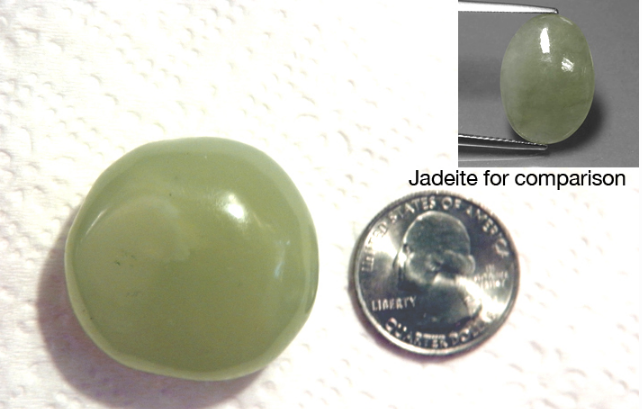
I saw your post about finding non metallic items today and thought I'd share one I found the day after the 7th Annual Treasure Hunters Cookout ( about a year ago. I found this at the top of Turtle Trail when I went into the bushes to take a leak…At first I thought Adventura or Jadeite, however...


It has been identified as Serpentine by Laura Strolia with some interesting history behind it. I got this information from elle:

New Jade (Serpentine) makes an exceptional meditation stone. It helps you to find inner peace. Serpentine was carried in ancient Assyria to request the gods and goddesses to provide double blessings. Nursing women used it to regulate their milk supply. Serpentine can be placed directly on the skin. It is an aid to kidney and stomach complaints, relaxes cramps and menstrual pain and helps women who are unable to reach orgasm due to tension.

The picture below shows a perfect match. I would venture a guess that it came off the Corrigan's wreck (Capitana?)


Thanks John!  You made today's post really easy for me.

A good number of finds have been the result of leaks.  You'd be surprised how often I hear about that.

---

Concerning `1715 Fleet "sight finds, " I've posted a few in the past, including emeralds.

My personal favorite is the wax seal shown below.  I talked about it in more detail in my 2/13/16 post.  Unfortunately it does not photograph well.

Found Wax Seal.
The image on the seal is a bird postured very much like the one shown below - wings spread, head turned, breast and thighs prominent.  The wings on the wax seal are wider as is the breast of the bird.


Image Similar To That On The Wax Seal.
The wax seal was found at water's edge on a day of calm surf.  It was found just north of the Turtle Trail access.

It is hard to imagine that the wax lasted all those years.  

---

Sunday was a little windy.  East northeast mostly.  The surf is increasing.  Monday it is supposed to be somewhere around 4 - 6 feet.   The wind will be more easterly though.

It could open up a spot somewhere.  I suspect good spots will be scarce, but there might be a few.

I haven't been out much.  My latest problem was a broken finger.  Its better now though.

Happy hunting,
TreasureGuide@comcast.net

Wednesday, February 3, 2016

2/3/16 Report - One Of The Most Remarkable Beach Finds That I Could Ever Imagine.


Written by the TreasureGuide for the exclusive use of treasurebeachesreport.blogspot.com.

Some finds are really remarkable.  The royal escudos found last summer by the Queens Jewels guys are very remarkable.  There are some finds that aren't valuable, but they are still remarkable.  I'm going to talk about one such find today.

The find I'm going to talk about isn't gold or silver or even copper, pewter or lead.  It isn't wood, glass or ceramics or mineral or stone or shell.   It isn't a coin or medallion or anything that you would really expect to find on a beach, especially not after hundreds of years.

What I am talking about is a wax seal impression - not the wax seal stamp that would be used to make an impression, but the impressed wax seal itself.

Modern Wax Impression.


Shown to the left is the type of thing I'm talking about, but that isn't the one.

Beeswax was used in the Middle Ages to seal documents, but since beeswax was flexible and could be easily removed, sealing wax was invented.

Below is a bit of the history of sealing wax.

...Government officials, particularly those engaged in clandestine operations and delicate and confidential negotiations, immediately recognized the need for a sealing material which would betray any effort made to tamper with the seal and gain access to the contents of the document it was intended to secure. It was then that the superior qualities of the new "Spanish" wax came to be highly valued. The basic formula of this new sealing compound was a blend of shellac, mastic, turpentine, chalk or gypsum, and a coloring agent, to which essential oils and/or fragrant balsams might be added to facilitate melting and impart a pleasant fragrance. This "sealing wax" could be melted to a thick viscous fluid which would readily and firmly adhere to the parchment or paper on which it was placed. While warm, it would take a clear impression of any seal that was pressed in to it. It would remain solid, even in the heat of summer, and was flexible enough to remain intact while affixed to the document on which it had been placed...

You can read more of the history of sealing wax by using the following link, which will take you to the article where I found the above information.

 https://regencyredingote.wordpress.com/2012/11/16/sealing-wax/

The wax seal impression shown below was found many years ago near Turtle Trail.  The remarkable thing is that it survived,for hundreds of years.  It is not very durable.  It must have been protected by a layer of sand for a long time.  It could not take much of a beating without crumbling.  

Wax Seal Impression From Treasure Coast Beach.
It is not easy to see the details of the impression.  I'll try to point out some of the features.  There is some sand or crust on part of it, but I can make out a little more of it than what shows in the photo.  

In the picture below I outlined one wing that shows fairly clearly.

Eagle Wind Outlined In Red.
To the left of the wing you might be able to see the breast and thighs of the eagle.  I outlined those in the picture below.

In the picture below you can not see the head at all, but I outlined it too.

The other wing is covered by encrustation.

Eagle Body And Thighs Outlined In Red
At about the ten o'clock and seven o'clock positions some of wax broke off of the perimeter.

You can see how the wax flowed out around the edges of the seal very much like the picture of the red seal above.

I wish that more details were visible, but for me it is enough of a miracle that it survived hundreds of years before being found.  I can't think of any kind of find that would amaze me any more.

---

We have a south wind today and about a two foot surf.  We'll have a small surf for several days.  Not much of a tide either.

Happy hunting,
TreasureGuide@comcast.net

Thursday, December 18, 2014

12/18/14 Report - Another Type of Once-In-A-Lifetime Find. Calm Surf and Poor Beach Detecting Conditions.


Written by the TreasureGuide for the exclusive use of treasurebeachesreport.BlogSpot.com.


There are once-in-a-lifetime finds.  They aren't always big things like the Atocha or Queen's Jewels.  Sometimes they are little things, but you just don't expect to ever find another one.

Here is one of those for me.  It isn't a gold coin.  I don't really consider them once-in-a-life time.  I've found two of them in one weekend.  One was from the 1900s and one from the 1700s.   I don't ever expect to find two from two different centuries in one weekend again.  But what I'm talking about today is something different.

You can see it here.  You probably can't tell what it is.  It isn't the best picture.  I haven't been able to get a really good picture of it. 

It is a wax seal.  I'll try to point out some of the detail in another picture. 

When you look up wax seals you'll mostly find the lead or carved stones that are used to make an impression in the wax.  This is the wax with the impression on it.

I don't ever expect to find another.  I find it hard to believe that I even found one.  It was eye-balled  at the edge of the water on a calm surf day, very much like today.  The sky was blue and the water was calm. 

It was found at Turtle Trail.

But the thing that amazes me is that the wax lasted so long.  It was evidently covered by sand and protected.  I don't think it could ever have survived very long in rough surf.

I tried to highlight some of the details in this picture.

The shape seems to be four double lobes. See the red outline.

Inside is an eagle.  To the right, I drew a red line around the one wing.  You can see it best in the picture.  I outlined the head of the eagle, some of the body and the leg feathers.

Below is another image of a wax seal which is similar but not the same.  It shows about the same type of eagle, with wings spread, leg feathers, turned head, etc.


There are no words that I've been able to see on the wax seal I found.

----------


The surf on the Treasure Coast today was very calm.  It was almost like a summer beach again. 

The cuts that I showed a few days ago are mostly filled again.

The front of the beach shown in the first picture below had a lot of new mush sand on the beach front.

Treasure Coast Beach As Seen Near Low Tide This Morning.


The above video shows the calm surf gently lapping at the beach.

There were some shells and pieces of fossils.   There might be a surprise like my wax seal.  You never know.

Happy hunting,
TreasureGuide@Comcast.net