Sunday, April 16, 2017

4/16/17 - Happy Easter!


Early 20th Century Postcard.
I remember sugar eggs like the one shown on the postcard being in my Easter basket.  There was a cellophane window on the front and a Easter scene inside.


Have a blessed Easter.

Make it memorable for many years to come.

Saturday, April 15, 2017

4/15/17 Report - The Huge Importance of Beach Conditions For Finding Treasure Coins. The Steep Slope Of The Finds Curve


Written by the TreasureGuide for the exclusive use of treasurebeachesreport.blogspot.com.


Finding old shipwreck treasure coins on the beach is a different type of hunting.  The vast majority of coins are found on a very few special days.  Those days are rare.  They don't occur every year.  They might only occur once every several years.  They are special times like during the Thanksgiving storm of 1984 or after hurricanes Francis and Jeanne.  Numerous finds are made during especially productive times like that. During those special times people can find more treasure coins in a few days than they might otherwise find during a entire year or more.

I don't remember the last time I issued a 5 rating on my Treasure Coast beach conditions rating scale, but I know it has been quite a while.  A 5 rating indicates excellent conditions like those I just described.  The dunes are eroded, the beach is heavily eroded and the sand in front of the beach has been moved.

The past couple of years have been very slow for finding old shipwreck treasure coins on the beach, and that is the only thing I'm talking about right now.  We had Matthew, and that opened up a few places and resulted in some good treasure coin finds, but not massive amounts.  Most finds occurred on just a few beaches, and not nearly in the numbers that were found after Francis and Jeanne.  You had to be at the right place at the right time.

I changed my beach conditions rating system not too long ago.  The change, in addition to better describing transitional conditions, also better reflects the rarity and huge impact of the very best conditions (5 ratings).

I changed my "2" rating so that it now indicates transitional conditions.  That rating indicates that sand has moved and conditions are improving, but finds are not certain.  More improvement over level 2 conditions will normally be necessary to predict that treasure coins will definitely be found.

The illustration at the top of this post attempts to show the general shape of the finds curve.  As conditions improve so do finds.  That is simple enough, but what I really wanted to show is the steep increase in number of finds during the very best conditions.  It is a dramatic increase, and the vast majority of finds are made during a very few days while conditions are best.

My illustration is not precise in any manner, but I do think it illustrates one the one thing that I am most trying to illustrate.

Level one conditions are in effect most of the time.  Level five conditions are rare.  They don't even occur every year, yet they still account for a large percent of the finds because of the large number found when they do occur.

The change of my two rating moves the entire scale weighting to the right and I think that was a good move.  My level 3 rating is now like more like my original level 2 rating.

1 and 5 ratings indicate times when detecting skill, while always helpful, is not as important as at other times.  During poor conditions, it doesn't matter if you are very skillful or not skillful at all, you are not going to find treasure coins on the beach.  There are always exceptions, of course, but those exceptions are extremely rare.

During level five conditions, skill is helpful, but you can find a lot without much skill.  During level five conditions people have actually put down their detector and ran around picking up coins laying on the surface like it was an Easter egg hunt.  The main thing is to be at one of those massively productive spots at the right time.

One of the difficulties during level five conditions is that beaches and bridges might be closed.  The other problem is all of the damage and all of the people that need help, which might be a higher priority.  It can be a time when more important things need to be done.  You most likely will find a lot if you are out a lot during times like that.

Skill is more important during the intermediate condition ratings.  The productive spots are more scattered.  Being able to read the beaches can help you find those scattered finds.  It is easy to miss a lonely half reale on a big beach.

Skill is also very important when it comes to artifacts.  Some people will never find an iron shipwreck spike simply because they discriminate out iron.  Maybe that is what they want to do, but I'm sure a lot excellent artifacts are unintentionally missed.

Another type of skill is adjusting when beach conditions are poor.  There are other types of hunting and other places to hunt if you do your research and are adaptable.  Those other types of hunting normally require a good amount of skill.

---

There has been a nice stiff breeze all morning.  The surf is supposed to be higher today.  The wind direction isn't the most favorable.  I haven't been able to check the beaches myself yet.

Happy Easter,
TreasureGuide@comcast.net

Friday, April 14, 2017

4/14/17 Report - Locals Hit Treasure Coast Beaches On Good Friday. Gold Shipments Sunk. Brass Monkey. Unfortunate Loss.


Written by the TreasureGuide for the exclusive use of treasurebeachesreport.blogspot.com.


Jensen Beach This Afternoon.

It is a beautiful Good Friday on the Treasure Coast and many locals along with a few remaining snow birds hit the beaches.


North of Jensen Beach Friday Afternoon.

There were a lot of people at Jensen Beach - as many as I've seen on a Treasure Coast beach for a good while.  There should be a few coins and modern items to find.

The Treasure Beaches weren't as busy.  They weren't eroding either.

John Brooks Friday Afternoon.

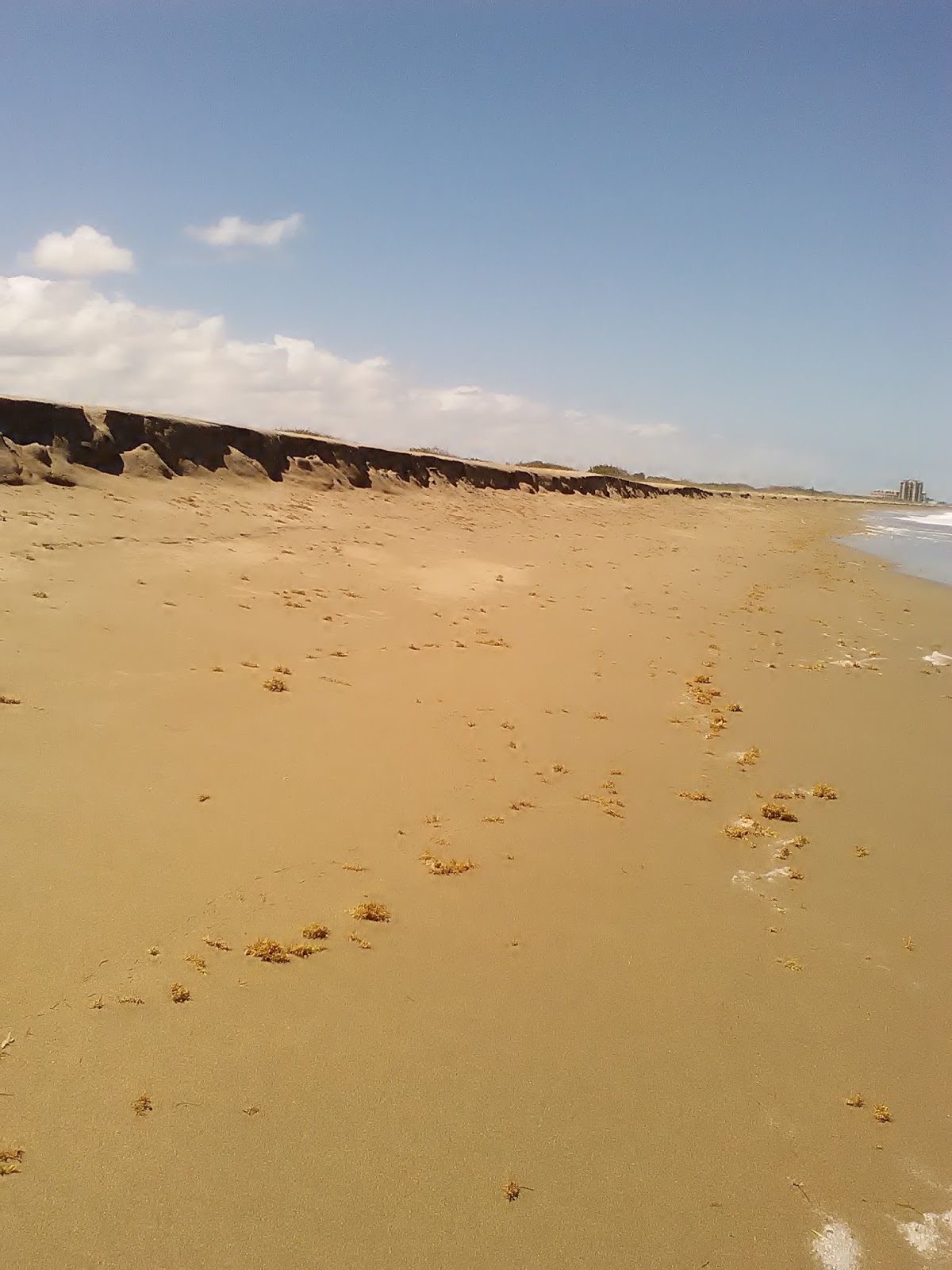
John Brooks beach had filled some since I showed it last.  It had more sand.  The cuts were at least a foot less than the last time I was there.  Also, there was more seaweed.


---

Michael Gannon died at 89.  He was personally known to some of this blog's readers and was a leading promoter of  St. Augustine’s history. 


---

Here is an excerpt from a good article.


After 25 years of research, a group of marine experts has produced a comprehensive and closely-guarded database of secret gold movements from Britain to the U.S. and elsewhere in World Wars I and II.


The gold was being sent by both the government and private institutions to pay their wartime bills. But a substantial amount ended up on the seabed, courtesy of the German U-boats which made every trans-Atlantic voyage a game of Russian roulette.


Now some of it may be heading for the surface as the most ambitious treasure hunt of modern times gets underway.


After painstakingly cross-referring classified Bank of England and government records with new archive material in Britain and overseas, the researchers believe they have pinpointed a series of Atlantic wrecks containing gold with a combined value of at least £4.5 billion. That is just a conservative estimate...

Here is the link for the rest of that article.


There is a lot to read in that one article, and there are other related articles to check out.

I haven't looked into this story much yet, but might have more on it in the future.


---

Brass Monkey and Cannon Balls.

If it was very cold today I might use an old expression and say, "It is cold enough to freeze the balls off a brass monkey."  That sounds crude - certainly not appropriate discussion for Good Friday.  The statement might not be as obscene as it sounds though.  If the article I just read is true, the expression has nothing to do with primates or any part of their anatomy.  The article says that the expression comes from the time of sailing ships and the balls referred to are cannon balls.  The "monkey" was a brass plate on which the cannon balls were stacked.

Here is what the article says.

The master wanted to store the cannon-balls such that they could be of instant use when needed, yet not roll around the gun deck. The solution was to stack them up in a square based

pyramid next to the cannon. The top level of the stack had one ball, the next level down had four, the next had nine, the next had sixteen, and so on. Four levels would provide a stack of 30 cannonballs. The only real problem was how to keep the bottom level from sliding out from under the weight of the higher levels. To do this, they devised a small brass plate (“brass monkey”) with one rounded indentation for each cannonball in the bottom layer. Brass was used because the cannonballs wouldn’t rust to the “brass monkey”, but would rust to an iron one.

When temperature falls, brass contracts in size faster than iron. As it got cold on the gun decks, the indentations in the brass monkey would get smaller than the iron cannonballs they were holding. If the temperature got cold enough, the bottom layer would pop out of the indentations spilling the entire pyramid over the deck. Thus it was, quite literally, “cold enough to freeze the balls off a “brass monkey.” (Source: http://www.snopes.com/language/stories/brass.asp)


That is the story anyhow, and I assume they are sticking with it.

I'm a little skeptical and suspect that there is some truth to it, but I've also read that the physics don't work out.  At least one person said that no amount of cold would have such an effect to freeze the balls off of the brass monkey.  That sounds right to me.  I wouldn't be surprised if this was one more of those things that has some truth to it, but also some myth.

---

Happy hunting,
TreasureGuide@comcast.net
Thursday, April 13, 2017

4/13/17 Report - Couple Sinks In Beach Sand. Found Religious Medals. Ghost Ship. Higher Surf Saturday.


Written by the TreasureGuide for the exclusive use of treasurebeachesreport.blogspot.com.


Imagine walking down the beach when you suddenly sink in the sand up to your knees.  Then you are in up to your waist and chest.  You panic.

That is exactly what happened to this couple.

An evening stroll along Torquay Beach for Sam and John Gould quickly turned into a fight for survival.
Sam and her husband John were walking along the beach near the water on Monday about 6.45pm when suddenly they began to rapidly sink into the sand.
Within a few seconds the sand was up to Sam's waist and the more she moved the further down she sank until it was up to her neck.
It was a traumatic experience for John, who fought with all his strength in the darkness while waist deep in sand, to stop his wife from sinking further into the depths.
"On a fear factor of one to 10 - it was 100," a shaken John told the Chronicle...

Here is the link for the rest of the article.

https://www.frasercoastchronicle.com.au/news/within-seconds-we-were-submerged-in-the-sand/3165793/

Reminds me of the hymn that says "all other ground is sinking sand."

If you remember my posts on sand liquefaction ( 3/15/17 ), you'll understand how that could happen.

It is not surprising that this happened in front of a revetment wall.

---


Dug Religious Medallion Finds
Photo by Michael F.
Here is the email message that accompanied the above photo received from Michael F.


In reference to your article yesterday. Indeed religious artifacts are common finds, not only on beaches but also in parks and schools. Below is a photo of a display I made of some of the religious and good luck medallions I have found over the years. Not unusual, I’m sure , but I think they make an attractive display.

An avid reader of your daily reports,

Mike in New Jersey.

Thanks much Mike.  Nice collection.

---

A kayaker found a 110-year-old ghost ship on a small tributary of the Ohio River.

Here is the link for that story.

http://www.viralforest.com/110-year-old-ghost-ship-in-the-ohio-river/

---

I picked up a nice fossil on a Treasure Coast beach this week.  So there are some old things surfacing, but fossils are different than coins.

---

Source: MagicSeaWeed.com.
The surf is supposed to peak Saturday at 4 - 7 feet.  That is a three foot range, so there is a good bit of uncertainty.  If it is seven feet, we could be looking at some beach improvement, depending upon other factors.

The primary swell will be more east than northeast though, so don't expect much.

Happy hunting,
TreasureGuide@comcast.net


Wednesday, April 12, 2017

4/12/17 Report - Rare Four-Reale Expected To Sell For Nearly Five Thousand Dollars. Recent Cuts on the Treasure Coast. Ghost Ship.


Written by the TreasureGuide for the exclusive use of treasurebeachesreport.blogspot.com.


Source: See link below.

Here is one of the higher priced reales in the current Sedwick auction.  Said to be a rare variety, the auction estimate is $3500 - $5000.

Here is the lot description.

Lima, Peru, 4 reales, Philip II, assayer R (Rincon) to left, second denomination o-iiii to right, motto PL-VSVL-T, legends HISPA / NIARVM, extremely rare. S-L1; KM-10.1; CT-311. 12.45 grams. Broad flan with nearly full legends, bold full pillars and shield (the latter slightly doubled, slightly porous XF+ with nicely toned fields, full secondary denomination o-iiii to right of shield, a near-unique variety of which we have only ever seen one other (the Sellschopp and Heiss Plate Coin we offered in Auction #18, curiously made from a different pillars-side die).


http://auction.sedwickcoins.com/Treasure-World-U-S-Coin-and-Paper-Money-Auction-21_as47083?p=1&ps=50&ca=860005&so=1&q=&hi=0&vm=1


---

John Brooks Beach Yesterday Afternoon.
Above is what I saw at John Brooks Beach yesterday afternoon.  Below is what I saw at Walton Rocks just a little later.


Walton Rocks Beach Yesterday Afternoon.
 There is a lot you can see on this beach.  Towards the top just in front of the dunes is a little cliff that was created back some weeks ago.

Down the slope a little farther was a recent cut.  You can see it just above the heavy line of seaweed.

Then of course is the sea weed, and just below that you can see where new sand piled up.

Below the recent cut would be a good place to look wherever the new sand hadn't accumulated much.  It would have been better to be there before the seaweed and sand came up.

You can often see where new sand fills in after a beach cuts.  This is a good example.

Yesterday I mentioned how John Brooks has been cutting every other week or so,  It has been cutting and filling over and over, but not into anything old.

---

A 110-year-old ghost ship was found on a tributary to the Ohio.

Interesting read.  Lots of pictures.

http://www.viralforest.com/110-year-old-ghost-ship-in-the-ohio-river/


---

Looks like the Easter coin hunt isn't going to be as good as expected.  The predictions now are for four to seven foot seas instead of five to eight as earlier predicted.  

Looks like the prediction models are up to their old tricks.

Happy hunting,
TreasureGuide@comcast.net


Tuesday, April 11, 2017

4/11/17 Report - Cuts On Treasure Coast. EM Dive Sled On Atocha Site. Conquest of Peru.


Written by the TreasureGuide for the exclusive use of treasurebeachesreport.blogspot.com.


Three Foot Cut At John Brooks This Afternoon.
\
This has been happening a lot.  It seems every time a front comes through and we get a northeast wind, John Brooks cuts a little.  It has happened quite a few times lately.  It seems like every week or two.  Seems like the same old sand coming and going.  Not much but modern targets though.

Other beaches didn't show this type of cutting.

The interesting thing is the 5 to 8 foot surf that is predicted for this weekend.

--- 


Diver With EM Sled.

Aquasurvey Inc. used and EM sled to find a copper ingot and other artifacts on the trail of the Atocha.

The copper ingot was under about four feet of packed clay.

A gun barrel was another artifact they located.

Recovered Copper Ingot 

Here is the link to see the sled in operation as well as the recovery.

http://www.aquasurvey.com//video/view/trail_of_the_atocha_season_2_ep_1

 The video is from the TV series Trail of the ATocha- second season.

---

A first Italian edition of Conquest of Peru by Francisco de Xerez is up for auction at Sotheby's.

Francisco de Xerez was with Francisco Pizarro on the mission to conquer the Incan Empire, and his work is one of the most important records of the conquest of Peru. "Xeres, the secretary of Pizarro, left Spain with him in January, 1530. This narrative was written by order of his master, while he was in America and was printed directly after his return to Seville, which he reached with the first installment of gold in July 1534. As is natural, with one who knew personally the actors in that drama and witnessed its sanguinary events, Xeres endeavours to extenuate their deeds of rapine, destruction and massacre. The narrative is interspersed with many anecdotes and personal reminiscences" (Church, pp.161-163).

Here is the link.

http://www.sothebys.com/en/auctions/ecatalogue/2017/travel-atlases-maps-natural-history-l17401/lot.88.html

The auction estimate is 6 - 8 thousand British pounds.

---


Happy hunting,
TreasureGuide@comcast.net

Monday, April 10, 2017

4/10/17 Report - Religious Metal Detector Finds and Easter Traditions. A Letter From 1564 Fort Caroline


Written by the TreasureGuide for the exclusive use of treasurebeachesreport.blogspot.com.

Gold Metal Detector Find From The Beach Near The Nieves Wreck Site.

The figure shown above is about two inches high and was undoubtedly at one time attached to a cross.  It is truly old.  Both the method of manufacture and type of gold show that.  So does the style, wear and encrustation.  It is definitely centuries old.

It isn't a new find, and I posted it before but thought it was particularly appropriate for today's post.  

If you've been detecting the Treasure Coast very long or just reading this blog, you are aware of how many religious artifacts have been found on the shipwreck sites and beaches and how common religious symbols are on many finds.  You will find a cross prominently displayed on many treasure coins, and religious medallions are also common metal detector finds.  

The most important Christian season has begun.  You might think it would be Christmas by the way we celebrate today, but it is actually Easter. Yesterday, of course, was Palm Sunday. And Easter is next Sunday.

Easter is celebrated on the first Sunday after the first full moon after the Spring equinox.  You might have noticed the bright moon lately.

Easter isn't a new celebration at all.  Maybe it has changed some over the centuries, but it has been celebrated for many centuries, including the seventeenth and eighteenth centuries.

Even the Easter bunny and Easter eggs, which might seem to have no religious significance stem from ancient practises and meanings and still carry religious significance for some even if the same symbols carried different meanings at different times and places.  Ancient pagan beliefs and symbols related to fertility carry the meaning of redemption and rebirth for many today.

Spain is one place where Easter is celebrated with much fanfare.  I'm sure that the celebrations have changed over the centuries, but much has remained the same too.

In Spain Semana Santa (Holy Week) is the most important celebration.  

Here, the most important Catholic holiday is commemorated with a week full of color, art, religious fervor, and extravagant processions. The most spectacular events take place in Malaga and Seville, where the streets are taken over by flamboyant parades and intricate religious displays depicting biblical scenes.

Like everywhere in Spain, the festivities begin on Palm Sunday (Domingo de Ramos) and last until Easter Monday (Lunes de Pascua), with the most dramatic and passionate parades held on Maundy Thursday and Good Friday...


Although Easter celebrations in Malaga are of huge proportions, it’s the Seville Semana Santa that has crossed the boundaries becoming a world-famous event. During the Holy Week, the gorgeous Andalusian capital comes to life with thousands of pilgrims that gather here from all corners of the world to witness the city’s extravagant pasos.

See https://spainattractions.es/easter-spain/ for more.

Like many of our Christmas traditions, our Easter traditions were heavily influenced by German settlers.  That includes the Easter Bunny (Osterhase). According to the tradition, children would build brightly colored nests, often out of caps and bonnets, in secluded areas of their homes.  The “Oster Hase” would, if the children had been good, lay brightly colored eggs in the nest.  As the tradition spread, the nest has become the manufactured, modern Easter basket, and the placing of the nest in a secluded area has become the tradition of hiding baskets.

The same things we are acknowledging, remembering and celebrating this year have been celebrated for centuries and centuries.  We have a lot in common with our ancestors and the early settlers and explorers.  It is hard to imagine the same things being celebrated hundreds of years ago, but as much as things have changed, some things remain the same.  At the core and root of it all is something human and something Divine that transcends space and time.

---

Here is a letter written by a young French man from Fort Caroline in 1564.

http://ufdc.ufl.edu/UF00025123/00001/1x

---

I didn't post yesterday because I've been researching something and lost my sources.  I'll get back to it when I find them again.

It seems a lot of the snowbirds have gone home.  The beaches haven't been as busy lately.

The surf will be around three to five feet this week.

Happy hunting,
TreasureGuide@comcast.net