Thursday, August 17, 2017

8/17/17 Report - More 1715 Site Finds From the Capitana. 1802 Shipwreck With Interesting Cargo. Storms Forming in the Atlantic.


Written by the TreasureGuide for the exclusive use of treasurebeachesreport.blogspot.com.

Cole Smith of the Capitana Crew with Encrusted Object
Photo submitted by  Captain Jonah Martinez

Captain Jonah said, The cargo hook was found by Cole Smith newest member of the Capitana...

Congratulations Cole, and thanks for sharing Jonah!

Cole also found a class ring. Not the class of 1715 - but 1968.

Cole's 1968 Class Ring Find.
Things of various ages and sources sometimes get mixed together.  Just because something comes from a known shipwreck site doesn't mean it came from the shipwreck.  That is obviously the case with this class ring.  The ring looks like it has been lost for a good number of years.

Nice thing about diving all day is that your hands look like you just got a manicure - not like relic hunters.   Relic hunters usually look like they could start a seed garden under their fingernails. ( :

---

Continuing with that theme, I found an article about a shipwreck that was lost in 1802 that was carrying antiquities taken from ancient Greece.

Chess pawns, combs and a toothbrush are some of the new findings brought to light by the underwater excavation of the wreck of the ship “Mentor” that sank off the island of Kythira in 1802...


Divers On The Site of the 1802 shipwreck of the Mentor.
Source: See GreekReporter link below.
The ship, which was carrying antiquities plundered from the Parthenon by British diplomat Lord Elgin, was bound for England via Malta but sank at the entrance of the port of Avlemona southwest Kythera...

For more about that, here is the link.

http://greece.greekreporter.com/2017/08/15/items-recovered-from-wreck-of-elgins-ship-off-kythira/

Another example how items from various sources and ages can be found together.

---

Source: nhc.noaa.gov
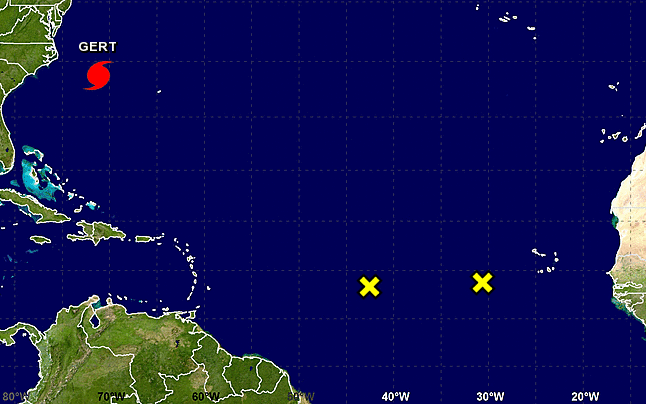
The Atlantic is hearing up.  The system approaching the West Indies (red) had an 80% chance of becoming a cyclone in the next 48 hours.  The next system has about a thirty percent chance.

Gert is way north now.

I'll be posting a projected path on those systems before long.

Happy hunting,
TreasureGuide@comcast.net

Wednesday, August 16, 2017

8/16/17 Report - New 1715 Fleet Find By Crew of Capitana. Search For Lost Merchant. Attitudes Towards Historic Items and Artifacts.


Written by the TreasureGuide for the exclusive use of treasurebeachesreport.blogspot.com.

Capitana Diver Grant Showing His Recent Find
Photo submitted by Captain Jonah Martinez
As you know, salvage season is in full swing.  The crew of the Capitana has been finding artifacts, including the scale weight shown in the photo above.

Congratulations Grant.  Great find!

And thanks to Capitana captain Jonah Martinez for sharing the great photos with us.

Bronze 4M or Marcos Scale Weight Found by Grant Photo submitted by Captain Jonah Martinez

I'll post more recent 1715 Fleet finds probably tomorrow.

---

The crew of the Dare has been working 24/7 looking for the shipwreck code-named Lost Merchant.  After surveying about 220 nautical miles with both a magnetometer and side scan sonar.  A number of targets have been identified for further investigation.

---

Three New Areas To Watch.
Soruce: nhc.noaa.gov
Hurricane Gert is now well north of us, but there is a parade of systems coming off of Africa.  It is too early to know if they will affect Florida.  I'll keep an eye on them.

---

Never RememberSource: CNN News Video

This historic Confederate statue was torn down.  I wonder how far this will go.  Could there come a time when confederate or other historic artifacts from other times or movements be treated the same?  Is this a sign of things to come?  Could there come a time when the Washington Monument or other statues or monuments, or even dug artifacts, will be similarly regarded or erased from the landscape and history?

Happy hunting,
TreasureGuide@comcast.net

Tuesday, August 15, 2017

8/15/17 Report - Numismatic Archaeology of North America. Ship's Store Tokens. Determining the Source of Silver Coins. New Weather In The Atlantic.


Written by the TreasureGuide for the exclusive use of TreasureBeachesReport.blogspot.com.


Here is a good book.  You can read a sample free online.  The title is Numismatic Archaeology of North America: A Field Guide.

You might want to look at some of the later chapters first because there is a limit to how much you can read as a free preview.

Below is just one of many illustrations from the book that I found interesting.

-----------------------------------------------------------------------------


-------------------------------------------

Maybe you've found something that looks like a coin but you can't identify it.  I have. This is an entire class of coins or tokens that you should know about.  As the book says, such tokens might be found in port cities or where sailors live.

There seems to be a lot of good interesting information in that book.

Click here to take a look at the free preview.

----


Researchers in Germany and Denmark analysed the chemical composition of 70 silver Roman coins dating from about 310 BCE to 101 BCE, spanning either side of the war.

"Before the war we find that the Roman coins are made of silver from the same sources as the coinage issued by Greek cities in Italy and Sicily. In other words the lead isotope signatures of the coins correspond to those of silver ores and metallurgical products from the Aegean region," said Katrin Westner of the Institute for Archaeological Sciences, Goethe University, Germany...


Later coins came from silver mined in what is now Spain.

Here is the link to read more about that.

http://www.ibtimes.co.uk/2200-year-old-coins-record-hannibals-defeat-start-roman-empire-1634912


---


Source: nhc.noaa.gov

Gert is up by North Carolina now, but there are two more systems to watch out in the Atlantic.  Either or both of those could possibly come our way.  It will be a while before we know what happens to them.

That is all for today.

Happy hunting,
TreasureGuide@comcast.net


Monday, August 14, 2017

8/14/17 Report - South Hutchinson Island Beaches and Conditions. A Few Finds. Tropical Storm Gert.


Written by the TreasureGuide for the exclusive use of treasurebeachesreport.blogspot.com.


I took a look at a few beaches along South Hutchinson Island this morning.  Beach detecting conditions were generally poor.

Most beaches had loose shelly sand with a steep slope.  Other beaches were more flat and had a layer of fine sand over the course sand.

As you can see, the surf was flat this morning.  One of the salvage boats came out of the Fort Pierce Inlet around 8:30.  I didn't see any of the others.

Seaweed was common too.

I hadn't been out much lately, but things have not changed much either.

Below are some more pictures of South Hutchinson Island beaches.


I didn't hunt very much.  Mostly I just looked at the beaches, but I did detect a little.  No matter how hard the beaches have been detected, there is usually a little something left, like the crusty coins shown below.

Two Crusty Pennies.

I don't know why they remained on the beach so long.  Maybe because people aren't bothering with zinc pennies, or maybe it was because there was a screw between them, which could have protected them.  They were the only coins I found, although I only detected for a short while - probably not even twenty minutes.

Also the following small gold earring was found at good depth - probably about seven inches.


---

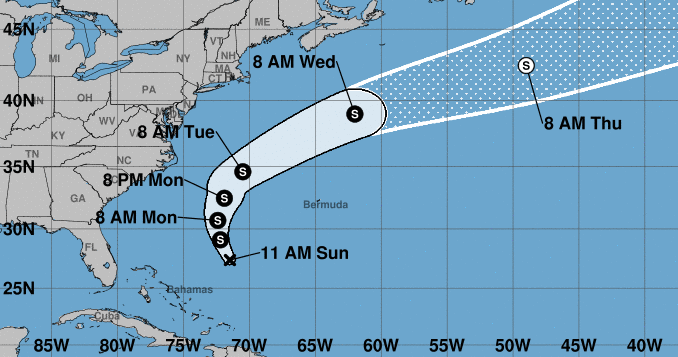
There is now a named tropical storm - Gert.  She won't come our way though.  She is headed north and out into the Atlantic.

Source: nhc.noaa.gov

The surf on the Treasure Coast will remain two feet and under for several days.

Happy hunting,
TreasureGuide@comcast.net


Sunday, August 13, 2017

8/13/17 Report - Old Maps From the Internet. The Watch Videos. Different Terms. D.B. Cooper Treasure Mystery. Tropical Storm Forming.


Written by the TreasureGuide for the exclusive use of treasurebeachesreport.blogspot.com.

Super Old Map For Locating Metal Detecting Sites.

The internet provides so much good research material.  I found this 1876 map showing the area where I grew up and where many of my ancestors settled in the 1800s.  There farms are well marked on the map.  You can see where the old school house was, and you might be able to see the Plank Road running down the middle of the map, which was actually covered with planks back in the day.  Now it looks like any other road.  And near there used to be an old one-room school house that has been remodeled many times so that you would never guess that it was either a school house or old.  These kinds of old maps are invaluable for locating good metal detecting sites.

I also found an early 1700s map showing where one of my ancestors had land near Lancaster PA.  As I've said before, I really enjoy digging up (in more ways than one) my own family's history.

---

The past few days I showed some videos.  One thing you should get out of that series is the need to be careful about selecting the mode you use when you metal detect.  I generally prefer an All Metals or Pinpoint mode.   If you used coin mode for those watches, for example, you probably would have missed them a lot of the time, and even if you used All Metals mode and were going by the signal tone or ID meter, you still could have missed some of the watches.  Other artifacts could be missed just as easily.

I used the Garrett Ace for the videos.  It is not a high-end detector, but the circuitry is basic and similar to that used in many detectors.  I might demonstrate how different types of detectors woud respond some time in the future.

---

I remember once reading that someone didn't like the use of the word "detectorist."  I forget their reasoning, but for me the term is a good one.  They preferred the label "coinshooter."

I prefer the word detectorist because it is more general.  Few people who are out there hunting coins would not want to find a nice gold ring or something else of value.  Most people who search the treasure beaches hunt for and find things other than coins, including rings, spikes and other artifacts. And those that too narrowly focus on coins, might not realize how many other types of nice shipwreck items they are missing.

Treasure hunting is an even more general term.  There a lot of different kinds of treasure that can be found on a beach.  Some aren't even metallic.  The 1715 Fleet wax seal impression that I found is one example.  There are also pottery, stone, fossil and other types of treasure that can be found while detecting.  I don't like being too restrictive.  I don't like to miss much of anything that I might find interesting.  I'm not just interested in coins or jewelry or silver or gold.  Even when I really want to find one type of thing and go out with that intent, I do not see any reason to pass over any other interesting things that might be there.  You can be looking for one thing and find something else even better.  Also, the other things you see along the way, such as a pot shard or musket ball, might provide just the clue you need to help you find the thing you set out to find.  Everything that has been on a beach for a while provides some indication of how the beach and other things are moving and therefore can provide very important and useful information.

---

A crew of volunteer cold-case investigators in the Pacific Northwest, led by a former FBI agent, has uncovered what they believe to be “potential evidence” in the 46-year-old mystery of D.B. Cooper...

Here is the link for more about that.

https://dbcooper.com/2017/08/1382/

Thanks to Dean for the link.

---

Tropical Storm Eight.
Source: nhc.noaa.gov
Tropical Depression Eight looks like it will be a storm, but it won't come our way.  I'm not expecting to get anything off of this one at all.  It has been a very long sustained period of south and southeast wind and building beaches.  Someday that will change.

Happy hunting,
TreasureGuide@comcast.net

Saturday, August 12, 2017

8/12/17 Report - Detector Signals Produced by Three Different Complex Targets and The Effect of Position.


Written by the TreasureGuide for the exclusive use of treasurebeachesreport.blogspot.com.

Source: nhc.noaa.gov
It looks like the weather shown on the map above will become a cyclone in the next few days, but will probably stay out to sea and go north of us.  At this point I don't expect the Treasure Coast to get much from it.

---

I had to correct yesterday's post.  My description of the signals produced by the watches in the video was incorrect.  I described the wrong video.  That must have been confusing.  Sorry about that. I corrected it last night.  If you read that post before I made the corrections, you might want to go back to read it again.

Today I'll describe a third video on detecting watches.  I'm sure some of you will think I've already done too much of that, but I'm illustrating a variety of important points.  There are some things that are very difficult to correctly identify unless you dig them.  It isn't limited to watches.

Complex and irregularly shaped targets are not as easy to identify as coins or rings.  I've also shown in the past that when a ring is buried so that it is standing on end, it will produce a very different signal than the same ring laying flat in the ground. I posted a video on YouTube about two years ago that shows that.  The position of a watch will affect the signal too.  The signal is more unpredictable due to the irregular shape of watches, the variety of materials that can be used in a watch, how the watch is laying, as well as how the detector is used.

In the next video I used the same three watches and put them on the ground so that the face is facing up instead of being perpendicular to the ground as they were in the previous two videos.

Here is the link for that video.

https://youtu.be/lqZ9XJiKy7o

You probably noticed that the first watch (Polo Club) produced mostly a low tone signal.

The second watch was very inconsistent: sometimes producing no signal, sometimes a Bell tone and sometimes a lower tone signal.

The third watch ( large high-end Seiko ) consistently produced a Bell Tone, no matter which direction the coil was moved.  The ID meter gave a meter ID that was in the coin range.

The lower tone (produced by both the first watch and sometimes by the second watch) was accompanied reading of something between a pull tab and penny on the ID meter.

If you were only digging targets that produced the Bell Tone, you would have dug the third watch, maybe dug the second watch, but probably left the first watch in the ground.

Target ID is not always simple.  Of course different detectors give you more or less information, but no metal detector can identify everything correctly, and as a result you can easily miss something very good.  It is important to really know your detector and how it responds to different types of targets.

Targets such as coins are easier to identify than complex or irregularly shaped targets such as watches.  You can often get more information about a buried target by changing the angle of your sweep and comparing the signals obtained by sweeping in two different directions.

One thing I hope you see is that there are some very good targets that might not sound good or read as good on a meter.  At helps to really get to know your detector.  I highly stress the value of experimenting with test targets.  Most targets will not be as complex as watches, however they might be more complex than you think.  Various things, even those as simple and common as coins, can give signals different from what you might expect.

For example, coins sometimes seem to disappear when you are digging.  They can slip deeper into a hole or  stick to the side of the hole.  A coin sticking to the side of a hole so that it presents the narrow edge of the coin to the coil will be much more difficult to detect and can seem to disappear.

As you probably know, I do a lot of different kinds of posts on a variety of topics.  I'll undoubtedly be back on some other topic before long.

I hope you find the videos useful.

Happy hunting,
TreasureGuide@comcast.net

Friday, August 11, 2017

8/11/17 Report - More on Metal Detecting Watches and All Metals Mode. Sedwick Treasure Auction. Numismatic and Shipwreck Salvage Presentations.


Written by the TreasureGuide for the exclusive use of treasurebeachesreport.blogspot.com.

Two Areas of Weather That Might Affect the Treasure Coast
Source; nhc.noaa.gov
---

Yesterday I showed how one metal detector responds to watches.  I used the inexpensive Garrett Ace 250 for my demonstration.  I could have used a variety of other metal detectors and got very similar responses.  I might  actually do that some time.  Of course different detectors will respond somewhat differently, but the main point remains the same: how you use your detector will determine what you find or don't find.  As I am showing, it is easy to miss potentially valuable targets such as watches if you are not careful.  I've often warned of the risks involved with various forms of discrimination and too much reliance on target ID as well as other detector settings such as search modes that might seem convenient.  You can miss very good targets and never be aware of it.

Yesterday for my demonstration I used the Ace 150 in Coin Mode.  As you saw, there were times when the detector completely missed or responded minimally to large men's watches.  But what if you were not using such a selective mode?  I'll show you what happened when I switched to All Metals mode.

I used the same watches placed in very similar positions.  Also the same detector.  The only difference is that I switched to All Metals mode.

Here is the video link.

https://youtu.be/BtIVumXmtyU

[ I corrected the following three or four paragraphs.  My original text was incorrect.  Sorry! ]

There are are basically two tones that you heard.  One is the Bell Tone that is used by the Ace to indicate a coin or similar good target.  The other tone is lower.

The signal produced by the various watches varied depending upon the direction the coil was moved.  That happens with a lot of targets, especially those that are elongated like nails or spikes.

The signal produced by the last watch ( the heavy high-end Seiko ) was the most consistent.  It produced a definite signal almost all the time, no matter if the coil was moved parallel or perpendicular to the face of the watch.  In one direction, though, the signal was a Bell Tone, and in the other direction is was the lower tone.

The first two watches often produced no signal, which you might find very surprising, especially since it was made using All Metals mode.

The main point is that with complex targets such as watches, the signal will vary depending upon a variety of factors, including how the coil goes over it.  Changing the direction pf the sweep or position of the coil by a few inches one way or another, often resulted in a very different response. That makes target ID for such targets very tricky.

---

Below is a notice I received from the Sedwick's concerning the upcoming treasure auction.  Even if you aren't participating in the auction, you might want to catch the guest speakers, which are listed at the bottom of this notice.


Sedwick's Treasure, World, U.S. Coin & Paper Money Auction #22

Now is the last chance to consign to our Treasure, World and U.S. Coin & Paper Money Auction #22, which will be our Fifth LIVE PUBLIC FLOOR sale. As usual this event will take place at the DoubleTree by Hilton at Lake Buena Vista in Orlando, FL, with live floor auction on Thursday-Friday, November 2-3, 2017 and lot viewing and guest speakers the day before (Wednesday, November 1).

The final deadline for consignment to our upcoming auction is almost here: August 17. We have secured a vast amount of great pieces but there is always a spot for interesting consignments and trophy coins. Many international guests will be coming from Latin America and Europe, so take advantage of our great LIVE FLOOR event and get top exposure for your pieces.

This auction will feature Part II of The Richard Stuart Collection Selections, which includes the largest group of Panama cobs ever offered in one sale with 10 unique pieces; an impressive assortment of unique and finest pieces from Central America, including Costa Rica, El Salvador, Guatemala, Honduras, Nicaragua (including the largest offering of provisional coinage ever presented in a single auction) and Panama; plus the largest single-sale offering of British "Admiral Vernon" medals from the same pedigree.

Other features in this auction include a selection of Lima gold cobs from the 1715 Fleet (many unique dates and finest known pieces) in addition to many other Fleet treasures like gold chains, ingots and other artifacts. Finally we have hundreds of cobs, particularly Lima and Potosi, and an exquisite collection of Mexican pillar dollars.

Guest Speakers Include:

1) Jorge Proctor, Numismatist and Researcher: "The Forgotten Mine of Colonial Panama"
2) Manuel Chacón, Numismatic Curator: The Central Bank of Costa Rica "Costa Rica Numismatics"
3) Carlos Jara, Numismatist and Researcher: "Central American Provisional And Provincial Mints"
4) Capt. John Brandon, Historical Shipwreck Salvor: “An Overview of the Exploration For and Recovery Of Historical Shipwrecks: 1715 Fleet, Atocha and Lucayan Beach Wrecks”

We look forward to hearing from you, with thanks in advance.

Daniel Frank Sedwick, LLC

---

There are now two areas of weather pinpointed on the National Hurricane Center map for our area.  The first will just produce rain.  The other one has been out there for a while and might develop this weekend.  At this time it is expected to stay east of us and possibly make landfall in the Carolinas.  It is too early to say much about how that one might affect us.

On the Treasure Coast we'll be having something like a two foot surf again.

Happy hunting,
TreasureGuide@comcast.net