Showing posts with label North America. Show all posts

Tuesday, October 23, 2018

10/24/18 Report - Dog Island Shipwrecks Surface After Hurricane as Expected. Bronze Age Dagger Found. Martyrs of North America.


Written by the TreasureGuide for the exclusive use of treasurebeachesreport.blogspot.com.


Dog Island Shipwreck Uncovered by Hurricane Michael.
On 10/11/18 I posted the following.

As you know by now, the portions of the Florida Panhandle got hit hard by Hurricane Michael.  I have not doubt that some old things will be uncovered up around Alligator Point and Dog Island, where nice old Spanish coins have been found before.

If you want to become a little more familiar with the shipwrecks of the area, here is a link to a lengthy and  detailed archaeological report.

You will find a lot of interesting information in that report.


Some of the uncovered wrecks, such as the one or two shown above are now in the news.

It looks like that photo was taken by a drone.

An article in TampaBay.com published the photo at the top of the post and said, But among the destruction is also a reemergence of history.  The storm's surge unearthed a shipwreck from the 19th century, one or possibly two sunken ships that were washed up on Dog Island by a 1899 hurricane.  According to Sarah Revell, spokeswoman for the Department of State, the wrecks "have been mapped and investigated scientifically multiple times," and parts of them have been exposed in the past.

Here is the link for the rest of that article.

http://www.tampabay.com/florida-politics/buzz/2018/10/23/hurricane-michael-unearthed-a-19th-century-shipwreck-on-dog-island/


I also recommend reading the extensive archaeological report, if you haven't already done that.

Other sources also talked about Dog Island shipwrecks exposed by hurricane Michael.  The following appeared in MyFox8.com.


Here is the link for more about that.

https://myfox8.com/2018/10/20/hurricane-michael-exposes-120-year-old-shipwrecks-off-florida-coast/

Thanks to TekLord Doug for the lead on these articles.

---

Bronze Age Dagger.
Source: Spectator.sme.sk


Here is an excerpt from an article about another interesting find.

A local man has found a unique Bronze Age dagger on the banks of the Slanec stream in Hriňová. The dagger is probably between 3200 and 3600 years old. More specific data will be available after more detailed research by preservation offices.
“It is the oldest finding from the area around our town and may reveal significant new historical connections to the region,” said the Hriňová project manager, Michal Machava, as quoted by the TASR newswire...
Here is the link for more about that.


https://spectator.sme.sk/c/20940695/bronze-age-dagger-unearthed.html

---

Here is an excerpt from an interesting article about martyrs of North America.


In the summer of 1642, Jogues and the surgeon-turned-Jesuit brother, St. René Goupil, were accompanying a large group of Huron warriors homeward when they were ambushed by Mohawks (part of the Iroquois Confederacy) at Lake Champlain. Many died, but the rest were taken prisoner, with Jogues and Goupil among them. Both were victims of torture and Jogues had most of his fingers cut off. Goupil was martyred shortly after professing his religious vows in the presence of Jogues for teaching a small boy the Sign of the Cross. Commenting on this, Jogues wrote, “this angel of innocence and martyr of Jesus Christ gave his life for him who had given him his.”

And here is that link.


---

Friend, physician and detectorist Russ P. confirms that the Red Tide that has been plaguing our beaches does cause coughing.  I understand that if you have asthma, it could be dangerous.

There are no storms in the Atlantic.

A cool front came through last night with some northeast winds.  I haven't seen the beaches yet.

Happy hunting,
TreasureGuide@comcast.net


Wednesday, November 1, 2017

11/1/17 Report - Numismatic Archaeology. Literally Finding a Mint. Old Coin Blog. Educational Seminars Today.


Written by the TreasureGuide for the exclusive use of treasurebeachesreport.blogspot.com.

Source: Numismatic Archaeology of North America: A Field Guide.

Here is an interesting book - Numiamatic Archaeology of North America: A Field Guide, by Akin, Bard and Akin, 2016.

The above illustration comes from that book.  I know it is a little hard to read the illustration but it starts on the bottom with ocho reales, or an 8-reale, and ends at the top with the small medio reale and then smaller cuartillo, or quarter reale.  The number on the right is the number of coins of that denomination in one peso.

Just thought it was useful to see a good comparison of the different sizes of reals.

You can preview a little of that book online.  It contains many illustrations.  I would say well worth reading.

Click here to go to the preview.

---

... “We’ve come to a layer with material from the end of the 3rd and the beginning of the 4th century in which we have discovered slag and bellows for fanning up fire for metal smelting," lead archaeologist Veselka Katsarova from the Museum of Sofia History, has told bTV.

She adds that the layer in question contains coins from the time of Roman Emperors Gallienus (Gallien) (r. 253-268 AD), Claudius II (r. 268-270 AD), and Aurelian (r. 270-275 AD) up until the beginning of the 4th century AD.

“We are finding slag, and clay fragments from bellows… There are metal particles stuck to the bellows fragments," she has elaborated, as cited by BNT.

In addition to these latest finds, the archaeologists’ hypothesis that in the Late Roman era the building in question and the adjacent structures were turned into a coin mint is also supported by findings from excavations in the 1970s and 1980s by archaeologist Prof. Magdalina Stancheva of a large Roman public building underneath today’s St. Nedelya Cathedral...


Here is the link for more about that.

http://archaeologyinbulgaria.com/2017/10/25/archaeologists-may-found-mint-ancient-roman-city-serdica-bulgarias-capital-sofia/

---

Peter H. from Wales recommended this blog about old and beat up coins.

www.oldcoinnecromancer.blogspot.co.uk

Take a look.

---

The educational sessions and lot viewing for the Sedwick auction takes place today (Wednesday) in Orlando.

Happy hunting,
TreasureGuide@comcast.net

Tuesday, August 15, 2017

8/15/17 Report - Numismatic Archaeology of North America. Ship's Store Tokens. Determining the Source of Silver Coins. New Weather In The Atlantic.


Written by the TreasureGuide for the exclusive use of TreasureBeachesReport.blogspot.com.


Here is a good book.  You can read a sample free online.  The title is Numismatic Archaeology of North America: A Field Guide.

You might want to look at some of the later chapters first because there is a limit to how much you can read as a free preview.

Below is just one of many illustrations from the book that I found interesting.

-----------------------------------------------------------------------------


-------------------------------------------

Maybe you've found something that looks like a coin but you can't identify it.  I have. This is an entire class of coins or tokens that you should know about.  As the book says, such tokens might be found in port cities or where sailors live.

There seems to be a lot of good interesting information in that book.

Click here to take a look at the free preview.

----


Researchers in Germany and Denmark analysed the chemical composition of 70 silver Roman coins dating from about 310 BCE to 101 BCE, spanning either side of the war.

"Before the war we find that the Roman coins are made of silver from the same sources as the coinage issued by Greek cities in Italy and Sicily. In other words the lead isotope signatures of the coins correspond to those of silver ores and metallurgical products from the Aegean region," said Katrin Westner of the Institute for Archaeological Sciences, Goethe University, Germany...


Later coins came from silver mined in what is now Spain.

Here is the link to read more about that.

http://www.ibtimes.co.uk/2200-year-old-coins-record-hannibals-defeat-start-roman-empire-1634912


---


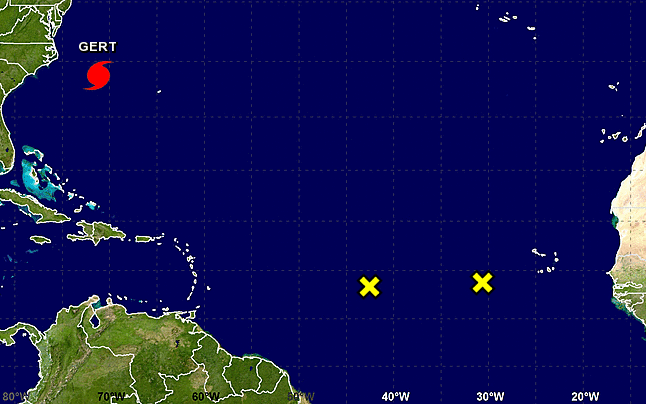
Source: nhc.noaa.gov

Gert is up by North Carolina now, but there are two more systems to watch out in the Atlantic.  Either or both of those could possibly come our way.  It will be a while before we know what happens to them.

That is all for today.

Happy hunting,
TreasureGuide@comcast.net


Saturday, April 2, 2016

4/2/16 Report - Elks Find. New Viking Site Found In North America.


Written by the TreasureGuide for the exclusive use of treasurebeachesreport.blogspot.com


Item Found by John C.
John C. found this item, which I assume is an Elks pin or pendant.

The Order of Elks was formerly organized February 16, 1868, in the City of New York. Its full corporate name was "Benevolent and Protective Order of Elks of the United States of America." Its declared purposes are to practice its four cardinal virtues, Charity, Justice, Brotherly Love and Fidelity; to promote the welfare and enhance the happiness of its members; to quicken the spirit of American patriotism; and to cultivate good fellowship. 

Here is a link about the Elks.

https://www.elks.org/lodges/LodgePages.cfm?LodgeNumber=1625&ID=3095

If you can provide more information on the item such as date or purpose or the other inscriptions, please let me know.

Perhaps someone can provide the meaning of the clock, which is seen on many Elk items.

Thanks for sharing John.

---

Tony (penzfan) sent me a couple of pictures of silver rings he found in the surf this week with his new 3030.

Thanks Tony.

---

A thousand years after the Vikings braved the icy seas from Greenland to the New World in search of timber and plunder, satellite technology has found intriguing evidence of a long-elusive prize in archaeology — a second Norse settlement in North America, further south than ever known.

The new Canadian site, with telltale signs of iron-working, was discovered last summer after infrared images from 400 miles in space showed possible man-made shapes under discolored vegetation. The site is on the southwest coast of Newfoundland, about 300 miles south of L'Anse aux Meadows, the first and so far only confirmed Viking Settlement in North America, discovered in 1960....

Click here to continue reading that article.

The article referred to "space archaeologists."  That doesn't sound like the most accurate description to me. That sounds more like someone that conducts archaeology in space or that studies old space trash or something.

---

Expect a calm surf for at least a few days.

Happy hunting,
TreasureGuide@comcast.net