Saturday, November 24, 2018

11/24/18 Report - What's Going On At the Beach.


Written by the TreasureGuide for the exclusive use of treasurebeachesreport.blogspot.com.

John Brooks Saturday Morning.
Yesterday I showed this same view.  Since then the surf came up over the berm and smoothed out the cuts.  We've had some really high tides lately, and today the wind was from the west.

The waves were rather impressive.  They were crashing right in front of the beach.

Surf At John Brooks This Morning.
There were a lot of surfers down at Blind Beach where the swells were building farther out.

Frederick Douglass Beach Saturday Morning.
Frederick Douglass Beach was smoother today too.

Lady Detecting the Seaweed Line At Frederick Douglass This Morning.
You can see where the water was.

Setting Up For a Beach Wedding At Frederick Douglass Saturday Morning.
Besides the wedding setup, you can see the horses coming in.  A lot people were out enjoying the beautiful weather on a holiday weekend.

Riders Returning at Frederick Douglass
Down at Blind Creek there were a lot of people, including surfers, but no erosion.  I did notice one of the old dead trees was moved by the water.

Fort Pierce South Jetty Beach Saturday Morning.
Notice the water behind the new sand to the north in this photo.

Now I'll show you Fort Pierce South Jetty as it looked yesterday. 

Fort Pierce South Jetty Beach Friday Morning.
What a difference a day makes.  The cuts are now gone and a lot of new sand has filled in.  That is a good comparison.

I haven't been farther north, so don't know what is going on in the Vero or Sebastian area.  Maybe someone will let us know.

If you can find a place where the water was up in the natural dunes, it might be good to check it out.  I saw one place where that happened, but it was really minimal.

The west winds will be continuing until Tuesday, and the surf will be decreasing over the next few days.  The tides are still nice and high though.

Happy hunting,
TreasureGuide@comcast.net


Friday, November 23, 2018

11/23/18 Report (Part 2) - A Look At Current Beach Conditions.


Written by the TreasureGuide  for the exclusive use of treasurebeacheserport.blogspot.com.

Fort Pierce South Jetty Park Friday Morning.
We had north winds the past couple of days, but not much surf.  The tides were high though, so I went out to see what was happening.  The surf was now hitting the beach straight on.  

As you can see, there was some erosion at South Jetty Park.  There were a few coins washing out of the beach.  Some looked like they came with the renourishment sand.

John Brooks Beach This Morning.
John Brooks beach had some cuts that were about three feet high.  They weren't continuous though.

John Brooks Beach This Morning.
There were also a few darkened clad coins coming out of John Brooks beach.

Frederick Douglass Beach This Morning.
Frederick Douglas Beach was not as cut as John Brooks.  That has been typical lately.

Walton Rocks Beach This Morning.
No cutting at Walton Rocks beach.

Happy hunting,
TreasureGuide@comcast.net

11/23/18 Report (Part 1) Creating Your Own Test Bed. Treasure Hunting: A Way of Life.


Written by the TreasureGuide for the exclusive use of treasurebeachesreport.blogspot.com.

Source: MagicSeaWeed.com.
According to the latest MagicSeaWeed.com predictions, the peak surf for the Treasure Coast has been delayed a day or so, now expected to occur on Saturday rather than Friday, as predicted earlier.

We've had a couple days of north wind, but not much surf.  The tides are pretty big though.

I'll get out to check the beaches before long.

---

Sebastian Steve offered the following tips for creating your own metal detecting test bed.


I had to do a Minelab Equinox new design coil (15” elliptical) review vs. the EQX stock 11” coil in my Test Bed.
   

To verify my results, and put credibility on my results,  I explained what a proper Test Bed entails.  Surely a big job done properly...but if you are a serious detectorist, it will pay grand dividends over time...


First off - to trust my data means you need to know something about my test bed. I've made many over the years, but never a proper planned development. If you do "hodge-podge" in your backyard, you end up with wondering "Now how deep was this nickel yet, or was this the dime location"??? I think we've all been there! After the embarrassment of actually -losing- a test bed coin...due to placing it too close to the edge of the concrete and getting re-bar masking, I decided to do it right.  A "proper" Test Bed was laid out on the computer geometrically, in simple neat rows, 4' apart rows, and 4' side to side on each target hole.  


But most important... a -record- of your work on computer, phone app, even a simple piece of paper...just to remember your layout later on. Your biggest time consuming work with be de-masking the entire field. That is removing every last piece of unwanted metal, ferrous and non ferrous...  nails, nail heads, soffet tin scraps, screws, and if you're lucky...even a coin or two from the de-masking. Unfortunately I was not so lucky.  

By demasking...I of course mean removing all scrap iron and junk for a 98% iron free test bed that will be free of the effects of -iron masking-. Just as important is the opposite. You leave a piece of iron in the ground inadvertently, and it ends up right next to one of your holes. Now the real target is -amplified- and not a true reading on its own!  So if you can get through the iron removal process... probably several hours, (I had 84 pieces no bigger than a nail), you are well on your way to a test bed to be proud of.

I should take a minute to point out the great value and utility of a well built test bed (Test garden's are for tomatoes). That checking how deep your machine will read a particular target is the least of it. 


One...you may find out something is not right on your machine when you cannot hit an easy target....loose connector, bad coil, etc. 


Then you have the different modes, which really does work well in your soil? And when we get to -tuning- now we really benefit! So many possibilities! 


Wow...it works better and deeper -with- discrimination on!!?? Really??? Things like that. And then of course comparing one machine to another. 


And of course if your buddy's are good to you and bring the beer... well they too could use your test bed. I have personally enjoyed quite of bit of training others in my test bed. The uses are many and varied...and well worth the effort to construct a quality test bed that if done right, will last decades!

Here is how... and I'm going to keep this brief. Any questions, just please ask. 

1. Keep the test bed a minimum of 15' from any structure to avoid EMI and building materials near the structure. Of course a shady spot is always preferred. Watch out for U/G septic tanks, wiring, heavy plumping, etc.

2. You can decide on your own depths, but for me the minimum necessary was 8". 

3. Use a post hole digger if you have it, or your detecting shovel to keep tight, small holes. The less the side-walls are disturbed the better.

4. This is important...place a round plastic disc (from an old Tupperware, etc.) the exact width of the hole in the bottom of the hole by hand, carefully leveling off and pushing down into firm ground. This will keep the coin from sinking deeper into the ground, or worse yet, tilting off on its side.

5. Keep taking this disc in and out until you get the perfect depth to within a half inch or less. But always on the + depth to keep minimums. To measure accurately...carefully lay a paint stick on the ground across the center of the opening of the hole. Press flat and level with the overall lay of the land. Now measure straight down with a tape ruler, crossing the paint stick at right angles. You -will- get excellent depth control!

6. Place your coins logically. I started on the far left hole, 1st row with an 8" penny, then a 10" penny, then an 8" nickel, 10" nickel, 8" dime, 10." dime, 8" quarter, 10" quarter, 12" quarter, and 14" quarter. So you can stand there and easily count out to where you want to be.

7. And simply make your rows 4' apart, and the holes no closer than 4' from each other.  Deciding on the length of rows is up to you.

8, I intend soon to add another 2 rows for the half dollar, $1 coin, etc. And even a row for the Civil War Minie' Balls buried at different test depths!


All the Best,

Sebastian Steve 

---

I hope you had a great Thanksgiving.


I took my mother and family out to eat.  Amazing!  America is doing well -  at least a big part of it.

The meal was fit for a king - turkey, steak, ham and sides and deserts galore.

As if the meal and fellowship wasn't treasure enough, I found a ten dollar bill on the floor.  Treasure hunting isn't just for the beach.  It seems to be a full-time thing for me - a way of being.  It is about being alert and enjoying the surprises that pop up in front of you.  You can do it anywhere and anytime.

I looked around to see if I could see anyone who lost the bill but couldn't, so I ended up keeping it.  I checked the serial number to see if it was worth more than ten dollars, and it wasn't.

I've enjoyed treasure hunting since my earliest remembrance of going out to see if I could find if the chicken laid any new eggs.  We had one that nested on the ledge of the garage window.  I remember finding an egg and putting it in my pocket.  I must have been about five or something.  The egg broke in my pocket and made a real mess.  

I also enjoyed going out to find wild strawberries in the field on the hill.

Glad I was a country boy.

With the Thanksgiving celebration yesterday, as with everyday, there was a gift far above and beyond those I've already mentioned.  It is the amazing mystery of life and awareness itself, which provides the field and makes all the other things which appear within it possible. 

Some people try to make it about nothing but molecules and evolving green slime, but they can't explain awareness, let alone tell you what it is.  Some might say that it has to do with brain activity, but there is a huge leap from chemical and electrical activity to awareness. 

Where did it all come from?  The big bang?  You must be kidding!   What created the big bang?  The big bang answers nothing.  It just adds another question.  What about Occams Razor?  

People can give thanks for all kinds of things, but for me the most amazing mystery and gift is life itself and awareness.  Everything else occurs within the field of awareness, like ornaments on a Christmas tree.

Yes, there are problems too.  Pain and suffering.  Broken bulbs and lights that don't work.  But they get swallowed up.  They don't last forever.  And they fade in the light of eternity.

Accept your gift of Life and give thanks.

Happy Hunting,
TreasureGuide@comcast.net


Wednesday, November 21, 2018

11/21/18 Report - The Importance of Tracking Beach Movement Over Time. Big Surf Predicted.


Written by the TreasureGuide for the exclusive use of treasurebeachesreport.blogspot.com.

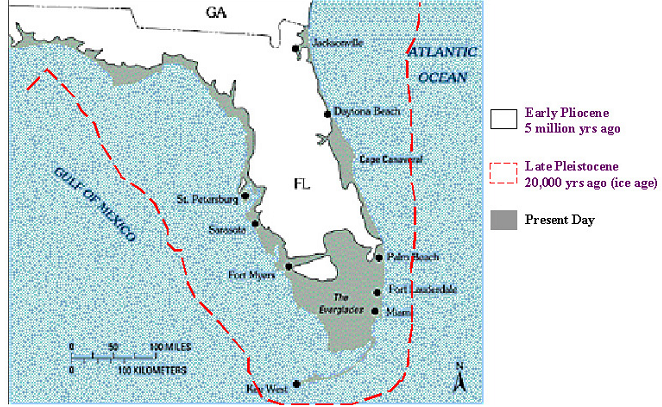
Florida's Changing Coastline.

Beaches move.  Beach sand moves constantly.  It is a complex choreography with countless moving grains - some moving in one direction and others moving in another direction - some moving rapidly and some moving slowly.

Sand is moved by wind and water.  I'm sure that doesn't surprise you, but the consequences are important for the beach hunter.

People talk about how items sink on a beach.  As I've argued before, items on a beach rarely move if the sand doesn't move.  Prove it for yourself.  Get a bucket of sand, put a coin on the top of the sand, and you'll be able to observe that a coin won't sink in resting sand.  Coins don't work their way down into sand like sand-fleas, moles or worms.  The biggest factor is the movement of the sand.

If I wanted to find old things at the beach, one thing I'd really like to know is the history of the beach and how it has moved over time.  The beach won't be where it used to be.  The sand will come and go many times in a year.  Beach could be a long distance from where it used to be. And even when the surface looks the same, the sand could have eroded several times and then filled again.  As that happens, objects will generally tend to settle lower.

I can remember times when local different Treasure Coast beaches were very different from what they are like today.  I'm sure you can too.  I remember, for example, when an old concrete foundation was exposed at the water's edge between John Brooks beach and the condos to the north.  I only saw it once, but I'm sure it is still there.  Of course the waterline is not where it was then.  In the same area, there was also once a line of tree stumps in the shallow water.  I haven't seen them again either.  The water line at that time was much closer to the condos than it is today.

I'd love nothing more than to have a overhead stop-motion video history of the beach changes.  You'd see the beach move in and out, slowly sometimes and at other times very quickly.

People often use stationary landmarks to judge beach changes and determine when old items might appear.  It wasn't long ago that I posted how people used a car frame up by Vero to judge when hunting would be good.  That car frame is gone now, but it provided a marker to estimate the movement of sand.

The illustration at the top of the post shows how much the Florida coastline has changed.  It changes year to year to, and even day to day.  Those changes are important to the beach hunter.  Many old objects that were once in the water are now covered by the beach, and other objects that were once on the beach are now in the water.

The beach can change quickly when there is a big storm.  Here are some photos of changes caused by hurricane Michael that did so much damage not too long ago.


The photos show how one section of beach disappeared in a very short time.  Here is the link for more about that.

https://www.usgs.gov/news/and-after-coastal-change-caused-hurricane-michael

Here is another example from the same article.


These changes caused by Michael are easy to see.  Most of the time the movement of sand occurs more slowly, but it does occur nearly continually. I'm sure that some of the erosion that occurred during Michael has been reversed by now.

I'm often amazed that people, sometimes conducting very big operations, are so far off simply because they failed to take into account beach movement. Remember, the beach is now different than it was a year ago, ten years ago, and certainly hundreds of years ago.

One of my old favorite shallow water hunting spots is now under the beach and the new waterline is out at least a hundred yards from where I hunted in the water about thirty years ago.  A beach renourishment project caused that.  If I went back there today and walked out into the shallow water, I'd be far from the area where I used to hunt and the old stuff would be deeply buried under the beach.

If you have a beach target that is dated to a general time period, one of the first things I'd recommend is that you do some research and try to find maps from that time and figure out where the beach was then relative to where it is now.

---

A six to nine foot surf is predicted for Friday.  That is a bit of an increase since yesterday.  It could get interesting.

Source: MagicSeaWeed.com.

Happy Thanksgiving,
TreasureGuide@comcast.net


Tuesday, November 20, 2018

11/20/18 Report - Eight Foot Surf Predicted. Gold Reliquary Cross Found. Knights' Gold. Popular Posts.


Written by the TreasureGuide  for the exclusive use of treasurebeachesreport.blogspot.com.

Source: ArchaeologyinBulgaria.com

A 12th century cross, which is a reliquary (engolpion) containing a particle from the Holy Cross from Jesus Christ’s crucifixion, and is the first known artifact of its kind that is made of pure gold, has been discovered by archaeologists in a recently found medieval church in the Trapesitsa Fortress in Bulgaria’s Veliko Tarnovo.

The previously unknown 13th century church was discovered earlier this fall in the Trapesitsa Fortress, one of the citadels of medieval Tarnovgrad (today’s Veliko Tarnovo), capital of the Second Bulgarian Empire (1185-1396/1422)…


Here is the link for more about that.

http://archaeologyinbulgaria.com/2018/11/14/world-first-medieval-gold-cross-reliquary-with-holy-cross-particle-discovered-in-trapesitsa-fortress-in-bulgarias-veliko-tarnovo/

---

I posted the ten most popular posts of the past year.  You'll see them on the left of the first page of the blof.  The most popular post of the past 12 months was posted last December and featured the Farleigh Dickenson Jr. ring that was lost decades ago and then found and returned.  Great story!

There were a few from December, which you'd expect because they've been out there longer and people continue to look at them.

The second most popular post of the past year was about proposed Florida legislation that was believed to restrict access to Florida beaches and who to contact to stop that legislation.  I don't really know what happened with all of that.

The third was one of a series of posts that I called Ole Timer Talk.  It was about a fellow who saw a pile of' possibly plates (possibly KangHsi) uncovered by erosion.   It was one of those that was posted in December of 2017.

Fourth was a post that really got a lot of attention in 2018 even though it was originally posted in 2015.  It was about fossilized sea shells with beautiful calcite crystals that were found on the Treasure Coast.

Fifth was a December 2017 post that featured a Viking hoard and what appeared to be an old sailing needle found in North Florida by Chris N.

Sixth was a post that described a hunt resulting ten gold items being found in the water during a single four-hour hunt.  That was one of the Ole Timer Talks.

The seventh most popular post of the last 12 months was about erosion on the Palm Beaches and shipwrecks you could see on Google Earth.

The eighth was about how to learn more about your detector.

The ninth most popular was about one reader's huge success sifting for silver at an old home site.

And the tenth was about a local cob find, among other things.

---

I've been reading the book Knights' Gold by Jack Myers.  I've finished most of it.  There are over four hundred pages of text and I just have a few more to go.  It is one of the most interesting treasure/history books that I've ever read. If you are thinking about a Christmas present for a treasure hunter or history buff, this might be a great choice.

The primary focus of the book is on a cache of over 5000 gold coins buried in an old Baltimore row-house basement that was found by a couple of teens in the 1930s.  The author then investigates the history of that cache and ties it to the Knight of the Golden Circle who were accumulating a treasury to fund secession from the union to create a new slave-holding country that would include other geographical areas including places such as Cuba and Mexico.

The book provides a wealth of historical research and tons of references.  I especially appreciated the information surrounding the beginning and conduct of the Civil War and the various political factions.

Besides the cache found in the Baltimore basement, the book talked about other related caches and the huge Doc Noss treasure.

After finishing the last few pages, I'll be locating and reading some of the references listed in the back of the book.

---

A big surf is predicted for the day after Thanksgiving.

Source: MagicSeaWeed.com

Looks interesting,
TreasureGuide@comcast.net

Monday, November 19, 2018

11/19/18 Report - Checking Your Metal Detecting Thoroughness and Coverage. Marx Lecture Enjoyed. Archaeo Trashing in CO.


Written by the TreasureGuide for the exclusive use of treasurebeaches report blogspot.com.

Two Possible Patterns of Coil Coverage As You Metal Detect.

When you metal detect you walk ahead while swinging your coil from side to side.  You might think that you are getting complete coverage, as shown by the illustration on the right.  There might even be some overlap on each sweep.  That gives you more complete ground coverage, and since your coil sensitivity might be greater near the center of your coil, overlap can help you get greater overall depth.

If you are walking ahead at a quicker pace, your actual coverage might be more like that shown on the left, which leaves some ground uncovered.  That pattern leaves more uncovered ground near the end of each sweep.

Some detectorists, when they see that the footprints of another detectorist are far apart, will go over the same ground figuring that the first detectorist will have missed things.

The first time I learned how much I was missing was not too long after I began detecting.  Someone on the beach asked if I could detect their watch.  I said yes, and they told me to turn around and they buried the watch on the beach.  I then started detecting and passed over it without detecting it.  I was shocked to learn that I missed it.  It was not my detector's fault, it was my fault.  My pattern was like that shown above on the left and I was skipping more area than I realized.

After that experience, I would occasionally check myself.   At the beach I would throw a coin out  in front of me without looking.  I would then detect in the direction that I threw the coin and detect exactly as before but without looking at the ground so I would not see where the coin landed.  If I missed it or if the signal was not very good, I knew some changes were in order.  That self-test is good for checking your sweep pattern and also your sweep speed.  If your coil passes over the object but you don't get a good signal, it could be because of your settings or sweep speed.

You might want to repeat the self-test several times.

It is not always necessary to use a good tight pattern.  There can be times when you are doing a quick scan and just want to sample some ground, but you should be aware that you are skipping ground and find that acceptable.  Be aware, and be strategic.

It is easy to get in a hurry and just think about covering ground without realizing what you could be missing.

If you want to get maximum depth and are using a coil that is more sensitive near the center of the coil, you might want to overlap your sweeps more to get that maximum depth.

I recommend testing yourself occasionally.  It is important that you do not know where the target is and do not look.  If you know where the target is, the results will not tell you much because you will alter your technique unconsciously very subtly but significantly.  Try to keep your sweep pattern and rhythm normal.

I also advise testing your coil so you know where the sweet spot is and how the sensitivity varies under different areas of the coil.

---

Roberto S. saw the notice of the Marx lecture in my blog and decided to go.  Here is what he said about it.

I just wanted to say thank you for posting information about the lecture given by Sir Robert Marx. He provided interesting information and specially personal experiences ...


Enjoyed the lecture very much and also the return to the school where I received my associates degree in Oceanographic Technology in 1973, that was very special, although I never practiced the field and went on to a different career. 


Glad you enjoyed the lecture Alberto. Thanks for the report.

---

COLORADO SPRINGS, Colo. - The adage "one man's trash is another man's treasure" was especially true at Garden of the Gods Thursday morning as archaeologists dug for remnants that were tossed out of the estate of Colorado Springs Founder Gen. William Jackson Palmer.

Yes, there was an archaeological dig underway inside the park for trash from more than 100 years ago...


Here is the link.


---

We might get some nice post-turkey surf on the Treasure Coast.


The weather this year made it seem like we went from 90 degree August weather right into the holiday season.  Seemed really quick.

Happy hunting,
TreasureGuide@comcast.net


Sunday, November 18, 2018

11/18/18 Report - $36,000,000 Marie Antoinette Pendant. Lucky Pennies and Coins. Great Mint Error Coin Database.


Written by the TreasureGuide for the exclusive use of treasurebeachesreport.blogspot.com.

Diamond Peral Pendant Worth $36 Million.


What do you think it is worth?

Well Sotheby's, who you'd think would know a bit about such things, thought this pendant would bring between one and two million dollars at auction.  Boy were they wrong!

The item was described as exceptional and highly important natural pearl and diamond pendant, 18th century.  But there is more.  Set with an oval diamond supporting a diamond bow motif and a slightly baroque drop shaped natural pearl measuring approximately 15.90 x 18.35 x 25.85mm, hook and hinged back fitting, the pearl and diamond bow motif were suspended from Marie Antoinette’s three strand pearl necklace; the single stone oval diamond surmount formed the clasp of that same necklace...


That might add some value!  Something did.

Although bidding started off pretty much as expected, it didn't end as expected.  Someone paid over $36,000,000 dollars for it.  That is something like twenty times the auction estimate.

That, I guess, is what it is worth - for now at least.  It might change the next time it goes up for sale.

So why do I talk about things like this.  Are you going to find something that was owned by Marie Antoinette?  Probably not.  But it is possible that you might someday be lucky enough to find something once destined for Isabella Farnese.  Still, that isn't the primary reason I talk about such things.

The primary reason is that people often ask what something is worth.  It helps to know how to value items, and you can always learn a little about that by watching how things are sold and what price they bring.

So what are the determinants of the price in this case.  I suspect that the diamonds, pearls and workmanship had something to do with it, but I think there was a bigger factor - the provenance of once being owned and worn by Marie Antoinette was a huge factor.   But I'm sure there was even more to it than that.  One person thought for some reason it was worth that much and had the ability to pay for it.  At this point, I don't know why the winning bidder thought it was worth more than anybody else that participated in the auction.  That is something that maybe only they know.

Selling well is largely a matter of getting things in front of the people that most appreciate them, and in the case of very expensive items, also have the money to spend.

I've said this before, but one thing I like about selling items, although I haven't done it much, is getting the item to a home where it will be appreciated.

Here is the link for more about the pendant and other items auctioned from the Bourbon/Parma family.


---

I've been talking a good bit about holed coins and lucky pennies and such things.  You've probably heard some variation of "Find a penny, pick it up, and all day long, you'll have good luck."  Some people say "If it is heads up, pick it up, but if it is heads down, leave it on the ground". A heads down penny is supposed to be bad luck, I guess.  It has also been said that a found penny should not be kept, but turned heads up and passed on to a friend or stranger.

In Ireland and parts of northern Europe it was said that pennies belonged to fairies or leprechauns, so when you found a lucky penny, you were to spit on it and throw it into the nearby bushes or foliage to return them to the creatures and receive good luck in return.

You've probably heard of the traditions of placing a coin under the cornerstone of a new building or under the mast of a ship.  I once found a 1909 penny when a house built in 1909 was torn down.  It was in mint condition except for a few scratches.  I think it could have been under the cornerstone of that house.

Here are some other superstitions having to do with pennies.

Carrying a penny for good luck.

Throwing a penny overboard  for safety when traveling by ship.

Keeping a jar of pennies in the kitchen for good luck.

Putting money in a wallet or purse given as a gift.  My grandmother always did that one.

Keeping a coin hidden in a baby's crib.

Putting a received penny in your pocket to attract more.

Coins with holes are especially lucky.

Tossing a penny with the idea that your worries will go with it.

Tossing a penny into a wishing well.

Keeping a penny in your shoe.   (Remember the penny loafers?)


I know that a lot of people will not pick up pennies on the street or when detected.  I will.  I always like to take them home and look for any mint errors or other interesting things I might be able to find on them.  I always check my change too.  Newly received change goes in one pocket so I can look at it when I get home.

I've found a few mint errors that way.  Some are significant enough to be registered on Wexler's coin error database.  Check it out.

http://cuds-on-coins.com/lincoln-cent-spike-heads-1990-1999/

Excellent database of mint error coins.

Pennies can be worth thousands of dollars.

----

The surf on the Treasure Coast will be two to four feet today, slacking off for a few days.  There might be a nice increase in a week or so.

Happy hunting,
TreasureGuide@comcast.net