Showing posts with label mint. Show all posts

Sunday, March 8, 2020

3/8/20 Report - Higher Surf and Some Erosion On The Treasure Coast. A Few Finds Made. Charles and Joanna Coins.


Written by the TreasureGuide for the exclusive use of treasurebeachesreport.blogspot.com.

Wabasso Saturday.
Erosion started on some of the beaches Saturday.  Some beaches were cut, others weren't.  

The access gate was closed at Seagrape.  That will be an obstacle for some, but for others it might be an opportunity.  Some reales were found there last month.

DJ sent the following photos taken Saturday at Turtle Trail.

Turtle Trail Saturday.

Turtle Trail Saturday.

Turtle Trail Saturday.

Turtle Trail Saturday.


A gold ring was found and another part of one.  They need to be cleaned and tested though.  

Here are a few other finds from Saturday.


Flat Button Found Saturday.
Back of Same Button After Light Cleaning With Detergent.

Sometimes all you need is a little light cleaning.  A little detergent and a toothbrush can help make a a button readable without much danger.  I just used a toothbrush and a little dish detergent on the above button.  You do have to be careful if there might be gilt which can be easily removed by accident though.


Encrusted Bullet.


Folded Lead Strip With Couple Holes.
---

Peter H. who lives across the pond but reads this blog daily and sent in the following link to a Sedwick article about Charles and Joanna coins.


https://www.sedwickcoins.com/articles/carlosyjuana.pdf

Great article.

Thanks Peter.

---

The surf is expected to be higher Sunday - 7 - 10 feet.

Happy hunting,
TreasureGuide@comcast.net

Tuesday, April 16, 2019

4/16/19 Report - A Chest Full of Bogota Two-Escudos. Cuts, Cliffs, Flow and Erosion.


Written by the TreasureGuide for the exclusive use of treasurebeachesreport.blogspot.com.

Bogota Two Escudo in Sedwick Auction (Lot 30)
Source: Current Sedwick Auction Listing.


Have you heard of the Mesuno Hoard?  The Mesuno Hoard consists of Bogota two escudos from the early years of the Bogota mint.  They are mostly dated 1628 to 1635.

The hoard was found by a poor fisherman who found a chest full of gold coins in 1936 in the Magdalena River near Honda, Columbia, when he went to check his fishing lines.  He shared the coins with his two brothers.

It seems that a boat carrying a shipment of coins to Cartagena was lost in the river.  From what I've seen of photos of the river today, it wouldn't have been a large boat.

I recommend that you read the very interesting and detailed Sedwick article about the hoard.

Here is the link.

https://www.sedwickcoins.com/articles/mesuno.htm

---

Yesterday I described two ways that cuts are formed on a beach.  The first is when the water hits at an angle and slices away the sand.  The second is when the water hits the beach straight on.  It seems to me that the second method does not happen often on a real beach.  Beaches don't cut real often anyhow unless there is something that makes the beach especially vulnerable, such as jetties, rocks, or renourishment sand piled where there otherwise would not be much sand.

A wave tank is obviously not exactly like a natural beach.  The wave tank has walls that channels the water both incoming and returning and also keeps the sand from spreading to the right or left.  In the wave tank, the waves are also equally spaced and of the same approximate magnitude.  At least that was the case in the video I posted yesterday.  If you watch waves hit at one of the local beaches, you will see they vary a lot.  You'll often see waves coming from two different directions.  They are not equally spaced, and as the tide comes and goes so the water moves higher and lower on the beach, unlike what was demonstrated with the wave tank.

With the cuts created in the wave tank, I observed three stages.  First there was erosion that caused the slope to become more steep.  Then the upper edge of the slope collapsed.  And then the cut increased in size and moved back on the beach.

Long ago I showed how water slamming into the face of the cliff causes slabs of sand to separate and fall to the base of the cut to be washed away by the waves that follow.  For that to continue the water level must increase or at least remain high.  If the water starts backing off, the cliff will not continue to develop.    As long as the water continues to slam into the cliff, the cut will slowly move back on the beach.

I haven't yet explained how cuts create hot spots.  I'll have to do that some another time.

If the water remains high or increases because of storm surge or an incoming tide, the water will be hitting the cliff with a lot of force and bouncing the water back down the slope.  When you have that kind of force moving back down the slope, more sand and other things will be carried with it.  The only thing to stop it would be the incoming waves.

For sand to be moved by water flowing over it, it first has to become suspended.  It takes more force to suspend sand or other materials, but once it is suspended, it takes less force to move it than it took to dislodge it from its resting place.

The sand in front of a cut will be repeatedly washed and permeated with each incoming wave.  I( believe that repeatedly crashing waves can cause liquefaction.

Here is a video showing how shaking saturated sand will behave when it is shaken.

https://www.youtube.com/watch?v=b_aIm5oi5eA

This is something that I've not been able to observe, but I suspect that if the sand becomes liquefied, it will flow off the beach at a faster rate, and secondly it will fail to support the sand on the slope above it.

I observed that effect myself.  If you are near the swash area where the sand is near the edge, if you step on it, it will quickly give way.  The sand above that, which is not as saturated and firmer, will hold your weight, leaving only an impression of your foot.

When the sand gives way, the sand immediately behind it also loses some of its support.

---

I know that some of you won't be very interested in beach dynamics, but I am, and if you understand it better, you'll be better able to determine when and where cuts will occurs and what will happened to the coins and other objects.  Then you'll have a better idea of where to spend your time.

I colored some grains and put them in the small surf and traced their movement.  Hopefully my video came out well and I'll be able to show you that in the near future.  I'm afraid there was too much glare on the water.

I'll also talk more about cuts and how objects will move relative to them.

---

I'm sure you all saw images of the fire at Notre Dame Cathedral.  Anyone interested in history had to be saddened by the loss of such a historic building.  Began nearly six hundred years before the 1715 Fleet sailed, it survived hundreds of years of history including the French Revolution, Napoleon Bonaparte, and World Wars, and was the residence of sacred relics such the Crown of Thorns, a stone from the Holy Sepulchre, and wood and a nail from the cross and many works of art, some of which were saved.


The tides are getting bigger, but there won't be much surf for several days.

Easter, if I correctly recall, falls on the first Sunday, after the first full moon, after the Spring equinox.

Happy hunting,
TreasureGuide@comcast.net


Sunday, December 9, 2018

12/9/18 Report - Looking More Closely At Common Modern Coin Finds: One Mint Error Example. Beach Cut and Unfilled Holes.


Written by the TreasureGuide for the exclusive use of treasurebeachesreport.blogspot.com.

Pepper Park North
Photo by Dale J.

Dale J. was at Pepper Park yesterday and saw this old cut.  He said there was a lot of soft sand.

He also pointed out the holes that he filled.


Holes Filled by Dale
Photo by Dale J.
Thanks Dale.

---

1984 P Snowing Mint Error.

Can you see a mint error on this dime?

There is one.  See if you can find it.

Here is  closer look at the error.


1984 P Dime Close Up View.

Notice the crown bottle cap like design on the coins rim.  That is not part of the intended design.  It is a minting error referred to as "collar clash."

As you probably know, coins are made using one die to create the obverse impression and another die is used to create the reverse impression.  That is the way it has been done since colonial times.  The big difference now is that the process is mechanized and the coins are not hand struck.

An anvil die is usually used to make the reverse design, and the punch die is used to make the obverse design.  The obverse is the side shown above with Roosevelt on it.

The anvil die is usually on the bottom, and the punch die is struck or forced down on the metal.  In Spanish colonial times, that was done by hand with a hammer.

One of the big differences between Spanish colonial cobs and modern coins is that the minting process now involves a third die.  The third die is the collar.

The collar is a circular piece of hardened steel which acts as the wall of the coining chamber, which provides the impression for the uniform circular outline around the coin. As its name implies, the collar prevents the striking pressure from spreading onto the flange. Apart from preventing imperfect strikes, the impression on the coin's edge (either as a recess or raised inscription) deters forgery or clipping (an illegal paring of metal from the circumference of the coin). The dies impress the various designs and devices on the obverse and reverse for the coin while the collar forms the edge of the coin. The collar, which is five-thousandths of an inch larger in diameter than the dies, is mounted on springs which allow slight vertical movement...

(Source: https://www.fleur-de-coin.com/articles/coin-striking)

A collar clash represents damage to the rim gutter of the die from contact with the collar. It shows up most clearly in reeded issues, where it takes the form of serrations along the top or the edge of the design rim. In an off-center strike, a collar clash will appear in the form of parallel grooves in the “slide zone”.

Collar clash is far more common on the hammer die. It occurs when a temporarily misaligned hammer die collides with the top of the collar and/or scrapes along its working face...


(Source: http://www.error-ref.com/collar-clash/)

The collar clash is shown on the obverse of the dime above.  It would therefore have been created by the hammer die.
Here is a picture of a die with notches on the edge.  That damage to the die was caused by the die clashing with the collar.  Those notches would then be transferred to the coin when it is struck.  That is what happened to the dime shown above.

Die Showing Damage Caused by Clashing With the Collar.
Source: See Error-Ref.com above.
There is a lot more to be seen on a modern coin than the date and mint mark.  Besides the intended design of the coin, you will also often see mint errors.  Some mint errors, such as collar clash, are fairly common and not worth anything.  Other errors are highly collected and can increase the value of a modern coin to millions of dollars.

It can be worth picking up pennies and other small denomination coins if you inspect them carefully and learn to identify valuable errors and varieties.

One of the biggest differences you will see between Spanish colonial cobs and modern coins, is the edge.  Modern coins have the finished round edge, perhaps with reeding or other designs features, because of the collar.

In addition to the possibility of finding a valuable a mint error or variety, you will also learn things from modern coins that can be applied to your understanding and appreciation of Spanish Colonial coins.  There are differences, but there are also many similarities.

It wasn't until rather recently that I began to inspect my coins for mint errors and varieties.  I don't know if I ever spent valuable coins.  It is certainly possible.

I have found a variety of mint errors.  Most have no value or very little value, but one was the first documented example of its kind, and is listed on an online error reference database.  

It is not as easy to find a valuable mint error.  Valuable examples are rare.  And some errors and varieties are difficult to correctly identify.  Like anything else it takes study and practice, but the results can be gratifying.

---

The surf predictions do not look as encouraging as they did a little earlier.  Now it looks like we'll only be getting three to five feet.  We are supposed to have a long period of north winds either.  Don't expect much improvement in overall beach conditions.


Source: MagicSeaWeed.com.
---

What is your all-time favorite coin find?  

Send me a photo of your favorite and tell why it is your favorite.

Happy hunting,
Treasureguide@comcast.net

Thursday, November 8, 2018

11/8/18 Report - Mint-State Silver Coin Beach Find. Lost and Found Diamond Ring. Garden Treasures.

Written by The TreasureGuide for the exclusive use of treasurebeachesreport.blogspot.com

One Ounce Silver Coin in Plastic Container.

A day or two ago I mentioned how you can on rare occasion find a near mint state coin on the beach.  It doesn't happen often, but it does happen.  Here is one I found in it's plastic container at the water's edge one day.

I was awed by the fine condition of the coin, especially compared to most of the coins that I find.  Most are in poor condition.  In comparison, this one has a strikingly fine appearance.  I think it is just beautiful.  I didn't take it out of its container, so you will see some dust, scratches and reflections from the plastic, but the coin is beautiful.  Here is a closer look.

Closer View of the Same Coin as Seen Through Plastic Container.

Another View Showing the Mirrored Surface of the Background.
I was just struck by the beauty of the coin and thought I'd show it.  It is so rare to get something in that good of condition on a beach.

---

Story of One Lost and Found Diamond Ring.

Sometimes the most amazingly unbelievable things happen.  One incident that happened to me about fifty years ago just came to my mind this morning and it seems just as unbelievable to me today as it did then - in fact, more so.

Anyhow, I was dating my wife, and I was wearing a diamond ring.  I never, never, never wear any jewelry, and haven't for many many years.  I'm a very active physical person, even though I've slowed down some lately.  I'd rather cut a tree with an axe than try to get a chain saw started, and am as likely to dig in the earth with my hands as use a shovel, so I don't like anything hanging on my fingers, hands or arms.

Anyhow, about fifty years ago when I was dating, I had a diamond ring, which my father gave to me as a present when I graduated from graduate school and got my first good job.  It never really occurred to me before, but this morning I had to wonder how he bought a diamond ring at that time. I sent money home from school every month when I got my assistant ship money.  I lived VERY frugally - ate rice three times a day every day one year.  He must have saved some of the money I sent home every month to buy something for me.  Me having and wearing a diamond ring back then is hard enough for me to grasp, but there is more to it.

I had taken my wife-to-be out on a date, and I took her home.  It was a little old house down a long gravel country lane in hilly rural West Virginia.  It was maybe about eleven o'clock at night and pitch black.

After I took her  home and left, a few miles down the road I noticed that my diamond ring was not on my finger.  Panic hit me.  I turned around and drove back to her home.  The house lights were off and there were no lights other than my headlights and the stars.   As I pulled down the lane, in front of her house, I saw one glint of light in the headlights in the gravel.  I got out and there was the diamond ring.  Boy was I relieved.  How unlikely was that - to see that one small flash of light in the gravel in the black of night.  Hard to believe, but true.

---

If you've ever noticed, a lot of very good accidental finds are made by gardeners.

While digging in the backyard of his Wiltshire farmhouse in England in February 2015, Irwin hit a cold, flat surface, he explains on his company's website. He was trying to install electricity cables so his children could play ping pong in their old barn, but instead he unearthed an untouched 1,500-year-old Roman mosaic...

Here is the link for the rest of that story.

https://www.countryliving.com/gardening/news/a38257/roman-villa-digging-garden/

It helps when you live on top of an ancient Roman residence.

---

No real change in beach conditions.

Happy hunting,
TreasureGuide@comcast.net

Sunday, August 5, 2018

8/5/18 Report - Coins As Recordings: A Jupiter Shipwreck Cob Example.


Written by the TreasureGuide for the exclusive use of treasurebeachesreport.blogspot.com.


Half Reale Once Found on Jupiter Beach.
I've been spending some time studying modern coin finds - especially errors and varieties.  You might be surprised how detailed that can get.   As a result I've learned to look at coins in a different way.  That includes old coins and cobs as well as modern coins.

Above is a half reale I found at Jupiter beach a number of years ago.  Unfortunately I didn't record the date so I don't know exactly when that was even though I remember it very well.  Observing the weather, I thought that Jupiter beach might be eroding, so I got in the car and made the nearly one-hour drive.  When I got there I saw the waves hitting the back dunes and creating a nice cut.  The waves were hitting the cut hard and washing away large chunks of sand with every hit.  

I'm pretty sure the cob shown above was washed out of the dunes.  I caught it in the rapid knee to hip high water that was rushing back down the slope.  The side shown above was covered with a thick sand crust.  The other side was pretty much as it is shown below.  I could see the cross, as I braced myself against the rushing water and took it out of the scoop.

Some people reduce each find to a single number - how much it is worth - but a coin contains volumes of information.  This cob is like a recording that goes back to geological time.

If you were to analyze it scientifically you could narrow down where the metal was formed and where it came from.  The shape and type of the cob is typical of those from the Jupiter wreck.  The shape is the handiwork of a worker who cut the planchet.

You also see the work of those who made the die and those who held the die and swung the hammer.

The design itself is the result of politics and royal decrees having far reaching roots and effects.

You see the work of the person who held the die and the man who swung the hammer.

If you inspect a coin closely, you'll see how worn the die was - whether it was new or worn and perhaps showing small cracks or breaks.

You can see where the die was recut and where the die bounced and created a partial second impression.

You can see the results of it being in salt water and on the beach for hundreds of years.  There are even a few grains or sand remaining.

You can even see the result of the cob being cleaned and my own hands where I slipped and made a scratch of my own, which will last as long as the coin.  A good eye can tell that scratch was made after the cob was recovered.

Those are just some of the things you can see if you study this cob.


Side That Was Not Protected by A Crust of Sand.
The second photo shows the side that I could see as soon as I took the cob out of my scoop.  It is not as clear as the side that was originally protected by a thick layer of crust that made that side invisible.

If you look at this side closely, you can see a nice lion rampant in the upper right quadrant and a castle to the left.  You can also see some of the legend between two partial circles of dots.

Unlike many of the cobs that I've shown in this blog, this cob is not from the Mexico mint.  You can easily tell that from the cross.

I've just begun to study coins more closely and am a novice at numismatics, but find it very interesting.

Returning to the other side of the cob for a minute, here is the Philip monogram up close.

Philip Monogram.
You can see some corrosion remaining.

The monogram is very clear.  Notice the horizontal bar in the middle that appears to stand out higher than any of the other parts of the design.

My guess is, and someone could probably confirm, that the die was well worn and the die was sharpened up.  The bar was carved into the worn die after it was well worn.

Although modern coins are produced by machines and this one was struck by hand, the process is still very similar and you'll see many similar effects.

Imagine the fellow that carve the die and how he cut the negative into the die.  He made some nice rounded dots.

You can see how the metal was compacted and stressed and the how the metal flowed into the areas where the die was hollowed out.

Here is a detail on the other side.


Close-up Detail of Half Reale.
In this photo you see the end of the Kings name, Phillipus, and part of the following numeral.

The "S" looks weird.  It doesn't look like an S at all.  It looks more like an eight - actually multiple eights.  What happened?

It could be a couple things.  A real numismatist could probably tell me, or with a little more study I could probably figure it out, but it could be that the die bounced when it was struck.

It also looks to me like the die could have been recut - and perhaps incorrectly.

You see similar things on modern coins.  As I said recently, by studying modern coin errors and varieties, I've learned to look at cobs in a new way.

I'll get into that more some other day.

I'd be happy to receive corrections or additional observations or thoughts about this cob.

One reason I decided to revisit this cob is because my photography has improved since I last posted it.

I hope that you will look at old cobs as containing volumes of information.  If you study them, they are more than a number.  They record a lot of history.  And by careful observation and study, you can unravel the story for yourself.

I've often said that if you know everything about anything, you know everything about everything.

---

If I showed enough hate maybe I could get a job writing for the New York Slimes.

---

Beach conditions have not improved and remain poor.  The tides are not big and the wind continues from the south.  The surf is only one to two feet.

There is one disturbance way out in the middle of the Atlantic, but it will probably never affect us.

Happy hunting,
TreasureGuide@comcast.net


Wednesday, November 1, 2017

11/1/17 Report - Numismatic Archaeology. Literally Finding a Mint. Old Coin Blog. Educational Seminars Today.


Written by the TreasureGuide for the exclusive use of treasurebeachesreport.blogspot.com.

Source: Numismatic Archaeology of North America: A Field Guide.

Here is an interesting book - Numiamatic Archaeology of North America: A Field Guide, by Akin, Bard and Akin, 2016.

The above illustration comes from that book.  I know it is a little hard to read the illustration but it starts on the bottom with ocho reales, or an 8-reale, and ends at the top with the small medio reale and then smaller cuartillo, or quarter reale.  The number on the right is the number of coins of that denomination in one peso.

Just thought it was useful to see a good comparison of the different sizes of reals.

You can preview a little of that book online.  It contains many illustrations.  I would say well worth reading.

Click here to go to the preview.

---

... “We’ve come to a layer with material from the end of the 3rd and the beginning of the 4th century in which we have discovered slag and bellows for fanning up fire for metal smelting," lead archaeologist Veselka Katsarova from the Museum of Sofia History, has told bTV.

She adds that the layer in question contains coins from the time of Roman Emperors Gallienus (Gallien) (r. 253-268 AD), Claudius II (r. 268-270 AD), and Aurelian (r. 270-275 AD) up until the beginning of the 4th century AD.

“We are finding slag, and clay fragments from bellows… There are metal particles stuck to the bellows fragments," she has elaborated, as cited by BNT.

In addition to these latest finds, the archaeologists’ hypothesis that in the Late Roman era the building in question and the adjacent structures were turned into a coin mint is also supported by findings from excavations in the 1970s and 1980s by archaeologist Prof. Magdalina Stancheva of a large Roman public building underneath today’s St. Nedelya Cathedral...


Here is the link for more about that.

http://archaeologyinbulgaria.com/2017/10/25/archaeologists-may-found-mint-ancient-roman-city-serdica-bulgarias-capital-sofia/

---

Peter H. from Wales recommended this blog about old and beat up coins.

www.oldcoinnecromancer.blogspot.co.uk

Take a look.

---

The educational sessions and lot viewing for the Sedwick auction takes place today (Wednesday) in Orlando.

Happy hunting,
TreasureGuide@comcast.net

Thursday, August 20, 2015

8/20/15 Report - Nine 8-escudo Royal Beauties From Mexico. More On New Treasure Coast Discoveries. Brent Brisben on Fox News.


Written by the TreaureGuide for the exclusive use of treasurebeachereport.blogspot.com.

Newly Found Royals
Photos submitted by Captain Jonah Martinez.

Here are nine newly discovered royal beauties for your viewing pleasure.  Mostly dated 1711, but also a a couple 1712s.  All are mint marked OXMJ, as I hope you can see.


Here is a Fox News Video interview with Brent Brisben, co-founder of 1715 Fleet Queens Jewels, talking about the new finds, which besides Royals, also included 300 2-escudos as well as other denominations.  I showed some of those yesterday.

Brent Brisben Being Interviewed On Fox News
Source: link immediately below.
http://my.xfinity.com/video/treasure-hunter-finds-over-1m-in-gold-coins-off-fla-coast/508582979985/Comcast/Today_in_Video?cid=hero_sf_TIV

As exciting as all that is, you might wonder what all of that has to do with the beach hunter.  People will get excited and get out on the beach wanting to find gold coins, but not a lot has changed for the beach hunter since the big find.  Beach conditions remain unchanged.

Beach hunters have been marching up and down that beach just yards away from where those coins were found for months now with little result.  Think about that.  Think about how close all that gold was. So close and yet so far.  The Capitana guys weren't a hundred yards off-shore. These finds were made in just a few feet of water in front of the beach.

Metal detecting, like horse-shoes is a game of inches.  As much as we love our super detectors, coins have to be right under the coil, and not only that, they can not be down very far under the coil.  You can miss a coin by an inch one way or another, either being to one side or down too deep.

Did you ever imagine that there was so much treasure so close to where you were walking?  Those things have been out there for three hundred years.  Some people have said, its all gone.  There's nothing left.  How wrong they were!

The main point for the beach detectorists is that you never know what is just below your feet or just a little over to one side or another.

Don't forget.  This isn't the norm for the salvage crews either.  This is a BIG hit.  It was years in coming.  It has been a long time since anything like this.  It took perseverance.  It took work.  There have been many hot frustrating days and dry holes.  Then the big hit.

It makes it all the more special that it doesn't happen all the time.  It is so hard to come by and so rare that the celebration is that much greater.

We don't have their feelings.  We didn't have their experience.  But we can relate to it in one way or another.  And we can all share in the celebration.

We all know what it is like to work and work and work with little to show for our efforts, not knowing when we might finally hit the big one, and then one day, there it is.

Let us all celebrate work and the human spirit, Let us all celebrate adventure and life itself, as we go through the ups and downs of life.  Let us all learn the lesson of perseverance too.

I've said before in this blog that there is a lot of treasure under the sand right in front of the beach. Some day we'll have a storm like the famed Thanksgiving Day storm that I wrote about a few months ago, and beach conditions will change.  The beach will be littered with coins.  Maybe you'll be lucky enough to be in the right place at the right time.

Not all of the coins will be gold or old.  But when discovered they will all be a part of the adventure and become a part of someone's life.

You might remember when I posted an ad for Captain Jonah in this blog before the salvage season began when he was looking for one more diver.  He found that diver through this blog.  And that diver, who had contributed to this blog from time to time before that, got to be a part of this big find. I'm really happy for that diver.  And I'm glad that this blog played some very small part - as infinitesimally small and remote as it was. And I'm happy that the captain and crew of the Capitana just became a big part of treasure history.

We are all fortunate to be able to see these newly discovered historic coins.  Thanks for sharing guys!

---

Rejoice with those who rejoice, and weep with those who weep.  Romans 12:15.

---

Don't forget to look at yesterday's post if you didn't see it.  More coins shown there.

The Atlantic is heating up.  Besides tropical storm Danny, there are two other disturbances.

Keep watching Danny.

Happy hunting,
TreasureGuide@comcast.net

Friday, July 10, 2015

7/10/15 Report - Water Hunting Compared to Beach Hunting. Mint Versus Well Worn Finds.


Written by the TreasureGuide for the exclusive use of treasurebeachesreport.blogspot.com.


Intricate Gold Ear Ring Find.

I hear from all kinds of people.  I hear from a variety of top level experts, and I hear from people that are just thinking about giving metal detecting a try.  That makes it difficult to write for all of those kinds of people.  I mostly write about whatever is on my mind, and that can be far ranging, but sometimes I want to take time to develop a topic before writing.


Today I was thinking about the differences between water hunting and hunting the beach or dry land.  The differences are considerable.  I started detecting when I lived in South Florida.  The transition from hunting dry land to hunting shallow water was easy.  Then I spent a lot of time in the water - more than on land.

10K Mark.
That wasn't easy to see without magnification.

On the Treasure Coast a lot of the shallow water is off limits to metal detecting because of the salvage and exploration leases.  And the swimming beaches are not as busy as down south.  Down south you also have more big shallow water swimming areas where the water is pretty calm much of the year.  You also have all the big resorts and hotels.  Furthermore, the culture is very different, which is no small thing.

But comparing water hunting to dry land, water hunting is more difficult.  Of course you need water proof equipment, which is more expensive.  You have to deal with swells and waves.  Sometimes the water is so rough that it is simply impossible to hunt in shallow water - not only for safety but also to protect your equipment.

Digging a target can be difficult in shallow water, especially in rough water and when there are currents.  The holes can refill as quickly than you can dig them, and the currents can wash sand and items out of your scoop as you lift the scoop.  Visibility can be zero.

There are those annoying waves that slap you at the most annoying times almost like they know when that is.  Just staying put over the hole can be a challenge.

I enjoy rough water hunting, but it takes more skill and better rigged equipment.  With a little experience you can learn to comfortably hunt in very rough water.  In the past I've talked about some of my favorite techniques for doing that.

One thing that is very different is running a search pattern in rough water.  You can not control your coil as easily.  It can be difficult to execute a tight grid pattern with waves pushing you and your coil one way and then the other.  You can, however, learn to use the currents move your coil for you.

In the water your sweep speed will be slower.  On land you can whip a detector as fast as you want to.  In the water, you have the water resistance.  Compared to hunting on land it can feel like you are doing resistance training as you push a detector through water.

I've talked about finding the optimal sweep speed for your detector.  Your sweep speed will naturally be slower in water.  You might want to switch from a motion mode to a non-motion or pinpoint mode id your sweep speed is slowed too much.  You have to know how sweep speed affects your detector in order to know when it might be a good idea to make the switch.  

Those are some of the differences.  There are many more, but those are the ones I was thinking about today.

---

Another topic.

The most valuable coins are usually those in the best condition.  And those in the best condition are those that have never been used.  They are in "mint" condition.

For me no coin is prettier than an old coin that has been well handled, smoothed by fingers over the years as it passed from one person to another and with a touch of patina in the depressions.

Coins in mint condition just don't have it.  All you see is metal on metal - sharp angles, and the same monotonous overall shiny surface.

I've noticed that my personal preferences and standards are less and less defined by others and less defined by estimates of value.  I like what I like, and sometimes what I like isn't worth much to the rest of the world.  

I would be surprised to find a mint or near mint condition coin.  The rarity of that would make it a little exciting, and the value might add some excitement, but it would not have the touch that I really like.  It wouldn't show the wear of daily use by men, women or children in their daily lives.

Beach finds don't show a lot of that most of the time.  The sand blasting and salt corrosion does away with a lot of that, but on rare occasions you can find something, maybe a religious medallion or gold crucifix, that shows how soft flesh with time and devotion wore down hard metal.  That is the type of thing I really like to see.  It is almost like shaking hands with those from another time.  Their touch was recorded.  And so is yours.

----

On the Treasure Coast we have another day with a one to two foot surf.  If you have a place where you can work the shallow water, you might find slightly deeper water a little easier than working inside the breaking waves where you have a lot of bottom current.

The challenge of deeper water will be staying in place when the swells roll by.  That isn't all that difficult though, especially with the small swells and waves we've been having recently.  Learn to ride the swells rather than fighting them.  I've talked about how to do that in the past.

Happy hunting,
TreasureGuide@comcast.net

Monday, April 13, 2015

4/13/15 Report - 1711 LIma 8 Escudo From 1715 Fleet. Lots of Sand on Treasure Coast.


Written by the TreasureGuide for the exclusive use of treasurebeachesreport.blogspot.com.

1711 Lima 8 Escudos In The Current Sedwick Coins Auction.
This 8 escudo is from the 1715 Fleet, and is encapsulated NGC MS 64, which is the highest grade certified for any Lima eight.   It is lot 28 in the auction.

You can see why it grades so well.  Very bold strike.  Look at the detail in the castle, for example.
A very bold strike and good luster.

You can see the three digits of the year 1711.  Also the mint mark in the upper left, assayer initial upper right, and denomination upper middle.

It comes with a Fisher photo-certificate.

It has an auction estimate of 20 to 40 thousand dollars, and already has a bid of $23,000.  I expect it to go much higher.

----

One Treasure Coast Beach This Morning Near Low Tide.
 
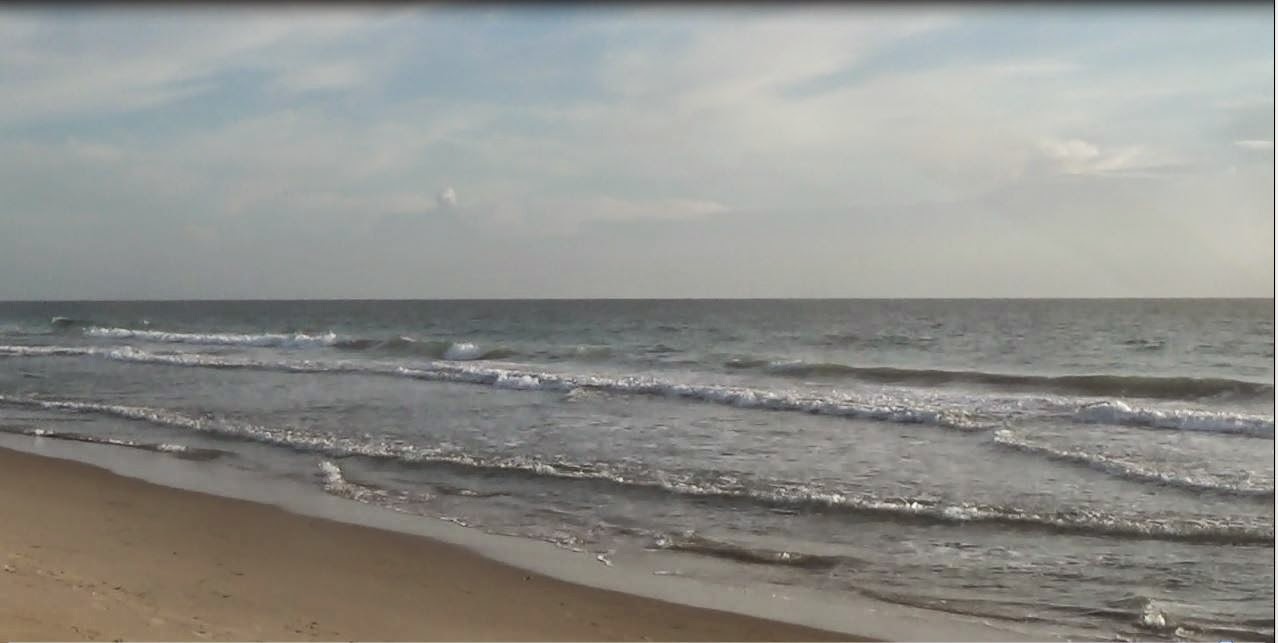
There were a couple of spots where the front beach was a little steeper where there were some modest coin clusters.  This beach was steeper than I expected.

The dry sand here showed evidence of heavy weekend use.  There was a bunch of junk strewn around and the sand looked like a football game had been played there.

I visited another beach this morning, one that is one of my favorites and found it to be worse than this beach.  It had accumulated about two feet of sand since the last time I was there.  As a result I was digging a lot of DEEP holes in very fine compact sand that was not easy to dig.  Thank goodness one of those deep holes paid off.  I must be getting lazy in my old age.

The Treasure Coast beaches are as clean as I've ever seen (target wise). People have evidently been removing the pull tabs, bottle caps, etc.  I wonder if I had anything to do with that?

When the junk targets are removed from beaches there is less and less benefit in using discrimination.

I mentioned just the other day how I had cleaned up one beach for myself and now even with zero discrimination, there is little junk to be detected.

Surf At One Treasure Coast Beach Near Low Tide This Morning.
One thing about the Excalibur is that it isn't too hot to iron.  That isn't what I was using today.  I was using a PI detector and there still was very little iron.

I've been really learning to make the optimal use of a detector that is fairly new to me.  I've spent a lot of time experimenting with it and the various settings and techniques.

I want to be able to use it to best advantage when a storm finally comes along that uncovers some older items on the beach.

I much prefer hunting a beach with features, including dips, cuts, holes, etc.  It is more interesting to me to hunt for accumulations even when it is easier to go for the recent drops.

Some spots accumulate coins and things consistently over a period of years or even decades.  Others seem to come and go more quickly.

I'll talk about that more some other time and maybe a few detectors as they shape up as beach machines.

I'll have to make some find photos later today.

Nothing more than a three-foot surf in the predictions for the Treasure Coast for the next week or so. We have to get a storm sometime.

That's all for now.

Happy hunting,
TreasureGuide@Comcast.net