Showing posts with label old coins. Show all posts

Wednesday, October 31, 2018

10/31/18 Report - Silver U. S. Coins From Abandoned Resorts and Swimmming Beaches. Indian River County Beaches Opened. Auction Schedule.


Written by the TreasureGuide for the exclusive use of treasurebeachesreport.blogspot.com.

Standing Liberty Quarter.

I was looking at some U.S. silver coins that I dug from various Florida beaches.  There might have been a few from up north, but the vast majority were from Florida.  There are very few of them that are in good condition.  Most are black and have bits of shell attached to them, like the one shown above.  As I looked at them I realized that it isn't easy to find those kinds of coins on Florida beaches, so I thought I'd show a few examples and give a few tips.

First of all, for me they mostly came in bunches.  One day, for example, I visited Jupiter Inlet beach and dug older U. S. coins all afternoon, but hit no reales that day.  The local beach keeper was Dave, who detected there all the time.  He was not happy to see how much I dug that day before he showed up.  I don't know what the coin count was, but it was good.  That was how it often happens.  You are either into the older coins, or not.

Another Beach Dug Standing Liberty Quarter.
The dunes at Jupiter were eroding that day.  I was surprised that no reales showed up even though a lot of silver U. S. coins did show up.

If you want to find these types of coins, you're best chance is at a beach that was used years back - preferably a resort or swimming beach - and then forgotten for some reason.

Some of those old beaches are still used, but your best bet is to find areas that aren't used today.  You can still find some of those that are in out-of-the-way places where you'll have little or no detecting competition.  Believe it or not, there are still places where you will seldom see another detectorist.  Let the crowds flock to the same spots, but if you look around you'll be able to find some places that are can produce but are not heavily detected.  They might be places that seldom produce.  That is why everybody else is not there.

1954 Washington Quarter.
Do your research, find those areas where there were resorts or swimming beaches in the past.  You'll have to check those out-of-the-way places, and they won't produce much most of the time.  You'll have to hit them when conditions are right, otherwise you won't get much.  But once you do find one of those old spots, they'll produce time and time again whenever the conditions are right.

Notice that the 1954 quarter shown above doesn't look any better than the Standing Liberty quarters.  There is a low correlation between the age of the coin and the condition of the coin.

As you can tell, these aren't collector coins.  Most collectors would not be interested in most of them.  That is one problem with beach coins, especially salt water beach coins.  They are seldom in nice condition.

1958 Washington Quarter.
This 1958 quarter is in better condition, even though it is discolored.

Some coins are in great condition under all the encrustation, if you can remove the encrustation without damaging the coin.

These quarters have a melt value of just over $2.50 - not much really, but I always liked digging up things at those forgotten locations just to see what is there.


Unidentifiable Front of a Washington Quarter.  
Same one as above.
I couldn't tell what this one was until I turned it over.

Worn Washington Quarter.

It is a Washington quarter too.

It has a different type of encrustation.  Seems to be more of a clay.  It is well worn.

If you have trouble seeing any details on a coin, sometimes you can see more if you change the lighting.


Crusty Silver Quarter.
When viewed with regular lighting, I couldn't see any detail on the front of this quarter, however when the overhead light was turned off and a light was directed at the coin from the side, I could see part of Washington's profile.

---

Schedule for the Upcoming Sedwick Live Floor Auction.

---

The Indian River County beaches are open now.  Tracking Station beach was delayed due to cleanup.  It seems the Red Tide problem has subsided.

---

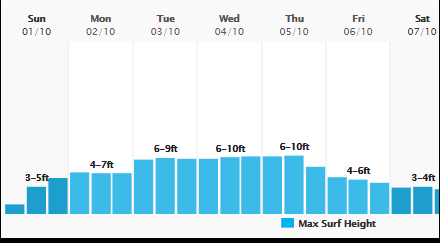
Source: MagicSeaWeed.com.
We'll have a three to five foot surf on the Treasure Coast Wednesday and Thursday.


Happy hunting,
TreasureGuide@comcast.net

Tuesday, May 15, 2018

5/15/18 Report - U. S. Coins and Foreign Coins Found in a Cache. Recycling Finds.


Written by the TreasureGuide for the exclusive use of treasurebeachesreport.blogspot.com.

Four Buffalos Without Dates.

I've been hunting an older site and came upon a cache containing a real variety of coins. It includes a mixture of heavily worn U. S. coins along with less worn foreign coins from a variety of countries and dates.   

Sorting all this out takes quite a bit of time.  Above are some buffalo nickels without dates that I quickly separated as not being worth much study.  Of course they would all be before 1938 if they had dates.  

The first few foreign coins that I took a look at included the following.  A 1922 Canadian 5 cent coin (nickel composition) , 1943 Sixpence (50% silver), and a 1942 French 50 centimes (aluminum), a 1922 Denmark 25 ore (copper/nickel), a 1917 one cent Canadian coin (bronze), a 1929 Mexico 1 centavo (bronze), and a 1930 Luxembourg 5 centimes (bronze).

It looks like the 25 ore could be the best of that lot, being worth perhaps $10 to $20.

I've found a good number of foreign coins while metal detecting beaches, but it was just one or two at a time and they were newer coins.  I've learned how time consuming it can be to go through numbers of various older foreign coins, which I do not know nearly as well as U. S. coins.  In some cases, I don't even know the country of origin, even though in many cases it is clear enough.  With world coins I have no immediate idea of value and have no experience in grading or looking for possible mint errors or key coins.  That will be time consuming.  Having been buried in a sealed jar, the foreign are in pretty good condition. 

Only one of these was silver (50%), three were bronze, one nickel, one nickel/copper, and one aluminum. 

---

Dan B. sent the following message.

I was recently sorting through old boxes of metal finds with the intention of reducing the size of my collection. In the past, I have scrapped much of the copper but after a few flat tires from the scrap yard and dwindling copper prices, I decided against that. I have recently been enjoying some minimalist tendencies and enjoy moving things on that have little or no use in my life. With that in mind, I have become better at finding great places for things by understanding other people’s needs and passions. So long-story short, I have been finding that people who love art and sculptures, or metal working, have a common love for old metal and mechanical pieces. It is one great way to disperse finds that may not hold a place in your collection. It is fun to get rid of something and see the same love for it in someone else’s eyes that I once had. Truly a continuation of that objects journey and recycling an object for a purpose of love instead of function.

Great suggestion Dan.  I keep a lot of things around in case I can use them someday and it seems I never want them until I finally give up and get rid of them. I do find a lot of uses for some finds.  For example, I found a lot of copper wire, which I am using all the time.  I use the lumber I find too.  It always comes in handy.  Some other things are used in more creative projects.  I love when I can use something that way.  Still, there are things I'd like to turn over to somebody that can put them to better use.  It is great when you find people who love and can turn your finds into great new items.  I haven't sold much, but when I do sell something, it is a way of finding somebody who loves and will appreciate the items and make better use of them than I would.  The best thing you can do with a random find, whether it is junk or valuable, is put it into the hands of somebody that really loves that kind of item or can make excellent use of it.  An item in the hands of an artist or specialized collector will be better cared for and used than it would be by a person who is not talented or specialized in a particular area.

For scrap copper and things like that, there are indeed people who can turn them into real work of art.

For collectibles, the expert knowledge and care of a great item can make it even more valuable.  Too often great finds are ruined by a 

---

The Sedwick treasure auction goes live today.  You might want to follow that.  It is already off to a hot start.

It is getting hot and humid.  It will soon be time to start watching the storms.

Happy hunting,
TreasureGuide@comcast.net


Happy hunting,
TreasureGuide@comcast.net

Friday, March 30, 2018

3/30/18 Report - More On The Sifting Compared To Detecting Experiment. Intact Section of 18th Century Wreck Washes Up On Beach. Good Friday!


Written by the TreasureGuide for the exclusive use of treasurebeachesreport.blogspot.com.

Section of Old Wreck Appears on Beach.
Source: See msn.com link below.

48-foot hull of a well-preserved 18th century vessel dubbed the 'Holy Grail of shipwrecks' washes ashore on Florida beach with copper tacks and roman numeral etchings still intact...

Experts speculate that the wreck may have laid under sand offshore for years, then washed onto the beach due to storm activity, explaining how the ship remained so well preserved...

Here is the link for more about that.

https://www.msn.com/en-au/news/world/48-foot-hull-of-a-well-preserved-18th-century-vessel-dubbed-the-holy-grail-of-shipwrecks-washes-ashore-on-florida-beach-with-copper-tacks-and-roman-numeral-etchings-still-intact/ar-AAvhmGj

If you have the chance to get up there and view this before it is removed or something should definitely do it.  I don't know if it is still there.  But if you do get a chance to look at it, take a close look at all the metallic parts.  It is a good chance to learn something.

Thanks to Dean R. and Bruce B. for alerting me to this story.

When I saw that peat washed up Tuesday, I thought there was also a chance for some old wood to wash up as well.  I was in an area where wood planks have washed up in the past.

---

On 3/26 I posted a report by someone who detected a lot several times, recorded all finds, and then sifted the entire lot to find out what if anything he had missed.  The results were amazing, both in the total number of coins found on that small lot, but also the number of old coins found, and what everybody should take notice of is the low number of old coins found as the result of multiple thorough metal detecting sessions despite the large number that was in that ground.  Most people would have detected the site a few times and maybe thought they had found most of the good coins that were there and thought it was time to give up and move on not realizing how many more old coins were waiting for them there.

If you have not read the 3/26 post and the total report of that experiment, I highly recommend that you do that.  If you don't you'll be missing out on proof of what is often said and speculated about in the metal detecting community.

The person who sifted that entire lot offered the following important comments and observations concerning that experiment.


No one was more shocked by the results than me.  I suspected there was more in the ground, but had no idea of the actual amount.  When I started, I did not intend to do [sift] the entire lot, just the areas I thought would be most productive.   However,  I just kept finding more, then decided to finish the job.  

I have a few other comments.  I can't be sure, of course, but I strongly suspect that this lot was never hunted prior to the houses being demolished.  It has nothing to do with the number of finds, but much of the lot was covered in a concrete pad and for many years during the detecting era it was a dangerous area.  This would make the conclusions more valid.

A point I don't think I emphasized enough is the difficulty detecting from the surface.  The first detectorist found 8 silver coins over 2-3 hunts.  I knew there were likely some more silver dimes because he found 3 silver quarters, a silver dollar, and only four dimes.  That is a strange distribution.  I actually briefly hunted the lot before they cleared the house piles and found a couple of clad coins only.  It is just mind-boggling to me, in hindsight, that I found no old coins on my first hunt on a lot with more than 225 in the ground!  When I went back, I found a silver half and silver dime and some wheats, some of which were on the surface.  The second time I found two silver dimes.  Over many hunts before I tried sifting I never found more than 2 silver coins with the detector.  I worked that lot thoroughly and repeatedly with multiple detectors because I strongly suspected there was more there.  I remember being frustrated about it.  So even though 30% of the silver coins were found using a detector, that was after an unusual amount of detecting, including moving at a snail's pace with a small coil and my Safari from different directions.   I feel confident saying that a more common scenario would be for the lot to be detected significantly less before being abandoned in search of greener pastures.  My point is that my detected finds likely overrepresent the percentage of finds that will be found using a detector on a site with heavy trash.

Overall, it was eye-opening for me.  The results were exciting...and daunting.  I now know there are a lot of great finds still to be made, even in well hunted areas, but it might not be easy.


I added the parenthesis and bolding for clarity and emphasis.

Thanks once again to the author of this report.

People are always looking for new unhunted sites.  Many of the old sites still hold more good finds, perhaps more than you would ever imagine.  Realizing how much more might be there is the first step to getting the finds you've been missing.

---

As you probably know, Easter is on the first Sunday after the first full moon after the Spring equinox.  Yesterday - Thursday - was a full moon, and today is Good Friday, which is the perfect time to talk about crosses.

A couple days ago I showed a silver ring with a cross on it.  Alberto S. found the same ring offered by WalMart.   So it is no Tiffany or anything really old.  I had no idea that it was anything but common modern despite my joking around.

Isn't it remarkable how prevalent the cross is whenever you talk about treasure hunting.  You'll find a cross on most cobs in one form or another, as well as on rings, pendants, and other things.  You can't escape that.  And there is a reason.

Something happened that changed the world, and 2000 years later people still wear and display the sign of the cross.  That in itself is remarkable.  But what people wear is not as important as what is on the inside.

You meet all kinds of people.  There are kind generous people, and then there are grumpy demanding people.  It is the same in metal detecting as it is in the world in general.  I'm glad to say that the readers of this blog, judging from the emails I receive, are almost exclusively of the kind generous type.

Some people can't get along with anybody and they think it is the fault of everybody else.  Some are always seeking and never finding.  They are looking in the wrong place.  Others have found the secret and carry their joy with them no matter what is going on in the world around them.  They are the ones that fill the Easter baskets and scatter the eggs and rejoice everytime one is found.

---

The surf will be 3 - 5 feet today and less tomorrow and Sunday.

Happy hunting,
TreasureGuide@comcas.net

Saturday, November 4, 2017

11/4/17 Report - How to Find Older Coins. Metal Detector Sandals. Big Money in Old News.


Written by the TreasureGuide for the exclusive use of treasurebeachesreport.blogspot.com.


Tired of finding zinc pennies? Want to find older coins and items like those shown above?  These were found at one site a couple days ago.

You know what they say about insanity -  it is doing the same thing and expecting a different result.  Your finds are the result of what you do or don't do.  You might want to try something different.

I often consider different ways of finding things.  If you've been reading this blog very long, you know that one other method I've talked about is sifting.  That is the way the archaeologists do it.

It isn't easy, and it is time consuming, but if you select the right location, it can be worthwhile.

Back in the old days there was what was called the Merkitch sifter.  It was a sifter that you pushed or pulled through the sand like a lawn mower.  I made one myself and used it on the beaches down south.  It worked, but it wasn't easy.

One reader of this blog sifts land sites.  Above you can see what he found on one hunt a couple of days ago.  How long has it been since you found coins like that?

Here is what he had to say.

I know sometimes you like to show finds that were unearthed in unconventional ways. I found these coins and marbles yesterday with a sifter on the mainland. The coins I find with the sifter almost never look as nice as these, since I am usually in high trash areas and the coins have been impacted by another metal, usually iron. However, at this particular site the layer of trash was very distinct and the coins were below in nice sandy soil. By my estimate, the half dollar was 3-4 inches down in an area that I'd been over numerous times with a detector.  It was one of my better sifting days for sure.

I still intend to get you a thorough accounting of my first sifting lot. The results were astounding to me. It will take a while to take the photos and write up, but I will get to it...


Sifting doesn't mean that you can't or shouldn't use a metal detector.  In this case, the detectorist had been over the same spot numerous times with a detector.  The coins were terribly deep, but he missed those coins when he used his detector.  There was a layer of trash over the coins.  

You can go over an area numerous times and continue to find things you missed the first time.  I've outlined a multiple-step approach to hunting such sites.  One thing you should do is change the direction you walk when you go over an area again.

The detector might miss certain targets, but it will still help you identify areas that you might want to sift.  There is little reason to take the time to sift an area where you are convinced there will be nothing.  There are other areas, however, where there was a lot of activity, perhaps a lot of trash, but some indication that there might be deeper targets.

You'll also come up with some non-metallic targets when you sift.  Notice the nice old clay marble. 

Those are some nice finds.  Thanks for the photo and email!

---


Sandals With Built-In Metal Detector Coil.
Source: Popular Mechanics (See link below)
This is half serious, but to me, mostly funny.  These sandals and the control box you wear on your ankle detect metal.  The Popular Mechanics article says, We were also disappointed at the sandal's rather weak metal-detecting strength. Despite the claim of a two-foot range, you pretty much have to bring metal objects right up against the sole of the foot for them to work. This is especially true with smaller objects, such as coins and paper clips. It had a slightly easier time picking the larger items we tested it with, such as pliers and scissors. But if you're looking for lost wedding rings and extra quarters, it's not the best solution.

What would you expect?  At least somebody was thinking - just not too well.  You would look weird if you tried to grid an area by dragging one foot around.

---

There's money in old news.  Four old newspapers containing accounts of the wrecking of the 1715 Fleet, the first published in November of 1715, received an auction bid of over four thousand dollars in the recently concluded Sedwick auction.

Here is the lot description directly from the auction catalog.

Unique set of newspapers with accounts on the sinking and salvage of the Spanish 1715 Treasure Fleet, consisting of four issues of The Post Boy (London) from 1715-16. 

Four very rare, complete issues of The Post Boy, a major London newspaper, from November 19, December 8 and 19, 1715 and July 3, 1716, each issue a single 14” x 8” sheet (“broadsheet”) of high-quality rag stock printed on both sides, and in Fine to Very Fine condition. In all probability these papers are the only ones in private hands. 

These four historic newspapers provide accounts of the legendary disaster and Spain’s frantic attempts to recover the hundreds of millions of dollars of gold and silver coins and precious jewels carried by eleven Spanish galleons, accompanied by a French warship that was the only ship to escape the hurricane on July 30, 1715, as the treasure-laden Fleet attempted to sail from Cuba to Spain. Hundreds of seamen and passengers drowned in the vicious storm with the survivors going to St. Augustine or Havana. Although much of the treasure was salvaged over the next few years—and present-day salvors have uncovered millions of dollars in coins and jewels—more treasure remains unclaimed in the Atlantic Ocean off the east coast of Florida. Several whole ships have yet to be found. 

The first report of the disaster in the November 19, 1715 issue reads: “Letters from the Havana, of the 17th of September, advise that the Flotilla, consisting of Ten Ships, met with such a violent Storm, upon the 31st of July, that they were forced to run ashoar upon the Coasts of Florida, 50 Leagues from Cape S. Augustin, and 20 from Cape Canaveral; and that only one Ship, v.z. the Flying-Hart, escaped: That upon this News, several Ships were immediately sent from the Havana to fish up the Gold and Silver; that good Part of it was already recover’d and particularly that on board the Urza de Lima; and that it was hoped, most of the rest would likewise be got up. They add, that 4 or 500 Men were drown’d, and among them several Passengers. This News was brought to Rochelle by the S. Francis, whose Cargo is very rich, consisting of 500000 Pieces of Eight besides Merchandizes.” 

Further details from the December 8 issue are more positive (possibly to buoy public opinion on the disaster). Some of the reporting stated: “We have receiv’d better News concerning the Flota of New Spain…that only two Ships of it were cast away; Some others were indeed run aground upon the Coast of Florida; but all the Gold and Silver, and most of the Merchandizes were taken out of them.” The King then sent four ships to Florida, “…and shall take on board those of the Flota, which amount to 12 Millions of Crowns in Gold and Silver only.” 

From the December 17, 1715 issue came the following: “Letters from Cadiz, of the 28th past, say, that all possible Diligence is used in fitting out the Men of War, which are to go and take on board the Cargoes of the Galleons run aground upon the Coast of Florida. By a Vessel arrived from thence they heard, that the Galleons could not be put a float again; but the Chests of Gold and Silver had been all taken up, and great part of the Merchandizes; so that only the Cochineal will be lost.” 

Finally, after just over six months of salvage attempts, the July 3, 1716 issue reported the following gleaned from letters from Havanna at the end of March: “…they had recover’d out of the Capitana, a thousand Chests of Silver, and seven hundred and fifty out of the Admirante (Almiranta), but no Merchandizes out of those two Ships, whereas all those of the Urca de Lima had been fish’d up; that some English Barques being come in Sight of Palmaer, five (Spanish) Barques were fitted out at the Havana to observe them; that nevertheless the English seiz’d some Part of the Plate above specify’d whereupon a Deputy was order’d from the Havana to the Governor of Jamaica to complain of that proceeding….” 

These newspapers represent highly important accounts of the disaster and the subsequent attempts to salvage the enormous treasure Spain and other European countries were counting on for their economies. In our time, ironically, these newspapers are vastly rarer than the treasure itself!


---

The surf is going to be around two to four feet for several days.  The tides are nice and high now.

Happy hunting,
TreasureGuide@comcast.net

Wednesday, November 1, 2017

11/1/17 Report - Numismatic Archaeology. Literally Finding a Mint. Old Coin Blog. Educational Seminars Today.


Written by the TreasureGuide for the exclusive use of treasurebeachesreport.blogspot.com.

Source: Numismatic Archaeology of North America: A Field Guide.

Here is an interesting book - Numiamatic Archaeology of North America: A Field Guide, by Akin, Bard and Akin, 2016.

The above illustration comes from that book.  I know it is a little hard to read the illustration but it starts on the bottom with ocho reales, or an 8-reale, and ends at the top with the small medio reale and then smaller cuartillo, or quarter reale.  The number on the right is the number of coins of that denomination in one peso.

Just thought it was useful to see a good comparison of the different sizes of reals.

You can preview a little of that book online.  It contains many illustrations.  I would say well worth reading.

Click here to go to the preview.

---

... “We’ve come to a layer with material from the end of the 3rd and the beginning of the 4th century in which we have discovered slag and bellows for fanning up fire for metal smelting," lead archaeologist Veselka Katsarova from the Museum of Sofia History, has told bTV.

She adds that the layer in question contains coins from the time of Roman Emperors Gallienus (Gallien) (r. 253-268 AD), Claudius II (r. 268-270 AD), and Aurelian (r. 270-275 AD) up until the beginning of the 4th century AD.

“We are finding slag, and clay fragments from bellows… There are metal particles stuck to the bellows fragments," she has elaborated, as cited by BNT.

In addition to these latest finds, the archaeologists’ hypothesis that in the Late Roman era the building in question and the adjacent structures were turned into a coin mint is also supported by findings from excavations in the 1970s and 1980s by archaeologist Prof. Magdalina Stancheva of a large Roman public building underneath today’s St. Nedelya Cathedral...


Here is the link for more about that.

http://archaeologyinbulgaria.com/2017/10/25/archaeologists-may-found-mint-ancient-roman-city-serdica-bulgarias-capital-sofia/

---

Peter H. from Wales recommended this blog about old and beat up coins.

www.oldcoinnecromancer.blogspot.co.uk

Take a look.

---

The educational sessions and lot viewing for the Sedwick auction takes place today (Wednesday) in Orlando.

Happy hunting,
TreasureGuide@comcast.net

Saturday, September 30, 2017

10/1/17 Report - Pelican of Piety. Two Finds. Effect of Changing Shoreline and Shifting Sand. High Surf This Week.


Written by the TreasureGuide for the exclusive use of treasurebeachesreport.blogspot.com.

Source: usedchurchitems.com

Some of the greatest and most meaningful 1715 Fleet finds have been religious items. I found the web site of a company that they are "devoted to preserving Catholic 'Traditional Latin Mass' church items, and invite you to experience the passion and quality of liturgical antiquities from our past."
Here is that link.

http://www.usedchurchitems.com/

One of the items I saw pictured on their web site was the lectern shown at the top of this post.  Look familiar?  It looks very much like the gold pelican of piety found by Bonnie Schubert on the Nieves site.

If you aren't familiar with the pelican of piety you should take a look at my  11/4/12 post in which researcher and author Laura Strolia described the significance of the item.

http://www.surf-forecast.com/breaks/Wabasso/forecasts/latest/six_day

See also the following article describing the original find.

http://archive.tcpalm.com/news/vero-beach-mother-daughter-team-find-solid-gold-bird-statue-from-1715-treasure-fleet-off-fort-pierc--345668992.html

And here is a link that will give you more about the meaning of the pelican in heraldry.

http://www.sacred-texts.com/lcr/fsca/fsca41.htm

---

Civil War Bullet and 18K Ring
Find and photo by Duane C.
Duane C. sent the above picture of two finds that he found on the same recent hunt.  That is quite an unusual combination of finds.

Congratulations Duane!

---

Brian B. send this link to a good site that gives good surfing and weather information.  Take a look.

http://www.surf-forecast.com/breaks/Wabasso/forecasts/latest/six_day

---

I've been talking a lot about the changing shoreline in recent posts.  The movement of sand and other items is something that I've talked about a lot in the past.  It is one of  the most important things for a beach hunter to understand.

As the shoreline changes items will be brought into metal detector range or covered and put out of detector range.  There are some places where you have a more-or-less progressive loss of sand or a progressive accumulation of sand.  Where there is a long-term progressive erosion, you'll have a good shot at finding older items.  These days they do so much beach renourishment that it is not easy to find areas that are continually eroding and uncovering newer materials.

When you get erosion of the back dunes, old items can easily wash out and down onto the beach.  That mostly happens on the narrow beaches with cliffs on the face of the back dunes.

Sometimes coins and things wash up and onto the beach.  I've described how that happens in the past.  However before items can wash up onto the beach, they have to be uncovered.  That might sound obvious enough, but it is important.  As long as items are covered by sand, they aren't going to wash up.  Therefore, when the shoreline is moving east (on the East Coast), more items are being more deeply covered.  That covering of sand will have to be moved before those items can wash up.

One of the things I see on many of the Treasure Coast beaches now is a lot of sand in front of the beach in the shallow water.  Not only does that sand cut the force of the waves before they hit the beach, but it also covers and protects buried items.  If sand is eroded from a beach, it can end up directly in front of the beach and more deeply cover old items there.  You can therefore see a beach that is eroded but find no old coins on the beach because they are deeply buried in the shallow water and also not being washed out of the dunes.  Those are the two main sources of old coins on a beach: those washed up from in front of the beach, and those washed out from the dunes.  A third source includes old coins that were originally deposited when the beach was eroded or previously washed up onto the beach and then subsequently got uncovered before either being dragged out into the water again or getting covered again.

---

Source: MagicSeaWeed.com

This should be an interesting week.  If the predictions are correct, the surf starts to build Sunday then stays high for a few days.  Even if we don't get favorable winds or swells, the surf might be high enough to do some good.

Please add your response to the blog poll.

Happy hunting,
TreasureGuide@comcast.net

Friday, March 10, 2017

3/10/17 Report - One Of The Easier Ways To Find Old Gold Coins. Lost Dutchman's Mine Movie. Stone Age Fashion.


Written by the TreasureGuide for the exclusive use of treasurebeachesreport.blogspot.com.

Picture From Old Blog Post. 

If you want to find old gold coins, maybe you think about getting a boat, crew and salvage lease or maybe going to some exotic location where there is rumored to be a hidden treasure, but there might be an easier way even though it might not be exactly the kind of thing you are thinking about.

As far as I'm concerned the easiest way is to go to some high-end tourist area such as South Florida and hunt for gold jewelry.  You might be surprised how many gold coins are found mounted in jewelry.  Gold coins are frequently mounted in rings, pendants and even earrings.  You'll see them at jewelry stores and other places.

One of the most common gold coins used in jewelry are Dos Peso coins from the 1900s.  They are fairly common and not real valuable.  You probably paid a lot more for your metal detector than most of those coins would be worth.

Below is an example of a mounted 2.5 peso gold coin.

The pendant is nice.

Below is another example.  This pendant has some small diamonds.


The most common mounted coins are on the small side, especially if they are found in a ring or earring.  Larger coins can be found in pendants.

You can find gold coins dating from ancient times up to the present mounted in jewelry.  If you go to the Mel Fisher web site and take a look at the mounted coins they sell from time to time, you'll see that there are some nice 1715 Fleet coins that are mounted.  They are lost at times too.  And found again.


There are also replica or fantasy coins that are mounted, so you have to be careful about that.  Fake coins are often used for jewelry.

---

I started watching an old movie on TV last night.  It was Lust for Gold, copyrighted 1949.  I didn't see the beginning, and when I started watching I didn't know it was about treasure.  At the end, they pointed out that the story had some basis in fact.  It was the story of the Lost Dutchman's Mine.  At the end of the movie a narrator said something to the effect that it was in Arizona and it would be legal for anyone to search for the lost mine.  That was in 1949.  I suppose it is still fair game.

You might enjoy the movie, especially knowing that it is somewhat based upon the story of the Lost Dutchman's Mine.  It was on Turner Classics, and they'll probably run it again.

You can learn more about the Lost Dutchman's Mine by using the following link.

https://en.wikipedia.org/wiki/Lost_Dutchman's_Gold_Mine

Concerning the movie, most of it wasn't anything spectacular.  It was the part at the end that I liked the most.

---

High Fashion from 4800 BC.

In the first study of its kind, archaeologists have identified the garment a body was buried in between 4950 and 4800 BCE in the Mediterranean, discovering details down to the embroidered design of seashells lining the jacket...

The garment had sophisticated embroidery, with 158 conical seashells – of the species Columbella rustica – arranged in lines on what was thought to be a jacket or tunic. They are arranged in patterns, either all pointing up, all pointing down, or alternating in pairs...


http://www.ibtimes.co.uk/exceptional-grave-reveals-7000-year-old-garments-stone-age-man-was-buried-1610257

---

We're having the most beautiful weather, small surf and negative tides.  It is a good time to be on the beach and in the water even if the beach hunting isn't that great.

Happy hunting,
TreasureGuide@comcast.net

Sunday, January 11, 2015

1/11/15 Report - Mystery Pot For Age Determination. Variety Of Great Old Coin Finds. Diamond Ring Recovered From Inside Dog.


Written by the TreasureGuide for the exlusive use of treasurebeachesreport.BlogSpot.com.


I got this message a couple of days ago from Jonah M.

Jonah said, I went out last night to a beach that I've found really good treasure on with no ties to our 1715 beaches. And this is what I found . We find a lot of China and all sorts of pottery on our wrecks but this piece looks older I could be wrong ,but after a light cleaning this is as good as I could get it. It's about 4 inches tall with no marks on the bottom.  Please feel free thoughts on age.


Let me know what you think about the age of the pot.

Context is often one of the better indicators of the age or source of an object.

Remember, when beach conditions aren't right for one type of material, it might be a good time for other types of material.  I've said that in the past, but not recently.


Michael E. has been putting in a lot of field work.  That is one of the biggest determinants of finds.  If you want to find a lot, you have to put in the time.

Michael said

... still land hunting for me to begin the new year. Last 2 hunts have resulted in many items, and some nice coins. 1943 half dollar, 1891 v nickel, 1870 centimos, 1918 buffalo, all first for me, which most things still are. Still have a gift for you in my truck, hope to catch up one day. This is my gold from 2014, less 3 pieces found after this photo. I dedicated to swing hard, Long and often in 2014, really to see what could happen. My goal overal was 100 rings and 10k pennies. Only made 5.6k pennies but dug over 10k individual pieces of clad. With minimal time at local parks. Didn't think I would reach the ring goal, but amid a few other hunters at my usual beach on December 31, I recovered #100, 18k band...


Below are some of Michael's recent old coin finds.

Coins Found by Michael E.
Photos by Michael E.
 
Very nice.  Thanks for sharing guys!


Did you hear about the dog that swallowed an expensive diamond ring and wedding band?

Here is the link to a video on that.
Maybe you should run your detector over the animals you come across.


I got word of some reale finds from a couple of days ago. 


Looks like the Treasure Coast will get something like a three or four foot surf for a few days.   The wind won't be out of the North until Tuesday.

I'll put my beach detecting conditions rating back down to a 1.


That is all for today.

Happy hunting,
TreasureGuide@Comcast.net


Thursday, April 10, 2014

4/11/4 Report - Old US Coin Bonanza Including 21 Over One Hundred Years Old Taken From One Site


Written by the TreasureGuide for the exclusive use of treasurebeachesreport.blogspot.com.

Barber Quarters, Dimes, Mercury Dimes, Indian Heads, Buffalo Nickles, etc.
Finds and Photo by Russ P.


I received an email from Russ P. who shared about finding one of those sites that detectorists dream about.   In the process he recorded several big personal firsts!

Here is Russ' description.

I thought you might like this story, though it involves a mainland site.

I happened upon a site next to a building that used to be an old A&P.  The concrete parking lot had been removed at least a week or so.  I was disappointed to immediately notice that someone had been there first, as there were a few scattered holes down the middle of the site with the dug metal junk beside.  I was not very optimistic and debated even pulling out the detector, especially since it seemed the prior detectorist had left without finding much.

What followed was the most thrilling few hours of detecting time that I've had as I realized that I had found, for the first time in my experience, a nearly unsearched site with access to much older coins.  I had a taste of what it must have been like for those detecting in the 1970's and early 1980's. 

I spent five hours the first day.  It was not a large site, probably just 30 by 100 ft, but I go slow and there was a lot of iron.  I actually moved faster than I would have liked towards the end, but still I felt like I covered the ground fairly well.  My coin totals blew me away, with 45 coins earlier than 1945 and twelve silver coins.  One was a 1915S Buffalo.

I returned a second time for just one hour and worked a few of the planters and other poorly accessible areas and found six more pre-1945 coins including an indian-head.

Taking some advice from your blog, I switched to a smaller coil and returned for a third time.  I then covered the ground by swinging the coil at 90 degrees to the angle of my initial coverage.  I only had two hours, so spent them in the areas of previous highest yield.  There had been no further disruption to the site, so I was stunned to find eight more old coins, including three silver.

Then it got really interesting.  I returned for a last time after final preparations had been made for the new pavers.  Excess concrete from the newly poured curb (which was poured prior to my first visit) had been scraped from the edges.  I covered the entire site again, finding twenty-three more old coins, with six silver.  I found my second Barber quarter at the site in a spot that I am certain I passed over with the coil twice in earlier searches.  

I learned so much in those few days. It was an area small enough that I could cover well, but I now believe, because of this experience, that there are truly no completely cleaned out sites.  I would work that site a dozen more times if I could as I firmly believe there is a lot left.  Unfortunately, it is now covered with pavers so I'll have to be very patient.  Maybe in a couple of decades I'll have a second chance!

There were many first finds for me at the site, including these highlights:  first Barber quarter (I found two), first double-digit silver day, first V-nickle with legible date (I found nine). Twenty-one coins were older than one-hundred years. 

In hindsight, there were several techniques that led to additional finds: extreme persistence once the site is known to be productive, covering the same ground repeatedly from different angles, switching coils, removing surface iron.  All of those techniques have been mentioned in your blog, so thanks for those tips.  I would have liked to have dragged a magnet and used a different detector but just ran out of time.  I'm convinced that I would have made additional finds had I done so.

I've included a picture of my uncleaned finds from the first day.  I'll send two further pictures of the finds cleaned.

Russ P.

I showed those two photos of the cleaned coins that Russ sent.

Thanks for sharing Russ!
 
More Silver Finds by Russ P.
 

There are several lessons that you can get from Russ' experience.   Here is a big one.  Don't give up on a site when you get there and see holes where someone has already been and found junk.

Many detectorists have no tolerance for junk and give up on excellent sites way too soon simply because they find junk.

You will often find the junk first.  Junk is often big and often is close to the surface.  As a result, if you are not an experienced detectorist, you will find the junk first.   If you give up after finding the junk, you won't get to the good stuff.

Many good targets will be masked by the junk.  It can be worth the time to remove some of the junk to see what might be in between the junk or under the junk.

An inexperienced detectorists will often leave a lot of big holes and dig a lot of junk while a lot of good targets remain.   Don't be fooled by those holes.  Check to see what remains.


Another good tip that this story bring out is to watch for special opportunities.  They usually are times when the soil or sand has been moved a lot, either by man or mother nature.   Always keep your eyes open for those special opportunities.  And when they occur, take advantage of them.  You never know how long they will last or what will end them.  The window of opportunity can close as quickly as it opened. 

I remember one particular time when Mother Nature slammed the door shut.   I had spent a little time on each of the two previous days at one water site, when the second evening the wind changed direction and the targets that were all over the place disappeared by the next time I visited.  The change in weather took a site that had hundreds of targets and completely shut the door.  In retrospect, I realize that I should have worked the site harder while it was producing. 


Online bidding has begun for the Sedwick Coins auction # 15.  Some lots already have bids.

http://auction.sedwickcoins.com/Treasure-World-U-S-Coin-Auction-15_a20264?p=1&ps=50&m=all&ca=860000&so=1


The tides on the Treasure Coast have been close to normal lately.  The big tides that we had a while ago are over for the time being.

The wind Friday will be directly out of the East and the surf will be down around two or three feet.  That won't do anything to change our poor beach detecting conditions.

Happy hunting,
TreasureGuide@comcast.net

Sunday, August 25, 2013

8/25/13 Report - More On the Old Coin Sites, The Road From St. Augustine, & More


Written by the TreasureGuide for the exclusive use of treasurebeachesreport.blogspot.com.

I was talking about Hurricane Andrew the other day and just heard that yesterday was the 21st Anniversary of Hurricane Andrew.  Doesn't seem all that long.  It was interesting.  Most of the mainland beaches in South Florida were not eroded even though the water got very high.  The other day I did mention a couple of the places were finds were made after Andrew.  Andrew also was responsible for getting me into hunting old bottles as some surfaced on a beach where I was hunting old coins.

The aftermath of Hurricane Andrew was an interesting time for watching the beaches and detecting.

A few days ago I presented a map of an area down south and marked some good detecting spots on the map according to my past experience with those sites.  I did that because I wanted to illustrate some things.  This is a continuation of what I started with that.

As I explained, I selected spots that were relatively close to each other (within just a few minutes of each other) and that produced old coins in good numbers when the conditions were right.  These spots did not produce as continually as some other types of sites. 

Beach sites that produce mostly older targets will only produce when conditions are right.  Besides only producing sporadically, the old U.S. coin sites do not generally produce many high value targets.

The three things that all four of those old coins sites had in common were, (1) that they only produced occasionally, (2) were small but well-defined areas, and (3) predominately produced coins from a relatively well defined time period.

I called those sites "secondary" in part because of those three defining factors.   They might be called "tertiary" rather than secondary depending upon how detailed you get in describing the various sites that you detect and your detecting goals, but they are not what I would call primary sites.

As I've said many times in the past, keep good detailed records of your outings.  That will help you get to know your sites better so they can be classified.

As you gain experience you will get to know more and more about different beaches, what went on at those locations in the past, and what they are likely to produce, and under what conditions they will produce. That means that you should be developing a good list of detecting locations, and learning more about what to expect from each of them.

Other things you might include in your site selection includes how far you have to travel to those locations, how close together different sites are and other things that affect the practicality and probable cost/reward ratio of detecting any one of them on a particular day.

Your primary site locations would undoubtedly include your favorites.   They are those spots that produce on a frequent basis a good number of the targets you most desire and provide few obstacles or little cost.

Your secondary sites would include those that on average produce fewer of the most desired targets and produce them less frequently.  I've previously discussed how to weight beaches or other detecting locations on the basis of the value of expected targets and the expected frequency of finds, also taking into account changing beach conditions at different locations.  

 It is not easy to find beach locations that produce older items such as coins these days, but they are out there.  It is much easier to find detecting sites that produce modern items.

The value of gold is still relatively high and it is difficult to find old coins of very much value, particularly on beaches where coins are often in very poor condition due to corrosion.

Nonetheless, do not completely forget about any locations where old coins have been found in numbers in the past and where they will likely be found in the future when conditions are right.  Those sites will also on occasion produce a few surprises in the form of antique gold jewelry or other old valuable items or perhaps a few modern items.

The gold items associated with old coin sites will most often  not be found mixed in with the old coins.  Remember, as I've shown in the past, over time items on a beach will move and settle according to factors such as density and shape of the targets.

Of course coins and gold at some sites will tend to be lost  differently too.  Often concentrations of coins will be found near places where people spend money and get change, whereas the gold will more often be lost in where people are removing items or frolicking in the water.

Good concentrations of gold will be found in high concentrations of coins in certain situations, such as in low dips that have a rocky or hard bottom.

One location that I marked on the map the other day would produce coins in the dunes and at the foot of the eroded dunes, but the gold items, including some gold that was newer than the coins, were more often found in the shallow water between the groins where there were very few coins.

You might categorize your proven and measured sites as follows.

Primary sites:  High average value of targets, high frequency of targets, often productive, no extreme costs or obstacles.

Secondary:  A mix of the above resulting in a overall lower value of finds (however you estimate that - it can be subjective rather than monetary).

Tertiary:  An even lower reward to cost ratio.

Of course you can use more categories than three if you tend to be more detailed.

I'll pick up here and continue in the future to address how to work secondary and/or tertiary sites into your site selection process.

It is important to remember it can take a while to find these secondary sites, but they are out there to be found if you spend some time prospecting.


Here is a story about the old route between St. Augustine and Pensacola.

http://staugustine.com/news/local-news/2013-08-25/nations-oldest-city-importance-corridor-not-well-known#.UhoBICDD_xV


I'm hoping to soon get out to do my "how fast do different shaped objects sink" experiment.   I haven't forgotten about it.  Just haven't gotten around to it.


This morning was cloudy and rainy.  The surf on the Treasure Coast was a touch rougher but still only 2 - 3 feet.  That won't change much soon.

Low tide this afternoon will be just before 6 PM.

There is one low pressure area down by the Yucatan but I don't expect it to do anything for us, at least no soon.


Happy hunting,
TreasureGuide@comcast.net


Saturday, January 29, 2011

1/29/2011 Report - Barber Dime & Other Old Coins From the Port Salerno Area


A Few Nice Metal Detector Finds.

Photos submitted by Mike T. who found these items.

Since shipwreck beach conditions haven't been very good lately, a few times I've mentioned the idea of hunting some different places and going after different types of things. Doing some different things every once in a while can improve your chances of success and you'll learn some new things in the process. In sports they call that type of thing cross training.

One of the guys I talked to on the beach a couple of days ago was from Arizona and mostly hunted ghost towns. He said he missed finding silver dollars and things like that.

Everyone, I think, has a special interest in a particular kind of treasure. For some people it is gold and diamond jewelry, for others it is old coins, for others it is gold nuggets, others like fossils or Indian artifacts, and for others it is shipwreck treasures. But for treasure hunter there alwasy seems to be one type of treasure that gets them most excited.

What you hunt to some extent is determined by where you live and what you know about that can be found in the local area. When I was talking to the fellow from Arizona, I pointed out that there were a couple of 17th Century shipwrecks just a short distance from where we were. He thought you would have to get in the water to be able to get anything off of those shipwrecks. You certainly have a better chance at things like that with a salvage boat, blowers, tanks etc., but sometimes things like that do wash up onto the beaches.

But the point I wanted to make is that most people focus on one or two specific types of treasure, and most people know about those types of treasures and how to hunt them, but they don't know as much about how to hunt other types of things.

Hunting coins is definitely much different from hunting fossils or Indian artifacts. You can use a metal detector to find coins but fossils can't be detected with a metal detector. You have to use other techniques to find them. You have to develop a different set of skills and a different knowledge base to do well hunting fossils or Indian artifacts.

You'll probably be best at finding what you hunt the most. But if you hunt other types of things and do other types of hunting, you'll learn things that can help you no matter what you hunt. You can always learn something from one type of hunting that will help you with another type of hunting. That is one reason, I recommend doing something different every once in a while.

Mike said that in South Stuart near Port Salerno ...there is quite a bit of history dating back the early 1900’s due to the railroad, the fishing industry and of course pineapples. Over the last few months Martin County has been making improvements in the downtown and waterfront areas of Port Salerno. This included adding some water lines, drainage and most specifically digging up an old alley between the current Post Office and one of the oldest buildings in town. In the early 1900’s this dirt “alley” was used extensively as a means to get fish from the fish houses down on the Manatee Pocket up to the railroad for shipment. So when the County started digging up this old alley way I just couldn’t believe it! What an opportunity to hunt some well traveled ground that might hold some treasures from long ago.

Fortunately the contractor was slow and made a number of mistakes along the way which gave me ample opportunity to hunt it on a number of occasions at different stages and depths of digging. As you can see from the pictures included there were some treasures there indeed and I'm sure many more which are now covered in concrete for another 100 years. The venture yielded a 1912 Barber Dime in excellent condition, a1902 Indian Head also in excellent condition, a 1945 East Indies Penny and several wheat cents and of course quite a number of modern coins as well. One of the most interesting things was an original COTY lipstick case circa 1920’s. Unfortunately it was a bit damaged but it has a beautiful design etched into the case and it still has lipstick in it! There were also a number of old bottles found too which was really cool to see and of course due to the fact that it is a fishing village we must have dug at least 10lbs of old lead sinkers from all the old fishing nets. There was no shortage of trash either which called for the use of a 6” coil and what a difference that made in picking out the good stuff!

I must say though that one of the best treasures I found in all was meeting a fellow treasure hunter named John who was visiting from the North East. I was a really pleasure meeting someone else with the same enthusiasm for finding “stuff” as me!


Thanks for the story Mike. It should give some people some hints.

Even though Treasure Coast residents hunt the shipwreck beaches a lot, there are other places to detect on the Treasure Coast. In fact I've mentioned the Bulldozer Hoard that was found on the mainland near Sebastian. I'm sure there are other mainland Spanish Colonial coins to be found as well.

Mike noticed the construction that was going on in an area with a lot of historic activity. It is good to take notice whenever old ground is being turned up. That can bring old treasures into detecting range just like erosion can uncover old coins on the beach.

To summarize my two main points today, first is try new things and places occasionally, and second, always watch for newly disturbed earth, no matter what the cause.


Forecast and Conditions.

Not much new to talk about here. The wind is from the northwest and the seas are calm and will remain calm for a few more days. That means no significant change in beach conditions.

The low tide areas are still pretty accessible. I noticed that the second low tide today will be the lowest.


Happy hunting,
TreasureGuide@comcast.net