Showing posts with label wreck. Show all posts

Friday, November 1, 2019

11/1/19 Report - Variety of Dug Spikes and Some Thoughts On Why and How They Are So Often Broken. Higher Surf Today.


Written by the TreasureGuide for the exclusive use of treasurebeachesreport.blogspot.com.


Broken End of Bronze Spike

The discussions of Troy's find made me wonder about broken spikes.  I started to look at the ends of some broken spikes to see what the ends looked like.   And then I started to wonder why so many of the spikes we find are broken.

Like I said yesterday, I couldn't find the specific examples I wanted but had plenty of others.   Here is a broken bronze spike.  As you can see, the broken end is just a little irregular.  I don't know how much it got smoothed down by the years in the surf, if much at all.

Below is the other end.  It appears that is the head. although there is not much of one.


Head End of Broken Bronze Spike.

Broken iron spikes appear sharper, although they are often encrusted and some of that roughness might be created by electrolysis or cleaning.

Uncleaned Encrusted Iron Spike.

It seems to me that iron spikes are often heavily encrusted - more than bronze spikes.  I found the one above when looking for a similar one that I already cleaned.

Double-Clinched Spike and Broken Iron Spike.

The iron spike on the right in the photo above is a broken iron spike that has already been cleaned.  You can see how sharp the break is.

Bronze is stronger than simple iron, but weaker than carburized iron.

It is amazing to me that so many spikes break like that.

Here is a bronze rod that broke in two places.


Opposite Ends of Spike Broken Twice.
One end of the broken bronze rod shown immediately above is very smooth while the other end is more irregular - more like I would rightly or wrongly expect.  The end shown on the left is kind of scooped out.

Bronze is more dense and brittle than iron, and iron is more easily bent.  It also melts easily in a pot over a fire, so it might get smoothed out by any burning after a wreck.

Here is the photo of spikes found by Jerry P. that I showed yesterday.

Variety of Spikes Found by Jerry P.
In the above photo you will see broken spikes that appear to be very much like the one I just posted.

In the top left grouping, you see three that appear to be broken at nearly the same length.

Shipwreck spikes can either go completely through or the end can be hidden in the wood.  Those that go through are often clenched over.

While often appearing on the boat or ship as ‘straight nails’ to finish with their ends ‘short’ or ‘blind’ within or beneath timbers; large nails—that pass ‘straight’ through frames and strakes—can be found with the projecting end bent once, to become ‘turned nails’ (single-clenched) or twice to become nails that are ‘hooked’ (double-clenched), back into the timbers. Sometimes nails are hooked over quadrilateral washers called roves. They also appear in the lapstrake or clinker form, though this tradition exhibited a once unique form of clenched fastening, the lapstrake rivet. This was a nail with its projecting end nipped off after it passed through the strakes, to be peened or deformed over a rove.*  

*(See http://www.maritimearchaeology.com/information/reference/fastenings/)

Back to my original question, "Why are so many dug shipwreck spikes broken and how does it happen?"

Notice the two-piece bent spike in the upper left of the illustration of Jerry P's spikes.  That might provide a clue to one way spikes get broken.

I made a little illustration using Jerry's photo.


How Spike Can Get Bent When Two Beams Pulling Apart

The illustration above shows how I think a spike might get bent and broken by beams pulling apart either during wrecking or salvage.

I think the most likely breaking point is at the bottom of the straight segment.  It might break there either when the beams pull apart or later after being exposed.

Below is another image of a bent broken spike.

Bent Broken Spike.


Here is another way I think spikes might get broken.  Some spikes are clinched spikes.  They are bent over where the point protrudes from the wood.  I think a clinched spike might tend to break where it was bent over, perhaps when the bottom piece of wood gets pulled away.

Some spikes are doubled clinched.  I showed one of those above.  That one did not break at the bend, but the head was pulled through instead.

If you look at the double clinched spike, it looks like a weak point has been formed at the end of the vertical straight segment.  It looks like it could easily break there.


Here are some excellent thoughts on the subject by Joe D.


I am guessing that spikes could break, and bend for several reasons!

#1- Ships wrecked, and breaking up!

#2- Removal for salvage by sailors or Indians, twisting the boards apart on shore!

#3- Heating from ship's fire or, being worked!


Troy's item could have been repurposed after breakage, or just "sea polished" after years in the ocean! The few spikes i have are from an 1800's wreck aren't quite as smooth as his!

All conjecture of course!


Thanks Joe.

If you have an additional thoughts on how and why so many spikes get broken, let me know.

---


The National Hurricane Center map is showing a little activity.

Source: nhc.noaa.gov

Could we get aThanksgiving storm like the legendary storm of 1984.  Some chance, but very slim.

Today we should see a higher surf and the wind coming from the north for a short time.


Source: MagicSeaWeed.com.

The tides will be decent too.

Happy hunting,
Treasureguide@comcast.net


Friday, March 15, 2019

3/15/19 Report - How A Beautiful Pre-Civil War Artifact Was Recovered From the Depths. Bone Find? Interesting Surf Prediction for T. C.


Written by the TreasureGuide for the exclusive use of treasurebeachesreport.blogspot.com.

1852 Tea Pot Recovered From Steamer Wreck On Display.
Find and photo by Sebastian Steve


I just received the following in an email from Sebastian Steve.

IMMIGRANT KETTLE/TEA POT 1852  Recovered by Sebastian Steve.

I saw your 'TEAPOT' photo, so I thought I might share my recovery (from about 30 years ago) of a teapot or kettle and the story that it carries on...hopefully forever...however long that is.

I was salvaging a passenger steamer up in Lake Erie, lost in 1852.  I went down on my morning dive to 160 feet, and worked along the port gunnel.  Sure enough jammed in the passageway on the main deck was an "immigrant crate" as I had named them.  This one the top was missing, evidently blown off from the air pressure trapped inside.  They really were not like an immigrant trunk with a big lid that opens.  Instead these were often just heavily built hardwood boxes nailed shut for the period of the voyage.  

Theft was rampant back in these days, and the only way to keep your goods safe, was to guard them day and night.  Literally sleep with your head resting against your crate.  Nailing your "Crate" shut certainly deterred theft!  The wealthy in first class would consign their luggage and valuables to the ship's purser, who kept all their belongings locked up tight in the purser's cabin for safe keeping. 

And as I began to feel around inside this immigrant crate, I could feel many objects to my delight still remained. Certainly all the contents could have been blown out from the air pressure.  This of course was all by feel, as the second my hand touched the first artifact, the powder silt was up, up, and away!  Totally bringing the visibility of the dive down to near zero at this location.  

But I was used to working in low visibility, or even just by feel, so I continued to investigate the contents of this crate.  A beautiful oval cheese box came out.  Totally hand made and carved with decorations in the wood.  These were often given as wedding gifts to a new young couple.  The crate had preserved the thin wood perfectly, and all the inscriptions and patterns could be seen.  A beautiful piece indeed.

Then I felt something harder near the bottom of the crate.  Harder, yet round with a protrusion.  I pulled this artifact up and out into the clearer water.  And I saw for the first time, that I had a beautiful tea pot or kettle as they are often known by.  Not a bit of damage, no dents, amazing how it survived a collision and foundering into 160 feet of water with no damage!  But wait... the lid was missing.  I think I groaned so hard, I almost spit out my regulator.  My chances of finding that lid was next to zero.  It must have blown out the top of the crate when the lid blew off.  What a royal shame... Still a pretty piece, and I could see some kind of inscription on the handle.  

And so I surfaced after my 11 minutes of decompression.  My total dive was about 50 minutes, but only 20 minutes of that was actually on the wreck.  In the afternoon dive, (after sitting out for 4 hours for residual nitrogen to escape my blood stream) my next dive would have the same profile for decompression, but only 15 minutes of time on the wreck.  So yes...a total working day of only 35 minutes....and a full hour boat ride each way to the wreck.  There was no time for sightseeing, not with the business I was in of making my living from the deep.

It was a beautiful day...and after a nice rest in the warm sun, a sandwich and soft drink, it was time to suit up again.  Down I slid on the descent line, deeper and deeper, and right over I swam to my mystery chest I had just located that very morning.  And I against all odds, felt around in the bottom of the crate for the lid.  I knew exactly what it would feel like, and its size.  My minds eye would identify this lid quite easily "If" it were only still there in the crate.  Blown out...in reality it could be anywhere.  Depending on when the air pressure had her way with the crate.  The lid could be five feet from the crate, or 50 feet away under three feet of silt.  It had to be found in the crate or kiss it goodbye...forever.  

I feel like I almost "willed" this lid into my hand.  Because at about ten minutes into the dive I had her in my hand !!!  I knew it right away, but I still backed up and thrust my arm up and above the silt cloud into clear enough water to see what I had.  And OH-Boy...was I a happy diver.  Far too fine a piece of history to not be complete.  And now she was complete in all her glory.

What makes this kettle so special?  If you study the inscription on the handle... it is "MHD" 1852.  And there is also a maker's mark from when the kettle was made.  This is only speculation...but I would state my reputation on this...Some gifted man for beautiful scroll work, purchased this kettle in N.Y.City after crossing the ocean from the Fatherland.  To commemorate his arrival in the United States, he scribed into the handle his initials, and the date.  Making this a very important --immigrant artifact--- of 1852.  I believe he had the calm and time to do the carving as he went peacefully down the Erie Canal from the Hudson River to Buffalo, N.Y. on a horse drawn canal boat. 


Inscribed Tea Pot Handle.
Photo by Sebastian Steve (clipped by TG)

And so after 30 years it was time....time for a new home that could guarantee its continuity and safety.  I carefully selected a couple who run a maritime museum out of their home in Michigan.  It's first rate in all respects.  And just as important, this Ken has a deep and loving respect for the history of The Great Lakes.  I wish him well with this gorgeous piece of immigrant history.  A piece this fine might bring in the neighborhood of $5,000.


All the Best,
Sebastian Steve 


Very meaningful and beautiful find!  Thanks for sharing Steve.

---


John L. sent me the following email and photos.


Hello again.
I was wondering if you and/or your readers could tell me anything about this find.
I know very little about fossils, but this sure seems to be one resembling a tooth.
Found it in a line of shells at a local, municipal, tourist beach.
Thank you again for keeping up your terrific blog! 


I don't think this is a tooth, but if you can provide more specific information on the item, please email me.


Find and photos by John L.


---

Now this is starting to look like it could get interesting.

Source: MagicSeaWeed.com.
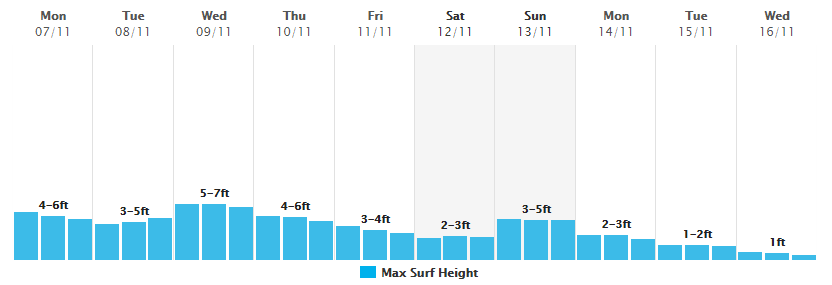
Three days in a row of 4 - 6 foot surf is predicted for the Treasure Coast.  Of course, it could change for the worse yet.
Keep watching,
TreasureGuide@comcast.net

Monday, August 20, 2018

8/20/18 Report - Gold Nugget Recently Found on Treasure Coast Beach. Mystery Find. Reported Reale Find.


Written by the TreasureGuide for the exclusive use of treasurebeachesreport.blogspot.com.

Gold Nugget Beach Find.
Find and photo by Duane C.
Here is what Duane said about his find.

I wasn't sure what I had a first thinking it may have been dental gold. Actually is a gold nugget., 23-24k. Very heavy 3.8 grams for its relatively small (pea) size. Maybe from a broken piece of jewelry?

Congratulations Duane! Nice photo too.

As you probably know, gold nuggets have been found on the wreck beaches. I've shown one or more that I found.

---

Mystery object found by Peter G.


Here is what Peter said about this find.

I found it on the low tide line at John Brooks Park. It is light in weight and about 3/4 inch diameter. 

You can’t bend it at all with your fingers. It seems to have a hole thru the center but is plugged with hard marine growth. It also has 2 very tiny holes evenly spaced around the center hole. The top outside does appear to have threads for a cap with a tiny hole in the threads. All tiny holes are inline as if they were drilled. 

Help Peter out if you can. Send me your ideas on what his find might be, and we'll see if there is any consensus.

---

I also received a report of a beach reale find. I hope to have more on that later.

---

There are no storms in the Atlantic to follow right now.  The surf is still around one foot, and the tides are moderate now.

Happy hunting,
TreasureGuide@comcast.net

Friday, March 30, 2018

3/30/18 Report - More On The Sifting Compared To Detecting Experiment. Intact Section of 18th Century Wreck Washes Up On Beach. Good Friday!


Written by the TreasureGuide for the exclusive use of treasurebeachesreport.blogspot.com.

Section of Old Wreck Appears on Beach.
Source: See msn.com link below.

48-foot hull of a well-preserved 18th century vessel dubbed the 'Holy Grail of shipwrecks' washes ashore on Florida beach with copper tacks and roman numeral etchings still intact...

Experts speculate that the wreck may have laid under sand offshore for years, then washed onto the beach due to storm activity, explaining how the ship remained so well preserved...

Here is the link for more about that.

https://www.msn.com/en-au/news/world/48-foot-hull-of-a-well-preserved-18th-century-vessel-dubbed-the-holy-grail-of-shipwrecks-washes-ashore-on-florida-beach-with-copper-tacks-and-roman-numeral-etchings-still-intact/ar-AAvhmGj

If you have the chance to get up there and view this before it is removed or something should definitely do it.  I don't know if it is still there.  But if you do get a chance to look at it, take a close look at all the metallic parts.  It is a good chance to learn something.

Thanks to Dean R. and Bruce B. for alerting me to this story.

When I saw that peat washed up Tuesday, I thought there was also a chance for some old wood to wash up as well.  I was in an area where wood planks have washed up in the past.

---

On 3/26 I posted a report by someone who detected a lot several times, recorded all finds, and then sifted the entire lot to find out what if anything he had missed.  The results were amazing, both in the total number of coins found on that small lot, but also the number of old coins found, and what everybody should take notice of is the low number of old coins found as the result of multiple thorough metal detecting sessions despite the large number that was in that ground.  Most people would have detected the site a few times and maybe thought they had found most of the good coins that were there and thought it was time to give up and move on not realizing how many more old coins were waiting for them there.

If you have not read the 3/26 post and the total report of that experiment, I highly recommend that you do that.  If you don't you'll be missing out on proof of what is often said and speculated about in the metal detecting community.

The person who sifted that entire lot offered the following important comments and observations concerning that experiment.


No one was more shocked by the results than me.  I suspected there was more in the ground, but had no idea of the actual amount.  When I started, I did not intend to do [sift] the entire lot, just the areas I thought would be most productive.   However,  I just kept finding more, then decided to finish the job.  

I have a few other comments.  I can't be sure, of course, but I strongly suspect that this lot was never hunted prior to the houses being demolished.  It has nothing to do with the number of finds, but much of the lot was covered in a concrete pad and for many years during the detecting era it was a dangerous area.  This would make the conclusions more valid.

A point I don't think I emphasized enough is the difficulty detecting from the surface.  The first detectorist found 8 silver coins over 2-3 hunts.  I knew there were likely some more silver dimes because he found 3 silver quarters, a silver dollar, and only four dimes.  That is a strange distribution.  I actually briefly hunted the lot before they cleared the house piles and found a couple of clad coins only.  It is just mind-boggling to me, in hindsight, that I found no old coins on my first hunt on a lot with more than 225 in the ground!  When I went back, I found a silver half and silver dime and some wheats, some of which were on the surface.  The second time I found two silver dimes.  Over many hunts before I tried sifting I never found more than 2 silver coins with the detector.  I worked that lot thoroughly and repeatedly with multiple detectors because I strongly suspected there was more there.  I remember being frustrated about it.  So even though 30% of the silver coins were found using a detector, that was after an unusual amount of detecting, including moving at a snail's pace with a small coil and my Safari from different directions.   I feel confident saying that a more common scenario would be for the lot to be detected significantly less before being abandoned in search of greener pastures.  My point is that my detected finds likely overrepresent the percentage of finds that will be found using a detector on a site with heavy trash.

Overall, it was eye-opening for me.  The results were exciting...and daunting.  I now know there are a lot of great finds still to be made, even in well hunted areas, but it might not be easy.


I added the parenthesis and bolding for clarity and emphasis.

Thanks once again to the author of this report.

People are always looking for new unhunted sites.  Many of the old sites still hold more good finds, perhaps more than you would ever imagine.  Realizing how much more might be there is the first step to getting the finds you've been missing.

---

As you probably know, Easter is on the first Sunday after the first full moon after the Spring equinox.  Yesterday - Thursday - was a full moon, and today is Good Friday, which is the perfect time to talk about crosses.

A couple days ago I showed a silver ring with a cross on it.  Alberto S. found the same ring offered by WalMart.   So it is no Tiffany or anything really old.  I had no idea that it was anything but common modern despite my joking around.

Isn't it remarkable how prevalent the cross is whenever you talk about treasure hunting.  You'll find a cross on most cobs in one form or another, as well as on rings, pendants, and other things.  You can't escape that.  And there is a reason.

Something happened that changed the world, and 2000 years later people still wear and display the sign of the cross.  That in itself is remarkable.  But what people wear is not as important as what is on the inside.

You meet all kinds of people.  There are kind generous people, and then there are grumpy demanding people.  It is the same in metal detecting as it is in the world in general.  I'm glad to say that the readers of this blog, judging from the emails I receive, are almost exclusively of the kind generous type.

Some people can't get along with anybody and they think it is the fault of everybody else.  Some are always seeking and never finding.  They are looking in the wrong place.  Others have found the secret and carry their joy with them no matter what is going on in the world around them.  They are the ones that fill the Easter baskets and scatter the eggs and rejoice everytime one is found.

---

The surf will be 3 - 5 feet today and less tomorrow and Sunday.

Happy hunting,
TreasureGuide@comcas.net

Monday, November 7, 2016

11/7/16 Report - Wreck Appears On Beach. Sedwick November 12- 13 Floor Auction. Local Beaches.


Written by the TreasureGuide for the exclusive use of treasurebeachesreport.blogspot.com.

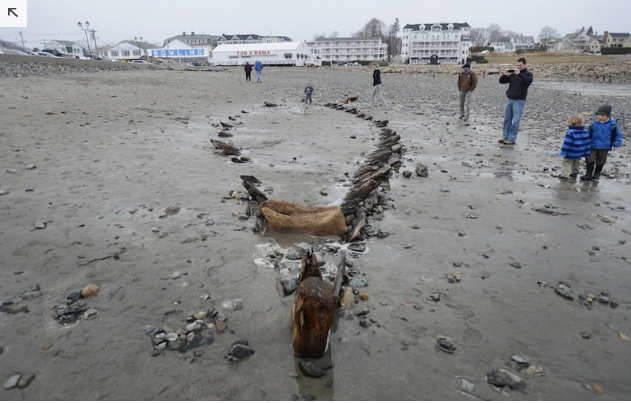
Wreck Surfaces on Maine Beach
Source: See link below.

...Although the skeleton of the ship, believed to be at least 160 years old, has appeared from time to time on Short Sands Beach, little is known about the boat or how it ended up buried in the sand.

What’s left of the wooden hull – catalogued by the state as the Short Sands Beach Wreck – made news in the 1950s after being exposed by a storm. It last appeared after the powerful Patriots Day storm in 2007...


Here is the link for more of that story.

http://www.pressherald.com/2013/03/11/beneath-the-waves_2013-03-12/

---

Treasure, World, U.S. Coin & Paper Money 


Auction 20


Floor Auction November 12-13 - Internet Only November 14

Orlando, Florida

Just one week remains before we begin the live FLOOR and Internet closing of our Treasure, World, U.S. Coin & Paper Money Auction 20, starting at 9:00 AM EST on Saturday, November 12, 2016.


Now is your LAST chance to order a printed catalog, make your travel plans, schedule to bid by phone, or mail/fax your bids if you are not attending in person. Now is also the time to register for the auction on iCollector, as any registration issues can be fixed in advance. Even if you already have an iCollector account, you still must "Get Approved" to bid for each auction by entering and confirming your information for this auction. 

---


Treasure Coast Beach This Morning

It might not be real easy to see, but this picture shows a shallow scallop on one beach this morning.  The beach fronts are generally mushy.  It looks like there is about a ten yards of flat sand in front of the beach which could easily turn into a sand bar.

Dip On One Beach This Morning.

There aren't many dips along the coast, but there are a few like the one above.

Overall, I'd say beach detecting conditions remain poor.

Surf For Coming Week
It looks like there will be no big change in beach conditions for a while.

Happy hunting,
TreasureGuide@comcast.net


Thursday, July 30, 2015

7/30/15 Report - Amazing 1715 Fleet Artifact Found In 1994. July 2015 1715 Fleet Finds by Trez. Steamship George L. Olson.


Written by the TreasureGuide for the exclusive use of treasurebeachesreport.blogspot.com.


Remains Of Steamship George L. Olson
Source: see scribol.com link.
The Steamship George L. Olson, launched in 1917, collided with another ship and was thrown off course and onto the rocks in 1944. Nobody was injured and the vessel later pulled into the harbour to salvage whatever possible. Some of the ship’s load – lumber – built the Baptist Church in Charleston. Though grounded in late 1944, the George L. Olson had a tendency to pop up over the decades. Storms moved sand off it and uncovered the ship in the ‘60s but once covered again, it was quickly forgotten. When it surfaced again in February 2008, though, it attracted quite a bit of attention.

http://scribol.com/anthropology-and-history/25-objects-devoured-by-sand

This Olson is a part of a list of 25 items devoured by sand.  There are other shipwrecks.  You might enjoy looking at it.

---

Aritfact Picture From July 5 Treasure Coast Newspapers.


Yesterday I showed some recent finds made on the Treasure Coast.   On July 5 the Treasure Coast newspapers did an article on the 1715 Fleet and why the Treasure Coast is named the Treasure Coast.  In that article they showed pictures of a few finds, including the "vessel" shown above.

Above is the description the newspaper gave with the item.

 I think you can see it on display at the Mel Fisher Museum in Sebastian.

---

You won't want to miss the treasure I'll post tomorrow.

---

I've been doing this blog for about seven years now.  That is hard to believe.  When I started, there weren't many others.  Now there are tons of others.

I started with the intention of letting people know when beach conditions were good for finding old shipwreck coins on the Treasure Coast beaches.

I thought that would be helpful, because I used to live down in South Florida and when I got interested in the Treasure Coast shipwrecks, I had to drive up here and the first times I did that I had absolutely no luck.  I thought people would like to know when they had a decent chance of finding cobs and when the chances were poor.

I haven't been posting my conditions ratings very often lately because the conditions have not changed or months and it gets boring posting the same rating day after day after day.

When I started I didn't imagine that so many people would read the blog, but it became popular right away.  I was really surprised.  I had tried a blog on a completely different topic and never got more than a handful of readers, so the success of this blog, blew me away.

I've never done any promotion.  I have no facebook page, twitter, ads or anything to promote the blog.  It has all been done by the readers of this blog via word of mouth.  (Thanks to all of you.)

After a short while I began to post more than my conditions ratings.  And as you know, the blog contains a lot more than the condition ratings, which lately have faded into the background.

Briefly, my Treasure Coast Beach Metal Conditions Rating Scale, as some of you will know, is a five point scale, with 1 indicating poor detecting conditions for finding old shipwreck coins, and 5 indicating excellent conditions.

Just to make it clear, my rating is for beach detecting, not salvage efforts with blowers that produces the kind of thing I posted in my last post.

I haven't had a five rating that I can remember in the seven years, maybe I did have one or two, but a five rating would be something like what you get after a hurricane, which we haven't had for ten years now.

I used to often repeat that I started the five-point scale with a 1 instead of a 0 because there is always some chance, even if it is very small.

Well, Trez proved proved this month that there is always some chance.  His high level of skill and local knowledge increased the chances though.  That is always the case.

Before I get into that, let me thank Trez for correcting an error that I made in my last post,  He pointed out that Potosi did not mint gold coins during the period that would be included in the group of coins that were recently found and that I posted in a photo.  I did see some Lima mint marks.

Here is what Trez said to me in an email.

So far my count for the month 3-1 reales, 5 pieces of lead sheathing w burlap imprint, 1 pot shard w some glaze, 1 small porcelain frag. (my 1715 celebration hunt will cont until the end of the month.) Hope to see you out there sometime. I have always believed and still do, no storm is needed to find 1715 material. It takes 40 plus days of this weather and you will find it, if you are patient.

Again, there is always some chance no matter how poor conditions are.  The chances though, can be very slim.  If you don't have the knowledge, skill and, as Trez points out, patience, you'll be out there for days and scan miles and miles without success.

He has a couple more days of the month to add to his finds too.

I always say those who hunt the most find the most.  Even when pickings are slim, if you stick at it long enough, you'll find something, and you can't tell what it might be.

Trez knows a lot about how to improve his chances.  That is the definition of skill.

Even though old things can be found anytime, even when overall conditions are poor, if beach conditions were better, you would have a much better chance.  To find anything like that now, local knowledge helps a lot.  There are also some things that have been going on lately that open up unique opportunities.  Sometimes those special opportunities have nothing to do with the general beach conditions.

Congratulations Trez, great finds!  A tip of the hat to your skill and patience.

---

Talking about the unexpected, my first escudo find was made in the eighties in Dade County.

---

Tomorrow I'll talk about "classification" or the sifting and sorting of targets.

---

One day remaining on the blog poll.  Your responses are appreciated.

---

The surf on the Treasure Coast will be increasing by about a foot for the next few days.

Happy hunting,
TreasureGuide@comcast.net

Sunday, May 17, 2015

5/17/15 Report - Have You Dug Error Coins? What You Should See To Know. More On The Neustra Senora de Encarnacion.


Written by the TreasureGuide for the exclusive use of treasurebeachesreport.blogspot.com.

Example of Double Die Penny Error.
Photo from the doubleddie.com web site below.

OK, so you think you've looked at all of your coin finds and don't have anything of value.  It might be time for another look.

I just found a web site that might have you going back through your coin finds one more time.  That is what I'm going to do.

I bet you've found error coins and didn't know it.  I bet error coins have passed right through your hands and mine without a second glance.

I've collected a few, but I would bet that most of them got passed along without being noticed.

There are an astounding number or error varieties.  There are too many to remember.

Wexler's Double Die Varieties web site is a great.  Here is the link.

http://doubleddie.com/

After going there go to his "double die" listings.  http://doubleddie.com/228401.html

You'll see great photos of a large variety die errors.

I've picked up a few error coins that I know of.  The only ones that I really noticed when I picked them up were a couple of 1982 pennies.  They both had the same clear error.  That was very unusual.

Here it is.

Dug Error Penny.
You can see why I noticed that as soon as I picked it up.

Most coin errors are much more difficult to see.  Much of the time magnification will be a big help.

I'll bet you have found some though, whether you know it or not.

-----

I'm glad I have my little Celestron handheld microscope to help me quickly go through bunches of coins.  It is quicker and easier than using a loop or magnifying glass.

----

Here is more on the Nuestra Señora de Encarnación, a colonial Spanish ship known as a nao, that sank in 1681 during a storm at the mouth of Panama’s Chagres River.

http://news.discovery.com/history/archaeology/mysterious-caribbean-shipwreck-identified-150515.htm

----

On the Treasure Coast it looks like the surf won't be changing much for a week or so.  We do have a nice negative tide now though.

Happy hunting,
TreasureGuide@comcast.net