Showing posts with label dip. Show all posts

Monday, July 6, 2020

7/6/20 Report - Tropical Storm Edouard. Beach Zones. Density and Specific Gravity of Things.


Written by the TreasureGuide for the exclusive use of treasurebeachesreport.blogspot.com.

Yesterday I discussed liquefaction, which can occur on a beach under certain circumstances that cause sand to act much like a liquid.  I showed a couple photos of liquefied sand being moved by big waves.  Of course, most of the time that occurs near the front of the beach, but when the tides and swells are big, it can occur on the back of the beach.

Before delving more into the physical forces that move sand and other objects, this morning I thought it would be useful to mention the various beach zones of interest to the detectorist.  

Starting off-shore in the shallow water, there can be a sand bar.  That can be a good place to metal detect if there are a lot of bathers using the bar.  That happens a lot down in the Fort Lauderdale/Miami area.  It can be a very good place to detect for modern finds or what I call recent drops, but don't forget that the bar will move, and one side or the other, depending upon the direction the bar is moving, can be good detecting.

Inside of the bar, is often a dip, which can also be good detecting.  In fact some of my best detecting ever was in a cleaned out dip.  The dip can be full of sand and shells, but it can also be cleaned out down to bedrock, which of course is when the detecting can get very good.

On the beach front in the wet sand can also be good detecting, but it can also be poor, depending upon what is going on.  This area can be good or poor, depending upon a variety of factors, especially whether the sand is building on the beach front of eroding.  In either case, good water action can wash up good targets.  In the wet sand below the berm you might be able to find the coin lines or coin holes that I've mentioned many times.  They can also have other good targets beside coins.

The fourth zone is the dry sand area, which of course can be good if people have been using it.  Hunting the dry sand is very different from hunting the wet sand or water because the water does not do as much sifting and sorting there.  Detecting in the dry sand depends more on where things were dropped.  In the wet sand things gets sifted and sorted more, so you are often looking more for where targets ended up rather than where they were lost.  The water does however hit the wet sand area on some occasions and can definitely affect the distribution of finds.

The fifth zone is the dunes, where you will usually not be allowed to hunt.  Very old items will typically be buried a foot or more in the dunes, but when the water hits the dune face, items can be washed out and onto the flat beach.  

It can get a lot more complicated but those are some of the basics of the five zones.

---

We often talk of where you might find heavy items like gold.  As I've said many times, it is really not the weight that we are concerned with.  A ton of Styrofoam will float.  It is more a matter of density, rather than weight.  Other things are important too though, such as the shape of the object.  Bend tons of steel into the shape of an ocean liner and it will float.


Here are the densities of some of the metals you might find.  That helps explain why you can find aluminum when beach conditions are not very good, and why lead is a good sign if you are looking for beach gold.

Again, shape is also important.  Shape a super tanker out of steel and it will float.  Thin sheets present more surface area for the water to push around or lift.

Specific gravity is the density of an object relative to the density of a reference substance, usually water at a specific temperature and salinity.


Having a specific gravity of 19.32, gold is over 19 times more dense than reference water.

Sand has a specific gravity of somewhere around 2.65 to 2.70.   So being more dense than water it sinks in water.  There are a variety of other forces at work on the beach sand though, and the shape and constitution of the sands makes a difference too.

Notice the specific gravity of aluminum is very close to that of sand, so it is no surprised that you can find it in sand that is building on the beach.

Another generality is that it will take a lot more water force to move gold than either sand or aluminum.

If you understand these things it will help you figure out how things are moving and that will give you a better idea of where they might be found.

One of the things about gold rings is the relative lack of a flat surface area for the force of water to act on.  A copper coin on the other hand, will move differently than a gold ring not only because of the different density of the material but also because of the shape.  Likewise the movement of a zinc coin will be determined in part by the adherence of materials to the surface of a corroded coin.

That will provide some background for future discussions.

---

As I said yesterday, the National Hurricane Center map is starting to light up.  There is now a tropical storm :Edouard.  Edouard will not affect us, but there is a new system down by South America to watch.

Source: nhc.noaa.gov
It is the time of year to start watching for storms.

Happy hunting,
TreasureGuide@comcast.net


Wednesday, April 17, 2019

4/17/19 Report - Seeing Beaches, Cuts, Bars and Dips Form. Reflections on Cathedral of Notre Dame.


Written by the TreasureGuide for the exclusive use of treasurebeachesreport.blogspot.com.


I have an free Easter present for you today.  It is a little early. and it wasn't what I planned on doing, but it is just too good.

I'm going to show you an excellent wave tank video.  It begins with small slow waves and increases the frequency of the waves and then the size of the waves. You will get a really good look at how waves of different frequencies and sizes affect a beach differently.

There are some things I want you to watch carefully, so I'll give you advance warning.

Here is a clip that comes from the beginning of the video when the waves are small and the time between them is relatively large.


Small Infrequent Waves Building a Beach.

Notice how the sand is agitated in the high energy area where the wave is breaking.  I've mentioned this before, but this is the best illustration that I've seen.  You can really see the sand being suspended.  The suspended sand is then dropped on the beach as the water slows on the slope.

Suspended Sand Under Front of Wave.

You can really see how the sand is suspended in this clip  That sand moves back and forth as the wave passes, almost seeming to vibrate.  If you watch it in the video, you can see how similar it looks to the liquefaction video that I posted yesterday.  You can really see the similarity when the waves are more frequent.

While there is a lot of sand movement both ways in that area, there is a net movement either landward or seaward, depending upon the size and frequency of the waves.

When the frequency is increased,, you'll see the sand start to erode.  A small cut is created when the waves are frequent but not large.

Then when the waves get bigger, the whole thing accelerates, and a lot of sand migrates down the slope.

Bigger Waves Has Moved Sand Down The Slope And Has Created a Sandbar.

Notice also the dip.  That is an area that can expose a lot of objects on a beach, especially when the dip is down close to a hard rock or clay bottom.  That can be a real bonanza.

In the last clip, the sand has been completely removed from in front of the end of the tank.  That is how it would work if there was a sea wall or something behind a beach.  A sea wall will accelerate sand loss, as will a cut.

Now watch the video and you will see how all of those things develop.

https://www.youtube.com/watch?v=SCirBRjYKSo

If you watched the entire video carefully several times, you probably got a lot out of it.

I watched it quite a few times and will probably watch it several more times.

Again, a wave tank is not exactly like a beach, but you will find some things the same.

---

I wanted to comment on the Cathedral of Notre Dame.  We all saw the images.

Alain de Botton, author of the The Art of Travel said, “A dominant impulse on encountering beauty is to wish to hold on to it, to possess it and give it weight in one’s life. There is an urge to say, ‘I was here, I saw this and it mattered to me."

I lost the original reference, but I read the following in a current article. Maybe it was the New York Post, but I'm not sure.

… In a world that increasingly feels impermanent, transactional, brittle and under threat, the stillness and solidity of an 850-year-old steeple stretching into the sky gave us hope that some things remain. That how we once were is how we will always be.

Indulgently, these monuments are also a backdrop to our younger, more adventurous selves. They remind us of who we were when we fell in love or explored with friends or opened ourselves to long unscheduled weeks in unfamiliar lands.

You cannot gaze at a shimmering stained-glass window or find yourself dwarfed by a sepia-toned fresco and not feel sharper, rawer, as if in glimpsing beauty it is indelibly etched on your soul.

I think that is all pretty true, but watching it burn and crumble, reminds us that all things in this world, the most wondrous and long-lasting, will eventually crumble and fall.  In that we recognize our own mortality. And in the thought of rebuilding, we share the joy of resurrection Sunday.

Happy Easter!
TreasureGuide@comcast.net

Wednesday, July 26, 2017

7/27/17 Report - Webcams and A Few Tips On Hunting Modern Items In Shallow Water.


Written by the TreasureGuide for the exclusive use of treasurebeachesreport.blogspot.com.

Sebastian Area Beach
Webcam capture submitted by Darrel S.

Same Beach Another Time.
Webcam capture submitted by Darrel S.

Darrel sent the above two webcam images of the same beach - one taken after a rain and the other when it was nice and sunny.  Darrel suggested using technology such as webcams so you can see what is going on and know where to metal detect.  You might not like metal detecting in the heat when all the sun-bathers are out, but you can check to see where the crowds are when you aren't on the beach.

I haven't talked about shallow water hunting for modern items lately.  I'll do that a little today.

Generally speaking, beaches and areas that have more people will produce more finds, but that isn't always the case.  It is a more complicated than that.  There are a lot of factors.  For one thing, as I've said before, some groups don't wear or carry much of anything to lose.  There are cultural differences and socioeconomic differences.   There are also differences between condo beaches frequented by residents who tend to take items off before going out to the beach, and resort visitors, who are less likely, for various reasons, to remove their valuables before going in the water.  Those are just a few examples of differences between various groups of people.

Young active people are also much more likely to lose valuables in the water than older cautious people.

In addition to people differences, beach conditions are important too.  When people are on a sand bar, items can be covered quickly.  When that is happening you'll have to find an item before it disappears.   How quickly it disappears will depend upon how the water is moving the sand.  It can take months or years for an item to be exposed again.

The dip in front of the sand bar can be good or not so good.  The dip will fill up at times and get cleaned out at times.  A couple feet of lose material can quickly accumulate in the dip covering up items like rings.

The following illustration shows a crude illustration of one beach area in front of a Fort Lauderdale resort that I used to hunt a lot. There was usually small dip and a sand bar in front of the resort.  On the other side of the sand bar was gradually deepening water.


The beach didn't change much over the years.  People always congregated on the sand bar in front of the cabanas and beach chairs.  Of course they crossed the dip to get to the sand bar and wondered off the sand bar at times, but most of the time the vast majority congregated on a small area on the sand bar.

Where do you think the majority of finds were made?

If you guessed on the sand bar, that is a good guess - but wrong.  And it wasn't in the dip, or on the deep side of the sand bar.

There was almost always a hot spot just to south.  I outlined the hot spot below (big grey circle). I could almost always find coins and jewelry in the hot spot even though I rarely saw people in that area.


Once in a while I would find a newly lost item on the sand bar where most of the people congregated, and occasionally something would show up in the dip, but usually I could find the good hot spot to the south of that.  The items in the hot spot were often discolored.  They were not recent losses, but had accumulated over time in that one area. That area was a pretty consistent producer.

My main point is that the best spot is not always were the most people go, although you will find items that were just lost there if you are quick enough.  Remember, sand bars move.  Sand is pealed away and the sand bar moves in one direction or another.  And dips fill and unfill.  If you happen to catch a dip that has recently formed and has been cleaned out deeper than usual, that can be a real hot spot too.  It would take me a really long time to try to describe how all of that occurs, so I won't try to do it now.

It pays to really get to know your beaches.  It takes time.  You have to explore a little, but once you know a beach, you can take advantage of that knowledge for months or years.

Don't forget that the sand is almost always moving to some extent, as do other items.  I've talked about trigger points and things like that in the past.

The history of a beach is important too.  Beaches go through phases.  They can be popular for a while, then became old and outdated and then be revived again.  Beaches that are not busy and active now, may have been in the past.  Coins and modern jewelry items can still be found years or decades after they were lost.  All it takes is for the sand to move.  I often hunted beaches that were not currently the most busy and popular beaches.

---

Source: nhc.noaa.org
As you can see, we now have one disturbance to watch.

The surf remains calm and the tides pretty big.

Happy hunting,
TreasureGuide@comcast.net

Monday, January 9, 2017

1/9/17 Report - South Hutchinson Island Beaches This Morning and A Distinct Coin Hole. Underwater Archaeology Lecture by Robert Marx at FIT.


Written by the TreasureGuide for the exclusive use of treasurebeachesreport.blogspot.com.

South Hutchinson Island Beach Monday Morning

I went out to check some beaches this morning.  It wasn't nearly as cold as yesterday morning.  The beaches hadn't improved much.  John Brooks had some of the bigger cuts that I saw this morning, and had improved a little since yesterday.  Otherwise there were very few cuts along South Hutchinson Island.  The sand on the slopes was generally pretty mushy.

Another South Hutchinson Island Beach Monday Morning
 Here is another South Hutchinson Island beach that had no cuts.  Also notice the sea weed.  There is a little dip in front of the beach here.

Interesting Cut On Frederick Douglass Beach
After I checked two or three other beaches, I stopped at Frederick Douglass.  I didn't take out my detector until I took a look.  Here is what I noticed.

There was a detectorist.  You can see him in the picture walking along near the high water mark.

There was one dip that stood out to me.  It is just above center and just a little to the right of the center of the photo.  I thought I better check that spot out.

The dip was unusual.  It was originally created some weeks ago, but had refilled to a large extent and was reshaped.

It was an irregularity.  It was the only one of its type and size in the area.

I got my detector, turned it on and walked right to that spot.  I started hitting clad after a few swings.

There was a coin hole just below the dip, which you can see the top of in the photo.  The coin hole spread a little to the south.  The other fellow walked right past it.  He was above it.

It seemed like the coins might have been washing in at that spot.  I'm not sure of that though.  They were all seasoned coins, showing discoloration and encrustation.  Nothing very good was found there, but it makes a great illustration.  The coins were clustered there but there were almost none anywhere else on the beach.

This coin hole only had modern coins in it, but the same thing could happen with cobs and older items.

I only checked a few beaches, and they were all on South Hutchinson Island, so I'm not going to give an Treasure Coast beach conditions rating.  I didn't see any of the beaches in the Vero or Sebastian area and haven't received any reports form those areas.  There is the definite possibility that if you find the right spot on the Treasure Coast, a few cobs might be found.  What I saw on South Hutchinson Island, though, was not very promising.

If anyone can send me a report from the Vero or Sebastian areas I would appreciate it.

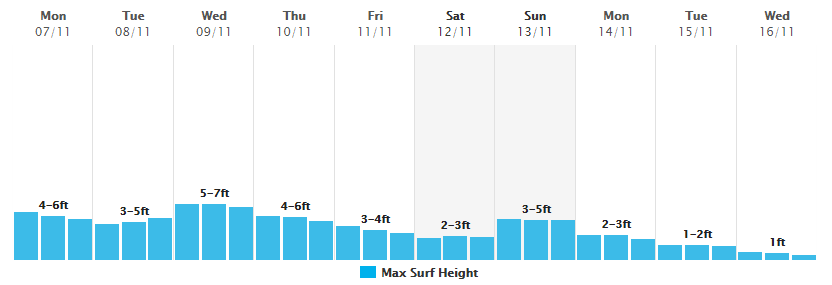
Not many people were on the beach today, but it got to be pretty nice.  On the radio they are saying we'll have a rough surf all week, but according to the surfing web sites, the surf will be decreasing about a foot after today.  The same web sites are showing a nice increase again after a few days.

I've been using a smart phone instead of my Sony video camera, which is acting strange.

---

Underwater Archeology Lecture by Sir Robert Marx

Tuesday, January 10, 2017
7:00 PM - 8:00 PM (ET)
Gleason Performing Arts Center Gleason Performing Arts Center
Event Type
Lecture/Seminar/Symposium
Contact
George A. Maul
321-674-7453
Thanks to Warren D. for this info.

Happy hunting,
TreasureGuide@comcast.net

Monday, November 7, 2016

11/7/16 Report - Wreck Appears On Beach. Sedwick November 12- 13 Floor Auction. Local Beaches.


Written by the TreasureGuide for the exclusive use of treasurebeachesreport.blogspot.com.

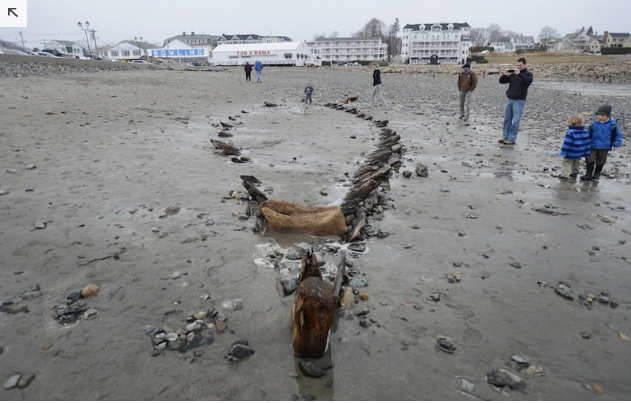
Wreck Surfaces on Maine Beach
Source: See link below.

...Although the skeleton of the ship, believed to be at least 160 years old, has appeared from time to time on Short Sands Beach, little is known about the boat or how it ended up buried in the sand.

What’s left of the wooden hull – catalogued by the state as the Short Sands Beach Wreck – made news in the 1950s after being exposed by a storm. It last appeared after the powerful Patriots Day storm in 2007...


Here is the link for more of that story.

http://www.pressherald.com/2013/03/11/beneath-the-waves_2013-03-12/

---

Treasure, World, U.S. Coin & Paper Money 


Auction 20


Floor Auction November 12-13 - Internet Only November 14

Orlando, Florida

Just one week remains before we begin the live FLOOR and Internet closing of our Treasure, World, U.S. Coin & Paper Money Auction 20, starting at 9:00 AM EST on Saturday, November 12, 2016.


Now is your LAST chance to order a printed catalog, make your travel plans, schedule to bid by phone, or mail/fax your bids if you are not attending in person. Now is also the time to register for the auction on iCollector, as any registration issues can be fixed in advance. Even if you already have an iCollector account, you still must "Get Approved" to bid for each auction by entering and confirming your information for this auction. 

---


Treasure Coast Beach This Morning

It might not be real easy to see, but this picture shows a shallow scallop on one beach this morning.  The beach fronts are generally mushy.  It looks like there is about a ten yards of flat sand in front of the beach which could easily turn into a sand bar.

Dip On One Beach This Morning.

There aren't many dips along the coast, but there are a few like the one above.

Overall, I'd say beach detecting conditions remain poor.

Surf For Coming Week
It looks like there will be no big change in beach conditions for a while.

Happy hunting,
TreasureGuide@comcast.net


Saturday, October 17, 2015

10/17/15 Report - What Is In Front Of The Beach Is Important. Six or Seven Foot Surf Predicted For Monday.


Written by the TreasureGuide for the exclusive use of treasurebeachesreport.blogspot.com.


Small Silver Pendant With Chalky White Stone.
Shown on penny.

Yesterday I showed some new erosion on a couple of South Hutchinson Island beaches.  I went back after the next high tide to see what happened.  At the end of the day, it was worse instead of better.  Some of the erosion had disappeared.

The erosion that I found in the morning was created by a small surf and as a result was close to the front of the beach.  .

On the beach where the erosion was, the waves had been breaking right at the foot of the beach.  At another beach which had no erosion, the waves were breaking farther out and there was a lot of sand far out into the water.

We know that the waves break where the water becomes too shallow for the swells to continue without breaking.  That means that the water right in front of the beach was deeper on the beach where the waves weren't breaking until they hit shore.

The beach without erosion was a beach which eroded during the high tides back a week or so ago. The eroded sand was now in front of the beach and provided protection.

The area between the low tide mark and the breakers is very important.  It is also the area that is most turbulent and difficult to observe, especially during rough water.  Coins that wash up onto rather than out of the beach come from  that zone.

When there is a lot of sand in front of the beach, not only is the beach protected from the waves, but coins and things can remain buried and protected.  For coins to wash up onto the beach, they have to be uncovered, or at least moved to surface layers of sand that will be moved.  You can get a lot of erosion without coins washing up.

As far as I can figure out, there are two ways that coins in front of the beach can be uncovered.  One is when the sand in front of the beach is dragged out into deeper water thus exposing the coins.  After the coins are exposed, or at least brought close enough to the surface that they are in layers of material that can be moved, they can then be washed up onto the beach.

You'll recall that sand can be moved while other materials are left behind (the process of classification).

The best shallow water hunting that I've ever encountered has been in dips right in front of the beach after the sand had been removed from the dip, leaving coins and jewelry on a bed of packed rocks.

The other way coins and things can be uncovered in the shallow water is by strong long shore currents moving sand roughly parallel to the beach.

In both cases, for coins to be washed up onto the beach after being uncovered, the force of the water then has to be strong enough to wash them up.   For those coins to remain on the beach, the backwash can not wash them back into the water.

When the backwash is not interrupted or does not slacken enough, both the sand and coins can be washed back into the water.

I've talked before about the importance of the long shore currents and the importance of the north/northeast winds, which push the long shore currents.  The long shore currents move sand away from in front of newly eroded areas.

Waves approaching from the east will tend to build beaches.  Sand can come in from farther out and fill any dips.

Unusually big swells can move items up onto the beach, but from my experience items moved by swells hitting from the east are  generally the easier to move items such as half reales rather than eight-reales or gold.  Big swells of course can hit the cliff at the back of the beach and release harder to move items and if the backwash is sufficient also uncover items that were buried under the beach.

---

Bill F. sent me this related email back a few weeks ago.

Was reading the current one about cuts and backwash.  An important
aspect is that coarse material forms a steep beach.  2 reasons.
First, the higher the velocity of the water, the larger the material
which can be transported (pushed) by water movement.  Strong waves
move coarse material up the slope.

Then, a second feature comes into play.  As the water velocity slows
and stops, much of the volume of water soaks into the coarse material.
Thus, the returning water is much lower in volume and velocity, and
moves less material back to the ocean.  At low tide, you see this
water running back out of the beach, often at the top of the hardpan
layer.  Beach is kinda like a big sponge!

Bill

Thanks Bill.

---

If you know what the chalky white material in the pendant is, please let me know.  I can think of it right now.

---

The Treasure Coast surf is only supposed to be 1 - 2 feet through Sunday.  I don't expect the beach conditions to improve this weekend, however they are still predicting up to a seven foot surf on Monday and northeast winds.  That might work.  So far the are also predicting something like a 4 - 6 foot surf through out the coming week.  That could definitely create some erosion.  We'll have to wait and see.

Happy hunting,
TreasureGuide@comcast.net

Monday, August 17, 2015

8/17/15 Report - Detecting With Beach Movements. Mystery Token. Marks On Silver Cross.


Written by the TreasureGuide for the exclusive use of treasurebeachesreport.blogspot.com.

Markings On A Found Silver Cross.
Can anyone help me identify the markings on this silver cross.  If you can idnetify them please zip me an email.

The cross is about one and a half inches high.  I think it had a loop for a pendant.  The loop is missing.

---

Found Token
This token appears to be copper or brass and appears to be just a touch bigger than a quarter.  It is the same on both sides.

I'd also like help in identifying it.  Thanks.

---


The above illustration shows the shallow water area and a front beach.  I wanted to discuss detecting in the shallow water a bit today.

I put the orange lines in to divide off some areas.  From left to right, you have the deeper water outside the bar, then the bar, then the dip inside the bar, and then the slope.

You'll often read or hear people say different things like, Check the dips in front of any cuts.  Nothing wrong with that. It is good advice.  I'd check that area if it looks promising, just like I would check any area. The dips will be good sometimes, but sometimes not - depending upon what is going on. Its a very dynamic system and the best thing is to be able to read the flow.

It is never a bad idea to check any area.  But checking doesn't mean spending a lot of time.  Check and make a decision base upon what you see.

Checking can help you not only determine if there are any targets there, it can also help you determine how things are moving.

A couple of thing you might want to learn is what kind of material is in the dip and how much of it there is.

Some types of areas definitely produce much more than others.  No doubt about that.  No area produces all the time though.  And spots will change between hot, neutral and cold, and sometimes very quickly.

Any one of the four areas I mentioned above can be the best place to hunt. Those areas are always changing.  They change as the tides go in and out, and they can change whenever the wind and waves change.

A local thunder storm might not last an hour, yet it can change the situation substantially.  A thunder storm can pass by, whip up the waves and create small cuts in a matter of less than an hour.

There are changes that occur over decades, years, months, weeks, days, hours and even minutes.  The past couple of years, for example, we've been in a sustained period of small surf, and the beaches have changed, but mostly in one direction.   What we've been seeing is a bit unusual.  I've never seen such a long period of time with nothing but small surf.

Even within that time, though, there have been times when things changed significantly on a very short term basis.  One day the front slope was loaded with coins.  The next day that was entirely changed.

My main point today is that things change constantly.  Maybe not large changes, but changes that affect where you will want to spend your time.

The area outside the bar might be the place to be at times.  That would be when swimmers have been hanging out and playing on the bar before the bar moved in.

The bar will move in and out.  I like to check the side of the bar that is losing sand.  For example, if the bar is moving in, check the outside of the bar.

When the bar is moving in, if it goes on long enough, the dip will eventually get filled and objects in the dip will get covered up.

There are times when the dip is a good place to find things like watches.  That often occurs when there coarse shell sand and lose material filling the dip and the coins and similar things are covered up.

The dip can get really good when the front of the slope is cut away and things are dragged down into the dip, especially when the sand gets moved out to deeper water.

Recently on the Treasure Coast, and I'm sure neighboring areas to some extent, there has been very little movement and change.  Things have remained relatively stable for quite a while.  Despite how stable things have been there have been times when certain areas got hot for a short time.  There have been days when it was best to detect the wet beach and other days when the zone just in front of the breakers was good.

It is a dynamic thing.  Don't get stuck in a rut. It's more of a dance.  Get in tune with it and move with it.

---

I'll probably continue with this some other time - maybe tomorrow.

---

Happy hunting,
TreasureGuide@comcast.net

Monday, May 11, 2015

5/11/15 Report - Treasure Coast and Other Florida Beach Conditions. Good Ships and Travel Web Site.


Written by the TreasureGuide for the exclusive use of treasurebeachesreport.blogspot.com.

Jensen Beach This Morning Near Low Tide
This photo shows a beach where some sand has moved.  At the bottom of the picture note the dip in the shallow water.  At the top left, note the sand bar.

The light sand between the two people (one is just a white dot) at the top left is where the sand was scooped out to form a shallow cut.  You would expect to find coins there.

That sand got washed into the water to add to the sand bar.

These days I'm happy to see features like those.  It means that things at least got shifted around a little.

You can easily read a beach like that and know where to spend your time.

Jensen Beach Looking South
The second photo was taken from near the same spot only looking the other direction.  There are not as many interesting features in that direction.

Another Beach On South Hutchinson Island
Here is another beach.  It was featureless.  I much prefer to hunt a beach that has distinct features.

That photo also shows where someone got married this weekend.  May and June is a time for a lot of beach weddings.

While our beaches are only producing modern items, I keep hearing about the St. Augustine beaches and the beaches up a little farther north where Ana caused some erosion.

Here is a good article on St. Augustine's disappearing beaches.

http://www.gulflive.com/news/index.ssf/2015/05/florida_coast_sea_rise_threate.html

Ana was the earliest tropical storm since 2003.

http://hosted.ap.org/dynamic/stories/T/TROPICAL_WEATHER_ANA?SITE=AP&SECTION=HOME&TEMPLATE=DEFAULT&CTIME=2015-05-09-06-21-18

It looks like there were good crowds on the Treasure Coast beaches for Mother's Day.  I hope you and your family had a good one.

Mother's Day has a surprisingly complex history.

http://news.nationalgeographic.com/2015/05/150507-mothers-day-history-holidays-anna-jarvis/

Here is an interesting web site that you might want to take a look at - Ships and Travel in the 18th Century

http://www.iro.umontreal.ca/~vaucher/History/Ships_19thC/


I ran into a good coin hole this morning.  Lots of coins.  Only one piece of gold though.

I define a coin hole as being roughly oval shaped, while a coin line I would say would be at least five times longer than wide.

The coin hole that I found this morning was on a convex beach front near the water.  It wasn't the most obvious spot.  Shells were just under the sand.

I'm not expecting anything for the Treasure Coast other than a one or two foot surf for a couple of days.

Sea Weed On Bahia Honda
Photo submitted by Dan B.
Thanks for this photo from the Keys Dan.  Seaweed like that can be a pain if it is where you want to detect, but you can sometimes find things tangled in seaweed such as dollar bills or chains.  It is worth looking.

The good thing about reading about the erosion up north is that it reminds me that it is only a matter of time until we finally get ours.

----

I heard from some people interested in the opportunity I announced yesterday concerning diving on the 1715 wrecks with Captain Jonah.   If you didn't see that, you might want to go back and take a look, but the captain will be doing the selection and you need to contact him at the phone number provided.  Read it carefully before calling.  This is for one full time position.

---

Happy hunting,
TreasureGuide@comcast.net

Sunday, February 8, 2015

2/8/14 Report - A Recent Treasure Coast Cut and Some Hints For Analysis. 17 Pound Gold Nugget Found.


Written by the TreasureGuide for the exclusive use of treasurebeachesreport.blogspot.com.

Interesting Spot On The Treasure Coast Yesterday.
This picture makes a good illustration.  I'll use it to talk about beach analysis.

The low spot is just a touch above and to the right of the center of the picture.  That would be in the wet sand just behind the bigger rocks.

Cuts were very few and far between that day. This spot was not at all typical.

When I look at a spot like this the first thing I look for after looking at the cut is the low spot in front of the cut.  In this case, the low spot was bordered on one side by rocks.

The cut in this picture is about four feet high and maybe a little more.  As you can see the cut extends to the north a good ways.  It also extends a good ways to the south (out of the picture).

I'd take a look at the bottom of the cliff to see if it is a fresh cut or if it is a few days old and deteriorating.  Also look at the sand in front of the cut to see if the cut is filling yet, and if so, how much.  Check the firmness of the sand in front of the cut.

There are boards sticking out of the sand.  Check them to get an idea of how old they are.  In this case I was disappointed by how modern they looked.  I really should have taken a better look at them and the nails that were in them.   Nails can tell you a lot about the age of the boards.  I didn't take the time to uncover the nails.  That could have been a mistake.

Rocks can function as traps.  Both the rocks and boards can serve as markers, as they are covered and uncovered it will tell you how much sand is being added or removed.  Always take a good look at such markers.  They can provide valuable information.

In this picture you can see a bend in the beach.  Look at any cuts or dips to try to determine how they were formed.  There may be other similar places along the coast where similar cuts were formed.   I'd check other spots south of bends like this one.  Sometimes you'll get a good idea of where other cuts will occur along the coast by looking at how and where one cut was formed.

Just under the top layer of sand was a layer of course but hard packed red/brown shell sand.  You will learn to identify different types of sand and what types of items might be found in them.  That sand had been undisturbed for a good while, but the boards suggested to me that the sand had not been undisturbed as long as I first thought might have been the case when I first saw it.

Watch any spots like this over time.  They can fill or become deeper.  They can move any direction.  By watching the various markers, including boards and rocks, you should be able to tell if the dip is moving one direction or another from one day to the next.

Note when the dip was formed.  What was the wind direction at that time?

When a cut like this is formed south of an eastward bend in the beach, it would normally be a north/northeast wind.   When the wind changes there is a good chance the cut will fill again.

Any cut like this is worth checking out at least briefly.

Today we have a southeast wind.  That won't change until around Tuesday when we'll get a northeast wind again and a bit of a bump in the surf.

-----

Here is the kind of day you'd like to have.  A herdsman found a 17 pound gold nugget laying on the ground.   Now that is the type of eyeball find I'd love to make.

Here is the link for the whole story.

http://www.marketwatch.com/story/chinese-herdsman-stumbles-onto-a-17-pound-gold-nugget-2015-02-05?mod=MW_story_recommended_tab

Thanks to Leo for sending that in!


Happy hunting,
TreasureGuide@comcast.ne

Monday, October 20, 2014

10/20/14 Report - Treasure Coast Beach Conditions. Another Reason To Not Discriminate. How To Know Where To Detect. Know Your Gem Stones.


Written by the TreasureGuide for the exclusive use of treasurebeachesreport.BlogSpot.com.

I took a look at the beach yesterday near low tide.  Here is the first beach I looked at.  The waves were breaking there right near the foot of the beach.  Course sand was piled up on the front of the beach.

A mile or two away, I saw a beach that was different (Second photo.).  The waves were about the same size, naturally, but they were breaking about 40 yards farther out.

On that beach the sand bar was farther out and there was a dip between the sand bar and the foot of the beach.

On the front of the second beach, the sand was even more course and the slope was covered by very course sand with shells and even small rocks next too the water.  I wish I got a picture of how that course sand transitioned.  There was a sharp division between the course material on the slope and more fine sand in the dip.


Notice the shells in this second picture, and also notice just above the center of the picture and a little to the left, how the water is piled up near the foot of the beach.  Just below that you can see the flat water covering a dip.

----------------------

The other day when I talked about discrimination, I ended by mentioning that when I talked about what I called "working the washing machine" I dug only one trash item while digging a good number of good targets.

Some beaches are so busy that you can always find some recent drops, no matter how poor the conditions in that area might be.  You can have a spot that is very mushy where anything good will sink quickly, but if the item was just dropped, you can still find it before it disappears.  I don't generally spend my time in areas like that,   though in some situations, if there might be high value targets and I don't have a lot of good alternatives or the time to travel, I might do that.

Normally I am always assessing the situation and trying to find areas where the good to bad target ratio is good, and I don't stick around in areas where I determine from any evidence that I can gather, that the area is not where I want to spend my time.

How do you know which is which?  First you can tell a lot by how it looks..  That is the first level of analysis.  Learn to read the beach, and also the water.

You can also tell a lot by checking.  Do a little sampling.   What are you digging?  Aluminum junk or dense objects?  That will tell you a lot.  Where are the dense items?  Maybe lead or coins?  You won't get all the information if you are discriminating. 

Not only is the type of item important, but also how deep it was found.  What can you tell about layers?

This type of hunting works well in wet sand and shallow water, but is also applicable to other types of areas as well.  What I focus on is finding a well defined area where I can really focus my efforts.  That would be an area where I can quit prospecting and begin mining, as I sometimes put it.  That would be an area where there are few trash items relative to the number of good targets.

There is more than one way that the distribution of items (good and bad) can be changed.  In wet sand and shallow water, the water action and movement of sand and other materials has a lot to do with it.

In the dry sand or even on dry ground there are still many relevant factors that can affect how good an area might be.  Inland, for example, besides the fact that there are still layers and the layers are occasionally changed by water, for example by rain or creeks, or falling leaves, or human events and activities, those areas can also be changed by other detectorists and how they hunt.

What I'm trying to say is that my focus is on learning how items are distributed, and finding those areas with concentrations of high value targets, and that junk as well as good targets provide good information about the area and which direction to go next. 

Things are not distributed randomly, and I want to locate and spend my time working the most productive spots.

Not only does the type of item provide information, but how old it is and how deep it was, also provides good information.   For example, how deep a pull tab was found is important, as is the age of the pull tab.

I'm always considering the type of item, depth, density, age and its history, and any other factors that might shed some light on if I should stay where I am or which direction I should move next.

I'm generally not going to spend my time in an area where the junk to good target ratio is poor.  There are a few exceptions.  For example, if I have reason to believe that a dip filled with course sand and aluminum also might contain a Rolex or other high value target, I might hunt that area.  The point is that there is an analysis of all evidence and an intentional calculated decision about where to go next.   It is not just a process of wondering around and hoping to hit something good.

As I said, when working the washing machine the other day, I was finding almost all coins or better items, and only one junk item.  Under the circumstances I was going to stay in that general area.  I was going to try to find any center point and return towards it if I started wander away from it.   If I started to wander one way or another and started to get into an area where I was only finding aluminum, I would try to find the center of the good area again.  It is better to spend a lot of time in a small area once a good area has been identified.  If the good area was cleaned out, I would move on and try to find another good area.

-------------------------------

What is the most expensive gem stone?  Here is a link that will show you several of the most expensive.  I bet you haven't heard of some of them.

http://www.gemstonesadvisor.com/most-expensive-gemstones-in-the-world/

Red diamond will bring a million dollars per carat. 

Mistaking your gemstones can cost you a lot of money.   Don't assume or guess.

----------------------------------


Tomorrow the surf on the Treasure Coast will be down to one or two feet again.

There is an interesting disturbance down by Central America that might come our way.


Happy hunting,
TreasureGuide@Comcast.net


Friday, June 20, 2014

6/20/14 Report - 2000 Year-Old Gold Coin, Price of Silver and Gold, Chosen Ring, Returned Ring, & Beach Video


Written by the TreasureGuide for the exclusive use of treasurebeachesreport.blogspot.com.

Worn Gold Coin Found Dating To Around AD 64 or 65.
Souce: Link shown here.
In a breakthrough which defied two generations of diggers along Hadrian’s Wall, a volunteer French archaeologist has found the first gold coin at Vindolanda, the Roman site which has been intriguing excavators for almost 50 years.

Described as being “well-worn”, the confirmed aureus bears the image of the Emperor Nero, dating it to around AD 64 or 65. The precious currency was worth half a years’ salary for serving soldiers, but was lost on the northern outpost of the empire following 300 years in circulation...


Here is the link for the rest of the story.

http://www.culture24.org.uk/history-and-heritage/archaeology/art487168-Archaeologists-hail-magical-moment-miraculous-Roman-gold-coin-find-Vindolanda


As you might have noticed, the price of gold and silver increased around 4 percent each yesterday, as gold shot through the $1300 per ounce mark.  Gold ended at $1313.10 per ounce and silver, at $40.40 per ounce as the dollar fell.

If you are holding gold or silver finds, you might hang on a while if you think those metals will continue to increase.  


Here are a few prices and dates,from www.onlygold.com showing how the price of gold has increased over the years.  

Ending 2012, the price of gold was $1664, 
1954, it was 35.25,
1912, it was 20.67,
1867, it was 27.86
and 1808, 19.39.

Here is a link for more on gold prices.

http://www.kitco.com/news/2014-06-19/KitcoNewsMarketNuggets-June-19.html


Yesterday I showed a "Chosen" ring.  Those rings appear to be very popular right now.  

Being such a common ring, Robert H. has also found one.  I'm sure others have as well.


Chosen Ring and Two Silver Rings Found by Robert H.Photo by Robert H.


I still do not know if there is any specific reason that he word "Chosen" appears on the ring.


I also mentioned that there have been a lot of returned rings featured in the media lately.  Robert H. sent a photo of one of those happy moments too.  Thanks Robert!


One Happy Return
Submitted by Robert H.


Below is a quick video of a beach this morning near low tide.

Notice how wide the front beach is and how far out into the water the sand goes.

Also notice the dip behind the walking couple.

The dip is not well enough developed to be worth much, but that is one type of thing you should look for and notice.

I was surprised there wasn't more junk in the wet sand here.  In the first 30 or 40 minutes a ring and two ear rings were found.   I expected more aluminum than was found.

The three pieces of jewelry were found while only one coin was found.


There is enough jewelry on the beaches these days, but if you aren't hunting a rich or glitzy area, the jewelry is likely to be low quality.  That is one thing that happens when the price of gold is high, and of course when you hunt in an area that isn't very wealthy.  If you want to find better stuff, you might have to drive to an area where the density of quality finds will be higher.

Timing is very important these days.  It is especially important when beach detecting conditions are poor.  I should talk more about timing your hunt some time.

As you see from this video, beach detecting conditions are still poor.  Don't expect much to change any time real soon.  You can however find recent drops.

Happy hunting,
TreasureGuide@comcast.net


Tuesday, May 13, 2014

5/13/14 Report - Reasons to Explore Zinc Penny Dip, Santa Maria Found, Bell of the Santa Maria, Space Race Archaeology


Written by the TreasureGuide for the exclusive use of treasurebeachesreport.blogspot.com.


Pile of Recently Dug Corroded Coins.
 
Some think the wreck of Columbus' sunken flagship, the Santa Maria, has been found just north of  Haiti.  Permission is being sought to conduct an extensive archaeological survey.

Here is the link for more of that story.

http://www.nbcnews.com/science/science-news/santa-maria-found-wreck-may-be-columbus-sunken-flagship-n103766


The bell of the Santa Maria, if that is indeed what it is, has been the subject of a battle between Portugal and Spain going back to 2003/2004.   The bell was supposedly being returned to Spain from the New World when the ship carrying the bell sank in Portuguese waters.

Spain claimed that the bell was stolen from them when it was recovered by a diver, and the bell was returned to Spain in 2004.  I haven't seen anything more recent on that. 

It seems there are questions not only about who should own the bell but also if it is indeed the bell of the Santa Maria.  That might be why there appears to have been no resolution to the issue, at least not that I can find.

Here is a link from 2004.

http://www.nbcnews.com/id/5257041#.U3GQGSDD8VQ

The story of the bell is old news but I never found out what finally happened to it or if it was proven to be the bell from the Santa Maria.


Archaeologists are surveying the deteriorating structures of the early days of the Space Race at Cape Canaveral.

http://archaeology.org/news/2101-140512-cape-canaveral-space


Above is a pile of coins recently recovered from the water.  It isn't hard to tell that they were exposed to salt water.  

That is the kind of thing you'll often find between a sand bar and the beach when the dip still contains too much loose sand and shells.  Most better targets will be deeper in a location like that.

You'll also notice some green encrusted coins in that pile, and a little junk flag pendant in the middle.

The pennies are not worth the effort, but they can provide important information.  These pennies were not recent drops but had accumulated and been sifted and sorted.  These pennies told me that there was a good bit of activity in that general area and as a result things were lost nearby in good numbers.  That is good information.  The question is then, how much deeper or in which direction would you need to go to get out of the pennies and into concentrations of better items.

Besides the information they provide about other possible targets, another reason to not ignore concentrations of finds like this, is that there can be better items in with the pennies.

Dips that contain loosely packed sand and shells and zinc pennies often also contain things like watches.  This one did - two in fact.

Most importantly, this concentration of pennies told me that better targets were probably nearby and, most likely, in good concentrations.  The better items would be deeper and perhaps off to one side or another.  If I was able to use a blower in that area to remove the loose sand, I'm certain a good number of better items would have been found.  As it was, I couldn't move the necessary amount of sand and am waiting for Mother Nature to do the job.  It might happen or it might not.  It depends upon which direction the sand moves.  In any case, I know there is one very promising spot if and when the window finally opens.

Junk Flag Charm.

I'll clean up the watches and get a photo of them.  Both seem to be in good working order.

The pennies went through a quick tumbling to remove some of the crust and corrosion.

I'm actually more interested in what is under all of the remaining sand.

Anyone recognize the flag right off?


On the Treasure Coast today we are near a full moon and the tides are more significant again.  The wind, however, is pretty directly out of the East, and the surf is up a little, to around three or four feet.

Happy hunting,
TreasureGuide@comcast.net

Sunday, May 4, 2014

5/4/14 Report - 80 Pound Concretion Filled With Reales!!!, HELP Lost Engagement Ring & Sand Bars and Dips


Written by the TreasureGuide for the exclusive use of treasurebeachesreport.blogspot.com.

First I want to post notice of a lost engagement ring.   It was lost last Sunday, April 27, at Pepper Park.  The ring has 3 stones across the top, center stone is square and the stones on each side are round! White gold. If you find the ring please contact  crzy4stmpn@aol.com.

The ring was lost when a ball was thrown to the person wearing it, and they threw up their hands.  It went flying off.

I went out yesterday to Pepper to see if it looked like I might be able to find this ring for them, but it was almost a week after it was lost.  They told me that the person was standing in very shallow water and that the lady was coming in when the ring was lost.  They mentioned a sand bar.  That worried me, because that indicates a lot of sand in the shallow water area which might be moving.  We also just had a day or two of increased surf, up to about five feet.  Neither of those things help the chances of finding the ring right now.  Maybe someone found it earlier.

Talking about sand bars, sand bars can be good detecting areas when a lot of people have been on them.  Objects lost on a sand bar can remain in detecting range for a good while or objects they can disappear rapidly, especially when the sand bar is moving.

A moving sand bar can be a good thing or bad thing.  Sometimes you can figure out which way the sand is moving and detect a lot of objects on one side or other of the sand bar.

And of course there is the dip inside the sand bar.  That area can also be a place where the sand is either moving to or from. 

When the dip is filling with shells and sand and lightly packed material it can be poor.  Even then though, it can be a place to pick up watches and things like that.

I've found a good number of watches, dive knives and things like that in the dip when the dip is filled with a lot of loose sand and shells.

When the dip is filled with a lot of lose material, it can be difficult to recovery items that are buried.  The lose material can be moved in good quantities, but it tends to refill quickly and items can continue to get deeper and remain out of range even as you dig.  That means that there will be times when you will have to move a lot of sand quickly to retrieve deeper items.

In some ways it is like digging in the wet sand where the hole continues to refill.

Two techniques that I will sometimes use to remove a lot of lose material quickly is to fan the sand with my foot or put down my detector and use both hands to hoe the sand with my scoop as quickly as possible, almost like fanning, not stopping to check the target until it is surely uncovered.  Using the second method, you will then have to detect around to relocate the object.  If you got a good fix on it before you started moving sand, you will know about where it should be after you moved the sand.

If you put down your detector, that, of course, means that your detector will have to be completely waterproof. 

You will have to get a good read and a good estimation of location and depth on the object before you start to move sand so you will know how much sand you will need to move.  You will want to make sure to uncover the object without pausing.  The hole can refill partially or totally in the time you take to pick up your detector and recheck the hole.  You want to move enough sand but not too much before you stop moving sand.

The area in the dip between a sand bar and the shore can be hugely productive when a lot of the lose material has been swept one way or the other by the surf, leaving behind the less easily moved items.  That sometimes leaves a dip with a nice hard packed bottom covered with targets.

If the bottom of the dip is paved with rocks, recovery can still be difficult. The rocks can be packed together with sand acting almost like mortar in between the rocks.  A scoop does not work well when the bottom is packed with rocks like that.  My technique in that case is foot fanning.

Foot fanning will lift the sand from between the rocks loosening the rocks and then lifting the rocks out.  Foot fanning under those conditions takes a lot of energy.  Some targets will be on the rock surface, but others under layers of packed rock. 

Foot fanning in those conditions can be dangerous in more ways than one.  Rocks can fly up and hit your boney foot, you can step on rocks and sprain your ankle or worse, or a fishing lure can fly up out of the hole and stick in your foot.  All of those things have happened to me.  Foot wear is advised.


Here is a little more from Clint L.  You might remember that I posted some of his beach observations two or three days ago.

Clint said,
I thought I’d share this with you. I lived in Sebring from 1982 to 1985. I would drive 3 times a week to the Treasure Coast to search for treasure or jewelry.  I never found much of anything…except when I was there during the 1984 “no-name hurricane”. I found a 1 real piece when I could finally find the dry beach at Turtle Beach Access. Then my PI 1000 Died!!

I stood beside a guy that found a 1715 full 8 escudo and a pair of 1700’s pliers. He found the pliers first and a second scan and scoop brought up the gold. He was using a Garrett XL500 Pulse. A guy with a machete was rather threatening so we moved to an area with more hunters around.

I did take home an 80 Lb. concretion which yielded 270 ship spikes (some worked) and remnants of the bands and some mineral perfused cedar wood. They made a gorgeous display….BUT there were five 8 reales and 24 mixed 2 and 4 reale coins in the sludge. I went to Kellyco and bought an XL 500…started finding reales over the next 2 months at the two Vero accesses and Colored Beach.
 
After this Clint moved away from Florida for a while.  I'll post more of what Clint told me in the near future.
 
Thanks for sharing Clint!
 
How would you like to find an 80 pound concretion like that?
 

On the Treasure Coast the wind has changed direction and the waves are now coming out of the North.  That will continue through the day.   The surf will only get up to three or four feet.

The air is nice and cool.  The tides are pretty average now.


They are dredging or are going to dredge down at Fort Pierce again.  I saw the equipment from a distance.  I understand that not long ago they were dumping sand south of the Sebastian inlet as they dredge the inlet.  Lots of junk.

Last day to respond to the most recent blog poll.  Thanks


Happy hunting,
TreasureGuide@comcast.net