Showing posts with label bronze. Show all posts

Friday, November 1, 2019

11/1/19 Report - Variety of Dug Spikes and Some Thoughts On Why and How They Are So Often Broken. Higher Surf Today.


Written by the TreasureGuide for the exclusive use of treasurebeachesreport.blogspot.com.


Broken End of Bronze Spike

The discussions of Troy's find made me wonder about broken spikes.  I started to look at the ends of some broken spikes to see what the ends looked like.   And then I started to wonder why so many of the spikes we find are broken.

Like I said yesterday, I couldn't find the specific examples I wanted but had plenty of others.   Here is a broken bronze spike.  As you can see, the broken end is just a little irregular.  I don't know how much it got smoothed down by the years in the surf, if much at all.

Below is the other end.  It appears that is the head. although there is not much of one.


Head End of Broken Bronze Spike.

Broken iron spikes appear sharper, although they are often encrusted and some of that roughness might be created by electrolysis or cleaning.

Uncleaned Encrusted Iron Spike.

It seems to me that iron spikes are often heavily encrusted - more than bronze spikes.  I found the one above when looking for a similar one that I already cleaned.

Double-Clinched Spike and Broken Iron Spike.

The iron spike on the right in the photo above is a broken iron spike that has already been cleaned.  You can see how sharp the break is.

Bronze is stronger than simple iron, but weaker than carburized iron.

It is amazing to me that so many spikes break like that.

Here is a bronze rod that broke in two places.


Opposite Ends of Spike Broken Twice.
One end of the broken bronze rod shown immediately above is very smooth while the other end is more irregular - more like I would rightly or wrongly expect.  The end shown on the left is kind of scooped out.

Bronze is more dense and brittle than iron, and iron is more easily bent.  It also melts easily in a pot over a fire, so it might get smoothed out by any burning after a wreck.

Here is the photo of spikes found by Jerry P. that I showed yesterday.

Variety of Spikes Found by Jerry P.
In the above photo you will see broken spikes that appear to be very much like the one I just posted.

In the top left grouping, you see three that appear to be broken at nearly the same length.

Shipwreck spikes can either go completely through or the end can be hidden in the wood.  Those that go through are often clenched over.

While often appearing on the boat or ship as ‘straight nails’ to finish with their ends ‘short’ or ‘blind’ within or beneath timbers; large nails—that pass ‘straight’ through frames and strakes—can be found with the projecting end bent once, to become ‘turned nails’ (single-clenched) or twice to become nails that are ‘hooked’ (double-clenched), back into the timbers. Sometimes nails are hooked over quadrilateral washers called roves. They also appear in the lapstrake or clinker form, though this tradition exhibited a once unique form of clenched fastening, the lapstrake rivet. This was a nail with its projecting end nipped off after it passed through the strakes, to be peened or deformed over a rove.*  

*(See http://www.maritimearchaeology.com/information/reference/fastenings/)

Back to my original question, "Why are so many dug shipwreck spikes broken and how does it happen?"

Notice the two-piece bent spike in the upper left of the illustration of Jerry P's spikes.  That might provide a clue to one way spikes get broken.

I made a little illustration using Jerry's photo.


How Spike Can Get Bent When Two Beams Pulling Apart

The illustration above shows how I think a spike might get bent and broken by beams pulling apart either during wrecking or salvage.

I think the most likely breaking point is at the bottom of the straight segment.  It might break there either when the beams pull apart or later after being exposed.

Below is another image of a bent broken spike.

Bent Broken Spike.


Here is another way I think spikes might get broken.  Some spikes are clinched spikes.  They are bent over where the point protrudes from the wood.  I think a clinched spike might tend to break where it was bent over, perhaps when the bottom piece of wood gets pulled away.

Some spikes are doubled clinched.  I showed one of those above.  That one did not break at the bend, but the head was pulled through instead.

If you look at the double clinched spike, it looks like a weak point has been formed at the end of the vertical straight segment.  It looks like it could easily break there.


Here are some excellent thoughts on the subject by Joe D.


I am guessing that spikes could break, and bend for several reasons!

#1- Ships wrecked, and breaking up!

#2- Removal for salvage by sailors or Indians, twisting the boards apart on shore!

#3- Heating from ship's fire or, being worked!


Troy's item could have been repurposed after breakage, or just "sea polished" after years in the ocean! The few spikes i have are from an 1800's wreck aren't quite as smooth as his!

All conjecture of course!


Thanks Joe.

If you have an additional thoughts on how and why so many spikes get broken, let me know.

---


The National Hurricane Center map is showing a little activity.

Source: nhc.noaa.gov

Could we get aThanksgiving storm like the legendary storm of 1984.  Some chance, but very slim.

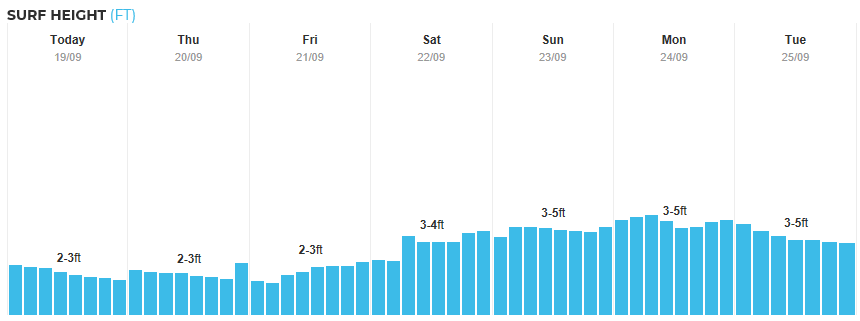
Today we should see a higher surf and the wind coming from the north for a short time.


Source: MagicSeaWeed.com.

The tides will be decent too.

Happy hunting,
Treasureguide@comcast.net


Thursday, October 31, 2019

10/31/19 Report - A Variety of Nice Finds From Brevard and Indian River County. More on Spikes. Bigger Surf Coming.


Written by the TreasureGuide for the exclusive use of treasurebeachesreport.blogspot.com.

Items Found At Radar Site at Melborne Beach by TM
Photo by TM.

I received an email from TM and photos of some of his finds that came from Brevard and Indian River Counties.


I’ve been detecting the south Brevard and north Indian River county beaches for about a year and a half now.

Found many items and try to clean my share of trash up.

Just thought I’d share a few things. 


Also I really enjoy the treasure beaches report.


TM's finds included those in the photo above and the four following photos.  Each is labeled with the location of the find.  Really a nice and varied group, including some really great finds.

Ring Found North of Bonsteel Beach.


Bracelet Recently Found Near Seagrape Beach Access


Clovis Point Found North of Sebastian Inlet.

Congratulations TM. Great finds! Thanks much for sharing. The Clovis point would be somewhere around ten thousand years old. Now that is an old find. From Wikipedia: The Clovis culture is a prehistoric Paleoamerican culture, named for distinct stone tools found in close association with Pleistocene fauna at Blackwater Locality No. 1 near Clovis, New Mexico, in the 1920s and 1930s. It appears around 11,500–11,000 uncalibrated radiocarbon years before present at the end of the last glacial period, and is characterized by the manufacture of "Clovis points" and distinctive bone and ivory tools. Archaeologists' most precise determinations at present suggest this radiocarbon age is equal to roughly 13,200 to 12,900 calendar years ago. Clovis people are considered to be the ancestors of most of the indigenous cultures of the Americas. You might enjoy reading more about the Clovis culture. Here is a good link. https://www.smithsonianmag.com/history/the-clovis-point-and-the-discovery-of-americas-first-culture-3825828/ ---


The past few days I talked a little about Troy's chisel or spike find. At this point, I think the overwhelming consensus is that it is a broken spike. That is my opinion and the opinion of others that I've heard from. If you think about it, I suspect there are hundreds of shipwreck spikes out there for every old chisel. I've discussed some of the reasons for concluding that it is a spike, and posted some of the reader's thoughts that I've received on the subject. I just received an email from Jerry P., who also believes the find is a spike. Jerry also included some photos of those that he has found.
Spikes Found by Jerry P.
Photo by Jerry P.
Notice in particular the broken spike that looks very much like Troy's. I still haven't found the particular examples I was looking for. I wanted to take a close look at the break. I did look at the break on some others. I don't know how good the photos are yet. I haven't uploaded them yet. Also, notice the bent one. I plan on talking more about how they get bent and broken in the future. What do you think about that. I have some ideas, but I'd think it would take a lot of force to break a spike like that. I hope to talk about that more in the future. How do you think spikes get bent or broken? Troy sent me a closer photo of the top of his find.
Find and photo by Troy C.
That gives a better view. Thanks Troy. I was going to upload some photos that I took but found out I have to recharge the camera battery. First the upload utility was giving me trouble, and now the battery runs down. Sheesh. I get back into that topic, maybe tomorrow. One thing I've noticed, especially with broken bronze spikes, is how smooth the break can be. --- I'm just going to tell you about the surf instead of wasting any more time trying to upload the image. Expect a 4 - 6 foot surf on Friday and Saturday. You'll have to look it up yourself. I also asked TM if he could provide any more info on his finds. Happy hunting, Treasureguide@comcast.net

Thursday, October 17, 2019

10/17/19 Report - Two Hoards. Columbus Landing. 17th Century St. Augustine Shrine.


Written by the TreasureGuide for the exclusive use of treasurebeachesreport.blogspot.com.


Ancient Coin Cache Found.
Photo by Denis Glicksman


A HOARD OF EXCEPTIONAL COINS FROM THE END OF THE XVTH CENTURY DISCOVERED IN DIJON

During an archaeological diagnostic in the center of Dijon, near the old abbey of Saint-Bénigne, an Inrap team has brought to light a coin hoard of about thirty gold and silver pieces from the second half of the XVth century, coming from Italy and the Holy Roman Empire states. This hoard, of great numismatic interest, bears the likeness of a catalog of portraits of all the great princes from the end of the Middle Ages.

Here is that link.


---


Depiction of Christopher Columbus Landing.
Source: SpiritDailyBlog.  See link below.

Columbus day, which has traditionally been celebrated in the United States and other countries on-Oct. 12, in today's super-divisive hyper-political world, instead of a day of pride has become an opportunity to hold up and celebrate the uniquely egregious sins of Caucasian Christians.

For Christopher Columbus was not only a devout Catholic, but — like other explorers who would follow in his wake — a missionary. He considered the evangelization of the New World his primary goal...

Here is a link to an article about the religious feelings and motives of Christopher Columbus.
https://spiritdailyblog.com/commentary/hidden-history-columbus-amazing-catholicism

---


.- Bishop Felipe Estévez of St. Augustine announced Friday that the Shrine of Our Lady of La Leche has been elevated as a National Shrine by the US bishops' conference.

The Shrine is located at the Nombre de Dios mission in St. Augustine, founded in 1587. According to the Diocese of St. Augustine, it is America's oldest Marian shrine... 
Here is that link.


https://www.catholicnewsagency.com/news/historic-marian-shrine-in-florida-elevated-to-national-shrine-54052

---

Found Contents of a Bronze Age "Tool Kit."

Bronze Age Europe was a violent place. But only recently have scientists uncovered the scope of the violence, at a 3000-year-old site in northern Germany where thousands of well-armed young men fought with sophisticated weapons in in what appears to be an epic battle. Now, a bagful of bronze artifacts and tools found at the bottom of the river in the middle of the battlefield suggests some of these warriors traveled from hundreds of kilometers away to fight. That suggests northern European societies were organized on such a large scale that leaders could call warriors to distant battlefields, long before modern communication systems and roads.

Here is the link for more about that.

https://www.sciencemag.org/news/2019/10/3000-year-old-toolkit-suggests-skilled-warriors-crossed-europe-fight-epic-battle

Thanks to Douglas for that link.

---


Source: National Hurricane Center.
As you can see from the map, there is a system in the Gulf that is expected to become a cyclone in the next forty-eight hours.

If that one affects us at all, it won't be before several days.

Happy hunting,
TreasureGuide@comcast.net

Sunday, August 11, 2019

8/11/19 Report - Two Finds for ID. One From Treasure Shores and One From the Gulf. Your Help Needed.


Written by the TreasureGuide for the exclusive use of treasurebeachesreport.blogspot.com.

Unidentified Underwater Find.
Find and photo by Glen S.
You could possibly help find a shipwreck if you can identify this find.  As you can see below, it is slightly less than one and a half feet long.

Here is an email I received from Glen s.

I have been searching for a shipwreck over here on the west coast of Florida that L.Frank Hudson gave a general location for in one of his books. Today I was metal detecting in the water offshore and found a strange iron item and some lead sheeting about a foot under the sand. Can anyone help me identify the item? Could this be part of the ship's rigging? I've attached pictures of the items. The iron piece weighs 26.6 pounds. 

Thanks.

Here are more pictures of the item and the small piece of lead sheeting.

Two More Views of the Object Found by Glen S.


Small Piece of Lead Sheeting Found With Other Object.
Find and photos by Glen S.
  Any and all thoughts and opinions on the possible use or identify of the item are appreciated.

Thanks in advance.

---

Small Bronze Pot Found by Jerry S.
Photos by Jerry S.


Here is another find for ID.  Jerry P. found it last summer near the south end of Treasure Shores beach where salvage boats were working just offshore.

Here is a bit of what Jerry said.

If you hunt long enough you will have a jar, cigar box, shoe box or in my case a large rubbermaid tote full of mystery objects... 

...sometimes an object becomes a clue and remembering where you found it is key to finding something valuable. If you don’t know don't throw and remember where you found it. Here is a mystery item from my tote...

There are no markings on it, it’s darn heavy and it’s just under 3 inches around. 


Jerry thought it might be bronze.  And as he said, just under three inches around and heavy.

It looks like maybe a lid was once attached.

He had an idea what he thought it might be, but I want to get your opinions before telling you what Jerry or I think because I want YOUR opinions.

Again, all thoughts and opinions are appreciated.

Thanks in advance.


---

It has been hot, but the water has been fine.  Now the surf is only one foot or less and that is predicted for the next week or so.

There are no new weather systems on the National Hurricane Center map.

Let me know what you think of both of the objects for ID today.

Happy hunting
TreasureGuide@comcast.net

Wednesday, September 19, 2018

9/19/18 Report - Treasure Digging Dog. Ancient Gold Coins Found. Slightly Higher Surf for T. C.


Written by the TreasureGuide for the exclusive use of treasurebeachesreport.blogspot.com.

Ancient Gold Coins Found in Theatre Basement
Source: See FoxNews link below.

Hundreds of Roman gold coins have been unearthed in the basement of an Italian theater.

The coins were found in a stone container during excavations at the site of a former theater in Como, northern Italy, according to the country's Ministry of Cultural Heritage and Activities (MiBAC)…
Here is the link for more about that.


---
3000-year-old Treasure Discovered by Dog.

It was a typical March day under the Orlické Mountains and Mr. Frankota was walking his dog, Monty, along one of the fields. Suddenly Monty began frantically digging and when Mr. Frankota came to have a look at what all the fuss was about, he noticed that bronze, sickle like objects were appearing.

Eventually, 13 of the sickles, as well as two spear points, three axes and a number of bracelets were discovered. All are dated to be over 3000 years old... 


Here is the link about the treasure digging dog.

https://www.radio.cz/en/section/curraffrs/dog-discovers-bronze-age-treasure-in-kostelec

---

Steve M. sent the following comments on Muntz metal.

I read your article( I love your articles!) about Muntz metal sheathing.  Muntz metal is brass which as we know does not last underwater in saltwater at all.  It is an alloy of copper and zinc.  Zinc is very quick to corrode in saltwater, especially near other more noble metals such as copper.  That is why Muntz metal did not stay on the market long, it would dissolve, fairly quickly, where pure copper would last forever.  Bronze is an alloy of copper and tin.  Tin is super stainless and rust/corrosion resistant but fairly soft.  Mixed with copper to make bronze, it is perfect.  Better than stainless steel in corrosion resistance.  Steve M. in Sarasota, FL. ---
Source: nhc.noaa.gov
The Atlantic is pretty quiet again. The surf on the Treasure Coast will be a bit higher though.
Source: magicseaweed.com.
Happy hunting, TreasureGuide@comcast.net

Friday, February 6, 2015

2/6/14 - Most Valuable Artifacts Ever Found! Eye-balled Sports Memorabilia Find. Lots of Wind But Very Little Erosion Found Today.


Written by the TreasureGuide for the exclusive use of treasurebeachesreport.BlogSpot.com.


One Treasure Coast Beach This Afternoon Before Low Tide
We got a good bit of wind the past couple of days - even some small amount of wind damage, yet not much happened to the beaches.  Above you can see a pretty typical Treasure Coast beach this afternoon.  Not very good detecting conditions at all despite the increased surf.  When I was there the water was hitting from the East. 

There was one beach that had about a four foot cut.  It was getting down close to some of the older sand layers in one spot, yet most of the erosion was in only in renourishment sand.  That erosion was caused by a renourishment project and the tons of sand that was dumped just to the north of heavily eroded spot.  As a result of the artificial beach, the wave energy was redirected.  That happens a lot.  You dump sand in one spot and an adjacent area badly erodes. 

To sum it up, despite all the wind we had, beach conditions remain poor.  There are a few eroded areas, but those are mostly caused by recent renourishment projects, and they are generally not where shipwreck items would be uncovered.  It is possible that a very few older items might pop up in rare spots.

I'm not expecting any significant improvement in overall beach detecting conditions anytime soon.

-----

3.25 Inch Limestone Sculpture
Source:wikipedia Gruennel Lioness

What would be the thing you would most like to find?  Would it be gold, platinum or diamonds?  How about this 3.25 inch tall limestone figure? 

Take a look at this little beauty.  It is Guennol Lioness.  It is 5000 years old, and was found near Bagdad.  What do you think it is worth?

It sold at auction in 2007 for $57.2 million dollars.  It is one of the most valuable artfacts ever.

There are two sculptures by famous sculptures that have sold for more. One by Picasso and the other by Giacometti.

The next most valuable artifact of all time is could be Artemis and the Stag, a Hellenistic bronze sculpture that sold in 2007 for $28.6 million.

Artemis is just over 36 inches tall.  It was found in the 1920 during a construction project at a Roman site.

So if you ever wondered what the most valuable artifacts are, I just showed two of the top ten contenders.

You can learn more about those two and eight more of the most valuable artifacts by using the following link.

http://www.theartwolf.com/articles/10-most-expensive-antiquities.htm

That should be a good reminder to keep your eyes open for non-metallic items while metal detecting.  You never know what you might find.

------

One fellow was picking up aluminum cans in Lexingon Creek when he found an interesting piece of sports memorabilia.  It was metallic, but it was eye-balled.  It was coin-like and had the 1955-56 basketball schedule for the University of Kentucky on it. 

Here is the link for more about that.

http://www.wkyt.com/home/headlines/UK_fan_finds_rare_coin_in_Lexington_creek_131027803.html

-----

Too bad all of that wind didn't do more for us.

They are getting ready to dump more sand on South Inlet Park at Fort Pierce.  

They only get a dozen tourists there, and a few fisherman.  They must spend about a million dollars per tourist to dump sand there very year.  I'll be curious to see if this sand is filled mangled aluminum junk like it was the last time.

Happy hunting,
TreasureGuide@Comcast.net

Sunday, June 22, 2014

6/22/14 Report - Land and Sea Treasures: New Finds By The Capitana Crew At The Green Cabin Wreck and Nice Inland Finds.


Written by the TreasureGuide for the exclusive use of treasurebeachesreport.blogspot.com.

Bronze Shipwreck Artifact Found by the Crew of the Capitana Yesterday.
Photo submitted by Captain Johan Martinez.

I started to write up one topic this morning but didn't complete it.  I couldn't get it organized and ready, so I gave up for a while.  I'll get back to that topic some other time.  Maybe tomorrow.

It actually is better that I put that topic off because as I was writing I was coming up with more and more information.  I might have to break it up and present it in two or three different posts.


In the mean time I got some updates from Captain Jonah and the crew of the Capitana who are still finding some super items on the Green Cabin wreck site.

They found this bronze artifact along with some other artifacts yesterday.  Really neat!  Keep it up guys.

Reale Found by the Crew of the Capitana
Photo submitted by Captain Martinez.
Captain Jonah also sent me pictures of a couple of reales they found.  I'll show one of those today and another some other day.  I'll also get into a discussion of the details and identification at some other time.

Really nice detail showing on this reale!

Great job guys.  Thanks for sharing!

Like we said the last time, there is more out there and will be for a long time to come.


On the Treasure Coast beaches we've been having such poor beach detecting conditions, and no sign that that will change much any time soon.

Things can still be found.  I've been surprised by my rate of jewelry finds on the beach lately despite not finding hardly any coins.

Michael E. and William M. have been doing some inland hunting after calling to get permission from land owners.

Finds included vintage buttons, a merc dime, old shot gun shells, wheat cents, and a lead seal.

Michael says he likes the shot gun shells because you can date them with a little research.  I like them too.  They have different graphics and show a good bit of information.

Then Michael did some water hunting and got his 34th and 35th rings of the year.  Very good for anybody but especially for someone that hasn't been detecting a long time!

Variety of Very Nice Inland Finds
Photo submitted by Michael E.


Tungsten Ring Found by Michael
Photo submitted by Michael E.


Thanks for sharing Michael and William.  Nice finds during poor detecting conditions!

With the high price of gold you'll find a lot of rings made of other metals.

\That is all for today.  I'll be back with more some other time.

Happy hunting,
TreasureGuide@comcast.net

Saturday, January 11, 2014

1/11/2014 Report - Bent Coins, Polar Vortex Frees Diamond Ring & Bronze Medal


Written by the TreasureGuide for the exclusive use of treasurebeachesreport.blogspot.com.

Bent Coins.
Here are just a couple of the many bent coins that I've dug from shallow water.  They aren't the best examples, but a couple that I had close at hand.

I've dug quarters that were bent at 90 degree angles.

Whatever happened didn't take real long.  These coins are obviously modern.  You can see that the dime is clad.

I've dug some that had marks that show were the coins were bent by some mechanical contact such as maybe a lawn mower blade, but there are no such marks on these and many others.


The Polar vortex and freezing pipes led to the find of a diamond wedding ring when the trap was removed.  The ring was returned to the previous owners of the house who had since moved.

http://on.aol.com/video/wedding-ring-found-after-pipe-bursts-in-arctic-blast-518080941?hp=1&playlist=127167&icid=maing-grid7%7Cmain5%7Cdl4%7Csec1_lnk3%26pLid%3D428889


Everything, like everybody, has a history.  And most of the things we find, were once lost.  That is part of the fun of detecting. 

Part of it is the surprise of not knowing what, when or where things will be found, but another part of it is the history of the item.  Where did it come from and how did it get there. 

That part is mostly about the past, but part of it is about the future too.  Once the item is found, what does it mean.   Maybe the item tells a story of storms and shipwrecks and lost life, but it also has a place in the future.

When an item is found that is only a beginning.  Then another process of discovery begins.  Can the item be conserved and displayed?  What is its future?   What WILL be its role and what will it say today, tomorrow and well into the future?

Unfortunately nothing lasts forever - especially items that exist in one of the most challenging environments of all -  the beach.

Remember, the beach is composed of stones and shells that have been broken down into tiny pieces.  And the same environment that breaks and grinds stone will over time break down anything else exposed to the waves and forces.

Iron, rusts and corrodes and eventually disappears.  Coins corrode and are ground down.

I've shown in the past how modern clad coins get bent in half.   I don't know exactly how that happens but I suspect that they get buried under tons of  sand, caught in between rocks and get bent.

Items that appear to have remained undamaged have been lucky so far.  But it won't last forever. 

Unlike iron, gold does not corrode.   At least not much.  But gold is not pure.   The vast majority of coins or other items are not 24K.   Most gold items do corrode to some small extent.  Not that it is noticeable most of the time, but gold, being soft, will wear and bend unless it is continually protected.

Items in the high energy zone near the front of the beach are always in danger.  They have no meaningful context, but they are in danger.  They will not remain protected forever, even by tons of sand.  They will be damaged and eventually disappear unless they are retrieved.

The ax head that I showed yesterday was remarkably well preserved for an iron item found in encrustation.  It happens, but more often what you'll find is formless mass or a hole with absolutely none of the original item remaining except for a void where the item once was.  I am glad that it didn't dissolve and disappear.


Bronze Medal Find.
This seems a little strange to me.  This bronze medal in a coin pendant mounting doesn't make sense to me.  On this side is the Gemini astrology sign, and on the other side it is a is a Bicentennial design showing 1776 - 1976.  I don't really get the mixture of zodiac and history.  Maybe there is some connection, but I don't know what it is.


On the Treasure Coast the surf is down to around three feet now, and it will remain around there for a while.

The tides have flattened out a little.

The wind is and will be from the south a lot for a few days.

It doesn't look like beach detecting conditions will be great for a while.


Happy hunting,
TreasureGuide@comcast.net

Friday, June 15, 2012

6/15/12 Report - Bronze Strap and Ring Identified & And Key to Good Finds


Written by the TreasureGuide for the exclusive use of treasurebeachesreport.blogspot.com.


Good news!  The readers of this blog came through again.   The amount of knowledge displayed by my readers is really impressive. 

You might not know who reads this blog, but you might be surprised.  It is not at all how the archaeologists or media tend to characterize detectorists.  When you see a detectorist on TV, he usually is portrayed comically.   Nothing wrong with that other than the image being inaccurate and  misleading.  You can tell from those fleeting images that the media don't know much about detecting or detectorists.  For one thing, the guy is usually swinging his detector a foot or so in the air like he is swatting flies.  That might not be ignorance on he part of the media so much as the fact that if you are showing a detectorist in the background, you might not notice what he is doing if he actually does it correctly.  Artistic license, I guess.

Anyhow, the reality of the detecting community is far different than how it is portrayed.  The readers of this blog who I hear from include physicians, attorneys, architects, historians, authors and all kinds of intelligent informed people.

Yeterday I posted an object with the hope of getting some information about it.  Well, in less than 24 hours from the time the object was posted,  I heard from two people who have worked in the boating industry and knew exactly what the object is.


Bronze Strap & Ring.  See 6/14 Post For Larger Photo
Here is part of the email I received from John L.

The bronze (definitely not brass) strap, (not cleat) and ring in today's post is a product of the Wilcox Crittenden company. That is undoubtedly their logo.

Here is a link to a modern cleat made by them currently listed on Ebay in which you can clearly see the same logo.

http://www.ebay.com/itm/5-WILCOX-CRITTENDEN-CHROME-OVER-BRASS-BRONZE-SHIP-BOAT-DOCK-CLEAT-CHOCK-0093-/380441936191?pt=LH_DefaultDomain_0&hash=item58941b413f

Here is a link detailing the history of the company, originally established in 1847, which became Wilcox Crittenden in 1869. 

http://library.mysticseaport.org/manuscripts/coll/coll231.cfm


Thus, the item could be as old as 140+years old.

Thanks John!

Then I received an email from Eric L. with the following information.

The makers mark is a Wilcox Crittenden mark. It should be cast bronze. This company made hardware for the marine industry from the 1800's to modern day. I worked as a shipwright for many years and their stuff is on everything from dingies to commercial vessels...

This could have been a ring for a tie down point or possibly attaching a small snatch block. Their old hardware catalogs can still be found with a little searching online.

Thanks Eric!

As I mentioned a few days ago, these are the types of stories I really like.   It started with the research that James F. conducted that led him to this find, but the research wasn't over when he dug up the object.  Then there was the research to identify the find, and I don't doubt that there will be more finds and more to learn.

If you are tired of hunting the same old over-hunted places and want to find some interesting old things, take a few tips from James F. whose research led him to this find.  This wasn't something that James just happened to run into.  His research led him to believe that he might find old steamboat related objects at the location.

James said, I always find it strange I never see anyone else with a metal detector where I hunt...    I always do a little research before targeting an area to hunt...

He does a lot of library research with what he calls "real" books.  He says it only took him about 30 minutes in the library to find another promising 19th century site to hunt.

You might want to try the library too. 


No change in beach detecting conditions.   I won't bother to comment more on that today.


Happy hunting,
Treasureguide@comcast.net


Thursday, March 1, 2012

3/1/12 Report - Helmet Dredged Up By Commercial Dredger, Whatzit & More


Written by the TreasureGuide@comcast.net for the exclusive use of treasurebeachesreport.blogspot.com.

2600 Year Old Bronze Greek Helmet Brought Up by Commercial Dredging In Harbor.

Here is a link to the article about that.

http://www.freerepublic.com/focus/f-chat/2852306/posts

If it was dug up by a detectorist would it have been a crime?

Take a look at how the Anglo-Saxon Hoard was handled when it was discovered by a detectorist in England. It provides a good example of how to handle these things and provides some good lessons.

The Hoard was the second most popular touring exhibition ever at the National Geographic Museum in Washington DC. More than 1,000 visitors paid eight dollars each to the Anglo-Saxon treasure. Again, it was discovered by a detectorist who was fairly compensated.

Here is a link to an article about that.

http://www.msnbc.msn.com/id/33004687/ns/technology_and_science-science/t/largest-hoard-anglo-saxon-treasure-found/

People often ask me if you can find treasure in dredged sand. The helmet shown above is one example from Israel. If an entire helmet can be dredged up, certainly other smaller items can too.

I do know of cobs that were found in freshly pumped beach renourishment sand in the past.

As I've told people that have asked about that, you'll need patience looking through dredged sand because you'll generally find a lot of mangled aluminum and rusty iron.

I asked a question the other day that got overshadowed by the recent legislative uproar. I asked detectorists to send in stories of how people responded when a lost item was returned to them. I'm sure there are many good stories about that out there and I would like to post a few.

I've received offers of a few bucks, drinks and dinner. Sometimes though, people respond with a puzzling indifference, or even hostility.

Anyhow, please send in your best story about what someone did when you returned a lost item.

I've found keys that shut down a hole business for a day until they were located.

The world needs to know about that side of detecting to. All they hear about is grave robbers and looters, which, of course, has nothing to do with metal detecting. Metal detectors are sometimes used by criminals (as are shovels), but also sometimes by law enforcement. The crime is not metal detecting.

Mystery Object Found With Metal Detector.

I've posted this one before, but don't feel like I have it solved. It is about three inches across. There are similar ones that are smaller, but nearly the same shape with the same pattern of holes.

It was found where battles took place in the last half of the 19th Century and early part of the 20th Century, along with musket balls and musket parts. I assume it is from the same time period but could be earlier or later.

Someone thought it might be a gorget and that certainly is possible, but I'm not convinced yet. I'm still hoping someone might come up with the answer.

Let me know what you think.


I've been deluged by email concerning the proposed SB868. Please forgive me, but I can't personally respond to all of the communications that I've received the past two days.

There is a lot to digest, and I'll continue to comment on the legislative issue from time to time.

The detecting community certainly did mobilize and make it's voice heard. Citizens need to do that occasionally if for no other reason than to remind law makers that they are out there and have concerns.

There is one thing on the SB868 issue that I should address today. They claim that the reason for the whole problem is that an early draft of the bill mistakenly included the words "all lands." That typo, or whatever it was, has been removed from the bill, and they say that the new bill provides for only a very small extension to the land being protected.

As some have said, it is good that attention was brought to the error before it passed into law. Hmmmmmm.

Don't let down your vigilance. You never know when you might find an error. And as we've learned in the past year or so, even some of our Federal representatives don't read the bills they vote on.

I'll get back to some of this in the future. There were some other thingc in the response that I read that are red flags to me.

For today, I'm about out of time.

Don't miss this though!

Seas are decreasing through Saturday. Sunday they'll start increasing again, reaching up to seven feet or more by Wednesday if the surf web sites are correct.

That is getting high enough to give a good chance of significant improvement in beach conditions.


Happy hunting,
TreasureGuide@comcast.net

Thursday, August 18, 2011

8/18/11 Report - 1500s Gold Bar, Bronze Coin Finds, and $5 Indian


Gold Bar for Sale on EBay.

This 14.74 troy ounce lower kt. gold bar is for sale on eBay for just under $20,000. Interesting! To me it seems unusual in a variety of ways. It is listed as being from a shipwreck, but the age and ship is unknown. It is speculated to be from the 1500s. That would be a relatively rare date for a North American shipwreck, although there are some.

There is no COA included.

I'd like to hear from others that may have some thoughts on this bar.


3,422 ancient bronze coins dated to between 264 to 241 BC were accidentally found in 68 feet of water off the island of Pantelleria.

Here is the link to more of that story.

http://news.discovery.com/history/punic-coins-retrieved-110812.html


Gold hit $1825 today as India and China keep buying.


One gold coin that I really like the look of is the Indian Five Dollar gold coin, which is close to a quarter of an ounce. Of course the value of these coins varies depending upon year, mint and condition.

The New Orleans mint, for example, produced just over 34,000 coins in 1909 and since not many survived you might get over $1800 for a coin like that.

The following link is to a nice article that shows what dealers would pay for an Indian five dollar gold coin of various dates, mints and conditions.

http://www.coinstudy.com/indian-five-dollar-gold-coin-value.html


There is a new survey on the main page that has already started.


Treasure Coast Beach Forecast and Conditions.

The tropical disturbance down below Cuba is developing and has an 80% chance of becoming a cyclone. It will probably not affect us on the Treasure Coast.

There is another tropical wave over by Africa that is developing but it is too early to guess what it might do.

The wind is from the south and the swell from the east. The sea is calm, although a touch rougher than last week. That will continue for a few days and then next week it will get just a little rougher again, if the predictions are correct. It will still be less than three feet, again, if the predictions are correct.

That means no change in conditions again.

Happy hunting,
TreasureGuide@comcast.net