Showing posts with label Coronavirus. Show all posts

Tuesday, April 7, 2020

4/7/20 Report - Beaches Closed But Some Have Access. In The Field: Points. Calusa Fish Farming. Gold and Tides Up.


Written by the TreasureGuide for the exclusive use of treasurebeachesreport.blogspot.com.
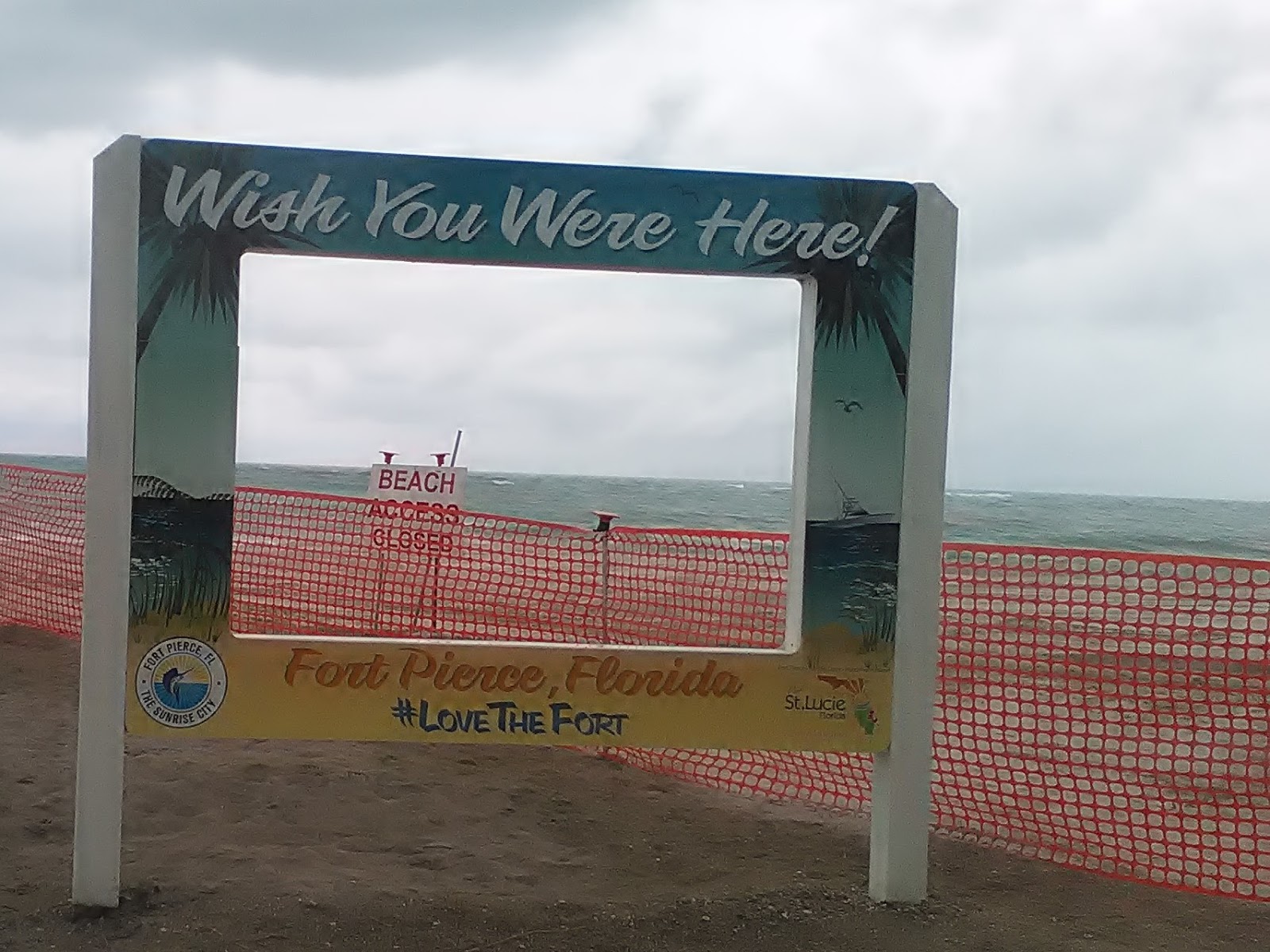
Beautiful View of Fort Pierce Beach.
As you've seen the past few days, I featured some items that are not metal detector finds, but are still great finds.  In fact they are better than most metal detector finds if you really appreciate old items.

With the beaches closed, some people are hunting elsewhere, even if it is their own yard.  Below is the plowed field where points and other items I recently posted were found.

Newly Plowed Field With Plenty of Space for Social Distancing.
Photo by JamminJack.

And here is another find by JamminJack's buddy.


Another Nice Arrowhead Find.
Photo sumbitted by JamminJack

---

Source: See FloridaMuseum link below.

The mighty Calusa ruled South Florida for centuries, wielding military power, trading and collecting tribute along routes that sprawled hundreds of miles, creating shell islands, erecting enormous buildings and dredging canals wider than some highways. Unlike the Aztecs, Maya and Inca, who built their empires with the help of agriculture, the Calusa kingdom was founded on fishing.
But like other expansive cultures, the Calusa would have needed a surplus of food to underwrite their large-scale construction projects. This presented an archaeological puzzle: How could this coastal kingdom keep fish from spoiling in the subtropics?


A new study points to massive structures known as watercourts as the answer. Built on a foundation of oyster shells, these roughly rectangular enclosures walled off portions of estuary and likely served as short-term holding pens for fish before they were eaten, smoked or dried. The largest of these structures is about 36,000 square feet – more than seven times bigger than an NBA basketball court – with a berm of shell and sediment about 3 feet high. Engineering the courts required an intimate understanding of daily and seasonal tides, hydrology and the biology of various species of fish, researchers said...

For more about that see https://www.floridamuseum.ufl.edu/science/watercourts-stored-live-fish-fueling-floridas-calusa/


---

If you remember the post I did not too long ago about what was closed and not closed, some people will still have access to the beaches even if they are closed to the general public.  Here is one sentence from that previous post.


People with private access, such as hotel guests, HOA and condominium residents and community association members can visit the beaches.

I do not know why a person who owns property next to the beach should  have access to a public beach when the general public does not.   I don't think they should.  But there will always be those that have access to the beaches when the general public does not, and it isn't limited to those mentioned above.  Park rangers detect where others are not allowed to.  Parks employees, police and wildlife officers, security guards,  utility workers and construction workers, and others will have access even when the beaches are "closed."


Local authorities will close park accesses, even if they do not have any real jurisdiction over the beaches.  The state owns the beaches from the high tide line down.  The problem is that unless you swim or arrive by boat, you have to cross land to get to the beach.  And as we know private homeowners will not permit that and local agencies will not always permit it.

By the way, the state also claims to the other waterways and the beaches or banks up to the mean high tide line.

The public pays for the beaches, most especially those beaches that are constantly renourished using public funds, yet hotels and beach clubs etc. often act as if they own them.

Right now the beaches are closed to fight the coronavirus.  Regardless of the legalities, or even the common sense of it all, people are complying because it seems like the right thing to do.

Still, as always, there will be some that will visit the beaches and get in a little detecting.  As I've said before, there is always a way.  It might not be easy, convenient, or even something you want to do, but there is a way if you really want to.

---


Gold is now over $1700 per oz., well above levels of only a month ago.  Gold prices have been very volatile, as has the stock market.

---

Funny how they are all claiming with certainty that the mitigation efforts are working, while at the same time claiming they can't say anything about the effectiveness of a drug being used widely for treatment even though it has been studied rather well in other countries and is currently being studied in robust scientific studies in this country.   How can you say the mitigation efforts worked without the same kind of scientific evidence they require for other things, including drugs.  Yes we all want to believe that our extreme efforts payed off, but maybe the pandemic naturally peaked out or slackened off for any of a variety of reasons.

---

The high tides are now very high.  We are near a full moon.  As you probably know, Easter occurs on the first Sunday after the first full moon after the spring equinox.

The surf is decreasing, today being around 4 - 6 feet.

Happy searching,
Treasureguide@comcast.net

Sunday, April 5, 2020

4/5/20 Report - Pre-Columbian Indigenous Metallurgy and Tumbaga. An Old Find. FDOH Dashboard.


Written by the TreasureGuide for the exclusive use of treasurebeachesreport.blogspot.com.

Source: See Penn.Museum link below.

AD 1519, central Panama: the conquistadors were angry. They had promised the Spanish court a mass of gold in return for investing in their risky transatlantic voyage. But having failed to find the legendary gold mines of the region, they had resorted to looting the treasuries of the local chiefs and the grave goods of native cemeteries. Then came the shock. As the soldiers began to melt down the heaps of ornaments they had gathered up, they discovered that scarcely anything was made of pure gold. Rather, the metal was debased with large amounts of copper....

Here is the link for the rest of that article, Confounding the Conquistadors: Tumbaga's Spurious Luster.


---

You might also like the article entitled Pueblo Indians Adaptation of Spanish Metallurgy, which discusses a 17th century site.  Here is the link.


Here is one illustration from that article.


It reminds me  of some of the small pieces that I was picking up when cobs were found earlier this year.  Some of those were modern, but not all of them.

---

The Aztecs certainly had lots of gold, but nowhere near as much as the conquistadors believed. It turned out that all that glittered was not necessarily gold - much of it was an alloy called tumbaga.

The metallurgical skills of the pre-Columbian Indians went unrecognized for centuries prior to the pioneering work of Dora M. K. de Grinberg and others in the past fifty years or so. De Grinberg, an Argentinian archeologist working in Mexico, doggedly followed tenuous leads to uncover ample evidence that the ancient Indian metalworkers were far more knowledgeable than had previously been supposed...
Here is the link for that article.

https://www.mexconnect.com/articles/1238-did-you-know-lots-of-real-aztec-gold-was-only-tumbaga

---


Archaic Period Point Recently Found in Plowed Florida Field.
Find and photo by JamminJack.

A couple days ago I posted a photo of an axe or tool and had it mislabeled as an Archaic point.  I went back and made that correction in the old post.  This is actually the Archaic point that was found the same day as the other item.  It measures about two inches and was among the finds that Jack and his buddy found in a newly plowed field.

Jack said, I did some research and found there was an outpost and old post office (1800s) nearby... 

Thanks Jack. 

---

The Georgia governor despite a shelter-at-home order, opened the Georgia beaches, which like almost everything these days, was a very controversial move.

Here is the link.

https://www.foxnews.com/us/georgia-reopens-beaches-coronavirus-shelter-in-place-order

---

Here are today's Florida numbers from the Florida Dept. of Health dashboard.


You can use this link to access the interactive dashboard.

https://experience.arcgis.com/experience/96dd742462124fa0b38ddedb9b25e429

As you know the models depend upon data and assumptions, and the data, in my opinion is not very good.  There does not appear to be an overall highly consistent system and many states have not been reporting at all.

If you take the numbers from Germany, they have about a 1% coronavirus death rate, while the mortality rate for Spain and France is about seven times that.  That is a huge difference, which I believe must be due to measurement or reporting differences rather than population differences or differences in treatment.

Anyhow, you can keep up with the Florida statistics by using the FDOH dashboard.

You certainly can't say that coronavirus is irrelevant to metal detecting while the beaches are closed and we are under a variety of orders and advisements.

---


The Treasure Coast surf today is 3 - 5 feet and tomorrow is supposed to be 5 - 8 feet.

Be safe, be wise,
TreasureGuide@comcast.net

Wednesday, April 1, 2020

4/1/20 The Case For Opening Beaches, Parks and Outdoor Recreation Areas.


The Case for Opening Beaches, Parks, and Outdoor Recreation Areas.


The United States Declaration of Independence lists "Life, Liberty and the pursuit of Happiness" as three "unalienable rights."  Unalienable means not to be given or taken away.

Sometimes people don't do what is good for themselves or others, but the assumption seems to be that those in government can make better decisions for the entire population than individual citizens can make for themselves.  Prove it.  Where are the double-blind studies that prove those decisions safe and effective?  Are the citizens too dumb or irresponsible to exercise safe behavior appropriate to their own situation?

Not only do officials presume to know better and care more than the citizenry, but they often exclude themselves from the restrictions they impose.  In their "essential" functions they exercise their own judgement and remain immune to the penalties or forced compliance exercised upon the general population.

In the case of Coronavirus, is it safer, or even possible, for a family to remain cramped together 24 hours a day in a single dwelling?  Would not total confinement in close quarters mean that any one of them having other contacts be in danger of infecting the entire household, therefore leading to multiple contacts with healthcare workers and others.

Would not an automobile or outdoor setting actually provide or allow more effective isolation and social distancing while reducing stress and possibly adding the psychological and health benefits of exercise and fresh air?

People are capable of self-distancing.  They are wearing masks and staying away from others.  It is easier in open spaces.

Can't we see that packing people in close proximity is the worst thing you can do?  Compare the disaster in New York with Wyoming, or even Los Angeles, which has a very large population, but one that is much more spread out.

There is always risk.  Nearly 70,000 people die from drug overdose every year.  Nearly 40,000 people die from car accidents, while over 4.4 million are injured by car accidents.  The flu just two years ago was killing 4,000 a week for a period of time.  Are people willing to accept risky behavior?  Do we for some reason more easily accept some causes of injury or death?  The obvious answer is yes. There is a balance to be reached.  Some risk is acceptable.   Some risk is beneficial.

The elderly might be more at risk, but they've lived through World Wars and epidemics without modern medicine and survived.  The elderly living do not need anyone to tell them how to survive.  They have done it.

From their towers, the vision of researchers is as skewed as their data and models.  Their advise is valuable but it should not be taken as the whole wisdom of mankind.  If we are to maintain our form of government, our citizens must be thought intelligent and responsible enough to make decisions for themselves.

I am not minimizing the dangers of coronavirus.  It is dangerous.  It may be unprecedented in many ways, and adequate precautions need to be taken.  However one thing that must be considered is the risk of depriving the citizenry of their self-dignity and their right to life, liberty and pursuit of happiness.

Signed,
The TreasureGuide

Feel free to share.

Sunday, March 29, 2020

3/29/20 Report - Beach, Sand and Water Movemnts. Treasures in Books. Coronavirus Migrations.


Written by the TreasureGuide for the exclusive use of treasurebeachesreport.blogspot.com.

I've been thinking about presenting this topic for a long time, but it is difficult to present.  There are so many variables and it is so complex that it is hard to illustrate and explain.  Everything I am going to present is simplified, but that is the way it has to be.

It does NOT apply to steep areas or areas that the waves are breaking on.  It applies mostly to the mid and back beach areas that are only gently sloped.

If you talk about coins or things sinking at the beach, one way to visualize it is like objects sinking in water.  In other words, gravity would pull them down to a lower level without anything else happening.  That is not how it happens in sand.

You can set a coin or ring on the sand and it is not going anywhere unless the sand is agitated.  Try it for yourself.  It doesn't matter how long the object sits on the sand, it isn't going anywhere unless you stir things up.

Illustration A, which shows three objects on the beach.  They are going to sit there until the sand moves.  Assume the objects all have the same shape and size and density and the force of the water is enough to move the sand but not the objects.   If six inches of sand is removed from that area of the beach, the objects will then be down about six inches and on the new surface (NS), as shown in illustration B.

They will stay there on the new surface until more sand is moved from under them (again the assumption is that the water force is enough to move the sand but not the objects).

If more sand is moved while the force of the water is not enough to move the objects, the objects will drop down some more.  Remember, I'm oversimplifying here.  However if the sand returns (while the water force is still strong enough to move the sand but not the objects, the objects will get covered.  If six inches of sand moves, but this time in the opposite direction, the objects will be under about six inches of sand.

This coming and going of sand can happen many times.  If the amount of force is only great enough to move the sand, we will have some idea how deep the objects that started near the original surface will be.  If additional layers of sand are moved (without the objects being moved horizontally) the objects will find the lowest layer where the sand had vacated.  If, for example, three times six inches of sand was removed without any sand refilling, the objects will be down about 18 inches.  In actuality that would be unusual.   More commonly you would see sand eroding and then refilling to some extent in between erosion events.

My observations of local beaches seems to show that a foot or two is really about as much as you'll usually see, and that amount can put you into productive sand, and likewise cover it up when the flow of sand reverses.

More than a 100 times to 1 some amount of sand will be left covering the newly settled objects.  Only when a slight wash of water, most often during a descending tide, uncovers the items will the items be exposed and laying right on the surface.

I haven't even addressed when the water force is strong enough to move the objects too.  In that case, the objects, either a few or all of them will be moved some distance with the sand, but usually not as far as the sand.  And if the objects have different densities, sizes or shapes, they will also separate.

Another complicating factor is the fact that the water will be usually coming in and then reversing and going back out over the same area.  That means that in those cases the sand and any other objects can be moved in both directions.  The relative force of the incoming and outgoing water will determine which objects are moved how much, and the important thing - the net movement.  An easily moved object will can move a large distance in both directions, but one direction more than another.  Sometimes other factors come into play, such as the slope or other obstacles.

Objects that move less easily will remain closer to their original spot.  But there are also times such as when you have a good angle that the water comes in and washes out at more of an arc, which means a steady movement either south or north will be observed rather than only the back and forth of the up and down hill movement.

Back to the simple case in which we only consider a single sand moving wash of water.  The main point is that less easily moved objects fall into lowest layer and will tend to remain there, periodically being uncovered a little and then covered more deeply again.  They'll mostly stay at the same level until the sand gets moved and they reach a new lower level.  That might sound like sinking, but it is not sinking into a stable layer of sand.

When you can identify an old layer of sand that has been exposed, it likely has been relatively unmoved for a long time.  It will take an unusual event for it to be washed out - yet it does happened.  Usually when such a layer is near the surface it will get covered fairly quickly again and then most future movements of sand will be the coming and going of the one or two feet above that, but not much more.

If the objects are in deep layers that haven't been exposed for long periods of time, they will probably remain there for long periods of time.  It will take an unusual event to expose once again those deep layers.  And if items get down to bedrock and caught in crevices or whatever, they will stay there until some very dramatic event occurs or somebody removes them.  It will take a very unusual event, probably a sequence of events, to dislodge them naturally.

I started out trying to be specific, but couldn't cover much that way, so I got more general.  Like I said at the beginning, there are a lot of variables and it isn't simple.

---

Carpintero was working as an intern at the Z.D. Ramsdell Civil War Home Museum in Ceredo, West Virginia, when she discovered the letter tucked in a book. The letter, dated June 27, 1862, was written by then Lieutenant McKinley of the 23rd Ohio Infantry to Ramsdell. Carpintero found the letter Jan. 7 while researching another artifact in the museum and said her internship supervisor was just as surprised by her finding the letter as she was.

Here is the link.


I've written before about the surprises you can find in books.  I once wrote an article about that for a treasure magazine.

I have many old collectible books (over a hundred years old) that have never been read.   How can I tell?  The pages have never been separated.  They were never trimmed.

Old books are one of my favorite treasures, but unlike back forty or fifty years ago, the collectible book market is not good except for the most desired books.

---

Population migrations are interesting and often result in good places to detect.  Ghost towns are one good example.

Here is a link to an article about the coronavirus migration.

https://www.msn.com/en-us/news/us/the-great-american-migration-of-2020-on-the-move-to-escape-the-coronavirus/ar-BB11QAma?ocid=spartandhp

A few days ago I mentioned that people are escaping the high-risk New York area that has around fifty percent of the nations confirmed cases.  Instead of self-isolating that are spreading the risk.  There was some talk of stopping that, but it was those with means that were doing it, so it wasn't stopped.

Some local areas did take measures to stop it even if the governors didn't want to.

...From beaches and resort towns to mountain cabins to rural family homesteads, places far from densely packed cities are drawing people eager to escape from infection hotspots. But virus fugitives often are running into fierce opposition on their routes, including Florida’s effort to block New Yorkers from joining their relatives in the Sunshine State, a police checkpoint keeping outsiders from entering the Florida Keys, and several coastal islands closing bridges to try to keep the coronavirus at bay... 

...As the threat of the virus intensified last week, Danette Denlinger Brown, 54, hoped to relocate from Williamsburg, Va., to North Carolina's Outer Banks, where she and her husband own a second home. But as she prepared to leave, she learned that North Carolina police had blocked the Wright Brothers Memorial Bridge connecting the mainland to the barrier island. Only year-round residents could cross, a restriction county officials said was necessary to stop migrating families from overwhelming the area’s only hospital, a 20-bed facility...

They tell those who are moving to self-isolate for fourteen days, but who takes with them two weeks of supplies when they travel.  It's a farce.  Cuomo is happy to export his problem to another state, along the needs and statistics that go with them.

As per the TV news, there are so many private jets from New York now at the Palm Beach airport that there is no more parking space.

The blue state elites are now escaping to the culturally backward blue-collar red states for refuge.  Actually those who could always did.

---

The surf will increase to 3 - 5 feet in a few days.


Act responsibly not selfishly.  Think of others as much as yourself.
TreasureGuide@comcast.net

Friday, March 20, 2020

3/20/20 Report - More Experiences Cleaning Found Silver Cobs. Sneezing Into The Infosphere. More Beaches Closed.


Written by the TreasureGuide for the exclusive use of treasurebeachesreport.blogspot.com.

Eight Reale Found About a Year Ago.
Find and photo by Terry S.

One of the main points I want to make today is that all encrustation is not the same.

Another thing I want to mention before I really get started is that Bill P's method of cleaning silver coins first appeared in this blog about ten years ago.  It somehow got deleted and so I was glad he wrote it up again for posting this year.

I have used Muriatic acid for cleaning coins for I'd guess at least thirty years.  The first instance I recall, I ruined an upholstered dining room chair, which is what made it so memorable, I guess.  Although Muriatic acid (hydrochloric acid) will ruin things like that, I have never done damage to a silver coin or medallion using that acid.  Bill assured me it was safe on silver before I was sure of that.  It has proven out like Bill said, but you have to make sure the object is silver, because other metals will be affected differently.  For example, Muriatic acid will eat away at the surface of a bronze item, but my experience has proven Bill right and I have left silver items in Muriatic acid for days with no bad result.  However, just to make absolutely sure nothing bad is happening, I still monitor progress.  It is possible, for example, to have an object made of some other metal or alloy and not know it.

Terry took this encrusted eight-reale that had been sitting around for a year of so and "dipped" the coin in a 50/50 solution of Muriatic acid, followed by a water rinse and then used a baking soda paste.  Below are the results.

Same Eight-Reale Shown Above But After Cleaning.
Photos by Terry S. 

With a quick dip producing such good results, Terry was ready to try the acid treatment on his more recent find.

Terry said, Here is the early 1500’s coin after we dipped in the muriatic acid. When we put the first coin in the solution it bubbled like mad and the solution even changed color. When we put this coin in there was very little action and very few bubbles. I even tried the saliva and tin foil and didn’t see much improvement and finally resorted to a baking soda paste and a tooth brush with some results but no where near the results we got with the 8 reale.

Some more of the encrustation came off but no where near what needs to be removed...

A Recent Find Uncleaned.
Photo by Terry S.

Some coins will require a longer immersion than others.  Many, if not most, will require more than a dip.  I've had some that required days.  It depends upon the type and amount of encrustation.

I've also had coins that were not affected at all by immersion in Muriatic acid.  They had a dense clay crust that the acid would not penetrate.  But that is unusual.  When the crust was broken, it fell off nicely and showed the impression of the features of the coin as if the crust had been a plaster cast.  To repeat the point I started with, all encrustations are not the same.

I personally feel very confident about immersing coins known to be silver in Muriatic acid for long periods, but just to be sure I didn't make some kind of mistake or something, I still check the progress occasionally.

The coin shown immediately above would probably benefit from a longer soaking.  Assuming the coin is really silver, I'd be more concerned about a toothbrush than the acid.

---

Just to give credit where it is due, Bill P. is the one that wrote the detailed instructions I posted for using Muriatic acid to clean silver coins.  I originally posted those instructions about ten years ago but lost the post, so republished the instructions again in this blog not long ago.   When I was still occasionally using other methods, including electrolysis, Bill encouraged me to use Muriatic acid instead of electrolysis.  After years of additional experience, I can say Bill was right all along and deserves much credit.

Thanks Bill!

---

Social media sneezes words, images and ideas into the infosphere.  Some catch on and get retransmitted and become part of the common vernacular.  Some are used only in smaller specialized communities.

I've always been interested in psycholinguistics and trends in language patterns and usage.  I've mentioned my distaste for ambiguous over-used terms such as "existential threat," for example.

I remember using the equivalent of what we now call email and forums back in the late 1970s, when I was working for a company that had a very advanced international computer network.  I remember  thinking about conducting studies on how computer networks affect how people communicate.  Unfortunately I didn't do those studies.

Since I've been doing this blog I've seen the language used by the metal detecting community evolve.  It is natural for language patterns to evolve, but I believe this blog has played a significant roll in that evolution.

I remember when I was interviewed by a reporter from CNN and used the word detectorist.  She stopped and said, "Did I hear you use the term "detectorist.""  At that time the word was not as commonly used as it is today, and I believe some of that has to do with this blog.

As I recall, most people used the word "real" instead of "reale."  I thought "real" could be confusing, and I also thought the Spanish word seemed more authentic, so I always wrote the word with the final e.  It seems that spelling is now much more common than it was ten or twelve years ago.

I also never saw terms such as "coin line" used in the earlier metal detecting literature.  It certainly was not defined in the detailed way that I defined it. I've tried to find that term used in the detecting literature before I defined it in this blog and have not found any earlier instances.

Even if I could not claim that this blog has introduced new terms and ideas, I can definitely say that it has advanced the discussion in numerous ways.

---

The Washington Post is yelling "fire" in a crowded theatre and loving it!

If you listen to the media reports - and it's hard not to - it is beginning to sound more like an unbelievable horror movie.  A recent Washington Post story, Coronavirus Will Radically Alter the U.S., describes an overwhelmed healthcare system and 1.1 million American deaths.  No matter what you think of the Post, the story stokes fear while the subtle rewording in the headline suggests a thinly veiled satisfaction that President O'Bama's promise to fundamentally transform America will finally be ushered in by a catastrophe too good to waste.

---

Every thing seems new to people who haven't seen anything like it before, which is why studying history adds important context.

The Spanish Flu (January 1918 – December 1920) was an unusually deadly influenza pandemic, the first of the two pandemics involving H1N1 influenza virus with the second being the swine flu of 2009.  The Spanish flu infected 500 million people around the world, or about 27% of the world population of between 1.8 and 1.9 billion. The death toll is estimated to have been anywhere from 17 million to 50 million, and possibly as high as 100 million, making it one of the deadliest epidemics in human history. Historical and epidemiologic data are inadequate to identify with certainty the pandemic's geographic origin.

The world was very different then.  A much larger part of the population lived in rural areas, and the medical profession was much less advanced.  My grandparents survived that one.  They mostly took whiskey and sugar, and put a sign in their window or on their door saying they were quarantined.

Then the swine flu, 2009 - 2010, killed nearly 12,500 in the U.S., but we heard almost nothing about it compared to Coronavirus.

---

Many beaches have been closed.  Unfortunately I can't provide an updated list, but  I heard more were closed last night.

This might be a good time to explore new areas, do some testing or research finds.

Be blessed,
TreasureGuide@comcast.net

Tuesday, March 17, 2020

3/17/20 Report - Scrap Silver and Reworked Metals and Other Items At McLarty. Two Mystery Items. Palm Beach Beaches.


Written by the TreasureGuide for the exclusive use of treasurebeachesreport.blogspot.com.

McLarty Museum Display
Submitted by JamminJack

I received these photos from JamminJack a week or two ago.  I had a lot of news to cover, so held these for a while.  Below is a closer look at some of the display items.


Reworked Silver and Gold Items
Photo by JamminJack.


Some of the Leftovers.
Photo by JamminJack.

Not long ago I showed you some small melted bits of silver found on the beach.  They looked a lot like some pieces found at the Winter Beach camp.


Nice Four-Reale
Photo by JamminJack.

It would be a good education for any detectorist to visit the museum to study the items on display.

Thanks for the photos Jack.

---

There are a lot of opinions on the glass-looking mystery items that I posted not too long ago.

Here are the ideas that I've received.

Decorative glass for flower vases and beach weddings.
Shattered safety glass.
Fluorite crystals.
Meth crystals.  TM says it is definitely not that.

Now here is what Bill G. said.

Regarding the glass pellets:

I helped start a fire table company (Firetainment) and those pieces of glass look exactly like what we put in our burner pans. Here is a link to some on Amazon.


https://www.amazon.com/s?k=fire+pit+glass&ref=is_s

Thanks Bill.  Looks like we're not going to settle this one, but maybe the reader ideas gave the finder enough to narrow it down.

---

Here is another mystery find - this one from John B.  John said

Here’s a strange looking find… I found this a week ago on the beach near Vero

I thought it was lead, but i see silver in places on it.


Mystery Find.
Photo and find by John B.

To me it looks like Santaria Yamana items, which I used to find a lot in South Florida.

Here is a link to an old post I did on that.


---

Jerry P. sent the following.

I thought you and your PB County readers would like to know about Mid-Town Beach’s status. I decided to go there for some wet-sand and surf detecting this morning since I had limited time and it’s close for me. I was quite surprised when I got there. There is a Major Renourishing project going on using pumped in sand from offshore. I had not heard a word about it happening. Looks to me like they are close to completing the work and still have lifeguards in the stands as well as the beach open to the public. Even though there is heavy equipment, dredge pipes etc. still being moved about on the beach, there was a good number of folks enjoying the Sun and water. Needless to say, detecting where I like to search was very lean. I also learned when I got home, that starting tomorrow (3/17) all Palm Beach Island beaches will be closed due to restrictions from the Covid-19 virus. Although they are saying that the PB County beaches will remain open to the public for now.

Thanks Jerry.

---


If you are worrying that Coronavirus in the U. S. will spread like it did in Italy, you might be interested to know that northern Italy has a lot of sweat shops in which a very large Chinese population works, many of which come from an area not too far from Wuhan.

It might also help to put things in perspective if you consider that the N1H1 virus killed around 12,000 people in the U. S. in one year, 2009 - 2010.  So the Coronavirus has a long way to go to reach those numbers.

---

Happy hunting,
Treasureguide@comcast.net