Written by the TreasureGuide for the exclusive use of treasurebeachesreport.blogspot.com.
 |
Holed 1858 Flying Eagle Cent.
Photo by William K.
|
William K. sent this photo of an 1858 Flying Eagle cent. He said, With the small hole I assume it could have been affixed to a charm bracelet.
Sometimes coins used in jewelry are not real coins. The photo makes the wear on this one look strange to me. It might be the focus or glare from the lighting.
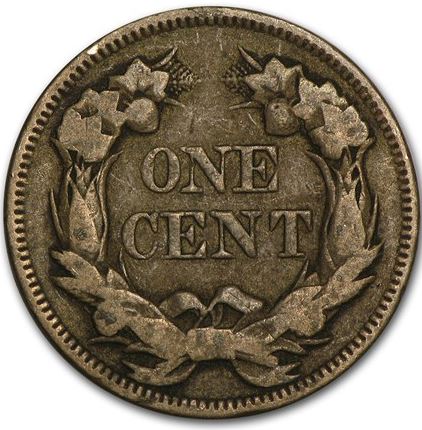
Below is a photo of an 1858 Flying Eagle cent shown on the APMEX web site, where it is listed as VG and has a price of about $50.

---
Here is another holed find. This one from Palm Beach.
 |
Holded Olympics Commemorative Coin
Find and photo by Jerry P.
|

Here is what Jerry had to say.
Here’s a holed coin I recovered on Palm Beach Midtown Beach. It was July last year when I dug it from the wet-sand after some nice erosion during that week.
It is a Commemorative coin from the 1992 Olympics in Barcelona Spain. The value is 25 PTAS, whatever that is. It was corroded to a zinc Penny when recovered.
I also recovered a $1.00 US Statue of Liberty modern coin & a 2003 10 KOIIEEK (Russian coin??) as well as a couple of small jewelry pieces that day.
Note the different dates on the different sides. It was evidently minted in 1991 for the Summer Games of 1992.
Thanks Jerry!
----
I like to use different detectors at different times. The best metal detector for one situation, might not be the best for another situation.
In my yard, the best choice is not the metal detector that I most often use at the beach. There are several reasons for that. The biggest reason is the ambient interference from overhead power lines and buried cables. The metal detector I most often use at the beach is more sensitive to that noise and even though it has a frequency check and tries to find the best frequency, still does not do as well as another much less expensive metal detector.
As I've said in the past, I look at metal detectors very much like golf clubs. You select the one that best suits the situation.
A change in environments can make a big difference. It is not only the electrical interference that makes a difference. While my more inexpensive metal detector usually does a fine job in the dry sand at the beach, it is not nearly as good in the wet salt sand.
Of course there are also different target types. One of the favorite Treasure Coast beach metal detectors, misses a lot of iron, and people don't realize it. And you don't have to be running any discrimination. It simply does not detect iron as well as some other metal detectors. Whether that is a good or bad thing, depends upon what you are trying to do.
Besides environmental factors and the operating characteristics of your metal detector, there are behavioral factors that are very important. By that I mean how you use your detector. Many people fail to realize the importance of coil speed, for example. Moving your coil either too fast or too slow, can cause a big loss in depth. Your detector's performance can be affected a lot by how you move the coil. Jerking the coil when you change the sweep direction can cause a lot of false signals under some circumstances and also reduce depth of detection.
You may or may not be fully aware of how sensitivity varies under different parts of your coil. In the past I've recommended testing to determine the how sensitivity varies under different part of your coil. My experience is that the cone of sensitivity is not always exactly what the operating manual suggests. It can be helpful to know where the spot of maximum sensitivity is and how that compares with different areas under the coil.
Those are just a few things that you might want to be aware of. It is easy to fall into habits. If you've been using the same metal detector for a while and detect the same types of places, you might not even take the time to adjust settings on different outings, but things change. There can be a different amount of ambient noise or interference on different days, for example.
On the other hand, absolute best depth or sensitivity might not be that important to you. Again, it depends upon what you are doing. You might not think some things are important, but I think it is good to be aware of various factors and be aware of the trade-offs and how your decision making can affect outcomes.
There are times when I don't care about getting maximum performance. Maybe I'm running a quick check of the area, but if I find there is reason to really tighten up and go for that last smidgeon of performance, I'll do that.
I'm an empiricist by nature. I don't automatically accept what I hear. I enjoy experimenting and testing things out for myself. I hope that you do the same with whatever I say.
---
The tides are still small. Today we'll have some north winds, but the primary swell will be east, and the surf will be only about two feet. I don't expect much.
Happy hunting,
TreasureGuide@comcast.net


