Showing posts with label Spain. Show all posts

Tuesday, November 5, 2019

11/5/19 Report - Charles II/Carlos Half Reales and Monograms. Lapstraked Ship Construction. Modest Surf and Tides.


Written by the TreasureGuide for the exclusive use of treasurebeachesreport.blogspot.com.

Here is an interesting half reale.  It shows the Charles monogram, which, if you've found many half reales on the Treasure Coast, you've probably seen.

This reale was part of the intenet only session of the Sedwick Coins auction that concluded Monday.

Included in that session were some of the more common and less expensive lots, such as this one, which sold for $122, not including the buyer's premium.

Here is the lot description.

Mexico City, Mexico, cob 1/2 real, Charles II, assayer not visible. KM-23. 1.41 grams. Teardrop shaped, F/VF with weak cross but defined monogram.

I suppose the most interesting thing about this one is the clear monogram and the unusual shape.  It would probably make a nice pendant.

Below is one that I found on Treasure Coast beach showing a distinctive monogram as it would appear on a half reale minted by the Mexico mint.

1715 Fleet Cob Showing Part of Carlos Monogram

It is often easy to identify a Carlos monogram even when you only can see a small part of it.  One of the features that you'll see on Mexico minted examples is what looks like a fish hook on the end of the C.  Being near the center of the monogram and being very distinctive, it is often all you need.

In the example below you can see a part of the C and a big part of the A, you can also see the assayer initial that looks like a C, but would be a G, which would be Geronimo Bercerra.  That would indicate a date range of 1666 to 1677.


Partial Monogram Mexico Half Reale Cob Found on Treasure Coast.

Below is another Carlos half reale that sold in the most recent Sedwick auction.

Source: Sedwick Treasure Auction No. 26 Online Catalog.

This Potosi minted example is partially dated - something unusual enough for a half reale.   You'll notice that the style of the monogram is different than those seen on the Mexico minted Carlos cobs.  I find the Mexico monogram more aesthetically pleasing.

The Carlos monogram as shown on the Lima, Mexico and Potosi minted half reales are different for each mint.

Here is the stylized monogram that you would see on a Lima minted Carlos half reale.

Stylized Carlos Monogram For Lima Minted Half Reale.

Tomorrow I'll post a link to a video that shows how you can tell the difference between Lima, Mexico and Potosi minted Carlos half reales.

---

A few days ago I was talking about broken shipwreck spikes from the Treasure Coast and discussed my theory on why so many are broken.  Here is an illustration that I think suggests how easily they could be broken.


Diagram Showing Lapstraked Hull.
Source: DIYWoodBoat.com

You can see how planks would be attached to the frame by clinched or roved spikes.  If you consider how all of the planks are attached to the frame, it seems that there would be a lot of broken spikes when the planks are ripped off of the hull.

---

DJ sent this photo of the Seagrape Trail beach yesterday afternoon.


Seagrape Trail Area on Monday Afternoon
Photo by DJ
Thanks DJ!

---

The tides are very flat now.  We're not getting much of a low tide at all.


Source: MagicSeaWeed.com.

Looks like we still have a chance for an increase in the surf next weekend.

Happy hunting,
TreasureGuide@comcast.netC


Friday, November 16, 2018

11/16/18 Report - Some Metal Detecting Tips. A Couple More Holed Coin Finds. North Wind But East Primary Swell.


Written by the TreasureGuide for the exclusive use of treasurebeachesreport.blogspot.com.

Holed 1858 Flying Eagle Cent.
Photo by William K.
'
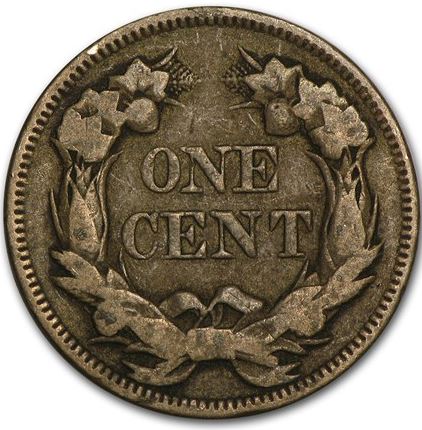
William K. sent this photo of an 1858 Flying Eagle cent.  He said, With the small hole I assume it could have been affixed to a charm bracelet.

Sometimes coins used in jewelry are not real coins.  The photo makes the wear on this one look strange to me.  It might be the focus or glare from the lighting.    


Below is a photo of an 1858 Flying Eagle cent shown on the APMEX web site, where it is listed as VG and has a price of about $50.


Thanks William.

---

Here is another holed find.  This one from Palm Beach.


Holded Olympics Commemorative Coin
Find and photo by Jerry P.


Here is what Jerry had to say.

Here’s a holed coin I recovered on Palm Beach Midtown Beach. It was July last year when I dug it from the wet-sand after some nice erosion during that week.

It is a Commemorative coin from the 1992 Olympics in Barcelona Spain. The value is 25 PTAS, whatever that is. It was corroded to a zinc Penny when recovered.

I also recovered a $1.00 US Statue of Liberty modern coin & a 2003 10 KOIIEEK (Russian coin??) as well as a couple of small jewelry pieces that day.

So even though it was a short hunt (right at LT) it was quite productive😎

Note the different dates on the different sides.  It was evidently minted in 1991 for the Summer Games of 1992.

Thanks Jerry!


----

I like to use different detectors at different times.  The best metal detector for one situation, might not be the best for another situation.

In my yard, the best choice is not the metal detector that I most often use at the beach.  There are several reasons for that.  The biggest reason is the ambient interference from overhead power lines and buried cables.  The metal detector I most often use at the beach is more sensitive to that noise and even though it has a frequency check and tries to find the best frequency, still does not do as well as another much less expensive metal detector.

As I've said in the past, I look at metal detectors very much like golf clubs.  You select the one that best suits the situation.

A change in environments can make a big difference.  It is not only the electrical interference that makes a difference.  While my more inexpensive metal detector usually does a fine job in the dry sand at the beach, it is not nearly as good in the wet salt sand.

Of course there are also different target types.  One of the favorite Treasure Coast beach metal detectors, misses a lot of iron, and people don't realize it.  And you don't have to be running any discrimination.  It simply does not detect iron as well as some other metal detectors.  Whether that is a good or bad thing, depends upon what you are trying to do.

Besides environmental factors and the operating characteristics of your metal detector, there are behavioral factors that are very important.  By that I mean how you use your detector. Many people fail to realize the importance of coil speed, for example.  Moving your coil either too fast or too slow, can cause a big loss in depth.  Your detector's performance can be affected a lot by how you move the coil.  Jerking the coil when you change the sweep direction can cause a lot of false signals under some circumstances and also reduce depth of detection.

You may or may not be fully aware of how sensitivity varies under different parts of your coil.  In the past I've recommended testing to determine the how sensitivity varies under different part of your coil.   My experience is that the cone of sensitivity is not always exactly what the operating manual suggests.  It can be helpful to know where the spot of maximum sensitivity is and how that compares with different areas under the coil.

Those are just a few things that you might want to be aware of.  It is easy to fall into habits.  If you've been using the same metal detector for a while and detect the same types of places, you might not even take the time to adjust settings on different outings, but things change.  There can be a different amount of ambient noise or interference on different days, for example.

On the other hand, absolute best depth or sensitivity might not be that important to you.  Again, it depends upon what you are doing.  You might not think some things are important, but I think it is good to be aware of various factors and be aware of the trade-offs and how your decision making can affect outcomes.

There are times when I don't care about getting maximum performance.  Maybe I'm running a quick check of the area, but if I find there is reason to really tighten up and go for that last smidgeon of performance, I'll do that.

I'm an empiricist by nature.  I don't automatically accept what I hear.  I enjoy experimenting and testing things out for myself.  I hope that you do the same with whatever I say.

---

The tides are still small.  Today we'll have some north winds, but the primary swell will be east, and the surf will be only about two feet.  I don't expect much.

Happy hunting,
TreasureGuide@comcast.net


Tuesday, August 15, 2017

8/15/17 Report - Numismatic Archaeology of North America. Ship's Store Tokens. Determining the Source of Silver Coins. New Weather In The Atlantic.


Written by the TreasureGuide for the exclusive use of TreasureBeachesReport.blogspot.com.


Here is a good book.  You can read a sample free online.  The title is Numismatic Archaeology of North America: A Field Guide.

You might want to look at some of the later chapters first because there is a limit to how much you can read as a free preview.

Below is just one of many illustrations from the book that I found interesting.

-----------------------------------------------------------------------------


-------------------------------------------

Maybe you've found something that looks like a coin but you can't identify it.  I have. This is an entire class of coins or tokens that you should know about.  As the book says, such tokens might be found in port cities or where sailors live.

There seems to be a lot of good interesting information in that book.

Click here to take a look at the free preview.

----


Researchers in Germany and Denmark analysed the chemical composition of 70 silver Roman coins dating from about 310 BCE to 101 BCE, spanning either side of the war.

"Before the war we find that the Roman coins are made of silver from the same sources as the coinage issued by Greek cities in Italy and Sicily. In other words the lead isotope signatures of the coins correspond to those of silver ores and metallurgical products from the Aegean region," said Katrin Westner of the Institute for Archaeological Sciences, Goethe University, Germany...


Later coins came from silver mined in what is now Spain.

Here is the link to read more about that.

http://www.ibtimes.co.uk/2200-year-old-coins-record-hannibals-defeat-start-roman-empire-1634912


---


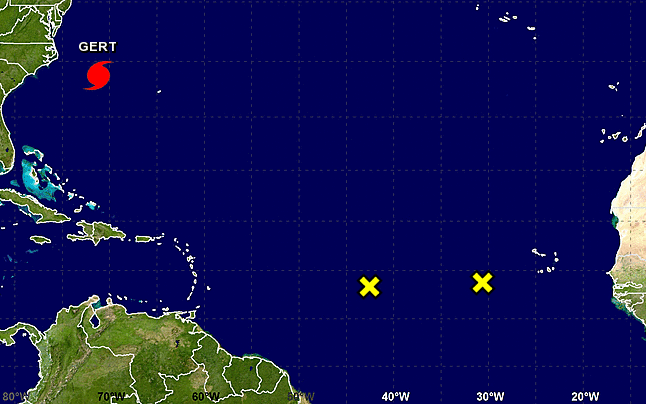
Source: nhc.noaa.gov

Gert is up by North Carolina now, but there are two more systems to watch out in the Atlantic.  Either or both of those could possibly come our way.  It will be a while before we know what happens to them.

That is all for today.

Happy hunting,
TreasureGuide@comcast.net


Tuesday, July 18, 2017

7/18/17 Report - Tropical Storm Don. Ancient Hoard Found in Spain. Live Cannon Ball Found.


Written by the TreasureGuide for the exclusive use of the treasurebeachesreport.blogspot.com.

Predicted Path of Tropical Storm Don.
Source:  nhc.noaa.gov
The big news for me is that we now have a named Tropical Storm.  It is named Don.

While it looks like Don will stay south, it could turn north, or maybe go through the Gulf and come back at us.

There is also another tropical disturbance behind (East of) Don.  That one now has a thirty percent chance of becoming a cyclone in the next 48 hours.

---

Hoard of Coins Found in Spain.
Source: See thelocal link below.

A treasure of gold and silver ancient Roman coins has been found at a mining site in Huelva, southern Spain.

The discovery is of "incalculable value and a milestone in the archeology of this mining area," according to the archeologists from Atalaya Mining, the company running the mine who found it. The discovery was reported by local newspaper Huelava Spain.

The 40 or 50 coins found, which date from the 2nd century AD, according to a report in La Informacion, are said to be from the era of Nero and Trajan.

"It is a discovery of great beauty that comes to contribute data to our knowledge of RioTinto, that was the great mine of the Roman Empire," Luis Iglesias, director of archeology at Atalaya Mining, told El Pais....

Here is the link.

https://www.thelocal.es/20170706/milestone-treasure-of-ancient-roman-coins-found-at-mining-site

Unless Don or the other system heads our way, it looks like we'll have a one to two foot surf on the Treasure Coast for a week or two.  We have some good tidal variation though.


---

Explosive Cannon Ball Found
Source: See CBC link below.

A cannonball fired by the British during the Battle of the Plains of Abraham in 1759 has been unearthed at a building site in Old Quebec.
The rusted, 90-kilogram projectile was unearthed during excavation work last week at the corner of Hamel and Couillard streets and still contained a charge and gunpowder.
The work crew that found the ball picked it up and gathered around it for photographs, unaware that it was still potentially explosive.
Municipal authorities were contacted, and archeologist Serge Rouleau was called in.
Rouleau brought the cannonball back to his home, and noticed it still contained a charge...
Here is the link for more on that story.

http://www.cbc.ca/news/canada/montreal/cannon-ball-quebec-city-1.4202559

---

I recorded some detector signals and was going to insert them in a post.  I couldn't figure out how to do that on blogspot.  Maybe I'll get it figured out some day.

Happy hunting,
TreasureGuide@comcast.net

Monday, April 10, 2017

4/10/17 Report - Religious Metal Detector Finds and Easter Traditions. A Letter From 1564 Fort Caroline


Written by the TreasureGuide for the exclusive use of treasurebeachesreport.blogspot.com.

Gold Metal Detector Find From The Beach Near The Nieves Wreck Site.

The figure shown above is about two inches high and was undoubtedly at one time attached to a cross.  It is truly old.  Both the method of manufacture and type of gold show that.  So does the style, wear and encrustation.  It is definitely centuries old.

It isn't a new find, and I posted it before but thought it was particularly appropriate for today's post.  

If you've been detecting the Treasure Coast very long or just reading this blog, you are aware of how many religious artifacts have been found on the shipwreck sites and beaches and how common religious symbols are on many finds.  You will find a cross prominently displayed on many treasure coins, and religious medallions are also common metal detector finds.  

The most important Christian season has begun.  You might think it would be Christmas by the way we celebrate today, but it is actually Easter. Yesterday, of course, was Palm Sunday. And Easter is next Sunday.

Easter is celebrated on the first Sunday after the first full moon after the Spring equinox.  You might have noticed the bright moon lately.

Easter isn't a new celebration at all.  Maybe it has changed some over the centuries, but it has been celebrated for many centuries, including the seventeenth and eighteenth centuries.

Even the Easter bunny and Easter eggs, which might seem to have no religious significance stem from ancient practises and meanings and still carry religious significance for some even if the same symbols carried different meanings at different times and places.  Ancient pagan beliefs and symbols related to fertility carry the meaning of redemption and rebirth for many today.

Spain is one place where Easter is celebrated with much fanfare.  I'm sure that the celebrations have changed over the centuries, but much has remained the same too.

In Spain Semana Santa (Holy Week) is the most important celebration.  

Here, the most important Catholic holiday is commemorated with a week full of color, art, religious fervor, and extravagant processions. The most spectacular events take place in Malaga and Seville, where the streets are taken over by flamboyant parades and intricate religious displays depicting biblical scenes.

Like everywhere in Spain, the festivities begin on Palm Sunday (Domingo de Ramos) and last until Easter Monday (Lunes de Pascua), with the most dramatic and passionate parades held on Maundy Thursday and Good Friday...


Although Easter celebrations in Malaga are of huge proportions, it’s the Seville Semana Santa that has crossed the boundaries becoming a world-famous event. During the Holy Week, the gorgeous Andalusian capital comes to life with thousands of pilgrims that gather here from all corners of the world to witness the city’s extravagant pasos.

See https://spainattractions.es/easter-spain/ for more.

Like many of our Christmas traditions, our Easter traditions were heavily influenced by German settlers.  That includes the Easter Bunny (Osterhase). According to the tradition, children would build brightly colored nests, often out of caps and bonnets, in secluded areas of their homes.  The “Oster Hase” would, if the children had been good, lay brightly colored eggs in the nest.  As the tradition spread, the nest has become the manufactured, modern Easter basket, and the placing of the nest in a secluded area has become the tradition of hiding baskets.

The same things we are acknowledging, remembering and celebrating this year have been celebrated for centuries and centuries.  We have a lot in common with our ancestors and the early settlers and explorers.  It is hard to imagine the same things being celebrated hundreds of years ago, but as much as things have changed, some things remain the same.  At the core and root of it all is something human and something Divine that transcends space and time.

---

Here is a letter written by a young French man from Fort Caroline in 1564.

http://ufdc.ufl.edu/UF00025123/00001/1x

---

I didn't post yesterday because I've been researching something and lost my sources.  I'll get back to it when I find them again.

It seems a lot of the snowbirds have gone home.  The beaches haven't been as busy lately.

The surf will be around three to five feet this week.

Happy hunting,
TreasureGuide@comcast.net


Friday, July 22, 2016

7/22/16 Report - Two Dug Ancient-Looking Coins For Identification. Silver Cache Found in Spain. Cannon Found in Waterway.


Written by the TreasureGuide for the exclusive use of treasurebeachesreport.blogspot.com.

Two Almost Identical Dug Beach Coins.


These two nearly identical coins were recently dug.  They are the same size as a quarter, but not as consistently thick.  I do not see any signs of them being circulated and almost no corrosion other than the dark patina.  I believe they are probably fake.  I don't have any good test acid right now, so I haven't tested them, but from the weight and other characteristics, I think they are not genuine coins but probably made to be used in costume jewelry.  They are more perfectly round than I would expect of a genuine coin, and the edges are sharp.

Even if they aren't genuine, I'd like to determine what they are supposed to look like, if there are genuine coins that look like that.

I provide photos of the lettering below.  If anyone can read the words or tell me what they are supposed to be I'd appreciate it.

Thanks much.


---

200 Silver Denarii Found Buried in a Vase.

Barcelona (CNA).- "The 2,500-year-old Empúries site on the Costa Brava continues to provide surprises. The last three weeks of excavations, carried out by thirty students attending the 70thedition of Archaeology Course of Empúries, lead to the largest treasure ever found on the site; a ceramic-vase containing 200 silver denarius dating from the 1st century B.C. Thanks to the good conditions of the treasure, the archaeologists have concluded that the treasure would have been hidden by its owner in one of the rooms of the houses which are also being excavated. The treasure would have been lost after a fire which hit the property. Besides this treasure, 24 amphorae of wine have been discovered in the cellar ​​the house, a slab of bronze -'simpulum'- to extract wine and two bracelets.

Here is the link for the rest of that story."

http://www.catalannewsagency.com/culture/item/200-silver-denarius-discovered-in-empuries-largest-treasure-found-so-far-in-the-roman-site

When I post a news item like this, there is usually something I think you can get from it.  In this case, one thing to notice is how the cache was lost.  A fire to the dwelling caused its loss.

Although the vast majority of my detecting has been on the beach, there are times that I get out and hunt land sites.  In one case I was able to hunt the site of an old hotel that burned down in the 1940s. Sites like that can be good sites with lots of targets, but there will probably be a lot of junk. The junk may actually be a good thing if you are not one of the first to detect the site.  A lot of detectorists will leave a lot of good targets when there is a good covering of junk.

---


Mid 1800s Cannon Recovered From Waterway In Hong Kong.
Source: South China Morning Post.
“This trip is tangible evidence that there is historical material in Hong Kong’s waters. There have been lots of surveys on land but not in water,” Jeffery added, urging the government to invest more in maritime archaeology as it is important to the understanding of Hong Kong’s history."

Here is the link.

http://www.scmp.com/news/hong-kong/education-community/article/1991821/hong-kongs-sunken-treasure-ancient-anchor-and

Some places are more covered by detectorists and salvagers than others.

---

We'll have something like a two-foot surf today.  Just a touch less this weekend.

We'll also have some negative tides.

There is no significant tropical activity yet.

Happy hunting,
TreasureGuide@comcast.net


Monday, July 11, 2016

7/11/16 Report - Local Treasure Coast Beach Detecting Conditions and Photos. 19 Amphoras of Coins Found in Spain by Construction Crew.


Written by the TreasureGuide for the exclusive use of TreasureBeachesReport.blogspot.com.


Small Part of Hoard Found in Spain.
Source: See link immediately below.

Construction workers laying pipes in a park in southern Spain have unearthed a 600kg trove of Roman coins.

The bronze coins dating from the late 4th Century were found inside 19 Roman amphoras, a type of jar.

Here is the link.

http://www.bbc.com/news/world-europe-36172538


---


I went out to the beach this morning to do a little detecting.  I was surprised by how few people were at the beach this morning.  I've seldom seen fewer at this beach.  Of course, it was early and I would guess beach goers would be showing up later.

Another View of the Beach This Morning.
As you can see, it was near low tide.  The beach front was built up.  Beach conditions were poor.

With all of this small surf we've been having, sand and not much else, not even anything other than small shells, has been washing up onto the beach front.

The shallow water was also very sandy.  There was a little bit of a dip in front of the beach, but hardly any at all.  Even the dip was shallow and had a lot of fine sand in it.  It was very sandy and shallow for many yards out.

The entire beach had very few targets, including the dry sand, which had been well detected.  Although targets were very few, there were some good ones, which were deep and difficult to recover.

Wet Sand Area This Morning.
This sand is fine and very packed.  You can see the ripples in the photo above.  There was also some black sand there. Getting maximum depth required some adjusting. 

There were some targets in the dip where sand was accumulating at the water line.  Targets were difficult to recover there.  The silty sand made deep targets very difficult to recover.  I left a couple.

---


Close-up Of Small Piece of Coral Found This Morning.


Happy hunting,
TreasureGuide@comcast.net

Sunday, May 1, 2016

5/1/16 Report - Lot of Mushy Sand On Beach Fronts. Non-metallic Finds Returned. Thousands of Bronze and Silver Plated Coins Found in Spain.


Written by the TreasureGuide for the exclusive use of treasurebeachesreport.blogspot.com.

A Lot of Mushy New Sand In Front of an Old Cut.
Add caption
 All of the beaches have a lot of new sand on the front of the beach because of the mild surf and south winds.

We have summer beach conditions.  We've had a lot of south winds.  There will be two or more weeks of almost no surf.

The front beach will be poor.  With the smooth surf the water will be easy to hunt, but conditions there will be sandy too.

I found the following items at the water line.  First was the fish grabber.

Fish Grabber Find

Then I found the waterproof container shown below.  Very nice.

It was full.  I suspect that it held a wallet or whatever.

I saw a fellow down the beach looking around like he lost something, so I went down and asked him what he lost.  When he told me, I returned the following items.  Needless to say, he was very happy.


Watch the water line for things like this.  Some of my favorite finds are no metallic and were found near the water line during a mild surf.  I've mentioned some.  One was a wax seal that I found.  I wonder how it survived all of those years.

Can you believe we are into may already.  It seems to me like New Years was just a few weeks ago. This has been one of my most hectic years.

I have a lot to talk about and show but won't get around to some of it for at least a few days.

---

MADRID — Workers laying pipes in a southern Spanish park have unearthed a 600-kilogram (1,300-pound) trove of Roman coins in what culture officials say is a unique historic discovery.

The Seville Archaeological Museum said the construction workers came across 19 amphoras containing thousands of bronze and silver-coated coins dating from the end of the fourth century. The coins are believed to have been recently minted at the time and had probably been stored away to pay soldiers or civil servants...

Here is that link.  Thanks to Dean R. 


That's it for now.

Happy hunting,
TreasureGuide@comcast.netn Coins Dis

Sunday, June 29, 2014

6/29/14 Report - National Archives For Research, Detecting Military Shells With a 2-Box Detector, Getting To More Remote Beaches, & US Religious Shrine


Written by the treasureguide for the exclusive use of treasurebeachesreport.blogspot.com.


Fellow Using Two-Box Detector To
Locate Buried Shells From WW I On His Farm
Source: video link below.
I've learned a lot through genealogical research.  I mention that again because once again I was amazed by what I found. 

My father was on a minesweeper during WW II.  He never talked much, hardly anything, about his experiences during the war.  We have, however, found where his ship was everyday during the war.  Palermo, Genoa, Sardinia, and Malta are some of the places where they cleared mines before his ship came back to New York and Miami before going through the Panama Canal to the Pacific.

I tell you this because the National Archives has tons of information that you can search.  Not only can you research individuals, but you can also find detailed records on ships and battles.  And not only do they have information on WW II, but also information going back to the Revolutionary War and more.

I was able to find a daily longitude and latitude for my dad's ship, which was one of the smaller ships in the Navy.  You might find it easy to find even more information about larger ships.

If you want to find information about a family member or track down a ship that sank while carrying gold bullion, the National Archives and Navy have tons of records that can be accessed.  You can receive some information free, but there may be a price charged to cover the cost of copies of other records.

Oh, by the way, you can also get medals and things posthumously, as well as a flag

You can apply for the flag by completing VA Form 2008, Application for United States Flag for Burial Purposes.

Here are a couple of websites that can help you get started with research on a veteran or a ship.

http://militaryrecordsusa.com/

http://www.ancestry.com/nara_new


Collection of Militaria From NY Times Video Clip
Source: link below.
Here is a video about a fellow (See picture above.) that uses a two-box detector to locate shells and other old military items on his farm. He has accumulated a huge collection.  

The story is a good reminder that there still may also be dangerous things in the ground and on the beaches around the Treasure Coast, which was once a military training center.  

It is said that 20 million shells were fired during the Battle of Verdun, of which about 20 percent did not explode.

Thanks to teklord for sending me that link!

Remember to be careful when digging where there could possibly be old shells or bombs.  That includes the Treasure Coast.


Spain recently returned a bunch of stolen artifacts to Columbia.  

http://in.reuters.com/article/2014/06/24/us-spain-colombia-archaeology-idINKBN0EZ1YW20140624


You might remember the case from back in 2012 in which Odyssy Marine had to turn over tons of coins from the Nuestra Senora de Mercedes that it recovered off of Portugal.  

http://tbo.com/news/business/spain-sends-military-to-retrieve-treasure-from-odyssey-marine-360822

I'm not sure why Peru didn't prevail in their claim for the same coins.


A Mexican helicopter fired shots at a US border patrol.  They claim it was by accident, of course.  I would not be surprised by anything down there these days.

http://www.nbcnews.com/news/us-news/mexican-helicopter-crosses-u-s-border-fires-border-patrol-n142966


There are religious shrines around the world that are visited by millions of people, but you might not know that there are religious shrines in the US as well.  I thought this one was especially interesting.

National Shrine of Blessed Kateri Tekakwitha, Fonda, NY: Having lost her parents at an early age, Blessed Kateri Tekakwitha (1656-1680) was raised among the Mohawks in the home of an uncle. There she first encountered Christian missionaries, and was baptized on Easter Sunday, April 5, 1676 in Fonda, NY near the Jesiut mission in Auriesville. Because of her baptism, her exemplary life, and her desire to remain a virgin, Kateri suffered great persecution. She died at age twenty-four known as the “Lily of the Mowhawks,” since she had given herself over entirely to care for the sick and long hours of prayer and penance. She was beatified in 1980 by Pope John Paul II. Her body is buried in the church of the Native American  reserve of Kahnawake, Quebec.

Source:  http://www.ssvmusa.org/Events/CatholicCulture/PilgrimageSites.shtm


It sometimes seems that the obvious beaches are over hunted.  I suppose they are.  There must be more detectorists today than back a few decades.  Yet that is easy to over estimate, as I've said before.  The detecting community is so much more visible today than in the past, due to the internet. 

The most over-hunted beaches are those that are obvious and easy.   Most of those "obvious" beaches have parking lots and beach walk-overs.

There are however long stretches of beach along the Treasure Coast that are seldom hunted because they are not as easy to get to.  Those beaches are not as heavily hunted, but they are also generally not as busy and so produce fewer modern targets.  That doesn't mean they will never produce shipwreck items though, and they may produce a few good modern targets even if they aren't real plentiful.

One way to make it easier to hunt those out-of-the-way beaches is to get someone to drop you off and pick you up again later.  That can keep you from having to walk a few miles with your detector, scoop, water, etc.

If there are two or more of you, you might consider dropping a couple of the more energetic people off at an out-of-the-way location while the others go ahead to a parking lot.   If the one group detecting the more distant location only has to walk to the parking lot, that means the walk has been cut in half.   If you park at a parking lot then walk to a remote site and then have to return to the parking lot, that doubles the distance you have to walk.


On the Treasure Coast we are stuck in the same old weather pattern with a one to two foot surf.  As is typical of this kind of weather, a few shards have recently been found up in the Corrigans area.

Happy hunting,
TreasureGuide@comcast.net