Showing posts with label metal detecting. Show all posts

Saturday, July 18, 2020

7/18/20 Report - South Hutchinson Island Beaches Somewhat Eroded This Morning. A Product Recommendation.


Written by the TreasureGuide for the exclusive use of treasurebeachesreport.blogspot.com.

Sunrise This Saturday Morning on the Treasure Coast.


I went to the beach this morning.  It is the first time I went out for a few weeks.  Yesterday I saw the wind change and thought I'd check out some of the beaches.


John Brooks Beach Saturday Morning.


As you can see, John Brooks had some erosion on the beach front.  You can also see the big step behind the erosion.

There were modern coins, sinkers and other items on the slope in front of the cut, both high and low.  I was there way before low tide, and I had already spent a lot of time eye-balling, so I didn't spend a lot of time detecting, even though it looked decent for Treasure Coast summer conditions.  If I didn't have other things to do, I could have easily detected much longer.


Erosion At John Brooks Beach Saturday Morning.


As you can see, the cut ran for along distance in both directions.

A little farther south, people were surfing.


Surfing On The Treasure Coast Saturday Morning


There was erosion to the south too.  Also the remains of some nice shell piles.  The shell piles had some of the bigger shells.  It wasn't just the little pieces, so it was possible there would also be sea glass, and there were some fossils.  In fact that is why I did some eye-balling first.  And once I get my nose to the ground, I'm like a beagle on the trail.  So I ended up doing a lot of that before I ever got my metal detector out.


Treasure Coast Erosion Saturday Morning.


I found a horse tooth fossil and another nice tooth that I need to identify, along with some other fossil bones.  

Which reminds me - I enjoyed watching Dino Hunters last night, and I was hoping to see a tooth or two today.

Here is the largest fossil bone I saw this morning.


Fossil Bone Found on Beach.


---

IIn response to my recent blog post, JamminJack spoke of a fellow that used to duck dive at night and also added the following.

...Using my knowledge of when I used to work with some of the salvagers, I would check some of the reefs to see if anything was nearby. Believe it or not, I never removed any shipwreck treasure other then some modern jewelry, fishing gear, and junk. One time, I discovered a reef loaded with shards of onion bottles, olive jars, etc. I told Bill Moore about it, but never got a reply back. Maybe he was protecting me, but will never know. There was no law going out on the reefs, but removing any treasure was...

My grandmother would tell me locks were made for honest people.

Is anyone out detecting with a [virus] mask on? I bet it is difficult with the heat and limited breathing.

Happy Hunting, JamminJack 


I recently bought a Solarguard Faceshield, made by Bimini Bay for $9.95 at WalMart.  A lot of fishermen use them for sun protection.   It is a tube of stretchy material that goes around your neck and can be pulled up to protect your face from the sun.

Well this morning I used the one I recently purchased for the first time.  When I got to the beach there were also a lot of mosquitos and I was glad I had the faceshield because it helped with that too.

Some people  use them as virus masks in stores, but that isn't what they were made for, and I don't know how effective they would be for that purpose.  

Anyhow, I found it helpful and had no problem using it in the early morning hours.  If you start to get hot, you can pull it down.  I also think it could be worn wet and would have a cooling effect.

---

There are no storms to watch right now, and the Treasure Coast surf is running two to three feet.

Happy hunting,
TreasureGuide@comcast.net


Thursday, July 16, 2020

7/16/20 Report - 18th Century Passwords. Reality Treasure TV Show Article. Cortes Aztec Palace. How It Was.


Written by the Treasureguide for the exclusive use of TreasureBeachesReport. blogspot.com.


Queen Anne's Passwords.
Source: Sotheby's Auction Catalog.  See link below.


Do you have trouble keeping track of your passwords?  It evidently isn't anything new.  Shown above is a list of passwords from 1704.  It recently sold in a Sotheby's auction.

Below is the lot description.


DOCUMENT SIGNED AT THE HEAD, LIST OF DAILY PASSWORDS "FOR THE COURT" AND "FOR THE CITTY"


providing two daily passwords, each being an English town or city, 4 pages, folio, February to April 1704, with a duplicate set of passwords for February, detached blank, contemporary docketing


These passwords, or paroles, will have been circulated to those guarding the royal court and the gates of the City of London.


https://www.sothebys.com/en/buy/auction/2020/the-collection-of-a-connoisseur-history-in-manuscript/queen-anne-document-signed-list-of-daily-passwords

---


Treasure Quest Team Leader Exposes the Fraud of Reality TV.


That is the title of a article I just found.  Below is a brief excerpt of that article.


A) On Treasure Quest: Snake Island Mehgan Heaney-Grier finds a rare and ancient solid gold mask while searching for treasure underwater.

B) The producers of Treasure Quest: Snake Island get a plastic mask, spray paint it gold, and place it underwater to be found by Heaney-Grier and claim it to be treasure.

The answer is B.

Believe it or not, reality TV is fake and scripted. Joe Teti of Dual Survival doesn’t walk into the woods with a pointy stick and come back with a hog slung over his shoulder. The producers go to a farm, get a dead hog and give it to Teti who triumphantly carries it back to his nonexistent survival camp...

There is much more in that long article to read.  Here is the link.


---

The remains of an ancient Aztec palace have been discovered under a stately building in Mexico City.

During renovations at the building off the capital's central Zócalo plaza, workers found basalt slab floors.

The floors were part of an open space in the palace of Aztec ruler Axayácatl, Mexico's National Institute of Anthropology and History (INAH) said.

The palace was also used as the home of Spanish conquistador Hernán Cortés after the fall of the Aztec empire.

Excavators have found evidence of the home Cortés had at the palace site....

Here is the link for more about that.


---

It is a beautiful morning, and I haven't even looked outside yet.  I'm feeling very blessed.  I'm alive and my back feels good.  No problem.  I have two 94-year-olds in the family, so am always aware of what could happen.  Being a caretaker is probably the toughest thing I ever did.

This is sometimes called the information age, but it seems like it could just as well be called the disinformation age.  We have so much access to information and misinformation, it can be overwhelming.  

I'm very fortunate.  I don't have to sell anything, and I'm not trying to become somebody.  I don't expect you to believe anything I say just because I say it.  I give sources and links so you check things out for yourself. I enjoy developing ideas and adding to my own understanding, which is my primary motive, and I don't ask for anything - not that you'll buy a book, and not even that you'll visit this site.  I never advertised and don't do any promotions, so I don't even know how you found this site to begin with.  

Like most oldsters, I sometimes look back and marvel at how things have changed.  When I started metal detecting the beaches, there was no internet.  You couldn't check out Youtube videos on every topic under the sun.  There were a few books, like those by Karl Von Mueller or maybe Charles Garrett, and there were two or three treasure hunting magazines that came once a month, but you couldn't just sign-on and find tons of information about almost anything you might like to know.  You had to learn a lot on your own.

In fact when I began this blog, people didn't like me giving so much information.  I got emails saying that people should have to put in the time and learn on their own like they did.  They didn't think I should give so much information away.  I can see that side of it too, but things were going to change with or without me.

I like learning on my own and do it even when it would be much easier to learn from someone else.  I like experimenting, and testing and proving things for myself.  For me, that is a lot of the fun of it.  It takes much longer, but when I test it out for myself, I  know if it works for me or not.

A lot of the guys back a few decades ago, didn't want people to know what they were doing.  They didn't advertise their successes.  They wanted to be able to continue doing what they were doing without everybody else finding out what they were finding and how they were doing it.

There was one anonymous fellow, for example, that was called The Florida Pro by the few that knew of him.  He'd slip into the water at night and come out to leave unobserved just about sunrise.  Jerry from Pot of Gold, once published a picture of the fellow in a newsletter, but he was wearing a dive mask and you couldn't really tell what he looked like.  That isn't usually how it is done today.

----

No storms or other big changes.

Happy hunting,
TreasureGuide@comcast.net

Tuesday, July 7, 2020

7/7/20 Report - Putting It Together: Waves, Liquefaction and Lenses. Kings Landing.


Written by the TreasureGuide for the exclusive use of treasurebeachesreport.blogspot.com.

Clark Little Photo of Wave.
Source: ClarkLittlePhotography.com.
They say a picture is worth a thousand words, but they say a lot of things - don't they.  In this case, it might not be too far off.

They also say appearances are deceiving.  It looks to me like there might be a bit of a fisheye effect in this photo, but it is still amazing and informative.  Even if there is a fisheye effect, and I'm not sure there is, it still seems to show the sand being picked up with the water.  The surface of the sand right in front of the wave seems to curve up into it.

I've posted other pictures showing something similar, but there is also a lot of geology science that talks about things like liquefaction of sand and soil and how that happens, so we have both the pictures and scientific principles, which seem to support each other.

Source: Pinterest.


Liquefaction can be created by vibrations, which it seems you'd have on a beach with all of the breaking waves, but if that were not enough, I showed an illustration about a week ago that illustrates how passing waves cause liquefaction and water lenses.  I also have referred to how dock piers are set by a pressure hose pushing sand and earth apart so the pier can be inserted.  Putting that altogether, it looks like liquefaction could be one big ingredient that hasn't been talked about much in the metal detecting community to explain how sand and objects move on a beach.  In the past, it seemed that people just talked like sand and objects were simply pushed around somehow.  If you put this all together, I think you'll have a lot more understanding of how sand and other objects can move on the beach.  You'll also want to add what I've called trigger points.

A lot of times things are simply uncovered or washed down from the dunes, but I think the best metal detecting days are when the waves crash from the low tide zone and work their way all the way up until they crash against the dunes.  We usually can't see through the turbulent water to see how everything is moving, but the above photo might give you a pretty good idea.

---

Find With Good Message.

I mentioned finding a cheap necklace not long ago.  It bears a good message.  It seems like every time out I've been finding some type of little turtle thingy.


---


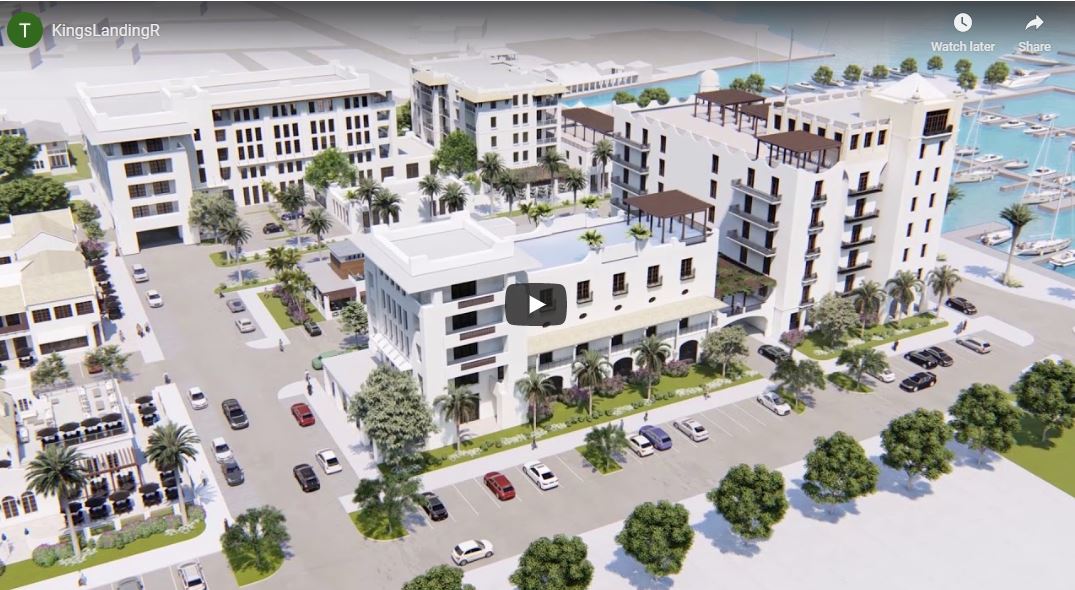
Exclusive Kings Landing Development Coming to Fort Pierce.


King's Landing, a new exclusive community is planned for marina area of Fort Pierce. 

Homeownership ranges from the mid-$400,000s to $1 million+. 

Charleston homes are two-story, three-bedroom and 3 1/2 bath residences.

Homeownership begins in the high $500,000s.

I've read that they are all reserved in advance.

---

If I decided that the predominant culture in which I now live has evil roots and is pervasively evil and I should no longer support it and participate in it or what came from it, that would mean I'd no longer use the internet or computers, or the English language for that matter.  I'd have to burn my degrees and erase them from my vita.   And I'd have throw away antibiotics and other pharmaceutical products, to to China or someplace for medical care, give up hot dogs, Coca Cola, eye glasses, laser surgery, TV, airplane travel, air conditioning, Ford, Chevy and Tesla automobiles, the convenience of the water closet, my Wrangler jeans, and UF Gator shorts.  I'd even have to stop rooting for my football team, watching the NFL and basketball.  And that is just a beginning.

---


Not much on the National Hurricane Center map today.

Happy hunting,
TreasureGuide@comcast.net

Monday, July 6, 2020

7/6/20 Report - Tropical Storm Edouard. Beach Zones. Density and Specific Gravity of Things.


Written by the TreasureGuide for the exclusive use of treasurebeachesreport.blogspot.com.

Yesterday I discussed liquefaction, which can occur on a beach under certain circumstances that cause sand to act much like a liquid.  I showed a couple photos of liquefied sand being moved by big waves.  Of course, most of the time that occurs near the front of the beach, but when the tides and swells are big, it can occur on the back of the beach.

Before delving more into the physical forces that move sand and other objects, this morning I thought it would be useful to mention the various beach zones of interest to the detectorist.  

Starting off-shore in the shallow water, there can be a sand bar.  That can be a good place to metal detect if there are a lot of bathers using the bar.  That happens a lot down in the Fort Lauderdale/Miami area.  It can be a very good place to detect for modern finds or what I call recent drops, but don't forget that the bar will move, and one side or the other, depending upon the direction the bar is moving, can be good detecting.

Inside of the bar, is often a dip, which can also be good detecting.  In fact some of my best detecting ever was in a cleaned out dip.  The dip can be full of sand and shells, but it can also be cleaned out down to bedrock, which of course is when the detecting can get very good.

On the beach front in the wet sand can also be good detecting, but it can also be poor, depending upon what is going on.  This area can be good or poor, depending upon a variety of factors, especially whether the sand is building on the beach front of eroding.  In either case, good water action can wash up good targets.  In the wet sand below the berm you might be able to find the coin lines or coin holes that I've mentioned many times.  They can also have other good targets beside coins.

The fourth zone is the dry sand area, which of course can be good if people have been using it.  Hunting the dry sand is very different from hunting the wet sand or water because the water does not do as much sifting and sorting there.  Detecting in the dry sand depends more on where things were dropped.  In the wet sand things gets sifted and sorted more, so you are often looking more for where targets ended up rather than where they were lost.  The water does however hit the wet sand area on some occasions and can definitely affect the distribution of finds.

The fifth zone is the dunes, where you will usually not be allowed to hunt.  Very old items will typically be buried a foot or more in the dunes, but when the water hits the dune face, items can be washed out and onto the flat beach.  

It can get a lot more complicated but those are some of the basics of the five zones.

---

We often talk of where you might find heavy items like gold.  As I've said many times, it is really not the weight that we are concerned with.  A ton of Styrofoam will float.  It is more a matter of density, rather than weight.  Other things are important too though, such as the shape of the object.  Bend tons of steel into the shape of an ocean liner and it will float.


Here are the densities of some of the metals you might find.  That helps explain why you can find aluminum when beach conditions are not very good, and why lead is a good sign if you are looking for beach gold.

Again, shape is also important.  Shape a super tanker out of steel and it will float.  Thin sheets present more surface area for the water to push around or lift.

Specific gravity is the density of an object relative to the density of a reference substance, usually water at a specific temperature and salinity.


Having a specific gravity of 19.32, gold is over 19 times more dense than reference water.

Sand has a specific gravity of somewhere around 2.65 to 2.70.   So being more dense than water it sinks in water.  There are a variety of other forces at work on the beach sand though, and the shape and constitution of the sands makes a difference too.

Notice the specific gravity of aluminum is very close to that of sand, so it is no surprised that you can find it in sand that is building on the beach.

Another generality is that it will take a lot more water force to move gold than either sand or aluminum.

If you understand these things it will help you figure out how things are moving and that will give you a better idea of where they might be found.

One of the things about gold rings is the relative lack of a flat surface area for the force of water to act on.  A copper coin on the other hand, will move differently than a gold ring not only because of the different density of the material but also because of the shape.  Likewise the movement of a zinc coin will be determined in part by the adherence of materials to the surface of a corroded coin.

That will provide some background for future discussions.

---

As I said yesterday, the National Hurricane Center map is starting to light up.  There is now a tropical storm :Edouard.  Edouard will not affect us, but there is a new system down by South America to watch.

Source: nhc.noaa.gov
It is the time of year to start watching for storms.

Happy hunting,
TreasureGuide@comcast.net


Thursday, July 2, 2020

7/2/20 Report - Holiday Beach Closures. Useful Research Resources: Postcards and A Great Book, Ages of Detectorists.


Written by the TreasureGuide for the exclusive use of treasurebeachesreport.blogspot.com.

Vintage Postcard Showing Captured Two-Man Japanese Submarine.


On the subject of postcards for research, nautical subjects are common.  Here is one postcard in my collection.  The back reads: The two-man Japanese submarine was captured off Oahu Island on December 8, 1941.  This suicide craft is 81 feet long and 6 feet in diameter and weighs approximately 17tons without the electric motor which was removed to lighten it.

(They must of had a decent battery.  See https://fleetsubmarine.com/battery.html.)

The only means of entrance and exit to the submarine is through a 16-inch hatch at the top of the conning tower.

In addition to the two 18 foot torpedo's, which were carried in the forward end, the submarine had a demolition charge of TNT sufficient to blow up two entire city blocks.

I don't know where this postcard came from but would guess my father picked it up during the war.  

And here is another example, postmarked Sept. 2, 1924.  It was sent from a pastor to members of the congregation mentioning that upon his return from Israel, he would be giving a sermon entitled "The Footprints of Jesus."


---


I recently did a post on a great thrift store find of treasure hunting memorabilia.  One of my favorite treasure coin books was found in a thrift store years ago.  Here it is.


I use it often and have referred to it many times in this blog.

It shows the largest selection of Spanish colonial coins I have seen anywhere.  The only problem is that it is written in Spanish.  Still you can find the photos and easily make out the important details.

---


In 2014 I did a poll in this blog to determine the age of those who metal detect.  Here is what I learned.

Of the 152 (very good sample size) who responded to the poll, only 1 person was under 25.  

Even more surprising to me is the fact that only 7 (2%) of those that responded to the poll were 35 or under.  93% of those that responded to the poll were 36 or older. 

According to the poll, the peak age group was 56 - 65 (33%).  That certainly corresponds to the beginning of the retirement years, so maybe it is a matter of leisure time.

23% were 66 or older. There is a time when detecting becomes more physically challenging.  It does seem that among hard-core detectorists, they continue until it becomes difficult.

Source: https://treasurebeachesreport.blogspot.com/2014/01/11214-report-age-of-those-who-metal.html


I decided to go back and look at the results of that poll after reading that the new coronavirus cases seem to be coming from those who are 30 and under.  As my poll numbers show, people of that age  are seldom detectorists.

I'd like to do more polling but haven't taken the time to select a new polling app after blogger deleted their poll app.

---

St. Lucie County Beaches will be closed during the 4th of July weekend.

Vero beaches will only be open for residents of the county.


There are no developing storms in our area of the Atlantic and the surf remains calm along the Treasure Coast.

Happy hunting,
TreasureGuide@comcast.net


\


Monday, June 29, 2020

6/29/20 Report - Mysterious Phoenix Button Found. Great Thrift Store Ephemera Hoard. T. C. Beach Hunting.


Written by the TreasureGuide for the exclusive use of treasurebeachesreport.blogspot.com.

Source: MyNorthwest.com link below.


The following is the beginning of the story of how detectorist Phil Massie found the mysterious Phoenix button

“And I’m swinging the metal detector on our way out, because we’re like, ‘There’s nothing here, let’s call it a day, just try another spot,’” Massie said, describing the denouement of what began as a typical outing with a group of his metal-detecting friends to a public beach along Puget Sound.

“[Then, on] my last like five feet before the dirt walking off of a beach area, I got a really good signal,” Massie said. “And I pulled it out. And I told the guys, ‘Hey, come here and take a look this, I found a button and I’ve never seen anything like this before.’”


What Massie had found buried about six inches down was made of brass, and was less than an inch in diameter.

Rubbing away the dirt clinging to the object revealed an intricate design of a bird, and what turned out to be a phrase written in French. Within a few days, Phil Massie figured out that other examples of this tiny object have been found around the West for more than a hundred years.


And he also figured out that their origins were a mystery for decades...

And here is the link for the rest of that interesting article.

https://mynorthwest.com/1976707/mysterious-phoenix-button-found-puget-sound


Thanks to Timothy M. for alerting me to that story.

---


Jerry P. ended up with a very cool thrift store find you won't believe.


Your recent post with the postcards made me think about last month's treasure find. Well, truth be told I didn’t find it but a close friend did and he had the insight to remember that I have a deep passion for anything local treasure. He was thrift stores hunting and came across a box filled with file folders and two of them had a written mark that said “DIVING + COINS”. He payed the price and I now own them. Inside were three incredible postcards that immediately caught my attention. I spent hours going over all the contents and it was like a time capsule. Inside were papers that included, post cards, news paper articles, personal letters from great treasure hunters, old news letters from local beach hunting treasure clubs, old beach maps from local hunters and a stack blank COA's from Mel Fisher’s original Cobb Coin Company with the auto pin of Eugene, Duncan and Mell, breath taking if you love history!

You have always implied treasure can be found anywhere if you are looking and nice enough to take the time to share your passion, thanks for all you have done!


Thanks for sharing Jerry.  That is one super cool treasure that found you through another person.

Here are photos of those items that Jerry sent.

File Folder Marked "Diving and Coins" 
Found in Thrift Store Along With a Variety of Ephemera.


Treasure Clippings 
Found in Thrift Store Hoard of Ephemera

Cobb Coin Company COA
Found in Thrift Store Hoard of Ephemera.  


Part Of Thrift Store
E;phemera Hoard.

Great story Jerry.  You can find surprising things in Thrift Stores.  Your treasure related ephemera hoard will serve as an inspiration to others.

---

I did a little detecting this morning.  There were a good number of coins on the beach.

Along much of the beach, a dip has formed between the bar and beach.  In many places it is less than six feet deep at low tide.  There is a lot of loose sand in the dip.

I picked up a cheap bracelet and a few dollars in coins.

It seems a lot of people have been going to the beach.  There were many out-of-state cars in the parking lot.  I guess Cuomo won't let his people come home without quarantine, so they are just enjoying the Florida sun.

There is one area in the Atlantic that could develop into a cyclone, but it is still far from us.

 I'll keep track of it.


The first two episodes of Dino Hunters was fun.  They didn't make it farcical like some of the treasure programs.  You know what I'm talking about.


It seems tons of people are leaving Twitter and flocking to Parler.


Happy hunting,
TreasureGuide@comcast.net

Sunday, June 28, 2020

6/28/20 Report - Summer Beach Conditions Continue. A Few Finds Including A Fossil. Atlantic Heating Up.


Written by the TreasureGuide for the exclusive use of treasurebeachesreport.blogspot.com.

Fishing On A Hazy Treasure Coast Morning.

I went out to see what was going on.  There were a lot of guys fishing at the beach.  I should've checked the river this morning.

The first thing I dug was this lengthy piece of copper shown with a bottle for comparison.

Piece of Dug Copper.
Bottle for comparison.

I eventually got something old - some fossils, including a snake vertebra fossil (below) if I'm correct, and I think I am after checking some books.


Posterior View of Fossil Snake Vertebra on Quarter and Expaned View.


I several fossils, some were just pieces.  The snake vert, a fish vert and a turtle scute were in pretty good condition.

The snake vert was the most interesting of the three to me.  The fish vert was not nearly as complex or complete and turtle scutes are very common.

Here are some other views of the same snake vert.


Two Views of Fossil Snake Vertebra.


It is intricate and still in pretty good shape.

---

I received this email from Norbert.


Just as a "for what it's worth" I found a heavy men's bracelet on a golf course where worked. I used to run my detector when I monitored the sprinklers at night for watering the greens. I had my hopes up that it would be a good. The clasp had apparently broken when the guy hit his shot and couldn't find it in the tall rough. Back in the golf shop under the light, it was clearly marked "Italy 14K", but was without question some kind of heavy pot metal with most of the gold flaked off. 


I think people are not as surprised by items that are marked higher than they should be. You can see a motive, so that could be intentional deception, but I guess simple mistakes can happen in both directions.

---


There is one system in the Atlantic with a small chance of developing in the next couple of days.


Source: nhc.noaa.gov

Otherwise nothing much new.

Happy hunting,
TreasureGuide@comcast.net
Friday, June 26, 2020

6/26/20 Report - Incorrectly Marked Gold. If You Dont' Know Where You Want To Detect Do Some Sampling.


Written by the TreasureGuide for the exclusive use of treasurebeachesreport.blogspot.com.

Gold Ring Find
Find and photo by Duane C.


Duane and I'd like to hear your opinions regarding the question he submitted below.


Unusual find beach detecting. A orange colored gold ring comes out ringing higher on my Nox than a typical 14k of its size. Higher numbers usually associated with higher carat like many 18k bands found prior. The color also closer to 18k than 14k. Originally believed it was 18k until I saw the marks inside. Surprised to see 14k not 18k. Tested at home with acid and electronic tester positive for 18K. The carat mark appears to be engraved not stamped. First one I’ve found like this. Makers mark maybe Cupillard but cannot find any further information on that maker. Ring appears no be marked wrong, odd one.

Mark on Same Ring Found by Duane.
Photo by Duane.


So what do you think about the item testing 18k with an electronic tester and acid test?

Send me your ideas.


---

One of the most useful things you can do is sample various areas of the beach.  But sampling is a skill and must be done well to get the anything out of it.

You can't cover every inch of a beach.  There is just too much of it.  And you don't always know what some areas might be holding, so one good thing to do is take a sample.

Before I get into the details of how to do that, it will help to get some background information.  Unlike beaches, we know a lot about the distribution of IQs.   If you test a bunch of people, the average IQ should be around 100.  But if you test any single person, they will fall somewhere in a range between zero and something close to 200.  Fifty percent of the population has an IQ score between 90 and 110, and 95% fall between 70 and 130.  For IQ, we know what the distribution looks like.  It looks like the bell-shaped normal curve shown below.  The vertical access is the IQ score, increasing left to right.  So the most people have the average score of 100.


Source: Wikipedia.
If we were to flip a coin numerous times, we also know what that distribution would eventually look like (assuming a fair coin).  It would be binary distribution, like the one shown below.  If you only flip a the coin a few times you might get something like five heads and only one tail, but as you increase your sample size, eventually you'll get about the same number of heads as tails.


The point of that is, when you take a sample, when your sample is small, it may not reflect the overall population, so you have to take a larger sample to get a better sample of the total population, or in the case of metal detecting, the area.

When you are on the beach, you may not have a good idea of the distribution of good targets.  You might not know if there are any good targets at all within range of your metal detector, but as you do more sampling you'll get a better idea of what might be there.  You'll never know if your sample was sufficient.  One missed target can be a big deal.

I always remember several seasons ago when on Gold Rush TV show, Parker was thinking about mining a piece of ground and I wanted to shout at the TV, "Take some samples."   Eventually he got Tony Beets to do drill some samples, and I was so relieved.

On Bering Sea Gold you'll often see them panning a few samples.  Sampling makes a lot of sense when you do know how much, if anything, is there.  Rather than spending tons of time before you have any evidence of what might be there, why not do a little sampling.  If there is something there, sampling can also help you figure out how it might be distributed.

You can use your past experience and present goals to help you narrow down the area or areas you are interested in sampling.  You'll often be interested in some areas but not others.  Samples should be representative of the area  you are interested in.  You might want to sample multiple areas.  Some may look productive and others not.

With a metal detector it isn't like taking core samples.  You would scan an area with your metal detector using any of a variety of patterns.  One of the patterns I've discussed in the past is a zig-zag pattern, for example.  That pattern will allow you to scan sample high and low areas of a long narrow zone.

Samples must be representative.  That means the area sampled must be a fair unbiased sample of the area to which you want to generalize.  If you start by taking a small sample and get some evidence that the area might be worthwhile, you can then take a larger sample.  Sampling is a skill, which I can't discuss in great detail now.

To use an example we are now all unfortunately very aware of, we keep hearing about the number of COVID cases.  If you wanted to estimate the incidence of infections in the US you would make sure to have a fair random sample.  If, on the other hand, you are primarily testing those who seek testing because they have symptoms or have been in contact with someone who was infected or something like that,  that sample would be expected to have a higher incidence of infections than the general population - unless, unless of course there were also a lot of hypochondriacs in the sample. :)  Please don't make me spend about another 50 pages on that topic.  I'm actually trying to avoid it.

The quality of a sample is important, but so is the sample size.   A very small sample will have limited value.  There is usually a sample size that is large enough that if you repeat the sample you will get very similar results and below which, the results will vary wildly.

Think of the heads/tails coins experiment.  If you flip a coin three or four times, you might easily get all heads or all tails, but as you increase the number of observations your distribution will more closely resemble the distribution that you would expect, which is half heads and half tails.  You don't need thousands or even hundreds of flips to be pretty sure your sample distribution comes close to the expected 50/50 distribution.  But that much simpler example than most real-world problems.

A sample has to be representative, which means it has to reflect the characteristics of the area you want to know more about.  You can't just sample the wet sand or dry sand if you want to draw conclusions about the entire beach.  As you know, there are places that coins and other objects are much more likely to be found than others, whether you are talking about wet or dry sand.

I'll wind it up here for today.  Maybe return to the topic some other time now that a lot of the background has been laid.

Anyhow, if you don't know where you want to spend your time, you might consider sampling an area or multiple areas of the beach to see if there is any evidence that you should detect that area more thoroughly.

When you look at a beach and see several spots you might consider and don't have time to thoroughly detect them all, you might sample each one before deciding where to spend your time.

I know I didn't do a good job on this topic.  It would probably take a fifty pages to do that.  Anyhow, maybe I gave you something to think about.

I'll undoubtedly come back and try to clean this up.

----

The surf is still small on the Treasure Coast and there is no tropical weather in the Atlantic on the National Hurricane Map.

Wednesday, June 24, 2020

6/24/20 Report - Important Roman Ingot Found by Detectorist. Sebastian Treasure Story of Last Century. Wabasso Bridge.


Written by the TreasureGuide for the exclusive use of treasurebeachesreport.blogspot.com.


Lead Ingot Found by Detectorist.
Source: See ShropshireStar link below.


One of the most significant Roman objects found in Wales in recent years has been discovered by a metal detectorist.

Rob Jones discovered a metal object in a field near Rossett and careful digging revealed the corner of a lead object with ‘writing’ on it...

The object found was a large lead ingot or ‘pig’ (about half a metre long, weighing 63 kilograms). The ‘writing’ reported by Mr Jones was a cast Latin inscription confirming that it was Roman and about 2,000 years old...

Lead o
re or galena contains silver as well as lead, and both were valuable commodities for the Romans. 

Less than a hundred lead ingots of this type are known from the mines of Roman Britain...


Here is the link for the rest of that article.

https://www.shropshirestar.com/news/local-hubs/oswestry/2020/06/20/metal-detectorist-in-historic-roman-discovery/

---


Yesterday DJ asked where the Fort Pierce casino was.  JamminJack said,


The Casino was on the lot where you park to fish on the the north side of Ft. Pierce Inlet. We used to find old tokens, etc, after it was torn down. I want to say it was still around in the 1960s, but I am not sure.

He also said the hotel he identified as Sexton's in yesterdays post could have actually been the Sebastian Inn, and included the following information he found.


---

The old swing bridge at Wabasso was removed, renovated and now lives at Disneyworld as part of the Main Street  Railroad.

Alberto S. alerted me to that, and sent the following picture of the bridge.


Old Wabasso Bridge at Disneyworld.
Submitted by Alberto S.

Here is a link that tells more about that.

https://www.florida-backroads-travel.com/old-wabasso-bridge.html

---

There is now a tropical depression in the Atlantic - Dolly.  It is far north of us and will never affect us, but it is the time of year when you have to stay alert for tropical storm activity.  As you know, summer storms can produce some of the best metal detecting.

We are getting some decent negative tides and the surf is still small.


Happy hunting,
Treasureguide@comcast.net