Showing posts with label Liquefaction. Show all posts

Tuesday, July 7, 2020

7/7/20 Report - Putting It Together: Waves, Liquefaction and Lenses. Kings Landing.


Written by the TreasureGuide for the exclusive use of treasurebeachesreport.blogspot.com.

Clark Little Photo of Wave.
Source: ClarkLittlePhotography.com.
They say a picture is worth a thousand words, but they say a lot of things - don't they.  In this case, it might not be too far off.

They also say appearances are deceiving.  It looks to me like there might be a bit of a fisheye effect in this photo, but it is still amazing and informative.  Even if there is a fisheye effect, and I'm not sure there is, it still seems to show the sand being picked up with the water.  The surface of the sand right in front of the wave seems to curve up into it.

I've posted other pictures showing something similar, but there is also a lot of geology science that talks about things like liquefaction of sand and soil and how that happens, so we have both the pictures and scientific principles, which seem to support each other.

Source: Pinterest.


Liquefaction can be created by vibrations, which it seems you'd have on a beach with all of the breaking waves, but if that were not enough, I showed an illustration about a week ago that illustrates how passing waves cause liquefaction and water lenses.  I also have referred to how dock piers are set by a pressure hose pushing sand and earth apart so the pier can be inserted.  Putting that altogether, it looks like liquefaction could be one big ingredient that hasn't been talked about much in the metal detecting community to explain how sand and objects move on a beach.  In the past, it seemed that people just talked like sand and objects were simply pushed around somehow.  If you put this all together, I think you'll have a lot more understanding of how sand and other objects can move on the beach.  You'll also want to add what I've called trigger points.

A lot of times things are simply uncovered or washed down from the dunes, but I think the best metal detecting days are when the waves crash from the low tide zone and work their way all the way up until they crash against the dunes.  We usually can't see through the turbulent water to see how everything is moving, but the above photo might give you a pretty good idea.

---

Find With Good Message.

I mentioned finding a cheap necklace not long ago.  It bears a good message.  It seems like every time out I've been finding some type of little turtle thingy.


---


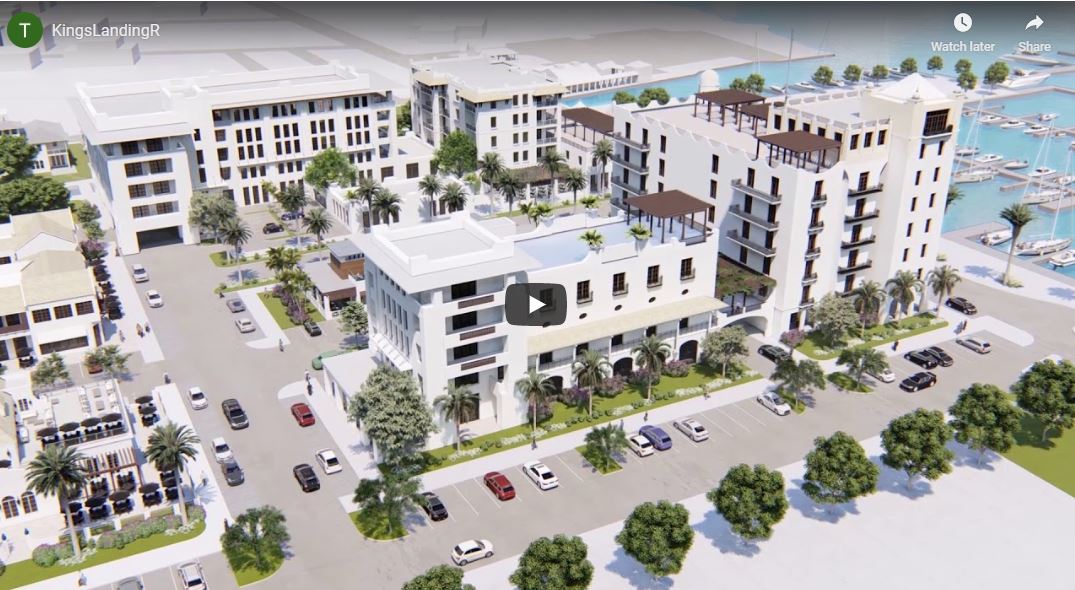
Exclusive Kings Landing Development Coming to Fort Pierce.


King's Landing, a new exclusive community is planned for marina area of Fort Pierce. 

Homeownership ranges from the mid-$400,000s to $1 million+. 

Charleston homes are two-story, three-bedroom and 3 1/2 bath residences.

Homeownership begins in the high $500,000s.

I've read that they are all reserved in advance.

---

If I decided that the predominant culture in which I now live has evil roots and is pervasively evil and I should no longer support it and participate in it or what came from it, that would mean I'd no longer use the internet or computers, or the English language for that matter.  I'd have to burn my degrees and erase them from my vita.   And I'd have throw away antibiotics and other pharmaceutical products, to to China or someplace for medical care, give up hot dogs, Coca Cola, eye glasses, laser surgery, TV, airplane travel, air conditioning, Ford, Chevy and Tesla automobiles, the convenience of the water closet, my Wrangler jeans, and UF Gator shorts.  I'd even have to stop rooting for my football team, watching the NFL and basketball.  And that is just a beginning.

---


Not much on the National Hurricane Center map today.

Happy hunting,
TreasureGuide@comcast.net

Sunday, July 5, 2020

7/5/20 Report - Waves, Liquifaction and Sand Movement on The Beach. NHC Map Lighting Up. Access to Technology and Data.


Written by the TreasureGuide for the exclusive use of treasurebeachesreport.blogspot.com.

Wave Photo by Clark Little Photography
Source: clarklittlephotography.com.
Although it seems like coins and rings and things sink in the sand, they don't sink in undisturbed dry sand without some disturbance of the sand.  You can easily prove that for yourself.  Just take a bowl or container of sand and place a coin or ring on top of it.  You can come back days later and clearly see that the item did not sink.

When you say a object sinks in sand, that seems to me to imply gravity as the primary force, which is misleading because the sand has to move to allow the object to "sink."  Maybe to you that is not an important distinction, and I can accept that, but for me, I'd rather place more emphasis on what has to happen with the sand.  That is what we have to know more about in order to be able to explain how an object will sink at the beach.

Clark Little takes amazing photographs of waves, like the one shown above.  If you visit ClarkLittlePhotography.com you'll see many great photos.

The above photo, besides being beautiful, shows some very interesting things.  Notice the brown area that the person is standing in.  There is brown all around the person, and there is also a brown vertical column in front of the camera.

The brown around in front of the wave shows that a lot of sand has been suspended by the turbulence.  And the brown vertical column, shows how sand has been picked up into the wave.  It seems clear that a lot of sand is being moved in that photo.

We don't often see a wave that big on the Treasure Coast, but the same thing happens with smaller waves, though to a lesser extent.  On the Treasure Coast we don't get waves like that, but the waves we do get will do the same thing - move sand.  And sometimes the waves do get pretty big.

Here is another great photo by Clark Little.  Once again, you can see the sand being sucked up into the wave.


Photograph by Clark Little.
Source: ClarkLittlePhotography.com.

As I've said many times, different materials and objects require different amounts of water force to move.  With a waves shown in these photographs a lot more than sand could be moved.

Here is an interesting explanation from Wikipedia explaining how sand fleas bury themselves.

Emerita is adept at burrowing, and is capable of burying itself completely in 1.5 seconds. Unlike mud shrimp,  Emerita burrows tail-first into the sand, using the periopods to scrape the sand from underneath its body. During this action, the carapace is pressed into the sand as anchorage for the digging limbs.   The digging requires the sand to be fluidised by wave action, and Emerita must bury itself in the correct orientation before the wave has passed to be safe from predators.

As the tides changes, Emerita changes its position on the beach; most individuals stay in the zone of breaking waves. This may be detected by the physical characteristics of the sand. As the tide falls, the sand is allowed to settle; when Emerita detects this, it uses the temporary liquefaction from a breaking wave to emerge from its burrow, and is carried down the beach by the wave action. Longshore drift also drag Emerita laterally along a beach.

Crashing waves cause liquification of the sand.  It burrows into the liquified sand, which settles when the tide recedes.

When you are talking about objects sinking into the sand, a number of things are going on.  Like I said above, it requires some disturbance of the sand.  In some cases that disturbance might be little more than sand moving away, while the denser objects remain.  When the sand is liquified, denser objects can actually sink into the sand, but that requires special conditions.  It does not happen unless the sand is being disturbed in one way or another.

In the near future, I plan to discuss some of the other variables and forces pertaining to how objects sink or appear to sink into sand.

---

Neural networks and AI could be a lot of help to the treasure hunter, but it would require a lot of research and development work, and access to the technology and data. For me the most valuable thing about going through years of higher education was access to technologies, labs and data.  I could  have done without the classes and lectures.  In fact, the thing in education that probably changed my life the most was discovering computers in 1969.

I started with batch processing, which involved punching computer instructions on punch cards, which were then submitted to the computer center.  You'd go back to the computer center in a day or two to get the output (you think your computer is slow).  As often as not, what you got was a listing of the many errors in your program that had to be identified and corrected before submitting the program again and waiting another day for the output.

I'll never forget the day I discovered a teletype machine that allowed me to use interactive BASIC to enter programs.  You'd hit a key and wait about two seconds before seeing the character typed on the computer paper on the teletype in front of you.  The delay in response took some getting used to but it was miles ahead of batch processing.  You know the rest - personal computers and then the internet.

If the general population had access to the most advanced technologies and data, progress would be accelerated many times.  If people had access to the raw data and information, there would be all kinds of genius geeks looking at the data.

A lot of things are accomplished by amateurs despite the barriers.  That is very true with archaeology.  Professionals have their own domain to protect and they seldom appreciate the talent that is sitting out there in the world.  Did you ever get a job when you were way beyond the person that would be your boss?  It won't happen.

In a very rare event about a week ago, a reporter actually asked a follow up question of Dr. Fauci, that elicited some useful information.  Dr. Fauci had mentioned in a very general way that something wasn't working, and the reporter asked what that was. Whoooaa - a reporter actually doing their job. Dr. Fauci said that contact tracing wasn't working because certain populations weren't responding to the calls.  In a moment of unguarded candor, he described those populations, but I won't.   I knew that very useful information was too politically incorrect to ever be mentioned in public again.  It wasn't.

Do you realize that a lot of the people at the top of the health agencies have been there longer than Moses wandered the wilderness?

The point I'm making is that the public only gets filtered information at best.  I'd love to see more good data put out there for the public to access.  Just yesterday I noticed a TCPalm headline that said something like 80% of corona cases are from minority populations.  I found some demographic breakdowns on the Florida Dept. of Health site and their numbers suggested nothing like that headline.

I don't do Facebook or Twitter.  I'm not much interested in the party line, the slogans, mantras, talking points or retweeted retweets.

I do very much like the idea of using neural networks and AI for contact tracing, but am personally more interested in tracing ideas and treasures than viruses, although that would be fun too if the data collection was more systematic and well defined.

---

Source: nhc.noaa.gov

Seems like the National Hurricane Center map is becoming a little more active.  Maybe we'll get some nice waves someday before long.

Tropical wave five is moving away from us and there is another area that has a small chance of developing in the next couple of days.

Happy hunting,
TreasureGuide@comcast.net

Thursday, April 13, 2017

4/13/17 Report - Couple Sinks In Beach Sand. Found Religious Medals. Ghost Ship. Higher Surf Saturday.


Written by the TreasureGuide for the exclusive use of treasurebeachesreport.blogspot.com.


Imagine walking down the beach when you suddenly sink in the sand up to your knees.  Then you are in up to your waist and chest.  You panic.

That is exactly what happened to this couple.

An evening stroll along Torquay Beach for Sam and John Gould quickly turned into a fight for survival.
Sam and her husband John were walking along the beach near the water on Monday about 6.45pm when suddenly they began to rapidly sink into the sand.
Within a few seconds the sand was up to Sam's waist and the more she moved the further down she sank until it was up to her neck.
It was a traumatic experience for John, who fought with all his strength in the darkness while waist deep in sand, to stop his wife from sinking further into the depths.
"On a fear factor of one to 10 - it was 100," a shaken John told the Chronicle...

Here is the link for the rest of the article.

https://www.frasercoastchronicle.com.au/news/within-seconds-we-were-submerged-in-the-sand/3165793/

Reminds me of the hymn that says "all other ground is sinking sand."

If you remember my posts on sand liquefaction ( 3/15/17 ), you'll understand how that could happen.

It is not surprising that this happened in front of a revetment wall.

---


Dug Religious Medallion Finds
Photo by Michael F.
Here is the email message that accompanied the above photo received from Michael F.


In reference to your article yesterday. Indeed religious artifacts are common finds, not only on beaches but also in parks and schools. Below is a photo of a display I made of some of the religious and good luck medallions I have found over the years. Not unusual, I’m sure , but I think they make an attractive display.

An avid reader of your daily reports,

Mike in New Jersey.

Thanks much Mike.  Nice collection.

---

A kayaker found a 110-year-old ghost ship on a small tributary of the Ohio River.

Here is the link for that story.

http://www.viralforest.com/110-year-old-ghost-ship-in-the-ohio-river/

---

I picked up a nice fossil on a Treasure Coast beach this week.  So there are some old things surfacing, but fossils are different than coins.

---

Source: MagicSeaWeed.com.
The surf is supposed to peak Saturday at 4 - 7 feet.  That is a three foot range, so there is a good bit of uncertainty.  If it is seven feet, we could be looking at some beach improvement, depending upon other factors.

The primary swell will be more east than northeast though, so don't expect much.

Happy hunting,
TreasureGuide@comcast.net


Wednesday, March 15, 2017

3/15/17 Report - Advanced Beach Dynamics : Fluidisation and Liquefaction


Written by the TreasureGuide for the exclusive use of treasurebeachesreport.blogspot.com.


It is amazing what you can learn by just walking around and observing.

Yesterday Joe R.wrote about sand fleas as a biological factor contributing to objects sinking in the sand on a beach. Here is some of what wikipedia says about sand fleas (Emerita).
Emerita is adept at burrowing, and is capable of burying itself completely in 1.5 seconds.[5] Unlike mud shrimp, Emerita burrows tail-first into the sand, using the pereiopods to scrape the sand from underneath its body.[11] During this action, the carapace is pressed into the sand as anchorage for the digging limbs.[11] The digging requires the sand to be fluidised by wave action, and Emerita must bury itself in the correct orientation before the wave has passed to be safe from predators.[11]
As the tide changes, Emerita changes its position on the beach;[5] most individuals stay in the zone of breaking waves.[6] This may be detected by the physical characteristics of the sand. As the tide falls, the sand is allowed to settle; when Emerita detects this, it uses the temporary liquefaction from a breaking wave to emerge from its burrow, and is carried down the beach by the wave action.[6] Longshore drift may also drag Emerita laterally along a beach.[6]

Notice the word "fluidised."  Another similar word is "liquefaction."  I've never used those words, but have described those processes to some extent.  If you ever watched the guys that build docks on the river, they use a pump to pump water into the sand and push the poles into area created where the sand has been fluidised.  You can see the same process if you watch people using water to run pipes under the road or driveways.

Here is a little of what I wrote a few days ago about how objects sink.

An item can be uncovered and covered several times before the sand below it is moved enough for it to sink down.  Another way an item can sink is when a wave crashes over the item.  That can push water into the sand, agitating the sand and pushing the grains farther apart while putting downward pressure on the item. 

That is a description of how I would describe what I've observed.  I recently found a study that talks about liquefaction.  "The criterion of liquefaction occurrence is estimated as the critical overpressure required to overcome the effective weight of the soil."

LIquefaction and fluidization are very important processes that can help explain how sand and other things move on a beach, but I was not previously familiar with those terms and have never used those specific words before. I've thought a good bit about how crashing water forces grains apart and puts them into suspension.

A few years ago I posted an amazing picture of a wave that appeared to show sand being sucked up into the wave.  It is easier to understand how that happens when you think in terms of the sand be fluidised.  When sand is fluidised and moves as a liquid, it is easier to imagine how the water and sand mixture becomes part of the wave.  Back then I described that as the sand being sucked up into the wave.  (My discussions of trigger points are also relevant.)

Below is a paragraph from the conclusion section of a scientific study on liquefaction.  The experiment was conducted in a kind of wave tank with a sloped loose soil base leading to a wall.  Waves were generated and the effects measured in a variety of ways.  .

CONCLUSIONS  A physical model for studying liquefaction occurrence in the wave loading against a vertical wall was described. For large enough wave conditions, and for a loose and partially-saturated bed, an excess pore pressure is recorded within the soil and a liquefaction threshold is reached. A large zone of the bed then clearly behaves as a fluid. Sand grains displacements were quantified. Phases of soil compaction and dilatancy were identified. As runs are repeated, the bed becomes more compact and better saturated, and the liquefaction phenomenon no longer occurs.

Soil dilatancy is another interesting phenomena that is relevant and could be discussed at length, but I won't try to do that now.

I'll have to study the article a bit more.  There are specifics in the paper that I'm sure I haven't yet captured.  The jargon they use is a bit strange and needs to be put into common terms.

Now think of a cliff that has been created by erosion on a beach.  A similar thing will happen to the sand in front of the cliff that happened in their wave tank in front of the wall.  If waves crash in front of the cliff and the sand "fluidises," sand will flow away with the water at a rapid rate.

There are a lot more details that I could get into, but I won't do that just yet.  I'm sure I'll add to that at some later time.

Here is the link to the study I was talking about.


I also just found a very interesting video demonstrating soil dilatancy. It shows how a weight will sink into agitated and fluidised sand while a buried ping pong ball rises through the sand to the surface.

I think you'll find the demonstration interesting.


https://www.youtube.com/watch?v=b_aIm5oi5eA

I talked about all of this to some extent before but did not have the studies to back it up, or the terms to make it clear.  The addition of these two new terms makes it easier to discuss and visualize the processes that I had thought about and referenced before.  Quicksand is another  illustration of sand fluidising.  Thinking of the suspended sand particles as  a fluid provides another conceptual tool that changes how we conceptualize its movement.  The studies also increase confidence in the conclusions.

I might not be a hundred percent correct in how I discussed the study today or how I used the terms in every case, but I found both the study and terms helpful in presenting my thinking on the subject.  I'm sure I'll increase my understanding of both in the near future and perhaps be able to explain some of the things we see on the beach a little more clearly.

That is all of that for now. It would take a lot of pages to put this all together for you.  I haven't felt like doing it yet.  It will be a big project.

---

The wind has shifted.  We're not going to have much surf this week, but we are going to have some good tides.  We'll also have some good north winds.

Happy hunting,
TreasureGuide@comcast.net

Tuesday, October 13, 2015

10/13/15 Report - Liquefaction. Missing Fossils. Mammoth Found. Sacrificied Spanish Convoy In Mexico.


Written by the TreasureGuide for the exclusive use of treasurebeachesreport.blogspot.com

Turtle Trail Near High Tide This Morning.
There was a small cut running along in front of the cliff.  It was less than a foot.  In front of that was a mushy convex beach.   Not good conditions at all.

Swell At Turtle Trail Near High Tide. This  Morning.
Notice how the swell piled up at the right side of the photo.

----

The area right in front of the beach is a really high energy zone.  While I feel fairly confident about my understanding of most the beach, I have some unanswered questions about that area.  It is hard to see what is going on with the sand there.

Back some weeks ago I showed some pictures that showed how waves sometimes suck sand up, but it is even harder to see what happens right where the waves crash and where the surge is greatest.

The crashing water has to stir things up there.  The downward force of the water along with the vibrations has to have an effect.  The sand there is saturated.

When soil or sand is saturated forceful downward pressure and vibrations can cause liquefaction.  Here is a link to a video demonstrating liquefaction.

https://www.youtube.com/watch?v=PwvvYxSZ7PI&index=2&list=PLyKoOnp09L5VvVdVP085aMm-NORFp_v5N

Interesting.  I'm thinking that the continual pounding of breaking waves and the vibrations could cause liquefaction, which results in the separation of water and sand and the possible creation of quicksand-like conditions.

I'll probably discuss that more in the future.

---

A huge fossil collection was forgotten in a university bell tower for 100 years.

http://www.nbcnews.com/nightly-news/hidden-fossil-collection-offers-unique-window-extinction-n442556

---

A farmer found a mammoth skeleton in a field in Michigan.

http://ns.umich.edu/new/multimedia/videos/23181-washtenaw-county-mammoth-find-hints-at-role-of-early-humans

---

It was one of the worst defeats in one of history's most dramatic conquests: Only a year after Hernan Cortes landed in Mexico, hundreds of people in a Spanish-led convey were captured, sacrificed and apparently eaten.

Here is the link for the rest of that story.

http://phys.org/news/2015-10-mexican-site-yields-sacrifice-spaniards.html

---

The surf is smooth today.  It will be one foot through Thursday and then start to increase.  The surfing web sites are predicting 5 - 9 feet for this coming Monday.   Those kinds of predictions seldom actually work out.  We'll have to wait and see.

Happy hunting,
TreasureGuide@comcast.net