Showing posts with label overlap. Show all posts

Tuesday, September 10, 2019

9/10/19 Report - Treasure Coin Found After Dorian. Coils and Area of Sensitivity. Storms Coming.


Written by the TreasureGuide for the exclusive use of treasurebeachesreport.blogspot.com.

Find Posted on Facebook.
Photo Forwarded by Kenneth T. 
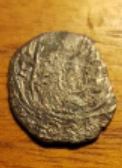
Looks like someone got their first.  This coin was posted on Facebook as some one's first shipwreck coin find.  The posting was on Sept. 5th at 8AM, and it says it was found near the Disney Resort.  So it looks like at least one was found, and probably a few more. The photos and report was sent to me by Kenneth T.

Other Side of Same Coin
Forwarded by Kenneth T.
I wish I had a clearer closeup of that silver reale.

Thanks much Kenneth!

---

I was going to do a detailed look at sweep patterns today, but I didn't get it ready yet.  It will take some time for me to make the illustrations.

I've talked before about the importance of knowing the area of sensitivity for your coil.  The area can vary for different areas of your coil.  Here is a simple illustration.


A concentric coil will typically have a more cone shaped area of sensitivity.  It will be most sensitive near the center of your coil.

A Double D coil will have an area of sensitivity that is consistent from the front to back of your coil.  A target under the front or back of the coil will be detected about as deeply as a target that is under the center of the coil.

I haven't always found that to be true when I personally tested coils, but that is what you'll see in the literature.  I believe in mapping the area of sensitivity for a coil by using an air test.  Move objects under different areas of the coil and see what kind of depth you get under different areas.

I've had some coils that for which the area of sensitivity was very wide.  I could detect targets to the edge and beyond.  Other coils on the same detector wouldn't do that.  In any case, it is good to know what the area of sensitivity is for the coil you are using.

If you have a concentric coil with a cone shaped area of sensitivity and make three sweeps without overlapping your sweeps, you'll be missing half of the area you thought you covered.

Lets say you have a coil that has a cone shaped area of sensitivity and you make three sweeps but are not careful to overlap each sweep.

You can see from the above illustration that you would be missing about half the ground that you thought you had covered.  A lot of overlapping would be required to get maximum depth over the area you are covering.

No matter what type of coil you have and no matter what the literature says about it, I recommend personally mapping out the area of sensitivity for you coil.  You will then know for sure what you are working with and what you need to do.

---

Three Systems Shown on the National Hurricane Center Map.
Here is the National Hurricane Center outlook text.

1. A weak area of low pressure, associated with a tropical wave located
a little more than 900 miles east of the Lesser Antilles is
producing disorganized showers and thunderstorms. Although some
slight development of this system is possible today or tomorrow, by
Thursday, upper-level winds are forecast to become unfavorable for
tropical cyclone formation.  This disturbance is expected to move
slowly westward across the tropical Atlantic Ocean for the next
several days.
* Formation chance through 48 hours...low...20 percent.
* Formation chance through 5 days...low...20 percent.

2. Shower activity associated with a surface trough interacting with
an upper-level low near the north coast of Hispaniola northeastward
over the southwestern Atlantic has increased a little since
yesterday.  Little, if any, development of this disturbance is
expected during the next few days while it moves west-northwestward
across the Bahamas and the Florida peninsula. However, environmental
conditions could become a little more conducive for development
when the system moves into the Gulf of Mexico over the weekend.
Regardless of development, this disturbance will produce periods
of locally heavy rainfall across the Bahamas through Thursday, and
across Florida on Friday and continuing into the weekend.
* Formation chance through 48 hours...low...near 0 percent.
* Formation chance through 5 days...low...30 percent.

3. A tropical wave located just off the west coast of Africa is
expected to move quickly westward during the next several days.
Some slow development is possible late this week and over the
weekend when the system is several hundred miles east of the
Lesser Antilles.
* Formation chance through 48 hours...low...near 0 percent.
* Formation chance through 5 days...low...20 percent.


So it looks like Number Two could move across Florida, but probably not as a strong storm.

Keep an eye on these.  It won't be long before we get into the Fall season, which is when we got some of our most productive storms in the past, including the famed Thanksgiving Storm of 1984.

---

Happy hunting,
TreasureGuide@comcast.net


Sunday, March 29, 2015

3/29/15 Report - Importance and Method Of Determining The Shape Of The Area Of Target Sensitivity For Your Metal Detector Coil.


Written by the TreasureGuide for the exclusive use of treasurebeachesreport.blogspot.com.

Every once in a while I post information that you won't find anywhere else.  Sometimes I get deeper into a topic, or sometimes I approach it a different way.  Today I'll post something I bet you've never heard before, at least not in the same depth or the same way.

Before getting into the new stuff, I need to repeat a bit that I've posted before.  Here goes.

There are several problems with air tests.  An air test can be useful when you get a new detector and are just beginning to get to know a detector and how it responds to different types of targets.  You can't, however, judge how deep a detector will detect in the field from an air test.  I do recommend doing some air tests to begin with, but field tests are much better.

One of the problems with an air test is that people test targets directly under the center of the coil in order to get the maximum depth.  In actual use in the field, the target will often not be under the exact center of the coil.

Also, when conducting an air test, people adjust the speed they move the target so they get the greatest possible depth. In the field, most people do not use the optimal sweep speed.  That can make a big difference. 

An air test can be useful for learning what type of signal, if any, a target will cause.  It can also give you an idea of the relative depth that can be achieved on different targets in air.

A third use, and here is one that you probably haven't read or heard about before, is determining the shape of the area of target sensitivity under the coil.

Illustration Showing Coil and Two Different
Areas Of Detection Sensitivity.
In this illustration the area between the curved red line and the coil would be the area of target sensitivity for a coil that is not extremely deep-seeking.

The area between the green line and the coil would be the area of target sensitivity for a more sensitive coil.

The semi-conical shape would be a very common shape for the area of target sensitivity for many detectors. 

Usually the greatest depth is achieved under the center of the coil.  Less depth is achieved out closer to the edge of the coil.  That is common knowledge.

The shape of the area of sensitivity is different for different detectors and different coils.  The area of sensitivity is more narrow for some detectors and broader for others.

I've had some coils that are more sensitive than others, even on the same detector.  One particular coil that I had was very good at picking up objects slightly outside of the edge of the coil.  Some people might say that isn't possible, but I'm convinced that some coils/detectors/settings can do that.

Coils that are good at detecting good targets at the edge of the coil, or even beyond the edge, have what I call good peripheral sensitivity.  You might think of that as being something like peripheral vision.

The Whites Surf PI, as one example, is much more sensitive near the center of the coil and not very sensitive out away from the center of the coil.  The area of maximum sensitivity is narrow on that detector.  That means that if you want to get good depth, you have to overlap your sweeps a lot.  Otherwise much of the area you cover will only give you something like half the depth or less than what you will get under the center of the coil.

In the above illustration I have four targets.  One would be detected by the less sensitive coil, one by the more sensitive coil and two missed by both coils.

Now here is an important point.   Since the size and shape of the area of target sensitivity is different for different coils and detectors, it is useful to know the approximate size and shape of the area of target sensitivity for your coil and detector.  One way to determine that is by air testing.

To determine the shape of the area of sensitivity for your coil for representative targets, do an air test, but instead of trying to find the maximum depth at the sweet spot, run your test target under the coil in the middle AND ALSO at different distances out from the center of the coil.   You will then learn the approximate shape of the area of target sensitivity.   How narrow or broad is the area of target sensitivity?  How broad is the area of maximum sensitivity?  How close to the edge can you get decent depth on the types of targets you are interested in?

Illustration Showing Three Sweeps, Two To The Rigth & One To The Left

This above illustration isn't very good, but I tried to do it quickly and the tool I selected wasn't great for the purpose.  I hope you can figure it out.

The circle labeled "coil" represents the starting location of the coil before the first sweep.  The big red rectangle shows the area covered by the coil as you sweep to the right.  The green rectangle shows the area covered by the coil on the sweep back to the left, and the blue rectangle shows the area covered by the sweep back to the right.  In actual practice these would most likely be arcs instead of rectangles, but I hope you get the idea.

The yellow area in the middle of each larger rectangle represents the area of greatest depth and sensitivity near the center of the coil.  Even with this tight sweep pattern some small area between the second and third sweep is not covered by the coil at all.  There is some overlap at the end of the first sweep and beginning of the second and some overlap at the end of the second sweep and beginning of the third.

The area of maximum sensitivity and depth (yellow) is more narrow than the width of the coil.  That means that even if you run a tight sweep pattern, the majority of the area covered by your coil is actually getting less than the maximum depth. 

With detectors having a narrow area of maximum target sensitivity that is more serious.  You would be getting much less than your maximum depth in most of the area you cover.  That is why it is important to know the shape of the area of target sensitivity and the areas of good and poor sensitivity for your detector   You can then adjust accordingly.  If it has a narrow area of maximum sensitivity, you might want to overlap more.  If your detector has a good broad area of sensitivity, you won't need to overlap as much to maintain good depth. 

Different situations call or different strategies, but you have to know your detector to make the very best decisions.  Knowing your coil and its response characteristics and strengths and weaknesses will help you make the best decisions.