Showing posts with label sweep. Show all posts

Thursday, September 12, 2019

9/12/19 Report - Coil Awareness and Gridding. Could Be New Storm Forming Not Too Far Away.


Written by the TreasureGuide for the exclusive use o treasurebeachesreport.blogspot.com.

Source: nhc.noaa.gov

Here is one to watch.  The one nearest to us will likely strengthen and could become a tropical storm in the next day or two.  I'll be keeping an eye on that one.

--


Detectorists often talk of gridding.  I take that to mean that they thoroughly and systematically covered an entire area inch by inch, not leaving any part of that area uncovered.  Sometimes they don't mean it that way.  Sometimes they mean what I would only call a lose grid, which may not cover every inch but still employs an up and down and back and forth pattern.

Above you see what I would call a grid pattern.  The detectorist would start at bottom right and work bottom to top sweeping the coil right to left and left to right up the first column and then moving over and coming back down the next column, repeating that until the entire area of interest has been covered.

If you have a ten inch double-d coil, each step you take before changing the direction of your sweep should be ten inches or less, otherwise you would be skipping some area in your grid.

When I'm not worried about covering every inch, such as when I am just sampling an area, I might call that a lose grid.  When I do that, I'm OK with missing a little.  I'm just scanning an area to see how promising it might be.

The illustration above is unrealistic in several respects.  First, it would be very difficult to make such perfect straight passes with a metal detector coil.   That would be quite unnatural and would require you to move very slowly, deliberately and unnaturally.  The natural swing would be an arc - not a straight line.


The illustration immediately above is not totally accurate either, but shows what would be a more typical arc-shape coverage pattern.   The red arrows point to some of the ground that is not covered by the detector coil.  If you walk faster and sweep while moving, you'll miss more ground.  It takes a lot of discipline to not miss skip any ground.

It can be surprising to learn how much ground you are missing.  I recommend throwing a target or two over your shoulder and then turn around and detect without looking at the ground.  You might be surprised by how often you miss an easy surface target.  I've demonstrated that to myself on multiple occasions over the years.

In actual practice, if you are holding your metal detector with your right hand, the arc would be tilted more to your right side.

The primary pivot point for the arc of your coil sweep would probably be your shoulder.  Often your elbow will be another pivot point, and also your waist.

If you consider how you actually swing your detector, you would not be walking down the middle of the path covered by your coil because the more of the arc would be to your right if you are holding the coil in your right hand.

The following illustration shows how your sweeps will be more to the right if you are holding your detector in your right hand.  To cover the entire area well, the distance between your north and south paths will not all be equal.  The first north and south paths are farther apart than the first south and second north path because the sweep is longer on the right of the detectorist.
Path Adjusted For More Complete Coverage Without Much Overlap


Here is an rough illustration of what I would consider a fairly normal sweep.


Note how much more of the sweep is to the side of the hand and the greater length of the sweep on the right partly due to the north to south movement of the coil as well as the east west movement.  That can be used to advantage when are walking parallel to a cut.

Of course different people will have a different sweep and may vary their sweep at different times.   I find it useful to be aware of how I am sweeping and will change it for different situations.

By paying attention to the biomechanics, you might be able to hunt tighter, longer, without becoming tired so soon, and [prevent overuse injuries.

There is also the matter of the vertical movement of the coil, which is just as important.  It is not uncommon for people to lift the coil at the end of sweeps.  That can cause more false signals and reduce depth to the extent that targets are missed.

The type of sweep you use is up to you and might change with the situation, but I think it helps to be aware of your sweep pattern.  You might want to take your detector out to the beach and sweep it on the dry sand just to see the pattern you make.

I'm sure nothing I said today is very surprising, but it is one thing to know something and another to apply it.  I have to remind myself once in a while.

--

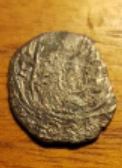
Terry asked me if that wasn't a Mexico style cross on the reale I posted the other day.  I took another look, and it does seem to be the Mexican cross.  I thought it might be a Potosi reale before taking a closer look.

Thanks Terry T.

---

Keep watching the Atlantic.

Happy hunting,
TreasureGuide@comcast.net

Tuesday, September 10, 2019

9/10/19 Report - Treasure Coin Found After Dorian. Coils and Area of Sensitivity. Storms Coming.


Written by the TreasureGuide for the exclusive use of treasurebeachesreport.blogspot.com.

Find Posted on Facebook.
Photo Forwarded by Kenneth T. 
Looks like someone got their first.  This coin was posted on Facebook as some one's first shipwreck coin find.  The posting was on Sept. 5th at 8AM, and it says it was found near the Disney Resort.  So it looks like at least one was found, and probably a few more. The photos and report was sent to me by Kenneth T.

Other Side of Same Coin
Forwarded by Kenneth T.
I wish I had a clearer closeup of that silver reale.

Thanks much Kenneth!

---

I was going to do a detailed look at sweep patterns today, but I didn't get it ready yet.  It will take some time for me to make the illustrations.

I've talked before about the importance of knowing the area of sensitivity for your coil.  The area can vary for different areas of your coil.  Here is a simple illustration.


A concentric coil will typically have a more cone shaped area of sensitivity.  It will be most sensitive near the center of your coil.

A Double D coil will have an area of sensitivity that is consistent from the front to back of your coil.  A target under the front or back of the coil will be detected about as deeply as a target that is under the center of the coil.

I haven't always found that to be true when I personally tested coils, but that is what you'll see in the literature.  I believe in mapping the area of sensitivity for a coil by using an air test.  Move objects under different areas of the coil and see what kind of depth you get under different areas.

I've had some coils that for which the area of sensitivity was very wide.  I could detect targets to the edge and beyond.  Other coils on the same detector wouldn't do that.  In any case, it is good to know what the area of sensitivity is for the coil you are using.

If you have a concentric coil with a cone shaped area of sensitivity and make three sweeps without overlapping your sweeps, you'll be missing half of the area you thought you covered.

Lets say you have a coil that has a cone shaped area of sensitivity and you make three sweeps but are not careful to overlap each sweep.

You can see from the above illustration that you would be missing about half the ground that you thought you had covered.  A lot of overlapping would be required to get maximum depth over the area you are covering.

No matter what type of coil you have and no matter what the literature says about it, I recommend personally mapping out the area of sensitivity for you coil.  You will then know for sure what you are working with and what you need to do.

---

Three Systems Shown on the National Hurricane Center Map.
Here is the National Hurricane Center outlook text.

1. A weak area of low pressure, associated with a tropical wave located
a little more than 900 miles east of the Lesser Antilles is
producing disorganized showers and thunderstorms. Although some
slight development of this system is possible today or tomorrow, by
Thursday, upper-level winds are forecast to become unfavorable for
tropical cyclone formation.  This disturbance is expected to move
slowly westward across the tropical Atlantic Ocean for the next
several days.
* Formation chance through 48 hours...low...20 percent.
* Formation chance through 5 days...low...20 percent.

2. Shower activity associated with a surface trough interacting with
an upper-level low near the north coast of Hispaniola northeastward
over the southwestern Atlantic has increased a little since
yesterday.  Little, if any, development of this disturbance is
expected during the next few days while it moves west-northwestward
across the Bahamas and the Florida peninsula. However, environmental
conditions could become a little more conducive for development
when the system moves into the Gulf of Mexico over the weekend.
Regardless of development, this disturbance will produce periods
of locally heavy rainfall across the Bahamas through Thursday, and
across Florida on Friday and continuing into the weekend.
* Formation chance through 48 hours...low...near 0 percent.
* Formation chance through 5 days...low...30 percent.

3. A tropical wave located just off the west coast of Africa is
expected to move quickly westward during the next several days.
Some slow development is possible late this week and over the
weekend when the system is several hundred miles east of the
Lesser Antilles.
* Formation chance through 48 hours...low...near 0 percent.
* Formation chance through 5 days...low...20 percent.


So it looks like Number Two could move across Florida, but probably not as a strong storm.

Keep an eye on these.  It won't be long before we get into the Fall season, which is when we got some of our most productive storms in the past, including the famed Thanksgiving Storm of 1984.

---

Happy hunting,
TreasureGuide@comcast.net


Thursday, February 15, 2018

2/15/18 Report - Are You Searching As Thoroughly As You Think? Sweep Patterns: Problems and One Tip. SAR Museum Artifacts Deaccessed.


Written by the TreasureGuide for the exclusive use of treasurebeachesreport.blogspot.com.


You might think that you move your coil in nice straight slightly overlapping parallel lines something like the way you mow the lawn if you have a rectangular lot without trees or obstacles.  If you are in a hurry or just not being careful to cover every inch, your coil might move more like the pattern shown immediately below.

Common Sweep Pattern
This pattern is so nice and neat as the ideal one you might imagine.  As you continually move forward so does your coil.  And the sweeps do not typically move in a straight line across your body.

How you move your coil makes a difference.  It is easy to move too quickly.  When you look out over a beach you can see hundreds of yards of sand to cover.  There is more ground than you can possibly cover.  The tendency is to get in a hurry and move too quickly.

If you think about all the beach you can see, your target might be in one square inch.  The trick is to put your coil over that very small area that contains the target.  Hitting that one square inch isn't all that easy.  If there is a concentration of targets, your chances of hitting something is much better.

I remember way back shortly after I began detecting, a fellow hid his watch under the sand and asked if I could find it.  A watch should be easier to find than a coin, but I made a pass and was surprised that I missed the buried target.  That showed me that I wasn't covering very well.

When you move quickly, whether it is too quickly or not, you can get false signals at the end of each sweep where the change of direction is abrupt.  That is especially true when there are variations in ground mineralization.   It is also common to slightly, though perhaps imperceptibly, raise the coil at the end of a sweep too, which can also add to false signals unless your sensitivity is low.

One little trip that I've found helpful is to think about moving your coil in a small loop at the end of each sweep.  You do not need to actually move the coil in a perceptible loop to get the effect.  Just the slightest amount will make the change in direction smoother.

Imagined Loops at End of Sweeps.
If you are getting false signals at the end of some sweeps, instead of lowering the sensitivity, you might try this. Again, the loop doesn't have to be big.  This techniques might also help you slow down your sweep speed.

Pay attention to your coil movement.  Try this technique and see if it does anything for you.  I always recommend testing things.  I personally do a lot of testing and experimenting with my detector and even if I read something in a manual, I test it out for myself.  I recommend that you do the same thing.

I've had coils that were supposed to be the same that showed significant differences.  I found that out through testing.

-----

The Sons of the American Revolution Museum is deaccessing artifacts.  Some will be claimed, but unclaimed artifacts will be auctioned off.

Here is a web site where you can check out the artifacts to be deaccessed.

https://sar.org/deaccession-artifacts

I've heard from people in the past who have donated items to museums and then were disappointed by how those items were used or not used.  Some were never on display and some were lost.  I don't want to discourage you from lending or donating artifacts, but you might want to make sure how they will be handled before doing that.

---

Of course the big news yesterday was about the shooting in Broward County.  As you'd expect the shooter had problems and there were warning signs.

Here is a link about that.

http://blog.spiritdaily.com/news/shooter-had-troubled-past

There are a lot of hurting broken people out there and they tend to spread the hurt.

What beautiful weather for enjoying nature.

On the Treasure Coast we've had something like a two to four foot surf for a while, and that will continue.

Not much to talk about there.

Happy hunting,
TreasureGuide@comcast.net

Thursday, September 3, 2015

9/3/15 Report - Some 1715 Fleet Salvage History and Implications. Five Simple Ways To Improve Detector Perfomance.


Written by the TreasureGuide for the exclusive use of treasurebeachesreport.blogspot.com.


I thought I'd present a little of the history on the 1715 Fleet today.

We know about the salvage efforts of recent years, but salvage of the fleet started immediately after the disaster.  Of course the first priority was survival.  Fresh water and food was needed.  Guns were undoubtedly a top priority.

Imagine the hostile environment of the barrier islands in those days.  I read that survivors buried themselves in the sand for relief from the mosquitoes.

Within a week of the disaster, Juan del Hoy Solrozano, sergeant major at Havana, had divers working on three of the eleven ships.   Those were the Tierra Firme Almiranta, Urca de Lima and La Hollandesa.  Those efforts continued for several years.

Illegal salvors also arrived from all over the Caribbean.  In 1718, that is three years after the disaster, the Spanish surprised and captured eight sloops in the act of looting the wrecks.

We also know how in 1716 Henry Jennings attacked the salvage camp where a lot of the salvaged treasure was kept in a block house that was on the narrow strip of land near the present McClarty museum.

As I've mentioned a few times lately, it weren't thrown away so much like they are today.  In days past items were repaired again and again.  Archaeological excavations show items such as guns that were over a hundred years old that had been repaired and upgraded again and again and were still in service a 100 years after they were first manufactured.  That is something that can make it more difficult to identify the age of artifacts.

We can imagine the Native Americans and how they would have been attracted to the wrecks and any strange items found on the wrecks or on the beach.

I remember once when a cargo ship leaving Port Everglades lost a cargo container of furniture and people were running up and down the beach picking up what they could.  It was mostly small tables, as I recall.  That would have been nothing to the wreckage of the 1715 Fleet.

I think people often think of the wreck as happening and then just laying there to decompose over the years.  I'm thinking that it must have been like a carcass on the Savannas of Africa.  It would have attracted everybody from miles around.  First the big predators like the lions and jackals, which would have to protect the carcass from other predators or lose their prize.  Then would come the smaller predators and vultures to clean up any easy pickings.  It wouldn't stop until every useful item that could be easily obtained was taken.

The only thing that saved all of that treasure over the years is the water and sand, which made the remaining treasure invisible and/or simply unsalvageable.

We know that by 1744, while much of what could be salvaged at that time had been salvaged, the British cartographer Bernard Romans reported the masts of the Spanish Fleet were still visible above the water.

You know how it goes.  The beach hides things like coins.  The sand covers it up, only exposing a little from time to time when the conditions are right, and then covers it up again.

The masts and other visible signs eventually rotted away or were covered up and the fleet faded into history until Kip Wagner started it all over again.

One thought I wanted to put out there today is that the galleons and all the treasure didn't sink straight to the bottom and then sit there for three hundred years undisturbed.  We know the water moves things from time to time, but I think we often fail to take into account all that took place in the years after the sinking, especially all of the salvage efforts by the Spanish, pirates or privateers, and Native Americans.

We know that items have been found around the salvage camps.  I'm sure the the salvage crews, working with less technology and precision than is exercised today, picked up items and sometimes lost them in the sand again.  I'm sure that there were people who made off at night to bury their own little personal cache with the hope of recovering it at some future time.

When you find a piece of treasure on the Treasure Coast, it might have been lost and found before.  It might have been salvaged and then lost in one way or another.  It might have been lost by pirates.

One thing I find useful is this chart that I've posted a few times before.


The chart provides a reminder of many of the ways that things were dispersed from pre-impact to post salvage.

It is difficult to guess how an item ended up where it did.  It might have come from the local shipwreck.   Or it might have ended up where it was found only after a long series of human and natural events.  That makes it all the more mysterious and wonderful, and provides a lot of food for thought as we try to unravel the mystery.

---

Here are five simple ways to improve detector performance without any adjusting your settings.

1. Keep you coil close to the ground.

2. Keep your coil at the same distance from the ground through the entire sweep.

3. The front and back of the coil should be the same distance off the ground - not tilted.

4. Make the change in direction at the end of each sweep smooth.  Take some of the jerkiness out of the change in direction.

5. Identify and use the optimal sweep speed.

---

We had a West wind this morning on the Treasure Coast.  The surf was only around one foot.  Expect a smooth surf through at least the weekend.

Fred is still out there as a tropical storm but won't affect us.

Happty hunting,
TreasureGuide@comcast.net


Sunday, March 29, 2015

3/29/15 Report - Importance and Method Of Determining The Shape Of The Area Of Target Sensitivity For Your Metal Detector Coil.


Written by the TreasureGuide for the exclusive use of treasurebeachesreport.blogspot.com.

Every once in a while I post information that you won't find anywhere else.  Sometimes I get deeper into a topic, or sometimes I approach it a different way.  Today I'll post something I bet you've never heard before, at least not in the same depth or the same way.

Before getting into the new stuff, I need to repeat a bit that I've posted before.  Here goes.

There are several problems with air tests.  An air test can be useful when you get a new detector and are just beginning to get to know a detector and how it responds to different types of targets.  You can't, however, judge how deep a detector will detect in the field from an air test.  I do recommend doing some air tests to begin with, but field tests are much better.

One of the problems with an air test is that people test targets directly under the center of the coil in order to get the maximum depth.  In actual use in the field, the target will often not be under the exact center of the coil.

Also, when conducting an air test, people adjust the speed they move the target so they get the greatest possible depth. In the field, most people do not use the optimal sweep speed.  That can make a big difference. 

An air test can be useful for learning what type of signal, if any, a target will cause.  It can also give you an idea of the relative depth that can be achieved on different targets in air.

A third use, and here is one that you probably haven't read or heard about before, is determining the shape of the area of target sensitivity under the coil.

Illustration Showing Coil and Two Different
Areas Of Detection Sensitivity.
In this illustration the area between the curved red line and the coil would be the area of target sensitivity for a coil that is not extremely deep-seeking.

The area between the green line and the coil would be the area of target sensitivity for a more sensitive coil.

The semi-conical shape would be a very common shape for the area of target sensitivity for many detectors. 

Usually the greatest depth is achieved under the center of the coil.  Less depth is achieved out closer to the edge of the coil.  That is common knowledge.

The shape of the area of sensitivity is different for different detectors and different coils.  The area of sensitivity is more narrow for some detectors and broader for others.

I've had some coils that are more sensitive than others, even on the same detector.  One particular coil that I had was very good at picking up objects slightly outside of the edge of the coil.  Some people might say that isn't possible, but I'm convinced that some coils/detectors/settings can do that.

Coils that are good at detecting good targets at the edge of the coil, or even beyond the edge, have what I call good peripheral sensitivity.  You might think of that as being something like peripheral vision.

The Whites Surf PI, as one example, is much more sensitive near the center of the coil and not very sensitive out away from the center of the coil.  The area of maximum sensitivity is narrow on that detector.  That means that if you want to get good depth, you have to overlap your sweeps a lot.  Otherwise much of the area you cover will only give you something like half the depth or less than what you will get under the center of the coil.

In the above illustration I have four targets.  One would be detected by the less sensitive coil, one by the more sensitive coil and two missed by both coils.

Now here is an important point.   Since the size and shape of the area of target sensitivity is different for different coils and detectors, it is useful to know the approximate size and shape of the area of target sensitivity for your coil and detector.  One way to determine that is by air testing.

To determine the shape of the area of sensitivity for your coil for representative targets, do an air test, but instead of trying to find the maximum depth at the sweet spot, run your test target under the coil in the middle AND ALSO at different distances out from the center of the coil.   You will then learn the approximate shape of the area of target sensitivity.   How narrow or broad is the area of target sensitivity?  How broad is the area of maximum sensitivity?  How close to the edge can you get decent depth on the types of targets you are interested in?

Illustration Showing Three Sweeps, Two To The Rigth & One To The Left

This above illustration isn't very good, but I tried to do it quickly and the tool I selected wasn't great for the purpose.  I hope you can figure it out.

The circle labeled "coil" represents the starting location of the coil before the first sweep.  The big red rectangle shows the area covered by the coil as you sweep to the right.  The green rectangle shows the area covered by the coil on the sweep back to the left, and the blue rectangle shows the area covered by the sweep back to the right.  In actual practice these would most likely be arcs instead of rectangles, but I hope you get the idea.

The yellow area in the middle of each larger rectangle represents the area of greatest depth and sensitivity near the center of the coil.  Even with this tight sweep pattern some small area between the second and third sweep is not covered by the coil at all.  There is some overlap at the end of the first sweep and beginning of the second and some overlap at the end of the second sweep and beginning of the third.

The area of maximum sensitivity and depth (yellow) is more narrow than the width of the coil.  That means that even if you run a tight sweep pattern, the majority of the area covered by your coil is actually getting less than the maximum depth. 

With detectors having a narrow area of maximum target sensitivity that is more serious.  You would be getting much less than your maximum depth in most of the area you cover.  That is why it is important to know the shape of the area of target sensitivity and the areas of good and poor sensitivity for your detector   You can then adjust accordingly.  If it has a narrow area of maximum sensitivity, you might want to overlap more.  If your detector has a good broad area of sensitivity, you won't need to overlap as much to maintain good depth. 

Different situations call or different strategies, but you have to know your detector to make the very best decisions.  Knowing your coil and its response characteristics and strengths and weaknesses will help you make the best decisions.