Showing posts with label National Hurricane Center. Show all posts

Tuesday, September 10, 2019

9/10/19 Report - Treasure Coin Found After Dorian. Coils and Area of Sensitivity. Storms Coming.


Written by the TreasureGuide for the exclusive use of treasurebeachesreport.blogspot.com.

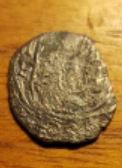
Find Posted on Facebook.
Photo Forwarded by Kenneth T. 
Looks like someone got their first.  This coin was posted on Facebook as some one's first shipwreck coin find.  The posting was on Sept. 5th at 8AM, and it says it was found near the Disney Resort.  So it looks like at least one was found, and probably a few more. The photos and report was sent to me by Kenneth T.

Other Side of Same Coin
Forwarded by Kenneth T.
I wish I had a clearer closeup of that silver reale.

Thanks much Kenneth!

---

I was going to do a detailed look at sweep patterns today, but I didn't get it ready yet.  It will take some time for me to make the illustrations.

I've talked before about the importance of knowing the area of sensitivity for your coil.  The area can vary for different areas of your coil.  Here is a simple illustration.


A concentric coil will typically have a more cone shaped area of sensitivity.  It will be most sensitive near the center of your coil.

A Double D coil will have an area of sensitivity that is consistent from the front to back of your coil.  A target under the front or back of the coil will be detected about as deeply as a target that is under the center of the coil.

I haven't always found that to be true when I personally tested coils, but that is what you'll see in the literature.  I believe in mapping the area of sensitivity for a coil by using an air test.  Move objects under different areas of the coil and see what kind of depth you get under different areas.

I've had some coils that for which the area of sensitivity was very wide.  I could detect targets to the edge and beyond.  Other coils on the same detector wouldn't do that.  In any case, it is good to know what the area of sensitivity is for the coil you are using.

If you have a concentric coil with a cone shaped area of sensitivity and make three sweeps without overlapping your sweeps, you'll be missing half of the area you thought you covered.

Lets say you have a coil that has a cone shaped area of sensitivity and you make three sweeps but are not careful to overlap each sweep.

You can see from the above illustration that you would be missing about half the ground that you thought you had covered.  A lot of overlapping would be required to get maximum depth over the area you are covering.

No matter what type of coil you have and no matter what the literature says about it, I recommend personally mapping out the area of sensitivity for you coil.  You will then know for sure what you are working with and what you need to do.

---

Three Systems Shown on the National Hurricane Center Map.
Here is the National Hurricane Center outlook text.

1. A weak area of low pressure, associated with a tropical wave located
a little more than 900 miles east of the Lesser Antilles is
producing disorganized showers and thunderstorms. Although some
slight development of this system is possible today or tomorrow, by
Thursday, upper-level winds are forecast to become unfavorable for
tropical cyclone formation.  This disturbance is expected to move
slowly westward across the tropical Atlantic Ocean for the next
several days.
* Formation chance through 48 hours...low...20 percent.
* Formation chance through 5 days...low...20 percent.

2. Shower activity associated with a surface trough interacting with
an upper-level low near the north coast of Hispaniola northeastward
over the southwestern Atlantic has increased a little since
yesterday.  Little, if any, development of this disturbance is
expected during the next few days while it moves west-northwestward
across the Bahamas and the Florida peninsula. However, environmental
conditions could become a little more conducive for development
when the system moves into the Gulf of Mexico over the weekend.
Regardless of development, this disturbance will produce periods
of locally heavy rainfall across the Bahamas through Thursday, and
across Florida on Friday and continuing into the weekend.
* Formation chance through 48 hours...low...near 0 percent.
* Formation chance through 5 days...low...30 percent.

3. A tropical wave located just off the west coast of Africa is
expected to move quickly westward during the next several days.
Some slow development is possible late this week and over the
weekend when the system is several hundred miles east of the
Lesser Antilles.
* Formation chance through 48 hours...low...near 0 percent.
* Formation chance through 5 days...low...20 percent.


So it looks like Number Two could move across Florida, but probably not as a strong storm.

Keep an eye on these.  It won't be long before we get into the Fall season, which is when we got some of our most productive storms in the past, including the famed Thanksgiving Storm of 1984.

---

Happy hunting,
TreasureGuide@comcast.net


Friday, August 30, 2019

8/30/19 Report - 3 PM Update and 5 PM Update - Change to ECMWF Model.


3 PM Update.

The weather channel just announced a change to the ECMWF track.  The new change took the track of Dorian up along the East Coast without coming onshore in Central Florida.  I'd be happy with that. 

The National Hurricane Center map has not changed the cone yet. 

At the time of this update, the GFS track was heading up towards the Space Coast. 

---

At 5 PM the weather channel once again showed the track of the European model that keeps Dorian just off-shore.  They did however mention that are still models that take it directly into the state.

Also the latest National Hurricane Center cone has now changed a bit.  It now has the center of Dorian making landfall right over the Fort Pierce Inlet and then turning north.

Center of National Hurricane Center Cone.
Source: nhc.noaa.gov
The past few National Hurricane Center updates seem to show a trend of the track moving more to the north and east.

Unfortunately there is still a lot of uncertainty on this one.  The spaghetti models are still all over the place.

Stay tuned.


---

Saturday, August 24, 2019

8/24/19 Report - Two Weather Systems to Watch. Changing Times and Changing Finds.


Written by the Treasureguide for the exclusive use of treasurebeachesreport.blogspot.com.

Source: nhc.noaa.gov
The National Hurricane Center map is becoming more active in our part of the world.  

The area of low pressure over Florida has a 70%  chance of becoming a cyclone.  It is predicted to move north and out into the Atlantic.  I'd say there is not much chance that it will affect us very much.

The other system is heading west/northwest, but I don't think it will affect us much either, but there is still a lot of time for it to change.

Still, it is that time of year and I'll be watching for something that might improve beach detecting conditions.

The Treasure Coast surf is supposed to be up to three feet today but nothing higher than two feet for the next week or so.

---

How things have changed!  And it didn't take long.

I came across some photos of a something you'll probably never see again.  It was a circus parade that came down main street when I was young..


I remember going out to the field where they were going to set up and watching the elephants being used to put up the poles to hold the big tent.

That doesn't happen any more.  It is something children today will never see again.

Its amazing how much has changed in my lifetime, and even during the years that I've been detecting.

There was a time when you'd find a lot of the ring type pull tabs.  Now they aren't too common.

Its amazing really.

I remember when we first got a TV and there was only on program, which came on in the evening for one hour.  Friends of the family would come over to watch it.

Gold and jewelry fashions have changed too.  Now you get a lot of rings made of materials like tungsten or stainless steel, which I didn't find twenty years ago.

Even gold changed.  Recently there was a lot more white gold.  It seems that yellow gold is coming back now.

Of course the internet changed a lot of things.  I think the metal detecting community is generally much more informed now.  And it is a great research tool.

I found tons of hotel keys in the past.  They are not nearly as common today.  Many hotels are now using the magnetic cards.

I also used to find a lot of arcade or game room tokens - also transportation tokens ie bus, turnpike, and other types of tokens.

Circus Token Dug on Florida Beach.


Here is a very nice pdf on the history of early gaming tokens.

http://www.ccgtcc-ccn.com/tokens.pdf

Silver modern coins were more common finds too.

I also used to get a lot more of the WW II shells than I have in recent years.

Also soda bottle caps used to litter some beaches.  We still have bottle tops to contend with, but not so much from soda bottles.

The same for glass soda bottles, which are now mostly plastic.

And one thing I found recently that I never found way back when is a smart phone.  I did find a few beepers back some years ago, if you remember those now.

All of the older things can still be found today if you find a good site or we get some improvement in beach conditions.

I'm sure I could think of some more changes in the last thirty or so years of metal detecting.  Maybe you can add some to my list.


That one system has a chance of developing in a few days.


Happy hunting,
TreasureGuide@comcast.net

Friday, August 23, 2019

8/23/19 Report - Atlantic Heating Up. Mint Error. Problems With Air Tests and Tests Gardens.


Written by the TreasureGuide for the exclusive use of treasurebeachesreport.blogspot.com.

Source: nhc.noaa.gov
An area of low pressure just east of the upper Florida Keys has a 70 percent chance of developing into a tropical cyclone over the next five days, but models disagree on what it means for South Florida this weekend.
The system, which would be named Dorian if it gains tropical storm status, has a 40 percent chance of developing over the next 48 hours.
While heavy rain is expected from the would-be Dorian, National Weather Service meteorologists in Miami said Friday morning that “global weather models are all over the place and not in good agreement with how they handle this disturbance.”

Looks like the Atlantic is becoming more active.  We might actually get improved beach detecting conditions some day.

We're getting a small bump in the surf now. In the next couple of days we might get up to three feet - which still isn't that much.
---

If you check your clad finds sometimes you'll find some interesting things.  Here is a 2016 clad quarter.

2016 P Quarter Showing Strike Through.
Here is a closer view of the strike-through.

Strike-Through on 2016 Quarter.

This has been identified as a strike-through, which is when debris is on the planchet when the die hits it to impress the image.

---

Conducting an air test or using a test garden is very different from metal detecting in the field.  When you conduct an air test, you start with a known target and do whatever is needed to get the best signal from the metal detector.  That is the opposite of what happens in the field.  In the field, instead of bringing a target to the detector and presenting it in the best way possible, you cover large areas of ground not knowing if there is a target or where in that acreage a target might be hiding.  In that situation, your behavior is very different.  You scan large areas - probably very quickly.  Your sweep pattern, including speed and height and other factors come into play, as well as various sources of noise, ranging from wind, surf, other people, tinnitus, electrical and radio interference, and ground mineralization to junk.  An air test has very little in common with actual metal detecting.  It is, however, a good starting place for learning about your metal detector.

A test garden is in a specific location.  The detector doesn't have to adjust to changing salt mineralization or any kind of changing ground mineralization, not to mention the fact that and you know where the targets are and what they are.  

I can't stress enough the huge effect of having a known target in a specific location, as compared to not knowing if there are any good targets, or where it might be in an expansive area, and not knowing what kind of target it might be if there is one.  To make that even more complex throw in an unknown quantity of randomly scattered junk targets of various types.

One of the early goals of psychologists was to measure the sensitivity of our sensory systems. They found that factors other than the sensitivity of sense receptors influence whether a stimulus is detected or not.  There is no single fixed level below which a person never detects a stimulus and above which a person will always detect it. Other factors are involved.

This approach [signal detection theory] abandons the idea of a threshold. Instead, the theory involves treating detection of the stimulus as a decision-making process, part of which is determined by the nature of the stimulus, by how sensitive a person is to the stimulus, AND by cognitive factors...  when a person is quite uncertain as to whether the stimulus was present, the individual will decide based on what kind of mistake in judgment is worse: to say that no stimulus was present when there actually was one or to say that there was a stimulus when, in reality, there was none.

To sum that up, detection of a signal is not only determined by the sensory system but also affected by decision strategies (cognitive/thought processes).  Sensory thresholds vary depending upon decision strategies and the value of targets and risk of mistakes.  Thresholds are also affected by expectations.  What weight do you put on the possibility of missing a good target versus digging junk?  Are you excited and expecting to find something big or getting worn out and tired of digging junk.  Those kinds of things can affect your focus, attention and perceptions as well as other behaviors.

An example from everyday life illustrates this point. Suppose a person is expecting an important visitor, someone that it would be unfortunate to miss. As time goes on, the person begins to "hear" the visitor and may open the door, only to find that nobody is there. This person is "detecting" a stimulus, or signal, that is not there because it would be worse to miss the person than to check to see if the individual is there, only to find that the visitor has not yet arrived. 


Signal detection theory was developed during World War II when radar was invented.  They wanted to study how operators could detect planes on the radar scope also showing other return (noise).

The effect of knowing where a target is and working backward to see if you can detect it is very different and results in very different results than you would get not knowing if there is any target at all.  In a test bed, that can be somewhat minimized by closing your eyes and truing to detect as if you had no idea where the targets were.

Unfortunately there is no perfect way to compare metal detectors.  They have so many different settings and there are so many variables in how they are used.  A large part of success is determined by how you use the detector rather than its capabilities.    Air tests and test beds definitely have theie place, but the limitations should be recognized too.

---

Happy hunting,
TreasureGuide@comcast.net