Sunday, November 13, 2016

11/13/16 Report - Old Encrusted Gold Ring Found. Fishers Back To Work on Atocha and Margarita. Super Moon And Small Surf.


Written by the TreasureGuide for the exclusive use of treasurebeachesreport.blogspot.com.

Old Gold Ring Before and After Cleaning
Find and photo by Duane C.

Duane C. sent me the above pictures of the gold ring along with the following email message.

You helped me before after being referred by Terry S.  I sent a picture of an old pewter ring I had found here in SC beach hunting.

My hunting friend Bud had found this the other day after hurricane Matthew. We believe it may have came in with high ocean surge & wind during the storm. It had a heavy encrustation & below is before & after cleaning. It passed both acid & electronic testing as 10k gold weighing 2.5 grams. We were curious on how old it may be based on that crust build up. 


Maybe a good one for your blog.    Thanks again.  Duane


Below is another view of the ring.

Another View of the Same Ring.
Notice the unusual pitting and irregular surface.   I've dug gold filled rings that showed a similar effect.  If they didn't say it was tested, I would have guessed that it was gold filled.

Also wondered if it might be depletion guilded.

Here is a YouTube video showing and explaining how depletion guiding was done by the ancient Colombians.


A copper and gold alloy was created and the gold brought to the then the surface copper removed.  The result was an item with a gold surface and mostly copper underneath.

I talked about crusts and how difficult it is to determine age from crusting in my recent post on the London Hammer.  Things can crust up quickly if the conditions are right.

We are still hearing of things being found as a result of hurricane Matthew.

---

There was a slow down in salvage operations with the rough seas after hurricane Matthew.  The Fisher organization is now back at work.

The Magruder will be back checking the area where the rapier was found.

The Dare will be checking some big hits along the Atocha trail.

The Sea Reaper will be searching the Margarita Trail.  They will be looking for a second pile that was salvaged by the Spanish.

---


Pod of About Seven Dolphin In The River This Morning.


You might have noticed the big moon last night.  Monday will be the Super Moon.  The moon will be at its full phase and at its closest point to the earth at the same time.  It will be the closest since 1948 and will not happen again until 2034.

We'll have some pretty big tides, including a high high tide and a negative low tide.
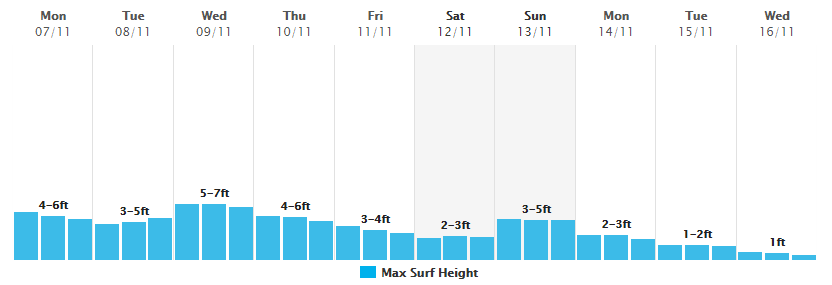
The surf will be small for a few days.
I had computer problems yesterday.
Happy hunting,
TreasureGuide@comcast.net

Friday, November 11, 2016

11/11/16 Report - Amazing 1715 Fleet Artifact As Found and As Cleaned. More On Relic Hunt.


Written by the TreasureGuide for the exclusive use of treasurebeachesreport.blogspot.com.

Complete Nested Weight Set  As Found.
Photos of nested weights submitted by Jonah M.

Here is a super artifact found by Dan B. on the Capitana during the 2016 salvage season.

Here is what Captain Jonah Martinez said about the artifact.
  ...This was found on aboard the Capitana this year and had a little encrustation on it. After some work at the lab we were able to open it and saw the whole set of cups were in it ,still fused more work was necessary. Once they came apart light cleaning was done next was to fasten bronze arms back to the top and outer cup. We made new little pins and doweled them...
 
Complete Nested Weight Set After Cleaning.

Sane Set With Weights Displayed.

Thanks much Jonah!  That is a great artifact and it is nice to see it both as found and then cleaned.

---

I did a second day of hunting a land site.  Here are a couple of things that I dug up.  Neither have been cleaned at all yet
Iron Toy Train Find.
I nearly threw the train away.  It looked like a piece of scrap metal until some of the dirt came off of it.  That is not a mistake that I make very often.  I am usually very careful about that.

I like really like toy trains and will probably clean this one up and mount it before display even though it looks like a piece of junk.

Watch Find.
There are more similarities than you might think between land and beach hunting.

I'll talk about some of those in the near future.

I was using a detector that I don't use very often and had to relearn how it responds to some targets.

I think it is always good to do a different type of hunting once in a while.

That is all for now.

Happy hunting,
TreasureGuide@comcast.net

Thursday, November 10, 2016

11/10/16 Report - Mystery Find. Story of Returned Ring. November 11 Educational Talks in Orlando.


Written by the TreasureGuide for the exclusive use of treasurebeachesreport.blogspot.com.

Mystery Object

---

Here is a cool YouTube video showing the finding of a ring then cleaning, researching and eventually the return of the ring.

Here is the link.

https://www.youtube.com/watch?v=Ir8mpWb0CB8&feature=youtu.be

Thanks to Bernie C. for pointing me to this video.

---

I did a little land hunting today.  I don't do that often, but I always like to when I have an interesting place to look.  Not much success, but did find the mystery object shown above.  Maybe someone can tell me what it is.

Obviously I didn't get it cleaned yet.  It looks something like a wrench on one end but is bent up on the other end like it was coat hook or something.

It was found in an area that has been used continuously for hundreds of years.

---

Here is the schedule and description of the educational talka that will be held in Orlando before the Sedwick Coins floor auction.

Friday November 11th

Martin Woodward (Isle of Wight, U.K.)

2:00PM "Treasures from the Deep: Significant Shipwreck Finds from the Isle of Wight and U.K."

Martin Woodward has been a professional diver since 1968, and is still actively diving in the UK and other locations worldwide. He was also involved with the RNLI for a total of 38 years, retiring as Coxswain of the Bembridge, Isle of Wight, lifeboat on reaching the age limit. Martin’s diving career includes “deep saturation” diving in the North Sea, oilfields in the Persian Gulf and many other locations worldwide. It has covered all aspects of commercial diving, including multiple shipwreck and salvage projects.
Isaac Rudman (Santo Domingo, Dominican Republic)
3:30PM "La Vida de un Coleccionista Profesional" (in Spanish)

Isaac Rudman, originally from Cuba, splits his time between Santo Domingo and Miami, and made his money importing and manufacturing home appliances. He collects Latin American art, rare coins, and pre-Columbian artifacts, among other things. He has been a collector for over 40 years and has vast experience in collecting from all over the world. From a button to a sculpture or the rarest of Mexican coins--he has seen it all.
Paul Karon (Florida, U.S.A.)
4:30PM "Strategies for Purchasing Potosi Cobs"

Paul Karon lived for over 38 years in San Juan, Puerto Rico, before moving to Florida in 1994 with his family. Paul was a very successful commercial printer with 40 years of experience; his massive operation had dozens of presses and he had hundreds of employees. In addition to printing he has been always devoted to collecting cobs, especially from Potosi, forming one of the most important collections ever offered in the 1990s along the lines of the Sellschopp accumulation. Paul became a full-time dealer specializing in cobs and went from being a collector to a curator of some other important collections. Today Paul visits the most important shows around the country and still consults clients and works as a dealer.
Dave Horner (Florida, U.S.A.)
5:45PM "Compilation of Treasure Recovery Stories 1970-1990"

Dave Horner has lived a life of adventure. From his early days in the Navy to a successful business career, he has studied subjects that interest him with a dogged determination. While living in Virginia Beach, Virginia, he founded one of the first professional dive shops in the mid-Atlantic region and pioneered sport diving for treasure through charter trips to sunken ships. He is a member of the Explorers Club and has sailed his custom schooner to interesting islands and reefs around the world. Dave is the author of several books, mostly about sunken ships, including The Treasure Galleons and Shipwreck (about the 1654 Capitana).
Friday November 11th Pre-Auction Dinner at 7:30 PM

- Saturday auction starts at 9:00 AM EST *all day.

- Sunday auction starts at 9:00 AM EST morning only.


- Monday Internet Only session, from 1PM (for about 4-5 hours)


Thats all for today.

Happy hunting,
TreasureGuide@comcast.net

Wednesday, November 9, 2016

11/9/16 Report - Some Basics On Detecting Strategies. Ancient Iron Tools Found by Metal Detector.


Written by the TreasureGuide for the exclusive use of treasurebeachesreport.blogspot.com.

Iron Viking Tools Found by Metal Detector.
Source: see link below.

I started to talk about strategies one day not long ago.  The first thing I pointed out is that the selection of a strategy should depend upon how you value different things.  If you ask people if they'd rather find a valuable piece of modern jewelry or an old coin, different people will give you different answers.  Some people like to find things that do not necessarily have a high economic value, while others are primarily interested in the economic value of their finds.  Some people are analytical and have a good idea of what they want to accomplish and know how they value things.  In order to select the most effective strategy, you first have to be clear about how you value things and what you want to find.

Different people utilize different decision strategies.  The eternal optimist, for example, tends to use what those who study decision theory refer to as the Maximax strategy.  They consider the best possible thing that could happen and make decisions based upon the best possible outcome.  They think of big finds, and don't think so much about the possible cost.

Treasure hunters are generally optimists to some degree.  They have to expect finding something and probably dream of finding something in particular.  The prime example of the eternal optimist is Mel Fisher, who was able to search for the Atocha year after year without being discouraged and giving up.  He expected to find it and looked at every day as if that day would be the day.  Most people are not that optimistic.

If you are a pessimist, you probably won't be a treasure hunter very long, if you start at all.

The pessimistic person thinks of what can go wrong and thinks in terms of minimizing negative outcomes.  They will tend to go after safe and easy targets.

The best decision strategies are informed by data and a clear estimate of the value of different finds and the probabilities of different finds.  At sites that you have hunted many times and studied the signs, you'll have a good idea of the probability of different kinds of targets under different conditions.

The probability of a find can only be estimated.  The estimate should be heavily based upon past experience and analysis of the situation.

I once did post on math for metal detecting.  That was my 7/10/14 post if you want to take a look at it.  You can find that post by entering "math" into the blog search box.

One day not long ago, I was working a coin hole and decided to leave the coin hole to check another area.  The other area was an area that in the past had produced some older items.  Why did I decide to leave a coin hole when it was still producing?  The answer is that the hole would most likely produce modern coins and cheap modern jewelry.  How did I know that?  From past finds and what I had dug to that point.  I also knew the type of people that normally visit that site.

While you hunt, collect data.  I always recommend keeping detailed records of finds, most especially the first few years you detect.   After a few years you'll know a lot about different beaches and what they produce.  Always observe and be ready to modify your thinking.

One of my main strategies is sampling.  Even if I think I can tell by looking at a beach, I'll often make a quick check with my detector to make sure my assessment is correct.  Sample to learn, and sample to verify.

---


The exciting find first came to the attention of Holm and her colleagues when a couple of amateur archaeologists with metal detectors found a signal near to the fortress’ east gate.
“We could see that there was something in the layers [of soil] around the east gate. If it had been a big signal from the upper layers then it could’ve been a regular plough, but it came from the more ‘exciting’ layers. So we dug it up and asked the local hospital for permission to borrow their CT-scanner,” says Holm.
There suspicions proved to be correct and they discovered a large collection of iron that immediately looked like tools. Even though the toolbox itself was long gone--wood rots away over time--but the placement of the objects suggested that they were not simply random finds...

Here is the link for the rest of the story and see the finds cleaned.

---

Darrel S. reports that a number of detectorists were at Turtle Trail early Tuesday.  The blue bags were still showing, but it didn't seem anyone did any good.

Happy hunting,
TreasureGuide@comcast.net


Tuesday, November 8, 2016

11/8/16 Report - The Florida Collection and Hoards. Narrowing Down The Date of Potosi Cobs From The Column Cap.


Written by the TreasureGuide for the exclusive use of treasurebeachesreport.blogspot.com.

1715 Fleet 1714 Eight-Escudo
This is one of several NGC graded 1715 Fleet escudos in the current online Sedwick Coins auction. The current bid is already $11,000.

There are a good many graded escudos in this auction.  

I also noticed a lot of Potosi half-reales and a few quarter-reales.

---

In Alan Craig's book, Spanish Colonial Gold Coins in the Florida Collection, he mentions a couple times that the Florida citizens own the collection.  "Own" implies control.  I don't know how you can say that the collection is in any way "owned" by the citizens.  Other than paying for its maintenance, few of them even know of its existence.  And their database is only for "internal" use, unlike the Mel Fisher artifact database.

As I've shown through my blog polls only a small minority(5%)  have ever seen any of the items in the Florida Collection.  And the poll results are based upon readers of this blog, who you would think would be much more interested in the collection than the average citizen.  About 73% of those who responded to the same poll said they knew virtually nothing about the collection - and those are detectorists and treasure hunters.  Most learn about Florida's treasures through non-government sources, including web sites, auction catalogs, magazines or expensive books such as Alan Craig's.

By the way, compared to his book on silver coins in the collection his book on gold coins was a disappointment to me, so check it out in the library or something before you spend the money.  There are a few interesting things to be found in that book though.

In his book on the gold coins in the collection, Craig includes a section on coin hoards.  He says that large hoards are uncommon, especially those that include coins in fine conditions covering a large time span.  That seems rather obvious, but it makes me think of some of the clusters of cobs found near or in the dunes along the Treasure Coast.  I could easily imagine that in the chaos following a shipwreck, that some survivor might take the opportunity of burying whatever he could gather.  It wouldn't be difficult digging.  All you would need to do would be to kick some sand over it, maybe during the night.  No metal detectors back then, so you might have a hard time finding it again - harder than you might think.

Several times I've recovered keys or rings or other things that beach goers buried for safe keeping while they took and dip and then found when they returned that they couldn't locate the items.

---

If you have a pillar Potosi cob without the date or assayer information being visible, you might be be to narrow down the date by matching the cap on the pillars to dated examples.

Below are three examples of column caps.  All three examples came from the current Sedwick online auction.


Match the cap with those shown in a good book such as the Sewall Menzel book.  Some caps might look different because they were not struck as sharply and some may be more worn.  The second one above is similar to the first, but was either not as well struck or is more worn than the first, but I think it is different.  The third one is from an earlier period and very different from the other two.  Many times you'll at least be able to narrow down the date from the cap.

---

We're supposed to have something like a 6 - 8 foot surf on Wednesday and a north wind.  That could possibly do something, depending upon the how the water hits the beach.

Happy hunting,
TreasureGuide@comcast.net


Monday, November 7, 2016

11/7/16 Report - Wreck Appears On Beach. Sedwick November 12- 13 Floor Auction. Local Beaches.


Written by the TreasureGuide for the exclusive use of treasurebeachesreport.blogspot.com.

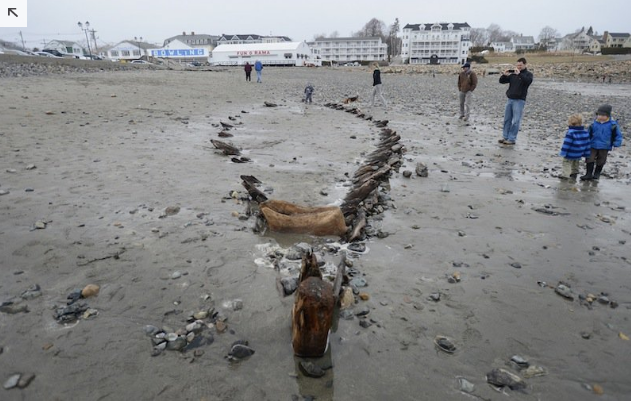
Wreck Surfaces on Maine Beach
Source: See link below.

...Although the skeleton of the ship, believed to be at least 160 years old, has appeared from time to time on Short Sands Beach, little is known about the boat or how it ended up buried in the sand.

What’s left of the wooden hull – catalogued by the state as the Short Sands Beach Wreck – made news in the 1950s after being exposed by a storm. It last appeared after the powerful Patriots Day storm in 2007...


Here is the link for more of that story.

http://www.pressherald.com/2013/03/11/beneath-the-waves_2013-03-12/

---

Treasure, World, U.S. Coin & Paper Money 


Auction 20


Floor Auction November 12-13 - Internet Only November 14

Orlando, Florida

Just one week remains before we begin the live FLOOR and Internet closing of our Treasure, World, U.S. Coin & Paper Money Auction 20, starting at 9:00 AM EST on Saturday, November 12, 2016.


Now is your LAST chance to order a printed catalog, make your travel plans, schedule to bid by phone, or mail/fax your bids if you are not attending in person. Now is also the time to register for the auction on iCollector, as any registration issues can be fixed in advance. Even if you already have an iCollector account, you still must "Get Approved" to bid for each auction by entering and confirming your information for this auction. 

---


Treasure Coast Beach This Morning

It might not be real easy to see, but this picture shows a shallow scallop on one beach this morning.  The beach fronts are generally mushy.  It looks like there is about a ten yards of flat sand in front of the beach which could easily turn into a sand bar.

Dip On One Beach This Morning.

There aren't many dips along the coast, but there are a few like the one above.

Overall, I'd say beach detecting conditions remain poor.

Surf For Coming Week
It looks like there will be no big change in beach conditions for a while.

Happy hunting,
TreasureGuide@comcast.net


Sunday, November 6, 2016

11/6/16 Report - A Controversial Encrusted Hammer and Other EOs. October Posts. More Rough Surf.


Written by the TreasureGuide for the exclusive use of TreasureBeachesReport.blogspot.com.

Source: See link below.

Maybe you've heard of the London Hammer (London Texas not London England).  It is a controversial object that is used as evidence by one famous creationist, but it is highly disputed.

Here is an abstract from an article about the London hammer.

An iron and wooden hammer, sometimes called the "London Artifact" or "London Hammer," found by local hikers in a creek bed near London, Texas in 1936, has been promoted by Carl Baugh and other strict creationists as an out-of place artifact. They maintain that the hammer, which was partially embedded in a small, limy rock concretion, originated in a Cretaceous rock formation (or an Ordovician or Silurian one, depending on the account), thus contradicting the standard geologic timetable. However, the hammer was not documented in situ, and has not been reliably associated with any specific host formation. Other relatively recent implements have been found encased in by similar nodules, and can form within centuries or even decades under proper conditions (Stromberg, 2004). The hammer in question was probably dropped or discarded by a local miner or craftsman within the last few hundred years, after which dissolved limy sediment hardened into a nodule around it. Although a brief rebuttal to Baugh's hammer claims was made by Cole (1985), Baugh and a few other creationists continue to promote it. This review provides further analysis of the hammer and creationist claims about it.

It would be interesting to find out who lost it and when, but the reason I mention it is that it is an encruted object (EO) and we find many encrusted objects along the Treasure Coast.  Below is an example of one found on the Treasure Coast.  I've shown others in the past.


Encrusted objects can remain in fairly good conditions within the crust, like the London Hammer.  In other cases the remaining iron is mostly or entirely gone.  In some cases, there is nothing left but an impression of the original iron object.

The London hammer seems to me to be remarkable.  I doubt that it is as old as Carl Baugh, the creationist, thinks.

As the abstract mentions.  EOs can form in decades rather than centuries.  It depends upon the situation.

Here is the link to the article about the London Hammer.

http://paleo.cc/paluxy/hammer.htm

I've seen what looks like sandstone form in not much more than a year.  I was surprised to see it form so quickly, but it did.

I'm very skeptical of scientific dating of objects, especially those supposed to be thousands of years old.

I check EOs as much as possible.  Other things can be stuck in them and you never know what might be inside.  Using imaging such as x-ray can be helpful in viewing the contents.

Here is one that I thought was unusual.  I showed it before.  There is a Royal Palm soda bottle adhering to the EO.


---

October was busy.  Hurricane Matthew pretty much passed us by but it did a little damage, but it hit North Florida harder.  Despite the lack of cuts on the Treasure Coast, the high water did leave some cobs.  According to the blog poll nearly 10% of the detectorists found treasure coins on the Treasure Coast.

The most Google Plussed post of October was posted just before the Matthew arrived.  It was the 10/5/16 Report about Matthew heading towards the Treasure Coast.

The most read post of October was the following post.
---

The surf didn't get quite as high today as I thought it might, but we're still supposed to have 4 - 6 feet for a couple of days and possibly another increase Wednesday.

Happy hunting,
TreasureGuide@comcast.net