Thursday, July 9, 2020

7/9/20 Report - A Few Treasure Coast Fossil Finds. Hunting Everywhere and Anywhere. Pieced Together Again.


Written by the TreasureGuide for the exclusive use of treasurebeachesreport.blogspot.com.

Two Views of Same Big Fossil Vertebra.

I was going through some old finds this morning and found this vertebra.  I don't know what type of animal it belongs to, and I haven't done the research.  Maybe someone can help me.

I have enough old finds to keep me busy with research for the rest of my life.

Here is another unidentified vert.

Fossil Vert of Some Kind.


Here is a fossilize piece of wood or coral.  I'm not sure which.  Anybody know?


It seems to have rings like wood.

----

treasurebeachesreport.blogspot.com.
Wit's End.


Somebody was wondering about places to metal detect when the beaches are closed.  For me that doesn't seem like much of a problem.  My answer would be anywhere and everywhere.  I've done my yard many times and there are spots that I still haven't done well be cause of interference from power lines, yet if I really want to I'm sure I can select and metal detector and settings that will handle it.

There is an overgrown lot just around the corner from me that needs to be detected.  There are old bricks on the surface, but a lot of weeds and things that need to be cleared to some extent before detecting.

And there are always edges.  For example, there is a lot of construction going on along some of the railroad tracks.  Those sites always offer something of interest.

If you have a boat, there are a lot of places that you can get too that haven't been detected much.

I never forget my first time in the woods in West Virginia, and everyone told me nothing was there.  My first outing I found a 1940s gold class ring.  I also found silver coins, artifacts from the 1800s, including a crotal bell that I've shown in this blog and arrow heads.

Sometimes it is good to try new areas.  Anyplace is worth checking.  You might have to do some prospecting rather than hunting places you know, but that could pay off.

I know that some places will be terribly junky or have other problems, but that will force you to adapt.  Maybe try some sifting.  If you work at it, you can find a way.  It might not be obvious or easy, but you might learn something in the process and eventually come up with a good site all your own.

One thing you can try in overgrown areas where you can't sweep like on the beach is switching to pinpoint or all-metals mode.  You can then move your coil slowly in around things and underthings.  It takes a little practice, but it works.

As I often say, there is always a way.  And there is always some place to hunt and something to find.

I've mentioned in this blog in the past some places where almost nobody detects that you might consider.  

---

Old Dish Pieced Together.


I found this old child's dish in pieces and managed to get it glued together pretty good. One piece didn't fit well, otherwise it went back together very nicely.


---

Source: nhc.noaa.gov


The system off North Carolina now has a 70% chance of becoming a cyclone in the nest 48 hours.

The low is expected to move northeastward or
north-northeastward near or just offshore of the North Carolina
Outer Banks. Later today and then along the mid-Atlantic coast
tonight through Friday night.

Happy hunting,
Treasureguide@comcast.net


Wednesday, July 8, 2020

7/8/20 Report - Mel Fisher Expeditions and Finds. Quintessential Treasures. Digital Treasure.


Written by the TreasureGuide for the exclusive use of treasurebeachesreport.blogspot.com.

Quintessential Treasures That Fortunately Were Never Lost.
See link below.

Not lost but still representing the kind of objects that any treasure hunter might dream of finding.  I'm sure that out there somewhere are lost objects that are as finely crafter and beautiful as these.


---

Down south, Mel Fisher's Expeditions are working on the the well-known Atocha and Margarita sites, but also the less well known "Lost Merchant" somewhere off the east coast of Florida, and another 1622 wreck that has yet to be found.

The Magruder went sifting for emeralds and then back to the area known as the Bank of Spain.  Their latest finds included a nice emerald, 1 complete silver candlestick, a piece of a silver plate rim, some pottery shards and half of a silver coin.

The Mel Fisher museum in Sebastian will be reopening on May 8.

---

The nature of treasure is changing.  I guess it always did.  Wealth is becoming less tangible.  Most transactions no longer require coins or currency.  It is done digitally.  Digital currencies include cryptocurrencies, virtual currencies, central bank digital currencies and e-Cash.  You've probably heard of bit coin for example.

And you know about the scammers that do their own form of illegal digital treasure hunting by mining the digital information that resides on our computers.

FBI Director Christopher Wray on Tuesday warned Americans that the Chinese government’s theft of American information is taking place on so large a scale, suspected incidents make up nearly half of his bureau’s counterintelligence cases.

Speaking at an event hosted by the Hudson Institute in Washington, Wray said that Chinese thefts amount to “one of the largest transfers of wealth in human history,” and that the American people are the victims...


See https://www.foxnews.com/politics/fbi-director-wray-says-half-of-bureaus-5000-counterintelligence-cases-are-related-to-china

Yesterday I mentioned some of the products of our culture. If you thought China might be a place you could escape from our culture, the Chinese have been going to great lengths to become wealthy by stealing our Culture.  Can you believe they even have a Shanghai Disneyland Park?

Now that Crossfire Hurricane is over maybe the intelligence agencies can spend there time on more useful things.

---

One great book that I think you'll enjoy is Bill Bryson's At Home: A Short History of Private Life.  It goes into the invention or evolution of the things around us and how we live today.   It is really an very exceptional book on the history of most everything we encounter in our homes and lifestyles.

---

Source: nhc.noaa.gov

There is a 60% chance that the system up by North Carolina will develop into a cyclone in the next 48 hours.  It is expected to continue to the northeast though. 

Most days now there is something developing somewhere.  I think we are supposed to get 20 some names storms this year.  It was upgraded some the last time I saw the forecast.


Looks like the page view counter will hit 2.5 million later today.

Happy hunting,
TreasureGuide@comcast.net


Tuesday, July 7, 2020

7/7/20 Report - Putting It Together: Waves, Liquefaction and Lenses. Kings Landing.


Written by the TreasureGuide for the exclusive use of treasurebeachesreport.blogspot.com.

Clark Little Photo of Wave.
Source: ClarkLittlePhotography.com.
They say a picture is worth a thousand words, but they say a lot of things - don't they.  In this case, it might not be too far off.

They also say appearances are deceiving.  It looks to me like there might be a bit of a fisheye effect in this photo, but it is still amazing and informative.  Even if there is a fisheye effect, and I'm not sure there is, it still seems to show the sand being picked up with the water.  The surface of the sand right in front of the wave seems to curve up into it.

I've posted other pictures showing something similar, but there is also a lot of geology science that talks about things like liquefaction of sand and soil and how that happens, so we have both the pictures and scientific principles, which seem to support each other.

Source: Pinterest.


Liquefaction can be created by vibrations, which it seems you'd have on a beach with all of the breaking waves, but if that were not enough, I showed an illustration about a week ago that illustrates how passing waves cause liquefaction and water lenses.  I also have referred to how dock piers are set by a pressure hose pushing sand and earth apart so the pier can be inserted.  Putting that altogether, it looks like liquefaction could be one big ingredient that hasn't been talked about much in the metal detecting community to explain how sand and objects move on a beach.  In the past, it seemed that people just talked like sand and objects were simply pushed around somehow.  If you put this all together, I think you'll have a lot more understanding of how sand and other objects can move on the beach.  You'll also want to add what I've called trigger points.

A lot of times things are simply uncovered or washed down from the dunes, but I think the best metal detecting days are when the waves crash from the low tide zone and work their way all the way up until they crash against the dunes.  We usually can't see through the turbulent water to see how everything is moving, but the above photo might give you a pretty good idea.

---

Find With Good Message.

I mentioned finding a cheap necklace not long ago.  It bears a good message.  It seems like every time out I've been finding some type of little turtle thingy.


---


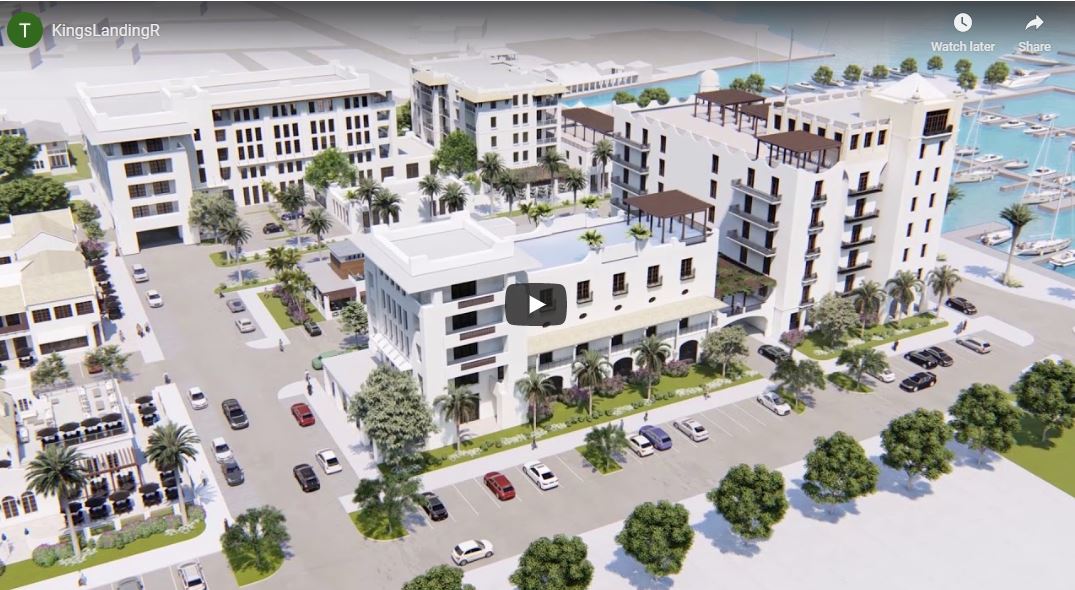
Exclusive Kings Landing Development Coming to Fort Pierce.


King's Landing, a new exclusive community is planned for marina area of Fort Pierce. 

Homeownership ranges from the mid-$400,000s to $1 million+. 

Charleston homes are two-story, three-bedroom and 3 1/2 bath residences.

Homeownership begins in the high $500,000s.

I've read that they are all reserved in advance.

---

If I decided that the predominant culture in which I now live has evil roots and is pervasively evil and I should no longer support it and participate in it or what came from it, that would mean I'd no longer use the internet or computers, or the English language for that matter.  I'd have to burn my degrees and erase them from my vita.   And I'd have throw away antibiotics and other pharmaceutical products, to to China or someplace for medical care, give up hot dogs, Coca Cola, eye glasses, laser surgery, TV, airplane travel, air conditioning, Ford, Chevy and Tesla automobiles, the convenience of the water closet, my Wrangler jeans, and UF Gator shorts.  I'd even have to stop rooting for my football team, watching the NFL and basketball.  And that is just a beginning.

---


Not much on the National Hurricane Center map today.

Happy hunting,
TreasureGuide@comcast.net

Monday, July 6, 2020

7/6/20 Report - Tropical Storm Edouard. Beach Zones. Density and Specific Gravity of Things.


Written by the TreasureGuide for the exclusive use of treasurebeachesreport.blogspot.com.

Yesterday I discussed liquefaction, which can occur on a beach under certain circumstances that cause sand to act much like a liquid.  I showed a couple photos of liquefied sand being moved by big waves.  Of course, most of the time that occurs near the front of the beach, but when the tides and swells are big, it can occur on the back of the beach.

Before delving more into the physical forces that move sand and other objects, this morning I thought it would be useful to mention the various beach zones of interest to the detectorist.  

Starting off-shore in the shallow water, there can be a sand bar.  That can be a good place to metal detect if there are a lot of bathers using the bar.  That happens a lot down in the Fort Lauderdale/Miami area.  It can be a very good place to detect for modern finds or what I call recent drops, but don't forget that the bar will move, and one side or the other, depending upon the direction the bar is moving, can be good detecting.

Inside of the bar, is often a dip, which can also be good detecting.  In fact some of my best detecting ever was in a cleaned out dip.  The dip can be full of sand and shells, but it can also be cleaned out down to bedrock, which of course is when the detecting can get very good.

On the beach front in the wet sand can also be good detecting, but it can also be poor, depending upon what is going on.  This area can be good or poor, depending upon a variety of factors, especially whether the sand is building on the beach front of eroding.  In either case, good water action can wash up good targets.  In the wet sand below the berm you might be able to find the coin lines or coin holes that I've mentioned many times.  They can also have other good targets beside coins.

The fourth zone is the dry sand area, which of course can be good if people have been using it.  Hunting the dry sand is very different from hunting the wet sand or water because the water does not do as much sifting and sorting there.  Detecting in the dry sand depends more on where things were dropped.  In the wet sand things gets sifted and sorted more, so you are often looking more for where targets ended up rather than where they were lost.  The water does however hit the wet sand area on some occasions and can definitely affect the distribution of finds.

The fifth zone is the dunes, where you will usually not be allowed to hunt.  Very old items will typically be buried a foot or more in the dunes, but when the water hits the dune face, items can be washed out and onto the flat beach.  

It can get a lot more complicated but those are some of the basics of the five zones.

---

We often talk of where you might find heavy items like gold.  As I've said many times, it is really not the weight that we are concerned with.  A ton of Styrofoam will float.  It is more a matter of density, rather than weight.  Other things are important too though, such as the shape of the object.  Bend tons of steel into the shape of an ocean liner and it will float.


Here are the densities of some of the metals you might find.  That helps explain why you can find aluminum when beach conditions are not very good, and why lead is a good sign if you are looking for beach gold.

Again, shape is also important.  Shape a super tanker out of steel and it will float.  Thin sheets present more surface area for the water to push around or lift.

Specific gravity is the density of an object relative to the density of a reference substance, usually water at a specific temperature and salinity.


Having a specific gravity of 19.32, gold is over 19 times more dense than reference water.

Sand has a specific gravity of somewhere around 2.65 to 2.70.   So being more dense than water it sinks in water.  There are a variety of other forces at work on the beach sand though, and the shape and constitution of the sands makes a difference too.

Notice the specific gravity of aluminum is very close to that of sand, so it is no surprised that you can find it in sand that is building on the beach.

Another generality is that it will take a lot more water force to move gold than either sand or aluminum.

If you understand these things it will help you figure out how things are moving and that will give you a better idea of where they might be found.

One of the things about gold rings is the relative lack of a flat surface area for the force of water to act on.  A copper coin on the other hand, will move differently than a gold ring not only because of the different density of the material but also because of the shape.  Likewise the movement of a zinc coin will be determined in part by the adherence of materials to the surface of a corroded coin.

That will provide some background for future discussions.

---

As I said yesterday, the National Hurricane Center map is starting to light up.  There is now a tropical storm :Edouard.  Edouard will not affect us, but there is a new system down by South America to watch.

Source: nhc.noaa.gov
It is the time of year to start watching for storms.

Happy hunting,
TreasureGuide@comcast.net


Sunday, July 5, 2020

7/5/20 Report - Waves, Liquifaction and Sand Movement on The Beach. NHC Map Lighting Up. Access to Technology and Data.


Written by the TreasureGuide for the exclusive use of treasurebeachesreport.blogspot.com.

Wave Photo by Clark Little Photography
Source: clarklittlephotography.com.
Although it seems like coins and rings and things sink in the sand, they don't sink in undisturbed dry sand without some disturbance of the sand.  You can easily prove that for yourself.  Just take a bowl or container of sand and place a coin or ring on top of it.  You can come back days later and clearly see that the item did not sink.

When you say a object sinks in sand, that seems to me to imply gravity as the primary force, which is misleading because the sand has to move to allow the object to "sink."  Maybe to you that is not an important distinction, and I can accept that, but for me, I'd rather place more emphasis on what has to happen with the sand.  That is what we have to know more about in order to be able to explain how an object will sink at the beach.

Clark Little takes amazing photographs of waves, like the one shown above.  If you visit ClarkLittlePhotography.com you'll see many great photos.

The above photo, besides being beautiful, shows some very interesting things.  Notice the brown area that the person is standing in.  There is brown all around the person, and there is also a brown vertical column in front of the camera.

The brown around in front of the wave shows that a lot of sand has been suspended by the turbulence.  And the brown vertical column, shows how sand has been picked up into the wave.  It seems clear that a lot of sand is being moved in that photo.

We don't often see a wave that big on the Treasure Coast, but the same thing happens with smaller waves, though to a lesser extent.  On the Treasure Coast we don't get waves like that, but the waves we do get will do the same thing - move sand.  And sometimes the waves do get pretty big.

Here is another great photo by Clark Little.  Once again, you can see the sand being sucked up into the wave.


Photograph by Clark Little.
Source: ClarkLittlePhotography.com.

As I've said many times, different materials and objects require different amounts of water force to move.  With a waves shown in these photographs a lot more than sand could be moved.

Here is an interesting explanation from Wikipedia explaining how sand fleas bury themselves.

Emerita is adept at burrowing, and is capable of burying itself completely in 1.5 seconds. Unlike mud shrimp,  Emerita burrows tail-first into the sand, using the periopods to scrape the sand from underneath its body. During this action, the carapace is pressed into the sand as anchorage for the digging limbs.   The digging requires the sand to be fluidised by wave action, and Emerita must bury itself in the correct orientation before the wave has passed to be safe from predators.

As the tides changes, Emerita changes its position on the beach; most individuals stay in the zone of breaking waves. This may be detected by the physical characteristics of the sand. As the tide falls, the sand is allowed to settle; when Emerita detects this, it uses the temporary liquefaction from a breaking wave to emerge from its burrow, and is carried down the beach by the wave action. Longshore drift also drag Emerita laterally along a beach.

Crashing waves cause liquification of the sand.  It burrows into the liquified sand, which settles when the tide recedes.

When you are talking about objects sinking into the sand, a number of things are going on.  Like I said above, it requires some disturbance of the sand.  In some cases that disturbance might be little more than sand moving away, while the denser objects remain.  When the sand is liquified, denser objects can actually sink into the sand, but that requires special conditions.  It does not happen unless the sand is being disturbed in one way or another.

In the near future, I plan to discuss some of the other variables and forces pertaining to how objects sink or appear to sink into sand.

---

Neural networks and AI could be a lot of help to the treasure hunter, but it would require a lot of research and development work, and access to the technology and data. For me the most valuable thing about going through years of higher education was access to technologies, labs and data.  I could  have done without the classes and lectures.  In fact, the thing in education that probably changed my life the most was discovering computers in 1969.

I started with batch processing, which involved punching computer instructions on punch cards, which were then submitted to the computer center.  You'd go back to the computer center in a day or two to get the output (you think your computer is slow).  As often as not, what you got was a listing of the many errors in your program that had to be identified and corrected before submitting the program again and waiting another day for the output.

I'll never forget the day I discovered a teletype machine that allowed me to use interactive BASIC to enter programs.  You'd hit a key and wait about two seconds before seeing the character typed on the computer paper on the teletype in front of you.  The delay in response took some getting used to but it was miles ahead of batch processing.  You know the rest - personal computers and then the internet.

If the general population had access to the most advanced technologies and data, progress would be accelerated many times.  If people had access to the raw data and information, there would be all kinds of genius geeks looking at the data.

A lot of things are accomplished by amateurs despite the barriers.  That is very true with archaeology.  Professionals have their own domain to protect and they seldom appreciate the talent that is sitting out there in the world.  Did you ever get a job when you were way beyond the person that would be your boss?  It won't happen.

In a very rare event about a week ago, a reporter actually asked a follow up question of Dr. Fauci, that elicited some useful information.  Dr. Fauci had mentioned in a very general way that something wasn't working, and the reporter asked what that was. Whoooaa - a reporter actually doing their job. Dr. Fauci said that contact tracing wasn't working because certain populations weren't responding to the calls.  In a moment of unguarded candor, he described those populations, but I won't.   I knew that very useful information was too politically incorrect to ever be mentioned in public again.  It wasn't.

Do you realize that a lot of the people at the top of the health agencies have been there longer than Moses wandered the wilderness?

The point I'm making is that the public only gets filtered information at best.  I'd love to see more good data put out there for the public to access.  Just yesterday I noticed a TCPalm headline that said something like 80% of corona cases are from minority populations.  I found some demographic breakdowns on the Florida Dept. of Health site and their numbers suggested nothing like that headline.

I don't do Facebook or Twitter.  I'm not much interested in the party line, the slogans, mantras, talking points or retweeted retweets.

I do very much like the idea of using neural networks and AI for contact tracing, but am personally more interested in tracing ideas and treasures than viruses, although that would be fun too if the data collection was more systematic and well defined.

---

Source: nhc.noaa.gov

Seems like the National Hurricane Center map is becoming a little more active.  Maybe we'll get some nice waves someday before long.

Tropical wave five is moving away from us and there is another area that has a small chance of developing in the next couple of days.

Happy hunting,
TreasureGuide@comcast.net

Saturday, July 4, 2020

7/4/20 Report - Independence Day Greetings. Things That Can Not Be Burned.


Written by the TreasureGuide for the exclusive use of treasurebeachesreport.blogspot.com.

July 4th Postcard
Circa 1906.
---

Researchers at the University of Hong Kong have built a drone capable of seeking out gemstone deposits and fossils at night using a laser. The drone uses a scanning laser to react with fluorescents in the various objects that can later be detected in processing.


The researchers, Thomas G. Kaye and Michael Pittman, found during experiments that laser-stimulated fluorescence (LSF) would react and begin to glow under laser light. The drone detects the glowing objects in the ground by recording a video. 


To ensure it can detect even small fossils, minerals, organisms, and archaeological artifacts, the drone is flown 4 meters (13 feet) from the ground, enabling it to detect objects of interest as small as a thumbnail...

For more of that article about how to use drones to find fossils and gemstones, here is the link.


---
Troops at Bailey's Crossroads on Nov. 20, 1861
Source: See WashingtonPost.com link below.


Yesterday I couldn't help but be reminded of my friend Larry Persina, who passed away a few months ago.  His birthday was July 3, and his favorite holiday was always the fourth of July, but I also got word of the passing of another relative who was always part of our 4th of July family picnics as far back as the 1950s.  Those picknics were very much what you would expect for that time in history.  

Yesterday, receiving sad news and yet being filled with fond memories, ended for me around mid-night listening to the Battle Hymn of the Republic as it was being sung in front of Mount Rushmore.  I was filled with awe and grateful for the everlasting assurance of those who had departed.

The last verse of the Battle Hymn was originally written as follows:

In the beauty of the lilies Christ was born across the sea,
With a glory in his bosom that transfigures you and me:
As he died to make men holy, let us die to make men free,
While God is marching on.


The words are too challenging for some, and the second phrase of the third line is sometimes changed to read "let us live to make men free," or "let us fight to make men free."  But there are those who have died to make men free.

One interpretation of the hymn is that it is about the judgment of evil at the end of time. It is based on the Book of Isaiah and the Book of Revelation. The enemy is spiritual as well as physical.  The melding of Biblical imagery and the Civil War is truly amazing if you take the time to study each.

See https://literarydevices.net/the-battle-hymn-of-the-republic/

Written in Nov. of 1861 by Julia Ward Howe in the predawn hours after reviewing the troops at Bailey's crossroads the day before, the lyrics were written to the tune of John Brown's Body.

Howe's words show the keen intellect and penetrating sensibilities of an accomplished author and poet who was fluent in several languages, and who fought for causes including the abolition of slavery and women's rights.  Analysis of both the lyrics and the author's accomplished, complex and troubled life would be fruitful endeavor for any honest student.

On June 8, 1968, as the 21-car funeral train bearing the body of assassinated U.S. Sen. Robert F. Kennedy from New York to Washington crept through Baltimore, a lone mourner in the crowd began slowly singing, Mine eyes have seen the glory . . .

Others in the throng of stricken bystanders picked up the lyrics and the melody singing

Glory, glory, hallelujah..


Many old hymns have amazing inspiring stories behind them.

For me a day that started with sad news ended with many memories and a deep sense of contentment.

---

Here is a really good web site that provides access to a broad range of resources for historical research.  For example, for the Civil War you will find the contemporary Harper's Weekly issues describing the progress of the war, but other periods of history are included.

http://www.sonofthesouth.net/

---

Tropical storm number 5 is heading out to sea and away from us.


Wishing you a deep and happy fourth of July.
TreasureGuide@comcast.net


Friday, July 3, 2020

7/3/20 Report - EXCITING Gold Find Made on Douglas Beach Wreck. Biker Ring Find. Lessons From Liquefaction and Water Lenses.


Written by the TreasureGuide for the exclusive use of treasurebeachesreport.blogspot.com.

Gold Pelican of Piety Artifact
Found by Captain Bonnie Schubert

If you've been reading this blog very long you might remember reading Laura Strolia's research concerning the Pelican of Piety artifact that was found by Captain Bonnie Schubert on the Douglas Beach wreck site in 2010.  As you can see from the photo above, it was missing a wing.  Well, ten years later, in 2020, Captain Henry Jones and 1st mate Tracy Newman along with Brian Fisher working on the M/V Perfect Day, found the missing wing, along with an attached segment of chain and connecting ring.

Missing Wing Found by Captain Jones and Crew of M/V Perfect Day.
Queens Jewels LLC Photo submitted by Captain Jonah Martinez.


Thanks to Captain Jonah for sending me this news.

For Laura Strolia's research and interpretation of the Pelican of Piety artifact, see the following web site.


If you want to read more about the Pelican of Piety artifact, use the search box and do a search of this blog.


===

Alberto S. found this stainless steel biker ring about 10 inches deep.


Stainless Steel Biker Ring
Find and Photo by Alberto S.


Alberto also said, I also found that the heat was unbearable, good thing I carried some water with me, 2 bottles which was not good enough for a 2 hour hunt. 

If you are working out on the beach these days, be sure to take water along with you.


Thanks for sharing Alberto.

---


People talk about the sun coming up or going down.  That is how they see it.  There is nothing wrong with describing it that way - unless you really want understand or describe what is really going on.  In that case, you might want to talk about how the earth moves relative to the sun.

For a long time I've been trying to move the discussion away from objects sinking in the sand.  They do sink, at times, but it is not like an item at rest will be drawn by the force of gravity alone to lower levels, which is how I would picture objects described as sinking.  It has a lot to do with the movement of the sand, which might to the eye seem relatively stationary.

The sand can move in a very obvious or very subtle way.  Sometimes it is easy to see it moving and sometimes not so much.

As you can see from the above illustration, which really gives a good description of one way that items are sorted and resorted in wet sand, resulting in stratification of layers with successive waves of pore pressure changes.

I'll leave it at that for today.  I've been trying to put together a good description of how items become stratified (you might say sink) in wet sand, but it is fairly complex and I'm going to have to invent my own descriptions and illustrations.  None of the experiments that I've seen take into account forces such as crashing waves, which is critical in many cases. That is just one of several important factors.  A crashing wave, like the passing waves shown in the above illustration, changes the pore pressure between grains.  Think about how a pressure hose can be use to set a dock pier.  The hose creates turbulence and separates grains to create a hole into which the pier can be set.

Anyhow, I'll try to elaborate on that more in future posts.

---

The surf is really flat on the Treasure Coast and there are no signs of storms forming.

Happy hunting,
TreasureGuide@comcast.net