Showing posts with label tides. Show all posts

Monday, March 9, 2020

3/9/20 Report - Recent Beaches and Finds. Tides Interacting With Surf Height.


Written by the TreasureGuide for the exclusive use of treasurebeachesreport.blogspot.com.

John Brooks Sunday Near Low Tide.
Yesterday was National Women's Day, so I hope all you husbands were thoughtful enough to take your wives metal detecting in honor of that day.

It seemed to me from what I saw that there were more and better finds Saturday than Sunday.  But it is probably to early to say, and we might hear of more good finds as the reports come in.

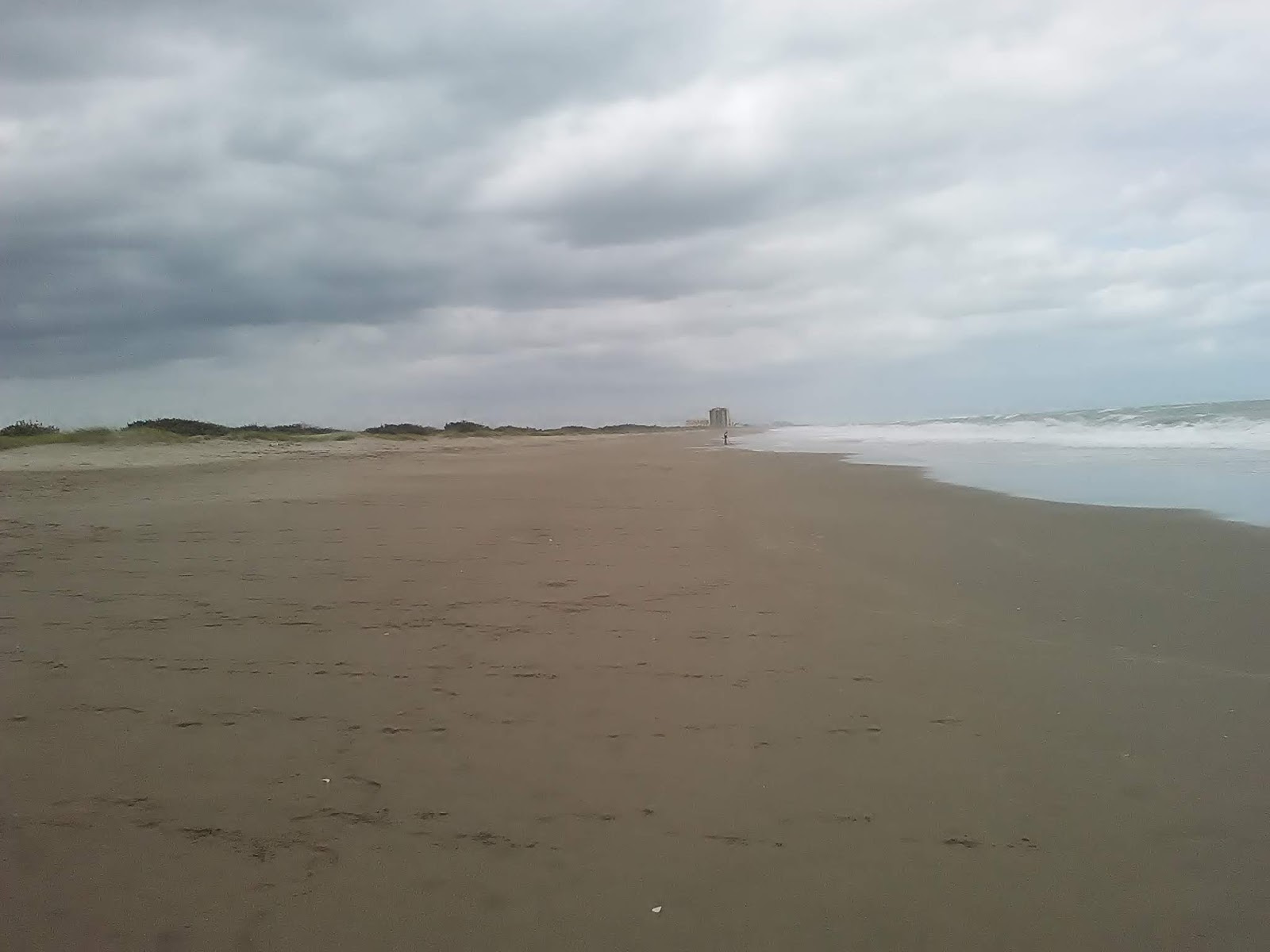
These photos show how a couple of the beaches looked on Sunday.  John Brooks was one big gradual slope.  It was being thoroughly  gridded by multiple detectorists.

Turtle Trail on the other hand, had a few small cuts, but fewer than Saturday.  The cuts were mostly left over from Saturday and some were gone.

The wind shifted since Saturday.  Saturday's cuts formed when the front first came through and the wind was strong from the north.


John Brooks Near Low Tide Sunday

Turtle Trail Sunday.
There was a cut in front of the Turtle Trail access on Saturday but Sunday it was gone.

A beach can either improve, get worse, or stay about the same.  When you have a decent surf there will be changes, even though they might be small.

Turtle Trail Sunday.

I didn't see a huge number of finds Saturday, but I did see at least one very nice shipwreck treasure.  Maybe we'll get a photo of that one.   '

'I didn't see any interesting finds Sunday, although there could have been some.  Of course, I didn't see most of the beaches.

John E. sent in photos and had questions about his Saturday finds, saying Unusual group found today … modern coins, I have been fishing 50 years and never seen a lead weight like this one, the “Indian princess” rings up 29-30 on equinox, also a 1930-S wheat cent.... anybody have any ideas on weight and small statue ? 

Saturday Finds by John E.

Weight Found by John E.

---

Below is the surf prediction for Monday.  The time of the tides can be important factors that interact with the surf.  For example, Monday's high tide is supposed to occur during peak high tide.

I drew the approximate high tide and low tide on the surf prediction.  High tide (H) occurs while the surf is near its peak, and low tide (L) occurs as the surf is decreasing.

Having high tide at the same time as the peak surf will have more effect than if the peak surf occurred during low tide.


The high tide will add to how high on the beach the water gets, while the low tide will take it lower.

The low tide will drop the water X amount but appear to have a greater effect when the slope near the water is less steep.  A drop of a foot can move the water line out many yards.

Happy hunting,
TreasureGuide@comcast.net


Thursday, February 27, 2020

2/27/20 Report - Cuts and Eroding Beaches That Expose Treasure. Photo Comparison. 1715 Fleet Silver Rings.


Written by the TreasureGuide for the exclusive use of treasurebeachesreport.blogspot.com.

Seagrape Trail As It Looked Last Saturday

I distinctly remember watching Monday Night Football maybe thirty years ago when Howard Cosell commented to Dandy Don, "You have a tremendous grasp of the obvious."  It was meant as a humorous insult, but it strikes me now as something of a complement.  Advances in understanding are often made painfully slowly and often involve gaining a deeper appreciation of what was hiding in plain sight all along.

Were you ever metal detecting when a surprise wave hit you and almost knocked you off your feet?   It has happened to me numerous times over the years.   In fact I remember once actually getting knocked off my feet.  Inspiration can come with a sudden rush too.

I've talked a lot about the importance of what I call cuts.   If you looked at some of the beaches that were eroded last week, you might not have noticed any cuts, but there were cuts.  Those cuts were very high though.  The face of the dunes was cut.  At the bottom of the dunes you could see a layer of black sand over a layer of the old orangish sand exposed in some locations.

It is not often that we get a surf of over ten feet, but that happened on the Treasure Coast in both January and February.  And shipwreck treasures were found both times.

On the 22nd the high tide was bouncing off of the dunes, and the water was rushing with good force back down the slope carrying sand and other materials with it.  You can see from the photo above where probably two feet or more of sand was removed.  Old wooden posts that were previously buried were exposed, and stairs were left hanging two feet off the ground.

If you take a volume of sand two feet deep by maybe thirty by fifty yards, that is a volume of 3000 cubic yards of material being classified.  That can easily happen in one six hour tidal period, and that is undoubtedly a small part of what actually happened on the beaches that day.

So what is it about cuts that makes them so significant to the beach detectorists?  I mentioned it above.  When the water hits the face of a cut, or dune, the water rushes back down the hill with a lot of force.  If you get caught in it, you can feel how strong the flow is.  There are times when it can knock you off your feet.  That is obviously strong enough to carry sand - and other materials with it.

Yesterday I talked about the amount of water velocity required to suspend different kinds of particles and objects, and the amount of force required to transport those objects.  When the force decreases below the amount required to transport objects, they drop out and settle.

My main point today is that even though there weren't any obvious cuts on the slope of the beach last Saturday, there were cuts to the dunes at the top of the beach, and at high tide the water was bouncing off the face of the dunes and flowing down the slope, carrying sand and other objects until the flow slowed enough to drop whatever objects were being carried.

If you look at the photo above, the yellow line runs parallel to the beach.  There is something of a momentary dead spot.  The incoming water hits the water rushing back down the slope there.  But that is only momentary, as the next wave is already on the way.

Obviously that area will move as the tide comes in and goes out.  It proceeds up the hill towards the dunes during the incoming tide and then recedes down the slope and out as the tide recedes.

The red line shows how much sand has been removed from under the steps.

Compare these two photos.


It is always handy to have more than the most recent photo.   Old photos give you a base line.   You can compare different times and see what is happening.

If I know a beach is especially high, for example, then I know it will take more weather and erosion to make it productive.

The fluctuation on a beach is seldom two feet or more over a wide area.  Down at Turtle Trail, when the sand is low you can see a foot or so of the blue bags, but when the sand is high they are covered again.  There are posts down there that also appear and disappear.

Notice  the foot of the dunes and the slope right in front of the dunes in the last photo.

Thanks to DJ for those photos.

---

Silver Finger Rings From the 1715 Fleet.

One of the most experienced Treasure Coast salvage divers said that no silver rings have been found on 1715 Fleet wrecks.  That is something that has interested me for a number of years, especially because of how commonly old silver rings are found on the wreck beaches.

I know of three examples of documented silver rings that have been correctly or incorrectly attributed to the 1715 Fleet.  That is such a small number that even if they are all correctly attributed, they are undoubtedly personal property rather than cargo.

Below are those I have seen listed as being from the 1715 Fleet.

1.  In Artifacts of the Spanish Colonies of Florida and the Caribbean, 1500-1800, Vol. 2: Portable Personal Possessions, by Kathleen Deagan, a silver Claddagh ring shown on page 126 is attributed to the 1715 Fleet.

2.  In the Winter Beach Salvage Camp, by Doubglas R. Armstrong (2012 revision), on page 52 a gold plated silver ring is attributed to the 1715 Fleet.

3.  And just this year, VeroNews reported that West Bay Trading Company certified a silver ring found by Jeff Emlet on a Vero area beach as being from the 1715 Fleet.  See my 2/6/20 post, https://treasurebeachesreport.blogspot.com/2020/02/2620-report-first-silver-ring-beach.html, for more information about that.

Without some type of specific markings and historical documentation, I do not know how you could tell that an isolated ring find would be from a particular fleet or wreck rather than from some other source, including, for example, contemporary salvage efforts.

In any case, I'd like to keep a list of silver rings attributed to the 1715 Fleet.   If you know  of any others, I'd like to add them to my list.  Please be specific about the source of information.

---

Despite the most recent cold front, we're supposed to have nothing higher than a two or three foot surf for the next week.

Happy hunting,
TreasureGuide@comcast.net


Monday, November 25, 2019

11/25/19 Report - Horse Tack and Related Finds. Gold Coin Counterfeits and Cautions. High Tides and Flat Surf.


Written by the TreasureGuide for the exclusive use of treasurebeachesreport.blogspot.com.

Old Rusty Snaffle Bit.

If you've been metal detecting very long you've probably found some horse tack or wagon parts.  I found the above bit years ago.  At first I didn't know much about it and still don't, other than it is a horse bit.  It looks a lot like an 18th century one I saw in Ivor Hume's book, A Guide to Artifacts of Colonial America.


Source: A Guide to Artifacts of Colonial America by Ivor Hume.

As you can see, the found bit pretty well matches example 3 in Hume's illustration, which is from circa 1730.  I doubt mine is actually that old and suppose they make similar ones today.  Maybe someone confirm or deny that for me.

Anyhow, I think we probably find horse tack and related items more often than we know.  There are so many different pieces of hardware that can be part of a harness, and some of them are decorative.  Separated they might be hard to distinguish from other unrelated items.

I was just ran across an item on a harness that reminded me of another old find.  Notice the piece in the middle attached to five or six chains.  That reminded me of a find that I wondered about for a long time.


Here is that item.


Two Views of Odd Find.

One person told me it looked like a clasp for a bolo tie.  That is the best answer I have, but it also looks very much like it could be something like the piece in the center of the harness.  I'd think that item would be sturdier though, so for now my best guess is bolo tie clasp.


I've found other bits that could be horse tack items.  Also horse shoes are no uncommon finds.  Hume's book also has an illustration for dating horse shoes.

---

Somebody recently told me they were afraid to buy coins on eBay because of all the counterfeits.  Their fear is well-founded.  I don't buy coins, but if I did, I wouldn't buy from eBay.   There are some places where you can safely buy though.  I would feel confident buying from some well known auction houses, including Sedwicks or Bowers, for example.  In fact the history of a coin selling in some auctions can actually improve the price of the coin by providing additional provenance.

Below are a few tips from an article you might find helpful.  

Did you know that PCGS and NGC slabs are also counterfeited?

Slabbed coins tend to be slightly more expensive, but the peace of mind that third-party authentication provides is more than worth the added cost.  **One note - make sure to check the slab certification number on the NGC or PCGS website to confirm it is a valid slab. Counterfeiters have recently taken to creating slabs along with the coins...


Buy from reputable sellers...


You are generally safe in buying raw classic and modern gold coins from the eBay mega-dealers like APMEX, Silvertowne. Those dealers do an enormous amount of business in American Gold Eagles and other gold bullion coins, where the time/cost of sending in a coin to get graded and authenticated is not the worth the time or effort. These dealers have two advantages for customers: a) they are large and established businesses (as opposed to small, fly-by-night dealers), with a vested interest in maintaining their longterm reputation; and b) they thoroughly inspect all the inventory they buy to identify counterfeits, prior to selling the coins to their customers... 


Avoid raw Indian head quarter eagles, Indian head half eagles, and gold dollars - these are the three most heavily counterfeited series of classic gold coins. If you are not already a collector of these series, you will not be able to identify the key diagnostics to identify counterfeits. (Also, a large percentage of raw gold dollars on eBay are problem coins - either polished, cleaned, or removed from jewelry). All of the other series of U.S. gold are counterfeited as well, but not to the extent of those three. Weigh the coin after you buy it.  If it's not within 0.1g of the mint standard (check the Red Book), open an item dispute and return the coin immediately. Even heavily circulated coins should still fall within 0.1g of the minted weight - the metal mass loss from circulation is less than you might expect...

And here is the link for the entire article.
https://www.silverdollarco.net/blogs/the-silver-dollar-scoop/36502081-how-to-safely-buy-gold-coins-on-ebay

---


Looks like we'll have a few days of nearly flat surf.


Source: MagicSeaWeed.com.

We'll have some good high tides though.


Fort Pierce Area Tides
Source: MagicSeaWeed.com

Happy hunting,
TreasureGuide@comcast.net


Sunday, October 27, 2019

10/27/19 Report - Turtle Trail Beach Conditions. A Mystery Item and a Couple Other Finds.


Written by the TreasureGuide for the exclusive use of treasurebeachesreport.blogspot.com.

Turtle Trail Friday.
Photo by Joe D.
Yesterday I mentioned that I hadn't been to the Vero/Sebastian area and didn't know what was going on there.  Joe D. sent these photos of Turtle Trail that he took Friday, which would have been after a lot of the higher surf.


Turtle Trail Friday.
Photo by Joe D.
Thanks for the photos Joe.

Joe said he met a couple detectorists there that were back from a detecting trip to Thailand.

---

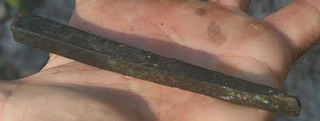
Troy C.  found the following item he would like to know more about.

Find Found by Troy C.
Photo by Troy C.
Below is what Troy said.


My name is Troy and recently I had found an item while I was free diving the southernmost edge of the Treasure Coast. I wasn't out very deep but I do believe this item to be an old chisel that was either coated in bronze or copper. I was hoping maybe to get feedback to see if what I had found... If this is something from the 1600s that would be pretty incredible.


Another View of the Same Find.

Let me know what you think about Troy's item.

And any thoughts on age?

---


I made some similar finds in the past.  Below are some of those.  The first seems to be about the same size as Troy's.


I learned a bit from researching those finds.  A reader informed me back a few years ago, that the large item in the second photo is a wedge rather than a chisel.

A wedge is for separating things.  A chisel is for removing material, such as wood or stone.

Both types of tools would be handy on sailing or later ships.

I posted information about that in an old post, which you can find by using the following link.

https://treasurebeachesreport.blogspot.com/2016/08/81316-report-wedges-and-chisels-and.html

That post also provides a nice link or two to articles about tools that you might enjoy.

---

Here is a find that I wasn't sure about for a long time.  Now I'm pretty sure I know what it is.

Mystery Item.

What do you think it is?


---

The high tides are going to be big, but the surf only two to three feet the next couple of days.


Happy hunting,
TreasureGuide@comcast.net

Wednesday, January 3, 2018

1/3/18 Report - Necklace Found and Returned. High Wind and Surf Decreasing Along Treasure Coast but Still Big Tides.


Written by the TreasureGuide for the exclusive use of treasurebeachesreport.blogspot.com

Necklace Recovered and Returned.
Find and photo by Alberto S.
Here is another example of the type of good deeds done all the time by detectorists.  Alberto S. was able to find a necklace that was lost just the day before.  Here is how Alberto told me about that.

Happy New Year!

My last trip to the beach on the last day of the year provided an opportunity to do a good deed for a young girl who had lost a necklace. As I walked on to the beach with my metal detector she approached me and asked if I could help her find a necklace she had lost the day before, it was given to her by her brother after his return from New Zealand, so it meant a lot to her. Not knowing if it had any silver or gold I searched the area where she lost it with my CTX 3030 full screen no discrimination, after a couple of hits that turn out to be aluminum foil the third was very different and sure enough it was the necklace, total time invested about 5-10 minutes. This is the first time I help someone find a lost item so it was very special to me and of course she was very happy, as soon as I placed the necklace in her hand she said thank you with a big smile in her face and ran to show her father. The beach (John Brooks) did not provide any good targets after a couple of hours of metal detecting, no erosion just like you mentioned on your post from a day or so ago, but I did get a chance to meet and talk for a bit with another person that was metal detecting. 

My 2018 bring you many happy moments and good health to enjoy them.

Alberto S.

Thanks for the good deed Alberto.  It helps the metal detecting hobby when people know what detectorists do for the public.  Thanks for sharing.

Alberto also sent me some beach photos.  He was out a few hours after I was yesterday.

Turtle Trail Close To 2:30 Yesterday.
Photo by Alberto S.
Notice the other detectorists.

Another Photo From Turtle Tail Yesterday.
Photo by Alberto S.
This photo shows the same area I showed yesterday but about three hours later when the tide was lower.  You can see the bags again.  It appears that very little, if any, sand was lost between when I took my photo and when Alberto took this photo.  

I don't know what if anything happened last night.

Thanks again Alberto.

---

As of this morning, the wind has stopped.  The tides are going to be big today - big high tide and nice negative low tide.

Below are the charts for the Fort Pierce area.

Source: MagicSeaWeed.com

The surf will be decreasing.


Source: MagicSeaWeed.com

It looks like there won't be much additional improvement to beach conditions.

Happy hunting,
TreasureGuide@comcast.net


Tuesday, August 22, 2017

8/22/17 Report - Increased Surf and Tides Today. Thoughts About Finds: Keeping or Selling. Atunement.


Written by the Treasuregiude for the exclusive use of treasurebeachesreport.blogspot.com.

Source: nhc.noaa.gov
We're being influenced by the weather you see on the map above.  If you look at MagicSeaWeed you'll see that today (Tues.)   It isn't likely to be a cyclone, but it is enough to increase the surf a bit- slightly more than predicted earlier.  The surf today for the Treasure Coast is supposed to be something like three or four feet.  On top of that we'll have some big tides.

There are some small cuts around the Treasure Coast today.

You probably didn't notice the eclipse yesterday unless you had the glasses or were able to catch a glimpse of it through the clouds yesterday.  I used a sun filter that I've used to take photos with my telescope and could see the shadow covered a good bit of the sun - I'd say 80 percent or more - even though the day stayed fairly bright.

---

When talking about a particular find, you sometimes hear treasure hunters say they'd never sell the item.  You  often hear the same thing about certain items on Antiques Roadshow.  Maybe the item is never sold, but the item still changes hands at some point. It gets passed on to someone else eventually - if it is not broken, lost or stolen before it gets passed on.

It is true that you can not take it with you.  At some point, if the item survives, someone else will own it even if you don't pass it on.  They may or may not appreciate the item as much as the original owner.  Family members are not always interested in the things that were always around.

I've seen many times on American Pickers, for example, that a collector decides to sell his collection because he doesn't want his family to have to deal with the collection when he goes. They will often not have the knowledge to know the significance of the items, and will not be able to sell them well.  Too often they are sold for a small fraction of their value. There will seldom be someone that has the same appreciation and knowledge about a collection as the person that put it together.  I don't suppose anyone else could possibly have the same appreciation as the person that actually went out and found the items.  The hunter or collector was motivated.  There was something within that person that drove them to find those items that were so special to them in some way.  That person experienced the hunt and the find.  They have that cherished memory.  The cost, whether it was effort, time or money, became part of them, as well as the reward.  They alone had that experience.  And it became a part of them.

A relationship with an item isn't nearly as much fun unless it is shared.  I don't know many families that actually share treasure hunting as a family activity.  You don't see many husband and wife teams in the field, or many mother/daughter teams out metal detecting.

I occasionally see a parent and child metal detecting, but not often.  Usually the child is a boy in the area of maybe ten to thirteen years of age.

It is not often that you see a teenage treasure hunter or even someone in their early twenties.  I know there must be exceptions, but mostly when I'm out I see people that look like they've been in the sun for at least a few years, if not decades.  But that isn't my point.

There are some people that have hunting partners or buddies, but the ones I see are mostly hunting alone.  If there is another family member present, one is usually swinging the detector, while the other sits and watches, or in some cases carries the scoop or maybe does a little digging.

I've seen a good number of husband/wife teams trying out a new detector while on vacation or something.  That usually doesn't seem to last very long.  If it sticks for one, the other tends to become less involved.

My feeling is that for a lot of hard core detectorists, metal detecting is a quiet, deep, meditative, and perhaps spiritual experience.  It is savored.  All the senses are alive, but the mind is focused on the activity.  Then there is the find, which becomes a new center of attention, study, and finally sharing.

I think the word "atunement" might describe it.  Not only is the detector finely tuned, but so are the mind and senses.  They are focused on that one objective.

You might also notice on American Pickers how the owner enjoys sharing his or her appreciation for an item.  Many don't want to sell their cherished items, but that can change when they discover that someone else appreciates the item like they do.  They know they can't hold onto the item forever and they'd like it to go to a good home where it will be cared for and appreciated.

Personally I would rather sell an item if that means finding the best home for it.  You never know what will happen to an item.  Too often they are neglected, broken, lost or sold for a very small fraction of their worth.  It will not own it forever, and selling it might be the best thing in some cases.
Items that are sold through good auction houses are studied and publicized.  That is a good thing. Auction catalogs provide great reference works.  And the item has a good chance of ending up with someone that really appreciates it and passes it on well again.

---

Keep good records of your finds and what you learn about them.  That can be important in many different ways.

Happy hunting,
TreasureGuide@comcast.net


Thursday, September 25, 2014

9/25/14 Report - How To Time Your Water and Wet Sand Hunt Based Upon Tides and Waves. Single Ear Rings Being Paired.


Written by the TreasureGuide for the exclusive use of treasurebeachesreport.BlogSpot.com.


Waves Breaking
 
Can you believe summer is over and we are almost at the end of September?  There is a time for everything.   The Bible says, "There is an appointed time for everything.  And there is a time for every event under heaven."

Anyhow, I've had timing on my mind as it relates to beach detecting.  Whether you hunt in the water or on the beach, timing can be very important.  You will often want to time your hunt according to the tides.

Take a look at the above illustration.   The waves will break where the water gets too shallow for the swells to proceed without being disrupted by bottom features.   (I know that is a gross oversimplification, but it will serve for now.) 

The waves will break where the water gets too shallow relative to the size of the swells  Bigger swells will tend to break in deeper water, while smaller swells will break in more shallow water.  You can therefore get a good idea of how deep the water is from where the waves are breaking and how big they are.

In the illustration above you can see the waves breaking where the water gets more shallow.  

Here is the link that is the source of my illustration.  You can also get more explanation there.

http://www.surfing-waves.com/waves/how_waves_break.htm

If the swells are small, like they were yesterday, the waves will break right in on the beach front where the water is very shallow.  If the swells are larger, they will break in deeper water where the bottom rises.

I'll call the water area where the waves are breaking zone B.  That zone can be narrow or broad and it can be in deep water or shallow water - again - depending upon the size of the swells and the shape of the bottom.

Zone A is the deeper water where the waves are not yet breaking.  And zone C is where the water surges in after the waves break. 

Unless the waves are small, it can be very difficult to detect in zone B.  Waves that break over your head can be difficult to deal with.  It can knock your ear phones off and generally make things difficult.

It can also be difficult to detect in the rushing water in the shallows if there are strong currents. 

It is usually easier to detect in zone A if the water is not too deep for you.   Zone A is where you'd find the recovery technique I described in my 9/20/14 post most useful.

Sometimes there will be a dip inside of a sandbar.  After the waves break over the sand bar, the water in the dip can be fairly calm and easy to detect.

The three zones will change as the tide goes in and out depending upon a variety of factors that includes the changing depth of water.

How does that affect how you time your visit to the beach?  Time your visit so that you can detect the zone that you want to detect.  In zone A, for example, you will probably want to detect when the tide is out.   Then you'll have more wet sand, but zone A will also now be where there was deeper water before and perhaps where the breaking waves were earlier.

If the waves are fairly big, you will probably want to detect when the breaking waves are not over the area where you want to detect.  Maybe that will be on the sand bar. 

Remember, as the tides get higher, the waves will tend to break in deeper water, and as the tide gets lower, the waves will tend to break closer to shore.   Remember those three zones and think about how they can move with the changing tides.

One other thing I want to point out while I have this illustration up, is the sand bar can move in or out too.  If you remember the experiment I did not long ago, the crashing waves will stir up the sand, causing the sand to move and causing objects to sink.  Very often the waves will break on the one side of the sand bar, stirring up sand and pushing it in.  In that case, the sand bar can move in towards shore, covering up things as the sand bar moves over them.

---------------------------

You know all of those unmatched ear rings that you've found.   According to Kovels Komments, one high-end jewelry store is matching up vintage ear rings that go together well and selling them as a pair.

http://www.kovels.com/tips-on-care-and-repairs/mismatched-earrings-are-high-style.html?utm_source=Listrak&utm_medium=Email&utm_term=Mismatched+Earrings+Are+High+Style&utm_campaign=ezinesept24&utm_content=ezinesept24


One thing I forgot to mention in my 9/20 post is that when you go with the flow, you don't have to hold onto your scoop if you have a scoop that will float upright.  Get a scoop of sand in the bucket, and let the scoop go when you get washed off of the hole.  Under normal circumstances, the scoop will be waiting for you when you get returned to the hole.  You can therefore use it as a marker and not have to take the time to relocate the hole by feel.

It is still a good idea to have the scoop tethered to you in some manner.


Source: www.nhc.noaa.gov

As you can see, there is now some weather in the middle of the Atlantic that could develop.  Today on the Treasure Coast the surf will be around two or three feet - a little rougher than it has been.  It might increase a little more in about a week.

The low tides are not getting very low.

Don't forget to respond to the blog poll.

I have a lot of new find photos to show in the near future.

Happy hunting,
TreasureGuide@Comcast.net

Friday, February 21, 2014

2/21/14 Report - More on Reading Beaches for Detectorists and 2 Dug Class Rings From Same School


Written by the TreasureGuide for the exclusive use of treasurebeachesreport.blogspot.com.


Source of diagram:
 
http://www.seafriends.org.nz/oceano/beach.htm . 
I heard from some readers that wanted to hear more about reading beaches or what I might call beach dynamics for detectorists.  I decided to do some more of that today even though I haven't been able to upload the video clips that I made for the purpose.  I'll use this diagram again instead.

I added the A and B labels to the original diagram to point out the advance and retreat of waves that hit the beach.  Point A is the most advanced point of one wave, and point B shows the point to which the water of that wave recedes down the slope again.

I also added the small black arrows between A and B and the x.  Those arrows show the advance and retreat of the most mobile sand during the surge and retreat of one wave.  The x shows the start and end point of the mass of moved sand at the beginning and end of each wave.

Most of the time the beach is in a state of relative balance.  It isn't in precise balance.  There is always some gain or loss of sand along the beach, but usually it isn't a huge gain or loss and wouldn't be noticed by casual beach-goers unless they had a special interest and made careful measurements.

I'm talking today about what happens when the waves are hitting the beach at something near 90 degrees - not when the water is hitting from a good northeast or southeast direction, which is an entirely different situation.

If you watch successive waves that hit the beach straight on, you'll see that normally each wave transports sand (which my video that I wanted to upload clearly shows on a micro level).  Each wave normally moves some sand up the beach a little (towards point A), and then as the wave recedes, a small amount of sand retreats back down the slope about the same amount (towards point B).

It is almost like there is a smaller wave of sand (black arrows) within the wave of water.  The sand moves a smaller distance than the water, but also advances up the slope and then retreats with each wave.  Point x, where the bulk of moved sand settles after each wave, does not change much with  each wave that hits the beach, but does advance up the slope as successive waves move up the slope with the tide.  And it retreats down the beach as the tide goes out.

The amount of sand that moves with each wave is small, of course, but the accumulated effect of many waves can be considerable.

When I was making my video clip the distance that the wave of sand moved was a fraction of the distance that the water moved with each wave.  The wave of sand was something like 20% of the distance that the water moved, but varied considerably depending upon things such as the timing of waves and how they came together.

The distance that most of the moved sand will move (length of the small black arrows) with each wave depends on a variety of factors.

Remember, what I am talking about is when the waves are hitting the beach at a 90 degree angle.  The movement of sand is small and the advance and retreat of sand pretty much balances out. Another way of saying that is that point x does not change much with each wave, but does change more with the tides.

In the video I took to illustrate that common situation, there was one notable shell that was in the area where the sand moved with each wave.  It must have been a hundred or thousand times heavier than the grains of sand that were moving.  How do you think the shell moved in relation to the sand under these circumstances?  Do you think the shell moved more or less than the lighter grains of sand with each wave.

The answer is neither.  Under those conditions the shell moved very much with the sand.  It moved up the slope about the same amount as the wave of sand and then back down with each wave the same amount as the bulk of moved sand.

I've often said that weight is not the most important factor that determines how an object gets moved on a beach.  This illustrated that point very well.  The shell was much heavier than the grains of sand that were being moved, but it stayed right with the moving wave of sand wave after wave.

I won't go into that entire discussion again now.  I don't want to complicate this too much at this point.

Here is a big factor to add to all of the above.  When one of these 90 degree waves recedes, it will  hit another wave coming in behind it.

What do you think happens to the carried sand and other materials when the incoming wave hits the receding wave?

The momentum of the water stops and the carried materials drop out.  At that point you will get a little pile of material.

Also, despite its much greater weight, the shell stayed on top of the moving sand, wave after wave.

Back to the movement of sand.  From what I've said so far, it would appear that you would neither lose or gain sand during a tidal cycle.  It would balance out.  And it often does.  But there are other things that could change.  For example, the surf might be rough during the incoming tide but then calm down during the outgoing tide.  Or the period between waves might change.  Or the direction of the wind and waves might change.  All of those things can affect the flow of sand and other materials.

That is all for that topic today.  It takes me quite a while to make that understandable.  I hope I succeeded.


Here are two class rings from the same school but many years apart.

If you do much water hunting, you'll find a fair share of class rings.

They can be fairly heavy.  I've found a few over an ounce.  These two are closer to .75 oz.

I think they are making a lot of lighter ones these days.  And even a few are made of silver or stainless steel now.

But class rings are among the more common finds for water hunters.

On the Treasure Coast today the surf is around three feet.  It will be about that this weekend too.

I'll keep trying to figure out how I can get the beach dynamics videos done.

Happy hunting,
TreasureGuide@comcast.net
Saturday, November 23, 2013

11/23/12 Report - NewPoll, Beach Conditions, and Research Using Old Postcards


Written by the Treasureguide for the exclusive use of treasurebeachesreport.blogspot.com.


Fort Pierce Beach in the 1940s.
First off, I know there were a good number of cobs or treasure coins found this month, but I'd like to get a better idea of just how many were found and how it compares to other times when cobs were found such as after tropical storm Sandy.  In order to start collecting that information, I posted a new poll on this blog.  You'll find it to the upper left of the main page. 

I kept this poll simple, but will post additional polls in the future to help get additional details.  For example, in the future I'll ask about the denominations that were found and things like that.

I know that there are many who were happy with their finds and others who were disappointed or frustrated.  This will help everyone put it all into perspective.  It isn't easy.  There is a lot of timing to it and even some luck.

Thanks for your participation.


It has been very worthwhile keeping up with the tide charts lately.  There has been a lot of variation in the surf, with a 2 -3 foot surf being repeatedly interrupted by a 6 or 7 foot surf.  That is really good information that gives a good idea about the times when the beaches might improve.  Of course, another important factor is wind direction.

Generally, but not always, a six or higher foot surf gives a decent chance of beach improvement, depending upon other factors.   A smaller surf can also cause improvement in beach detecting conditions, but much less frequently and only if other conditions are very good.   Usually though, it does take at least a six foot surf.   An eight foot surf or higher additionally increases the probability of improved beach conditions.

You can save a lot of wasted trips by watching the surf heights and wind speed and direction.

Watch the tide charts also.  Learn to use those factors to time and strategize your detecting trips.


Fox Business will interview Kim Fisher live on Monday November 25th during the 10 o'clock hour.  Undoubtedly he'll be talking some about the Atocha and Margarita as well as the business side of treasure hunting.


I often get emails about 35 mm shell casings found along the Treasure Coast.   Those are relatively common finds, as are other WW II items such as dog tags.  Numerous dog tags have been found in the past south of the Fort Pierce inlet.

Another Old Fort Pierce Post Card.
At the top of this post is shown a picture post card of military training activities on a Fort Pierce beach back during WW II. 

Many of you know that a lot of military training took part there, but if you want to do some research, one resource is old picture postcards like the one shown above and the one shown here.

This one is a 1940s era Fort Pierce post card.   Notice the dock and boats in the foreground.  Little remains of that dock now.  

Old postcards provide one way of getting a look at the past.  And they can help you find some interesting detecting sites.

Happy hunting,
TreasureGuide@comcast.net