Showing posts with label changes. Show all posts

Thursday, May 2, 2019

5/2/19 Report - Trough Now Off Florida Coast. Gold Cross Ole Timer Story. Changes. A Correction.


Written by the TreasureGuide for the exclusive use of treasurebeachesreport.blogspot.com.

Source: nhc.noaa.gov

It isn't hurricane season yet, but NOAA is already reporting a trough developing just off the Florida coast.  If you noticed the wind yesterday, you were observing the effects of the trough.

https://www.nhc.noaa.gov/gtwo.php?basin=atlc&fdays=2

A surf of three to five feet was predicted for last night and this morning by MagicSeaWeed.com.

Forbes.com says, Isn't it a bit early for the National Hurricane Center to be issuing outlooks? The Atlantic hurricane season typically starts on June 1st. The peak of the Atlantic hurricane season comes later in September when ocean temperatures are quite warm, and atmospheric wind shear is relatively low. Storms forming on May 1st are quite rare as indicated in the figure below. However, they are not unprecedented as I have written previously in Forbes.


A 2016 blog by the American Meterological Society said:

In the past decade, half of the Atlantic’s seasons had “preseason” storms. In 2012, two storms—Alberto and Beryl—were named before the season officially started. And last year, Ana formed east of Georgia on May 7. Granted, it was initially a subtropical storm, a hybrid with both tropical features and features of midlatitude cyclones. But waters were warm and Ana became fully tropical in just days, and moved ashore in South Carolina on May 10...
Here is the link for more of that article.


https://www.forbes.com/sites/marshallshepherd/2019/05/01/its-may-1st-the-national-hurricane-center-is-watching-something-near-florida/#2a1c4a8a3c54

---


Below is a story from Sebasstian Steve describing events that occurred around thirty years ago.

So the word "Tumbaga" reminded me of a day I went detecting down on the beach about thirty years ago,  down at the "Cabin Wreck" just south of the McLarty Museum.  It had blown real hard for a couple days, but the day I arrived there on the beach, it was an absolute "bluebird" day (as we used to say up on "The Lakes" on near perfect days weather wise)  The sky was clear and sunny blue, the ocean calm, calm, almost like a mill pond, with just a little tiny ripple rolling in.  

But you could however easily see what the heavy surf had done.  A hard cut, maybe four feet, and those big, erosion control bags are --right in front of Kip's Cabin-- if you know which house it is.  THAT IS THE GREEN LIGHT...when you see those big green or blue bags showing above the surface of the sand!  And there was __ A LARGE AREA OF THEM SHOWING__......not just a few square feet peeking out of one.

I was using my U/W diving detector that day on the beach... a Garrett Sea Hunter model.  Nothing fancy or powerful.  And I guess you could say all the myths were broken that day... a beautiful, calm day, no rain or foreboding weather, no wind whatsoever, and mid-afternoon.  There was no rush whatsoever....the good ole days.  And nobody else around...they all probably came and went with the morning tide.

As after a "grueling fifteen minutes" of detecting, I was about 4' out from the dune line.  And I got a good reading, nothing big or unusual about it, but strong enough to know it was quite shallow a target.  And so I took a scoop out, where I could have twitched it out with scrapping my fingernails down under the surface a few inches.  It could not have been down over 3 THREE INCHES.  I thought to myself..."Gee...any old machine would have found this!"

And what I held in my hand was a thin and delicate gold cross.  About 3-4" tall.  Without a doubt...straight in from the wreck.  As fresh as fresh can be.  Like a piece of bakery...still warm from the oven!  A sweet little double arm cross, that was poured out of Tumbaga gold according to a jeweler.  He was using the term in more of a generic way, to mean a lower than normal carat gold.  He thought 10-12 karat.  You could see the slight hollowed out area on the rear of the cross where the pour was.  But the face of this gold cross was very pretty, with The Virgin Mary holding Her Hands together as if in prayer.  She was standing up on a pedestal.  Quite pretty, and in very good condition.  Not worn or bent in the least.  A duller matt like gold tone on the front, and a very shiny gold in the rear pour area.  Seeing the rear gold pour, you would of thought pure gold, it looked like a molten puddle, shining as bright as the sun!  You knew immediately that this cross was gold.  (The McLarty Museum has in their collection from Kip Wagner, a similar cross).

It must of come from deep under the sand, or still tacked on a chest board, because to make it ashore without bending this thin gold cross was quite amazing!  Now I'm thinking it was on a chest of some sort, treasure or otherwise, or church papers chest, as the rear of the cross had two little "tangs" angled downward, so as to be able to gently drive this cross into a soft wood lid on a chest. (The treasure chests of the 1715 Fleet were made out of cedar).  Plenty soft for this type of application.

I actually did not have a safe place to put it in...while I continued detecting.  Had I stuck it down in my pocket, it might of easily got bent.  So I laid it on a large tree branch that was sticking out of the "wall cut".  It sat on there for another couple hours, while I continued detecting up and down the beach.   

Another detectorist arrived about an hour later, and I pointed it out to him.   Like... "That is my gold cross over there on the tree branch...you can look at it, but don't take it."  That's all...a different time and place.  Now how do we get the "Real" treasure back again ???  Words like "Trust" and "Admiration" come to mind.

God Bless All Who Read These Words.  
Sebastian Steve

PS:  If you would like to be detecting on the exact correct spot I speak about here....just contact me during a good blow.  I will take you there right after the storm abates.  What's the catch?  This ole boy ain't well anymore, and you would need to carry my detector for me...both ways!  I remember in my 20s or 30s, I would have jumped on such an offer...just to listen and learn.  But as I said...sadly we now live in a different time and place.  Here's proving me wrong...772 713-0965... leave message. (Storm times only please).

---


Times have indeed changed, but I think that most detectorists will go through changes if they stick with it long enough.  I know I have.

I don't look at treasure hunting the same way as I did a few decades ago.  There was a time when I was much more driven.  Like a lot of people at that time in life, I wanted to know how much I could accomplish.  I tested myself, and I found that out.  I learned what it would take for me to metal detect professionally, and I found out that I probably didn't want to.  For me, that seemed to take some of the fun out of it.  I didn't want to depend upon detecting for an income, yet for a short while when I was between jobs, I was able to test it out.

Over the years and decades, the find became less important to me.  No single find is worth risking life or limb.  There are always more finds to be made down the road.  That is the way I see it now.

Finds in general are less important to me.  I'd rather fail to make a good find than fail to make a good moral decision.  That is what determines the kind of person I am, not the finds that I make.

To cut it short, I've changed over the years, and how I look at metal detecting and treasure hunting has changed as well.  Different things are important to me now.   If you've been at it a while, you can probably look back and see how you've changed too.

---

I have a correction to make.  A couple days ago I posted an item found by Terry S. and mistakenly called it a copper ring.  In fact, it is a bracelet.  I wanted to make that correction and get some more ideas on the find.

Here are the photos again.

Three Views of Copper Bracelet Found by Terry S.
Photos by Terry S.
Let me know what you think of this item.  Any thoughts?

---

I just received an email from a professor in a New York university asking permission to use one of the beach dynamics illustrations I used in this blog.  I'm always glad to help the educational community when I can.

---

Live bidding begins on the current Sedwick auction at 10 AM today (Thursday).


Happy hunting,
TreasureGuide@comcast.net


Tuesday, January 22, 2019

1/22/19 Report - Google Maps and Changing Landscapes. Lunar Eclipse. Columbus Verboten. Bigger Surf.


Written by the TreasureGuide for the exclusive use of treasurebeachesreport.blogspot.com.

Eclipse As Seen From Treasure Coast
and Captured by Alberto S.
I missed the eclipse, but Alberto sent me the beautiful images that he captured.  He said the last image was from about 12:10 AM.  He said it felt like it was freezing outside.

Great images Alberto!  Thanks!

---

I've talked a lot about using old maps and the benefits of knowing the history of a place.  I'm amazed how seldom people reference old maps to check out shoreline and other topological changes.  Targets that were once on land might now be either in the water or more deeply buried under sand that has accumulated.

Recently I was talking about the advantage of having personal knowledge of changing landscapes.  Now it is possible to get GPS positions and compare those to images to see how things have changed.

Here is one example of what I was talking about yesterday.  The satellite map is from Google Maps.  It shows some of the changes I mentioned yesterday and illustrates how having a knowledge of the past can help you locate old treasures.

A View of An Area That I Was Very Familiar With Back a Few Decades Ago.

This area has changed a lot since the 1950s.  Where you see the bull-dozed dirt, there was an old barn (big rectangle) and a corn crib (little rectangle beside it).  

The house across the road with two cars out front was a small wash house, where several young local families got their start with housekeeping before getting their own house.  The rectangle behind that, was an outhouse, that later was filled with great old cork-top bottles, many with paper labels.

Across the road from that was a small dump in a little ravine by the current telephone poll.

The two blue arrows point to the winding creek where we threw bottles and shot them with BB guns.  Funny how toxic masculinity was fostered back when there was so much less crime.

Across the creek were no buildings or roads up until more recent decades.

The good old dump is the area indicated by a circled X.  It is right across the road from a three story farm house.

There is much more that I could show on this and neighboring maps, but that is enough of an illustration for now.  There were locations where arrow heads were routinely found and many other things.

I think you can see how knowing the history of the place would be a huge advantage for a detectorist.  There are many good detecting sites that would not be apparent to those who don't know the history of the place.

Although I haven't been able to spend much time, I have had a few short hunts there and quickly dug up some of the old metal toys that I played with as a child as well as some silver coins around the old ball field that is now hidden by weeds and trees, so I know those things are still there if only I was there and had the time to work them.

The same thing applies to the beaches.  I was not raised on the Treasure Coast, but I have been here long enough to observe some of the changes.

Here, for example, is the Blind Creek area.  The access road to the south of the lake has been closed for some time.  There was a parking lot where I drew the blue rectangle.  It washed over in the 2001 storms and kept filling in.  I think they eventually gave up on keeping it open.   Anyhow it has been closed now for quite a while.

Blind Creek Area As Seen With Google Maps.

Where you see the blue semi-circle, the beach was eroded back close to the lake.  Just a little more erosion and it could have opened to the ocean.  I don't doubt that it was at some time an inlet, although I don't know that for sure.

There is a lot more to know about just that little area, for example the Native American habitations, or where the WW II observation tower was, or the WW II dump to the south.  You can still find evidence of all of those today

Landscapes change and beaches change.  Some changes are rapid and permanent.  Knowing about those changes can help the detectorist in many ways.

---

SOUTH BEND, Indiana - The University of Notre Dame will cover murals in a campus building that depict Christopher Columbus in America, the school’s president said, following criticism that the images depict Native Americans in stereotypical submissive poses before white European explorers...

Here is that link.

https://cruxnow.com/church-in-the-usa/2019/01/22/notre-dame-to-cover-up-murals-of-columbus-in-the-new-world/

I have so much to say about that but I won't.  It is just too much.

---

Google Maps and similar web sites provide a convenient method for checking out sites that you haven't been to for a while or comparing to older maps.

The wind is out of the east at about 15 to 20 mph this morning.

I hope to get a chance to look at the beach some time today.


Source: MagicSeaWeed.com.

The tides are still nice and big.

Looks like the Treasure Coast surf will be a bit bigger tomorrow, but the wind will shift to the south.

Happy hunting,
TreasureGuide@comcast.net

Wednesday, November 21, 2018

11/21/18 Report - The Importance of Tracking Beach Movement Over Time. Big Surf Predicted.


Written by the TreasureGuide for the exclusive use of treasurebeachesreport.blogspot.com.

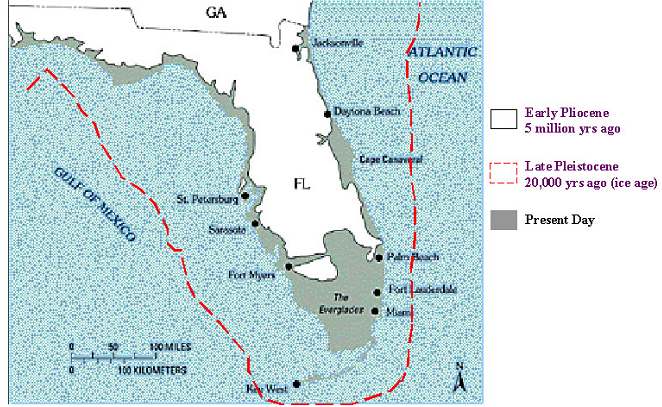
Florida's Changing Coastline.

Beaches move.  Beach sand moves constantly.  It is a complex choreography with countless moving grains - some moving in one direction and others moving in another direction - some moving rapidly and some moving slowly.

Sand is moved by wind and water.  I'm sure that doesn't surprise you, but the consequences are important for the beach hunter.

People talk about how items sink on a beach.  As I've argued before, items on a beach rarely move if the sand doesn't move.  Prove it for yourself.  Get a bucket of sand, put a coin on the top of the sand, and you'll be able to observe that a coin won't sink in resting sand.  Coins don't work their way down into sand like sand-fleas, moles or worms.  The biggest factor is the movement of the sand.

If I wanted to find old things at the beach, one thing I'd really like to know is the history of the beach and how it has moved over time.  The beach won't be where it used to be.  The sand will come and go many times in a year.  Beach could be a long distance from where it used to be. And even when the surface looks the same, the sand could have eroded several times and then filled again.  As that happens, objects will generally tend to settle lower.

I can remember times when local different Treasure Coast beaches were very different from what they are like today.  I'm sure you can too.  I remember, for example, when an old concrete foundation was exposed at the water's edge between John Brooks beach and the condos to the north.  I only saw it once, but I'm sure it is still there.  Of course the waterline is not where it was then.  In the same area, there was also once a line of tree stumps in the shallow water.  I haven't seen them again either.  The water line at that time was much closer to the condos than it is today.

I'd love nothing more than to have a overhead stop-motion video history of the beach changes.  You'd see the beach move in and out, slowly sometimes and at other times very quickly.

People often use stationary landmarks to judge beach changes and determine when old items might appear.  It wasn't long ago that I posted how people used a car frame up by Vero to judge when hunting would be good.  That car frame is gone now, but it provided a marker to estimate the movement of sand.

The illustration at the top of the post shows how much the Florida coastline has changed.  It changes year to year to, and even day to day.  Those changes are important to the beach hunter.  Many old objects that were once in the water are now covered by the beach, and other objects that were once on the beach are now in the water.

The beach can change quickly when there is a big storm.  Here are some photos of changes caused by hurricane Michael that did so much damage not too long ago.


The photos show how one section of beach disappeared in a very short time.  Here is the link for more about that.

https://www.usgs.gov/news/and-after-coastal-change-caused-hurricane-michael

Here is another example from the same article.


These changes caused by Michael are easy to see.  Most of the time the movement of sand occurs more slowly, but it does occur nearly continually. I'm sure that some of the erosion that occurred during Michael has been reversed by now.

I'm often amazed that people, sometimes conducting very big operations, are so far off simply because they failed to take into account beach movement. Remember, the beach is now different than it was a year ago, ten years ago, and certainly hundreds of years ago.

One of my old favorite shallow water hunting spots is now under the beach and the new waterline is out at least a hundred yards from where I hunted in the water about thirty years ago.  A beach renourishment project caused that.  If I went back there today and walked out into the shallow water, I'd be far from the area where I used to hunt and the old stuff would be deeply buried under the beach.

If you have a beach target that is dated to a general time period, one of the first things I'd recommend is that you do some research and try to find maps from that time and figure out where the beach was then relative to where it is now.

---

A six to nine foot surf is predicted for Friday.  That is a bit of an increase since yesterday.  It could get interesting.

Source: MagicSeaWeed.com.

Happy Thanksgiving,
TreasureGuide@comcast.net


Monday, August 18, 2014

8/18/14 Report - A Million Dollar Reliquary Pendant MD Find. More On Reliquary Pendants. Beaches Change During Level 1 Conditions Too!


Written by the Treasureguide for the exclusive use of treasurebeachesreport.BlogSpot.com.


16th Century Reliquary Pendat
Source; ukwirenews link.
Back in 2010 a four year old and his father using a metal detector found a 16th Century gold religious pendant (See photo.).  I reported on the find, but in light of the recently posted information from Laura Strolia that  identified the Booty's find as a reliquary pendant , I wanted to point out the fact that I also recently learned that the 16th century pendant was also a reliquary pendant.   It once had a back panel that opened. 

I think that is a very attractive and unusual item.

Here are two links for more details on the 16th century pendant.

http://www.ukwirednews.com/news/108762/Boy-four-unearths-16th-Century-gold-pendant-in-Essex

http://www.youtube.com/watch?v=oz3LIz3LSkE

And my 11/20/10 post.

That is one attractive and neat pendant.  Worth a lot too!


While on the subject of reliquaries, Laura Strolia sent me some additional information and another link on the subject. 

The Maria Stein Shrine of the Holy Relics in Ohio has hundreds of reliquaries, including relics enclosed in golden sunbursts of many different designs.  The round clear cases containing the relics are sometimes only an inch in diameter or less.  Many reliquaries throughout history were intentionally made with built-in metal rings for the purpose of hanging on walls – Laura Strolia  
One can see examples at:   http://www.youtube.com/watch?v=WQmzKWnFP_E

Thanks again, Laura.


Beaches can change very significantly, even when there is very little surf, as has been the case lately.   I'm not talking about the big changes that occur when you have a big surf that can change my beach conditions rating.  I'm talking here about the very subtle changes, that unless you are really paying close attention, might not be noticed.  If you are hunting recently dropped items, those small changes can be very significant.

As you probably know my beach conditions ratings are designed to give some estimation of the chances of finding old items on the beach.  When we are having storms or big waves, huge amounts of sand can be moved in very little time.  Those changes are hard to miss.  Big cuts occur.  Where there was once a big pile of sand, there will be cliffs and erosion.  That isn't what I'm talking about today.

The changes that I'm talking about now are the changes that occur when the weather is more like what we have been having for the past month or more.  Those changes occur during periods of calm surf.  They aren't nearly as obvious and they don't increase the chances of finding old items.  They do, however, affect the beach enough to determine where you will have the best chance of finding recently dropped items.

A few weeks ago one beach had a hard flat front beach.  Modern items including coins and jewelry were being found clustered in a few hot spots on the wet sand area of the beach.  Now the hot spots have moved.

Unless you were observing carefully you might not have noticed the change to that beach, but a foot or maybe more of sand has been added to that front beach area and the old hot spots disappeared.

It is not easy to see the change in the level of sand like that.   If I had a stationary post or something to measure the change in the level of sand, I suspect it might measure a foot or two of additional sand, but to the casual observer the change in level isn't noticeable since it is so gradual and spread over such a large area.

I used to often say that there is always some where to hunt and something to be found.  Lately it has been challenging to find the few scattered better areas where concentration of good items could be found.   There are still a few out there even though they are few and far between.

Some of the hot spots of a week or more ago have moved.  I suspect the change is due at least in part to the big tides we had.  On the beach where I was working a hot spot back a week or so ago, the best spot is now maybe twenty yards to the East and out in the water  

When the sand accumulates in one place, it came from someplace else.  The trick is to find the place where the sand has moved from.  That is where you will often find items besides those that were dropped just a few hours ago and possibly even items that were out of detector range for a while. 

I hope it is clear that I'm talking today about areas that are affected by moving water and not the dry sand today.  

Today I want to alert you to the fact that even when we aren't seeing the kind of beach changes that affect my beach conditions ratings, there are still small but important changes taking place.  They determine where you will have the best chance of finding modern items.  Those change occur during times of level 1 beach conditions.  Those changes are much less obvious, but still important when you are hunting modern items.  Hot spots still exist, as few and scattered as they might be, but they can move from day to day.


People have been getting ready for school to start again.   When school starts there will be fewer beach goers on the beach during week days until the snow birds return.

The weather disturbance that I've been mentioning for a few days is now nearly half way between us and the Atlantic.  Still far out and hasn't formed yet.

On the Treasure Coast it is still the same old thing.  Very calm surf.

As I explained today, there are still some scattered concentrations out there.  A lot of people have simply been hunting the dry sand.

Like I said yesterday, there is one very exciting inland project going on.  Very exciting.  Can't wait until I can tell you about it.

The posts about the hull pins, reliquary pendant and 1715 Fleet inscriptions are the kind of thing that I think makes very good posts.   I don't know how others feel about it though.   That is why using the plus button can help me know which ones you like.  I can't go by number of readers alone, because that fluctuates around holidays and different things as well as how much publicity a post receives.

Happy hunting,
TreasureGuide@Comcast.net