Showing posts with label cyclone. Show all posts

Saturday, August 24, 2019

8/24/19 Report - Two Weather Systems to Watch. Changing Times and Changing Finds.


Written by the Treasureguide for the exclusive use of treasurebeachesreport.blogspot.com.

Source: nhc.noaa.gov
The National Hurricane Center map is becoming more active in our part of the world.  

The area of low pressure over Florida has a 70%  chance of becoming a cyclone.  It is predicted to move north and out into the Atlantic.  I'd say there is not much chance that it will affect us very much.

The other system is heading west/northwest, but I don't think it will affect us much either, but there is still a lot of time for it to change.

Still, it is that time of year and I'll be watching for something that might improve beach detecting conditions.

The Treasure Coast surf is supposed to be up to three feet today but nothing higher than two feet for the next week or so.

---

How things have changed!  And it didn't take long.

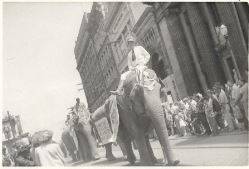
I came across some photos of a something you'll probably never see again.  It was a circus parade that came down main street when I was young..


I remember going out to the field where they were going to set up and watching the elephants being used to put up the poles to hold the big tent.

That doesn't happen any more.  It is something children today will never see again.

Its amazing how much has changed in my lifetime, and even during the years that I've been detecting.

There was a time when you'd find a lot of the ring type pull tabs.  Now they aren't too common.

Its amazing really.

I remember when we first got a TV and there was only on program, which came on in the evening for one hour.  Friends of the family would come over to watch it.

Gold and jewelry fashions have changed too.  Now you get a lot of rings made of materials like tungsten or stainless steel, which I didn't find twenty years ago.

Even gold changed.  Recently there was a lot more white gold.  It seems that yellow gold is coming back now.

Of course the internet changed a lot of things.  I think the metal detecting community is generally much more informed now.  And it is a great research tool.

I found tons of hotel keys in the past.  They are not nearly as common today.  Many hotels are now using the magnetic cards.

I also used to find a lot of arcade or game room tokens - also transportation tokens ie bus, turnpike, and other types of tokens.

Circus Token Dug on Florida Beach.


Here is a very nice pdf on the history of early gaming tokens.

http://www.ccgtcc-ccn.com/tokens.pdf

Silver modern coins were more common finds too.

I also used to get a lot more of the WW II shells than I have in recent years.

Also soda bottle caps used to litter some beaches.  We still have bottle tops to contend with, but not so much from soda bottles.

The same for glass soda bottles, which are now mostly plastic.

And one thing I found recently that I never found way back when is a smart phone.  I did find a few beepers back some years ago, if you remember those now.

All of the older things can still be found today if you find a good site or we get some improvement in beach conditions.

I'm sure I could think of some more changes in the last thirty or so years of metal detecting.  Maybe you can add some to my list.


That one system has a chance of developing in a few days.


Happy hunting,
TreasureGuide@comcast.net

Friday, October 27, 2017

10/27/17 Report - Irma Uproots More Than Trees. Beach Changes Overnight. More Thoughts On Mystery Object. Cyclone Developing Now.


Written by the TreasureGuide for the exclusive use of treasurebeachesreport.blogspot.com.

Photos by Joe D.


Yesterday I received the following message along with the attached photos from Joe D. 

Just read today's [ yesterday.s ] post.  I was out before sunrise to continue hunting the same area as yesterday, which was about 21 hours ago.  And the beach had drastically changed in that span of time.  The sandbar that I mentioned yesterday had made landfall with a vengeance and made anymore hunting here pointless for now.  (See pics for a same spot comparison).  But the sunrise was fantastic!             Also, here's a large piece of debris that had to have come through one of the inlets, or from the Keys via the gulf stream.  It's a large chunk of mangroves and soil, and probably weighs several thousand pounds.      Joe D.


Thanks for the report and pictures Joe.

---


Hurricane Irma Uncovered Native American Artifacts.

Archaeologists are sifting through the root balls of twenty trees on Marco Island that were uprooted by Hurricane Irma to see what Calusa artifacts might have been uncovered.

Here is the link to that story.


Just before I read about that, I read an email from Darrel S. about checking where trees have been uprooted.

I talked about various sources of erosion yesterday and should have mentioned that I do always check where trees have been uprooted.  A lot of the time I have found nothing there, but a few times I have made nice finds that way.  A few were 1715 Fleet finds.

---

I think the mystery coin that Steve found does show a Cuban seal on one side.  Thanks to Brian M. for pointing us in the right direction.  Both Steve, who found the coin, and some readers question if the other side matches that of a ten centavos coin.  Joe D. sent this picture of a two centavos coin with the following message.


Picture of Two Centavos Submitted by Joe D.


 Joe said,   I was just comparing Brians coin picture with the one posted today and I noticed something in the star that didn't mesh. I looked on coinect.com and found what I think is a better match for the star. It's a 2 centavos based on the pattern I see in his pic ( here's a pic). The 1 and 5 centavos don't match either, so I believe it's the 2!

The trouble with that is that Steve believes the coin to be silver.  The two centavos is not.

The earliest Cuba coins with that kind of seal was the 1915 coins.  A similar seal, but one that looks to me less like that on the mystery coin, was used as early as 1897, but those coins had a female head facing right  on the other side.

Here is a good link for Cuba coins.

https://en.numista.com/catalogue/cuba-2.html 


I like the process of how these mysteries get closer to a solution over time.  We make progress with each step as different people contribute and we have to take new facts and opinions into account.

Christopher P., on the other hand, thought mystery coin might be a badly worn medallion such as the "First Communion" medallion shown below.  He sent the following example.

First Communion Medallion
Submitted by Christopher P.
I guess there is some possibly it could be a medallion rather than a coin.  Lets see what Steve, the one person that has the advantage of looking at the coin in person, thinks.  I don't know if we have an exact match yet, but I think we are getting closer, thanks to those who have contributed their research and ideas.

---

It isn't too late to have a hurricane.  In fact right now there is a system developing down near Mexico that has a 50 percent chance of becoming a cyclone in the next 48 hours.

Source: nhc.noaa.gov
On the Treasure Coast we'll have a couple days of small surf.

The cool air is more comfortable than all those 90 degree days we had this summer.

Happy hunting,
TreasureGuide@comcast.net


Thursday, August 17, 2017

8/17/17 Report - More 1715 Site Finds From the Capitana. 1802 Shipwreck With Interesting Cargo. Storms Forming in the Atlantic.


Written by the TreasureGuide for the exclusive use of treasurebeachesreport.blogspot.com.

Cole Smith of the Capitana Crew with Encrusted Object
Photo submitted by  Captain Jonah Martinez

Captain Jonah said, The cargo hook was found by Cole Smith newest member of the Capitana...

Congratulations Cole, and thanks for sharing Jonah!

Cole also found a class ring. Not the class of 1715 - but 1968.

Cole's 1968 Class Ring Find.
Things of various ages and sources sometimes get mixed together.  Just because something comes from a known shipwreck site doesn't mean it came from the shipwreck.  That is obviously the case with this class ring.  The ring looks like it has been lost for a good number of years.

Nice thing about diving all day is that your hands look like you just got a manicure - not like relic hunters.   Relic hunters usually look like they could start a seed garden under their fingernails. ( :

---

Continuing with that theme, I found an article about a shipwreck that was lost in 1802 that was carrying antiquities taken from ancient Greece.

Chess pawns, combs and a toothbrush are some of the new findings brought to light by the underwater excavation of the wreck of the ship “Mentor” that sank off the island of Kythira in 1802...


Divers On The Site of the 1802 shipwreck of the Mentor.
Source: See GreekReporter link below.
The ship, which was carrying antiquities plundered from the Parthenon by British diplomat Lord Elgin, was bound for England via Malta but sank at the entrance of the port of Avlemona southwest Kythera...

For more about that, here is the link.

http://greece.greekreporter.com/2017/08/15/items-recovered-from-wreck-of-elgins-ship-off-kythira/

Another example how items from various sources and ages can be found together.

---

Source: nhc.noaa.gov
The Atlantic is hearing up.  The system approaching the West Indies (red) had an 80% chance of becoming a cyclone in the next 48 hours.  The next system has about a thirty percent chance.

Gert is way north now.

I'll be posting a projected path on those systems before long.

Happy hunting,
TreasureGuide@comcast.net

Sunday, July 30, 2017

7/30/17 Report - $130 Million In Sunken Nazi Gold. Pirates And The 1715 Fleet. Tropical Activity In The Gulf.


Written by the TreasureGuide for the exclusive use of treasurebeachesreport.blogspot.com.

Source: See FoxNews link below.

SS Minden, a German cargo ship scuttled in waters near Iceland during the early days of World War II, may contain a huge trove of Nazi gold.

The merchant vessel, which is 120 nautical miles south of Iceland, is in the international spotlight following the reported discovery of a chest containing up to four tons of Nazi gold on the wreck. The horde is valued at 100 million British pounds (approximately $130 million), according to news reports.

U.K. salvage company Advanced Marine Services (AMS) has reportedly requested permission from Icelandic authorities to cut a hole in the ship’s hull and remove the chest.

Here is the link.

http://www.foxnews.com/science/2017/07/27/sunken-wwii-ship-may-contain-130-million-nazi-gold.html

---

I found a very good web site about pirates.  I'll give you a few short excerpts that relate to our area just to give you some idea of the kind of information you'll find on that site.

The pirate population of New Providence was swollen in 1715 by a shipwreck off the Florida coast. This wasn’t just an everyday shipwreck. The dozen or so ships that were driven aground by a hurricane made up the Spanish plate fleet. In the hold of just one of the flag ships were three million silver pieces-of-eight, gold bars and coins, pearls and jewellery. The second ship of the fleet was almost as heavily loaded, with another three million pieces-of-eight, and there were nine more ships with smaller quantities of treasure....


Pirates close in

Soon, of course, English officials sat up and paid attention. The first was the governor of Virginia, who wrote to his bosses in London that
The Spanish plate fleet, richly laden, consisting of eleven ships, are, except one, lately cast away in the Gulf of Florida to the southward of St. Augustine …I think it my duty to inform his Majesty of this accident which may be improved to the advantage of his Majesty's subjects by encouraging them to attempt the recovery of some of that immense wealth.
Archibald Hamilton, the governor of Jamaica, also took an interest in the wreck. In fact, he took a very close interest indeed. Towards the end of November, not long after divers had stopped work for the winter, he sent two ships to sea. According to Hamilton, the Eagle and the Bathsheba were on a pirate-hunting mission that would last six months. Since Jamaica was itself a den of pirates, and had grown rich on the buccaneering trade, this perhaps seems rather surprising. So too was Hamilton’s choice of captain: he picked one Henry Jennings to command the Bathsheeba.

Jennings was no stranger to piracy – or at least, to its more upright brother, privateering. Jennings had successfully attacked Spanish ships in the war that had recently ended. Possibly Hamilton believed that Jennings’ experience as a privateer would make him a very effective pirate hunter, just as poachers make the best gamekeepers. But it’s much more likely that the governor and the captain had something altogether different in mind. Certainly Jennings wasted no time. The Eagle, the Bathsheba and three sloops sailed straight to the salvage site with 300 men.
Mooring their ships off-shore, the pirates waited until nightfall, cleaning their pistols, and sharpening their cutlasses ready for the attack. Then, armed to the teeth, they rowed to the sandbank. The raiders pulled their boats up the beach, well beyond the reach of the pounding surf that hid the sound of their approach. Then they lay low until dawn. The following morning, the company regrouped and drew their weapons before marching across the sand to the Spanish camp. Finding himself surrounded and outnumbered five-to-one, the Spanish commanding officer stared down the barrel of Henry Jennings flintlock pistol, then quizzically asked “Is it war?”.
“No” said Jennings “We have come to fish for the wrecks.”
“There is nothing of yours here…” replied the officer “…the vessels belong to his Catholic Majesty the King of Spain, and I and my people are looking for the treasure.” ...

That is actually a fairly long excerpt, but a very small portion of what you'll find on the site.

Here is the link.

http://www.piratechart.com/pages_ages/golden_age.php

---

On the Treasure Coast we still have a small surf.

There are now two disturbances: one in the Atlantic and one in the Gulf.

The one in the Atlantic is not expected to strengthen real soon.  The other, however, is close to the Florida Panhandle and has a twenty percent chance of becoming a cyclone in the next 48 hours.

Source: nhc.noaa.org
Happy hunting,
TreasureGuide@comcast.net

Sunday, June 19, 2016

6/19/16 Report - Cyclone Forming in the Gulf. Higher Surf. Milagros and Spanish Colonial Artifact Web Sites


Written by the TreasureGuide for the exclusive use of treasurebeachesreport.blogspot.com.

Disturbance With 70 Percent Chance of Becoming Cyclone in Next 48 Hours.
Ssource: nhc.noaa.gov
Right now we have a disturbance in the Gulf that will likely form into a hurricane in the next 48 hours.

One organization predicts an 80 percent chance that 2016 will be the most active hurricane season since 2012.

Two others predict an average to slightly above average hurricane season, 30 or 40 percent above the 2006-2015 norm.

Here is the link.


----

I've talked about milagros before.  Those are items, mostly silver, shaped like body parts, animals or a few other things. 

In the classical sense, milagros (also known as ex-votos or dijes) are offered to a favorite saint as a reminder of the petitioner's particular need, or they are offered to the saint in thanks for a prayer answered.


Apart from the contemporary use of milagros as decorative elements, milagros as symbols have new uses and meanings in New Mexico these days. If a friend is about to have an eye operation, the gift of a eyemilagro helps to say, "I wish you well." A pair of lungs can say, "I hope your cold gets better." An arm and a leg given to a couple trying to buy a house can wish them good luck obtaining financing. An ear milagro can suggest that someone be a better listener. An axe milagro might suggest that a relationship should end.

Milagros then, are not solely religious items, nor are they only for collecting. They are part of the magical and symbolic past common to all cultures which continues to influence our lives today. Whether used traditionally or in modern ways, milagros are an ongoing part of a fascinating folk culture in New Mexico and elsewhere.

Here is a good site about milagros.


---

I want to point out a great web site that should serve as an example for collectors and museums.  It was created by John Powell of St. Augustine.

The site iteself says, This site is dedicated to the exhibition and interpretation of Spanish colonial military artifacts from that vast region of southeastern North America which once comprised the Spanish Floridas and, to a somewhat lesser extent, Spanish Guale, Luisiana, and Tejas. While other materials are included in the illustrative displays, the interpretive emphasis of this site has been placed upon military clothing and, as they evolved, uniform-related artifacts: the buttons, strap and accoutrement buckles, and insignia worn by Spain's regular, provincial, and urban militia forces in the study region.  The period of interpretation is from ca. 1539—when Hernando de Soto began his epic journey of exploration in what is now the southeastern region of the United States—to the conclusion of Spain's colonial tenure in North America in 1821.

Here is the link.


A day or so ago I mentioned the Oxford Celtic Coin Index, which was put online by an coin collector.  That was excellent example created by a coin collector.


---

The wind has increased and the surf is increasing today.  The peak for Sunday will be 4 to 6 feet.  Tomorrow we are supposed to have a higher surf.

I'll go out and check around a little.

Happy hunting,
TreasureGuide@comcast.net