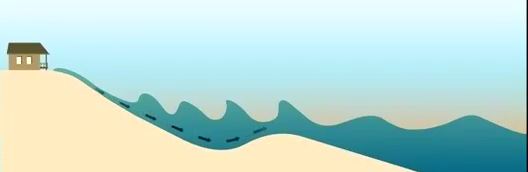
Showing posts sorted by relevance for query trigger. Sort by date Show all posts

Saturday, August 29, 2015

8/30/15 Report. Erika Gone. Supermoon Last Night. More on Trigger and Drop Points. Flying Aircraft Carrier Sunk.


Written by the TreasureGuide for the exclusive use of treasurebeachesreport.blogspot.com.


Two Disturbances
Erika has disappeared.  However, the remnants are just off of Cuba formed from the remnants of Erika.  At the time of the 8 PM update, this disturbance only had a ten percent chance of becoming a cyclone in the next 48 hours.  We will get a lot of rain from it.

There is another disturbance coming off Africa.  It has already turned into a tropical depression.

Erika fizzled out like Danny did.  The surfing web site are predicting something like a three to four foot surf on the Treasure Coast tomorrow.  Then it is supposed to decrease again on Monday.

---

Last night was a supermoon, the first of three supermoons to occur this Fall
...In fact, the term ‘supermoon’ is not astronomical. Scientists call this event a ‘perigee moon’: it takes place when the full Moon reaches the closest point to Earth on its oval orbit. This point is called perigee and it is about 50,000 km closer to our planet than the opposite side of the Moon’s elliptical path – apogee...

Here is a link for more about that.

https://www.rt.com/news/313812-supermoon-rising-saturday-august/
You might recall that it was worried that Erika would arrive during a supermoon.

---

I received the following email from Brian H.

I have been reading your blog and thought what if we had T-Shirts with Environmental Clean up Crew printed on them. Would make a great conversation point.

I have been studying your blog mainly on how objects move in the sand, fresh water lakes act different than the ocean but the fluid dynamics are the same. I do have the Great Lake Michigan in my back yard and it acts like an ocean.

I will hit a hot spot of 60's era flip tops and think no one has been here before? Then I will get into bottle cap heaven and dig like a hundred of them. One day I saw one in the water scooting across the surface of the sand and I started thinking differently.

It is when I get into the coins and nickels that I normally find the gold rings. Birds of a feather?

The weather on the lake for tomorrow will change to a Northeast and a Super Moon.

I will take a couple of machines and watch the sand movement.

Brian is right.  The water dynamics are the same.  Anywhere there is running water, even rain runoff, watch for the same basic principles at work.  Thanks Brian.  

Watching junk can tell you a lot.  Junk can help tell you how things are being distributed and therefor also where the good and bad areas are.

---

I really learned a lot about escudos lately.  It happened primarily as a result of looking at the recent Treasure Coast finds.

In the past couple of years I have also learned a lot more about how sand and objects move on beaches.  That is something I've studied for a long time, but I just made some new breakthroughs that help explain a lot. The more you learn, the more knowledge you have to build on, and that leads to learning new things.

A diver told me he was pretty sure that at least some of the escudos that were found this year down in the pot holes and cracks were up on the slabs before the blowers removed the sand.  A lot of the escudos were found on top of the slabs even after the blowers removed the sand.  That information was important to me for several reasons.  Basically it confirmed some things I suspected but was not absolutely sure about.

One of the books I mentioned the other day said that Frogfoot Weller wanted his blowers to run no faster than 600 rpm.  That was so the coins would settle down in the hole instead of being blowing around.

That provides an excellent example of how what I have named "trigger points" are important.  In case you haven't read what I've said about trigger points, a trigger point is the amount of water movement or force needed to get different objects to start moving.

Little force is needed to move silt or fine sand and more force is needed to move small pebbles and even more force is needed to move things like gold coins.  Every object has its trigger point.  If you know where each object lies on the scale, you know in what order things will be moved as the amount of force increases.  If you think about that continuum and how the various trigger points are  met as the amount of force increases, you'll understand how some objects are moved and others left behind as different amounts of force are produced.

The other important thing is the "drop point," which refers to the point at which different items drop out of moving water and settle.  As water movement decreases, different objects settle out at different times.

An important thing to watch is when and where the amount of force changes.  For example, there will be a lot of force directly in front of a breaking wave and less as the water goes up the slope on the front of the beach.  If the trigger point for an object, such as a coin was exceeded at the base of the slope, the "drop point" might be reached at some point as the water slows as it goes up the slope. Objects that are less easily moved will generally settle out first, but it is not a straight line function.

It gets more complicated since you also have to take into account such as back flow, which may have enough force to move sand or other objects back down the slope again.

Up to 600 rpm the force produced by Frogfoot's blowers moved the sand, but above 600 rpm the coins were also being blown around.  What they wanted was to blow the sand but not the coins, which would then tend to settle down into the hole.

---

Flying Aircraft Carrier
Source: see link below.
As early as 1916 the Navy had begun designing lighter-than-air (LTA) rigid airships, and by 1926 the focus had shifted to airships that could support aerial scouting missions. The first flying aircraft carrier, USS Akron (ZRS-4), was commissioned in 1931 – and after several incidents in two years, the airship crashed and sank off the coast of New Jersey in 1933...

I thought that was pretty interesting -  a flying aircraft carrier.  Note the size of the planes below the airship.  In the article there was is a picture of how the old planes were attached.  Really interesting idea that evidently didn't work out.

Here is the link.
http://news.usni.org/2015/08/19/exploring-the-wreck-of-uss-macon-the-navys-last-flying-aircraft-carrier

---

Happy hunting,
TreasureGuide@comcast.net

Wednesday, August 13, 2014

8/13/14 Report - How Objects Sink During Summer Beach Conditions. Valuable Antique Jewelry. H. L. Hunley Submarine. Titanium On Beach


Written by the TreasureGuide for the exclusive use of treasurebeachesreport.BlogSpot.com.

Antique Diamond and Ruby Ring.
Source: See aol.com link below.
I'm often asked about those light pieces of melted metal that people find along the coast.   They look a lot like aluminum.  I believe that many of those are titanium.   I've posted about that in the past.  Since I still get questions about those finds, here is a little repeat of what I said.

If you've ever dug up a piece of metal that looks something like melted aluminum on a Treasure Coast beach, it could be titanium from a rocket or maybe the space shuttle Challenger disaster.

Here is a link to a web site that tells how to identify titanium.

http://mrtitanium.info/2008/03/17/how-to-tell-if-a-piece-of-metal-is-really-titanium/

As you might know, titanium is also used to make inexpensive jewelry these days and is much less expensive than platinum, gold or silver.


Below is a beach photo that I showed a few days ago.  I'm showing it again as an illustration.

Recent Treasure Coast Beach Picture.

A few days ago a lifeguard told me about a diamond engagement ring that was lost a few days earlier.  He said the lady was in knee deep water at the time.  He also said that even though the ring was lost a few days before, the water had been calm.  He was thinking it would still be about where it was lost since the water had been so calm.
 
What the lifeguard did not understand is the poor sandy beach conditions in that area.  Despite the generally very calm surf, things were not staying near the surface, but rather were quickly sinking our of detector range.
 
The wave in the above photo is not as big as it looks.  It wasn't much more than about a foot.  It is breaking nicely and from its form you couldn't tell it from a ten foot wave. 
 
What I want to point out is that where the red line is, the crashing water will churn the sand even though the surf is small.  Furthermore, the line of impact will move as the tide goes in and out so that the red line will move ten or twenty yards or more in and out twice a day.  Not only that but the area in front of the crashing wave, between the red and yellow line has surging water which will move the sand and keep it from settling.  That means sand will be accumulating from the red line to the yellow line and a little beyond.   That is what happens during a summer beach.
 
So even though the water looks very calm, it won't take long for an object like a ring to be buried.  It is partly a matter of the ring sinking and partly a matter of  it being covered.  The sand in this area is loose and the apparent sinking happens at a fairly rapid rate.
 
As I have pointed out in the past.   It takes more water force to move some objects than others.  I'm talking about horizontal movement now, not vertical.
 
It takes very little water movement to move sand, especially when it has been suspended, as it would be by the crashing wave.
 
The fact that it takes little force to move sand but considerably more to move something like a ring, which is more dense,but which also is shaped in a way that does not provide good surface area to the water to push against, what happens is that the sand moves faster around the curved object, letting the object sink through the loose sand while at the same time moving more sand in to cover it up.
 
There is what I call a trigger point for different objects.   The trigger point (amount of water force need to move an object) for sand is much lower than the trigger point for an object like a ring.   That is much of what accounts for objects like rings sinking quickly in sand when the force of water is slight.  That is what basically what happens during poor beach conditions.
 
The trigger point is determined not only by an objects weight or density, but also by its shape.  I've demonstrated that by experiments in the past.
 
Here is one link to reference.  You can search for others.


Above is a picture of an antique diamond and ruby ring worth $80,000.  Use this link to learn more about the ring and a matching $160,000 bracelet

http://www.aol.com/article/2014/08/12/antiques-roadshow-diamond-and-ruby-jewelry-worth-a-fortune/20945611/


The H. L. Hunley being conserved.

http://www.postandcourier.com/article/20140812/PC16/140819871/1177/scientists-to-begin-exposing-the-real-hunley

Nice picture and article.


There is no tropical weather to watch in the Atlantic.

On the Treasure Coast the tides are still fairly big, but the surf is still around one foot and will remain that small for several days.

Happy hunting,
TreasureGuide@Comcast.net

Monday, March 10, 2014

3/10/14 Report - Experiments On The Movement Of Sand And Other Objects On A Beach


Written by the TreasureGuide for the exclusive use of treasurebeachesreport.blogspot.com.


I'm sure everybody had a great time at the TCAS club hunt this past weekend.

To the left is a picture of the beginning of an experiment.

Three lead sinkers were placed on a sand bar in shallow water where the water would get deeper as the tide came in.

At the time of placement the objects were in very calm water.  What I'm talking about here today happened before the water got rough.

Which object do you think would be the first to disappear from view while the waves were still gentle?

The big heavy one?  The little round one? Or the disc shaped one.

This might or might not be a surprise to you.

It was the disc shaped object that disappeared first.  It disappeared quickly and well before either of the other two.  The heaviest appeared to remain the most visible in those first minutes before the water got rough.

Some sand was removed from around the two egg shaped sinkers making a little depression around them, but the disc shaped one disappeared very quickly.

People often talk of things sinking.  And they talk about heavy objects sinking more.  That isn't always the case.

I should make one clarification here.  When I just said sinking, it was as much a matter of being covered as sinking.  There is a difference.

There is what I'll call a trigger point.  It takes a certain amount of water forced to move different objects.  Sand will be moved before the sinkers.

Very often when people think that things are sinking on a beach, they are actually being covered.

The trigger point is critical.  It is one of the factors that helps to create coin holes and lines.

There is also a trigger point or threshold of force that determines when an item will be dropped or settle out.

Considering the change in waves and changing tides etc. different items will be moved and dropped at different times.

In the first few moments of the experiment above the sand was being moved, not the objects.

When the sand moves objects can sink as they settle down as the sand is removed from under them or when they are pulled down a slope.

 I was flipping through TV channels the other day and happened to hit a program on USOs (Unidentified Submerged Objects, or something like that).  They were trying to find a plane that wrecked in the water off of the California coast and couldn't find it where they thought it would be.

In order to try to figure out what happened to it they did a little laboratory experiment.  I don't think it was a great experiment for what they were trying to accomplish but the experiment did reveal one thing.

I tried to find the video clip online but couldn't so I made the following diagram.  If you can find the clip I hope you'll send me a link.

They had a big tank of water and a sloped surface in it covered with sand.  They put what looked like a sinker on the sand.  The sinker was partly in the sand but mostly exposed.

They then toke a hose and made a current aimed at the object and up the slope.

Guess what happened to the object.


The current pushed the sand away from the front and sides of the object as the water rushed around it.  The object then STEPPED down the slope.  I say "stepped" because it moved in small quick steps, pausing in between steps.

The current moved the sand from the front of the object but not the back of the object.  Gravity on the object and also the sand behind the object then moved the object down the slope.

The current trigger or threshold level was sufficient to move the sand in the current up the slope but gravity moved the object down the slope.

That was a good illustration.

If you start putting all of these things together you will understand how gold and cobs and things move on a beach.  It isn't simple though.  There are many factors.


On the Treasure Coast we have beautiful weather again today.  A lot of sand though!

The wind is out of the West and the surf is only around three feet.  It will decrease even more for a couple of days.

Happy hunting,
TreasureGuide@comcast.net

Wednesday, January 27, 2016

1/27/16 Report - Most Recent Observations On How Water Moves Objects On A Beach.

Written by the TreasureGuide for the exclusive use of treasurebeachesreport.blogspot.com.


Yesterday was an excellent day for observing how objects move on a beach.  The surf was about three to five feet.  That was rough enough that there were significant waves and enough force, while not too rough to be able to get close to the crashing waves.  There were also lots of shells and small rocks.  That made it possible to observe how things move.

At low tide I stood near the low point of the beach where the waves were crashing at the time.  There were a lot of shells and things periodically exposed as the waves crashed and the water and sand came and went.  Shells and things would be exposed, moved up and back down the beach, and then sometimes covered by sand again, and then exposed and moved again and again.  Occasionally some were moved higher on the slope where they remained for a while.

I focused on one small roughly coin-shaped shell and watched the water rush back down the slope over that shell.  At first it didn't move as the water rushed over it.  No movement.  No movement.  Then all of a sudden it popped up off the sand, into the current and quickly retreated down the slope and disappeared into the swash.

The thing that struck me most about that observation is how quickly it popped up off of the sand and how quickly it moved after a period of hugging the sand and not moving as the water rushed over it.

Here is a quiz to see if you read my blog in the past.  What have I called the point when the water force becomes sufficient to move a specific object?

It is the trigger point.  And what I have just described is an excellent illustration.  Again, what struck me was how sudden it was.

I think it is tempting to think that it is a more gradual process and that if the water is moving, objects are being moved in a similar way at and at similar rate.  But water moves more gradually while objects being moved by the water can be moved not at all and then very suddenly. The trigger point is all or nothing.  Eight it has been reached or it has not.  Once the trigger point is reached and the object becomes suspended it moves very quickly until the what I have called the "settle point" is reached, and the object settles down on the bottom again.

Objects such as coins, which are relatively flat and settle against flat the surface, sometimes even settling slightly into the surface, move differently from round objects, which roll around - first up the beach and then back down.  Rounder objects do not hug the surface and provide more surface area for the water to push against.

Flat coin-shaped objects quickly settle into the surface and do not provide much surface area for the water to push against, until they are lifted off the surface, and then they are moved quickly, sometimes flipping.

You can not observe how this works when the water is very rough.  You can't stand in the crash zone when the surf is strong, and if you could you would still not be able to see small objects because the water is so rough and turbulent.

If you look at the illustration  at the top of the post, the red area is where the waves were hitting with force and masses of shells were exposed.  Occasionally they would get covered with sand and disappear, but often the sand was removed to expose the shells and rocks.

When a wave crashed, the water would dislodge settled objects and some of them would get washed up the slope.  Many would get washed back down the slope with the returning water, but those that settled near the top (blue area on the illustration) formed a shell pile.  Occasionally the water would hit the shell pile and wash some objects back down the slope.

This was all happening at low tide.  As the tide gets higher, the crash zone moves up, as would other the surge and objects. At other times the shell pile might be pulled down into the water and disappear again.

All of this is very well explained by trigger points, and the increasing and decreasing water flow interacting with various characteristics of the objects, including density, size, shape and surface characteristics.

I was observing shells and rocks today, but coins are moved in a very similar way.  Coin lines are formed in the same way as shell piles.  You can't often observe the same process with coins though. There are much fewer coins, and they are more difficult to see.  Shells will be moved slightly differently than coins, because of differences in density, size and shape, but the same basic principles apply.

I had plenty of other things to post today but thought I should post this while I was thinking about it.

Even when you are not finding what you want, take advantage of your time on the beach to observe how it all works.  You might find something else in the process.

Remains of An Old Cut As Seen Yesterday Afternoon.

One Formless Beach As Seen Yesterday Afternoon Near Low Tide.
I'll try to get some good close video of the things I described above.  I guess I was so intent on watching that I forgot to take a video.

Every time I do try to catch a video of something in the crash zone, it seems things don't happen when I want.

It rained last night and much of today.  The surf is down today and will be nearly flat for a few days.

I'll get back to recent finds in my future posts.

Happy hunting,
TreasureGuide@comcast.net

Tuesday, September 2, 2014

9/2/20 Report - How Objects Sink in Beach Sand, Density of Common Metals. Movement of Sand. Tropical Storm Dolly


Written by the TreasureGuide for the exclusive use of treasurebeachesreport.BlogSpot.com.


Gold Ring and Quarter In Cup of Sand and Water.
I always read  about how "heavy" objects sink in beach sand.  I understand why people say that, but it is not correct.

To the left you see a cup of genuine Treasure Coast beach sand and tap water.  I poured about half a cup of water into the cup and then about a half a cup of sand.  The sand filled the cup up over three fourths of the way with about a half inch of water on top of the surface of the sand.  I then put a quarter and thin gold ring on the sand.

How much do you think the quarter and ring sank in the last week?

Here is the answer.  Not at all!  

The way some people talk, or write, it sounds like gravity pulls objects like these right down through sand.  That didn't happen in this cup. 

You might say that this is a poor experiment, and it is nothing like a beach where the water and sand move.  Precisely!  It is not like a beach.  Everything is stable, and gravity alone will not pull coins or a rings like these down through this sand.  Other forces are at work when an object settles down to lower layers of sand on the beach.

On a beach the water and sand moves, and the moving sand covers  objects like these that do not move as much as sand.  But that is just part of it.

The objects will move some too, but much more often it is the sand that does MOST of the moving.

Before I go on I want to address another part of this.  People say that "heavy" objects sink, but it is not the weight of the object alone that determines if an object will find its way to lower levels of sand.  As I've explained in the past, a one-ton block of Styrofoam weighs one ton but will float in water and will not sink into the sand.  It is not the weight, but the density that has more to do with it.  But it isn't just the density of the object either that determines how an object will sink in the sand.  The shape of the object will have something to do with it too.

Lets focus on density for a bit.  The site linked through the following link presents a list of common metals along with their density.

http://www.engineeringtoolbox.com/metal-alloys-densities-d_50.html

Here are some of the most relevant metals listed on that web site.  (Density is given in Kg. per cubic meter.)

Aluminum  2712
Brass  8400 - 8700
Copper  8940
Gold  19320
Iron 7850
Lead 11340
Platinum 21400
Silver 10490
Steel  7850
Titanium 4500
Tungsten 19600
Zinc 7135

This correlates somewhat with how things will be distributed on a beach - but not perfectly

Aluminum is the least dense of the above group followed by titanium.  You'll see those often during poor beach conditions.

Copper and zine are sort of in the middle, with zinc being slightly less dense than copper.  Zinc cents will be found more towards the outer boundaries of coin holes, and copper cents just a bit closer to the center.

Lead is slightly more dense than silver.

The most dense of those listed above are platinum followed by tungsten, followed by gold.

(You might remember the tungsten ring that I found not long ago.  I caught it in the right light yesterday and saw on the inside of the ring that it was marked as tungsten.  On a detector the target ID came up as nickel.  I could tell when I picked it up that it was heavy for its mass, although without really thinking, I called it titanium at first before being corrected.)

If you look at that list, you'll have some indication of how those objects will sink into sand.  But as I showed above using the cup, they won't sink by themselves unless there are other forces at work.

The water moving the sand is a very big part of it.  I've explained before about trigger points.  Different objects require different amounts of water force to move them.  Grains of sand move relatively easily.  They have lower trigger points.  It takes less water force to move sand.  Objects like the coin and ring require more force to get them moving.  They have a higher trigger point.

When the water isn't moving much, the sand will be moved while the object remains relatively stationary.  Sand will be washed over the object, out from around the object, and if the shape is right, even from under the object.  This movement of sand is one of the biggest factors in determining how a object will sink into the sand.  With stationary sand, there is little to no sinking.

The shape of the object is also important in determining how an object will be moved on a beach.

I once showed an experiment in which lead sinkers having different shapes but the same weight were moved by crashing water - a disk shaped sinker was moved less by the same water than a egg shaped sinker, which was moved more than one of those fish shaped sinkers.  That is exactly what I predicted before the experiment.

The disc shaped sinker provided less surface for horizontally moving water to push against.  It hugged the surface of the sand something like a coin would.

Flat thin sheets are moved more by water - much more so than most other shapes.  As a result, even though copper is about three times as dense as aluminum, you will find thin copper sheets being deposited on a beach very much like aluminum.

Again, shape has a lot to do with how an object will sink in beach sand or be moved around and deposited.

For a more complete discussion of trigger points and the lead sinker experiment see my 3/10/14 post.
http://treasurebeachesreport.blogspot.com/2014/03/31014-report-experiments-on-movement-of.html

I also once showed an experiment that showed how an object "stepped" down a sand slope when the water current was rushing up the slope.  What happened is that the current moved the sand from around the object and from in front of the object as the object sat on the slope, and when enough sand was removed from the lower side of the object, the object slipped down the slope into the void, where it came to rest until the current moved enough sand for it to slip down another step.  Again, it was more about the sand being moved than the object sinking through the sand.

Of course loosely packed sand will move more easily and permit objects to "sink" lower more quickly than would packed sand.  That affects how much the sand moves too.  I can't get into all of the factors here, but wanted to make it perfectly clear that objects do not sink into sand simply by the force of gravity pulling the object down through the sand.

This might not seem important, but to me it is very important to me because it helps me understand how different types of objects will move on a beach, and therefore, where they are most likely to be found.  Sometimes when an object seems to be sinking, it is actually being covered rather than sinking.   And, of course, there are times when the water force is enough that more dense objects are moved forcefully by the water.  Coins have been observed to flip up and over a sand berm, for example.

That's all of that for today.


On the Treasure Coast we're supposed to have a one to two foot surf for a week or so.

There is a new tropical storm Dolly, but she will be hitting Texas.

Happy hunting,
TreasureGuide@comcast.net
jewelrymarks.html#art

Sunday, June 28, 2015

6/28/15 Report - Trigger Points, Drop Points, Water Velocity and How Things Move And Get Sorted On A Beach.


Written by the TreasureGuide for the exclusive use of treasurebeachesreport.blogspot.com.

There is a lot of information available on waves and coastal erosion.  What I do is start with that information and add my own observations and experimentation.  The academic literature is very good but it doesn't cover everything that a detectorist might want to know.

I could give you simple hints and suggestions such as to check dips below cuts, and that might would be good advice, but it won't help you nearly as much as knowing the principles of how beaches work. Situations differ, but if you know the important principles you'll be able to analyze any beach you look at and have a good idea if the beach is improving, and it will also tell you where to detect.  There is a lot to it, and it isn't simple, but if you continue adding to your knowledge base, you'll get it.  I keep learning more and more and understanding more and more.  Keep in mind the principles that you pick up and try to observe and test them in the field.

I'll try to put it in a way that I think is most understandable and applicable to a detectorist.  I'll add a little at a time, repeating some things and slowly adding a little new material to it.


As you would suspect, it takes more water velocity to move larger particles and larger items.  The relationship in "laminar" currents is pretty much a straight line when you are talking about items having the same densities and the same shape.

While particles will be transported by water moving at a given velocity, it takes more velocity to dislodge settled particles (and other objects) than it takes to keep them moving once they are suspended.

The velocity required to dislodge particles and get them moving is what I have often referred to as the "trigger point."  That isn't the scientific term.  It is just the term I use.  If we were to include that on a graph like the one above, there would be a line to the right of the red line, and it would not be a straight line because it takes more force to dislodge certain types of particles.

Clay is a good example.  It consists of very fine particles that transport very easily in water when suspended, but due to what I'll simply call the "stickiness" of clay, it takes a good bit more force to dislodge the particles and get them moving.

Different particles, in addition to having different trigger points, also have different "drop" points. When the water slows, there is a point at which the particle will drop out or settle.  The water has to be very calm before fine clay particles drop out, for example, while sand drops out while the water is moving a little more rapidly and pebbles will stop moving when the water is moving faster than that.


In this graph, the straight red line between the other two red lines shows the increasing velocity required to move larger particles and objects when a laminar current is assumed and other factors are not taken into account.  That line is very much like the graph above.

The curved red line to the right of the straight line shows that pebbles are moved with velocities of just less than 100 cm/s.  The same line curves to the left as particle size decreases because it requires less water velocity to move smaller particles such as sand.  It then curves back to the right again because it requires faster water to get silt and clay moving.

The curved red line to the right of the straight line on the graph shows it takes more water velocity to move clay than pebbles even though pebbles are much larger than particles of clay.

The most important thing to get from that is that objects such as sand, coins and rings and things have different trigger points and require different amounts of water force to get them moving.

There are times when you might have enough force to move sand but not coins.  Therefore, you might have erosion but not enough force to wash coins up onto the beach.  That would not be at all unusual.

The curved red line to the left of the straight line shows the decreased amount of force at which particles will drop out or settle.  Pebbles, for example, will continue to be moved until the flow slows to somewhere around 25 cm/s flow and will settle well before the water flow decreases to 10 cm/s.

Silt and clay, on the other hand, will remain suspended and continue to be transported as long as you have just a very little flow.

That is a good place to stop today.  Get that down and then I'll show you how it applies on a real beach to determine when there is erosion and when coins and things move and how they are deposited differently.  I'll add some additional factors.

---

Here is a good web site giving terminology and other good basic information about waves.

http://www.csun.edu/~khurst/ES300/Fritche/300waves.html#I

Knowing how a beach works is one of the most important things you can know for greater success with beach and shallow water metal detecting.

---

When you submit a photo of an object for ID, include some indication of size.  That can be something simple like a coin for comparison.  Also include a picture of both sides of the object.  You might think there is nothing to see on the other side, but some one who has not seen the item in person might benefit from seeing the other side even if there isn't much to see.  Maybe there is nothing to be seen there, but that is important too.  Sometimes there will be the tinniest of clues, a very small stub where something was attached, the slightest signs of usage, even corrosion, which by itself can tell something about the metal the item is made of.  Green corrosion is sometimes a sign that the object is cuprous, for example.  Even the shape is important.  An object might look flat on the back, but it might be just a touch convex or concave.  All of those are important clues.  I know it takes time.  I'm just saying, for the best chance for an ID, both size and pictures of both sides can make the difference.

An object that isn't easy to identify isn't easy to identify to start with, so any detail might help.

----

I've received some thoughts on the round mystery object I posted a couple of days ago.  I'll post that before long.

---

Has this been the longest period of smooth surf or what?  The Treasure Coast hasn't seen good beach detecting conditions for a very long time.

It has to happen.  I'm ready.

Happy hunting,
TreasureGuide@comcast.net

Tuesday, June 28, 2016

6/28/16 Report - How Water Sorts Things On The Beach. Gold and Emerald Finds.


Written by the TreasureGuide for the exclusive use of treasurebeachesreport.blogspot.com.

Gold and Emerald Ring and Gold Chain.
If you hunt where older people predominate you won't find nearly as much.  They don't do cartwheels or  dive for volleyballs, but they do lose some things.  The young people have been wearing more white gold, while the older people are still wearing a good bit of their older yellow gold.  The emerald ring is 14K, and the chain is 10K.  Both are recent finds.

---

A week or so ago I said I would explain why some days there are shells on the beach and other days not.  A lot of the same principles apply to coins.  I decided that I would have to repeat some things so you'd have some important background information.

As you would suspect, it takes more water velocity to move some items that it takes to move others. It isn't all about size or weight.  Density and shape are two important factors that I've discussed in the past.

While objects will be transported by water moving at a given velocity, it takes more velocity to dislodge settled particles and get them moving than it takes to keep them moving.

The velocity required to dislodge particles and get them moving is what I have referred to as the "trigger point."  That isn't the scientific term.  It is just the term I use.

Clay makes a good example.  It consists of very fine particles that transport very easily in water when suspended, but due to what I'll simply call the "stickiness," it takes a good bit more force to dislodge the clay particles to get them moving.

Different objects, in addition to having different trigger points, also have different "drop" points. When the water slows, there is a point when a particle will drop out or settle.  The same thing happens with objects.  When objects are being moved by a current, they will "drop" out, or settle, when the water slows enough.

The water has to be very calm before fine clay particles drop out, for example, while sand drops out while the water is moving a little more rapidly, and pebbles will stop moving when the water is moving still faster.

Below is one of the most helpful illustrations that I have seen.  It sums up a lot of what I just said.

In the illustration, the straight red line between the other two red lines shows the increasing velocity required to move larger particles and objects when a laminar current is assumed and other factors are not taken into account.

I won't try to explain what laminar flow is other than to say that it is a simple straight parallel flow. Look up "laminar flow" if you want.

The curved red line to the right of the straight line shows that pebbles are moved when the water velocity reaches near 100 cm/s.  The same line curves to the left as particle size decreases because it requires less water velocity to move smaller particles such as sand.  It then curves back to the right again because it requires faster water to get silt and clay moving.

The curved red line to the right of the straight line on the graph shows it takes more water velocity to move clay than pebbles even though pebbles are much larger than particles of clay.

The most important thing to get is that objects such as sand, coins, rings and all kinds of things, have different trigger points and require different amounts of water force to get them moving.  They also have different "drop" points, which is when they drop out of transport and settle on the surface.

Fine sand requires less current to get it moving and keep it moving than coarse sand or shells, but fine sand keeps moving as the water slows and shells drop out of transport.

Water flows up onto the beach, and then flows back down again.  When it washes straight up onto the beach, it washes back down the same path.  Sometimes an incoming flow hits the backwash, which stops the flow, and items drop out.

Lets say the water is moving up the slope of the beach fast enough to move the sand up the slope.  As the water gets higher on the slope, the water slows and the sand is deposited.  If the water is not moving fast enough to move the shells, then more sand gets deposited on the beach.  If on the other hand the water is moving fast enough to move both sand and shells, the sand might get moved farther up the slope than the shells, but if the water slows enough to drop the shells, but retreats fast enough to take the sand back down with, you will be left with a shell pile.

There are times, as we know, that the water washes onto the beach at an angle rather than straight up onto the beach.  When that happens, it does not slow so much at the peak.  The water also makes an arc, slicing onto and off of the beach, without being slowed so much.

The water moves onto the beach and back down with each wave, but there are also the tidal cycles to take into a account, and they are very important.  And there are still other things as well, such as where the waves are crashing.   It is not laminar flow (sorry if you did not look it up), but turbulent flow.

I ll stop there for today.  There are other important and interesting factors that come into play at different times, such as how compact the sand is.  I'll probably pick up with some of those topics some other time.

Much of what I said today I've said before, but I did add some.

---

There is still no tropical weather of any significance.  And we still have a small surf.

Happy hunting,
TreasureGuide@comcast.net


Tuesday, September 22, 2015

9/22/15 Report - How Coin Lines Are Formed: The Basic Beach Dynamics. CSS Georgia Salvage.


Written by the TreasureGuide for the exclusive use of treasurebeachesreport.blogspot.com.

Yesterday I talked about finding coin lines.  Today I will attempt to illustrate the basics of how coin lines are formed.

The above illustration shows how the amount of water and force decreases as it goes up the slope of a beach.

The key concepts are those I've mentioned many times before.  First is the trigger point, which is the amount of force needed to pick up and move specific objects - in this case coins.

The force is greatest near the bottom of the slope and decreases as the water goes up the slope, sometimes eventually ceasing altogether.

At some point the water slows enough that it can no longer carry the objects and they settle out.  In my simple diagram that would be about at the number two.

That is the most simple scenario capable of creating a coin line.

However, not only does the water rush up the slope, very often there is a backwash.


In this illustration the red line shows the backwash.  If the water retreating back down the beach is strong enough to carry coins, it can carry coins back down the slope.

Remember, when the water slows to the critical "drop off" points, objects will be dropped.

But different objects have different "trigger points" as well as different "drop off" points.  Both the surge and the backwash can move coins and sand, or if not strong enough to move coins, it will just move the sand, leaving coins behind.

If the backwash has enough force it will carry coins back down the hill and also sand.  Sometimes it will have enough force to carry sand but not coins.  That applies to both the surge and backwash.

To additionally complicate matters, the coins can start out either in the water or in the sand.  They can be washed up or down.  They can be carried up the beach and dropped off at some point, or if they start out in the sand, they can be uncovered as the sand is washed away and washed down the slope.

A coin line can be very narrow when the surge is consistent or wide when you have a waves and a surge that varies more.

Once a coin gets covered by sand, it can be protected from the flow of water, which will flow over it without moving it until the sand is moved and it is uncovered.  If the water is moving enough to move the coin, of course it will also move the sand.

The backwash can be very strong in some cases, and in others virtually non-existent.  The balance between the two is important.  You'll often see the surge colliding with the backwash,

This is overly simplified, but I think it is still a decent illustration of the key concepts.

I'll possibly add to this in the future, considering things such angles, different sources and abrupt changes in beach profiles.

---

Terry T. recently found these coins in a coin line.  You might remember that I mentioned that discolored coins are good signs or markers.  They have been out there long enough to have been sifted and sorted and dropped in a line.

Coins Recently Found In A Coin Line On The Treasure Coast.
Photo submitted by Terry T.
Here is what Terry said in response to yesterday's post about a coin line.

...All in the picture were found to the south of a public beach about 300 yards a few days ago. I had about an hour to detect. A cut approximately 3 ft ran for about 60 yards. 26 years ago people were able to park off of A1A on top the dune very close to the beach ( an old party spot). I have got stuck there many times in the sand. Only to come to the conclusion that a couple of 8 inch wide pieces of wood cut 3-4 feet in length stored inside my vehicle, and a little patience along with a small shovel (and a lot of sweat back in the day) would get me out of the situation. Now AAA will be called -lol. All are modern U.S. coins, but have been there for sometime ( I excluded the pop tabs - both modern and old school types from the picture). Not one fishing sinker was found - nor any gold, but this area has produced gold in the past along with other items. I went back 2 days later after digging the coins in the picture, and the cut was filled in. She hides it well.....

Thanks Terry.

The primary purpose of hunting a coin line is not to find modern coins, but they can also be made of old coins and sometimes even better things as well.  The thing about the coins is that they reveal a pattern that can then be exploited.

Any old green coin like those shown above can be a sign of a coin line or coin hole.

---

Many artifacts and a 9,000 pound Dahlgren cannon has been recovered from the wreck site of the CSS Gerogia.

Here is that link.

https://www.dvidshub.net/news/176414/second-dahlgren-rifled-cannon-surprises-css-georgia-archaeologists#.VgBQ1t9Vikq

---

It looks like Ida will fizzle out in the Atlantic.  There is a disturbance to the north of Florida that can be helping some of the states to the north of us.

The Treasure Coast is supposed to have a slowly increasing surf for the next week.  I'm not real hopeful.  We are getting into the Fall when typically we get some kind of storm.

Happy hunting,
TreasureGuide@comcast.net

Thursday, November 17, 2016

11/17/16 Report - On The Beach Or In The Hills Some Things Remain The Same. Sanitation Workers Find Wedding Ring.


Written by the TreasureGuide for the exclusive use of treasurebeachesreport.blogspot.com.

Showing Recovered Wedding Ring.
Source: See link below.

Sanitation workers dug through tons of trash to find this lady's lost ring.

Here is the link for that story.

http://abcnews.go.com/Lifestyle/ny-sanitation-crew-finds-womans-lost-wedding-rings/story?id=43574824

---

Not long ago I was hunting in the hills of West Virginia.  While I was doing that I noticed several similarities to beach hunting.

It was very hilly.  You can see that in the photo I showed in my 11/14 post.

There was a flat spot about a quarter of the size of a football field.  It was down the hill from an old settlement, and I know that it was heavily used.  There were certainly many thing lost there, yet I found almost nothing there but aluminum.  Why?  Because tons of leaves piled up and rotted there year after year for hundreds of years.  The leaves were piled about a half a foot deep, then under that was partly rotted leaves, and under that very loose new soil.  Anything of any age was deep, except for the stuff like aluminum foil, which remained on top of it all.

That flat area was very much like an area on a beach where the sand is very loose.  The loose sand moves in and covers any stationary objects, just like the leaves covered more stationary objects on the flat spot.

That wasn't the only area that was similar to a beach area.  They had heavy rain there last summer. The rain ran down some of the steeper areas and washed leaves and loose soil off the slope.  The result is that some surface objects were removed with the top lighter soil.  Some things were left behind though.  That area was also very much like a beach in some ways.

You'll might remember my lengthy discussions on "trigger points" and "drop points."   When the force of water is great enough some objects will be moved and others not moved.  The same thing applies to hilly land.  (For more on trigger and drop points, see my 8/30/15 post.)

The top soil and some objects got washed down over the slopes where the slope was great enough and the water flow forceful enough.  It as on such a slope that I found the oldest coin (about 100 years old).

The same slope  was very hard packed.  That was because the looser soil was washed off with some objects.  Whatever washed off the slope ended up at the bottom of the slope, whether that was a flat area or a gully.

I'm sure that if I could move a foot or more of soil, the flat area would produce a lot of older coins and things.  As it was, the older materials were found on the slopes.

One way that that land was different from a beach is that there were roots and a lot of rocks.  The roots and rocks held some of the items that would have been moved by the water.

Old bottles also washed out of the hillside along the gullies.

No matter whether you are on a beach or in the hills, I'm always happy to see erosion.  Erosion can always uncover some older items.  It also moves sand or soil that can cover up items.

---

A six-thousand-year-old underwater site was mapped and artifacts recovered.

Here is the link to that interesting article.

http://www.ibtimes.co.uk/underwater-stone-age-settlement-haven-fishing-yields-mysterious-elk-antler-pick-axe-1591682

---

We're going to have a small surf for a few days, but big tides, at least tomorrow.

Happy hunting,
TreasureGuide@comcast.net

Friday, April 7, 2017

4/7/17 Report - Rosary From Atocha. When Objects Move Against The Current. Erosion This Morning.


Written by the TreasureGuide for the exclusive use of treasurebeachesreport.blogspot.com.

Atocha Rosary In Sedwick Auction.

There are tons of coins listed in the most recent Sedwick auction.  You can get everything from -escudos to lots of 12 half reales.

There aren't too many shipwreck artifacts in the auction, but this is one of the stars.  It has been shown in museums and magazines.  It is an early Atocha find and has an auction estimate of $25,000 to $50,000.

Here is the link.

http://auction.sedwickcoins.com/Gold-and-red-coral-rosary-from-the-Atocha-1622-ex-Christie-s-1988-ex-Mathewson-1986-ex-Quee_i26973373

---

I gave you a little puzzle a few days ago.  I asked if you could imagine when an object might be moved in the opposite direction of the current.  Here is one answer that has been experimentally demonstrated.  I don't know if I can find the video of the demonstration, so I'll just try to illustrate what happened with a simple drawing.


The illustration shows a submerged sand slope (black) with an object (blue) resting on the slope.  The current is coming in and up the slope (orange arrow).  What happened in the demonstration video in which the actual object was part of a plane fuselage is that the current quickly moved sand from around the front of the object.  When a sufficient amount of sand was removed on the lower side of the object, the object slipped down the slope.  The object did not slide down the slope smoothly but but in quick short steps.

Enough sand would be removed so that the object would slip and stop.  Then when enough sand had been moved again the object would slip down again.  This happened repeatedly as the object moved down the slope against the current.

This is a good illustration showing two forces (water and gravity) acting on two objects (sand and the other object).  It illustrates something I talk a lot about - trigger points.  The trigger point for sand was exceeded, but not the object.  The movement of sand resulted in the object moving against the current.

In this example, the force of the water was enough to move the sand, but not the other object.  If the force had been strong enough to move both the sand and the object up the hill, the results would have been very different.  After the sand that was supporting the other object was moved, gravity brought the object down the hill against the current.

---

Since the wind changed, there is just a little erosion on a few beaches but nothing very significant.

A Bit of Erosion at John Brooks This Afternoon.


Happy hunting,
TreasureGuide@comcast.net
Tuesday, June 23, 2015

6/23/15 Report - Ancient Gold Bracelets Found. Clay Pipes. Beach Sand & Movement. More New Finds Made On T. C.


Written by the TreasureGuide for the exclusive use of treaurebeachesreport.blogspot.com.


Gold Bracelets.
Source: See scienceinpoland link below.
I know you enjoyed looking at the recent finds made on the Treasure Coast by the crew Capitana lately.  I'm sure you'll be seeing more of those very soon.

Here is a fascinating find with an interesting story, but it isn't from the Treasure Coast.

"During field work near Jasło, a farmer found three gold bracelets tied with golden wire" - told PAP archaeologist and Krosno museum director Jan Gancarski.

The archaeologist said that "the finder acted very honestly and informed the conservation services, which in turn transferred the finds to the museum in Krosno". "His attitude is commendable. I hope that he will receive an adequate award from the Minister of Culture and National Heritage" - added Gancarski.

Same Bracelets
Preliminary dating places the bracelets from 1600 to 400 BC.

http://scienceinpoland.pap.pl/en/news/news,405517,35---2-thousand-years-old-gold-objects-found-near-jaslo.html

I don't know if they are bracelets, but maybe.

----

In the list of dissertations that I mentioned yesterday there was a nice study of clay pipes.

Below is a figure from that study.

If you look at that illustration, it looks like that as pipes became more modern, they first got larger bowls and then later more upright bowls.

Here is the link for the dissertation and the figure shown above.
http://anthropology.tamu.edu/papers/Fox-PhD1998.pdf

----

I once did a short series on reading beaches.  One thing to watch is the sand of different grain sizes.

On the surface of the back beach and in the dunes, you'll see a lot of fine grain sand.  The wind blows fine sand to form the dunes.

Around the water line there will also be a lot of fine grain sand, which is easily moved by both wind and waves.  Fine sand can be washed up by very small waves.  That is what we've been having a lot of lately, and that is why the beach fronts are building.

Fine grain sands also can be washed up the slope easily.

As you go out into deeper water, there will be more larger grain sand.  Normally at around ten meters or so, you'll see a rapid increase in medium grain sand.  Then when you get out around maybe thirty feet deep or so, you'll see more course grain sand.

When the water gets deeper, even large waves don't affect the bottom much.  At that point you'll normally then see a predominance of fine grain sand again.  The less easily moved coarse sand will pile up just before that where there is some winnowing from the waves, but not a lot - enough to move the finer sand towards shore or out into the deeper water.

Once you get into that deep water where the fine grain sand piles up again, mud will also start to settle out.

Of course there are times when you'll see different layers of sand piled on top of each other.  In the high energy zone of the front beach and shallow water, big waves will move larger grain sands in and out and sometimes lay layer on layer.

If the waves are small and only fine sand is moving, like has been the case much of the time lately, other objects aren't being moved much either.  Things will however get covered by the moving fine grain sand, maybe more quickly than you would think.

The highest energy zone lately has been in between where the waves are crashing and the shore.

Watch not only the water as it heads to shore, but also as it washes back. It goes both ways.  And watch what happens to any shells or sand in that area.

Trigger points are important and vary for different types of items.  I've talked about trigger points in the past.  What I'll call the "drop" or "settle" points are also important.

Clay, for example, even though it is very fine, is difficult to dislodge but won't drop or settle out until the water is very calm.

This is all part of the picture that will help you to understand beaches and where to hunt.

I'll have to continue with that some other time.

---

I'll have more pictures of finds from the Capitana in my next post.

---

On the Treasure Coast we are expecting more days of calm surf.

That is not great for beach hunting, but it allows the salvors to keep on working.

Happy hunting,
TreasureGuide@comcast.net

Friday, February 10, 2017

2/10/17 Summary of Some Important Factors Determining How Coins and Objects Move On a Beach. The Oak Island Show.


Written by the TreasureGuide for the exclusive use of treasurebeachesreport.blogspot.com.

I haven't written much lately about how sand and things move on a beach.  It is about time for me to get back to that.  I hope to put it all together in one comprehensive treatment some day.  That will be a big job and take quite a few pages.  Today I'll just quickly summarize some of the most important factors.

1. The density (not weight) AND shape of the objects to be moved by the water are very important.

2. It requires more force to get some objects moving.  Those that require a lot of force to start, may move more easily and quickly once they are dislodged.

3. As the water slows, different objects will drop out and settle at different points.

4. The shape of an object has a lot to do with how easily and quickly it is moved.  Round ball-shaped objects will move more easily and quickly on a compact beach front than flat coin-shaped objects, for example.

5. The force of water is not constant, but varies as the water comes in, washes up the beach, and then back down the beach.

6.  The movement of coins and objects is multi-directional; in and out, along the beach, and up and down.

7. A cliff can drastically change the movement of water.  Instead of the water slowly sinking in or reversing and slowly flowing back down the slope, when it bounces off the face of a cliff, it returns with more force.

8. Breaking waves help to dislodge objects and suspend sand and other objects and materials in front of the beach.

9.  The direction of waves relative to long shore currents is important.

10. Coins and objects are covered and uncovered but do not sink in sand without some agitation. What appears to be "sinking" is sometimes actually sand moving out while a less easily moved object remains behind to be covered again later by in-coming sand. The cycle can repeat multiple times as long as what I call the "trigger point" for sand is exceeded but the trigger point for the other object is not reached.

10. Movement of coins and other objects on a beach can occur very quickly.

11. Where objects settle as the tide goes out or as the waves settle is the net result of multiple factors

There are so many interacting factors that it gets to be pretty complex.

---


I was sitting at the computer this morning and my wife brought in the object shown above.  She said, "Is this something?"  She was undoubtedly thinking that the strange lines might be carved.  I looked at the object for a moment, then must have given her a doubtful look, to which she replied, "Its as good as what they find on Oak Island."  We had a good laugh over that.

The object is something she picked up while collecting shells.  I looked it over some more and told her it was a man-made substance, and she said, "That's good."  I had another good laugh.

I find the Oak Island show entertaining even if they come up with what I think are some crazy conclusions and approaches.

My wife came back in and said, "They'd never want you as a consultant on that program, You'd just say everything looks like nothing." We shared another laugh.

The disappearing detector signals on the show are easily explainable.  The apparent mystery adds to the story though.

You never know what is done for ratings.  The editing can be misleading.  They can edit things so things that don't go together appear to.

By the way, one of the Legina brothers purchased old Spanish coins in Florida.  I don't have permission to say anymore about that though.

It does look like they are finally getting closer to something that might actually be very significant. They have to do some dramatizing, so the viewer has to cut through it all.  Some of the stuff is goofy, but it still makes for an interesting program for people like me.  Figuring out what is real and what isn't and what you would do is all part of the fun. Even the laughs are fun.

---

The wind shifted to the northeast this morning for at least a little while.

We'll have a full moon this weekend and some good negative tides.

Happy hunting,
TreasureGuide@comcast.net

Sunday, November 16, 2014

11/16/14 Report - 15 Million Year Old Shark Skeleton Found in Back Yard. More Treasure Coast Finds. Erosion Found On One T. C. Beach.


Written by the TreasureGuide for the exclusive use of treasurebeachesreport.BlogSpot.com.


A Few More 2014 Finds By Michael E.\
Photo submitted by Michael E.


Here are some more 2014 finds from Michael E.  I showed some of his gold finds from this year a day or two ago.

Congratulations Michael!

Anyone know about the U. S. Customs pin?

Nice Indian Head!


----------------------

A complete skeleton of a 15 million year old Snaggle Tooth shark was found in the backyard of a Maryland home.

http://xfinity.comcast.net/video/rare-shark-skeleton-inbackyard/357579843922/Comcast/StrangeVideos?cid=hero_sf_weird


-------------------

Typical Treasure Coast Beach This Morning

Here is a typical Treasure Coast beach.  Sand has been accumulating on this front beach lately.

This photo was taken near low tide this morning.

The surf is going to around three or four feet until Tuesday.

I did find one beach that had some cuts.  As you might expect, the erosion was in renourishment sand.  One poor turtle was tricked by that and the eggs were being uncovered.

One to Two Foot Cut On One Treasure Coast Beach This Morning Near Low Tide
 
You can see a smattering of shells and a little black sand.  There were coins and thing below the cut.

Too bad this renourishment sand doesn't seem to hold much of anything any good.

A few older items evidently washed up onto the beach here.


Waves In Front Of The Cut Beach.

One of the most important things I've learned about in recent years is the effect of the trigger point.  I've explained a little about trigger points in previous posts. Maybe I'll expand on that soon.

It looks like the surf will only bump up a foot or two in the next week or so.  Too bad.

Happy hunting,
TreasureGuide@Comcast.net

Tuesday, July 21, 2015

7/21/15 Report - Something You Need To Know For Water Hunting. Treasure Coast Waterways Cleanup. Junkyard Car Museum.


Written by the TreasureGuide for the exclusive use of treasurebeachesreport.blogspot.com.


See link below for details.
I have been looking at lot of very extensive studies concerning the movement of beach sand.  Some involve institutions such as Woods Hole and the Department of Defense.  Some involve laying fields of state of the art sensors, both in the beach and out into the water.  Some of the studies cost hundreds of thousands of dollars and the reports are full of technical jargon and mathematical formulas.  Those studies are only concerned with the movement of sand.  While I am interested in the flow of sand, I am also interested in how other objects such as coins move, and those studies to not address that, although I can draw some conclusions about that from what they do find.  A lot of the studies found nothing much beyond what I've learned through personal observation, which pretty much amazes me.

If you use the following link and browse around that site, you'll be able to find some of those studies.

Here is a link to a nice animation of that site.   When you get to the site, click on the multimedia section to view the animation showing the moving sandbar.  You might want to repeat it a several times.

http://www.whoi.edu/main/topic/changing-shorelines-erosion

 (Animation by Jack Cook, Woods Hole Oceanographic Institution)

The location of sandbars can protect or endanger the face of the beach. As undertow drives sandbars away from the shoreline and further out to sea, waves break further from the shore. When sandbars are pushed closer to shore, waves break closer and run further up the beach. (From the Woods Hole site.)

I took some clips from the animation and added some things.  I added the two vertical lines so you could better estimate the position of the moving sand.  Orange dots illustrate coins.

In the first clip shown below, the sand bar is out and the currents are moving the sand in, but not the coins.  The arrows indicate the direction the sand is moving.


When the sand bar moves in, but the water velocity is not sufficient to move objects such as coins, the coins that were originally lost on the bar when it was out end up in deeper water (see below).  Objects lost in the dip in front of the sand bar (above) get buried, as shown below.


Compare the second picture to the first and note the relative position of the coins.  There are also times when the coins will move as well as the sand, but that isn't the situation illustrated here.  It is about trigger and drop points again.  Water force can be sufficient to move just sand or strong enough to move both sand and other objects.  Sand and coins can move at different times, and at the same time but at different speeds.

Sand bars are generally moving, sometimes very slowly.  As I've said before, items lost on the eroding side will be uncovered if they were previously covered, while items recently lost on the other side of the bar will get buried when the sand is moving in that direction.

Here are a couple more clips from the animation.  These show situations where the undertow moves the sand out.


When there is sufficient undertow, items as well as sand can be dragged out.  The clip below shows the bar moved out.  The bar has flattened some (below).  It could continue to move out until it looks very much like that shown in the first clip. When the velocity of the water drops the sand drops out of transport and piles up.


If you are aware of the sands position and how it is moving, that is a big step towards knowing where you'll find objects when you are metal detecting in shallow water.  Sometimes objects get uncovered and sometimes buried, and sometimes the objects are moved too.

Whichever way the sand is moving, objects are moving in some relation to that, again depending upon the trigger points and drop points of the sand and objects.

I hope the illustrations are clear and helpful.  I had a hard time getting them fixed the way I wanted, and still didn't get it exactly like I wanted.

----

The Treasure Coast waterway cleanup will take place July 25.  I hope you will support this.  Anyone can volunteer.  It would be a great thing for clubs.

Here is the link for all the information.

http://www.tcwaterwaycleanup.com/

---

 Nestled in a north Georgia forest, over 4,000 classic cars decorate 32 acres that have been turned into a junkyard museum. Owner Walter Dean Lewis' parents started the business in 1931 as a general store that also sold auto parts. Lewis grew the collection, which had just 40 cars in the '70s, over time...


Lewis stopped selling parts about six years ago, soon after realizing he could sustain the business more as a museum, charging $15 for visitors just looking, and $25 for photographers. He estimates that 95 percent of the people who come through the six miles of trails are photographers...
Here is the link for the rest of the story.  Sorta neat.
http://www.aol.com/article/2015/07/20/ap-photos-in-rural-georgia-a-junkyard-of-classic-cars/21211215/

--

I can't believe it.  That little two foot bump in the Treasure Coast surf predictions for next week has disappeared.  We're back to one foot for who knows how long.

Happy hunting.
TreasureGuide@comcast.net